-
-
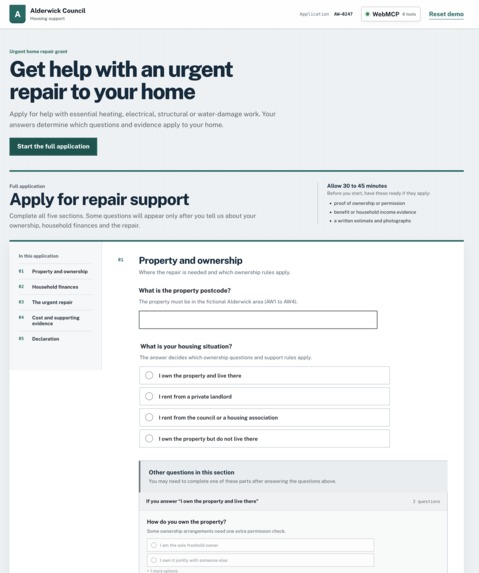
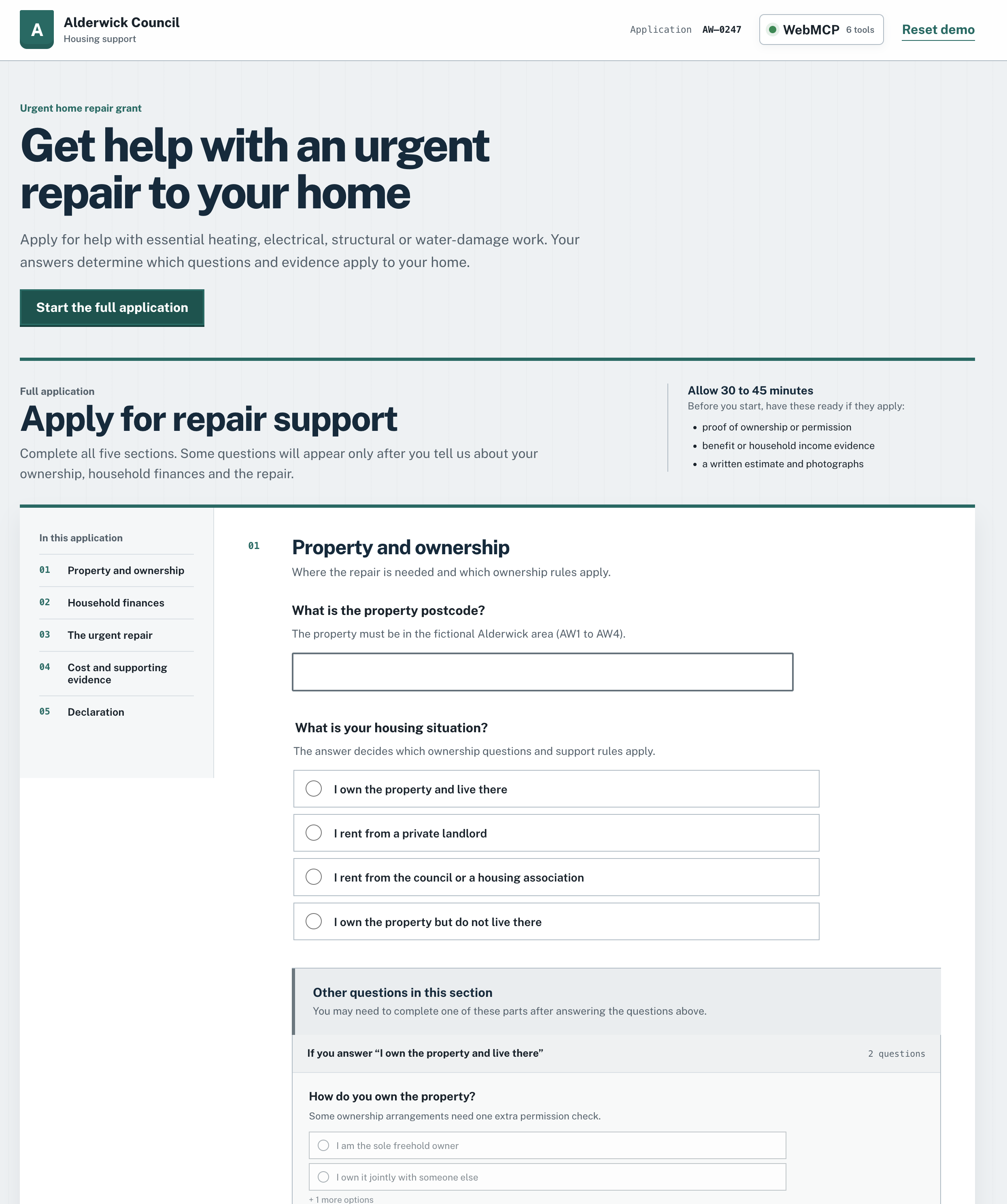
The initial form
-
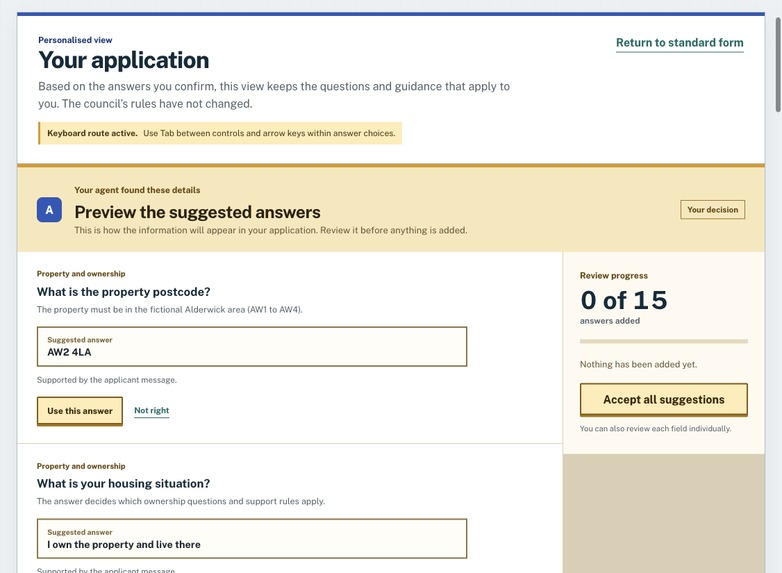
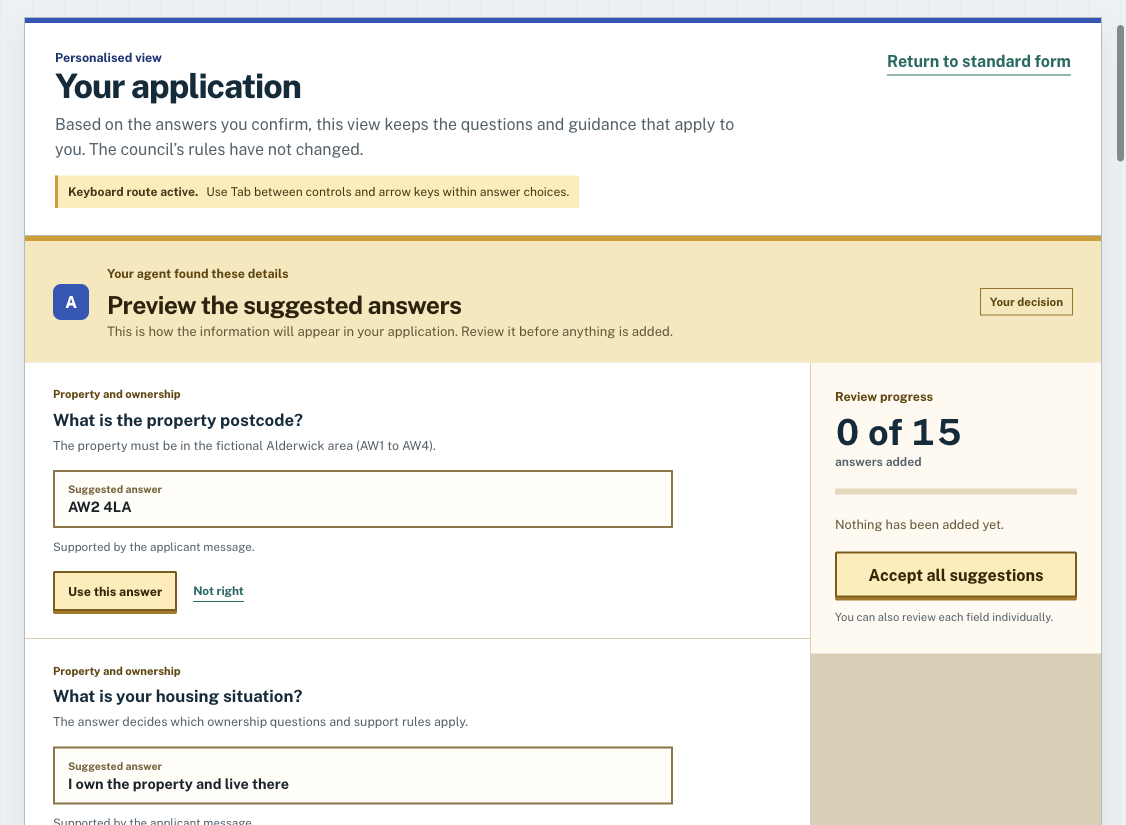
The simplified version based on the agent's contextual understanding of the user
-
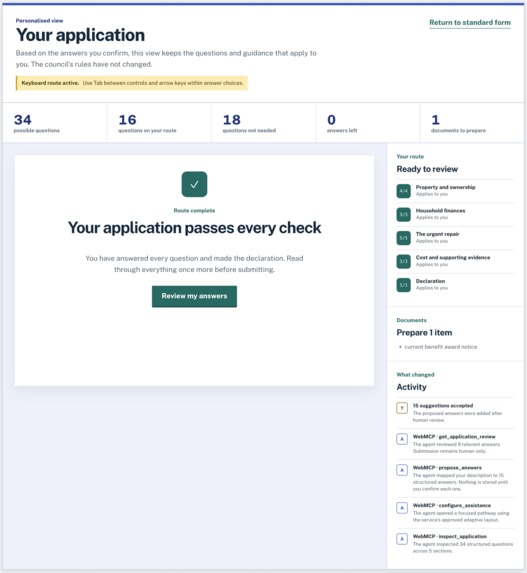
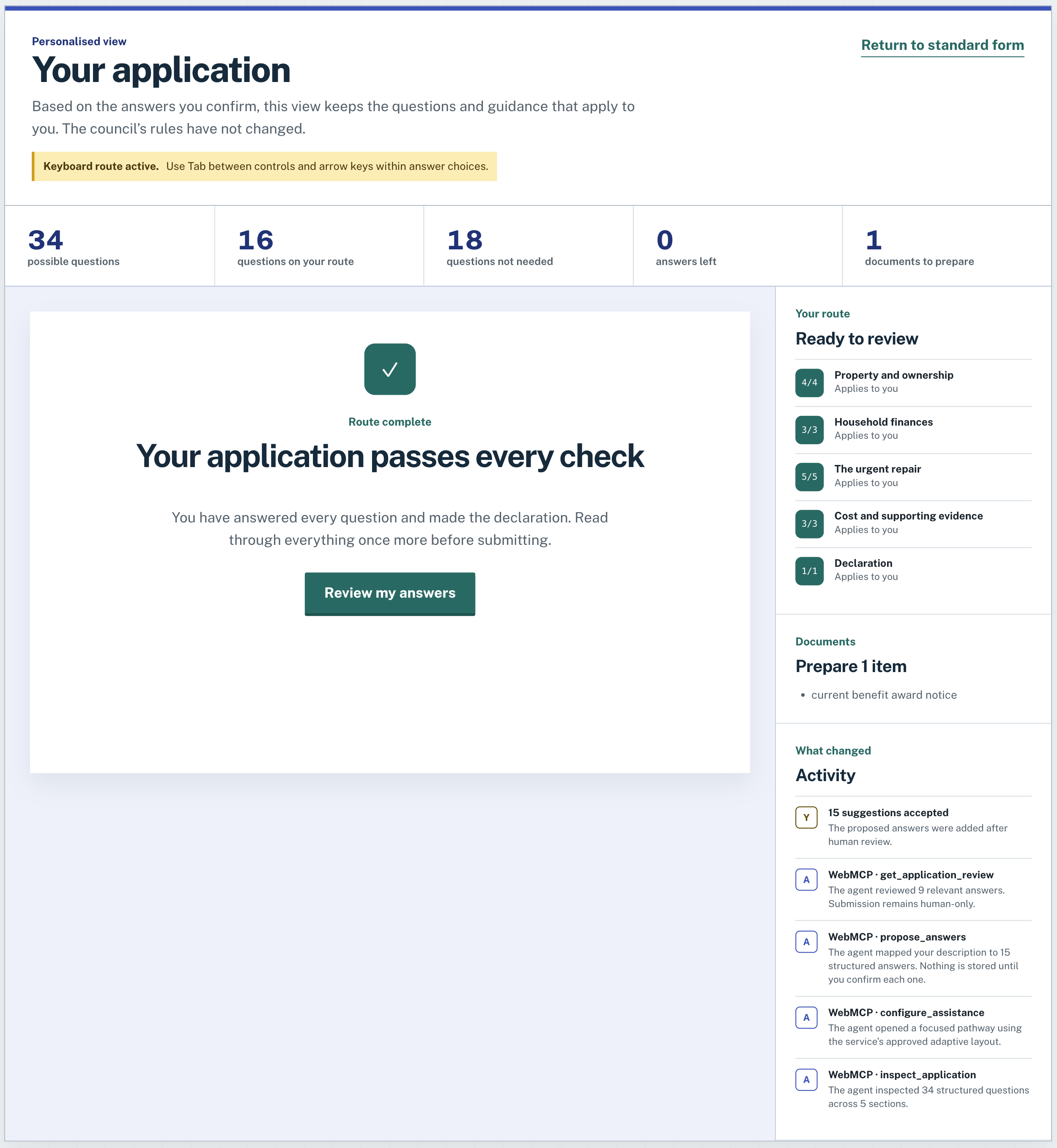
The final submitted version with MCP logs
Inspiration
I feel like most people who are technically oriented have at some point - and maybe with increased frequency - have found themselves frustrated with tech interfaces they encounter in their daily lives. Custom car interface software is a classic example, a needlessly long web form is another (as someone with ADHD I could go on for hours about other examples personal to me). But what if the interface adapted based on the personal facts about you, as well as your current intention?
Most commercial consumer AIs have a memory feature these days, and most consumers are starting to get the reflexive habit of treating their AI not just as a chatbox, but as a companion that can be present when they need - so how can we get the agent to help in the example of a confusing interface that sits between a user and the problem they need solved/communicated?
What it does
Form Less shares the website's rules and structure with the user's agent, so that the agent can adapt its interface around what the user actually needs to do.
To better demonstrate the functionality of Form Less, I built an example site/form: an application for repair support in the fictitious area of Alderwick. The default form - being a relic from days where the application was manual and has just been directly ported to a web version - can appear quite intimidating and confusing. But Form Less, via WebMCP, can take the user's specific situation into account and show them only what's necessary and what they need to understand and submit their application.
The user would describe their situation to their agent, e.g. showing it a photo of the damage/what needs repairing, and the agent would
The purpose isn't to complete the form for the user - not to 'remove thought' - but to present it and communicate it in a way that helps the user understand exactly what's being asked, and what they're submitting.
So Form Less is the reusable WebMCP pattern behind that helps an agent to help its human navigate UIs
How we built it
It's a static React/Typescript application in 3 layers:
- The JSON schema defines the 34 questions and answer types
- The UI schema defines the complete form and the focused layouts that are permitted
- A rules document handles the expansions and checks with more complex conditional branches.
Challenges we ran into
The main challenge was product design, and thinking about the wider nature of the interaction between a human and their agent. It would be technically trivial to also expose submission tools to the agent, but I explicitly scoped it behind this. I didn't want it to be a 'form completer' kind of tool, but something to help the user better understand the issue
I also wanted to make it technically easy for a site to implement - so the form and the agent's understanding is driven by the form's schema, so it learns the rules and requirements from the form's rules itself, so that a human 'deploying' it doesn't have to think and basically rewrite the rules of the form - no additional thinking/labour required here.
Accomplishments that we're proud of
I'm proud of the general idea and design of the execution. It's not just a one-time form-restyler, or 'get an agent to fill out a form for you', but a general approach that bridges the human-agent connection and the agent-browser connection, which I think is exactly what WebMCP enables.
Providing the agent with structured JSON gives it the form's design and its rules, so that if a site wanted to adopt it, they wouldn't have to spend extra time explicitly rewriting the form's rules, and also passes the principle that if the form is correctly built, the agent will correctly understand it.
What we learned
I realised that the difficult/interesting part of webMCP is deciding what tools you want to expose, and how they relate to the visible interface and the authority they should share. My initial conception of WebMCP was that it was just a more reliable way for an agent to do browser tasks like fill in fields. But then I realised you can communicate a lot more in terms of structure and logic that unlocks a lot more possibility for the agent to enhance the experience for the user.
What's next for Form Less
Alderwick's one example of making it easier for people to fill out a complex form, but the whole point of Form Less is that the general approach can be applied to many other areas
Built With
- react
- typescript
- vite
- webmcp

Log in or sign up for Devpost to join the conversation.