-
-
Progress
-
Squats
-
Home page
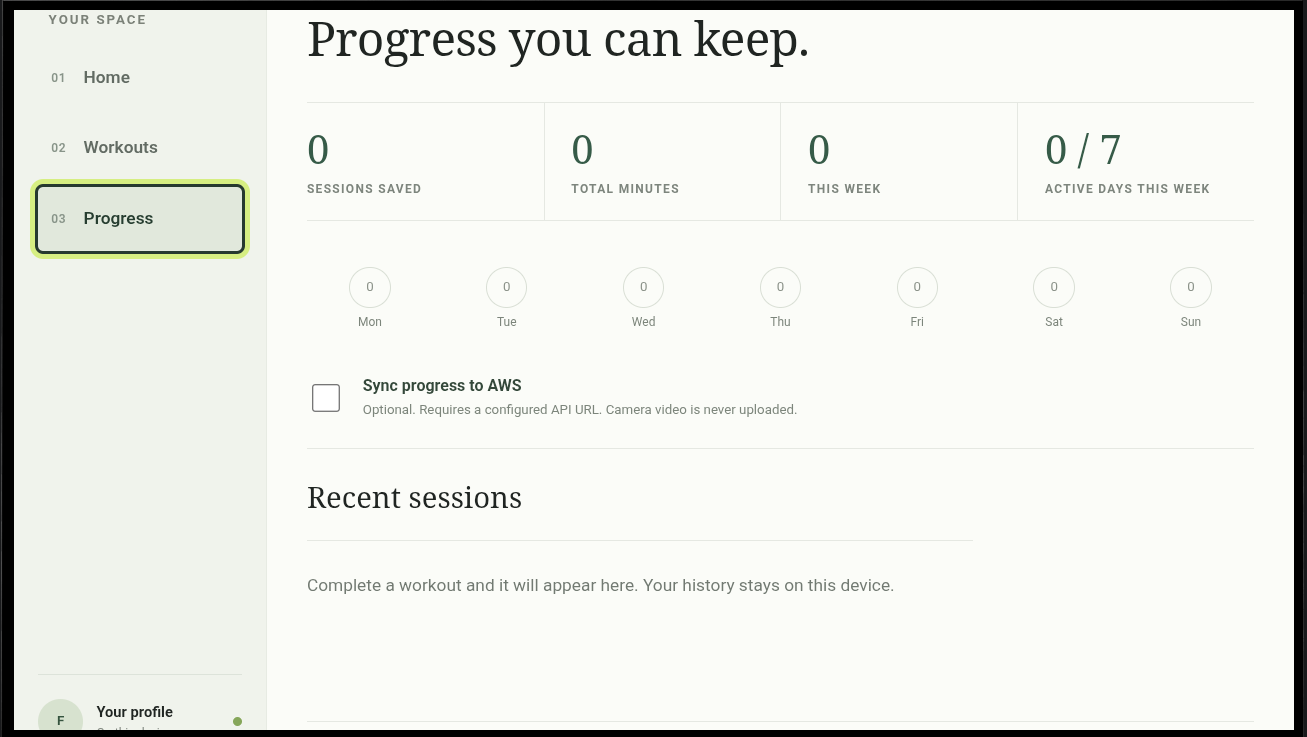
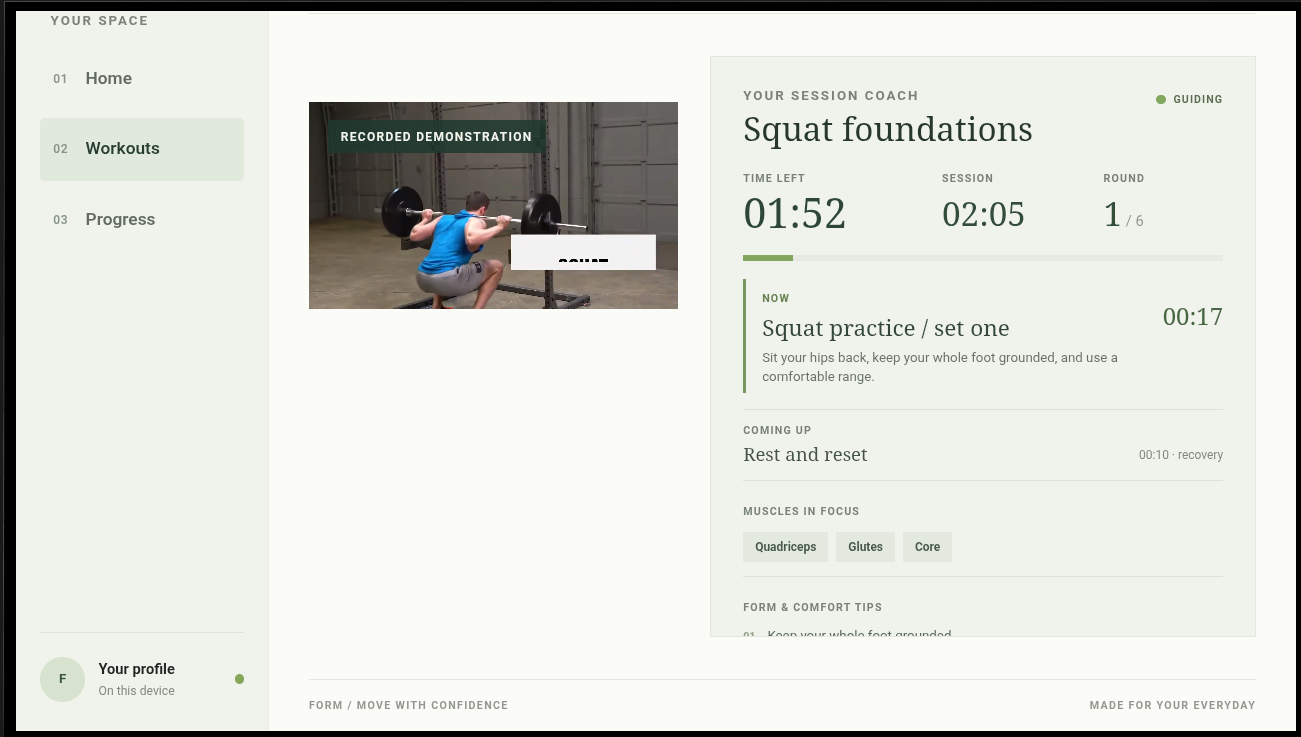
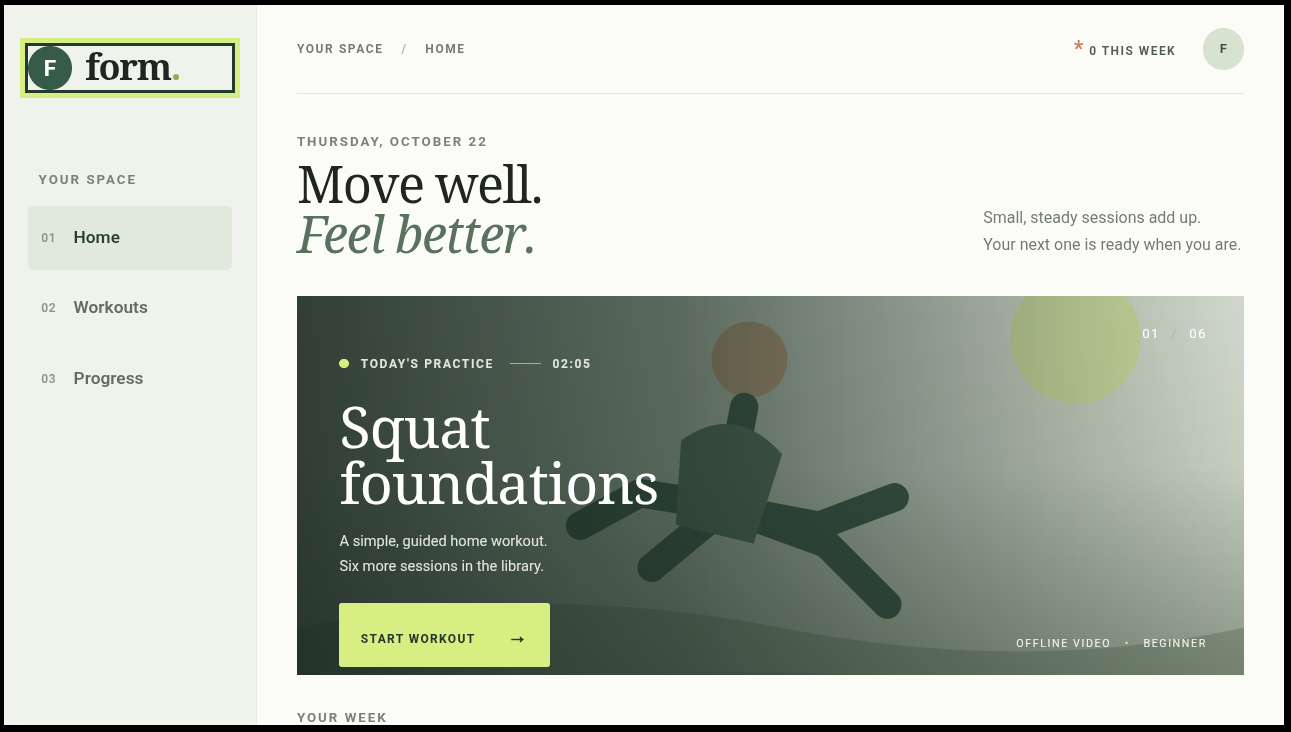
Inspiration I wanted to make at-home exercise feel more approachable and easier to follow on a television. A TV gives people room to see workout instructions without having to keep checking a small phone screen, but fitness apps also need to be simple to navigate from the couch. That led me to build Form: a beginner-friendly workout experience designed around clear guidance, large visuals, and remote control navigation.
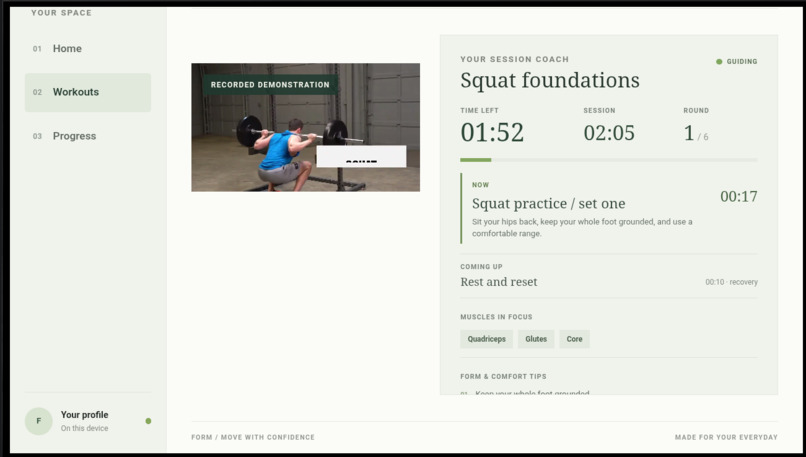
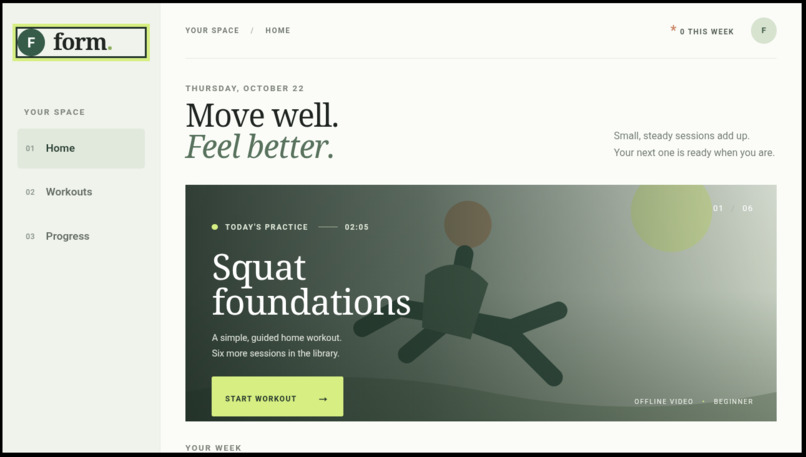
What it does Form offers a library of short, beginner-friendly workouts with timed intervals, equipment notes, muscle groups, and general form and comfort tips. For exercises without a demo video, it provides an illustrated, three-step guide that advances automatically and can be paused or controlled with the remote. Workouts and optional effort check-ins are saved on the device. The app also suggests a next workout using simple, visible rules. Its computer-vision feature demonstrates pose analysis on a recorded sample; it does not currently provide live camera coaching.
How we built it I built the app interface with React and TypeScript, then packaged it for Android TV using Capacitor. The workout player includes timed work and recovery intervals, while local storage keeps workout history and check-ins on the device. I created original SVG illustrations so workout guidance works offline and stays visually consistent. For the pose-feedback demo, I used MediaPipe Pose Landmarker to analyze a bundled recording locally. I tested the app and its remote-driven flows in an Android TV emulator.
Challenges we ran into Designing for a television meant rethinking interactions that are straightforward on a phone or computer. Controls need to be easy to see, navigate with a remote, and operate from a distance. Another challenge was relying on remote image hosting: images failed to load in the emulator, so I replaced them with bundled illustrations that work offline. I also had to make the scope of the computer-vision feature clear. The current demo analyzes a recording, so I avoid presenting it as live coaching.
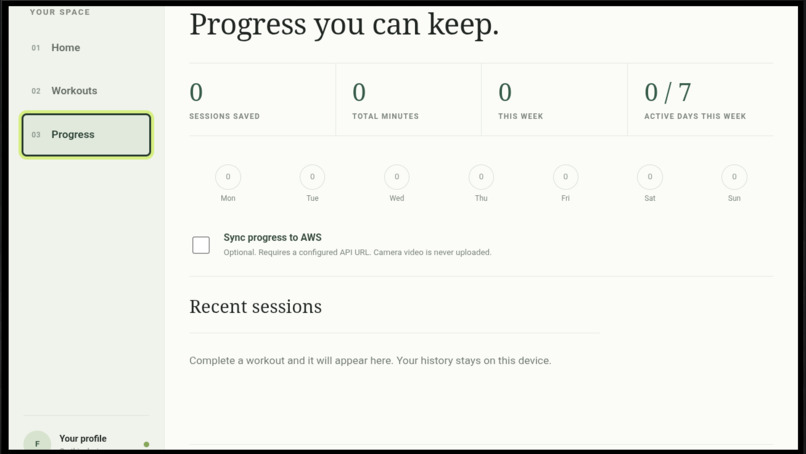
Accomplishments that we’re proud of I’m proud that Form brings together a complete workout flow: choosing an exercise, following timed coaching, pausing or finishing with a remote, and reviewing locally saved progress. The illustrated guides give exercises without video a consistent visual walkthrough, and their controls support both automatic and manual viewing. I’m also proud that the pose demo runs locally on a recorded sample and that the app clearly distinguishes it from live camera coaching.
What we learned I learned that building for TV is about more than making a mobile interface larger. Remote navigation, readable text, focus states, and reliable offline assets all affect whether the experience feels usable. I also learned to be precise about computer-vision claims: a recorded-sample analysis is useful for demonstrating the technology, but it is different from live, personalized form feedback. Testing on the emulator helped reveal platform and connectivity issues that weren’t obvious during ordinary browser development.
What’s next for Form Next, I want to validate the full experience on an actual Fire TV device or the competition-approved Fire TV/Vega simulator, especially remote navigation and playback. I’d also like to improve the workout illustrations and add more exercise-specific modifications. If I pursue live pose feedback, I’ll first verify that the target device supports the required camera setup and performance, and make sure camera use is explicit and privacy-conscious. Longer term, Form could offer more personalized recommendations while keeping them understandable and under the user’s control.
Built With
- capacitor
- css
- html
- landmarker
- mediapipe
- pose
- tv
- typescript

