-
-
-
-
-
-
-
-
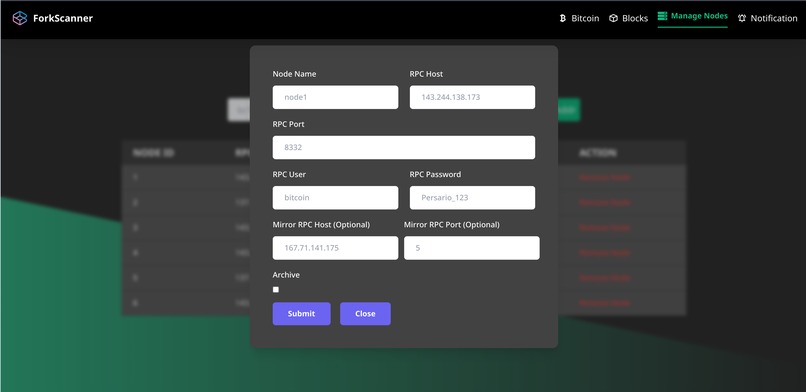
Add Node
-
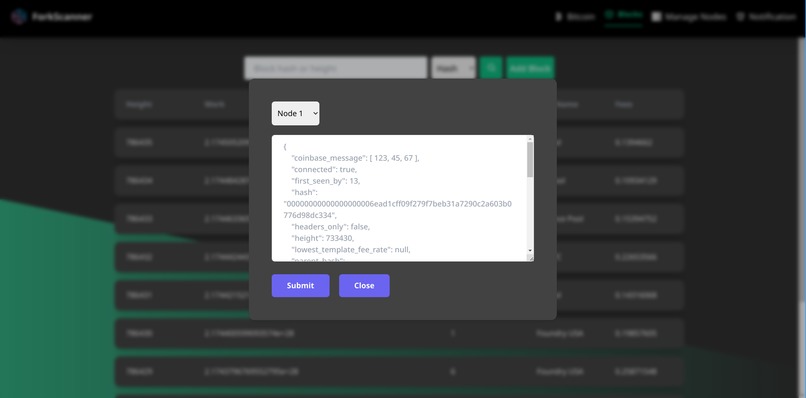
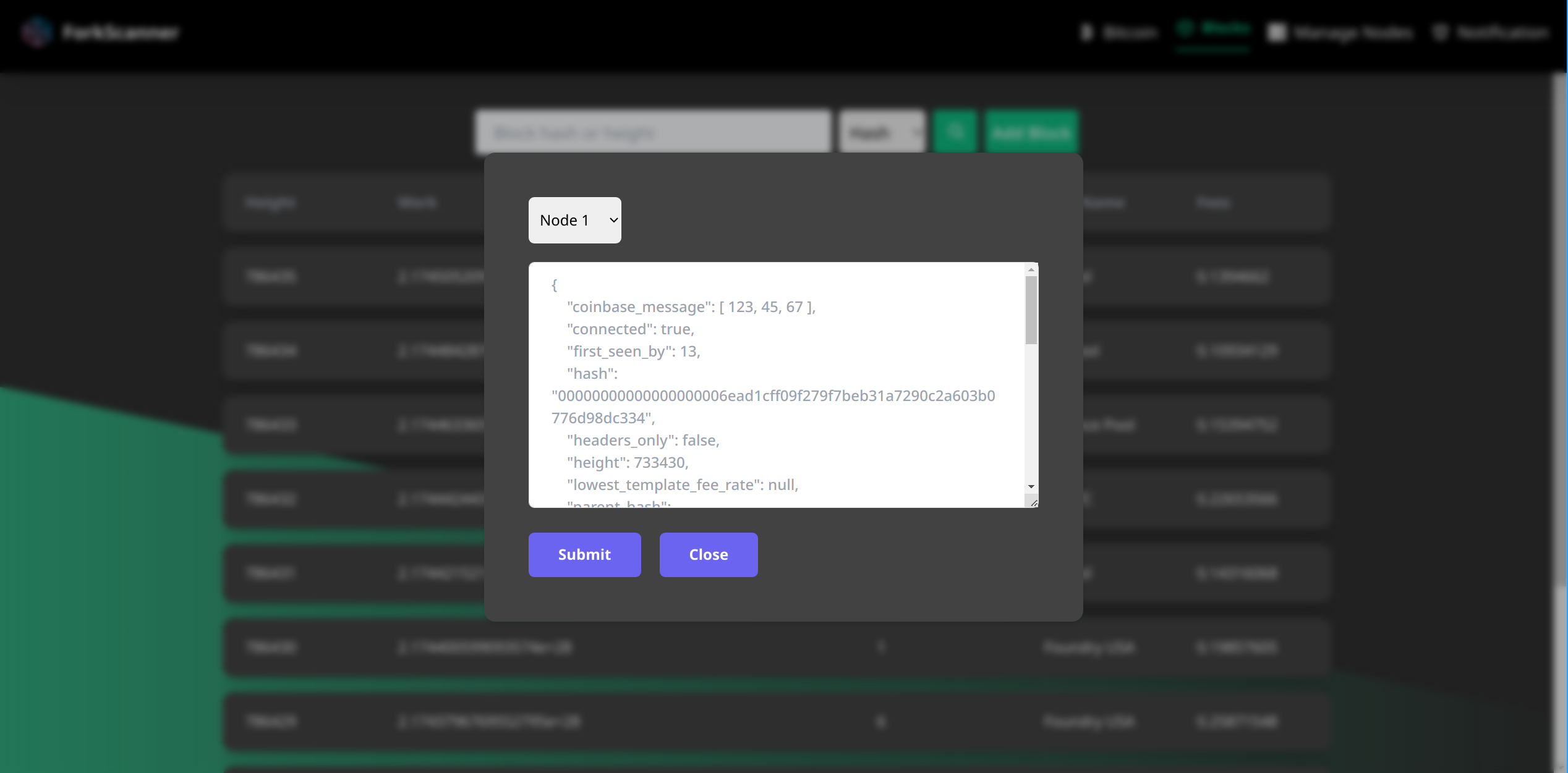
Add/Submit Block
-
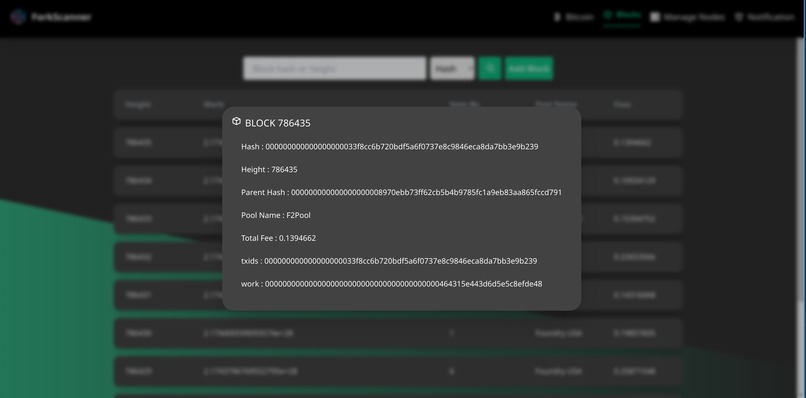
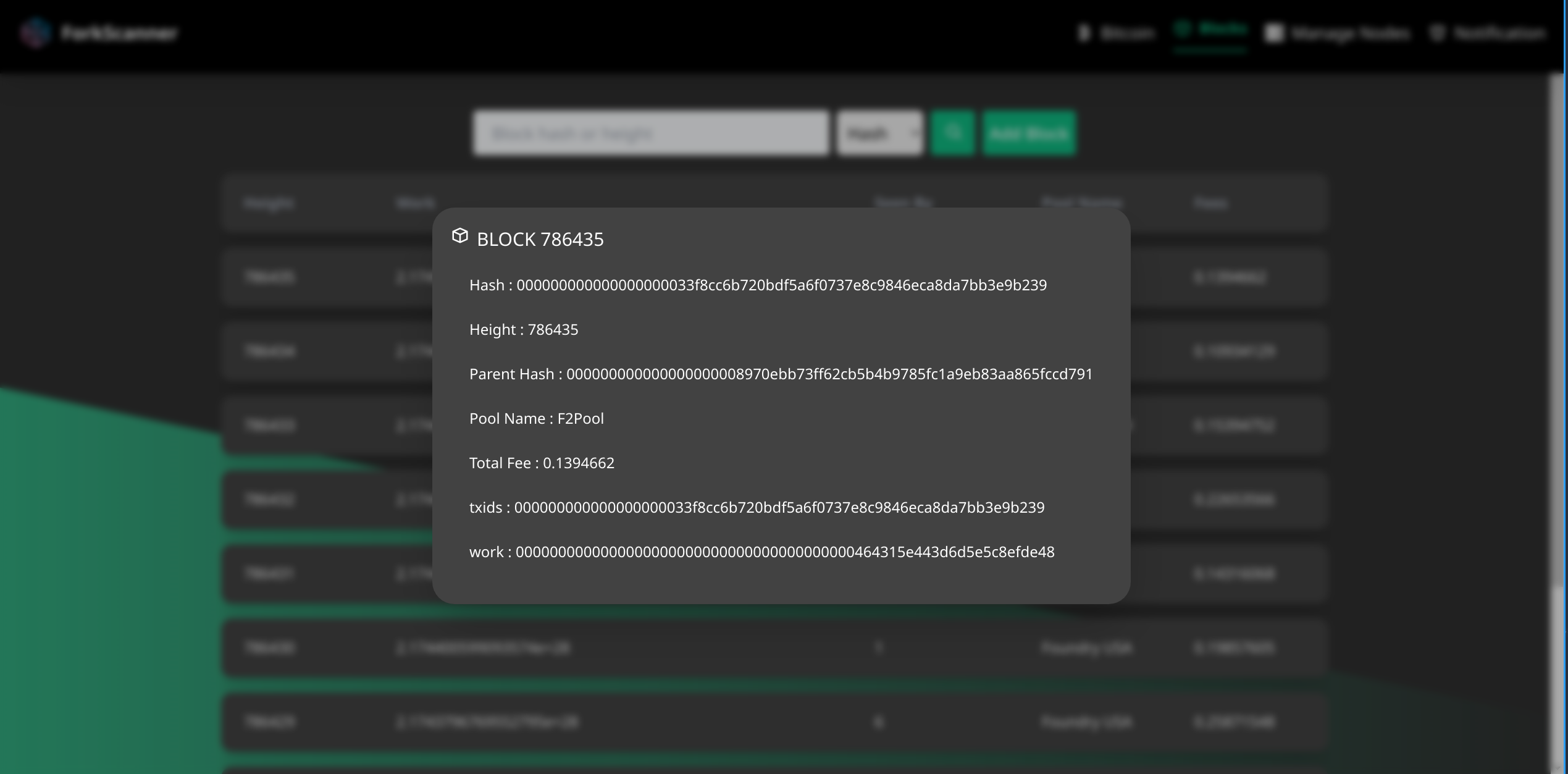
Block Details
-
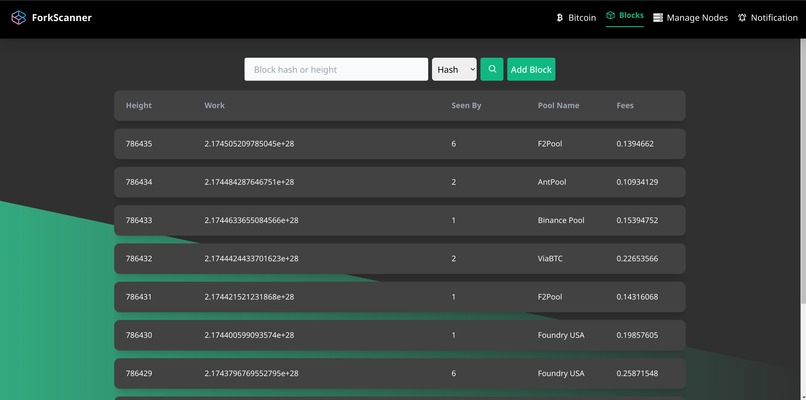
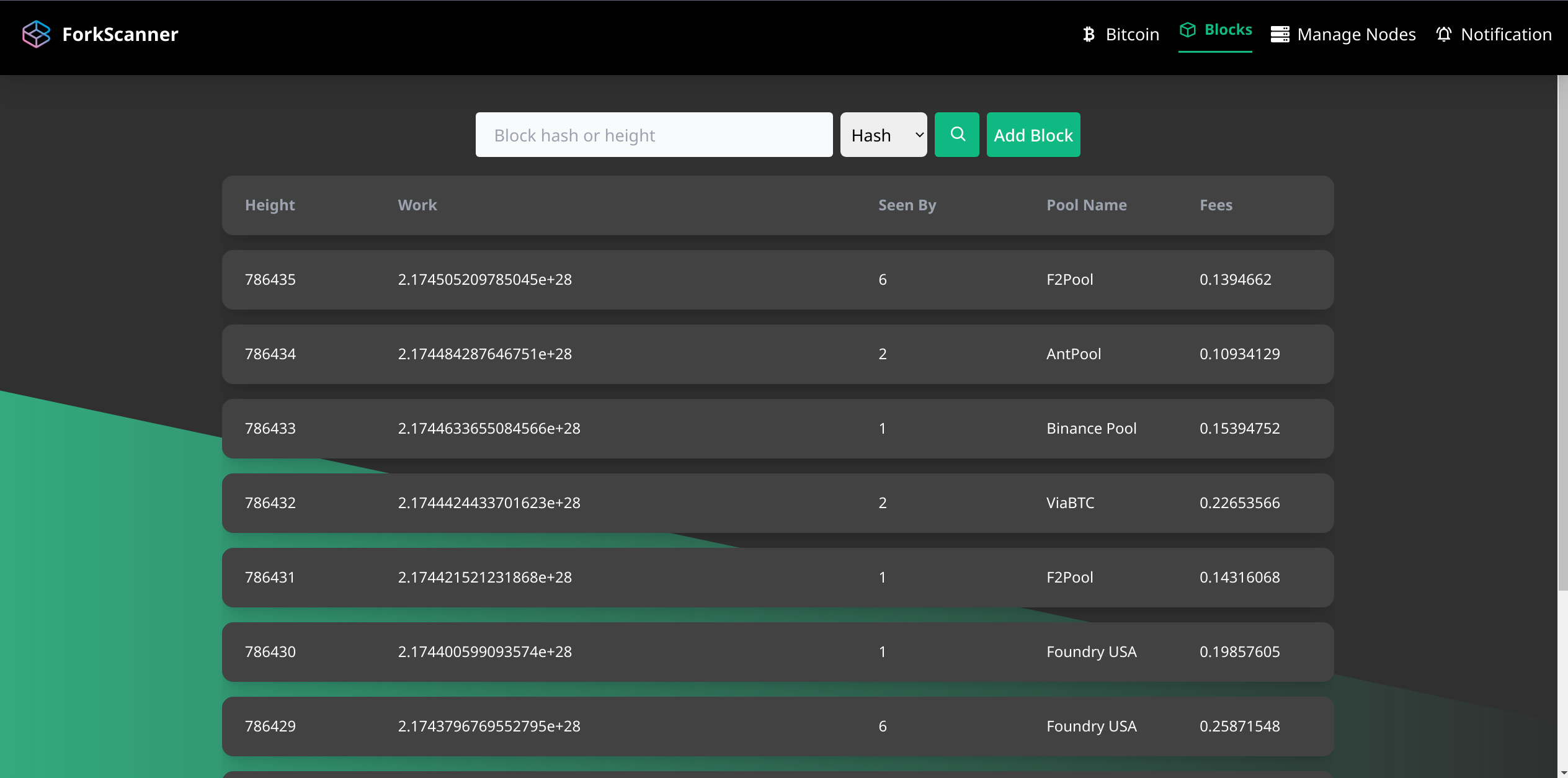
Block Explorer
-
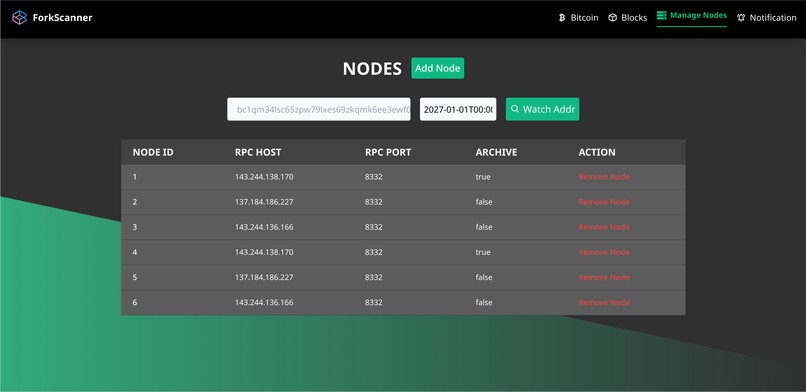
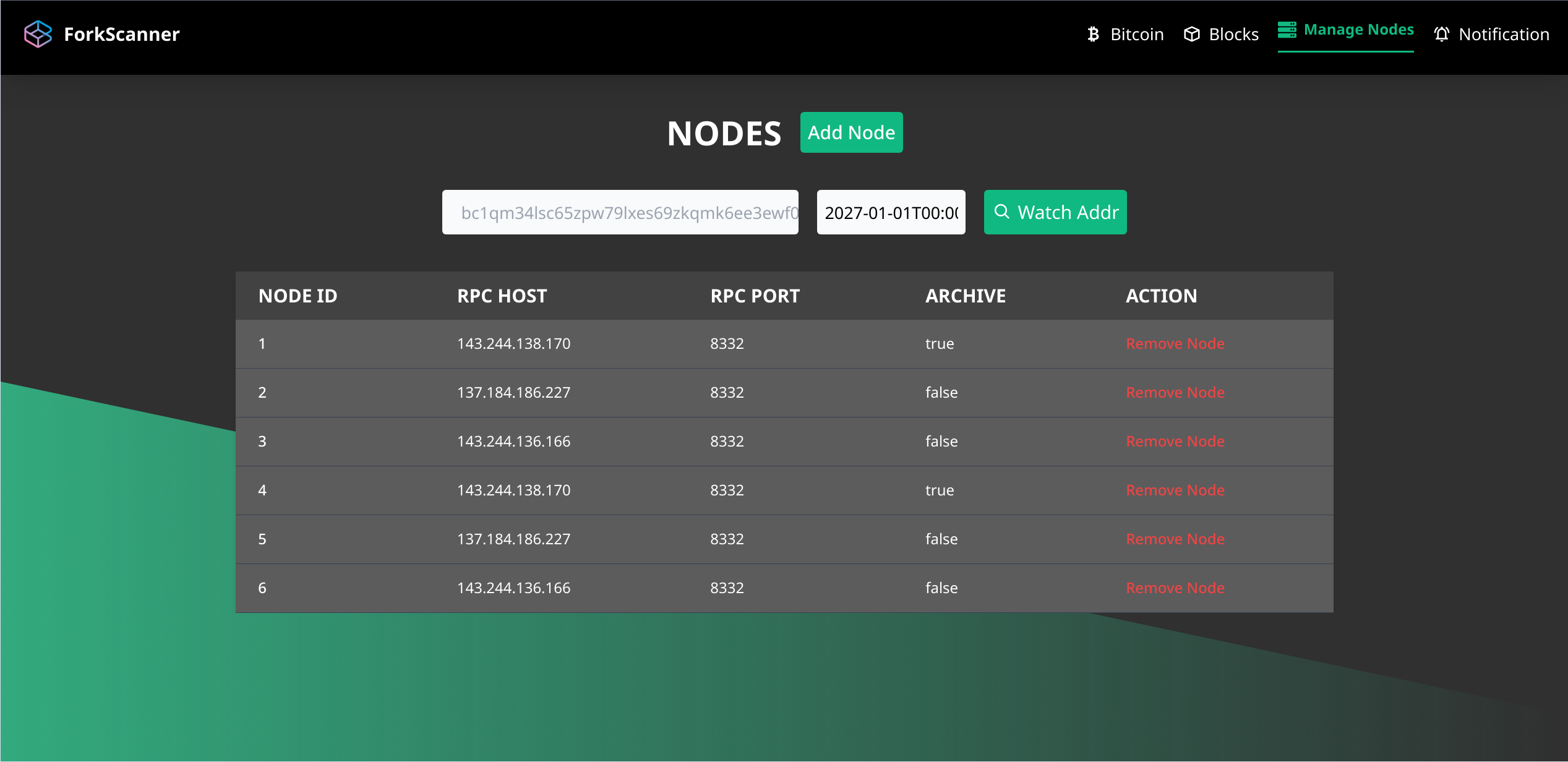
Manage Nodes
-
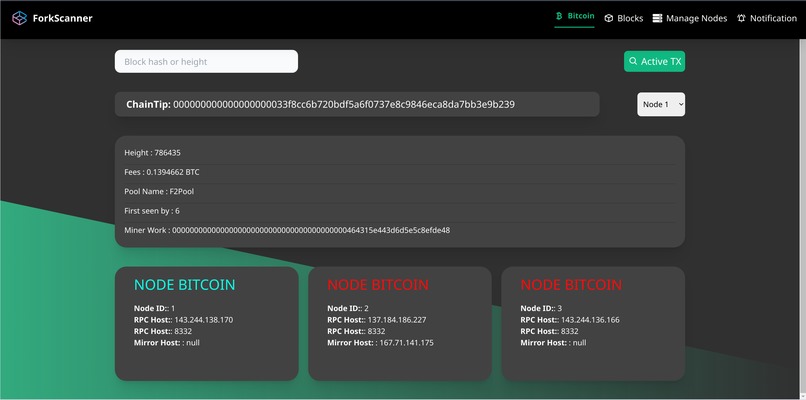
Bitcoin Info Page
-
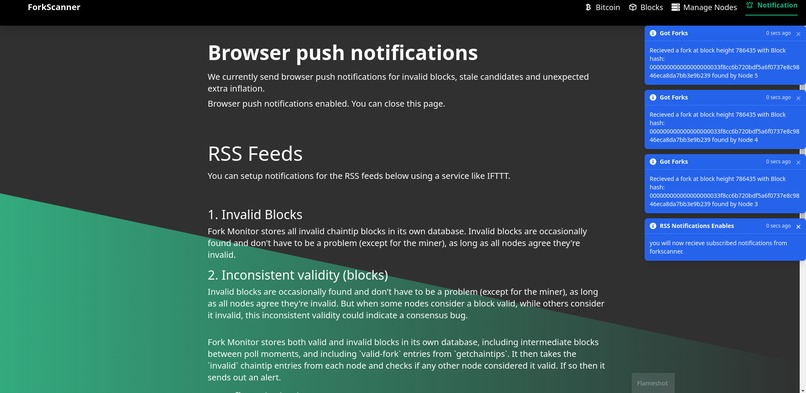
Notifications
Inspiration
As a cryptocurrency enthusiast, I've always been interested in understanding the inner workings of the Bitcoin network. Forkscanner is a sophisticated tool that offers users with vital real-time insights on the state of the Bitcoin network. As part of the MIT Bitcoin Hackathon, I opted to tackle the task of developing a frontend for Forkscanner. My goal was to make it easier for users to access and use the capabilities of Forkscanner, which could eventually contribute to cryptocurrency adoption and comprehension. I sought to improve the capabilities of Forkscanner and ease user interaction with the programme by building a frontend that uses backend RPC calls and socket connections to subscribe to real-time network events. I intend to contribute to the creation of creative technologies that will make cryptocurrencies more accessible and understandable to the general public through this project.
What it does
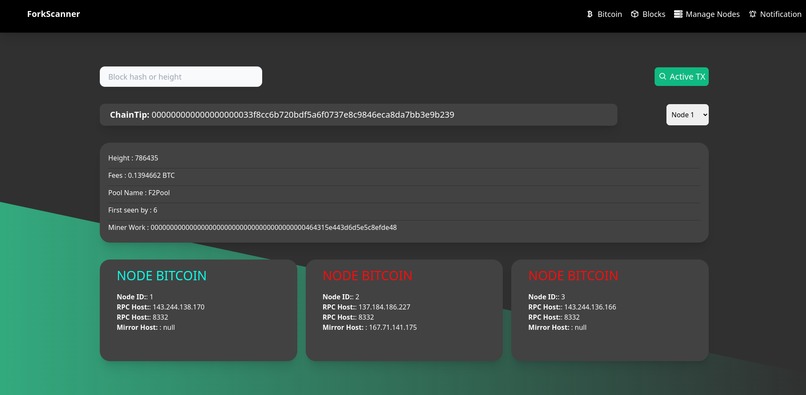
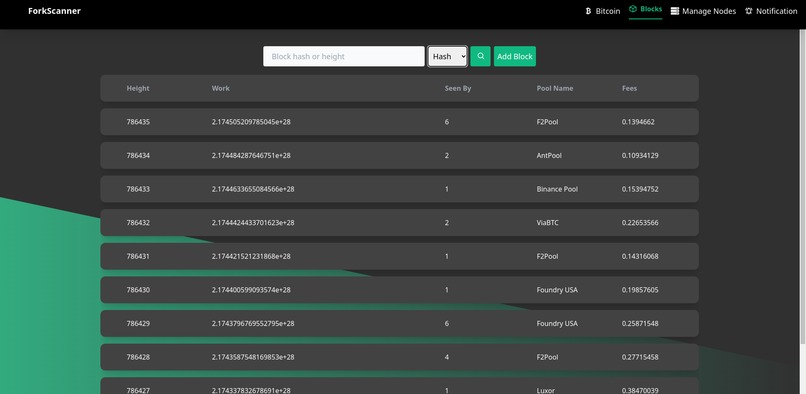
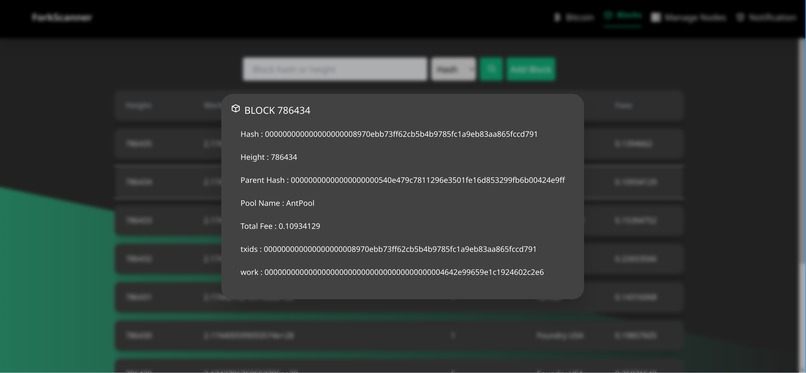
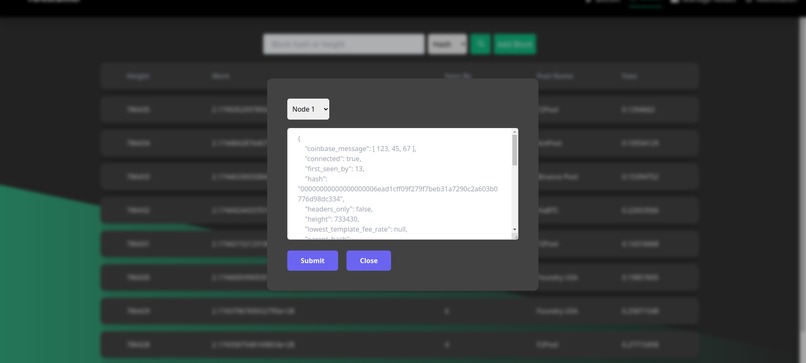
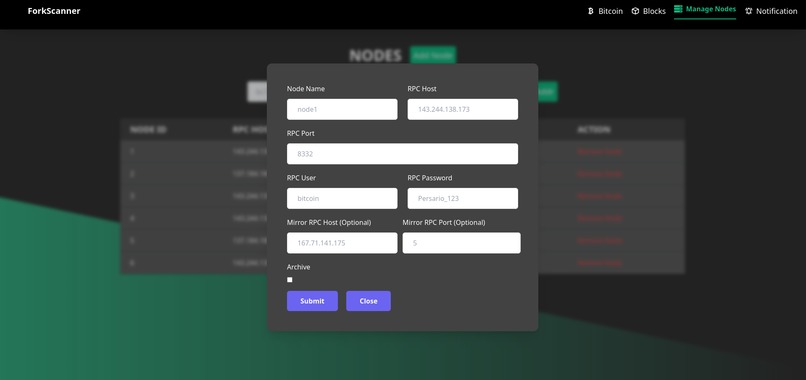
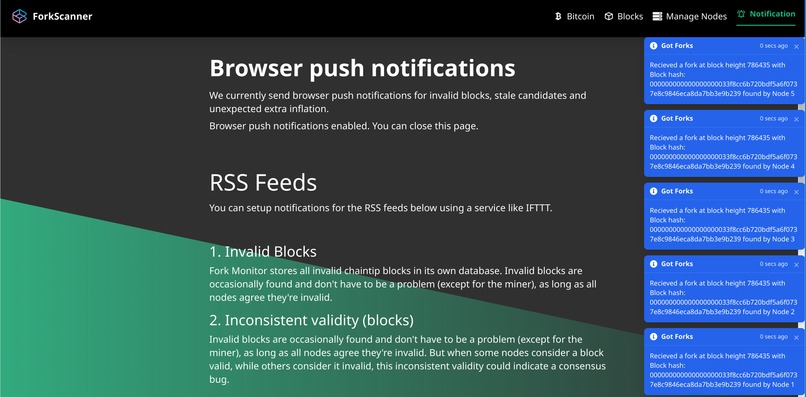
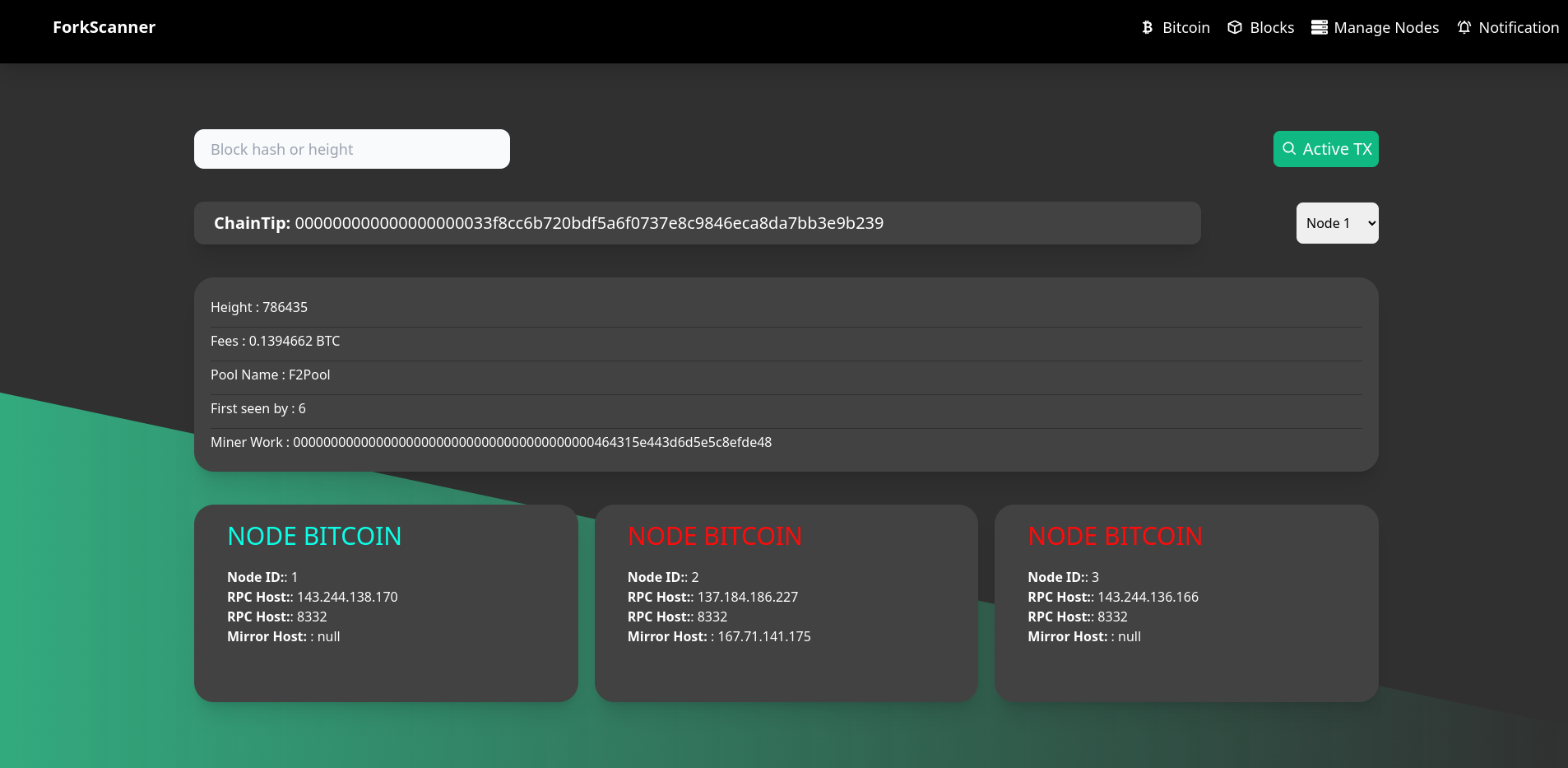
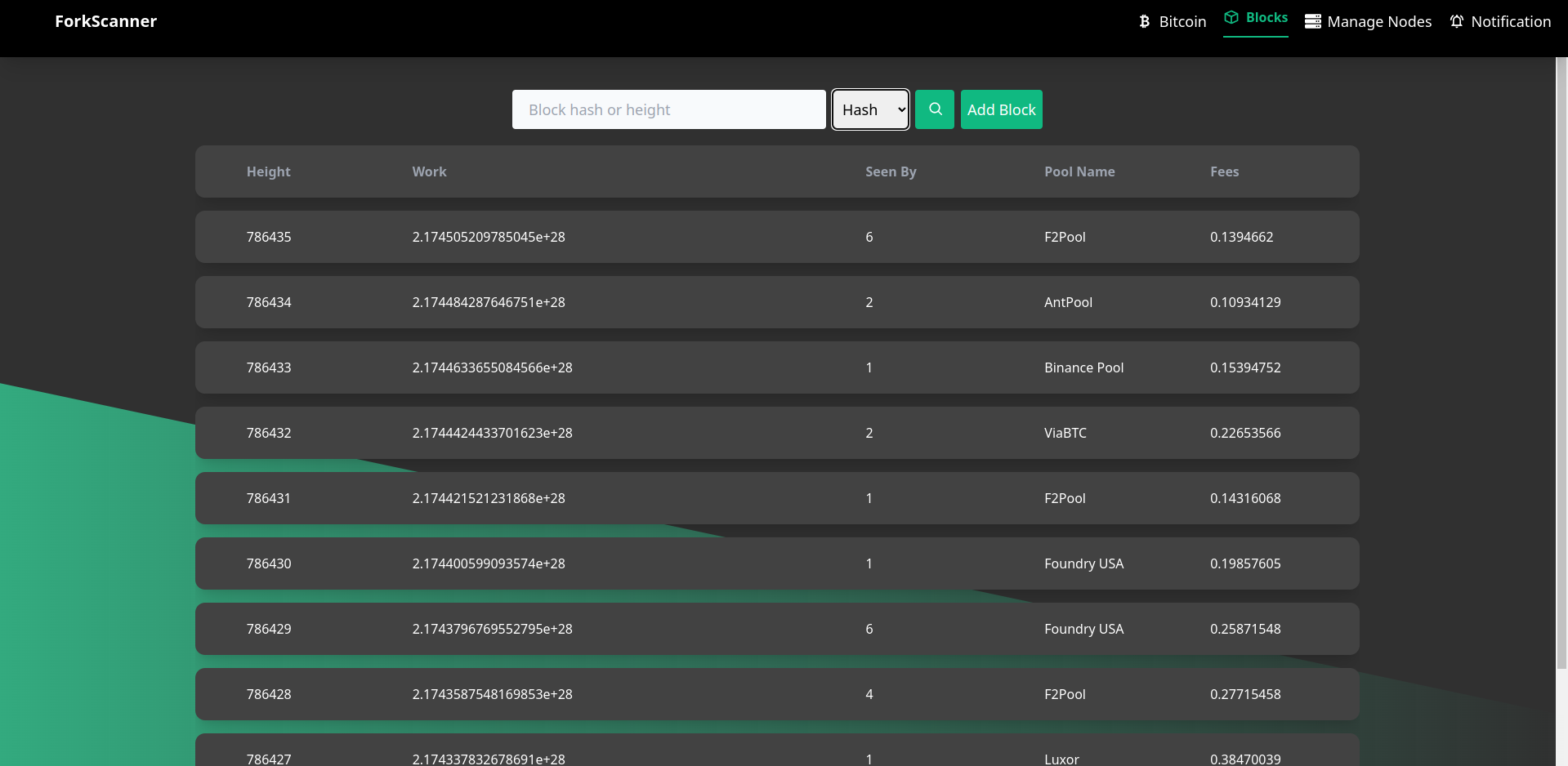
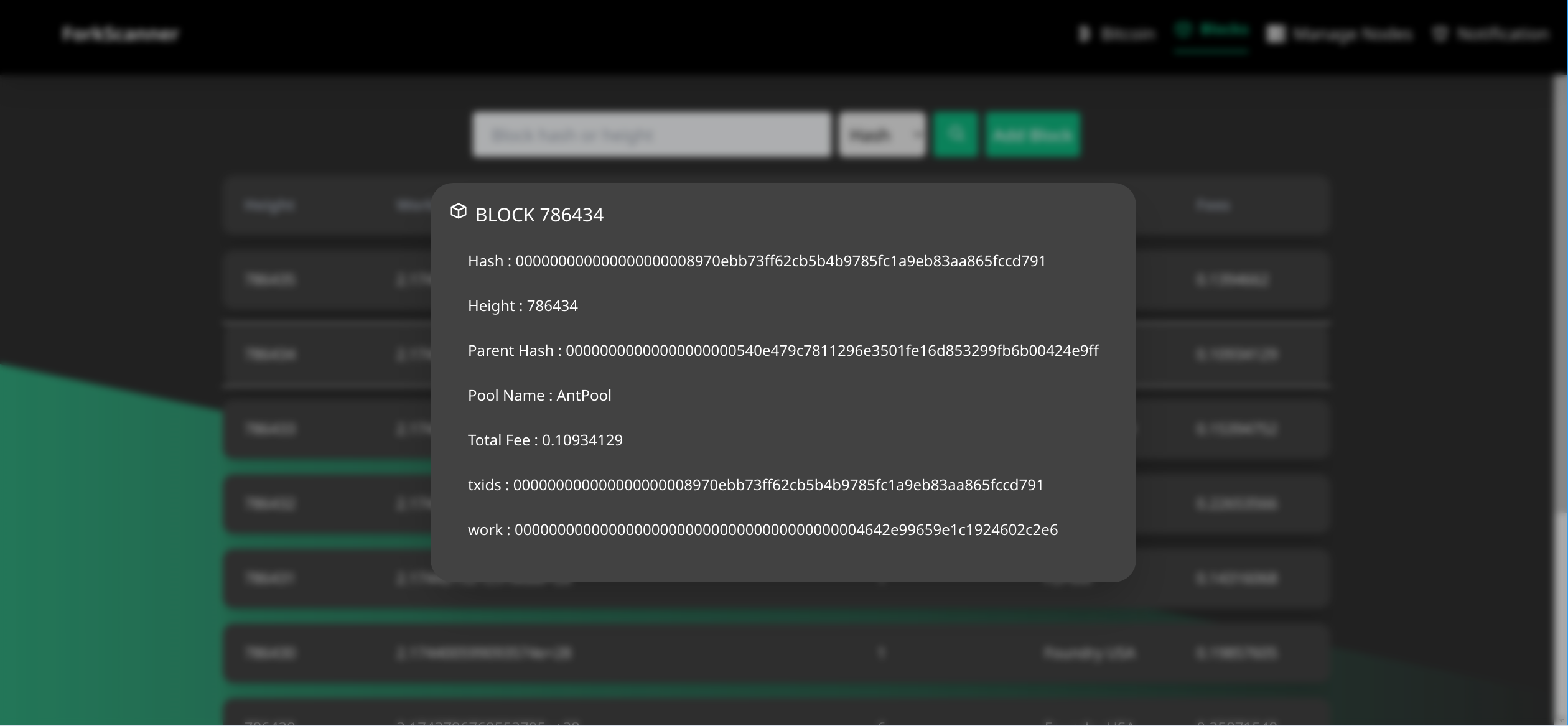
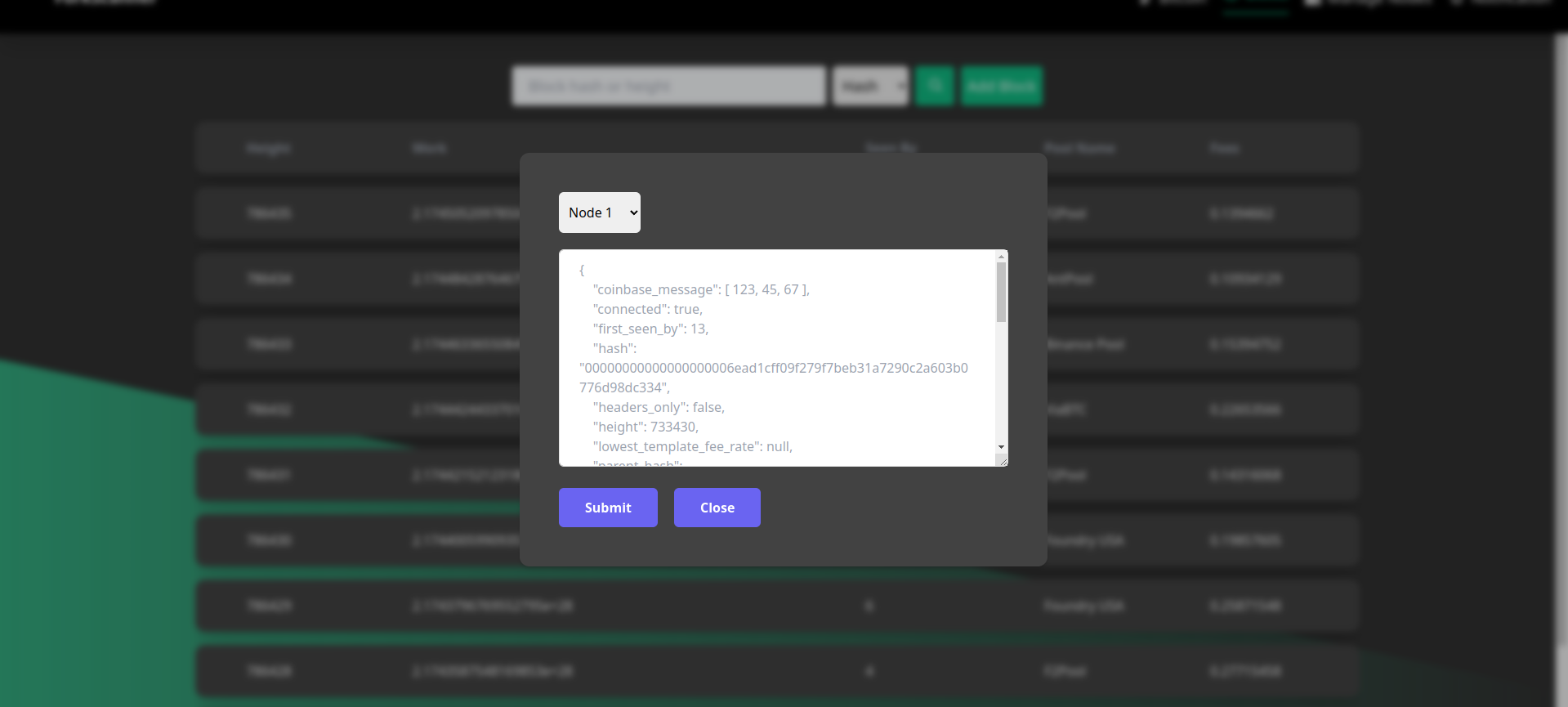
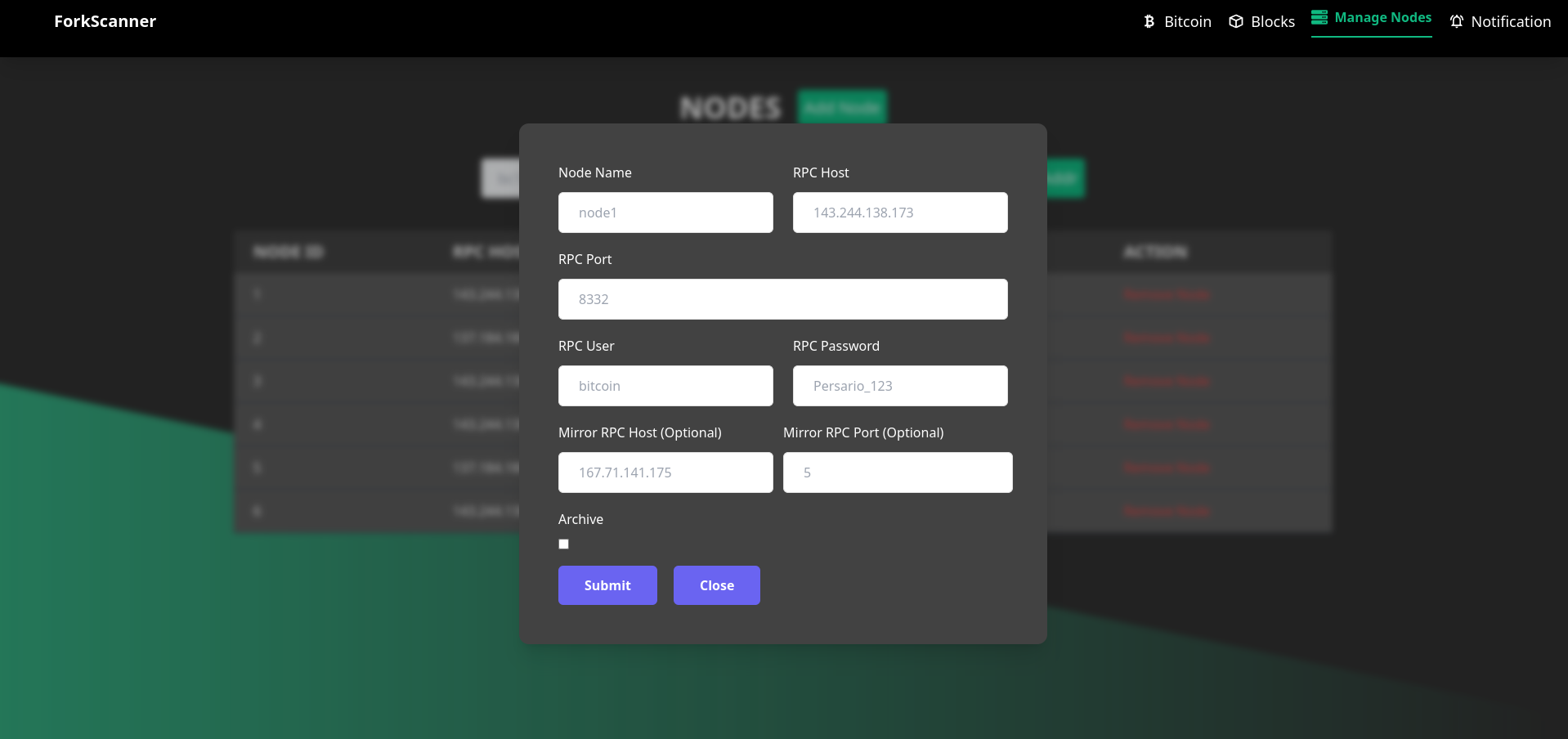
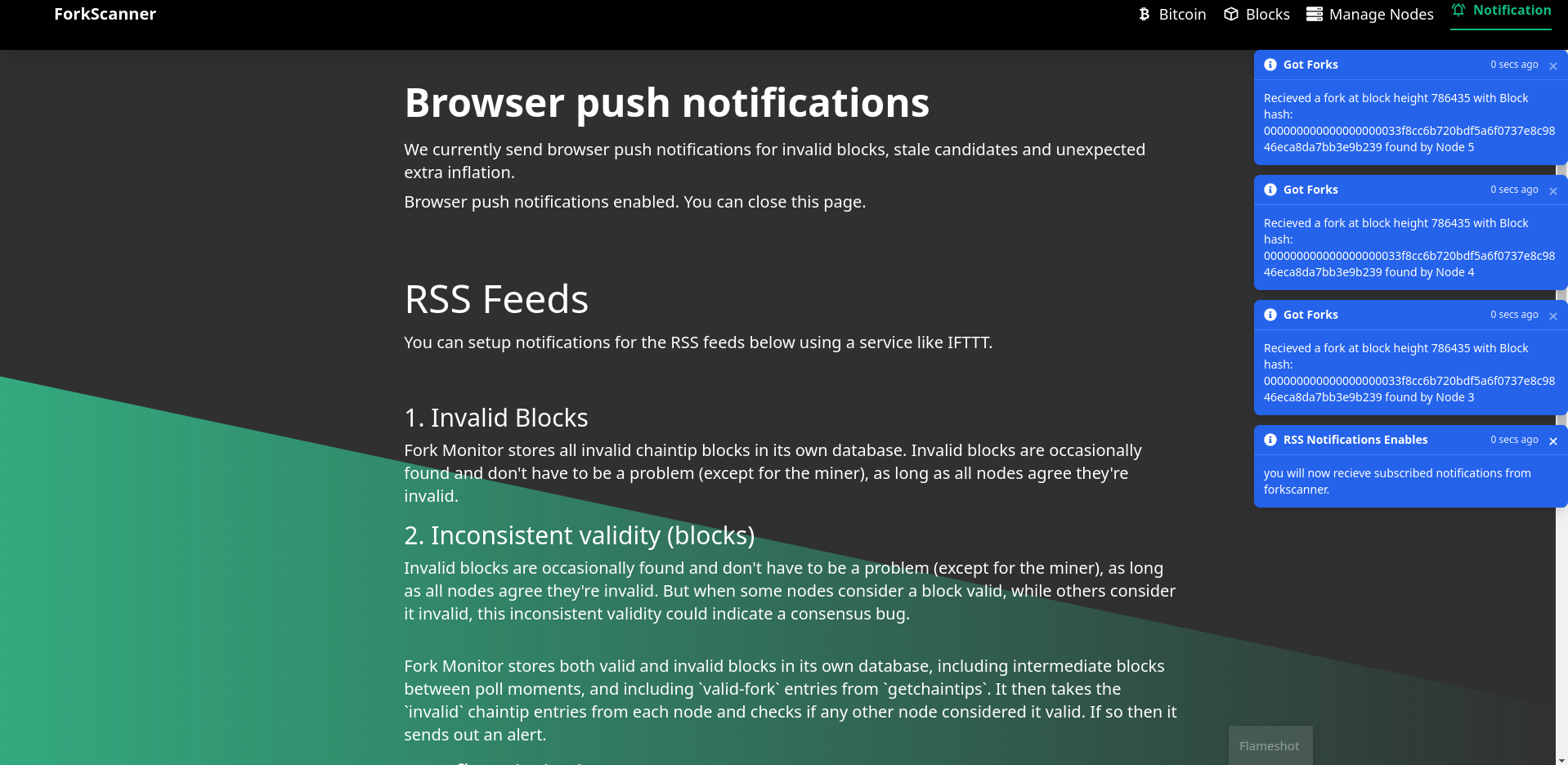
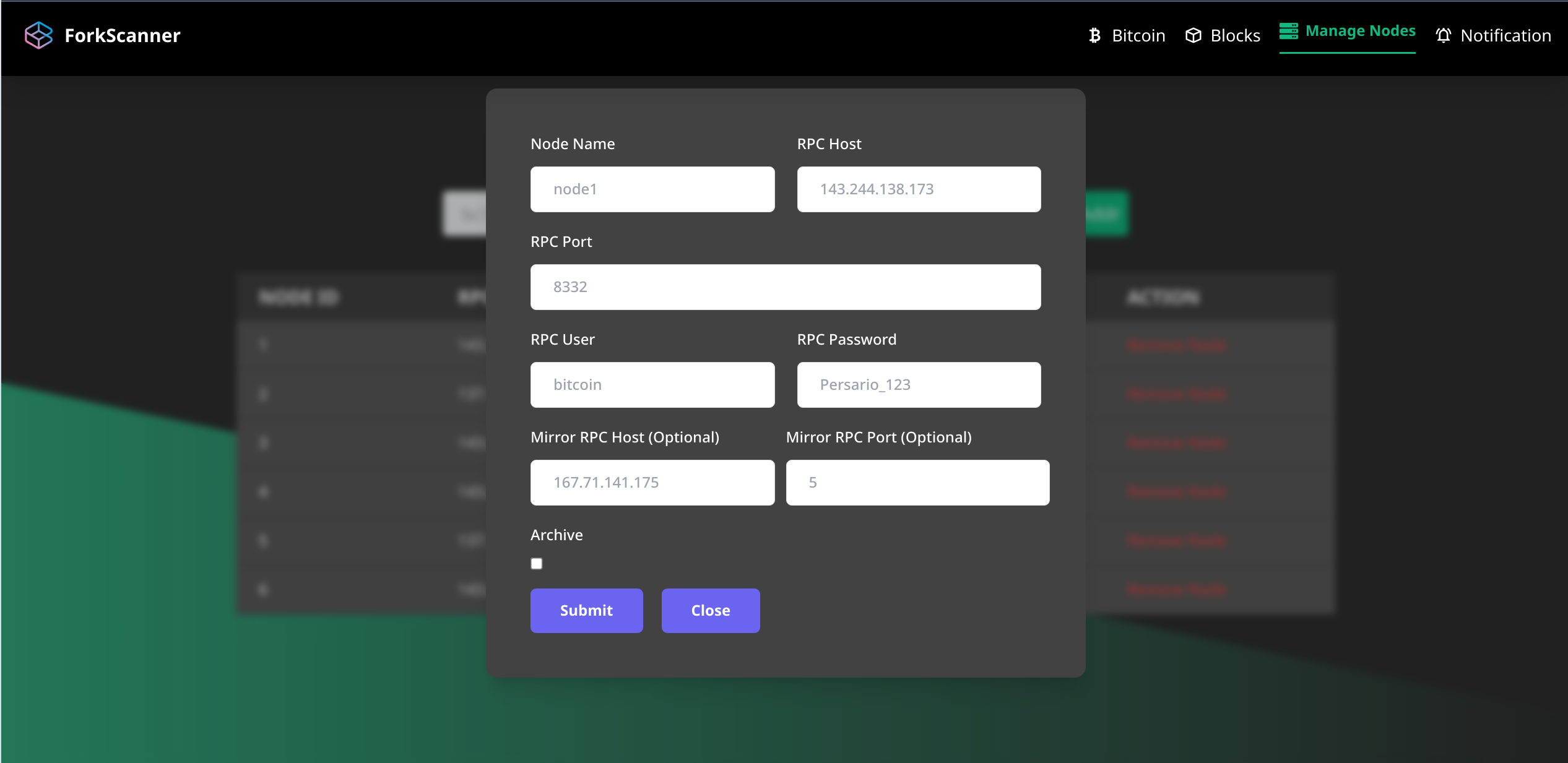
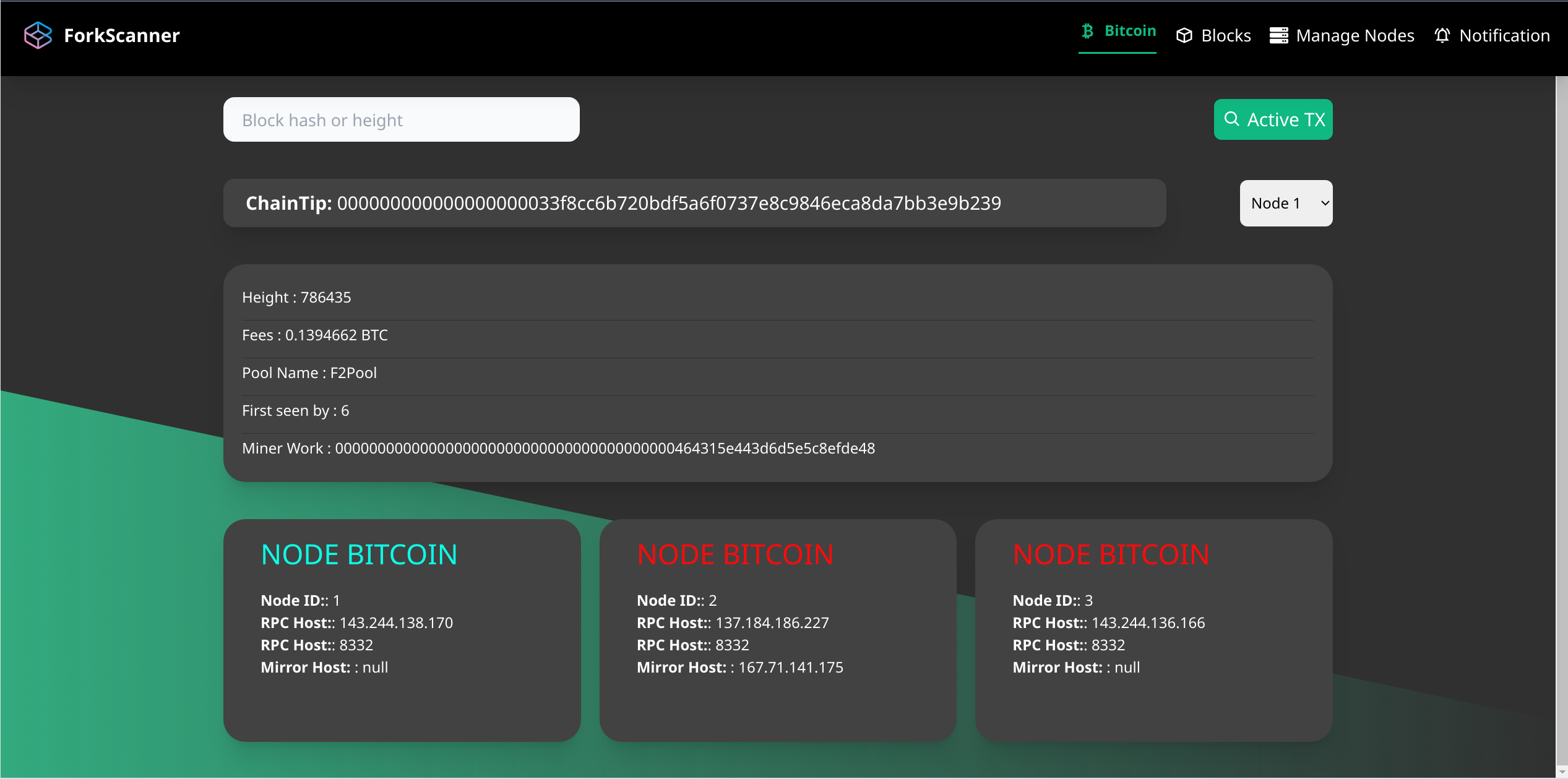
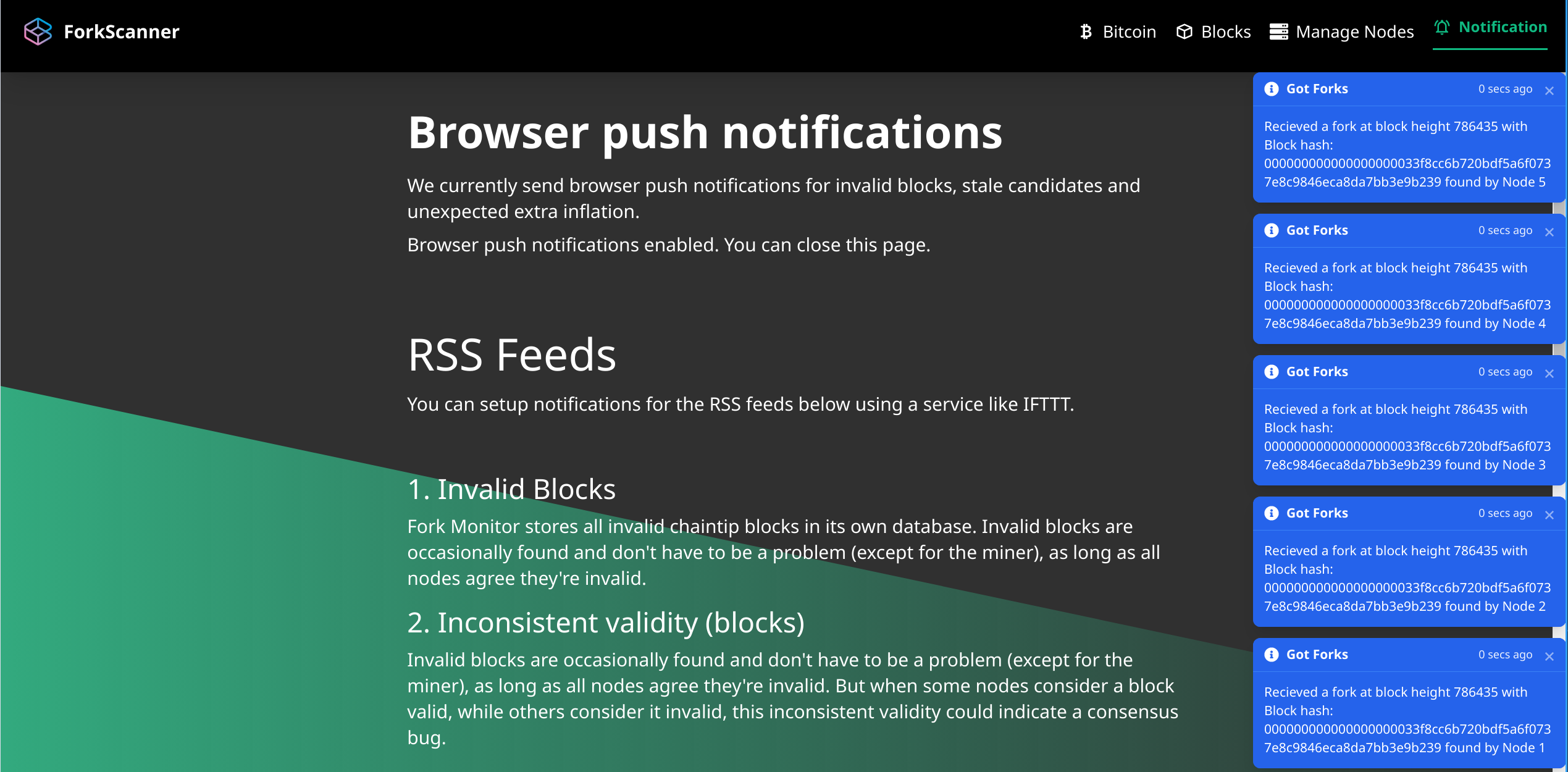
This is a React website which is designed to provide users with a range of tools to monitor and manage their interactions with the Bitcoin network. The Bitcoin Info page provides users with an overview of the chaintips of all the connected nodes and information about Bitcoin nodes running in a concise manner. Additionally, users can search for active transactions using transaction hashes. The Blocks page serves as a visual block explorer that displays the 10 latest blocks. Users can filter or search for blocks using the block hash or block height. The Block Details page provides users with more detailed information about specific blocks. The Add Block/Submit Block page allows users to submit a block using the block JSON and select the node from which they want to submit the block. The Manage Nodes page provides users with a concise interface to manage all their nodes, allowing them to perform actions such as adding or removing nodes and obtaining information on all their connected nodes. The Add Node Form page enables users to easily add a new node to the Forkscanner using the frontend without the need for CLI commands. The Subscribe for Push Notifications page enables users to receive notifications on important events such as forks, stale blocks, and inflated blocks, keeping them informed about the state of the Bitcoin network. Overall, this app provides users with a range of tools to monitor and manage their interactions with the Bitcoin network in real-time, helping them stay informed about important events and make informed decisions about their transactions and investments.
How we built it
Our project's frontend was developed using React, a popular JavaScript library. To enhance the styling of the interface, we utilized Tailwind CSS, a highly customizable CSS framework. Following the walkthrough documentation, we established the project's infrastructure and linked the frontend with the ForkScanner through a combination of remote procedure calls (RPCs) and socket connections.
Challenges we ran into
Initially, we faced difficulties in establishing a connection between the ForkScanner and the Bitcoin nodes. However, we successfully resolved this issue by whitelisting our APIs through collaboration with the sponsor. Additionally, we strived to create a cutting-edge and visually striking design for the frontend, which posed its own set of challenges during the development process.
Accomplishments that we're proud of
Undertaking the designing of the frontend was a new experience for us, and we are thrilled to have acquired a valuable new skillset through the process. also, we were able to expand our knowledge regarding the scanning capabilities of nodes on the Bitcoin blockchain, in addition to the practical application of the ForkScanner tool in maintaining a full Bitcoin node.
What we learned
During the course of this project, our team gained a wealth of knowledge and experience. Firstly, we learned the ins and outs of building a frontend using React and Tailwind CSS, which allowed us to create a visually striking and user-friendly interface. Additionally, we gained a deep understanding of the scanning capabilities of nodes on the Bitcoin blockchain, as well as the practical applications of the ForkScanner tool for maintaining a full Bitcoin node. We also learned the importance of effective collaboration and communication, particularly when it comes to troubleshooting technical challenges such as connection issues with the Bitcoin nodes, Additionally we learned how to work with docker, docker-compose and RPC calls.
What's next for Forkscanner-Frontend
Moving forward, our team plans to further enhance the capabilities of the Forkscanner-Frontend tool by leveraging APIs that were not previously integrated into the frontend. We also intend to implement a notification system that will provide users with updates on the events they have subscribed to within Forkscanner via email or WhatsApp, using tools such as Twilio and SendGrid. This addition will not only increase the accessibility of the tool but also make it even more useful for users who rely on real-time updates. Overall, we are excited to continue building upon the existing functionality of Forkscanner-Frontend and explore new avenues for its development.


Log in or sign up for Devpost to join the conversation.