-
-
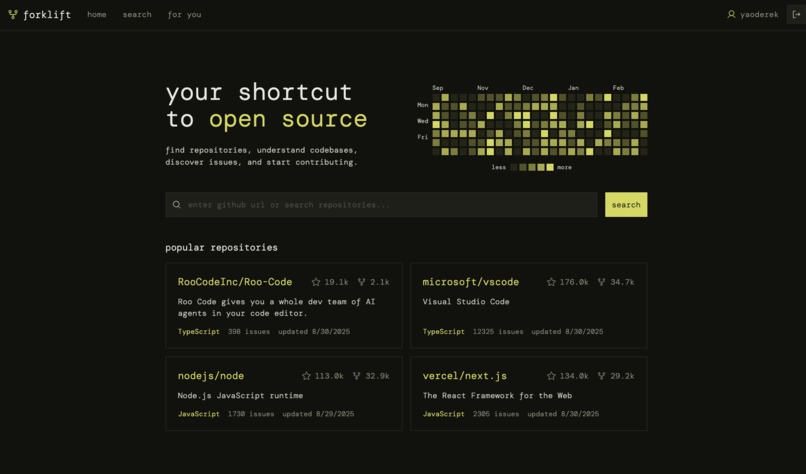
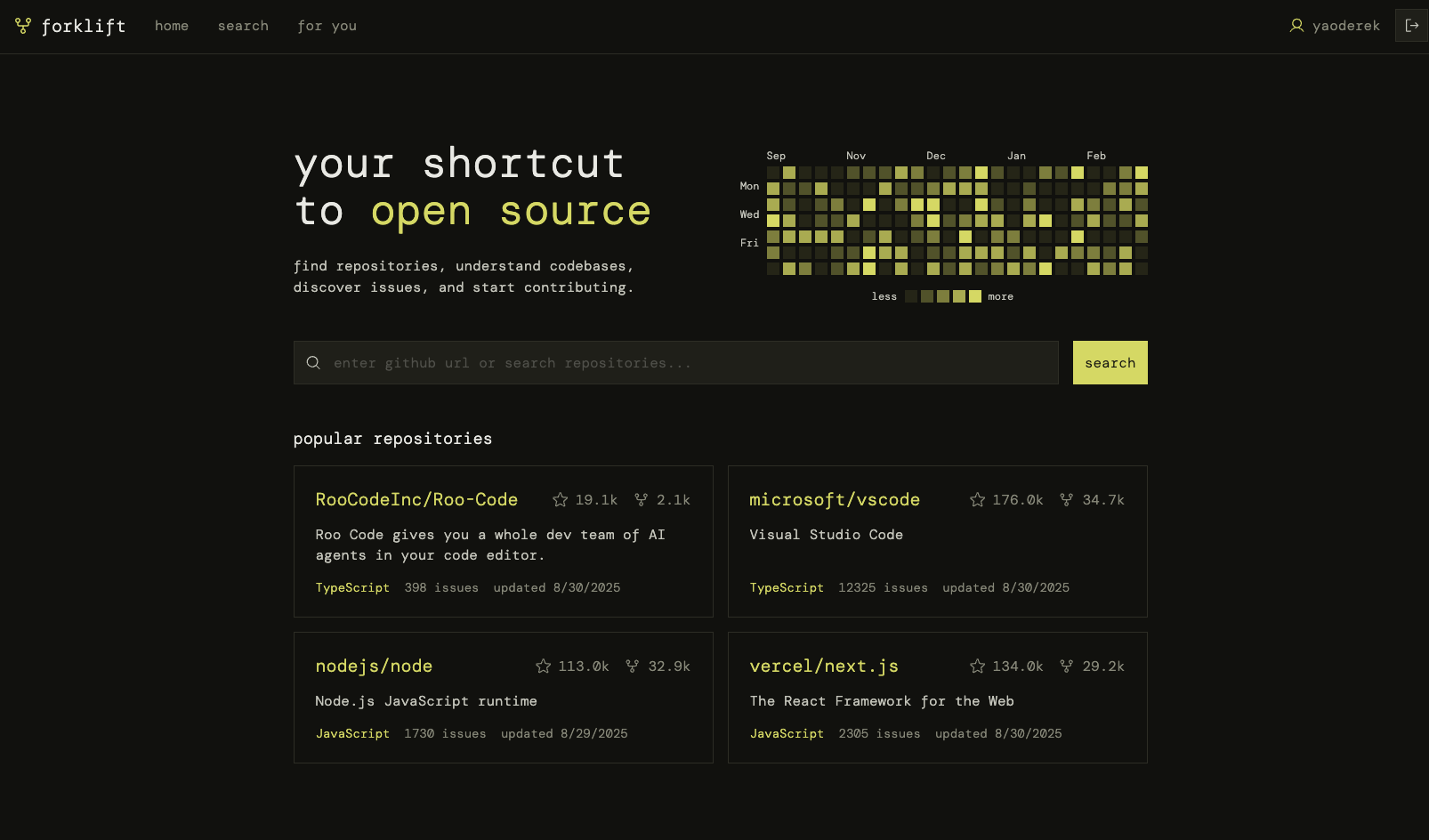
Landing page
-
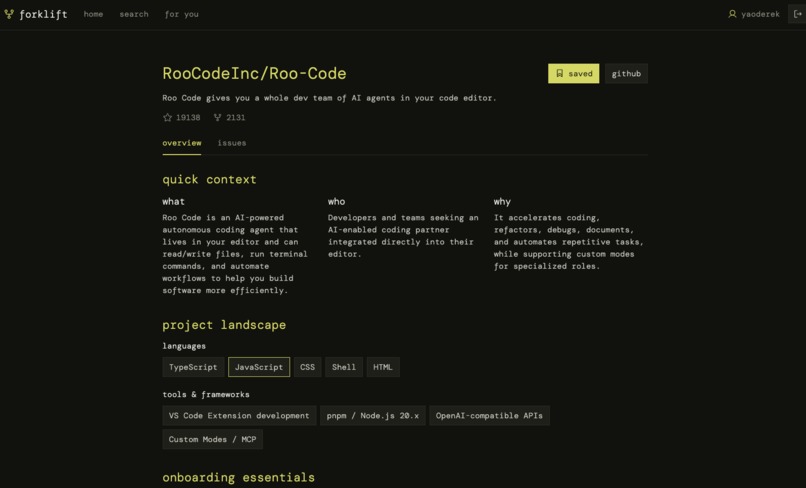
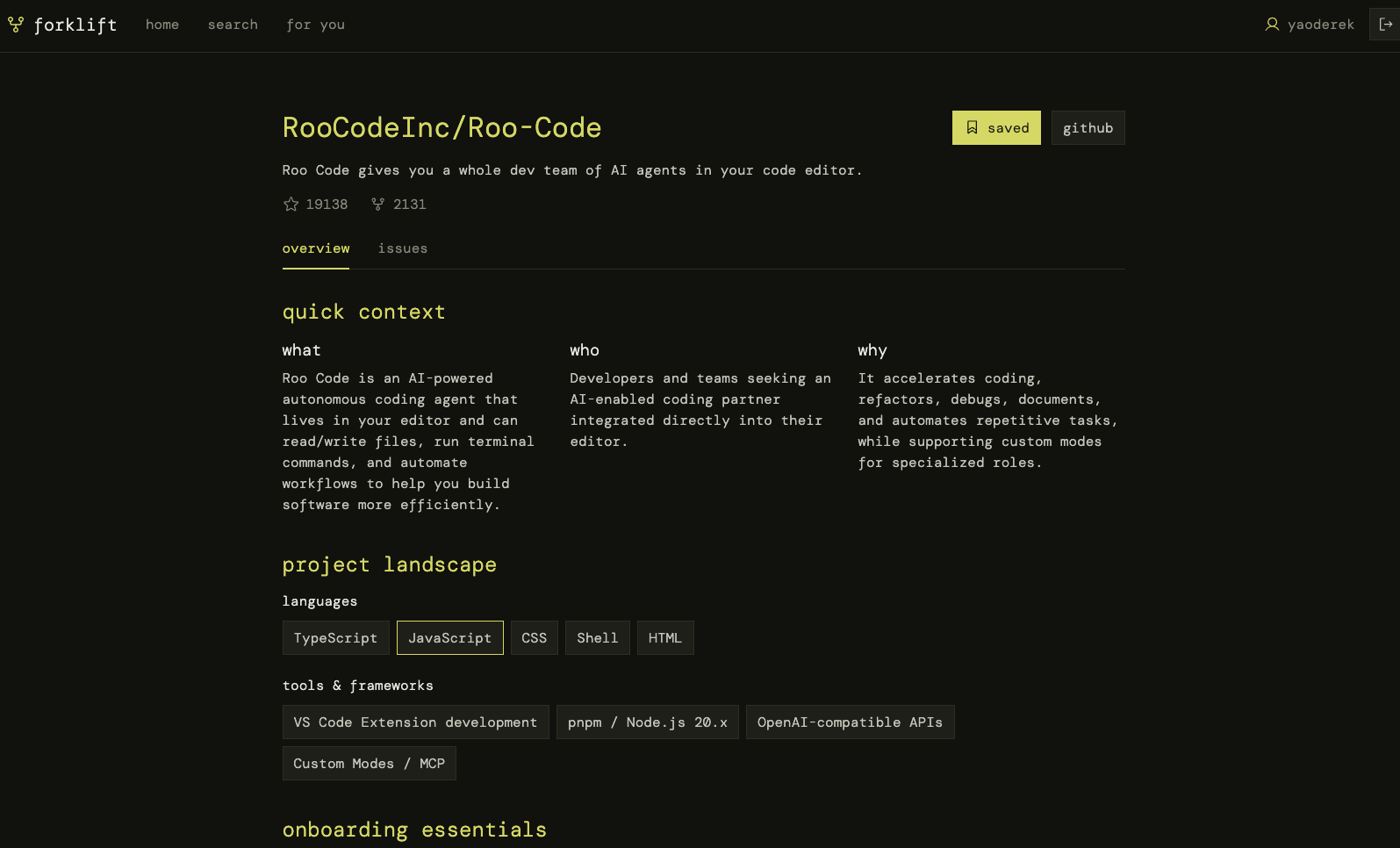
Overview page with AI-generated repo context and contribution pathway
-
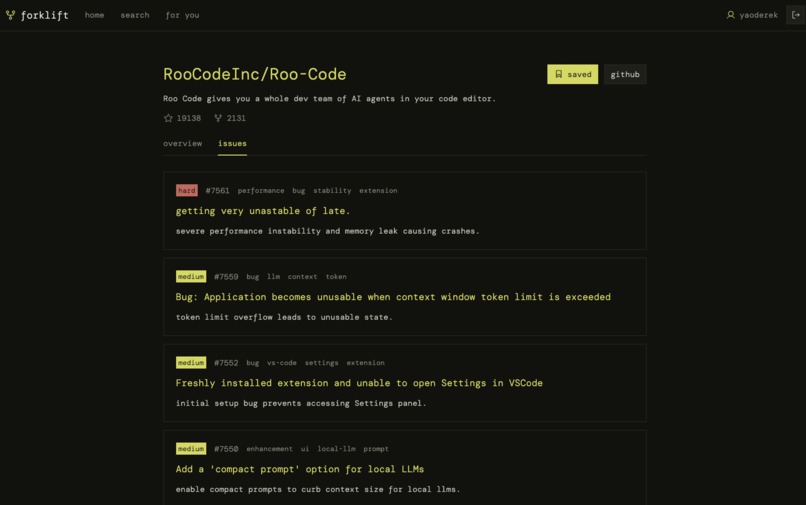
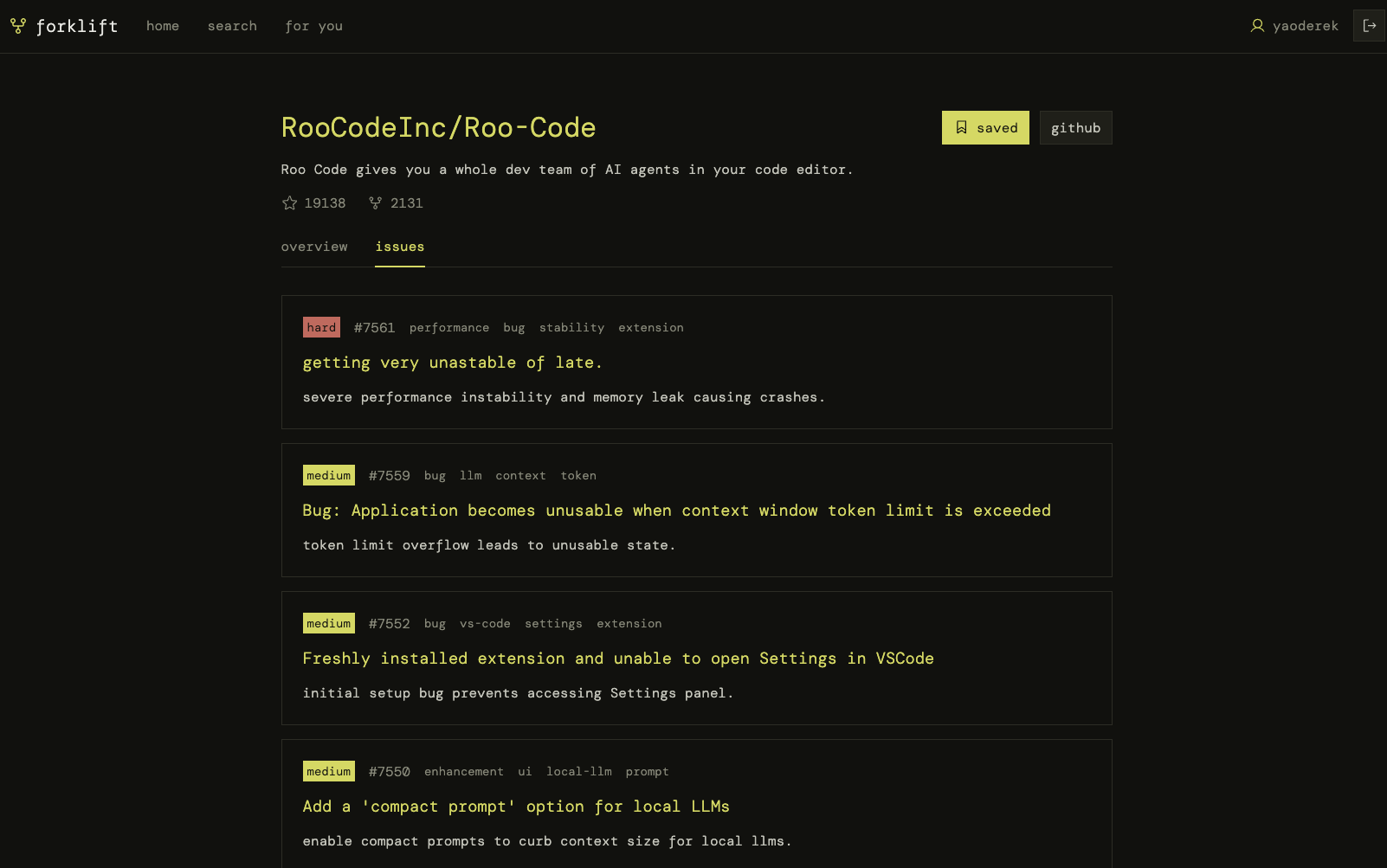
Issues page with AI-classified difficulty + summary
-
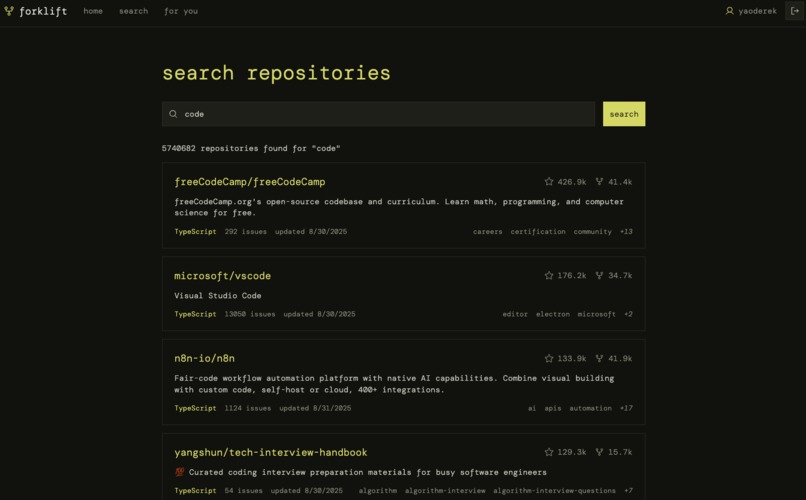
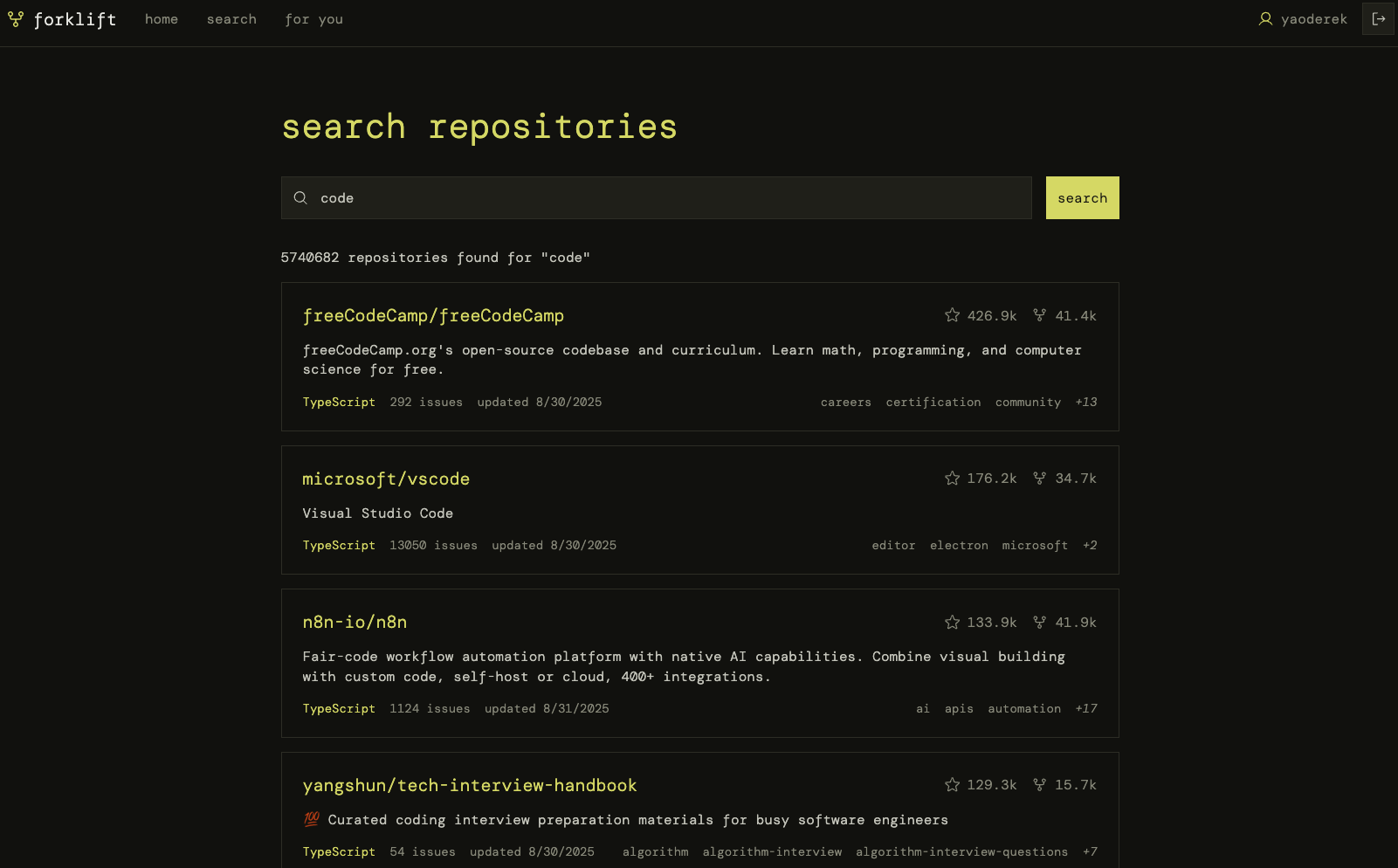
Explore page with relevant repos shown organized by stars
-
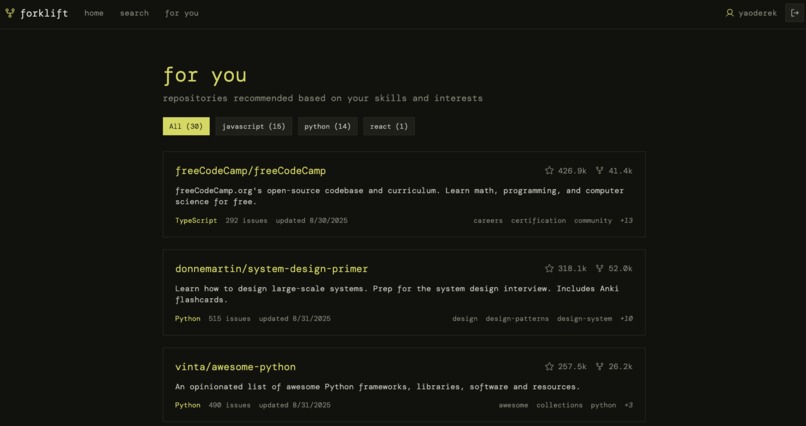
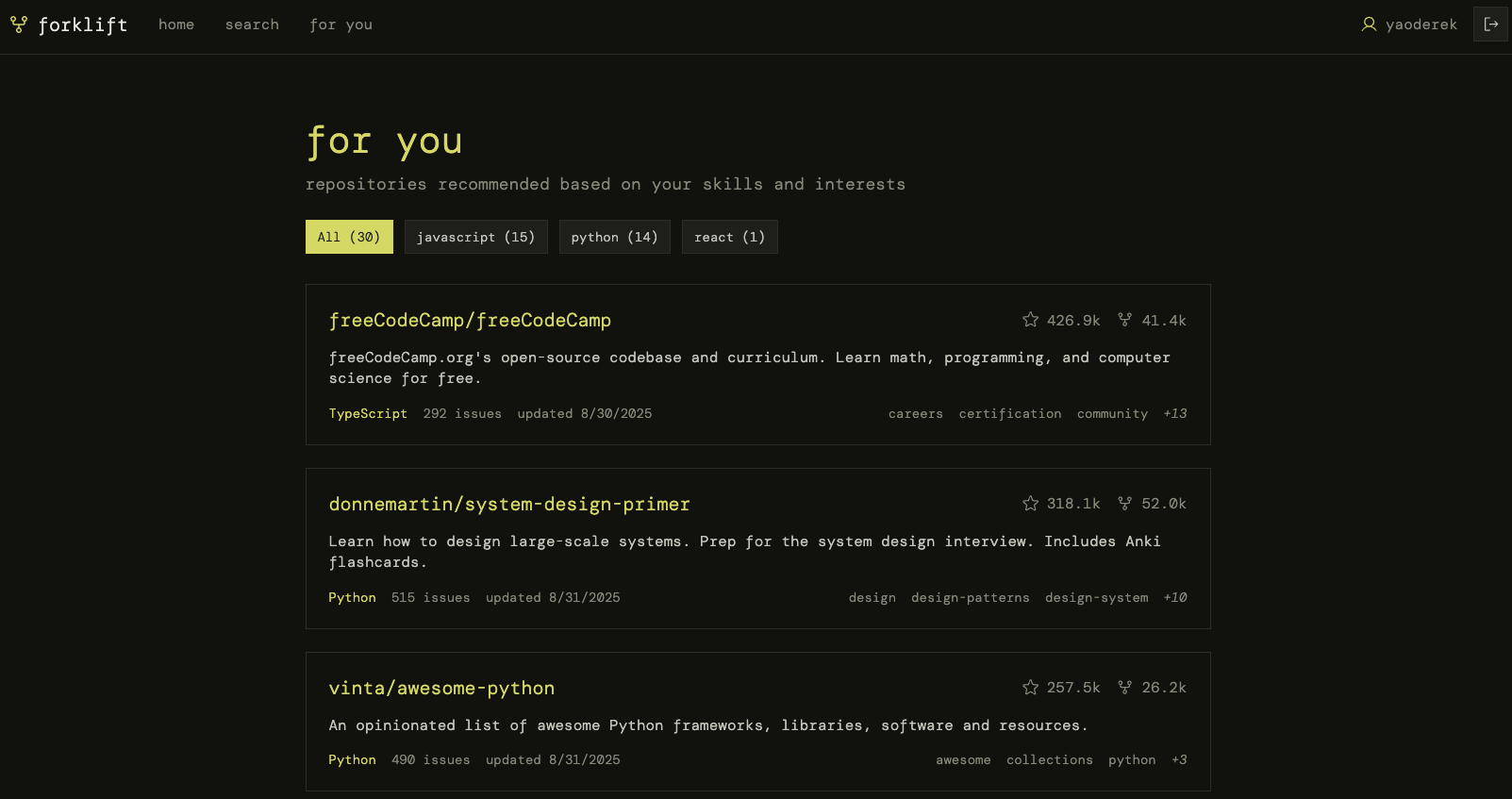
For You page with tailored repo recommendations based on your profile
-
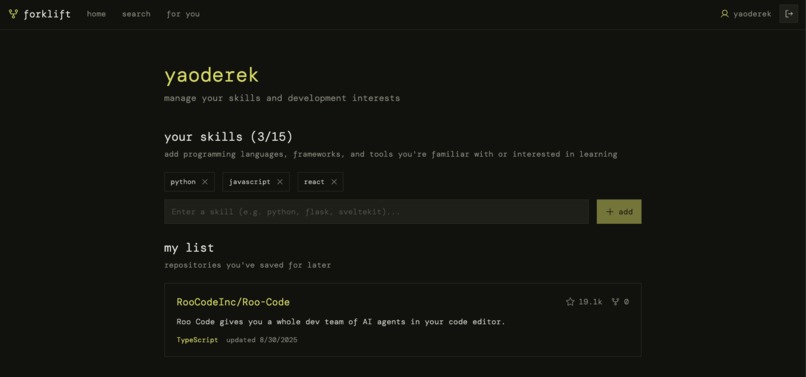
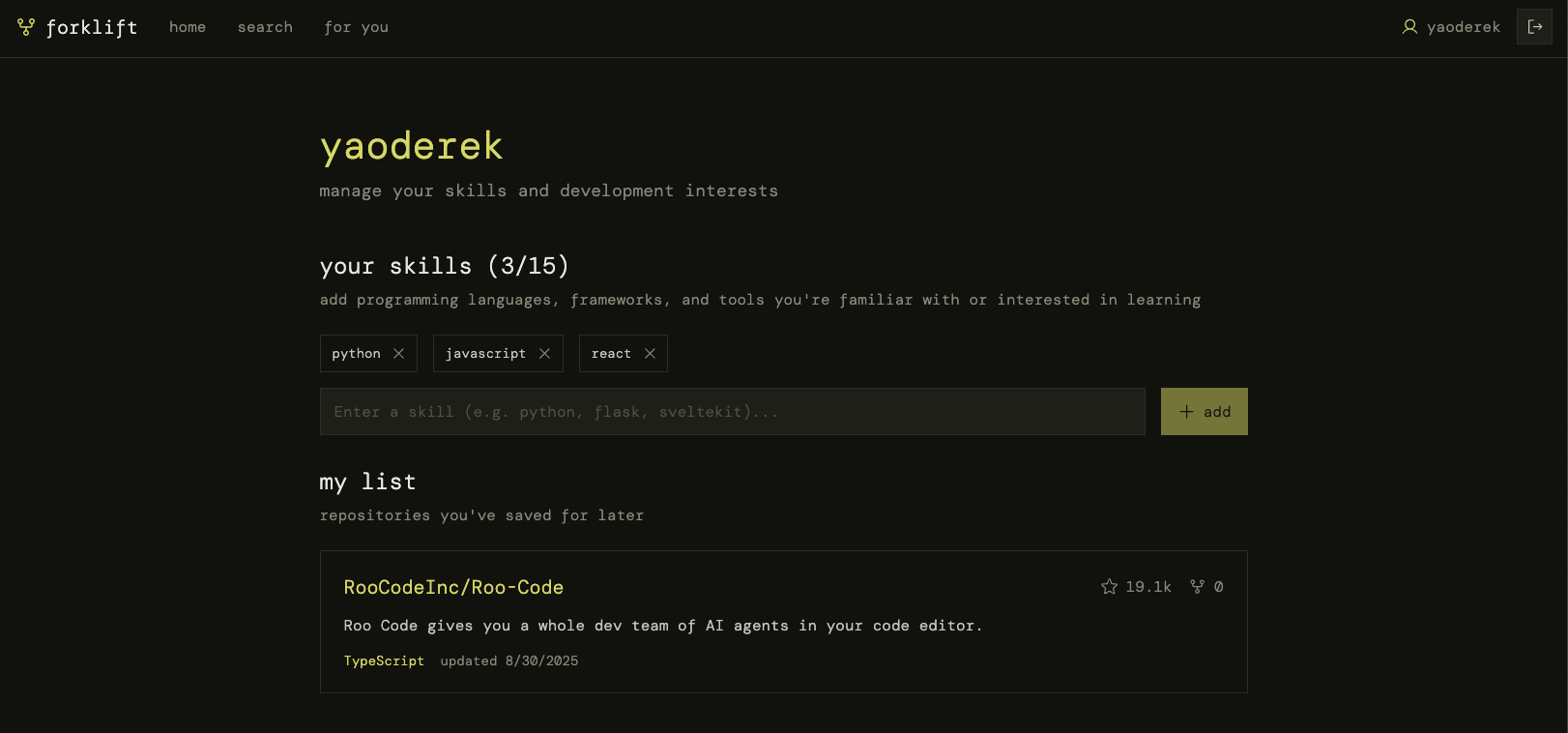
Profile page with saved repos and dynamic skill sheet
Inspiration
Contributing to open source projects can be an intimidating process, especially for beginners. Developers often spend hours trying to understand unfamiliar codebases, where complex file structures and sparse documentation make it difficult to identify good first issues or understand how to get started.
This initial friction can discourage potential contributors before they even write a single line of code. Our firsthand experience with this “cold start problem” in open source inspired us to build Forklift, an AI-powered dashboard to help developers submit their first PR with confidence.
What it does
Forklift streamlines the open source contribution process by providing AI-powered project summaries, beginner-friendly issue recommendations, and clear implementation guidance. By removing the friction from project onboarding, contributors can focus on writing code rather than hunting for context, helping open source projects grow their contributor community faster.
Core features
Skill-based matching → Get personalized repository recommendations based on the user's skills.
Instant repo analysis → Clear summaries of a project’s purpose, architecture, and tech stack.
Smart issue triage → Concise issue summaries with estimated difficulty labels (easy / medium / hard).
Personal bookmarking → Save issues to your profile to solve later.
How we built it
Forklift is a full-stack web application built with SvelteKit. We use the GitHub API to fetch repo and issue data, and use the OpenAI API to intelligently classify issues by difficulty, generate repo overviews, and write guides. We also use Supabase to handle user auth and save users' skills and bookmarked repos. The application is hosted on Vercel. We use Redis for caching to ensure better load times.
Challenges we ran into
Half of our team had never done a hackathon before, so building Forklift served as an excellent introduction to time-constrained development. Having powerful AI development tools like Roo Code's Gemini integration at hand definitely accelerated our workflow and boosted our productivity.
Despite this increased efficiency, we discovered that AI-powered development comes with unique challenges. We rapidly implemented features without considering overall system architecture, leading to chaotic development. The ease of adding functionality like user authentication and our explore feature meant we often deviated from our original scope, requiring constant refactoring and integration of disparate components. Although we consolidated these into a cohesive final product, this experience highlighted how AI tools, despite their power, don't eliminate the need for careful planning and foresight.
The biggest technical hurdles were integrating with external APIs (GitHub, OpenAI) that have strict rate limits. We needed extensive repository and issue data for accurate analysis, but frequent API calls would either exhaust our limits or create slow loading times. This forced us to implement smart caching mechanisms that store processed data locally, allowing us to deliver fast responses while minimizing redundant API requests.
Accomplishments that we're proud of
We're proud to have built a functional full-stack application that addresses a problem we've personally faced as developers. Open source is a great community, and if Forklift can help lower barriers for new contributors and strengthen that ecosystem, we'd consider this project a meaningful success.
What we learned
We found that breaking down tasks into smaller, focused prompts significantly improved both prompt adherence and code quality. Another effective strategy was making full use of the models’ context window by including documentation or example API responses, which resulted in more accurate, bug-free code.
One thing that we learned in hindsight is that we should plan our features out beforehand, since that makes implementation much easier.
What's next for Forklift
Going forward, we plan on adding more interactivity to the site through an on-demand chatbot that helps users navigate their first PR one-on-one. We’re also planning on adding improved collaboration tools, such as built-in guides for submitting PRs or integrations with community chat platforms. Finally, we will strengthen caching and add lightweight backend support to make the app more scalable.
Built With
- css3
- github
- html5
- javascript
- openai
- redis
- supabase
- svelte
- sveltekit
- vercel
- vite


Log in or sign up for Devpost to join the conversation.