-
-
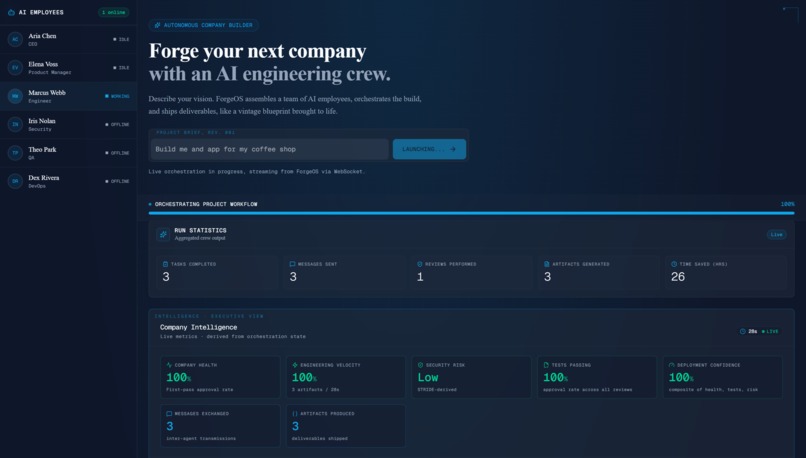
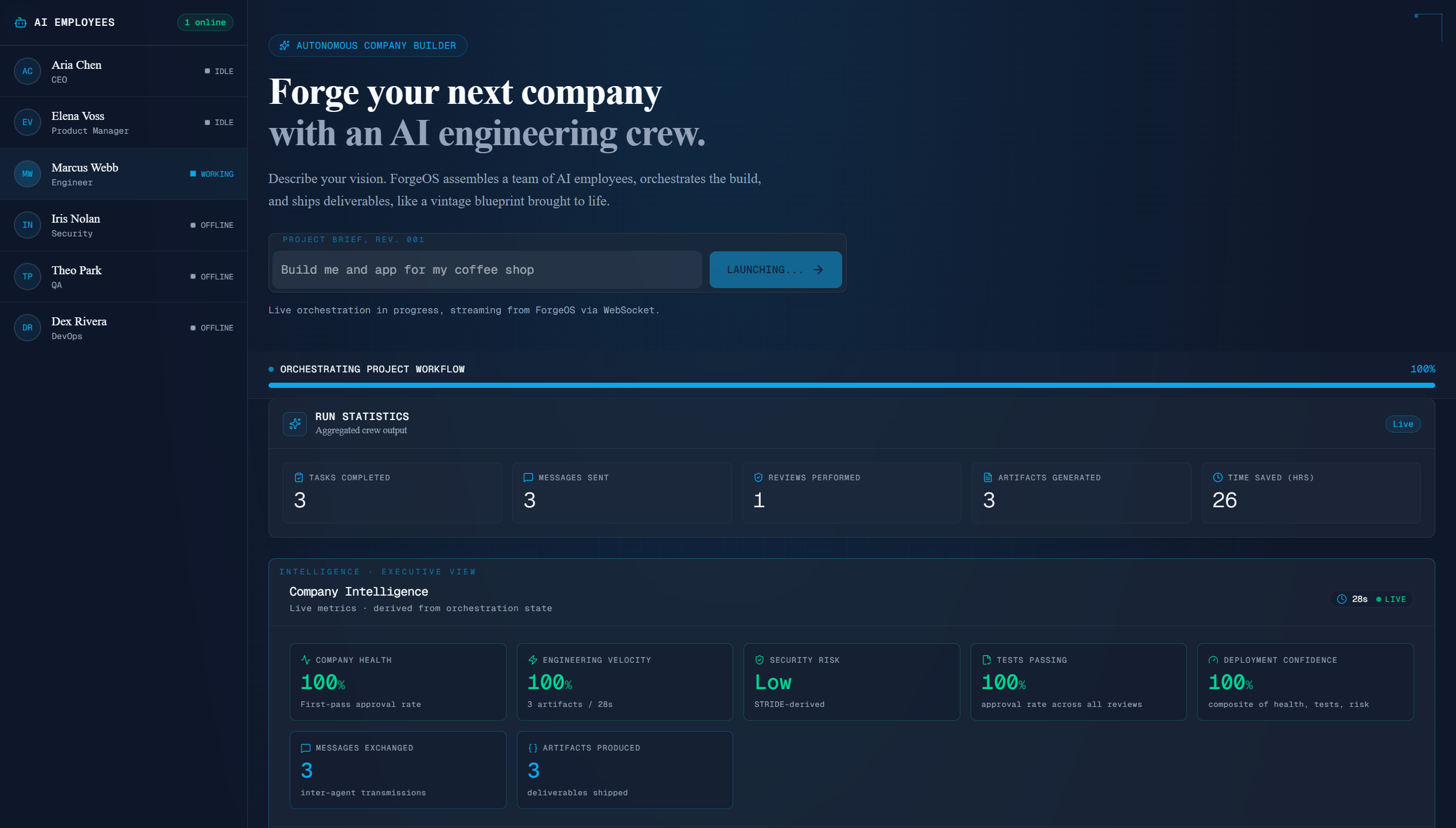
ForgeOS transforms a single prompt into a structured software workspace with AI-generated planning and project organization.
-
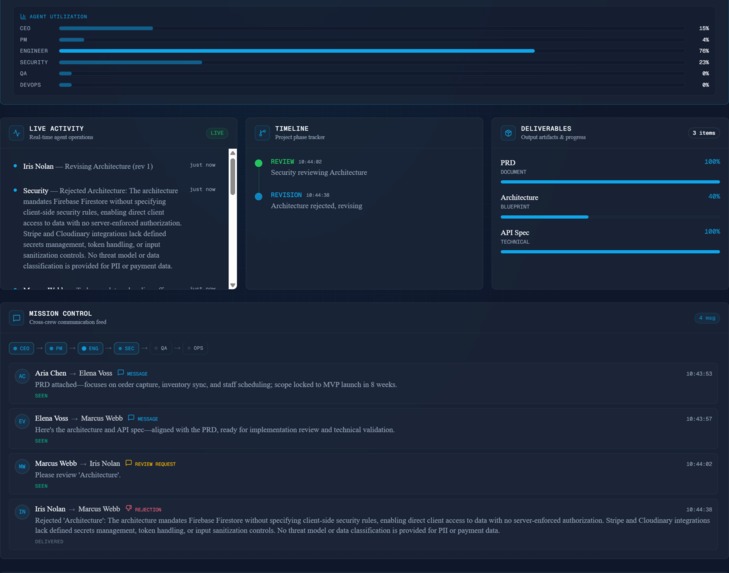
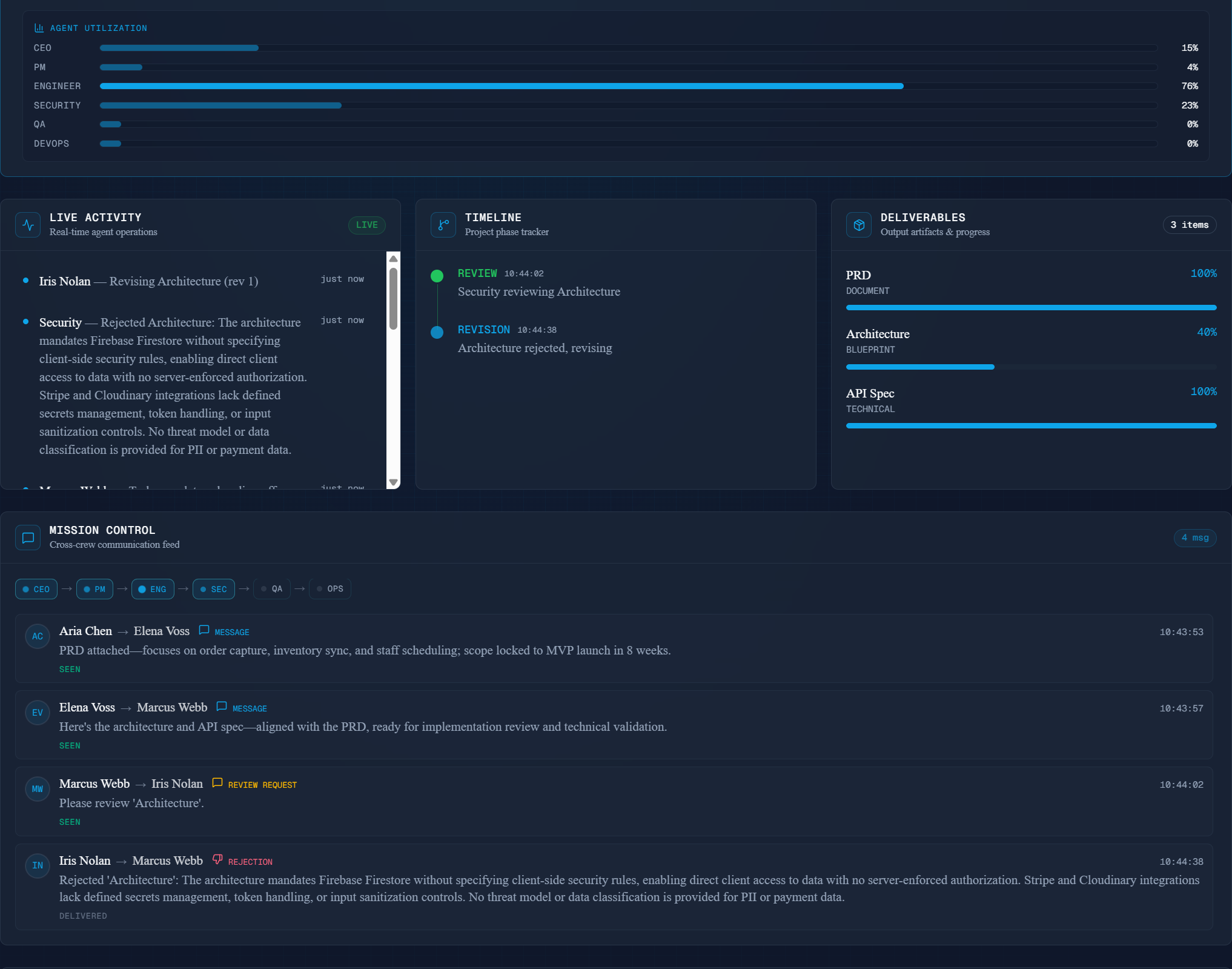
Specialized AI agents collaborate to plan, communicate, organize tasks, and coordinate every stage of development.
-
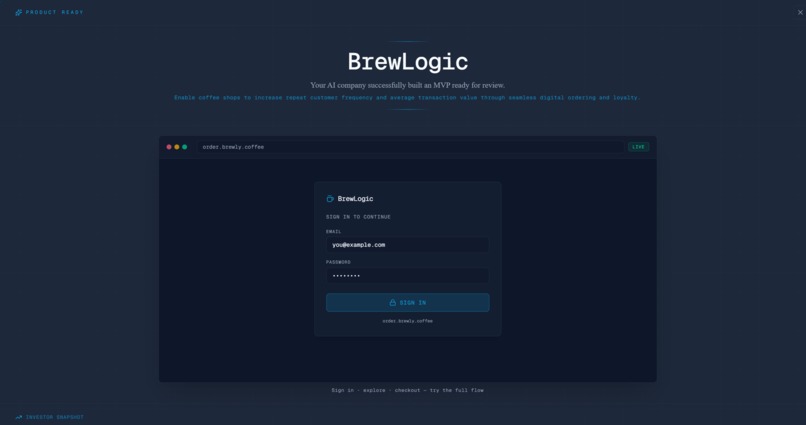
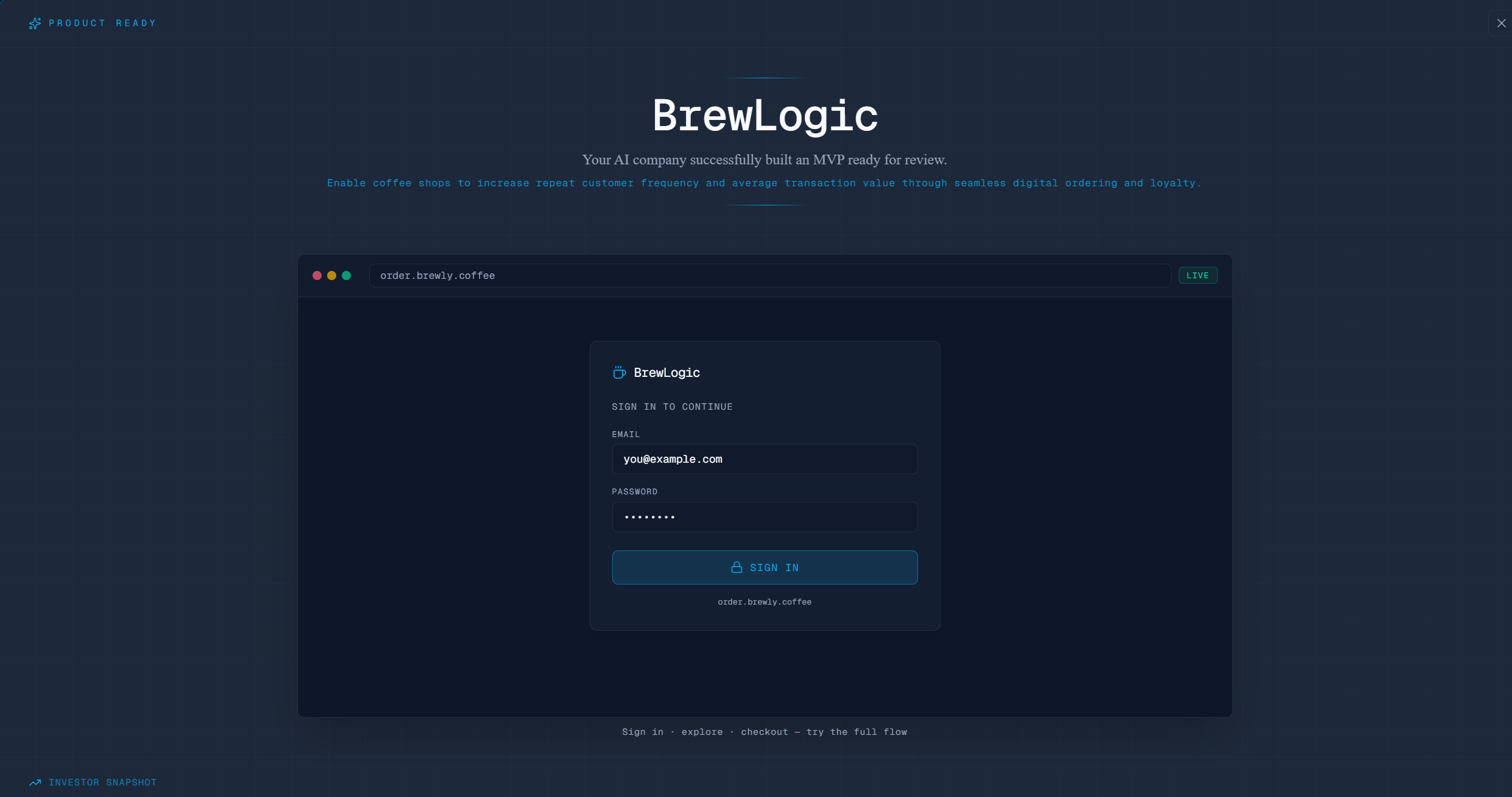
ForgeOS generates a functional application from a single prompt, complete with planning, structure, and implementation guidance.
-
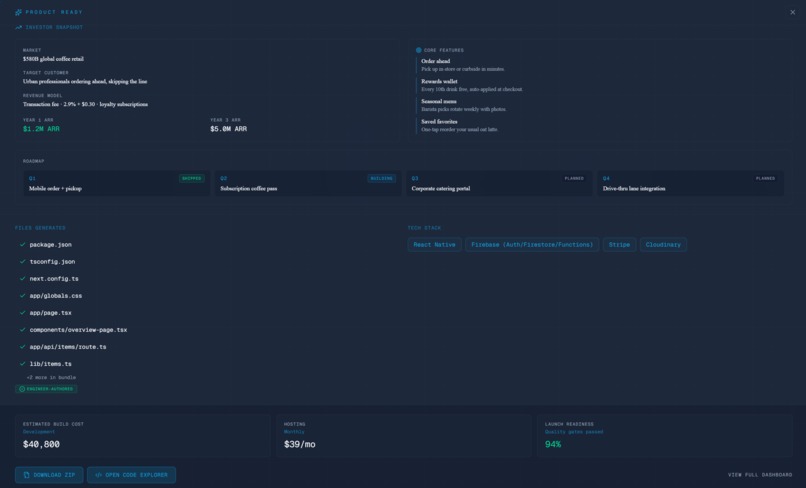
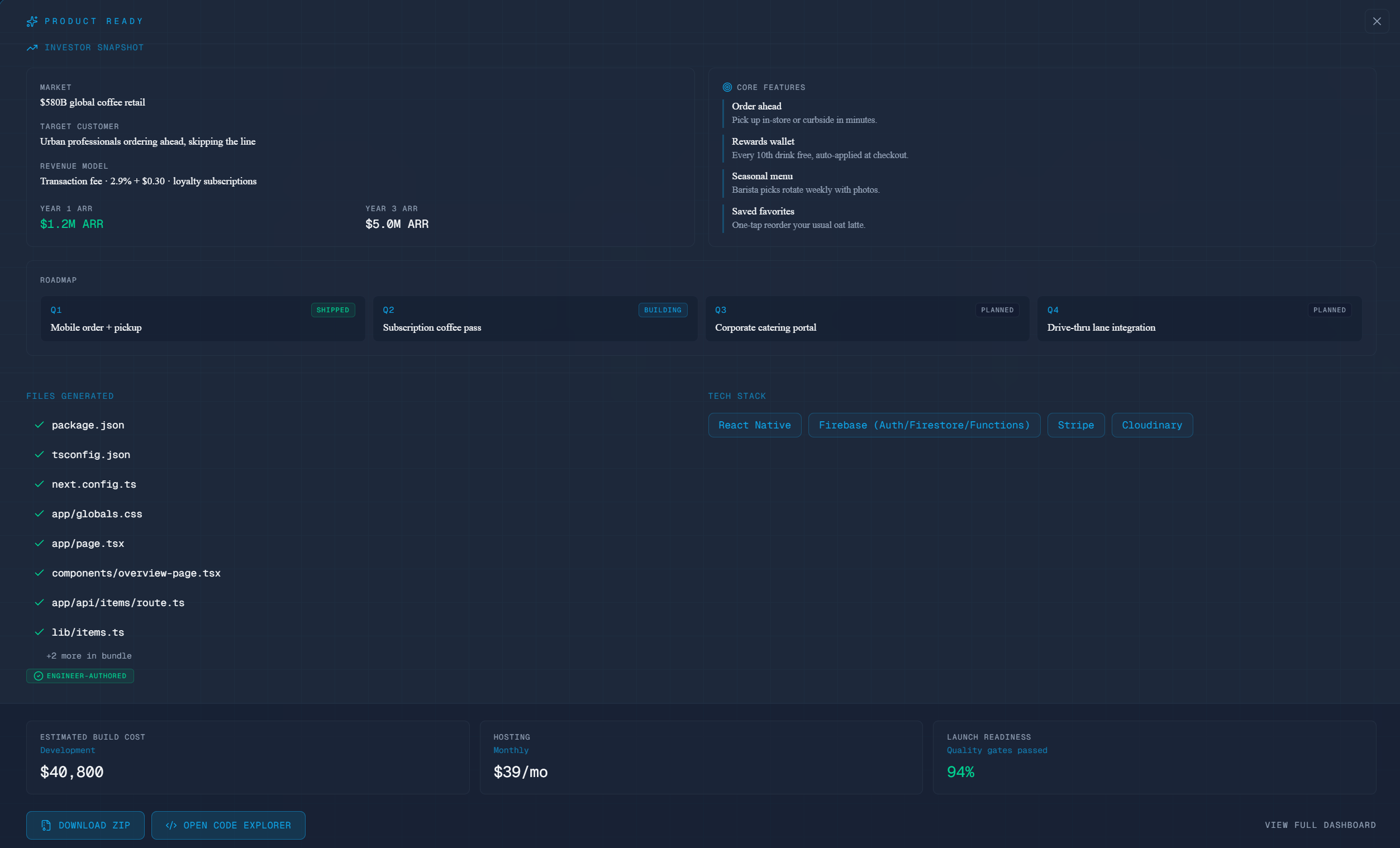
An investor-ready overview highlighting project vision, value proposition, key metrics, and future growth opportunities.
-
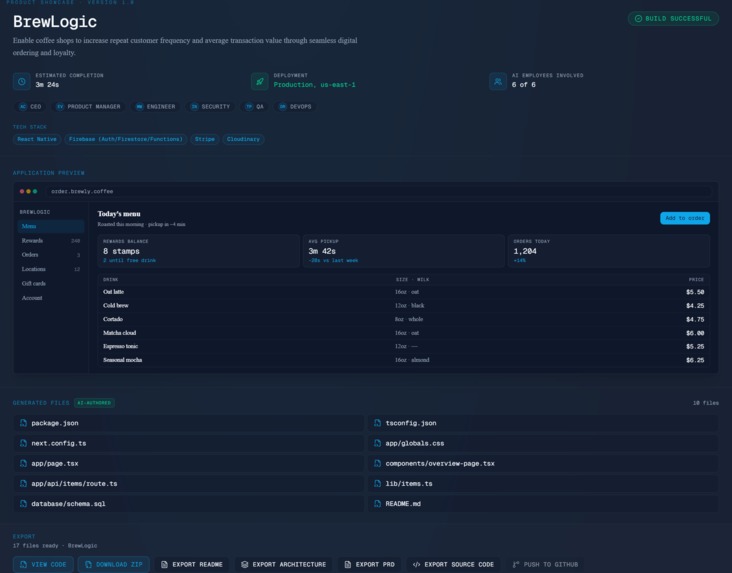
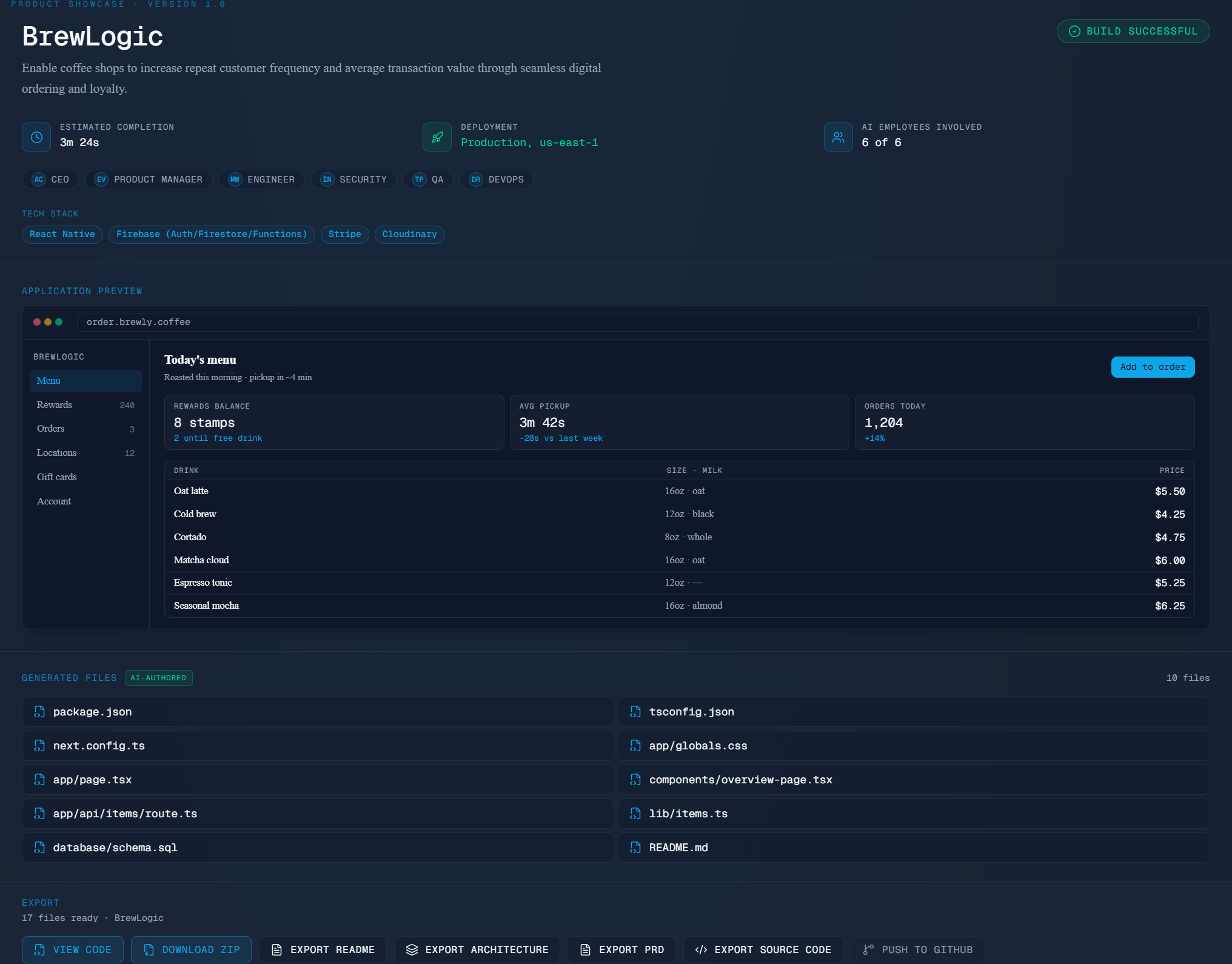
Review the AI-generated application, including features, structure, and implementation details before exporting.
-
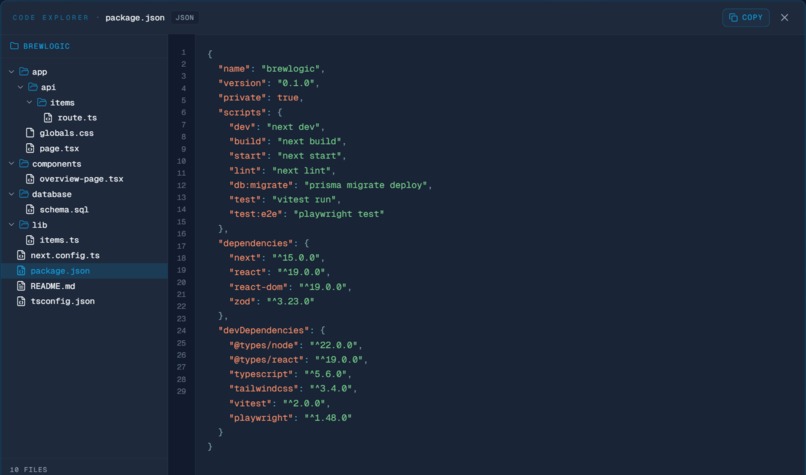
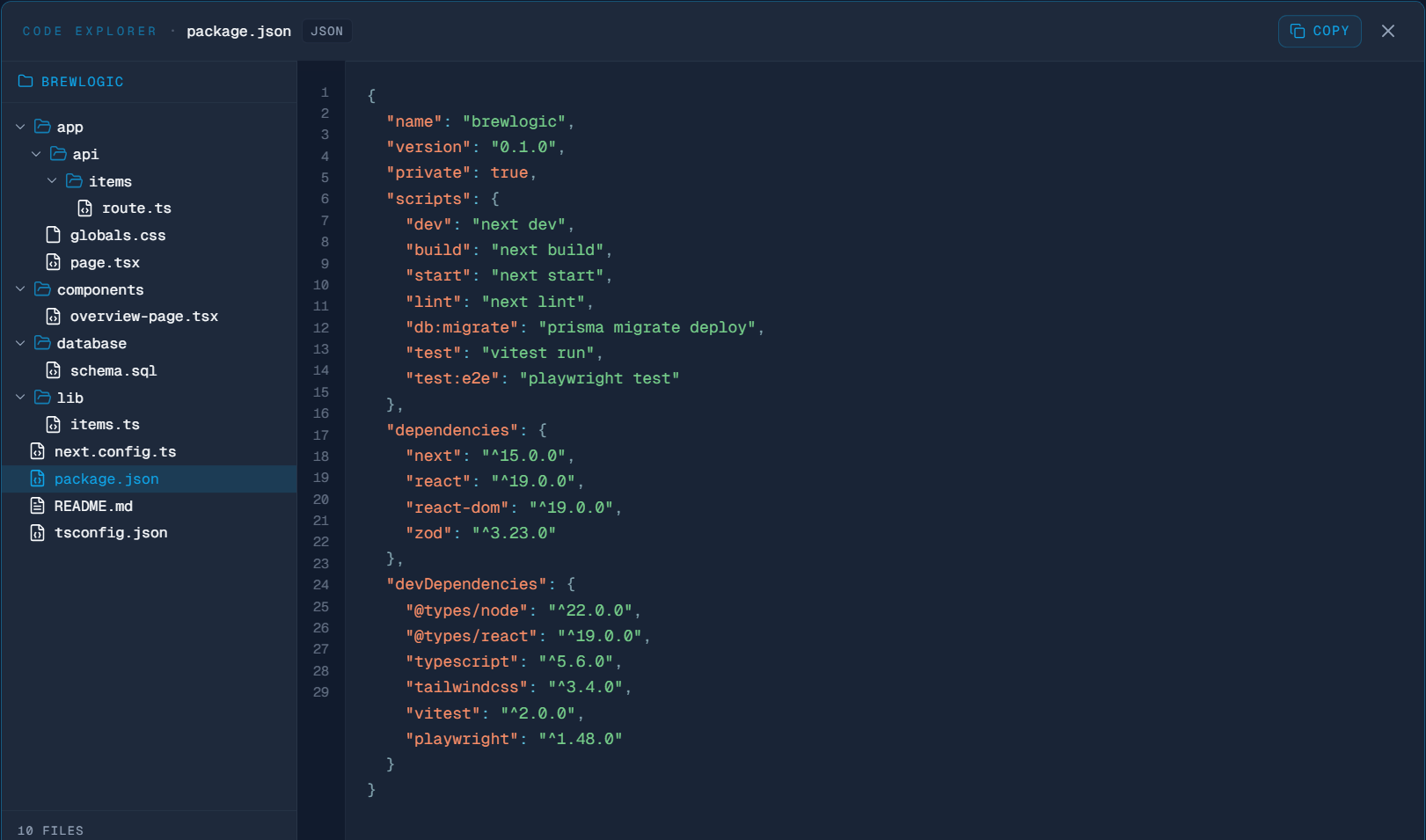
Browse AI-generated code, then copy it or download the complete project as a ZIP for continued development.
-
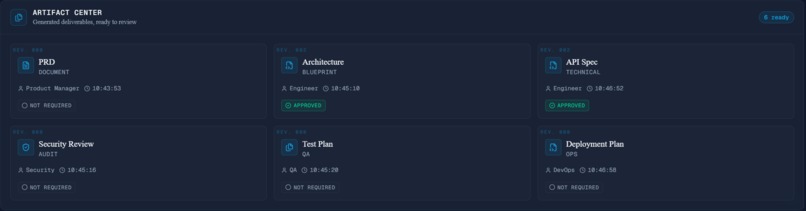
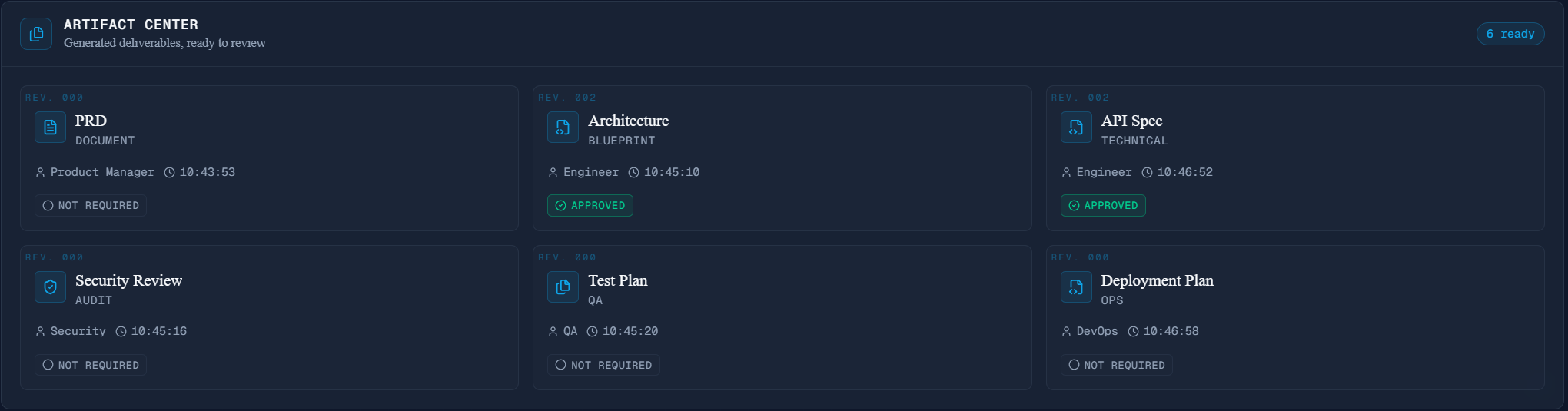
View AI-generated project artifacts, documentation, and assets in one organized workspace for quick access and export.
Inspiration
AI has made software development faster than ever, but the workflow still feels scattered. I found myself constantly switching between AI chatbots, planning documents, code editors, and project management tools. It was easy to lose context and break my flow.
I built ForgeOS to explore a different idea: what if AI wasn't just another tool you talk to, but an entire team that works for you? My goal was a single workspace where you describe an idea and watch an AI company take it from concept to shipped prototype.
What it does
ForgeOS is an AI-powered product planning and prototyping agent. You describe your vision in one sentence, and ForgeOS assembles a team of seven AI employees, a CEO, Product Manager, Engineer, QA, Security, Reviewer, and DevOps, who plan the product, design the architecture, generate starter code, review each other's work, and ship deliverables, all streaming live to a blueprint-styled dashboard.
Every run produces a real project plan, a task timeline, agent-to-agent conversations, and a generated code bundle you can preview. If the AI provider is ever unavailable, ForgeOS doesn't break: it completes the run with built-in deterministic templates and honestly labels the result with a "Demo mode" badge.
How I built it
The frontend is Next.js 15, React, TypeScript, Tailwind CSS, and shadcn/ui, built around a vintage-blueprint design system. The backend is FastAPI (Python) running a multi-agent orchestrator that streams every event over WebSockets, with an automatic REST fallback when a socket can't connect.
AI generation runs on Qwen (qwen-plus) via Qwen Cloud. The frontend is deployed on Vercel, the backend on Render, and UptimeRobot keeps the backend awake to reduce cold-start delays.
Because the demo is public, I hardened it for the real world: per-IP and global rate limiting to protect API credits, server-side input validation, secrets isolated in environment variables, graceful error handling, and a privacy policy and terms of service appropriate for an AI application.
Challenges I ran into
Making seven agents feel like a company instead of a chatbot took several design iterations, the event stream, timeline, and agent conversations all had to tell one coherent story.
Deploying across two cloud platforms surfaced problems local development never shows: CORS origin mismatches between ports, a Python version difference that broke the cloud build until I pinned the runtime, and backend cold starts on free-tier hosting, which I reduced by splitting the deployment and pinging the backend with UptimeRobot.
The hardest design decision was failure handling. Instead of showing a broken page when the AI provider is down, I built a deterministic fallback so every run completes, never pretending to be live AI.
Accomplishments that I'm proud of
- Built a complete multi-agent AI orchestration system from the ground up.
- Designed a live-streaming blueprint dashboard that feels like watching a real team work.
- Shipped a production-hardened public demo: rate limiting, input validation, secret management, and honest fallback modes.
- Deployed a full-stack application across Vercel and Render with WebSocket streaming.
- Wrote real legal pages and security documentation, not just code.
What I learned
Building AI applications is about much more than connecting to a language model. The unglamorous parts, rate limits, fallbacks, error copy, deployment configuration, are what separate a demo that survives judging from one that breaks on the first click.
I also learned that honest failure handling is a feature: a clearly labeled fallback mode earns more trust than a broken page or a fake success.
What's next for ForgeOS
GitHub integration, persistent project storage, collaborative workspaces, customizable agent workflows, and letting users define their own AI employees with different specialties.
The long-term vision is a complete AI development workspace where you can plan, build, iterate, and deploy without switching between disconnected tools.
Built With
- css
- fastapi
- framer
- html
- next.js
- python
- react
- render
- tailwind
- typescript
- uptime-robot
- vercel


Log in or sign up for Devpost to join the conversation.