
About ForgeFlow
The Problem
When people face a problem, the hardest part is often not identifying it — it's knowing what to do next. Advice can be scattered, generic, or difficult to turn into concrete action.
I wanted to build something that could take a problem stated in plain language and turn it into a practical path forward.
The Idea
ForgeFlow is an AI-powered action-planning tool built around a simple idea:
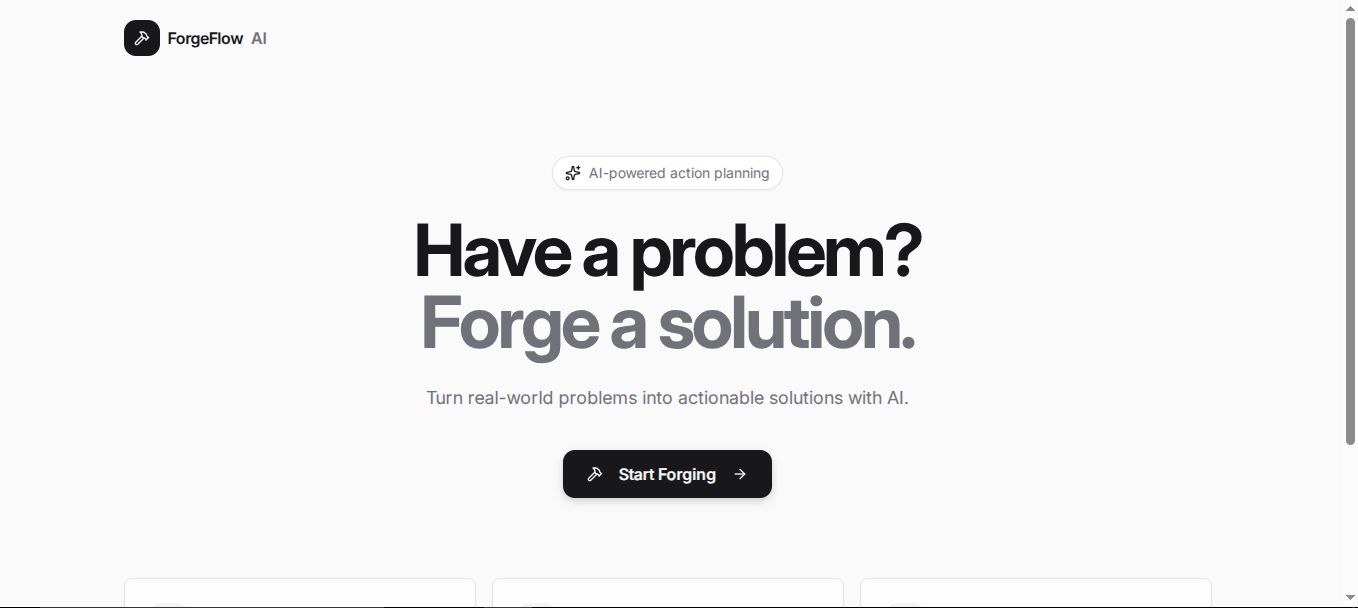
Have a problem? Forge a solution.
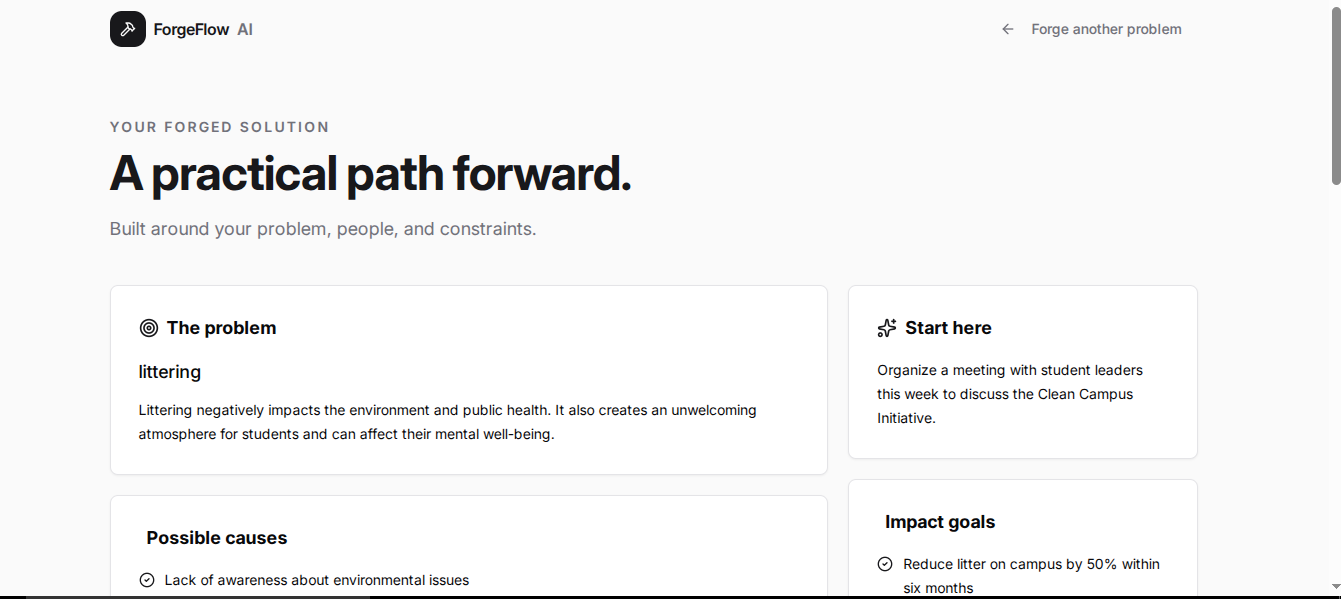
A user describes a real-world problem, and ForgeFlow transforms it into a structured plan designed to move from problem → analysis → action → result.
The generated result focuses on three key outputs:
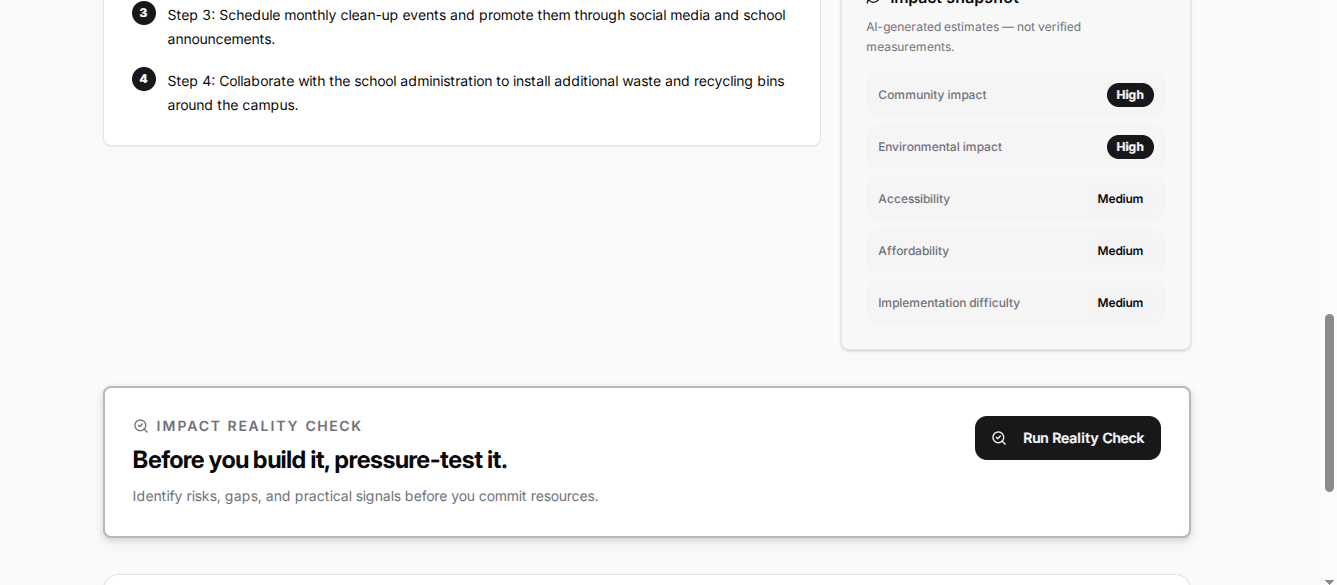
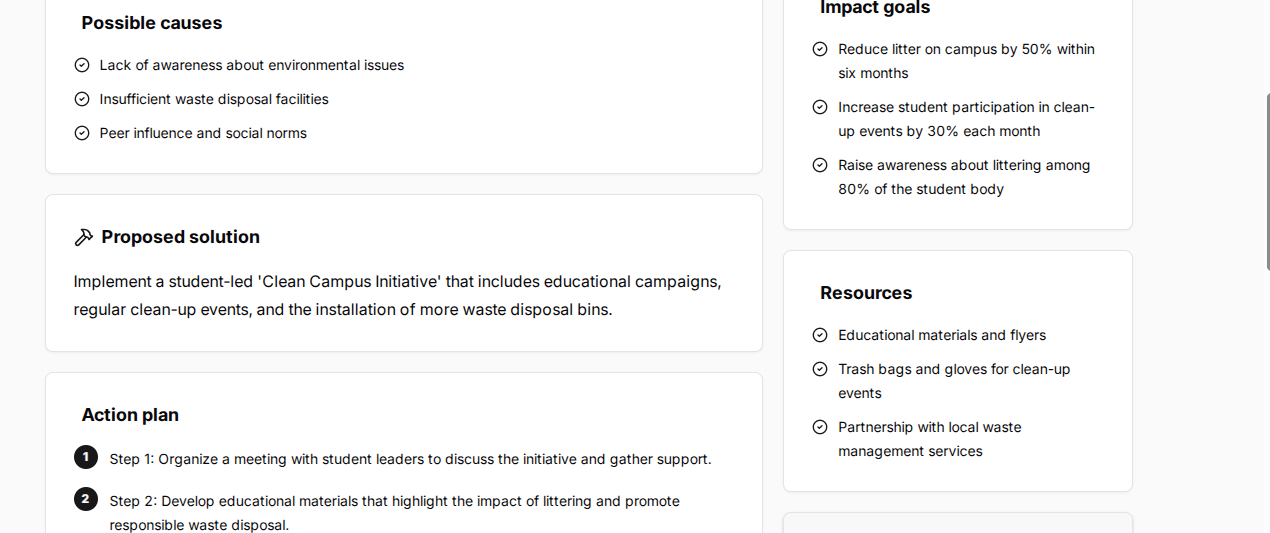
- Actionable steps — what to actually do next
- Impact goals — what meaningful progress should look like
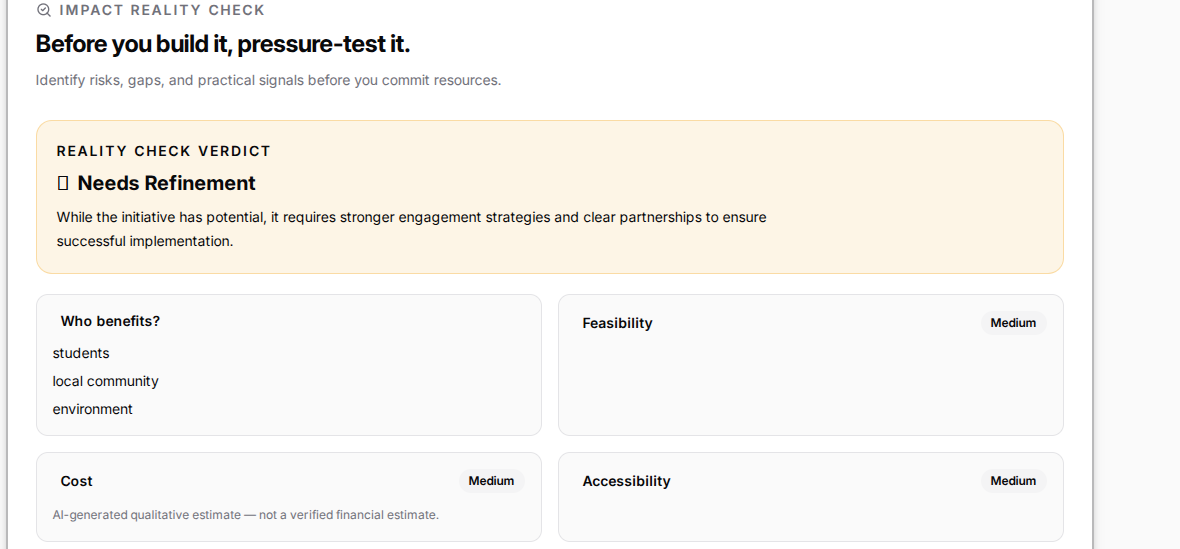
- Reality check — practical considerations and limitations to keep in mind
How I Built It
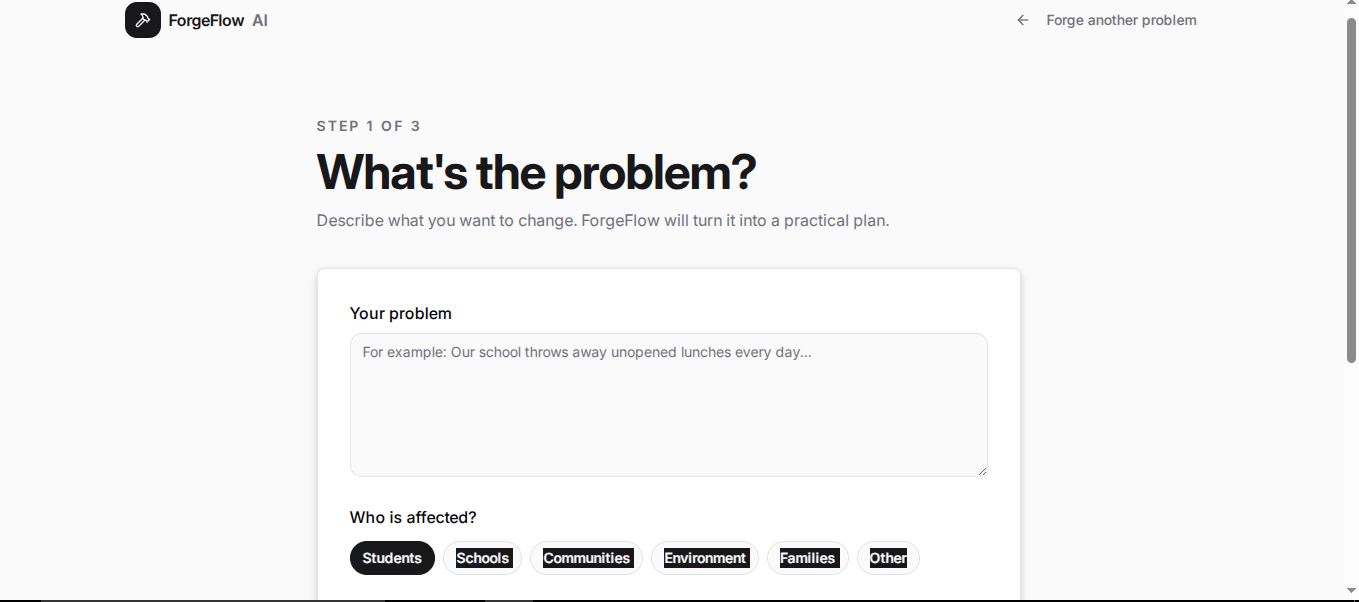
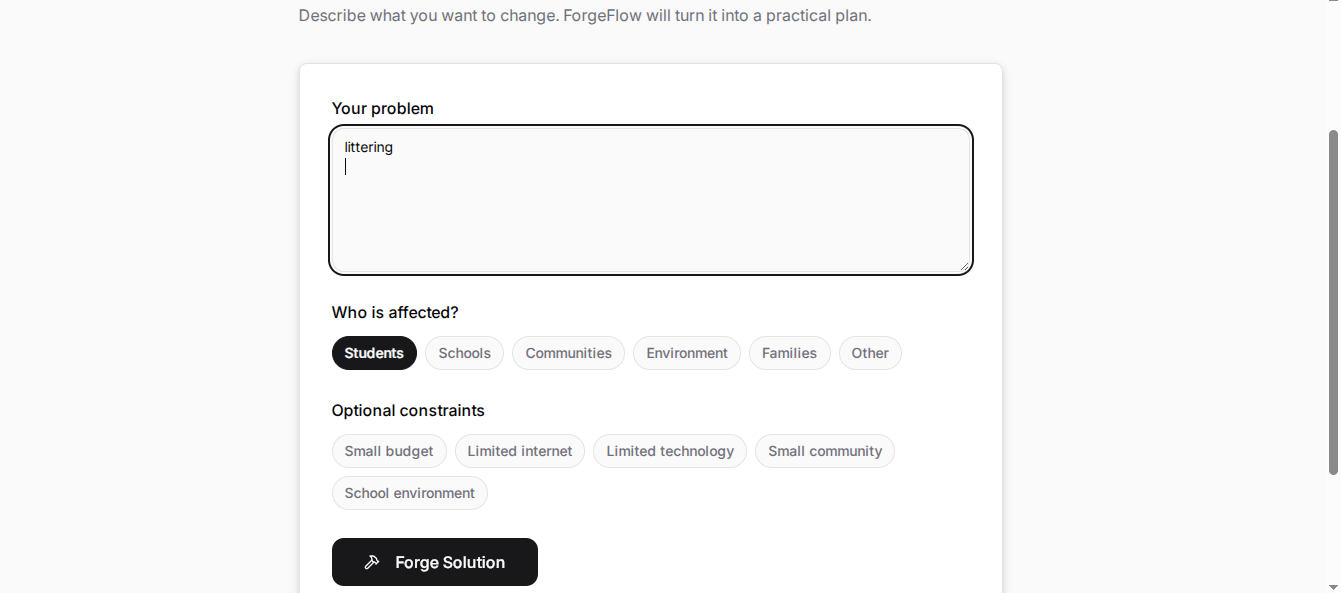
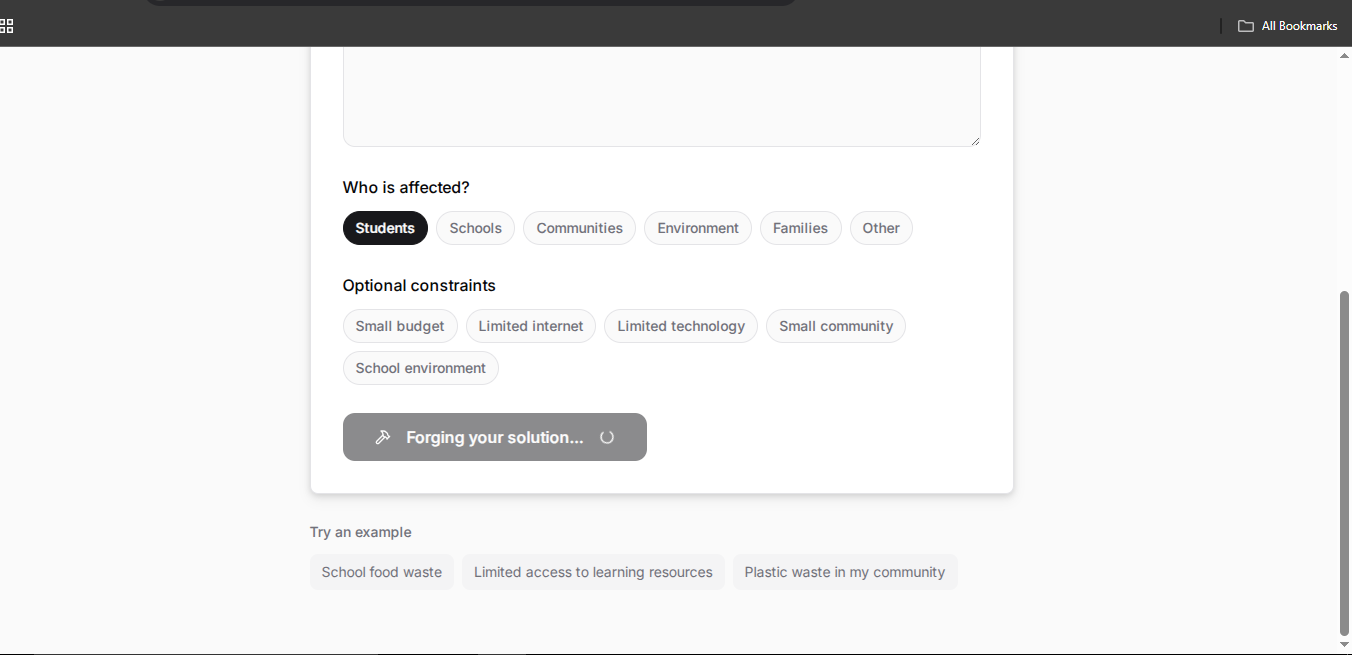
I built ForgeFlow using Retool and AI-powered workflows. The interface collects the user's problem, sends it through the planning workflow, and presents the generated result in a clear, structured format.
The project focuses on keeping the interaction simple: the user provides the problem, ForgeFlow processes it, and the result is organized into actionable steps, impact goals, and a reality check.
What I Learned
Building ForgeFlow taught me how much goes into turning an idea into a usable AI application. I learned about designing an interface around a specific user workflow, connecting AI functionality to an application, structuring generated output, and thinking about how users actually interact with an AI tool.
I also learned that building a project for a hackathon is not only about making the technology work — it is about communicating the idea clearly and creating something people can understand and use.
Challenges
One of the biggest challenges was turning a broad concept — "AI that helps solve problems" — into a focused workflow. I had to think about what information the user should provide, what the AI should produce, and how the result should be presented.
Another challenge was making the project accessible for demonstration within the limitations of the tools and plan I was using. Because of those limitations, the project page includes screenshots showing the complete ForgeFlow workflow.
Demo
The original ForgeFlow AI implementation was built with Retool and OpenAI.
A lightweight public demo is also available through GitHub Pages so judges can explore the core ForgeFlow experience without requiring a Retool login. The public demo preserves the same core concept and workflow: problem → analysis → action plan → impact goals → reality check.
What's Next
ForgeFlow could be expanded with more specialized planning modes, improved personalization, progress tracking, and ways for users to turn generated plans into actual tasks.
The larger vision is to make ForgeFlow a practical bridge between having a problem and knowing what to do next.
ForgeFlow — Have a problem? Forge a solution.
Built With
- retool/openai

