Inspiration
Most budgeting apps stop at tracking — they tell you what you spent, not what to do about it. As students, the harder questions are the ones that actually keep us up at night: Can I afford this? Am I saving enough? Should I pay off debt or start investing? We wanted to build something that answers those questions directly, the way a financially savvy friend would, instead of just handing us another spreadsheet.
What it does
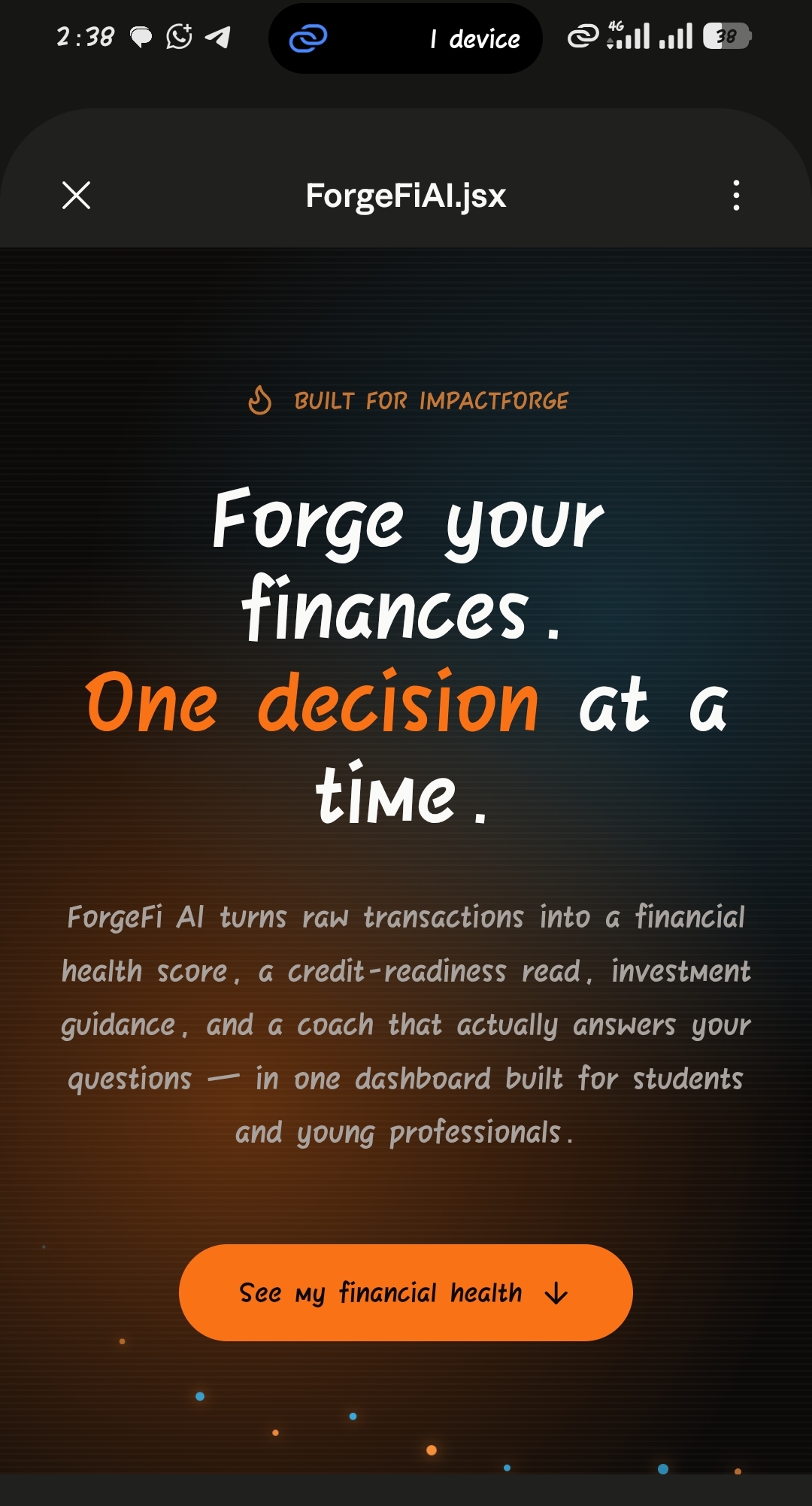
ForgeFi AI is a personal finance coach that turns raw transactions into action:
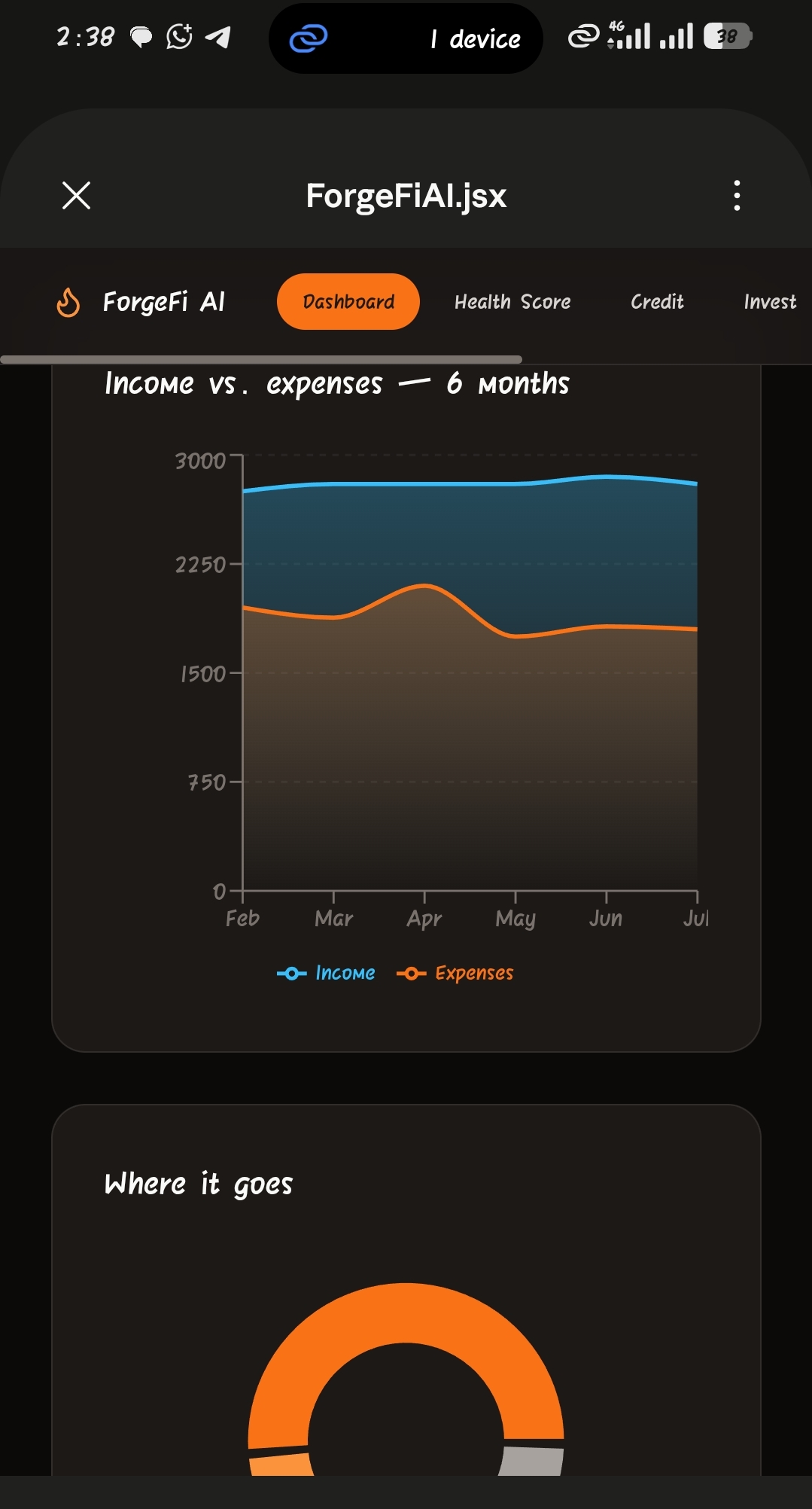
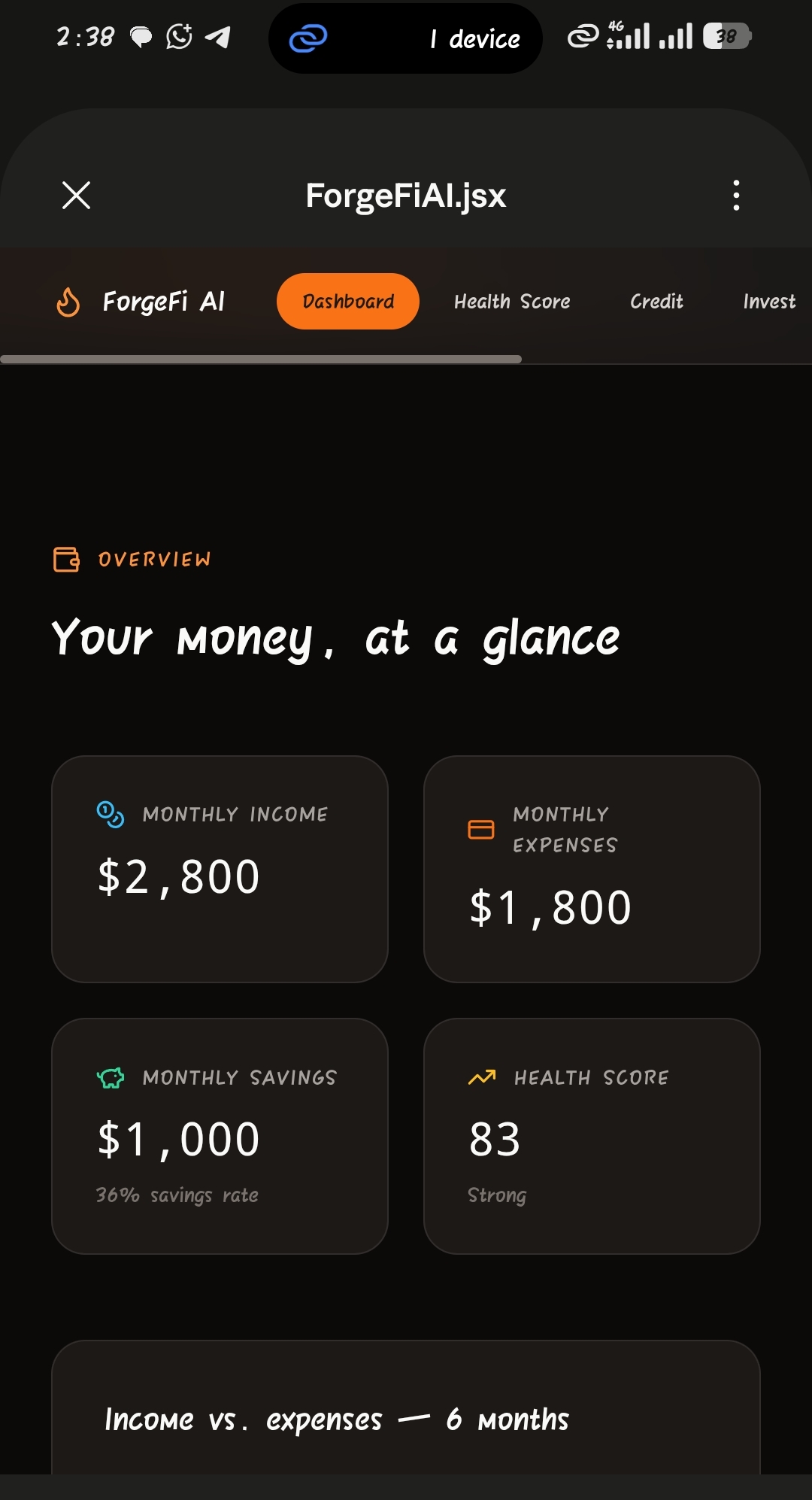
- Dashboard — income vs. expenses trends and a spending breakdown by category
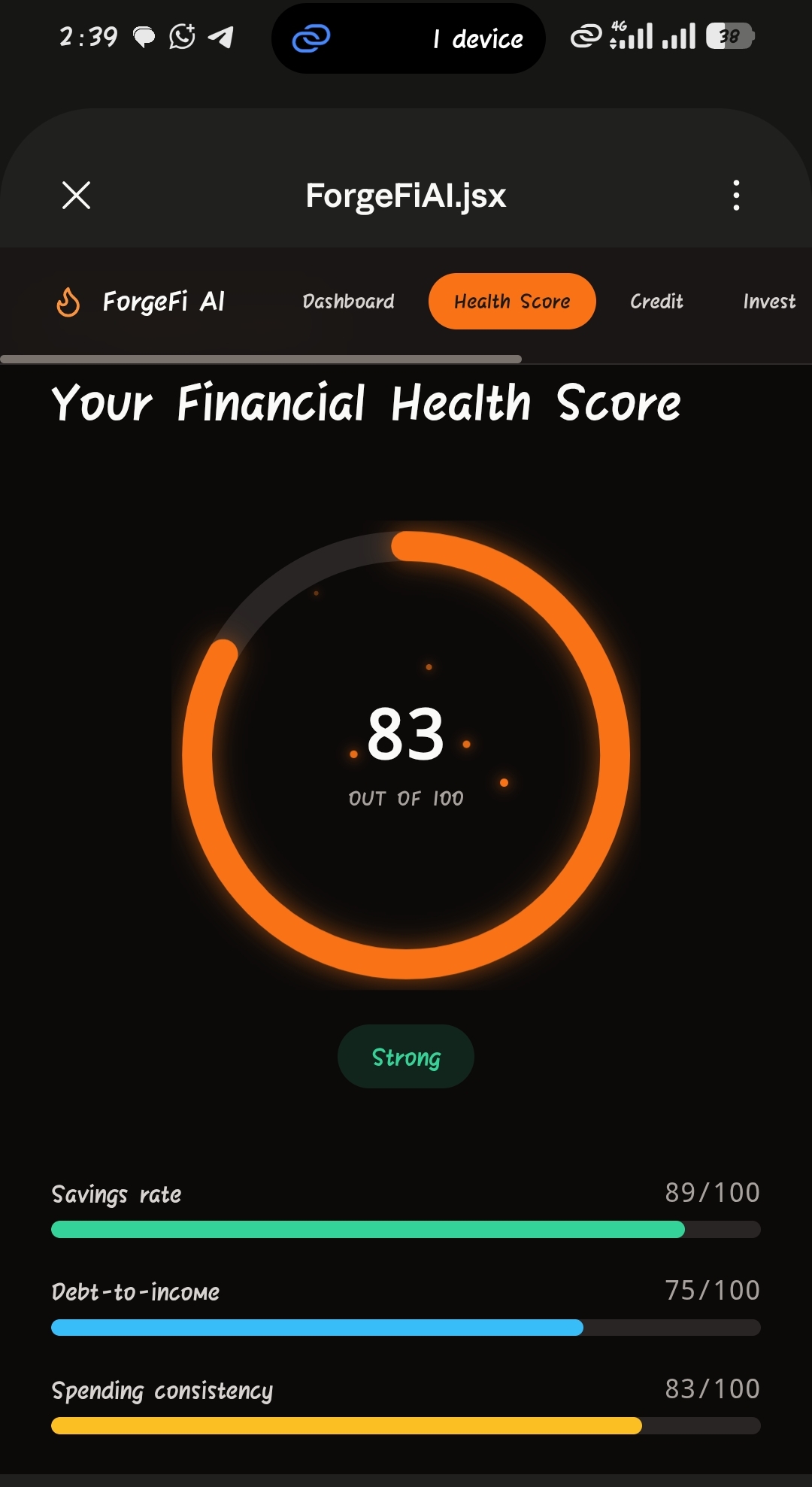
- Financial Health Score — a live score computed from savings rate, debt-to-income, spending consistency, and payment history, with personalized recommendations
- Credit Readiness — a separate score focused on what actually moves credit standing: utilization, debt-to-income, and payment habits
- Invest — a risk-profile picker with a suggested allocation and a projected growth chart for beginners
- What If? Simulator — drag sliders for extra savings or investing and instantly see the difference over 1, 3, or 5 years
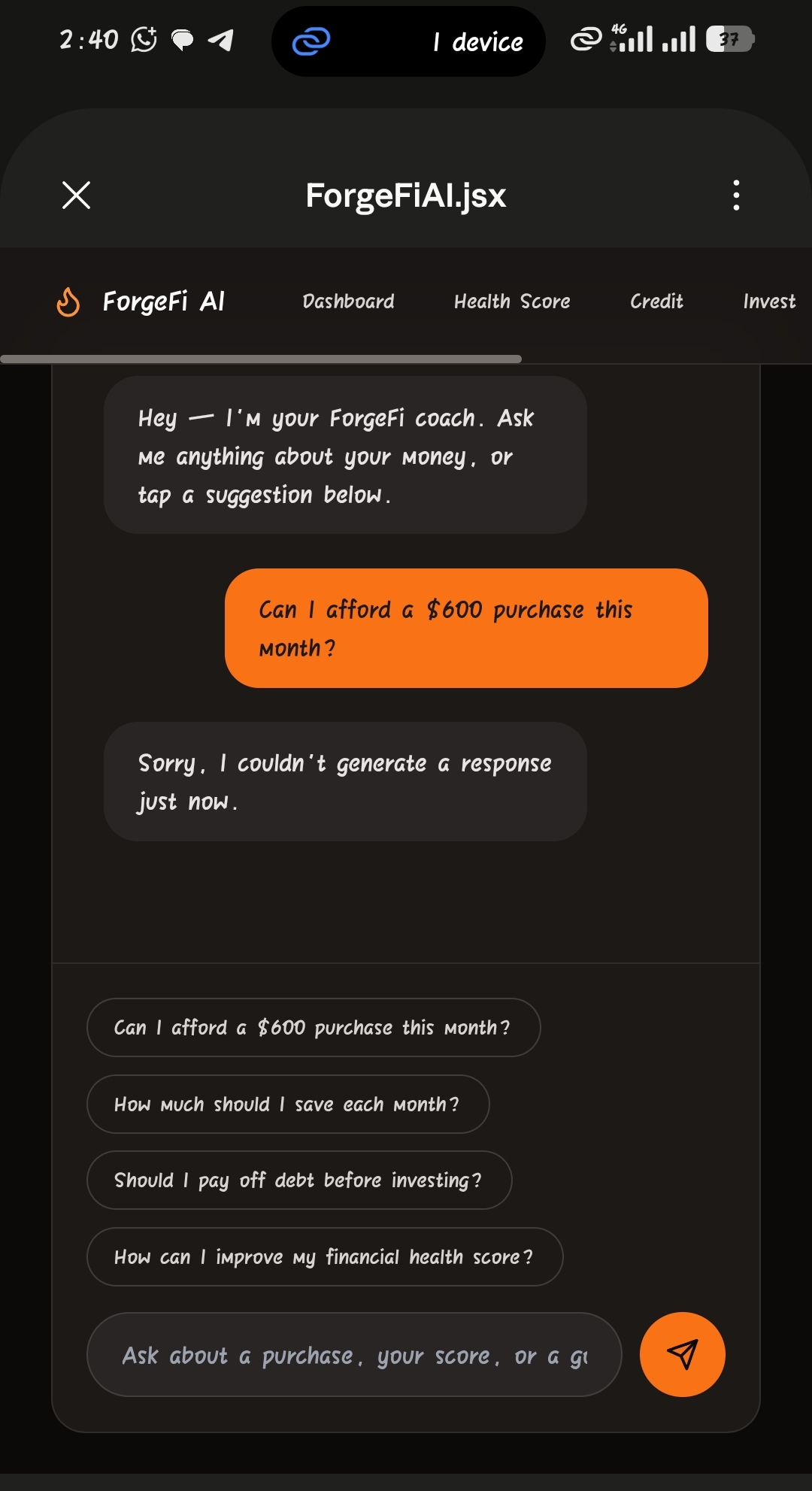
- AI Coach — a real chat, powered by Claude, that reasons over your actual financial snapshot instead of giving generic advice
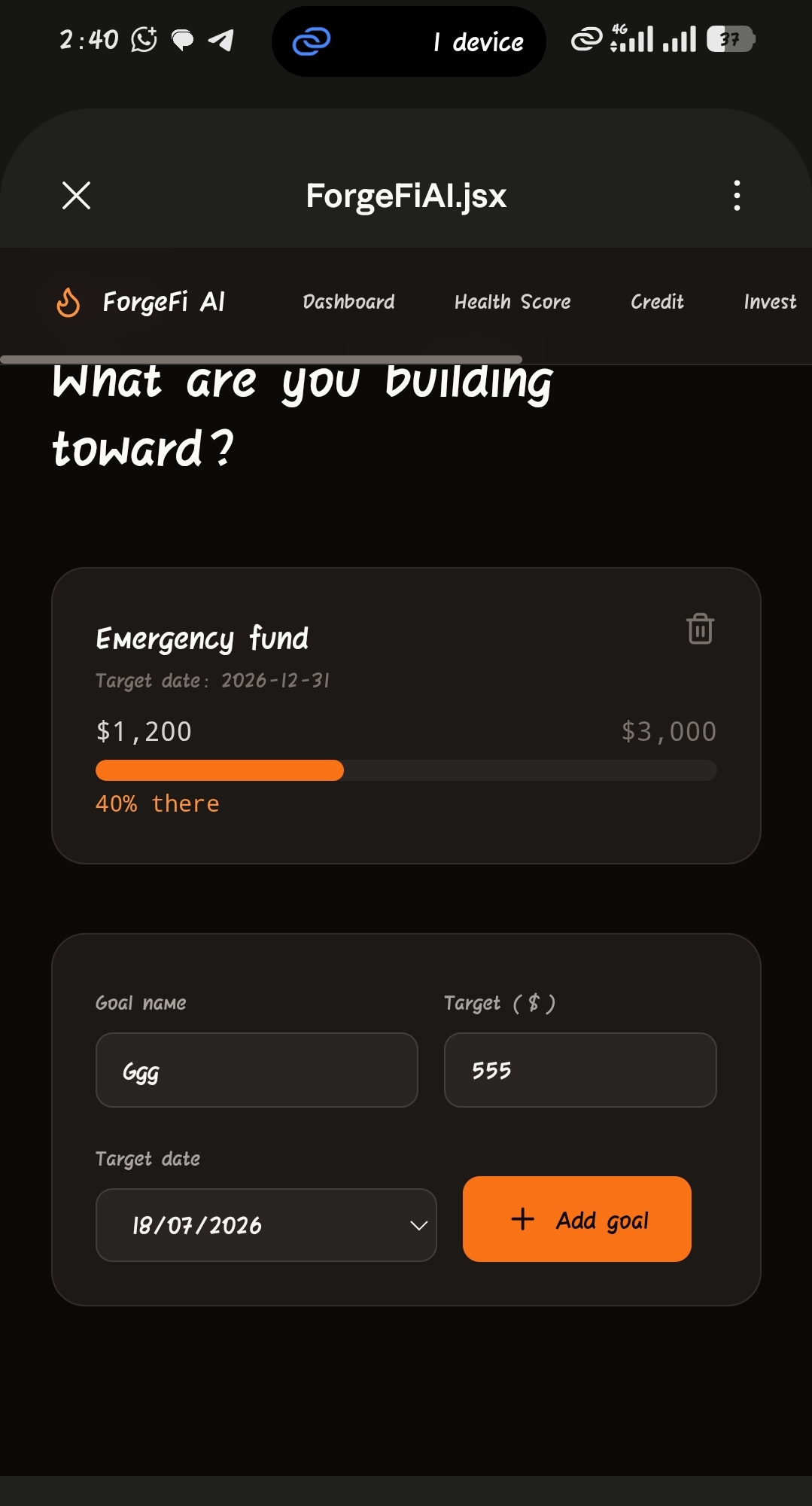
- Goals — set and track savings goals that persist across visits
How we built it
The frontend is React + Vite with Tailwind CSS, Recharts for the data visualizations, and Framer-style scroll/parallax effects for the landing experience. The Financial Health Score and Credit Readiness Score are computed live from underlying financial data rather than hardcoded, using weighted formulas across savings rate, debt-to-income ratio, spending consistency, and payment history. The AI Coach is backed by a small Express server that proxies chat requests to the Claude API, so the user's financial context (income, expenses, debt, scores) is passed as a system prompt and the API key never touches the browser.
Challenges we ran into
Getting the AI Coach to give grounded, specific answers instead of generic financial platitudes took real prompt work — we had to feed it the user's actual numbers and explicitly tell it to reason from them. On the frontend, building a custom animated score gauge and parallax scroll effects without a component library meant hand-rolling SVG animations and IntersectionObserver-based reveals. We also had to think carefully about safely separating the API key server-side instead of calling the AI provider directly from the browser.
Accomplishments that we're proud of
- A financial health scoring system that's actually computed from real formulas, not a fake static number
- An AI coach that gives specific, numbers-grounded answers instead of boilerplate advice
- A polished, cohesive visual identity (the "forge" theme) carried through every screen, not just the landing page
- A what-if simulator that makes the impact of small habit changes tangible in seconds
What we learned
We learned how much of "good financial advice" depends on context — the same recommendation can be right or wrong depending on someone's actual numbers, which pushed us to make the scoring and the AI coach both context-aware rather than one-size-fits-all. We also got much more comfortable building small backend proxies to keep API keys secure while still giving the frontend real AI capabilities.
What's next for ForgeFi.ai
- Real bank-statement and transaction imports (Plaid or similar) instead of mock data
- Persistent user accounts so scores and goals sync across devices
- Deeper investment guidance, including tax-advantaged account education (Roth IRA, 401k basics)
- Push notifications/reminders tied to goals and bill due dates
- Expanded credit education content for students building credit for the first time
Built With
- claude-api
- express.js
- javascript
- node.js
- react
- recharts
- tailwindcss
- vite

Log in or sign up for Devpost to join the conversation.