-
-
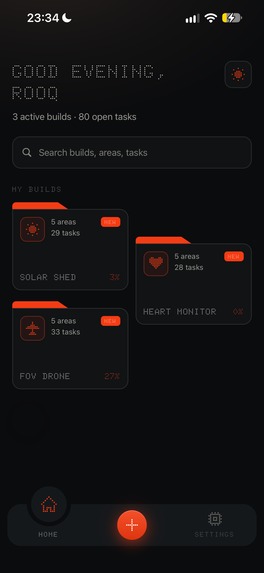
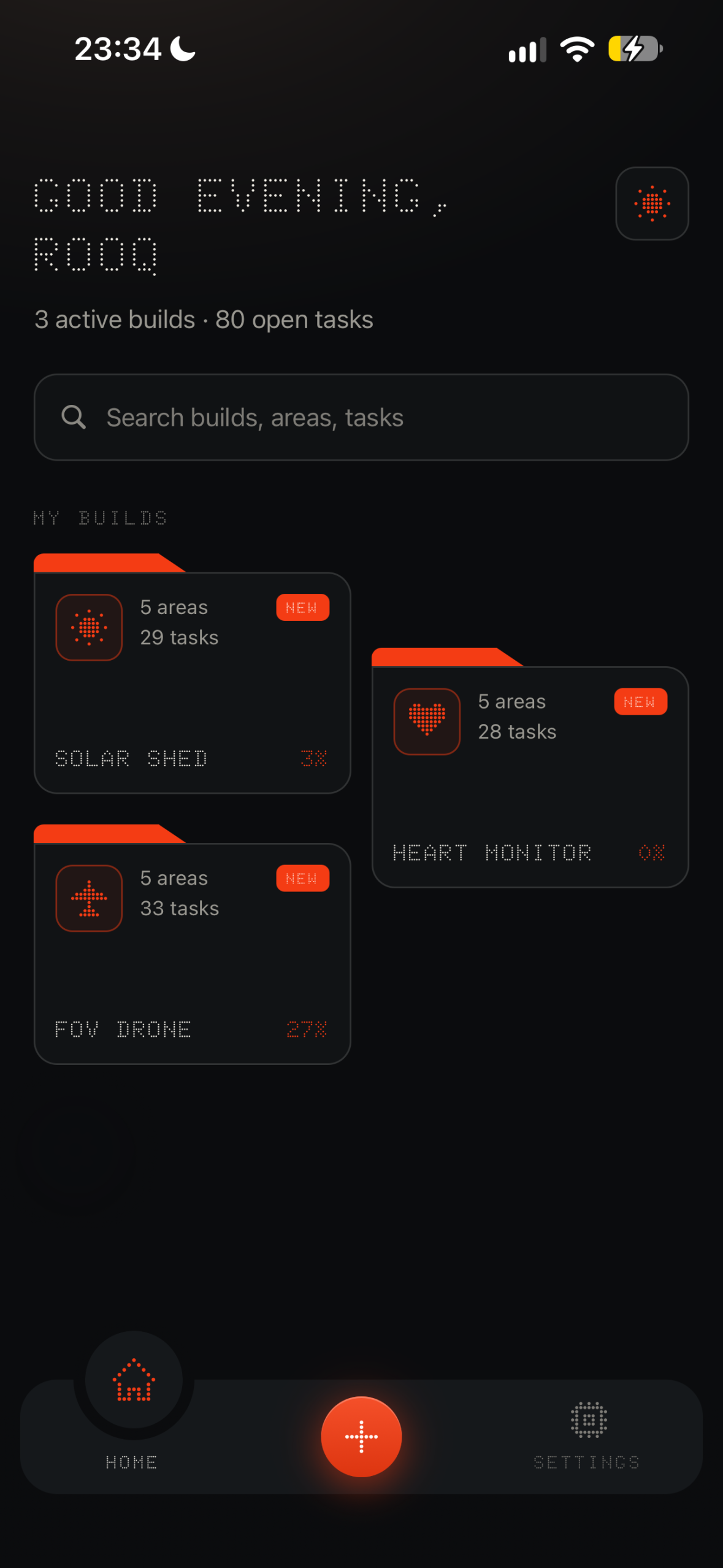
The HOME page screen
-
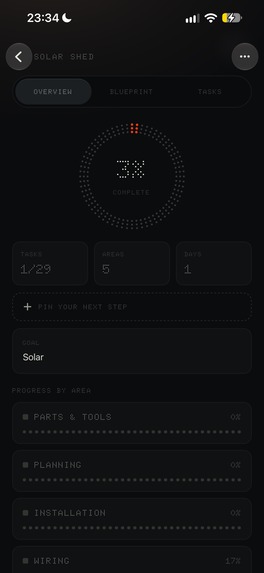
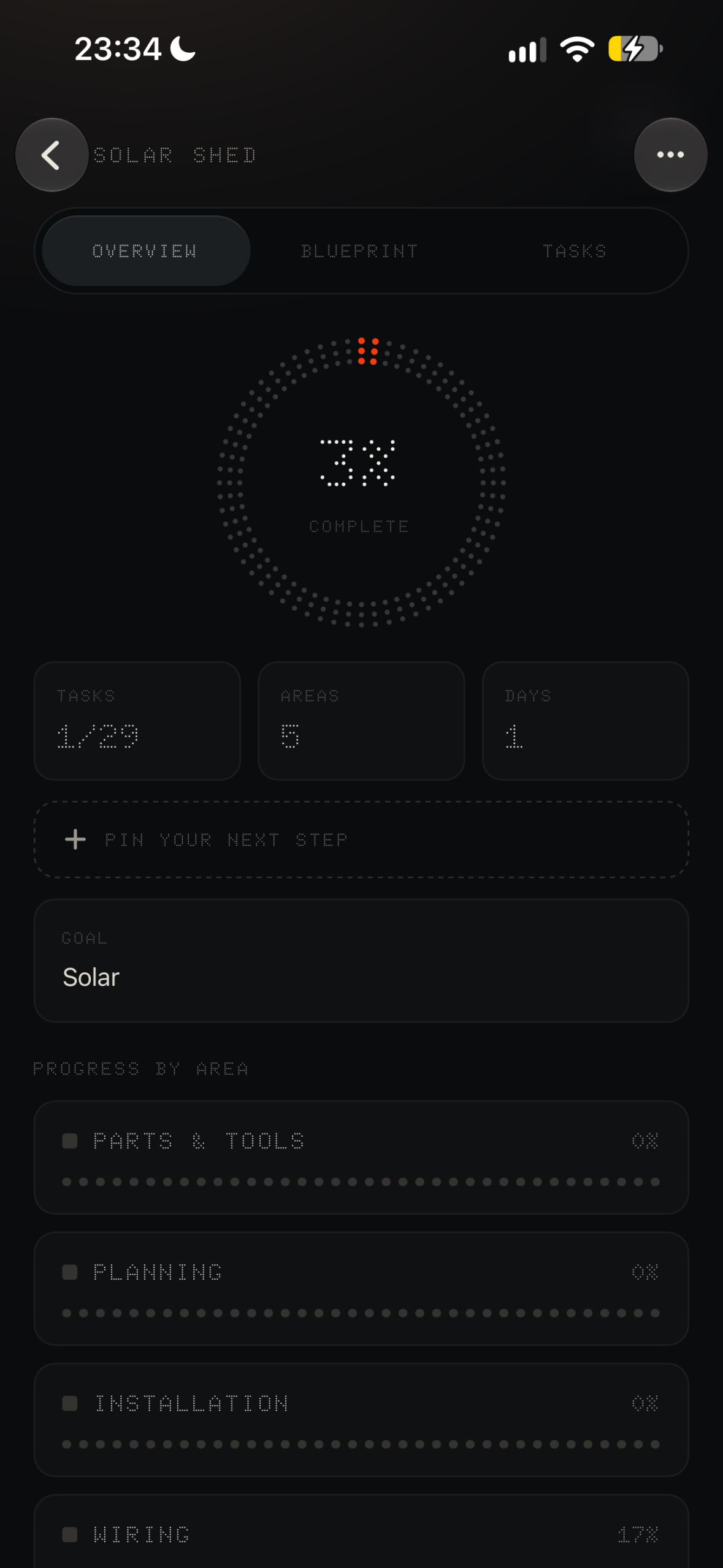
The Overview screen
-
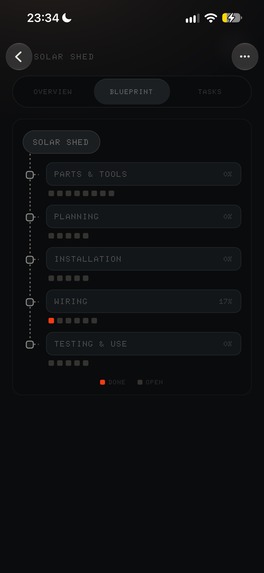
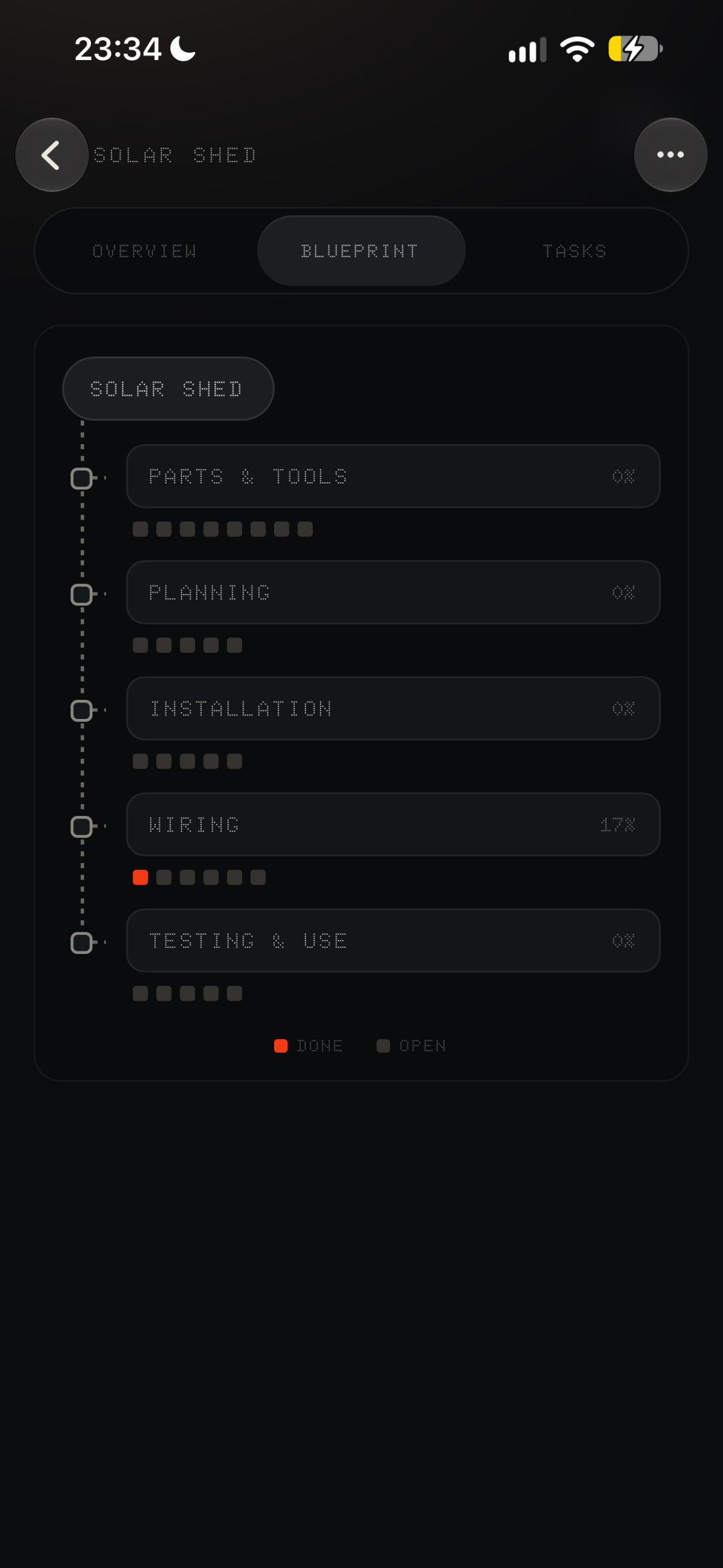
The Blueprint screen
-
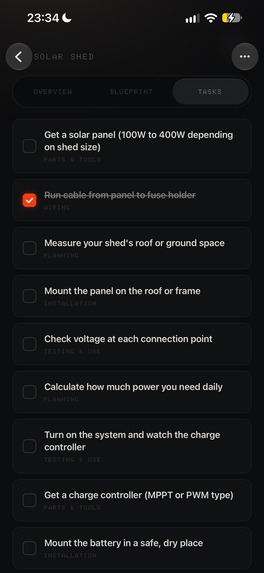
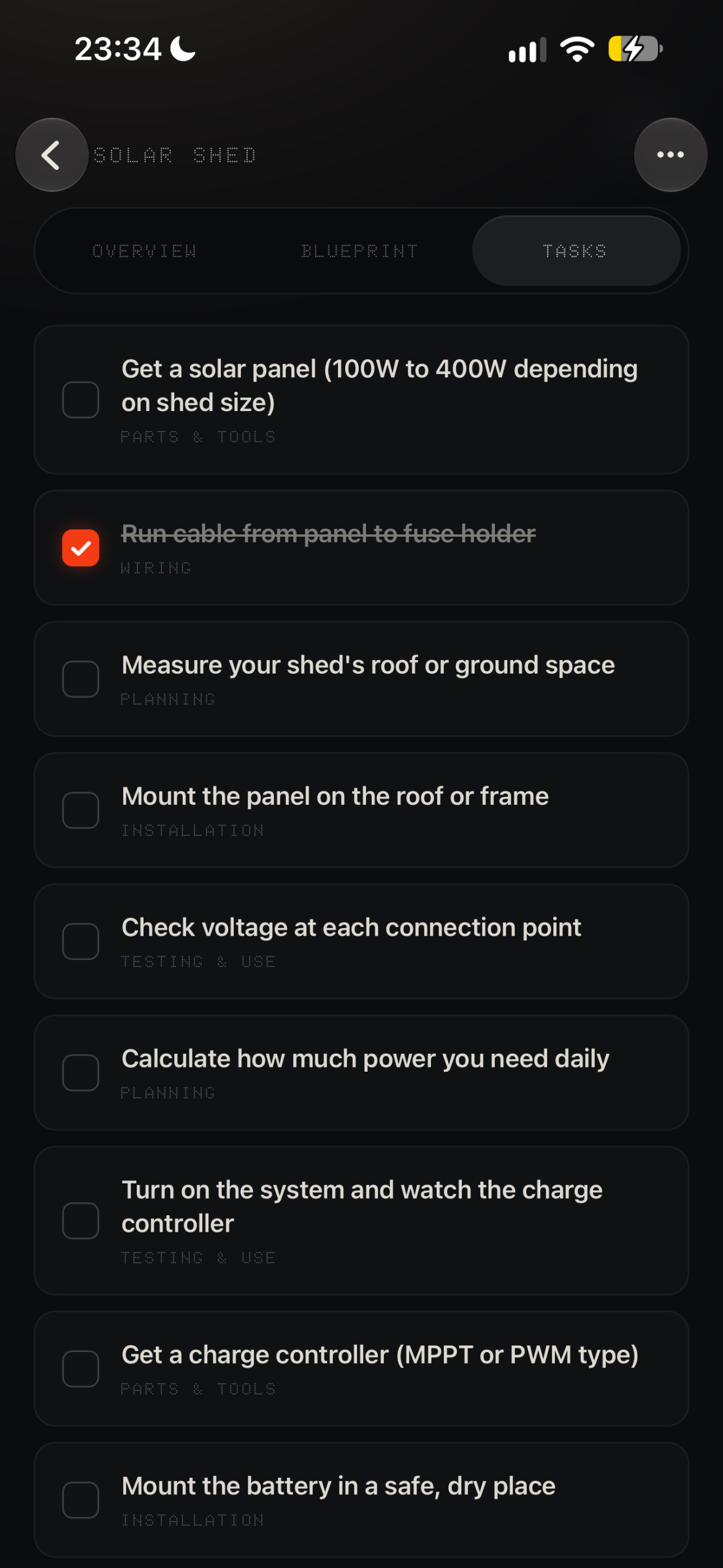
The Task screen
-
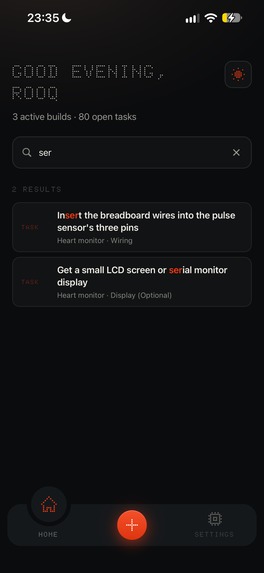
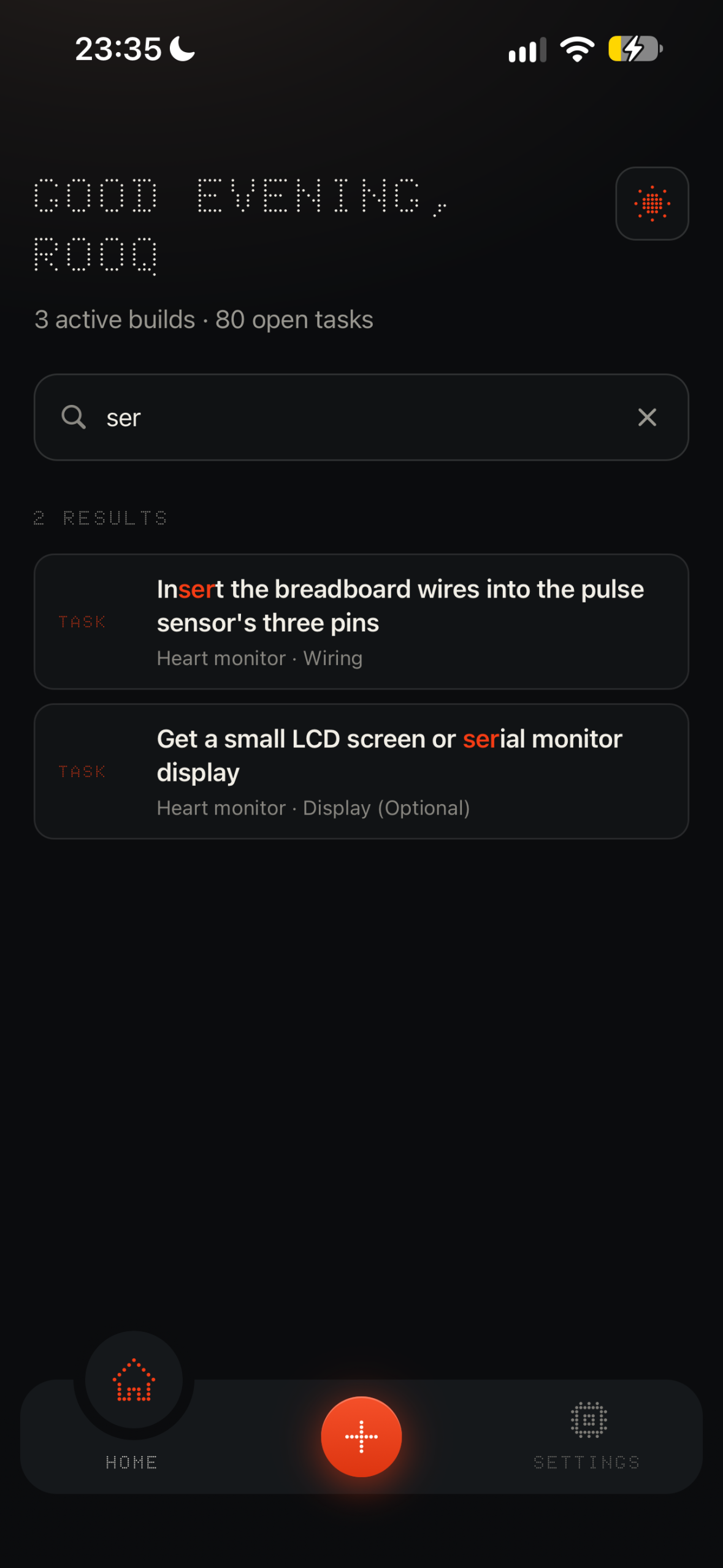
search
-
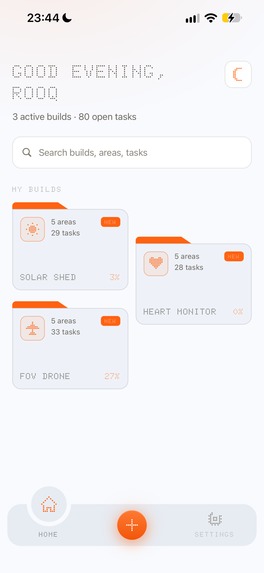
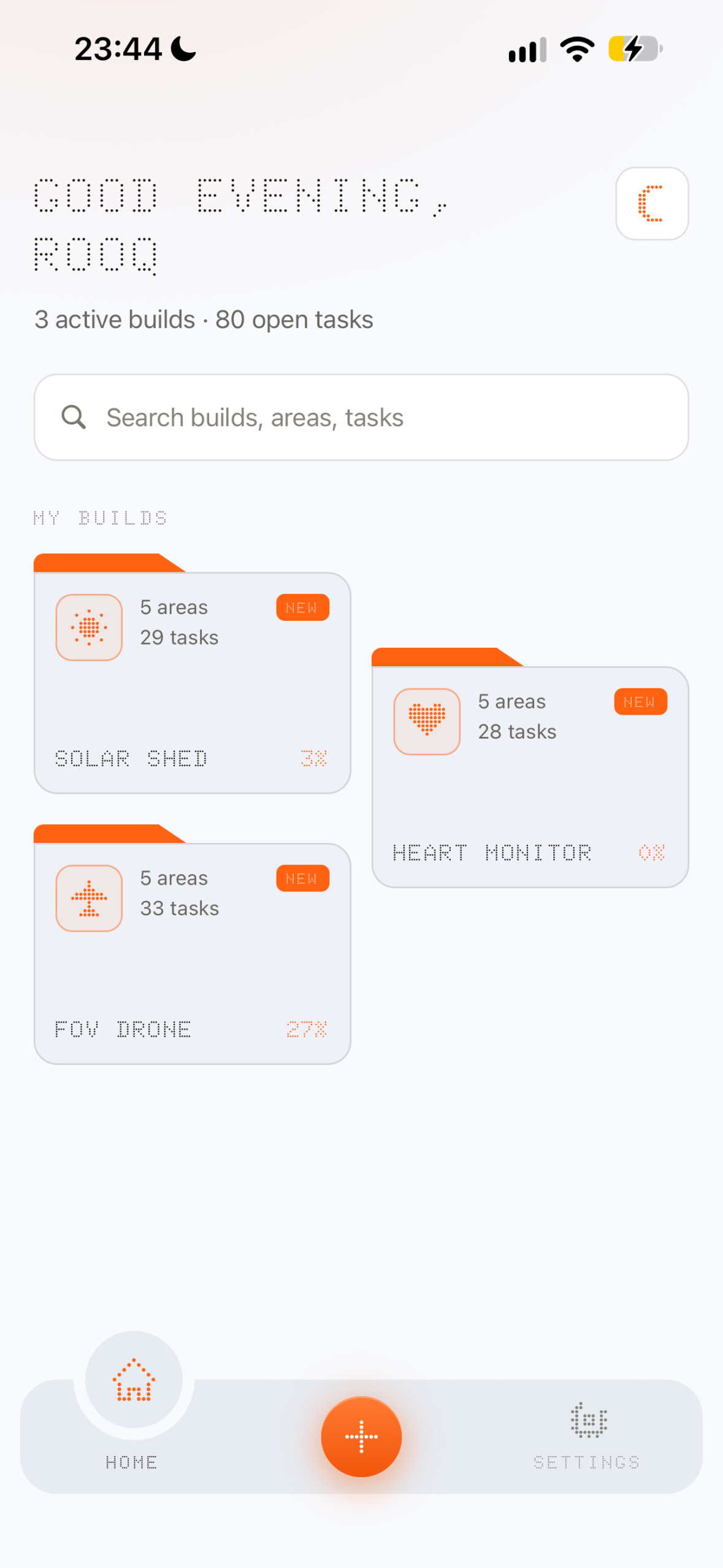
LIGHT mode
-
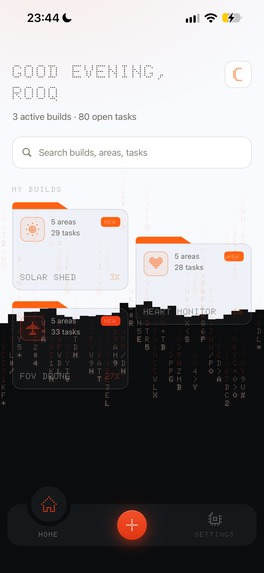
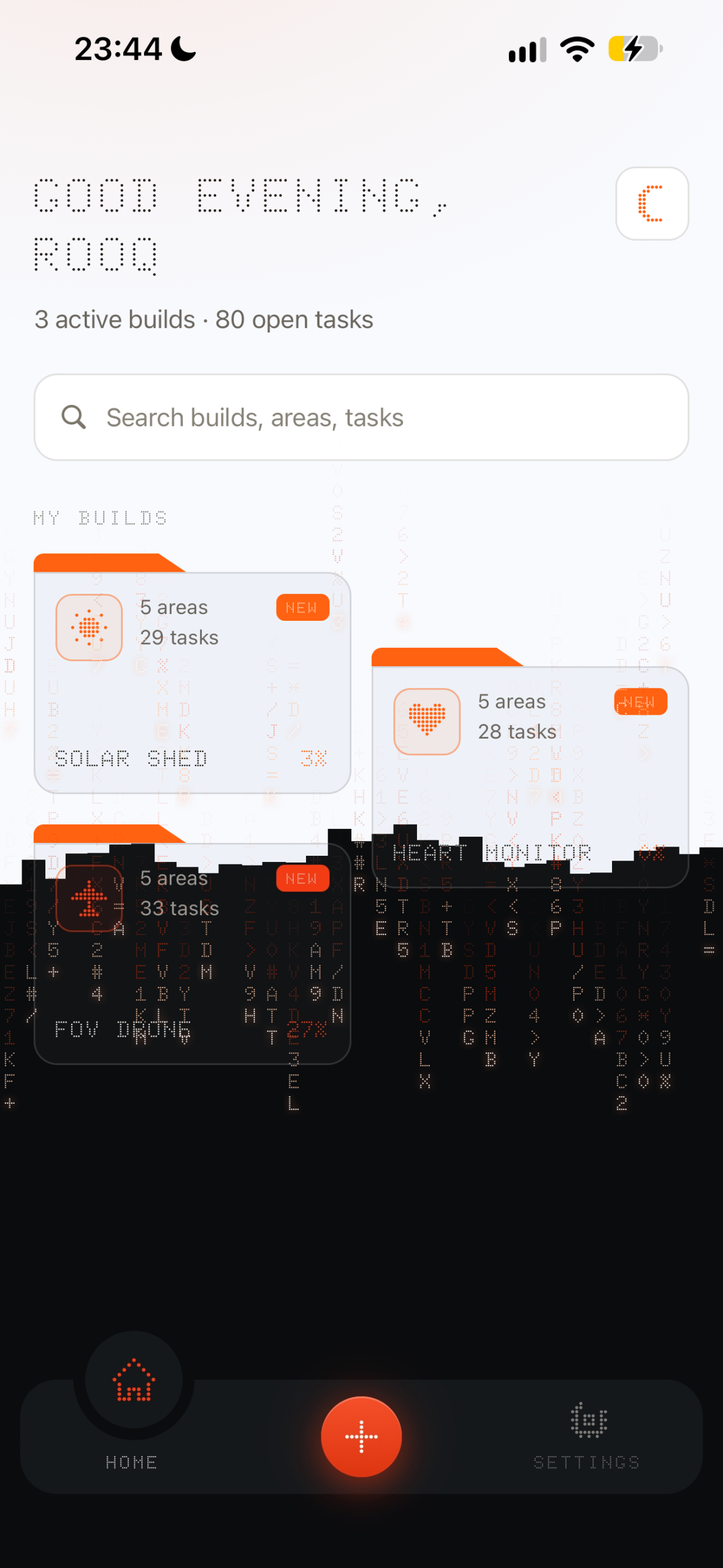
Matrix rain
-
icon

Inspiration :
I love hardware. I have so many things I want to invent, but components are always my problem. I don't always know exactly what a build needs until I'm halfway through it. Parts are expensive here and can take weeks to arrive, so buying the wrong one really hurts. And I already own a pile of parts I forget about, so I end up planning around things I don't have instead of the things I do. Tutorials show someone else's build with someone else's parts, and to-do apps treat a build like a flat list. So I built the thing I needed: tell it what you're making and what's on your bench, and it plans the build around those parts and remembers where you left off.
What it does :
FORGE is mission control for the things you build: robots, drones, synths, CNC machines, solar rigs, anything with parts and steps.
- You tell it what you're building and the parts you already have. The AI plans the build around those parts: areas (like Frame, Power, Firmware) and real tasks, starting with checking what you don't know yet and ending with a test of the whole build. It never guesses voltages or pin numbers it wasn't told.
- You look over the plan, pick an icon, and every build becomes a folder on your Home shelf with its progress on the front.
- Open a build and the blueprint shows everything at once: what's done, what's stuck, what hasn't started.
- Tick tasks off and watch it climb to 100%. Pin your next step, and NEXT UP on Home tells you exactly where you left off.
- Search across every build, area and task. Dark mode for late nights, light mode for the workbench.
- Free accounts get 3 builds. FORGE Pro (through RevenueCat) unlocks unlimited builds, templates and blueprint sharing. The paywall shows up right when you try to start a 4th build, and buying Pro finishes creating that build, so you don't type it again.
How we built it :
FORGE is built with Expo and React Native, with expo-router and Reanimated for the motion. The backend is Supabase: Postgres with Row Level Security on every table, so the database itself only gives you your own builds. Progress is calculated live from your tasks, so it can't drift out of date. The AI planning runs in a Supabase Edge Function that calls Claude, so the API key never lives in the app, with a daily limit per person. Payments and the Pro entitlement run through RevenueCat. I designed every screen myself around a dot-matrix look and one orange accent, and I used Claude as my coding partner the whole way.
Challenges we ran into :
The Apple developer account. I forgot my Apple password, recovery locked me out for days, and when I finally paid for the Developer Program it still had to be activated. So there's no App Store listing yet, and I'm entering Next Gen with a public repo instead. My server also gave me problems along the way. And I had built voice input ("say it out loud"), but it needs a proper iPhone build, which needs that same Apple account, so I parked it for this version.
Accomplishments that we're proud of :
I found out about the hackathon 11 days ago. In that time I came up with the idea, designed it, and built a working app with AI planning, payments, light and dark mode, and a design I'm really proud of. More than anything, I'm proud of the energy and effort I put into this one. My last project didn't get this from me. I'm really glad this one did.
What we learned :
React Native is completely different from React.js. No divs, no CSS files, and some packages only work in a real build and not in Expo Go. I also learned how much of an app's security can live in the database itself, and that a feature isn't done until it works on the actual phone.
What's next for FORGE :
A lot.
- Voice input, as soon as my Apple developer account is active.
- The App Store, in about a week.
- FORGE Community: a place to show off your builds, share blueprints and give each other feedback.
- ForgeBot: a guide for first-timers with no hardware experience, teaching the basics as simply as I can make it.
- My own AI model, trained for planning builds.
- And along the way, answering the big question honestly: why use FORGE instead of an Instructables guide or a YouTube video? My answer so far is that those show you someone else's build. FORGE is about yours: your parts, your progress, and your next step.

Log in or sign up for Devpost to join the conversation.