-
-
Logo
-
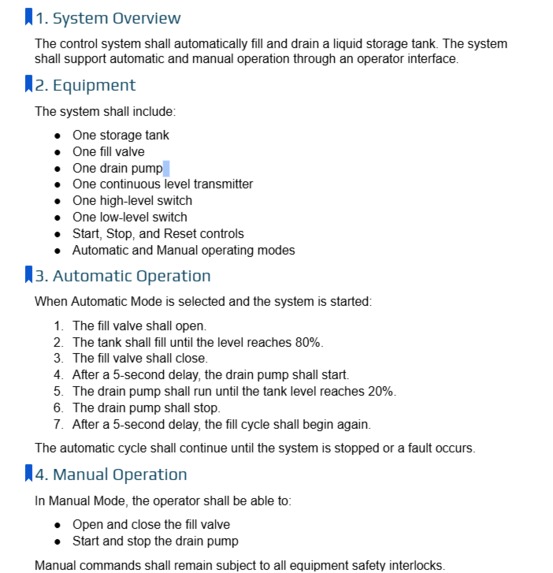
Snippet from demo dummy spec
-
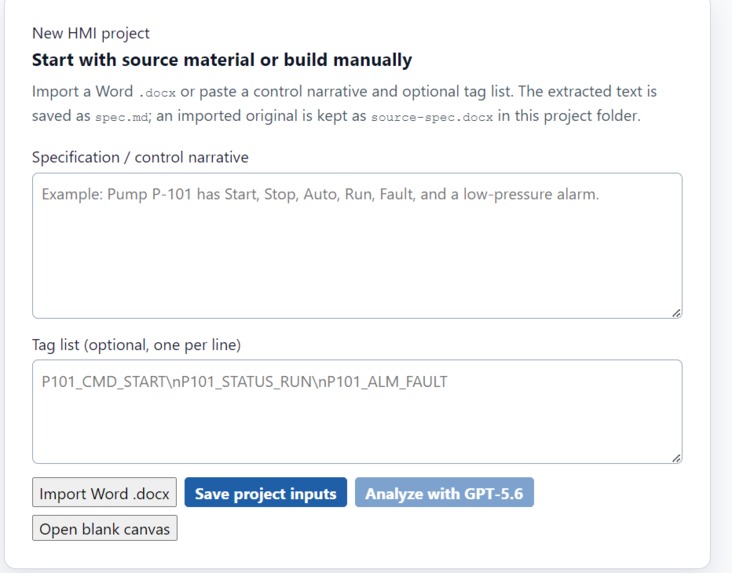
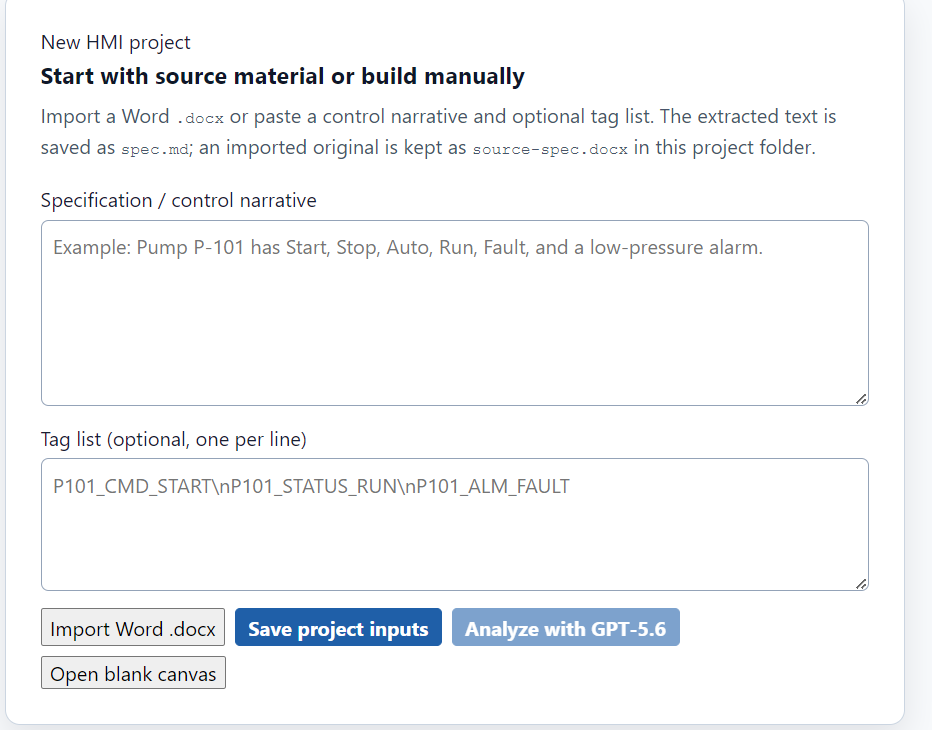
Opening menu asking for a spec import or narrative
-
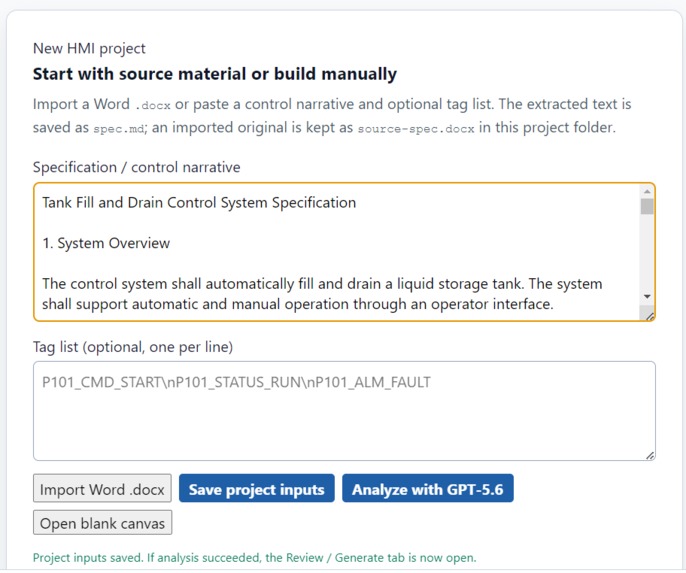
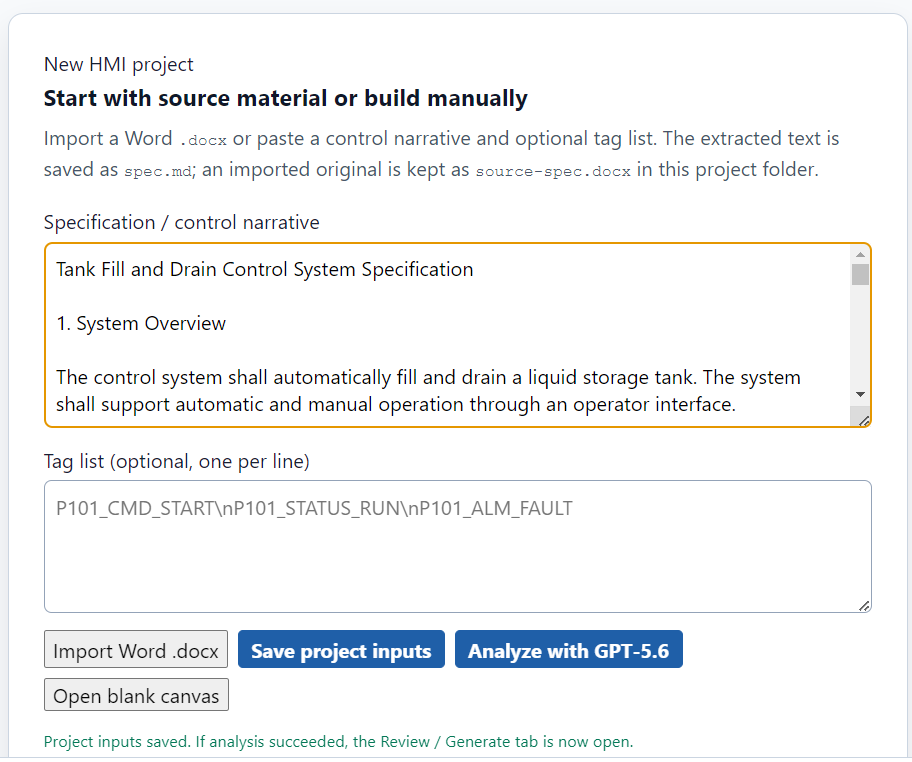
the spec imported in from .docx
-
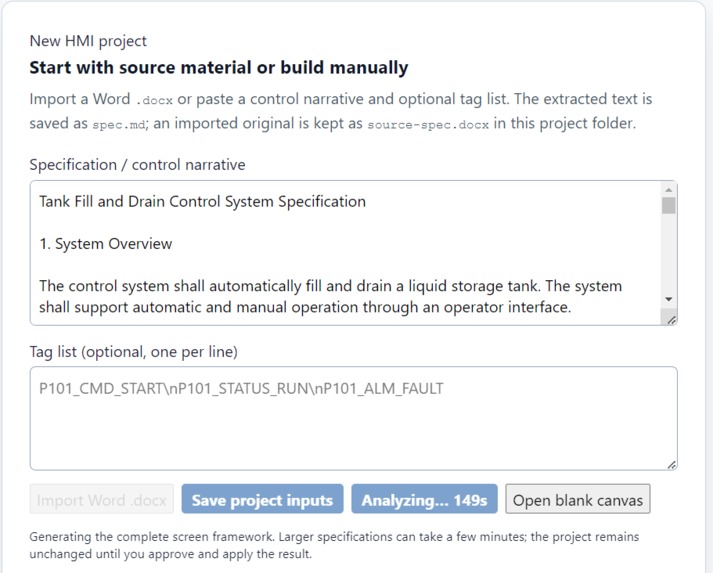
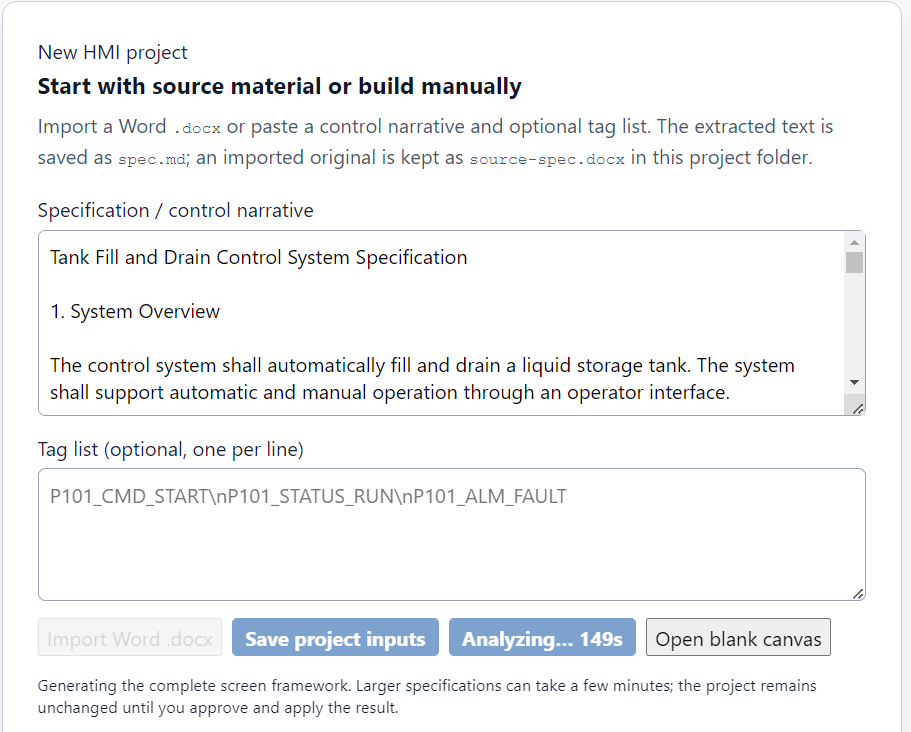
spec being analyzed
-
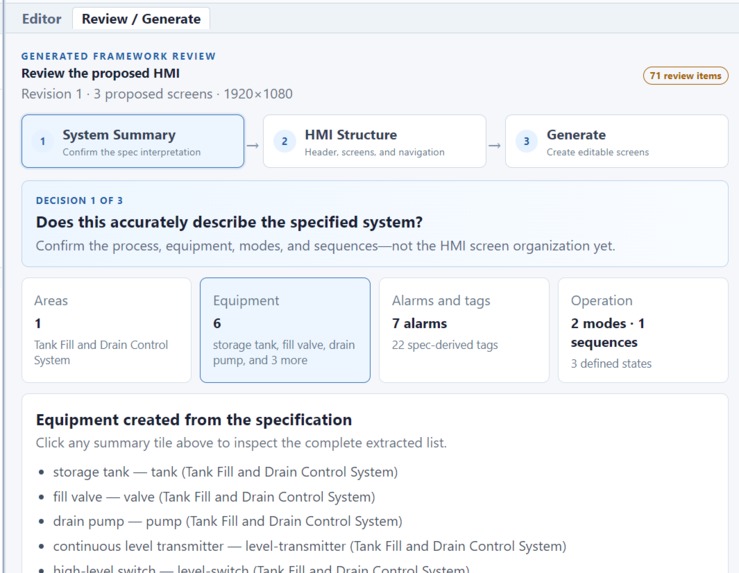
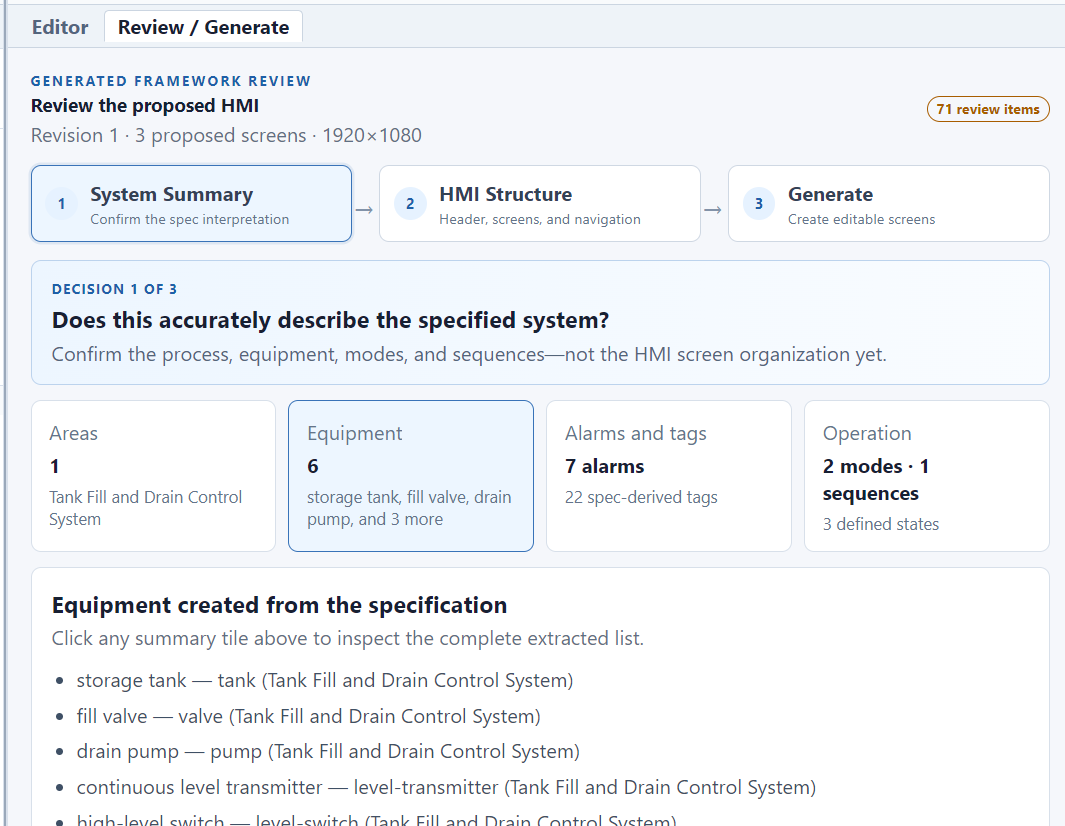
User Review Step 1
-
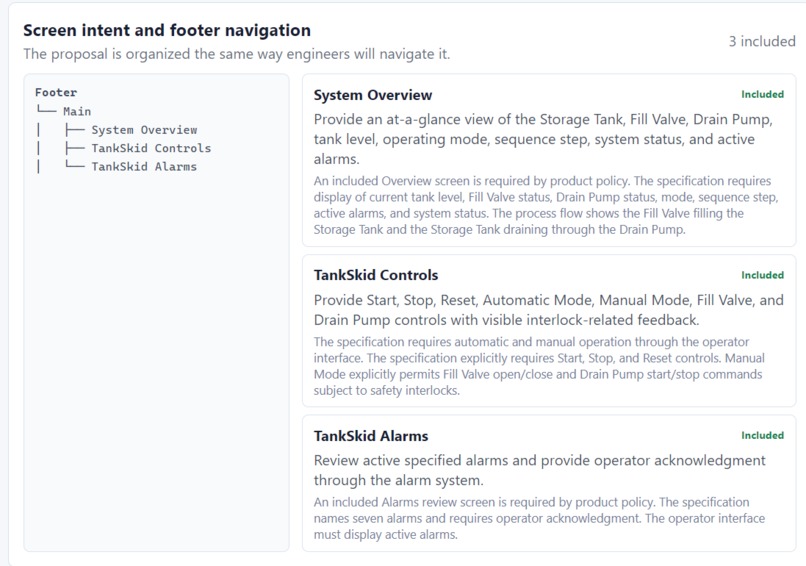
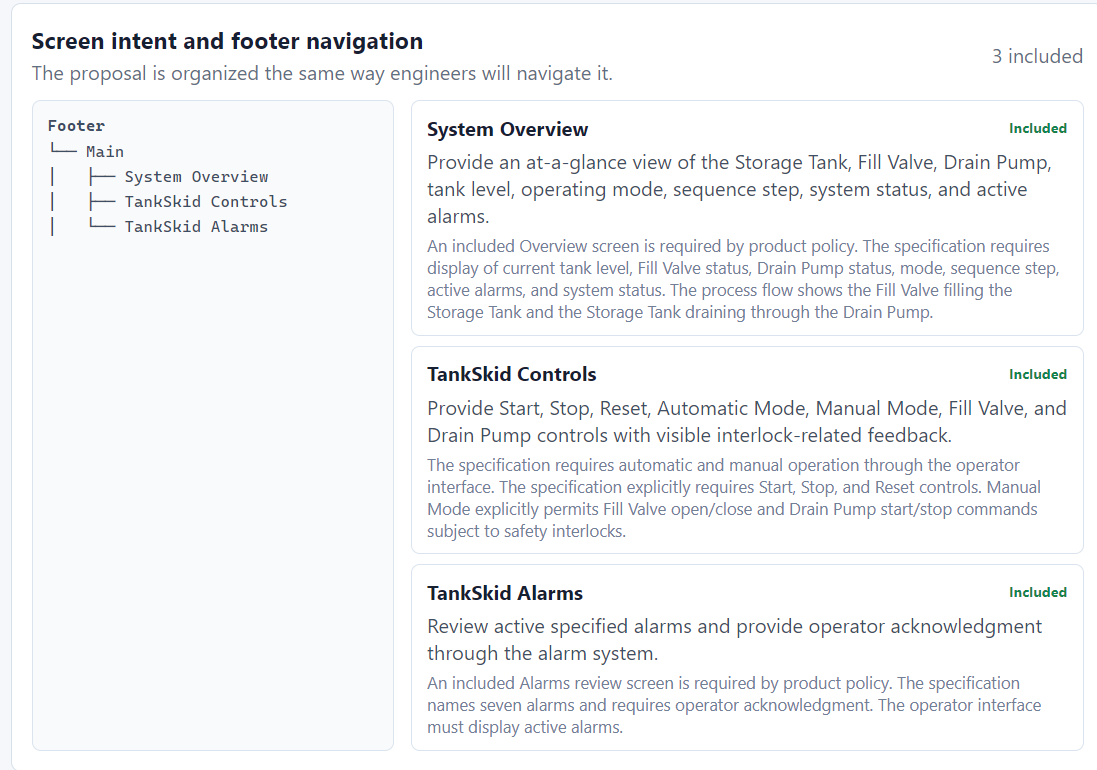
Screen/View proposal
-
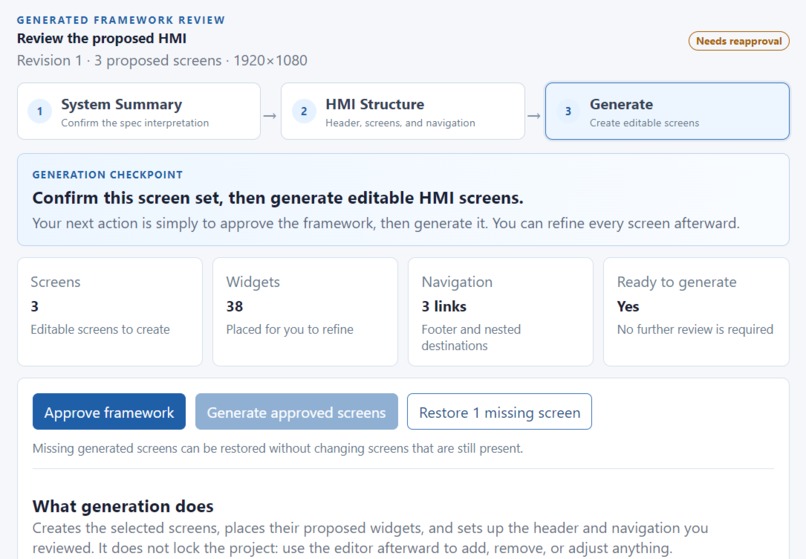
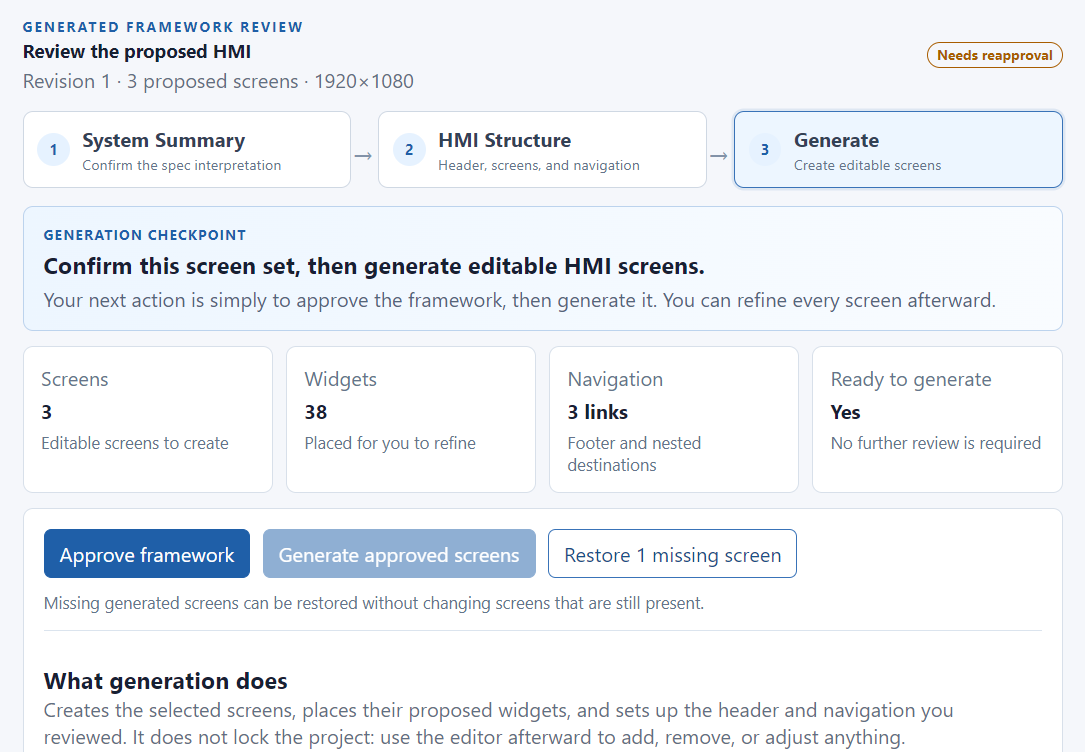
Final Approval / Generation
-
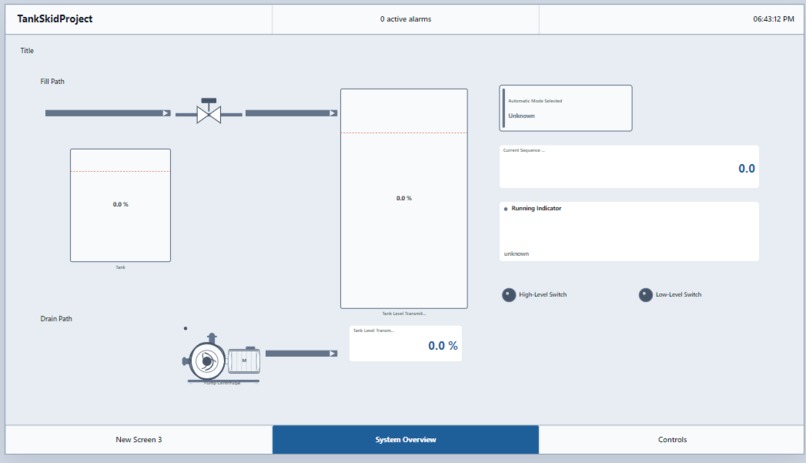
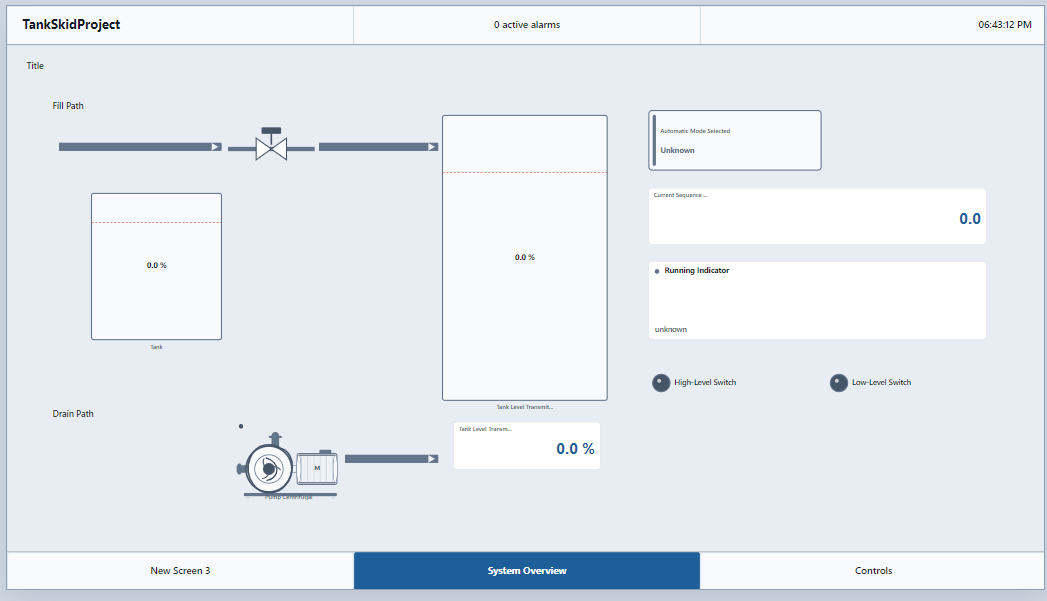
Generated HMI Screen
-
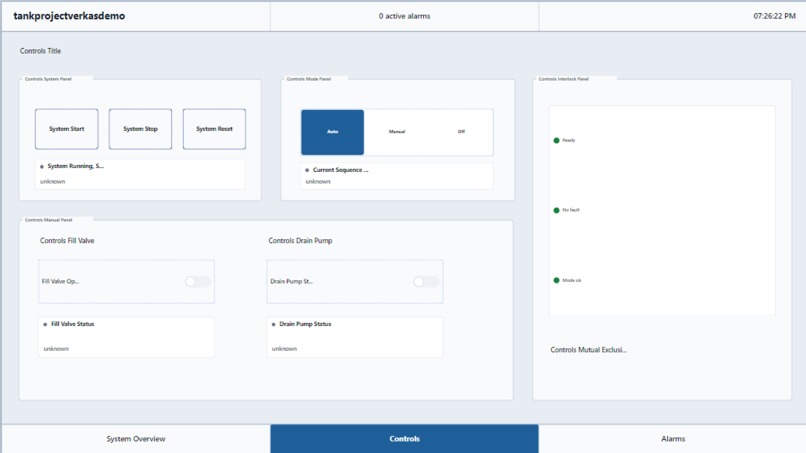
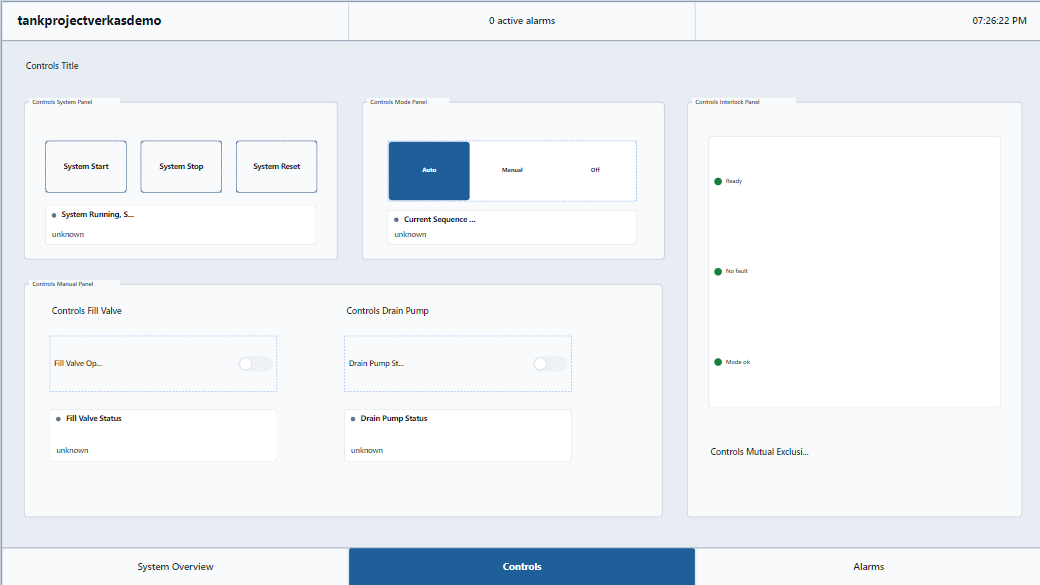
Generated HMI Screen 2
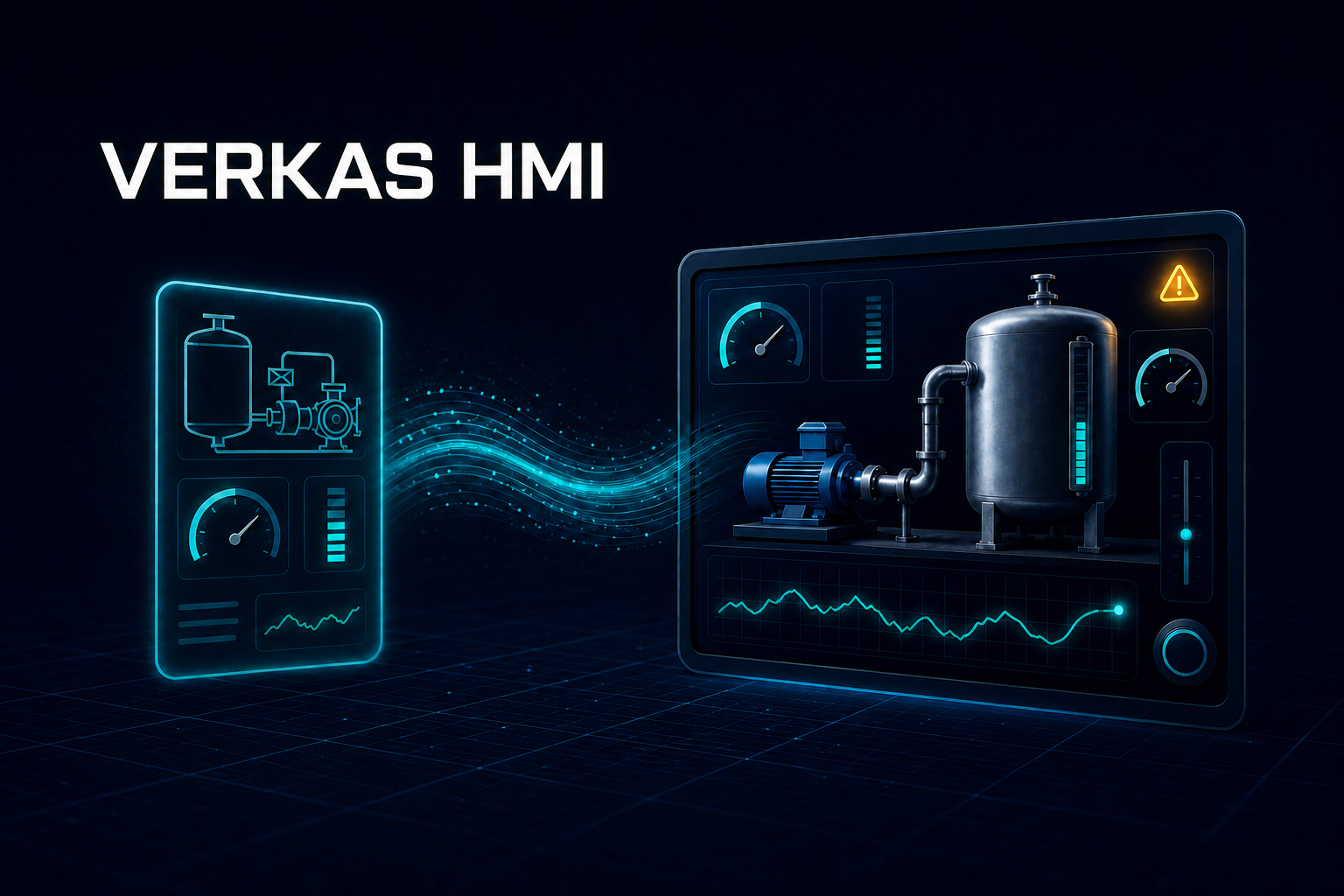
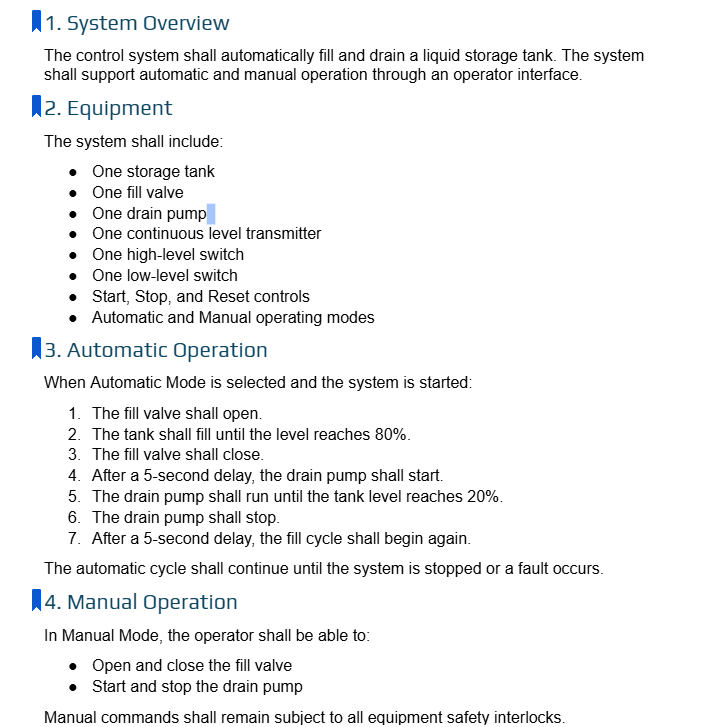
Inspiration
Industrial programming usually starts with a machine specification and, sometimes, tag lists. From there, it can take days or weeks of manual PLC programming and HMI programming. An HMI is the user interface for an industrial system.
I have spent about a decade building industrial control software. A pattern I kept running into was that, after spending weeks or months getting the control code working, I would then move over and spend almost as much time building the HMI. There are LLM tools and industrial IDEs that can help generate control code, but there is still not much that helps generate the HMI itself. That leaves a huge amount of work in the same manual state, and it is often an engineer's least favorite part of the job.
Verkas HMI is my attempt at a better workflow: use AI to turn that starting material into a reviewable HMI prototype, while keeping the engineer in control.
What it does
The app lets a user import a spec or simply type in what they are trying to build. The system then brings them through a review flow to refine the spec and propose the screens and functionality for the HMI. Once the engineer approves the proposal, the system creates the HMI prototype.
From there, the app has a visual industrial editor for editing and building out the HMI. It is also underpinned by typed local tools and includes a chat panel for making guided changes.
How we built it
Originally, I was working with Kiro, Claude, and Codex in a split of work, trying to play to each tool's strengths. For Build Week, I leaned heavily into Codex and GPT-5.6—both as tools for building the app and as the AI powering the specification-analysis workflow inside the app.
The result is a workflow where GPT-5.6 helps interpret the specification, but the generated HMI changes are still visible and reviewable before the engineer applies them.
Challenges we ran into
The biggest challenge for me has been time. I have a full-time job and a family. Taking a week to focus, and having a more capable tool like GPT-5.6, helped me get much further than I otherwise could have.
At the same time, I learned that even with powerful tools, this type of product takes a lot of iteration and testing to get the workflow and feel right.
Accomplishments that we're proud of
The spec-to-approval loop is now built and screens can be generated from the reviewed proposal. This is a huge step forward because, before this week, the project was largely a manual, MCP-enabled HMI editor.
Build Week contribution
I extended the existing local HMI editor into a spec-driven workflow: Word and text specification intake, GPT-5.6 controls analysis, structured assumptions and review, deterministic HMI proposal generation, explicit engineer approval, and a visual editor for refining the applied result. The Build Week branch and dated commits document this work.
What we learned
I learned that even with powerful tools and a lot of effort, this still takes a long time. It is very iterative and testing-heavy to get the workflow and experience where I want it.
What's next for Verkas HMI
The next steps are tag reconciliation, validation, simulation, industrial connectivity, and deployment to industrial touchscreens. The longer-term goal is to connect the app to a small physical system: PLC and HMI software built from this workflow, running on real hardware, while keeping clear engineering review and oversight.

Log in or sign up for Devpost to join the conversation.