-
-
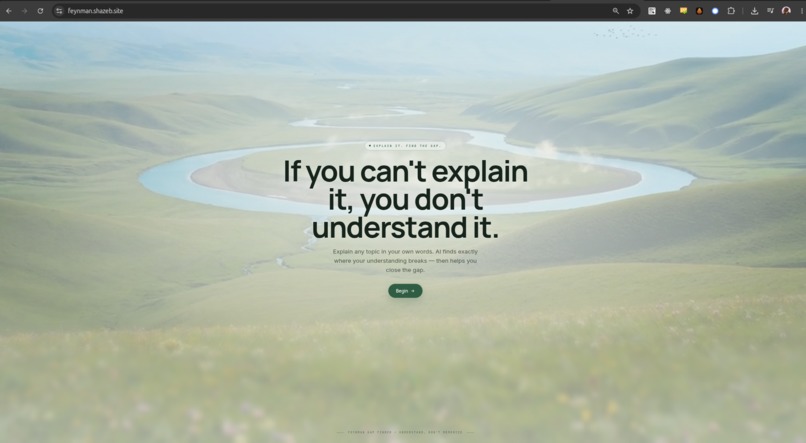
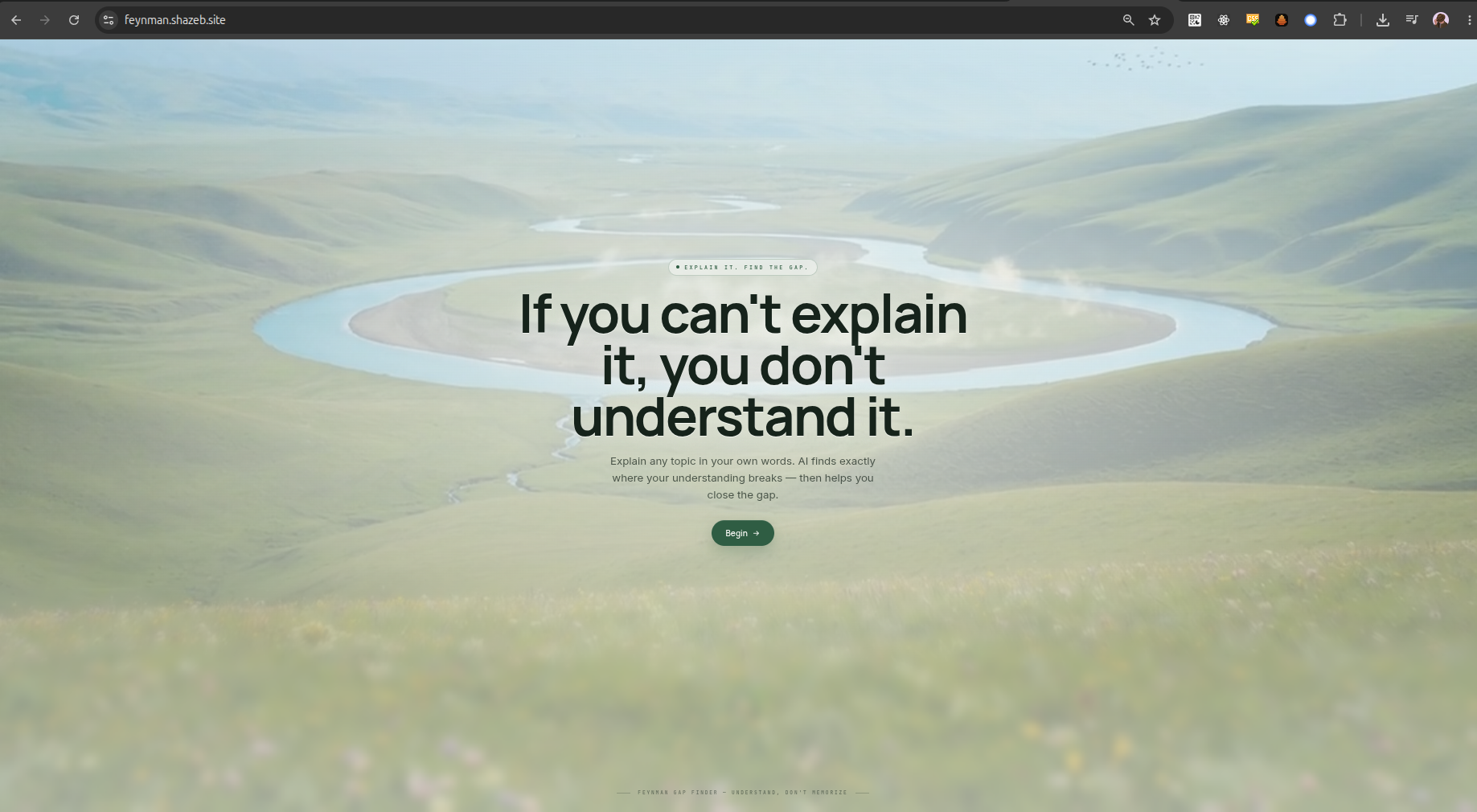
Landing Page
-
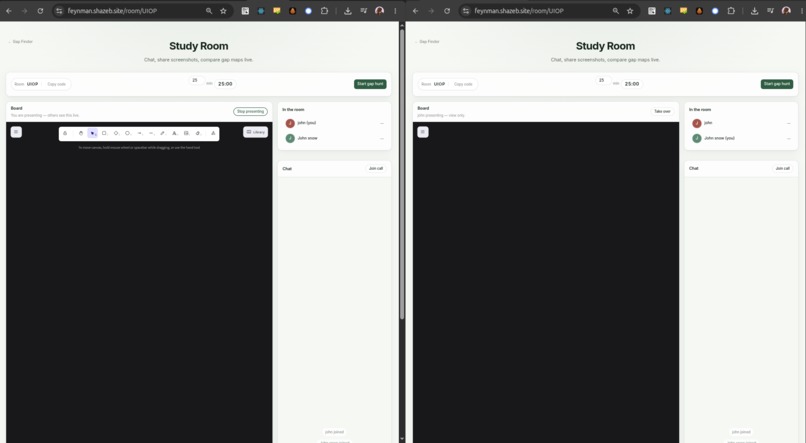
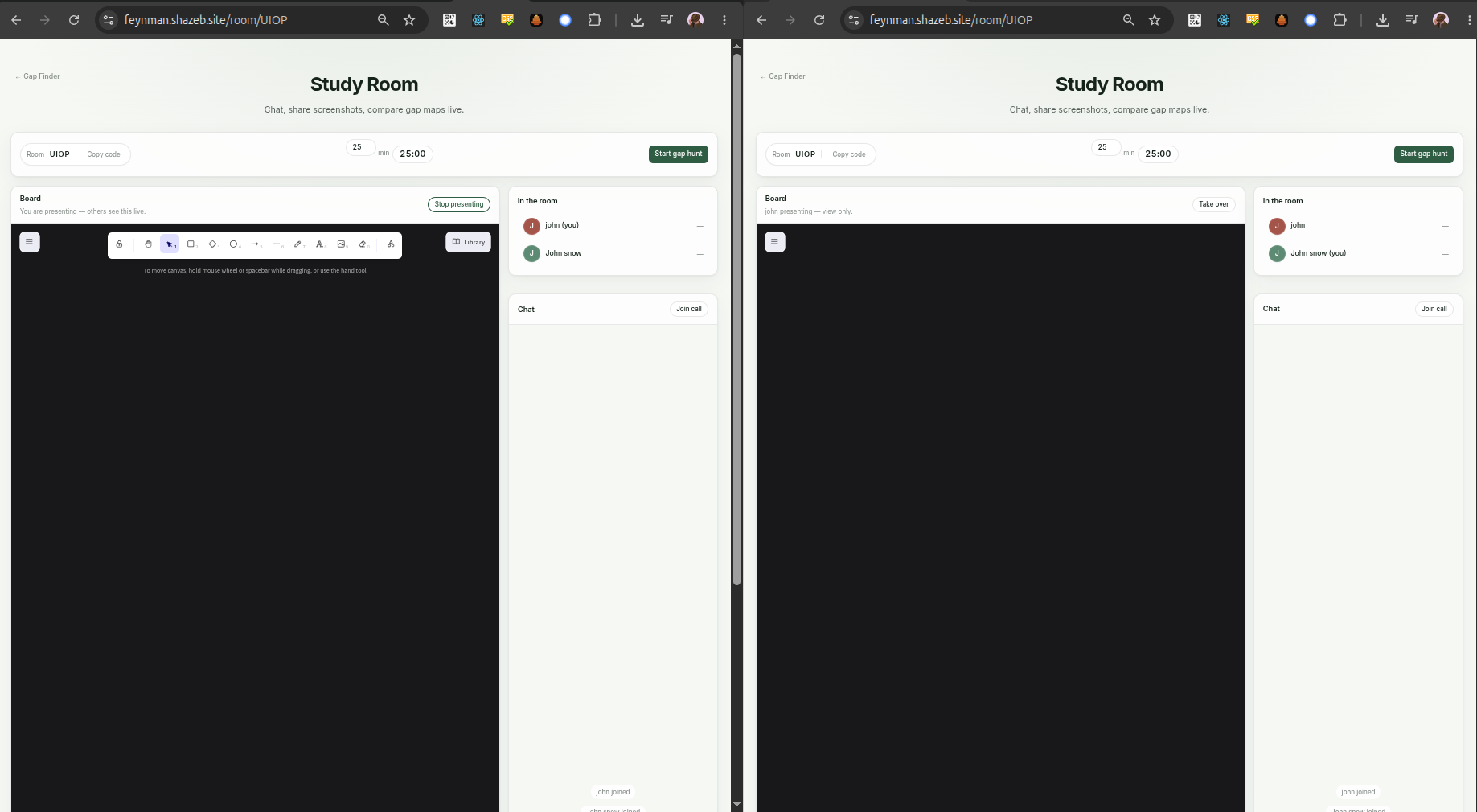
Study Room Members
-
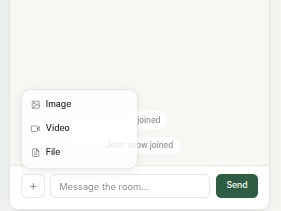
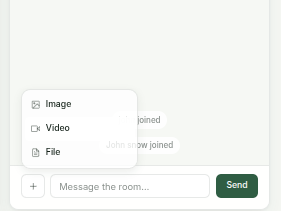
Provides chat image,files,video sharing option
-
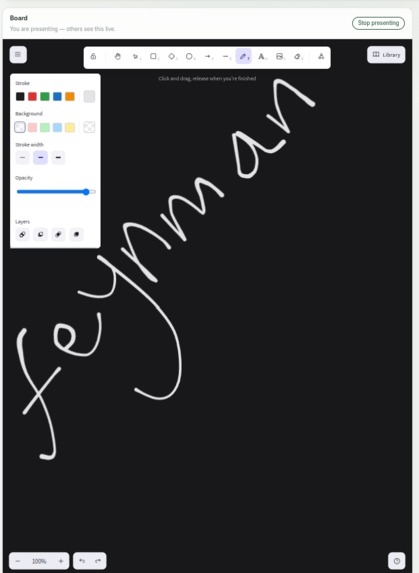
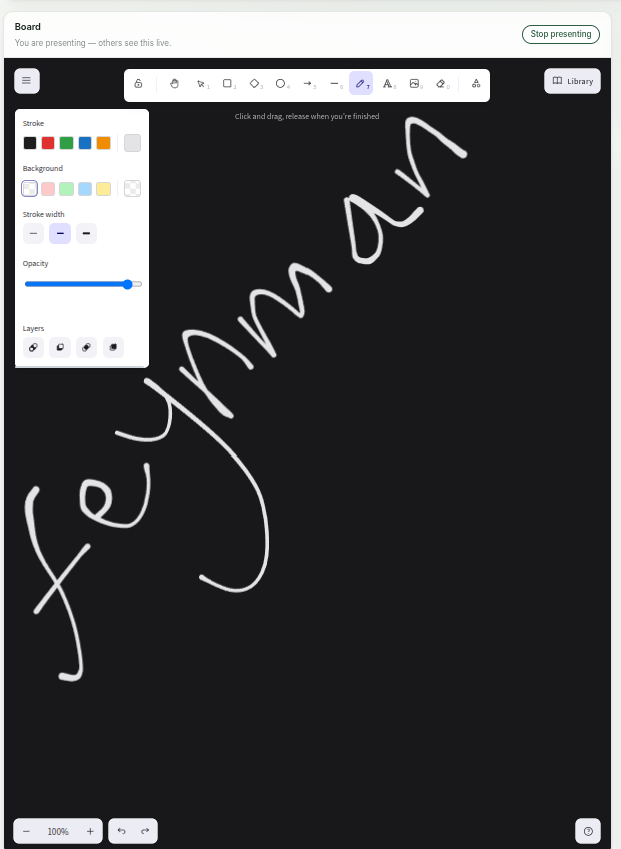
Excalidraw Integrated For Explaining or writing Diagrams
-
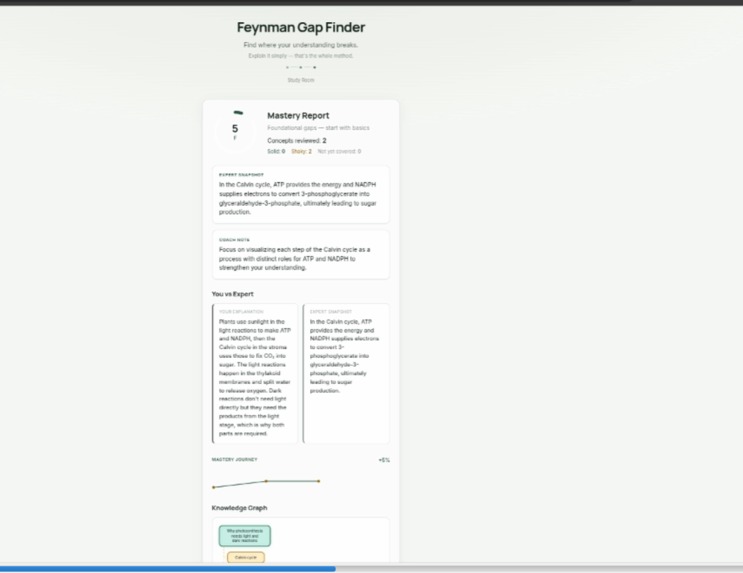
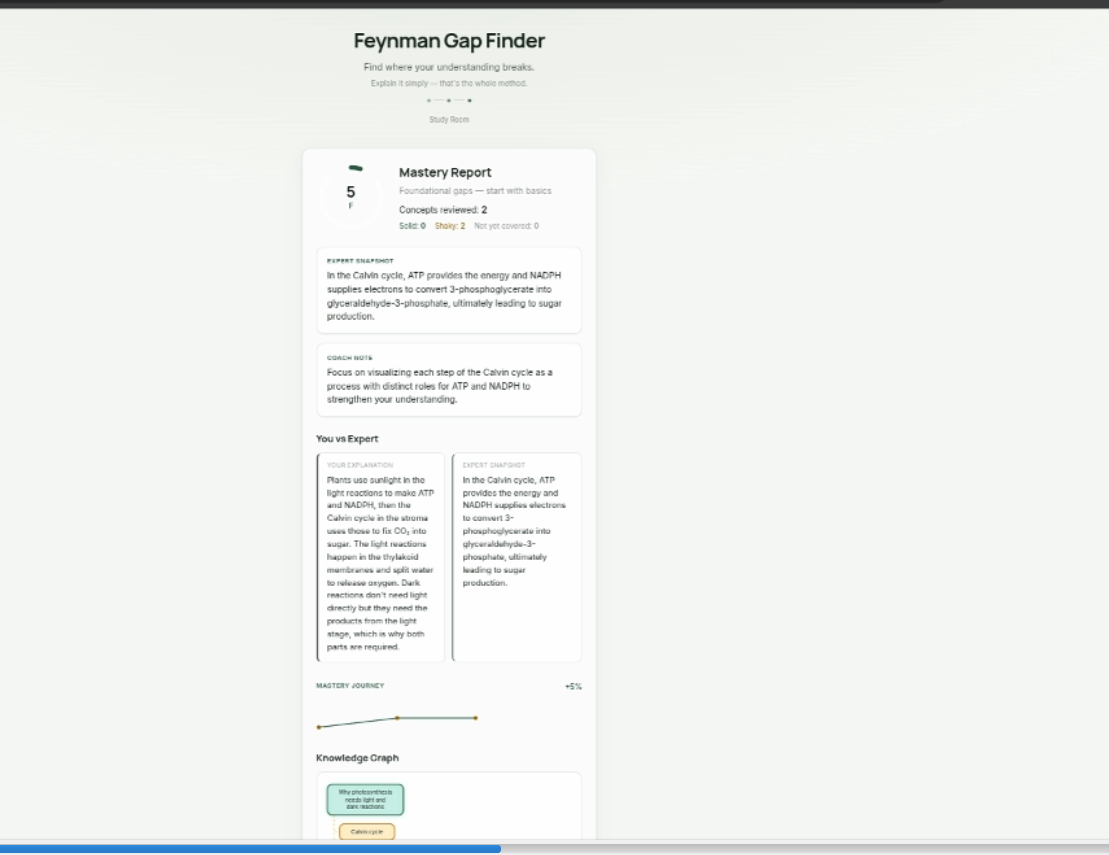
Results of Gap Find
-
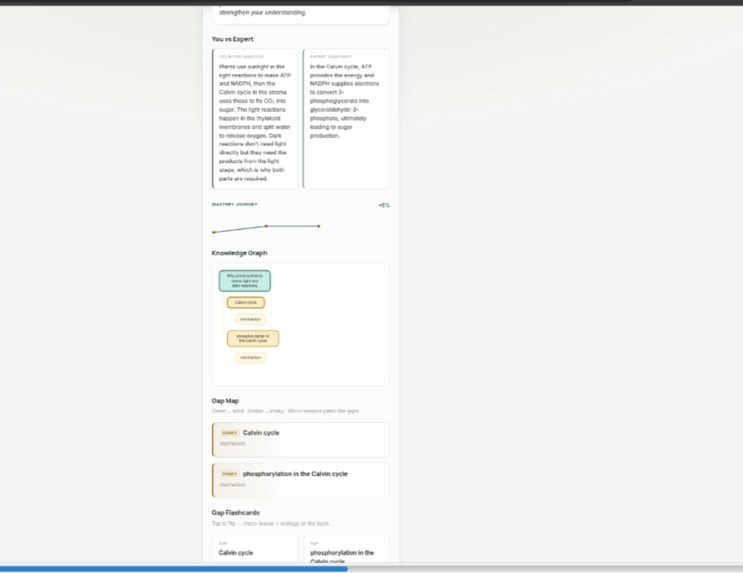
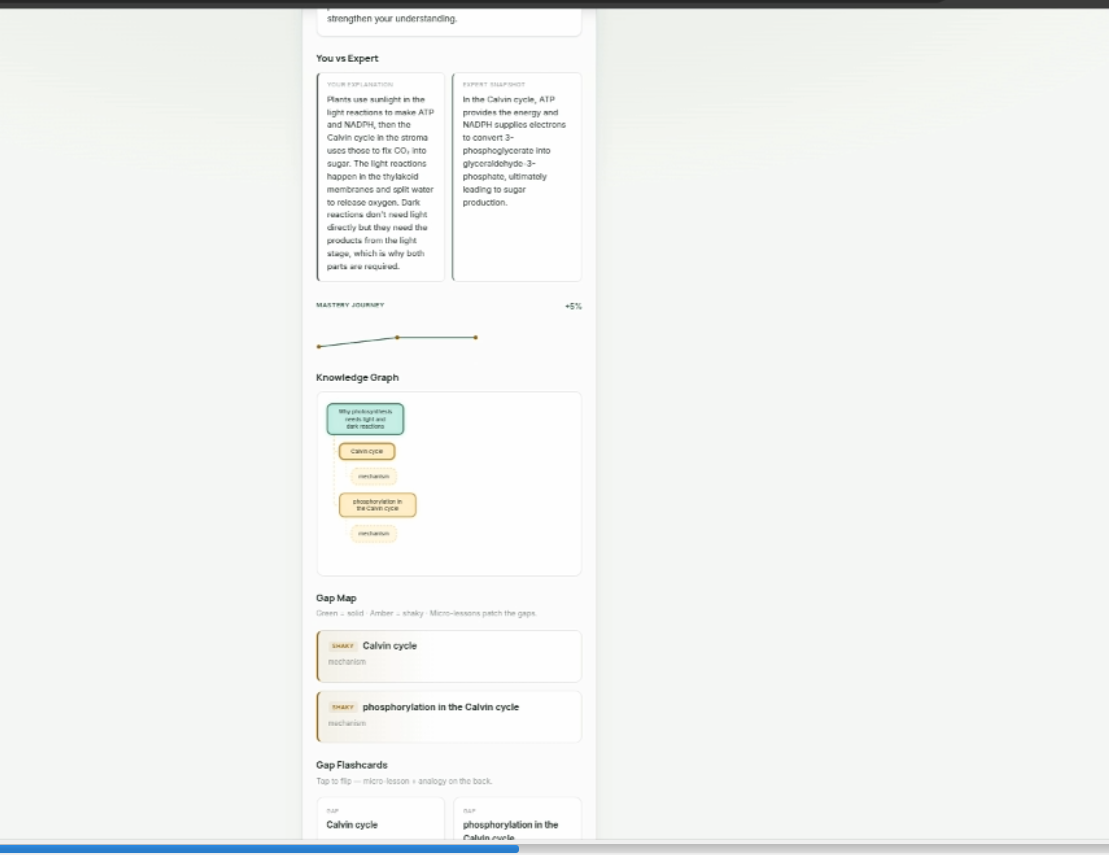
Results of Gap Find
Inspiration
I kept running into the same problem while learning: I could read something, feel like I understood it, and then completely fall apart when I had to explain it myself. Most learning tools tell you whether an answer is right or wrong, but they don't really show you what part of your understanding is weak or why.
That is what pushed me toward the Feynman Technique. If you can explain something simply, you probably understand it. If you can't, the gaps usually show up in the explanation itself. I wanted to turn that idea into an actual interactive system instead of just telling people to "use the Feynman Technique."
So I built Feynman AI around one core loop: explain what you know, detect where your reasoning breaks, understand why the gap exists, help you fix it, and then verify that you actually learned it.
What it does
Feynman AI is an AI-powered learning platform built around the Feynman Technique.
You explain a concept in your own words and Feynman analyzes the explanation to find missing reasoning, misconceptions, weak connections, and areas where the explanation sounds confident but isn't actually supported.
Instead of just giving you the correct answer, it shows you what went wrong and why. The GapFinder turns those findings into a structured view of your learning gaps, including a Knowledge Graph and Gap Map that show how the concepts are connected and where the weak points are.
From there, the system moves into intervention. It creates a personalized learning path and takes you into a Study Room where you can work through the gaps with AI guidance.
The Study Room is also collaborative. You can use video calls, chat, share images and videos, and work together on an interactive drawboard instead of switching between a bunch of different tools.
The whole thing is designed around a diagnosis → intervention → verification loop, rather than just being another chatbot that answers questions.
How I built it
The core experience is built as a continuous learning pipeline:
- the learner explains a concept in their own words
- the AI analyzes the explanation instead of only checking the final answer
- detected gaps and misconceptions are structured into individual learning issues
- related concepts are connected through the Knowledge Graph
- the Gap Map gives a visual overview of what is solid and what needs work
- personalized interventions are generated for the detected gaps
- the learner moves into the Study Room to work through those interventions
- follow-up explanations and answers are used to verify whether the gap was actually fixed
- the system can continue the loop instead of treating the first correct answer as the end
I also added an explainable Evidence/Reasoning Trace to the gap diagnosis. For every detected gap or misconception, the learner can open "Why we detected this" and see the exact parts of their explanation or follow-up answers that contributed to the diagnosis, along with a simple explanation of the missing reasoning. The goal is to make the AI's diagnosis inspectable instead of asking the learner to blindly trust it.
The collaborative layer brings the learning experience into one place with real-time study-room interaction, including video calling, chat, media sharing, and the shared drawboard.
Challenges I ran into
The hardest part wasn't getting an AI to generate an explanation. It was getting it to reason about a learner's explanation without turning every imperfect sentence into a "knowledge gap."
There is a big difference between someone explaining something differently and someone actually misunderstanding it. I had to design the diagnosis around evidence from what the learner actually said, rather than just comparing their response against a textbook answer.
Another challenge was making the diagnosis useful after it happens. A list of "you got these things wrong" isn't really a learning system. The output has to connect naturally into an intervention and then into verification.
The Knowledge Graph and Gap Map also needed to communicate something useful without overwhelming the learner. The UI had to make relationships and weak areas understandable at a glance.
And then there was the challenge of bringing collaborative learning into the same flow. Video, chat, shared media, and a drawboard can easily feel like separate features bolted onto an AI product, so I focused on making them part of the actual study workflow.
Accomplishments I'm proud of
I'm most proud that Feynman AI isn't just an AI tutor that gives answers.
It starts with the learner's own explanation and tries to understand how they are thinking. It can identify gaps, show the reasoning behind the diagnosis, map related concepts, create targeted interventions, and then verify whether the learner's understanding improved.
I'm also proud of combining that AI learning loop with a collaborative Study Room. A learner can go from discovering a gap to actually working through it with AI or other people without leaving the platform.
The Evidence/Reasoning Trace is another feature I'm particularly proud of because explainability is important when the system is making a claim about someone's understanding.
What I learned
I learned that personalized learning is less about generating more content and more about identifying the exact thing a person doesn't understand.
I also learned that an AI system becomes much more useful when it can explain its own conclusions. If the system says "you have a misconception," the learner should be able to ask why and see the evidence behind that conclusion.
Most importantly, I learned that the Feynman Technique works really well as a product architecture, not just as a study tip. Explanation becomes diagnosis, diagnosis becomes intervention, and intervention becomes another opportunity to explain and verify.
What's next for Feynman AI
The next step is making the diagnosis even more precise and adaptive as the learner goes through multiple explanation and verification cycles.
I'd also like to make the Knowledge Graph progressively smarter as a learner studies more concepts, so it can show how understanding develops over time rather than only representing a single session.
On the collaboration side, I'd like to expand the Study Room into a richer shared learning environment where learners can build explanations together, teach each other, and use the AI as a facilitator rather than replacing the human interaction.
Ultimately, I want Feynman AI to become a place where learning isn't measured by how much content you consumed, but by how well you can actually explain, connect, and apply what you learned.
Built With
- excalidraw
- express.js
- javascript
- node.js
- openai
- socket.io


Log in or sign up for Devpost to join the conversation.