-
-
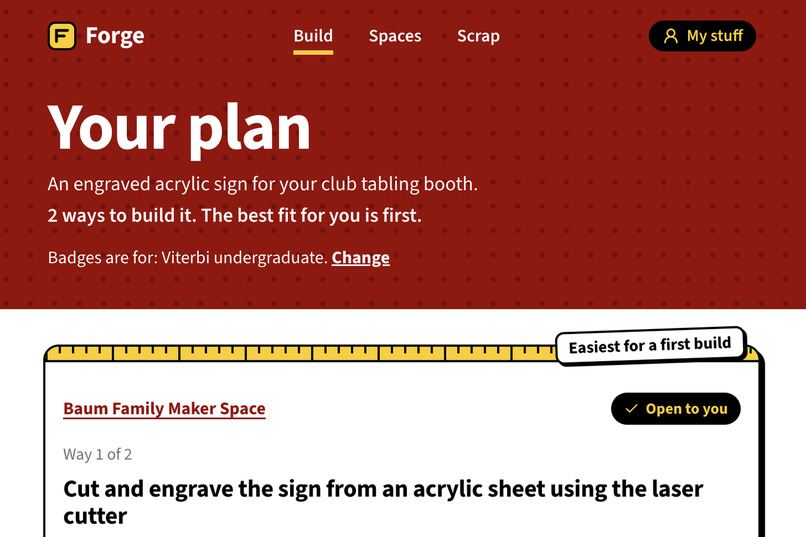
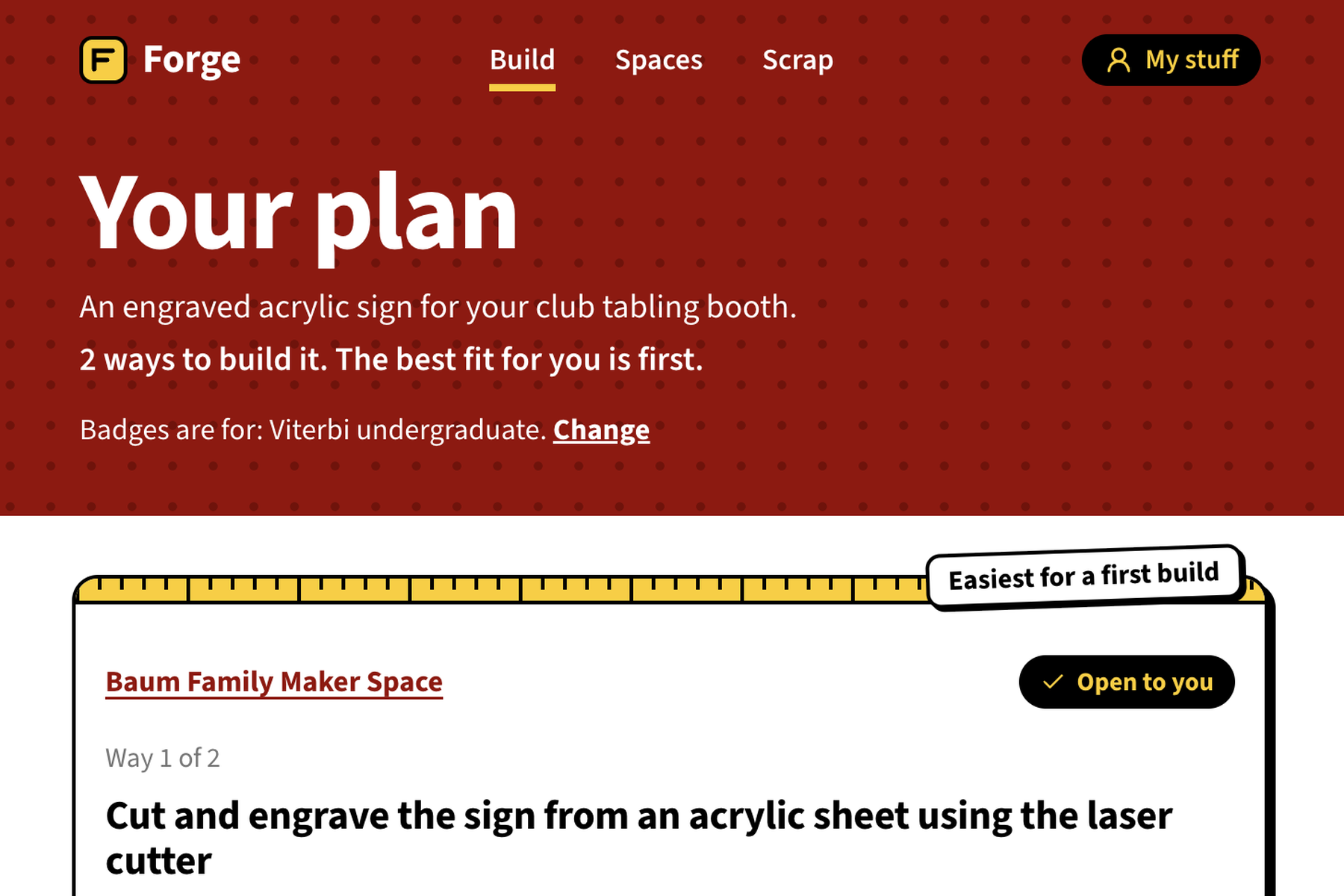
The plan for a Viterbi undergraduate: the Maker Space is open to them.
-
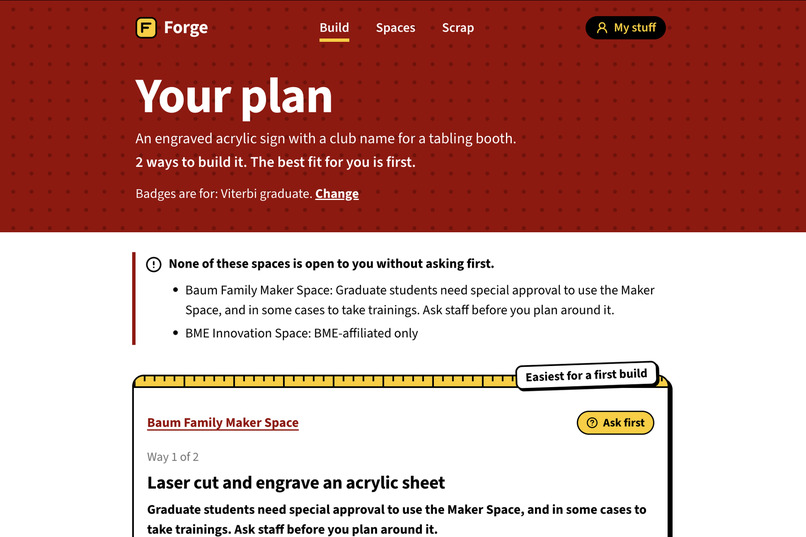
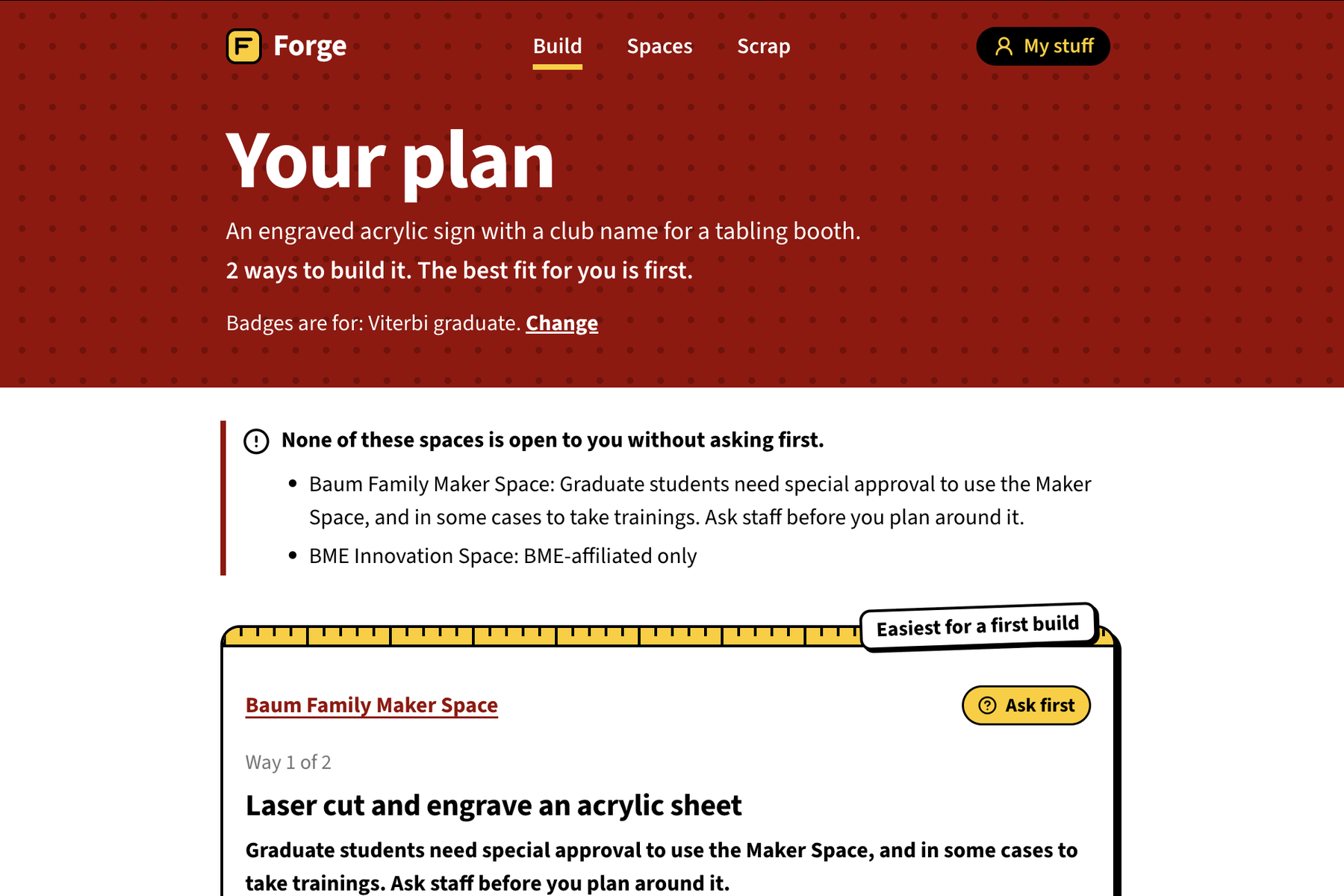
Same idea, different student: a Viterbi graduate has to ask first.
-
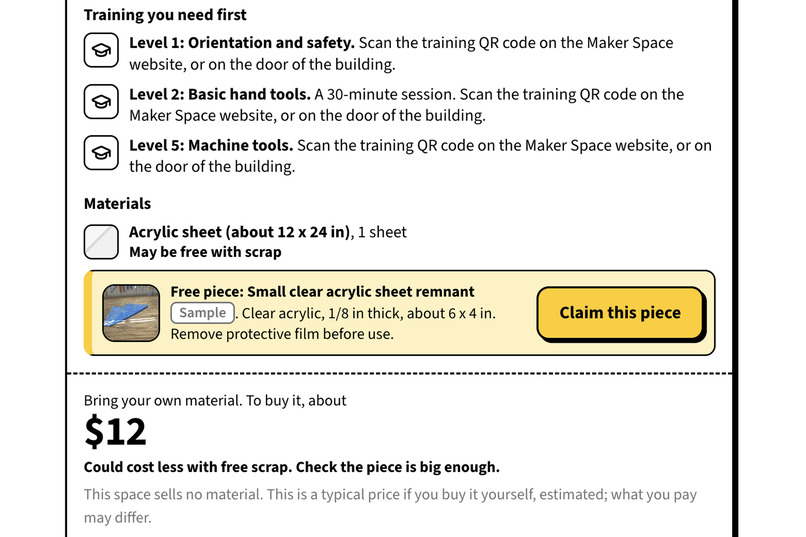
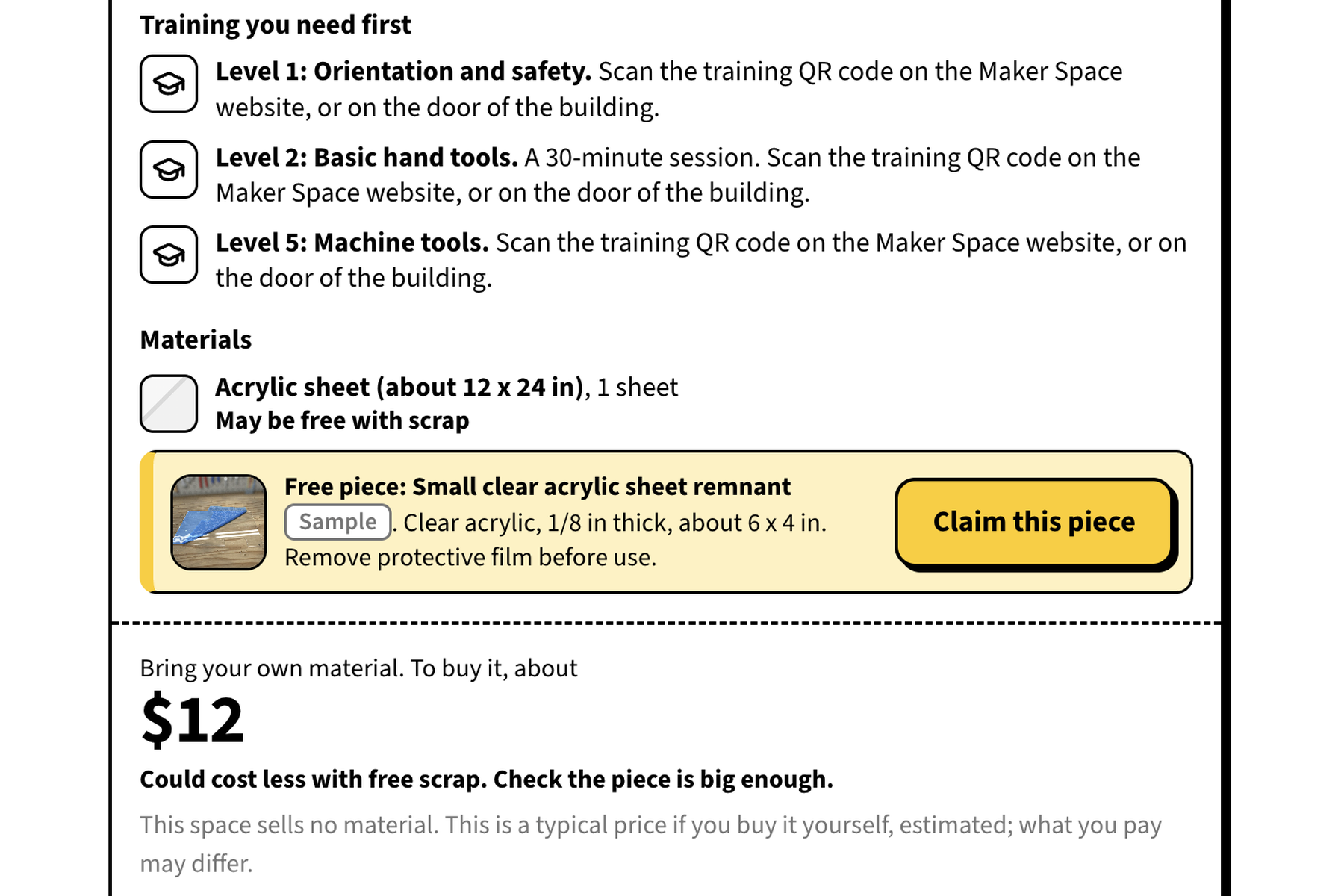
Trainings in order, materials, estimated cost and a leftover piece to claim.
-
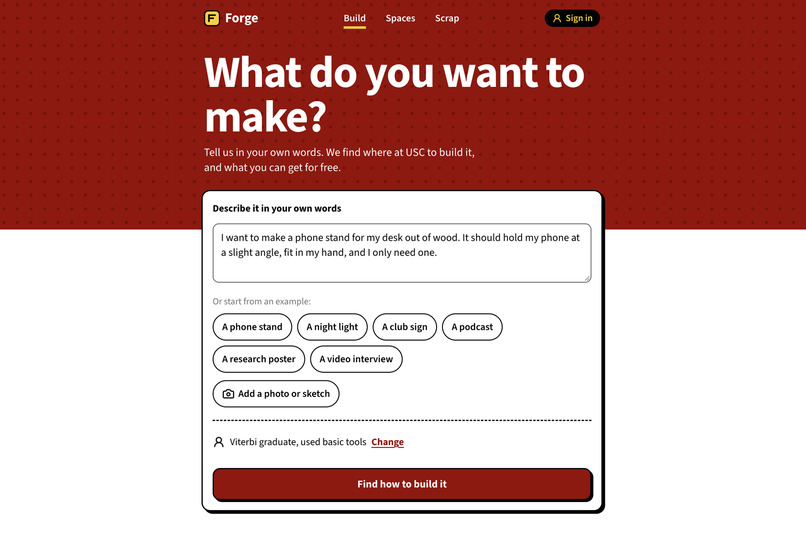
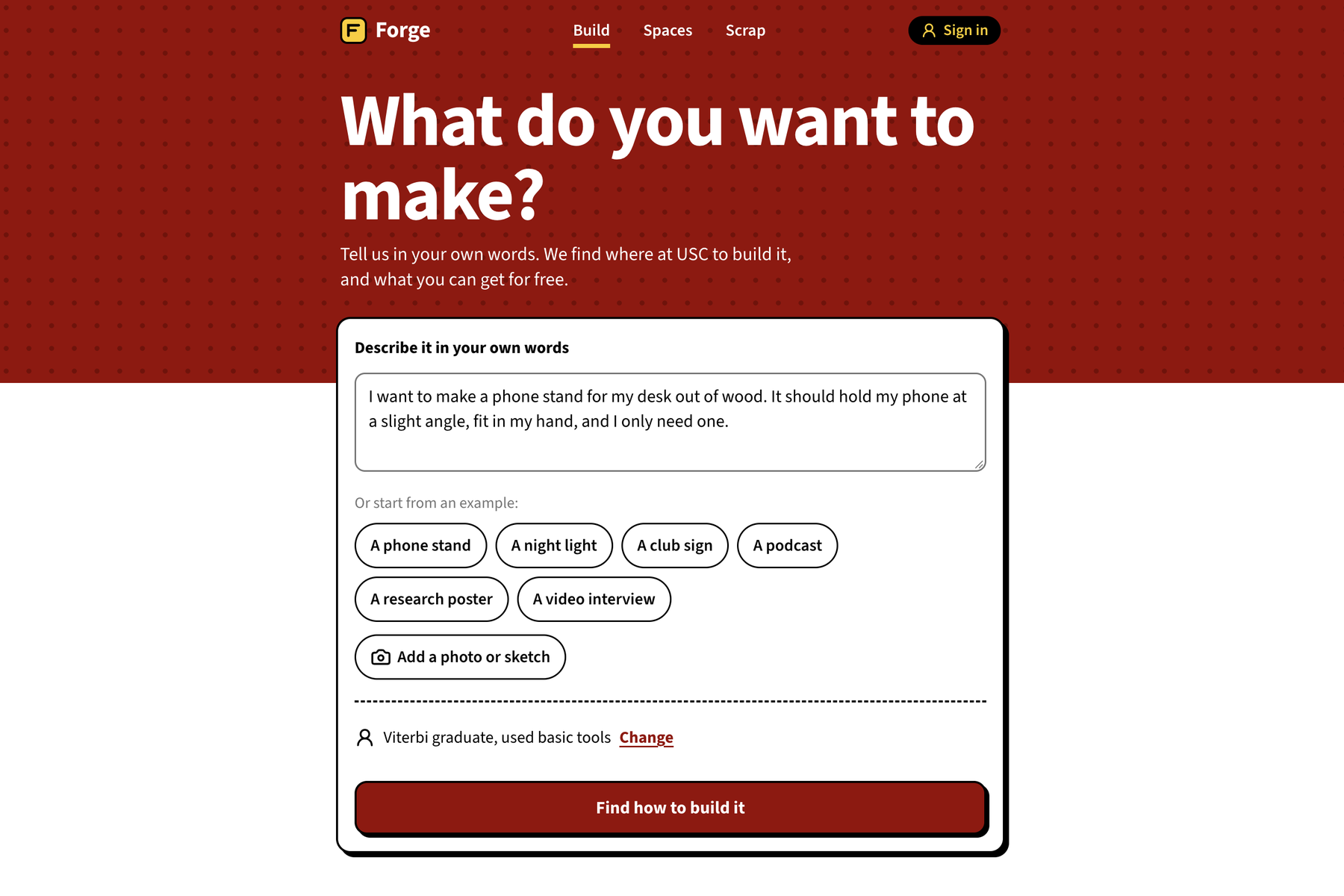
Describe what you want to make, in your own words.
-
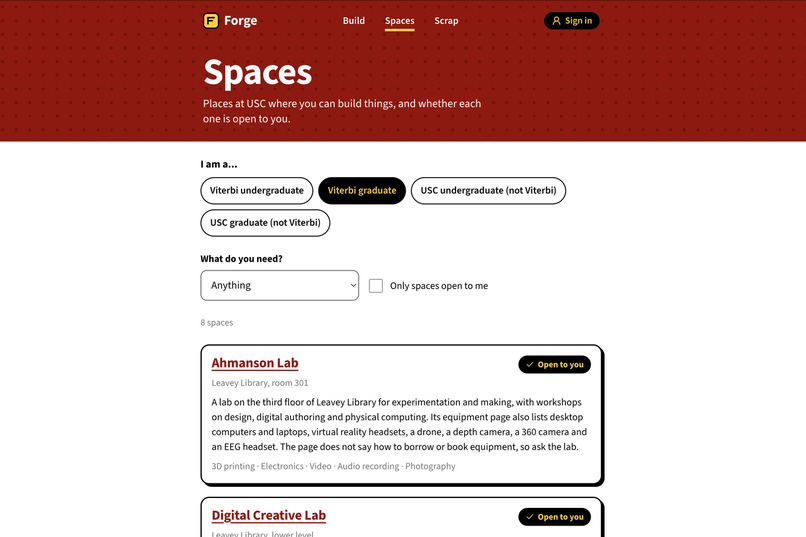
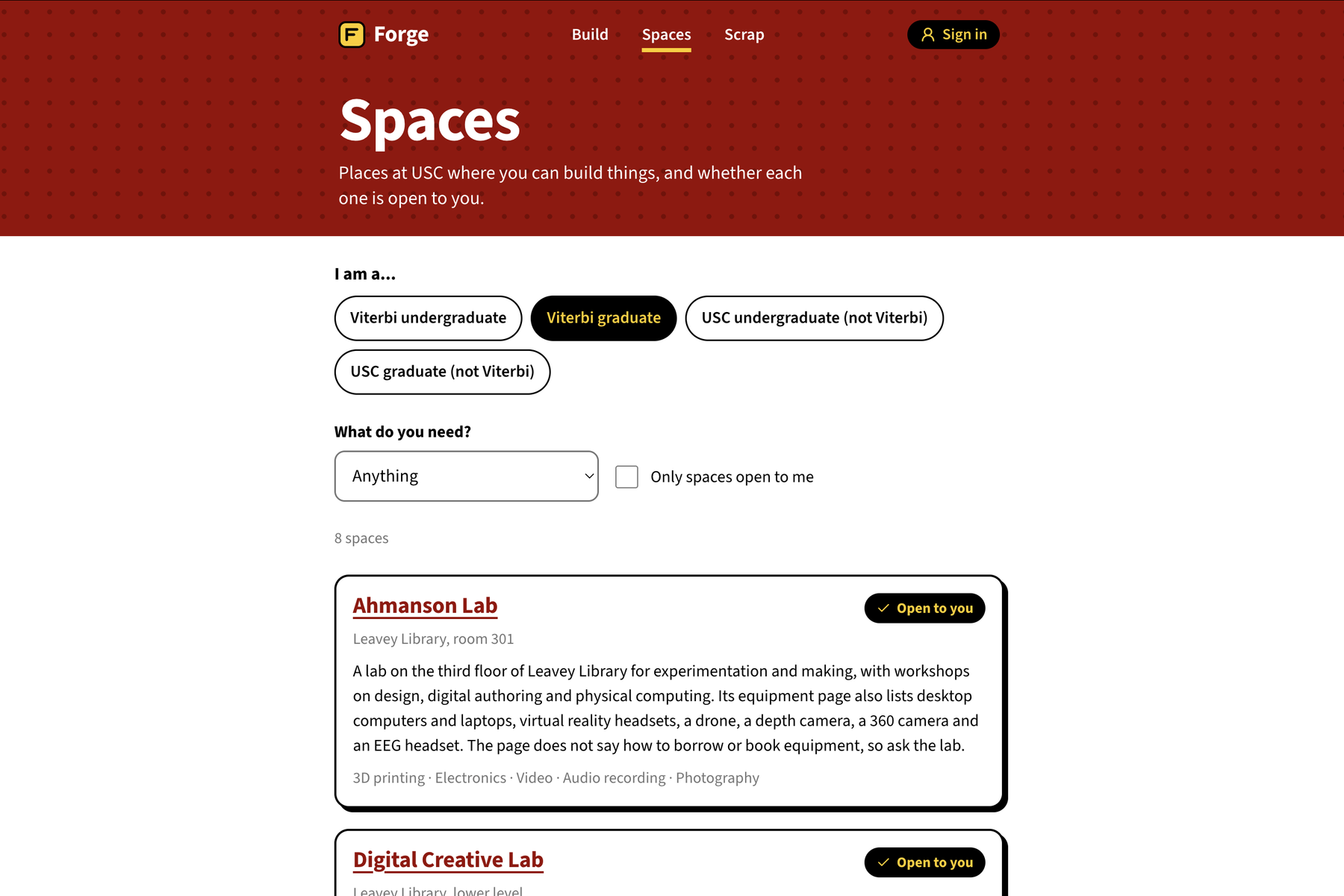
Eight USC spaces, each showing whether it is open to you.
-
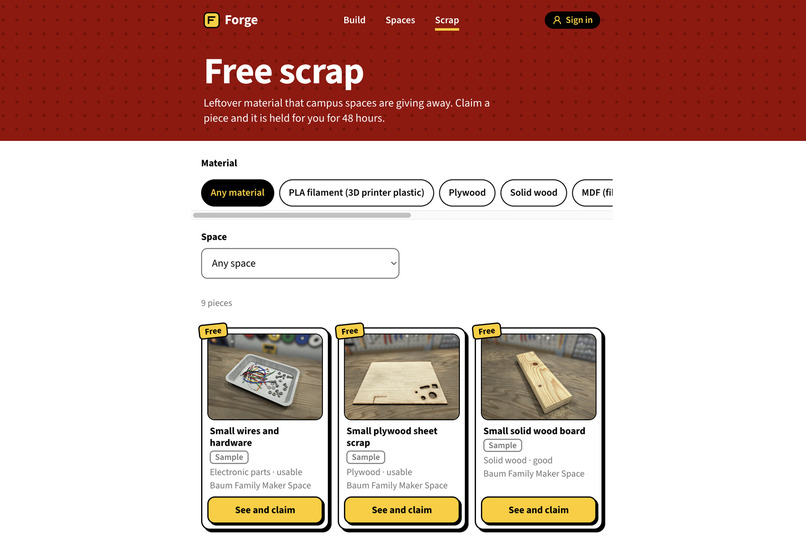
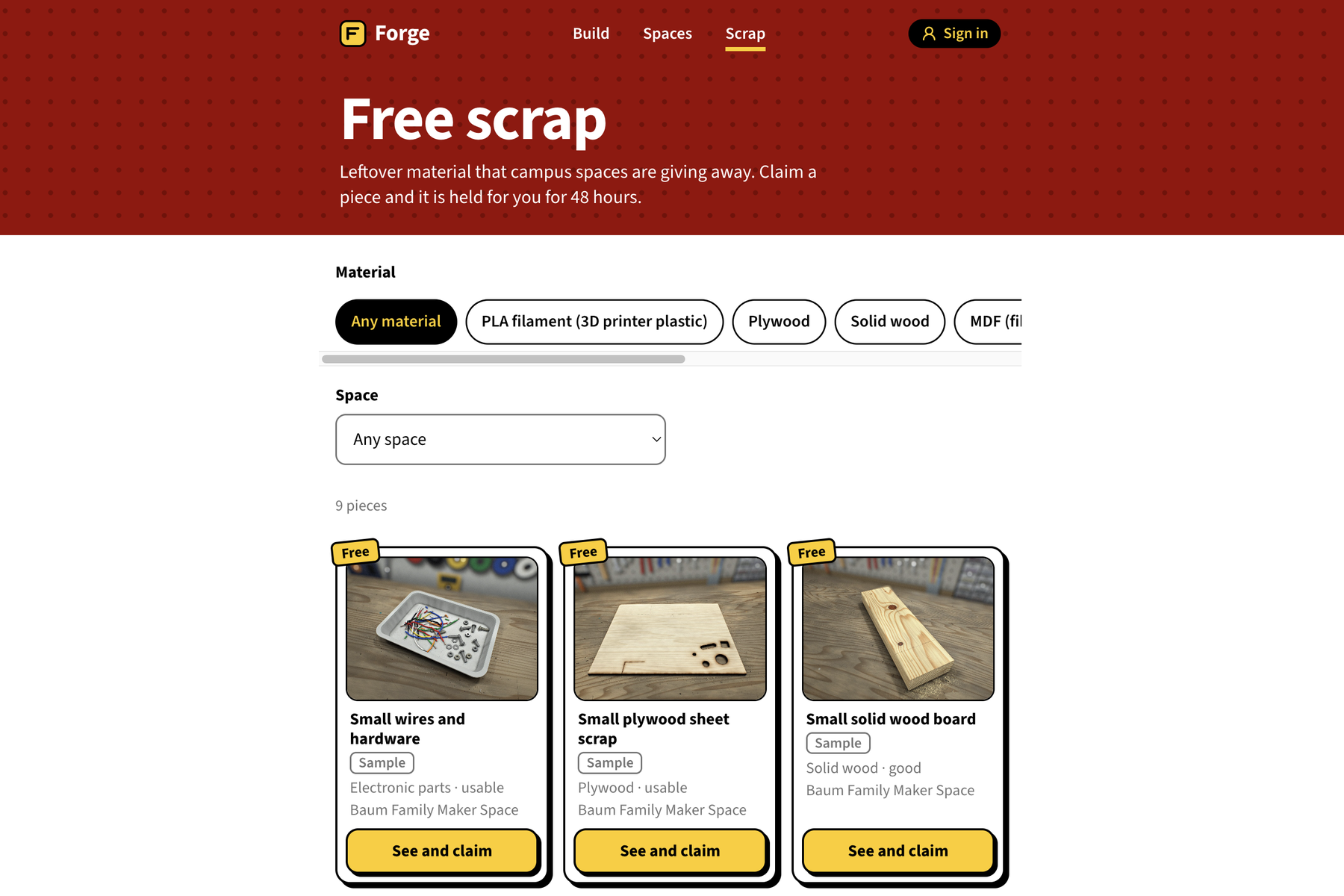
The scrap exchange: free leftovers posted by staff.
-
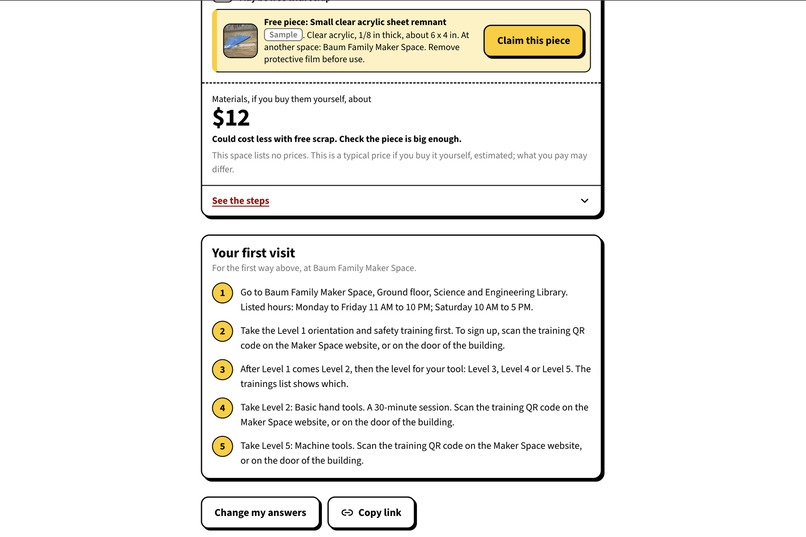
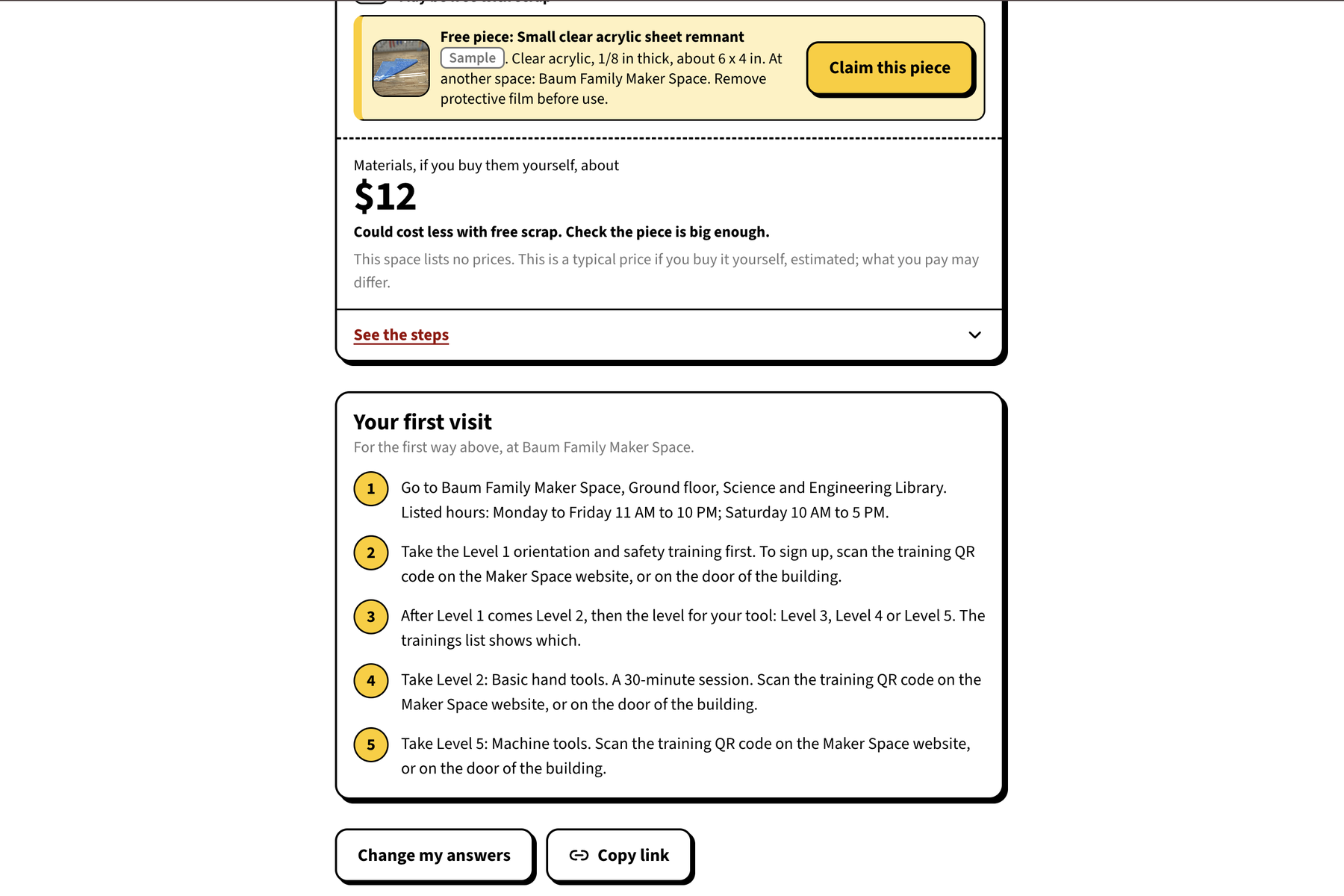
A first-visit checklist: where to go and which trainings to take.
-
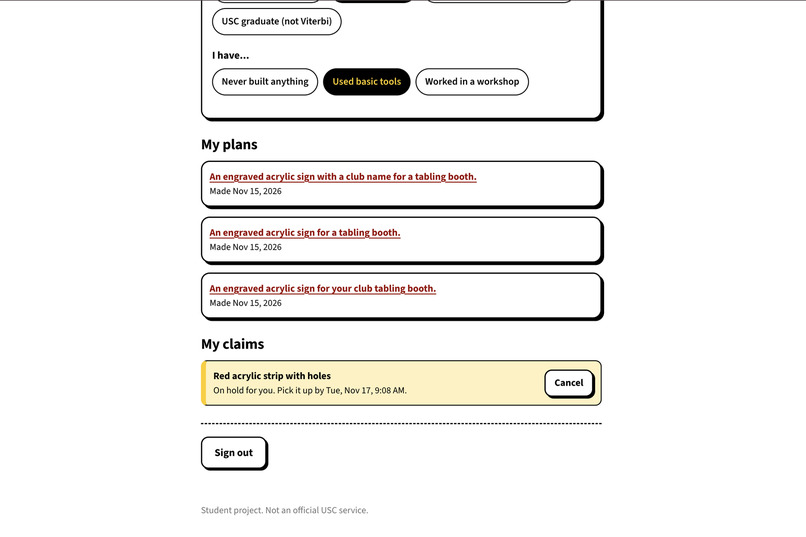
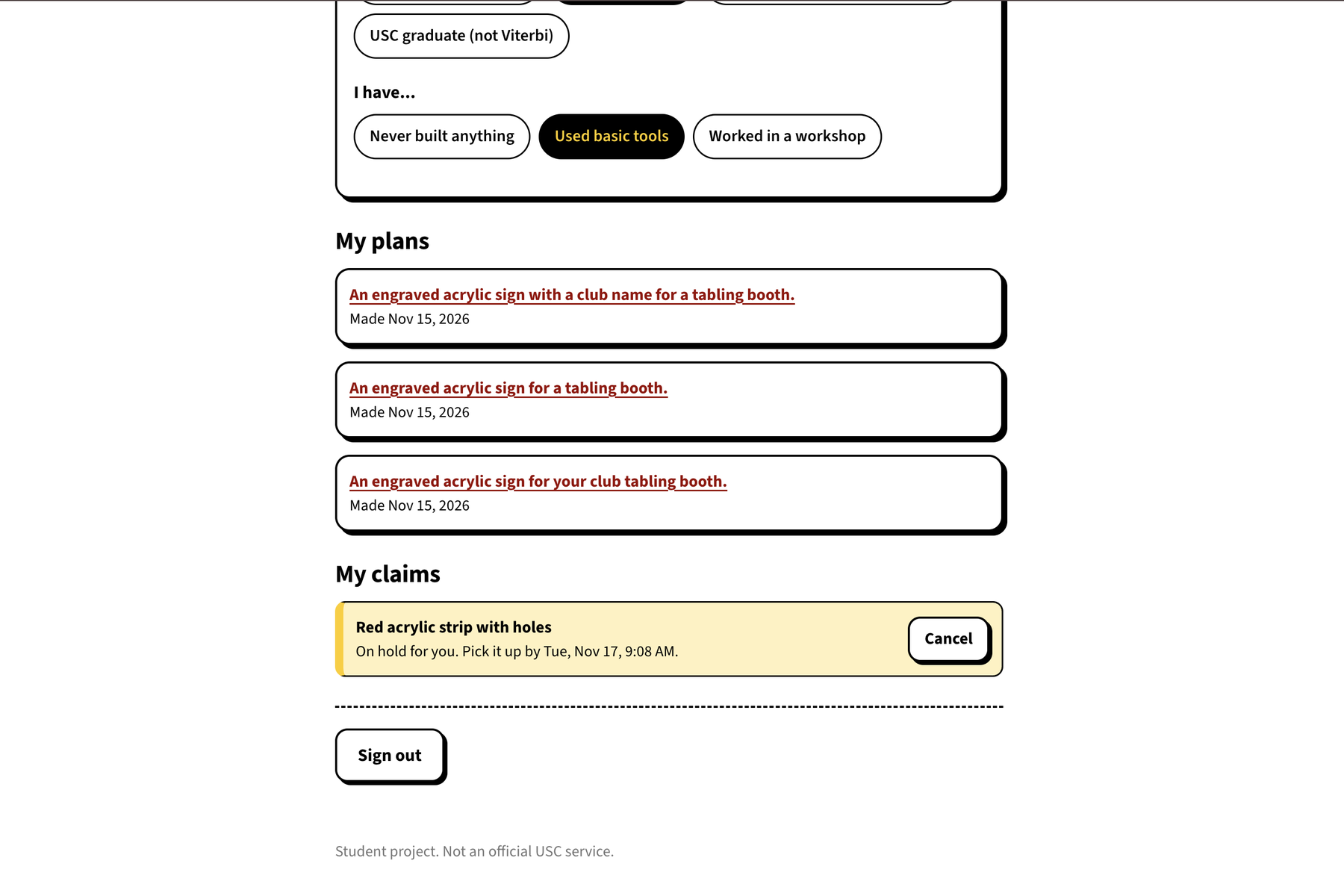
Saved plans, and a claimed piece held for 48 hours.
Inspiration
I work at USC's Baum Family Maker Space. A mechanical engineering freshman once walked in asking for scrap wood. He had a project in mind, and questions: where on campus can I build this, am I allowed in, what will it cost?
USC has labs, shops and studios across several schools, each with its own website, trainings and access rules. A first-time builder doesn't know the words to search for, and leftover material that students would happily use has no way of finding them.
What it does
Forge is a campus build planner. A student describes an idea in their own words, optionally adds a sketch, and answers up to three tap questions. Forge returns up to three ways to build it at USC. Each one shows:
- the space, and whether it is open to that student, needs asking first, or is not open
- the trainings required, in order, and how to sign up
- the materials and an estimated cost
- leftover material from the scrap exchange that may cover part of it
The scrap exchange lets staff post leftovers by photo. The AI drafts the listing, staff correct it, and unsafe items such as batteries are blocked. Students claim a piece and collect it in person from staff.
Forge lists eight USC spaces today. Every fact is labelled "Estimated" until that space's own staff confirm it.
How we built it
Next.js and TypeScript on Vercel, Supabase for the database and photo storage, and Google Gemini Flash-Lite for planning and for reading scrap photos. I directed the spec, the data and the testing; Claude Code wrote the code.
The model proposes; code decides. The model reads the idea and suggests ways to build it. Code then checks that every tool exists in that space's data, works out eligibility and trainings from rules, and computes cost from stored prices. The model never writes a price.
Challenges we ran into
- The model varies between runs. The same idea can come back with different routes, so the facts that matter are computed in code.
- Most space data comes from public pages. Forge labels it estimated and defaults unknown access to "Ask first", so nobody is sent somewhere they can't enter.
- The AI reads material well and size badly. On scrap photos it named the material correctly and got most sizes wrong, so the listing form is editable and Forge doesn't promise that a leftover is big enough.
- No paid API key. The app had to be developed against recorded responses and run on a free tier.
Accomplishments that we're proud of
- On 21 reviewed test ideas, run once against the live model, 20 got an accepted space as the top route, and all 45 eligibility badges were correct. The one miss sent a tote bag to a theatre scene shop.
- Over 130 automated tests, plus layout and accessibility checks at phone, tablet and desktop widths.
- A working scrap exchange, from photo to claim to pickup, that blocks unsafe items.
- An app that says what it doesn't know: every estimate is labelled.
What we learned
- Let the model do what it is good at, understanding a beginner's description, and keep rules, prices and eligibility in code.
- Saying "estimated" out loud is more useful than sounding certain. It also gives each space's staff a reason to take over their own page.
- Measure once and report the miss. One explained failure taught me more about the data than the twenty passes.
What's next for Forge
Not finished yet: sign-in runs in a test mode, and the scrap photos in the demo are generated samples, not real Maker Space stock.
- A pilot semester at the Maker Space with one first-year course
- USC single sign-on, and each space's staff confirming their own page
- Research labs and design teams posting leftovers as scrap-only sources
- Matching scrap by size as well as material
Built With
- claude
- gemini
- next.js
- postgresql
- react
- supabase
- typescript
- vercel

