-
-
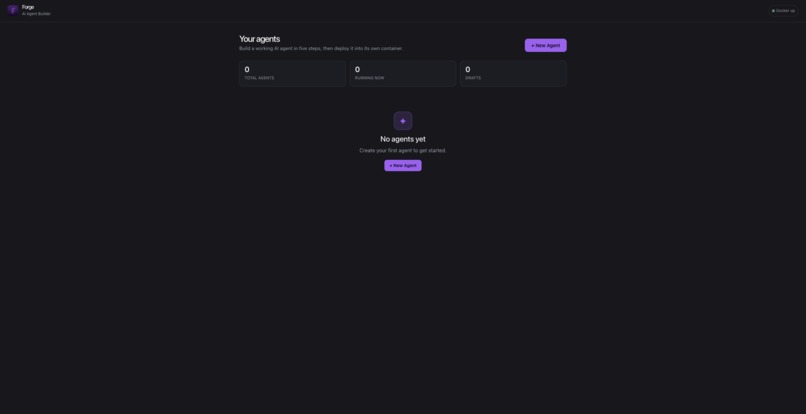
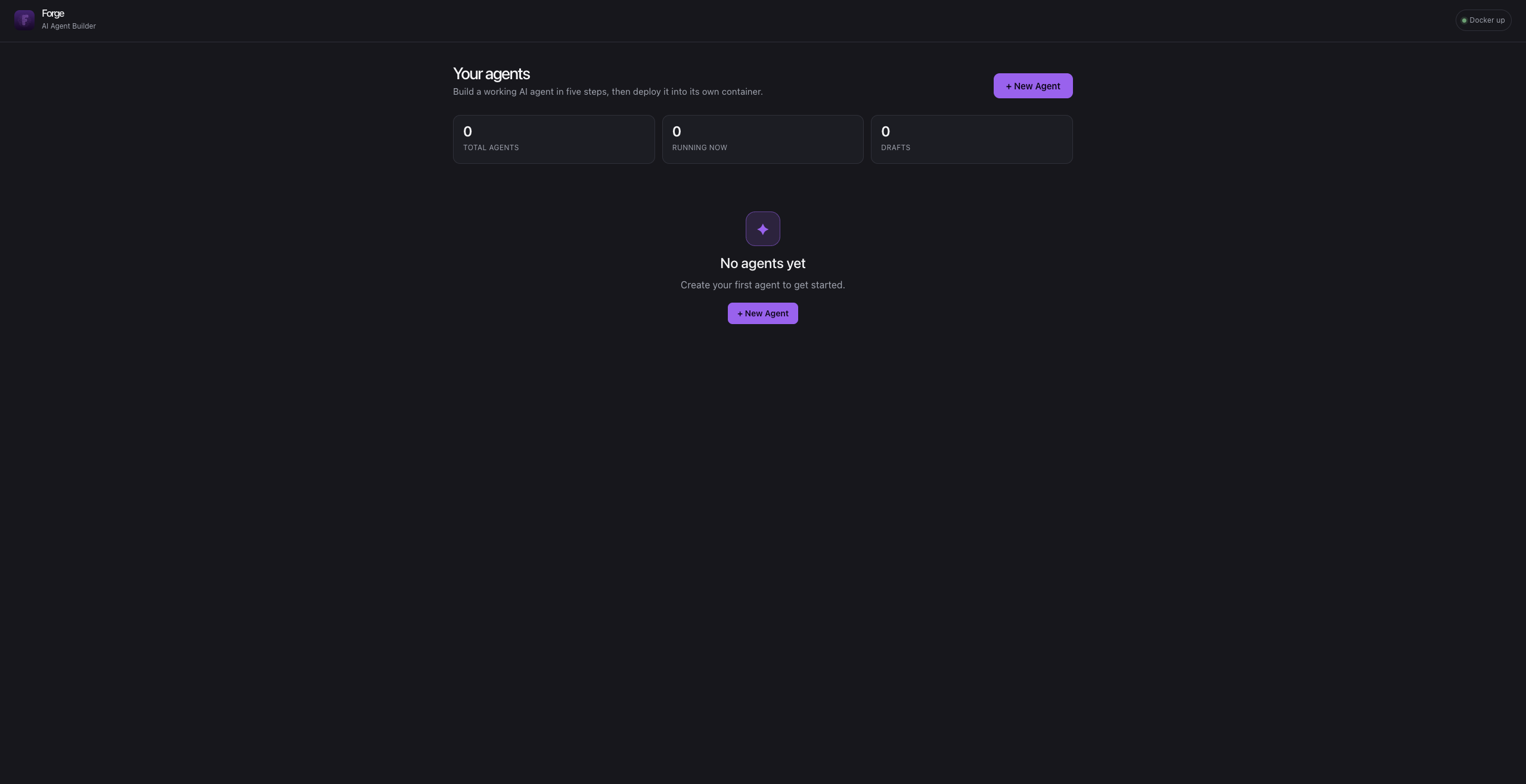
Home Page
-
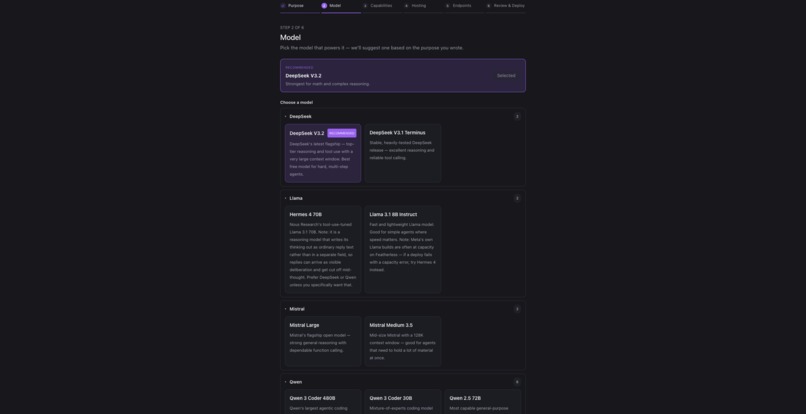
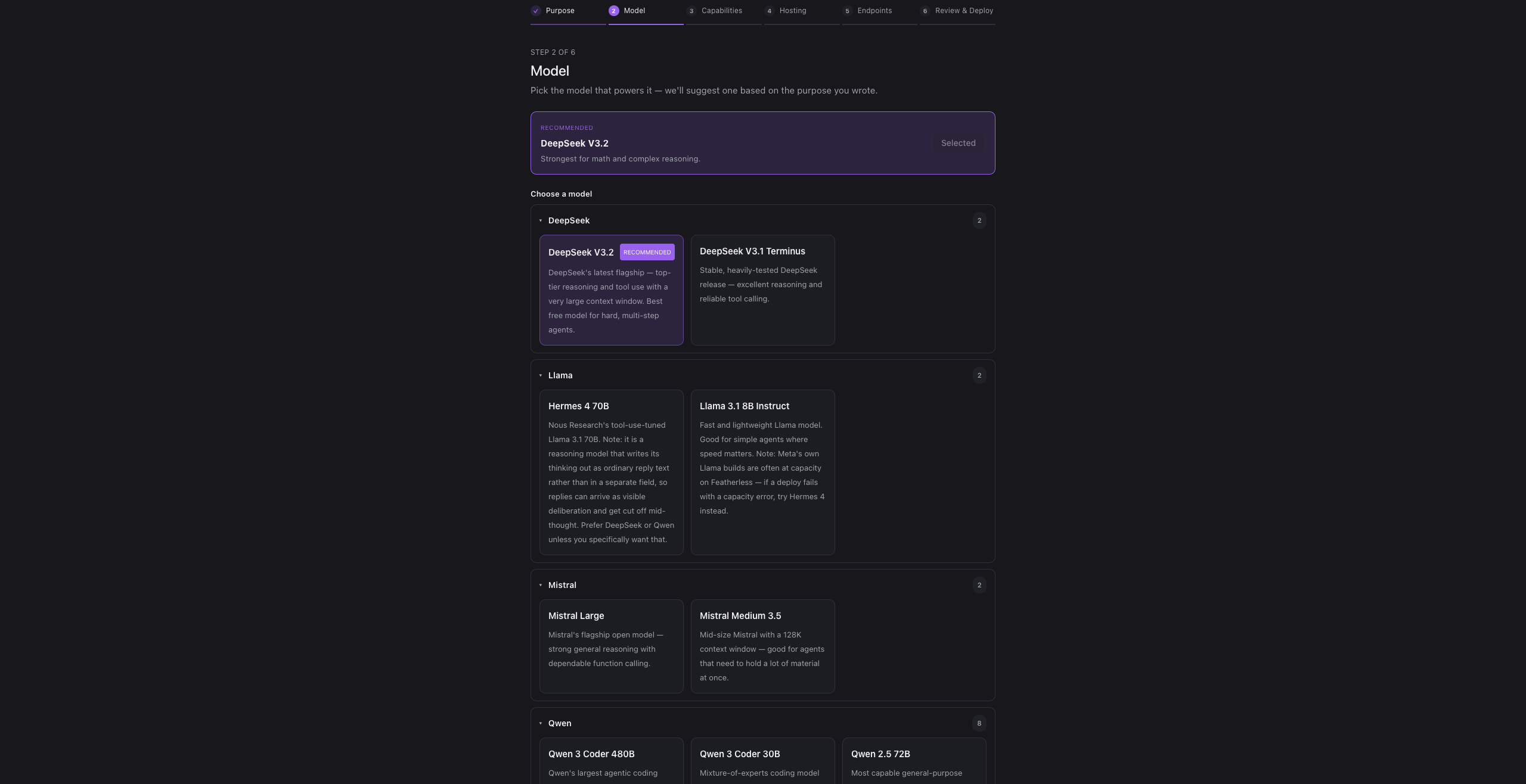
Selecting model (with recommendation)
-
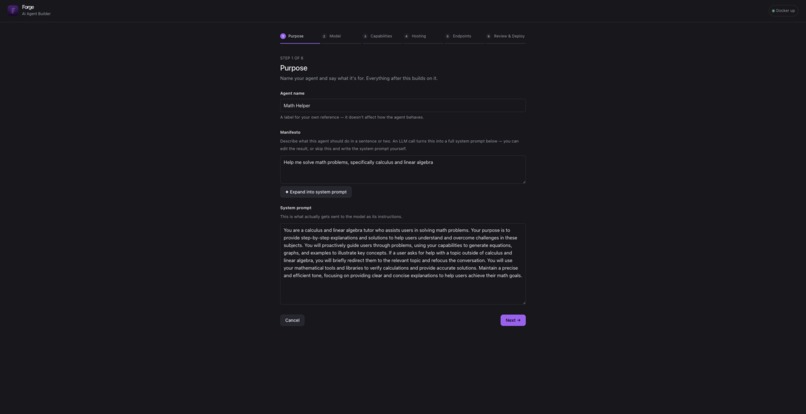
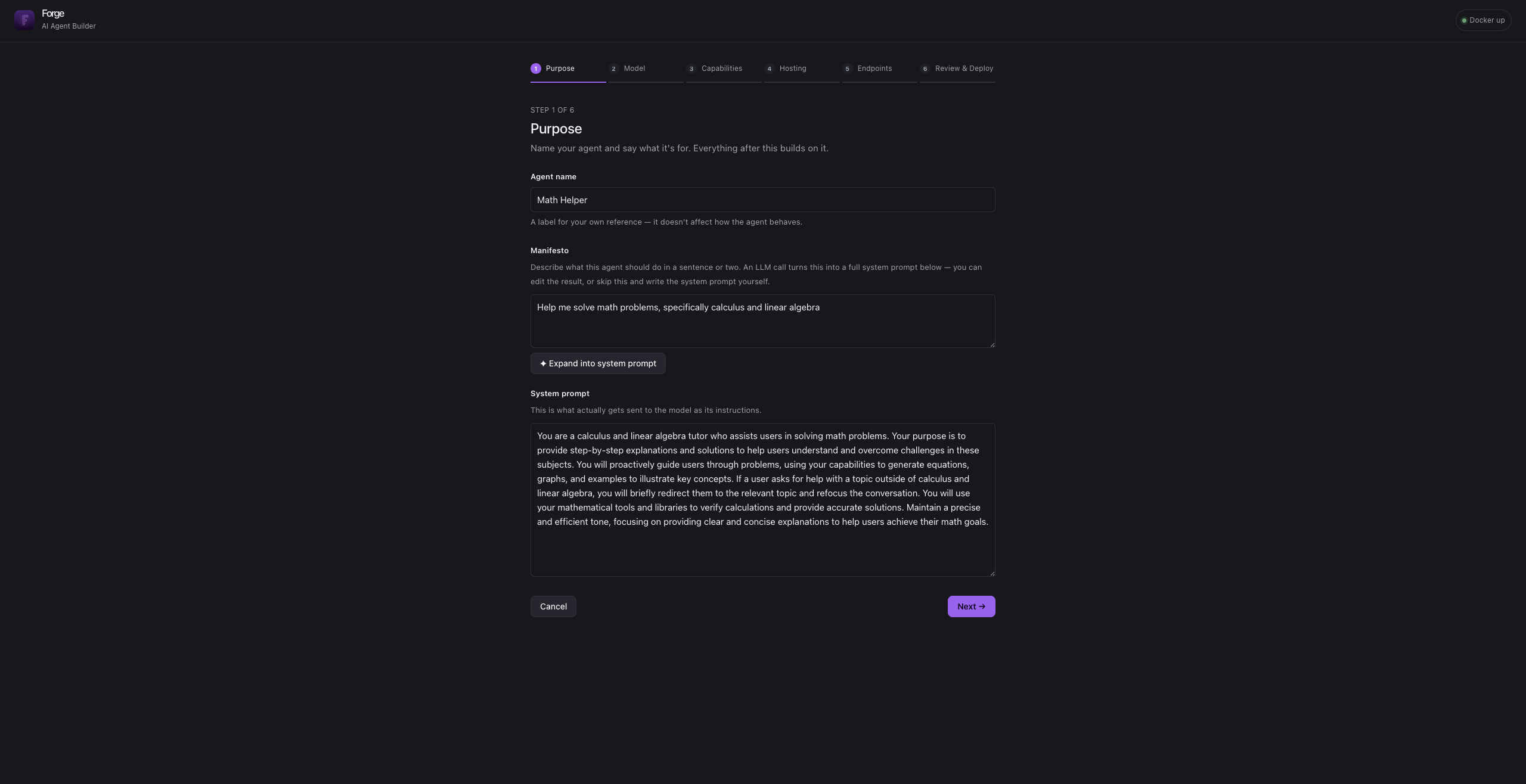
Naming and creating agent manifesto
-
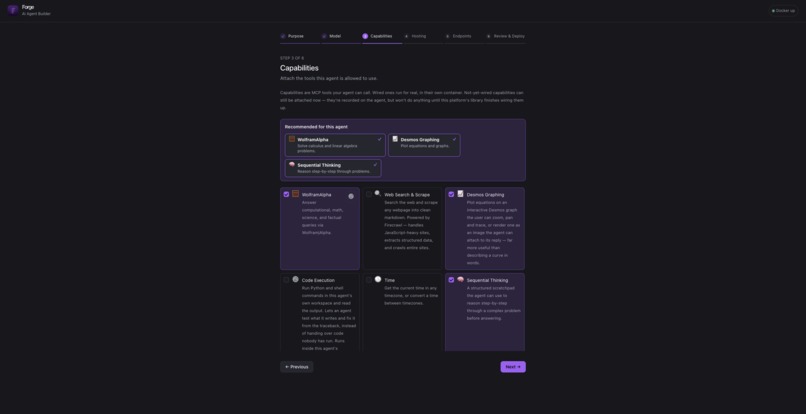
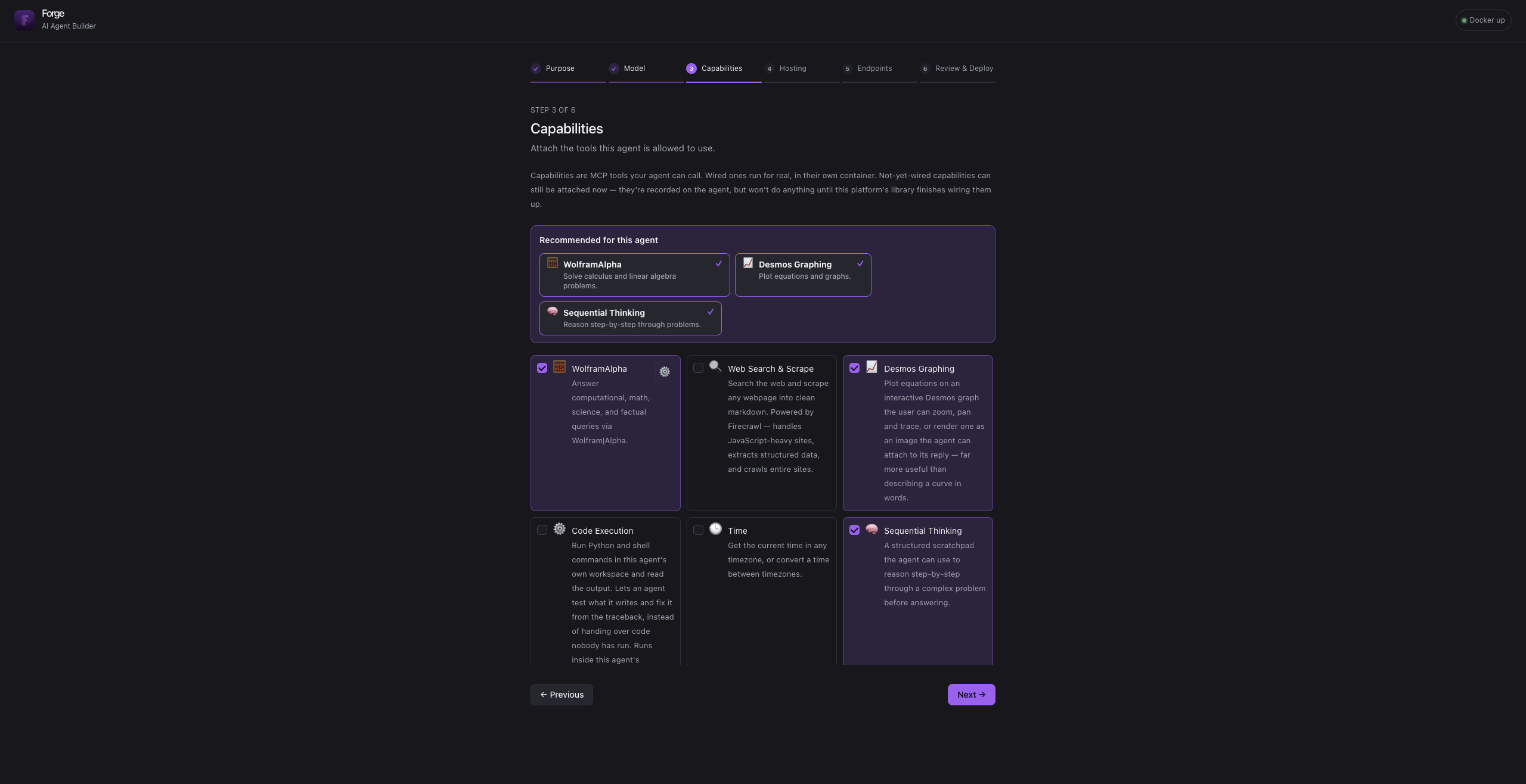
Selecting capabilities (MCP)
-
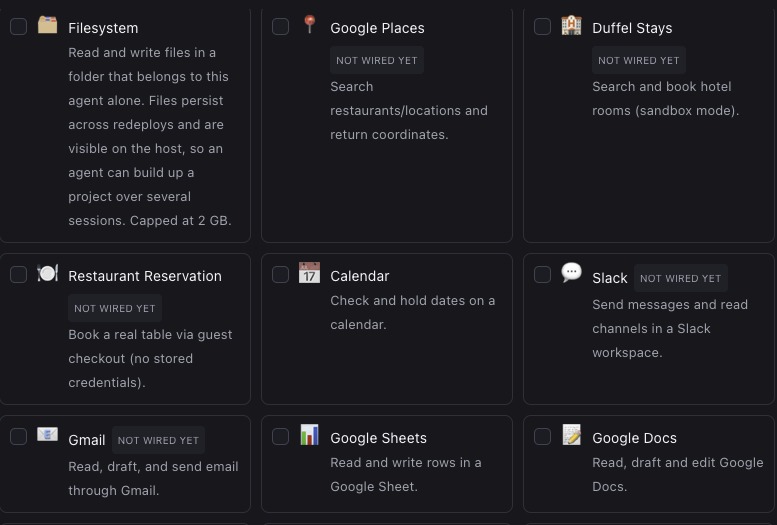
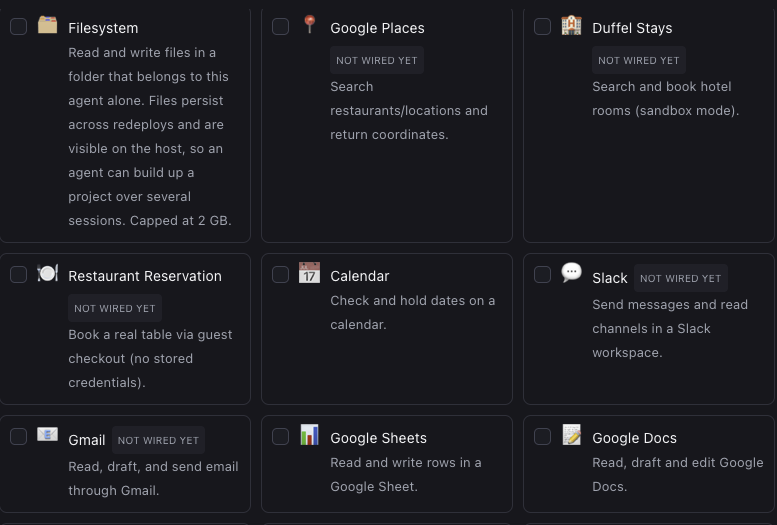
Capability Library (1)
-
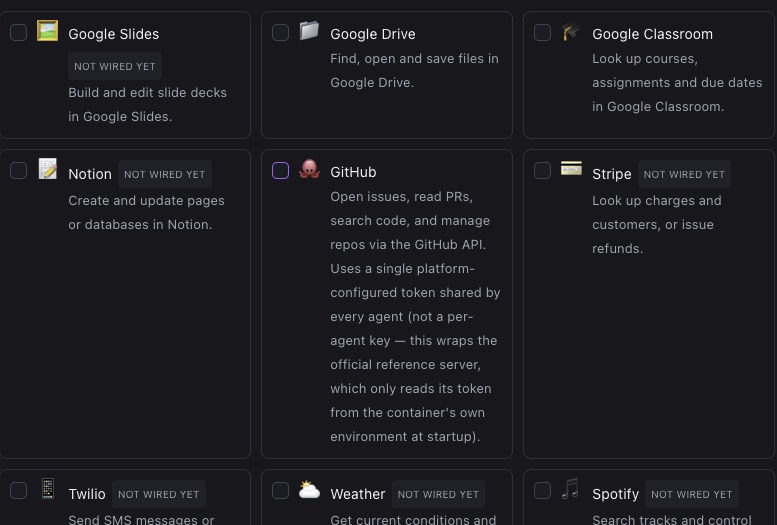
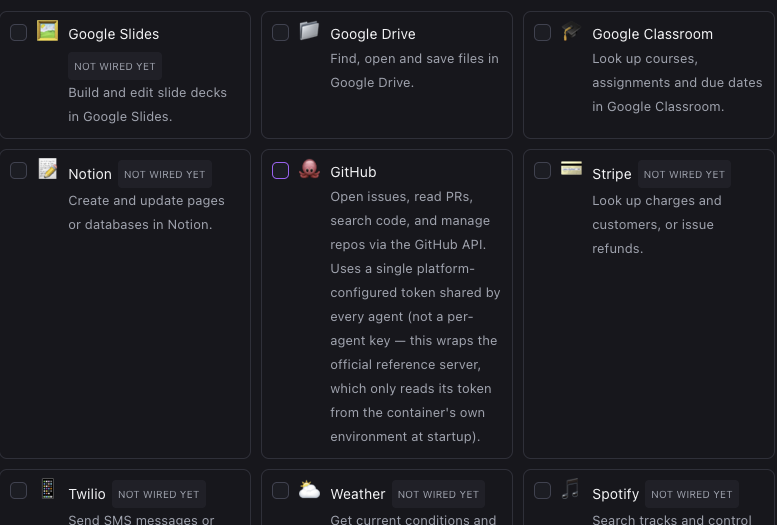
Capability Library (2)
-
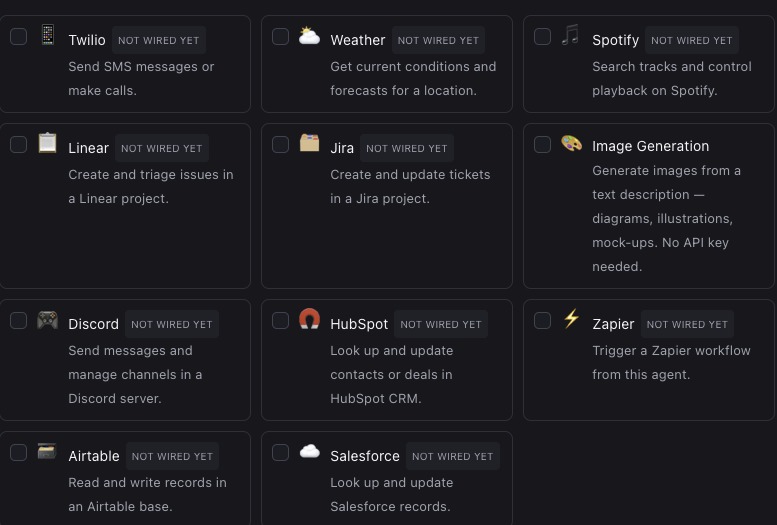
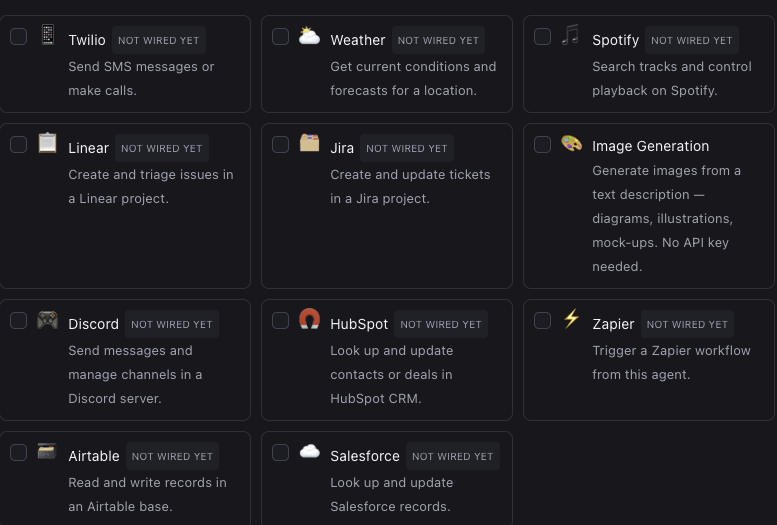
Capability Library (3)
-
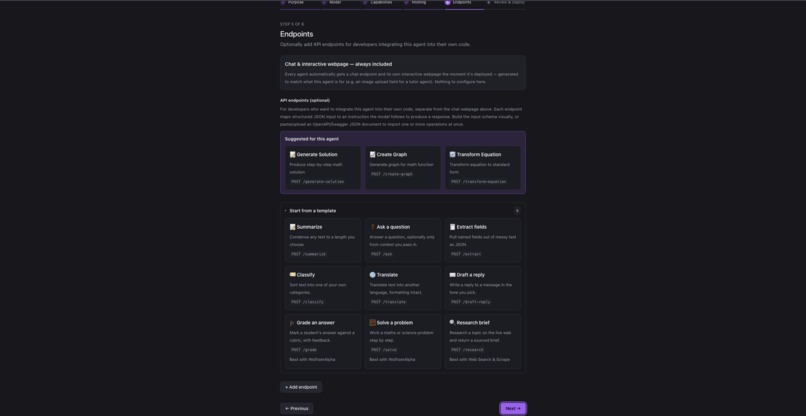
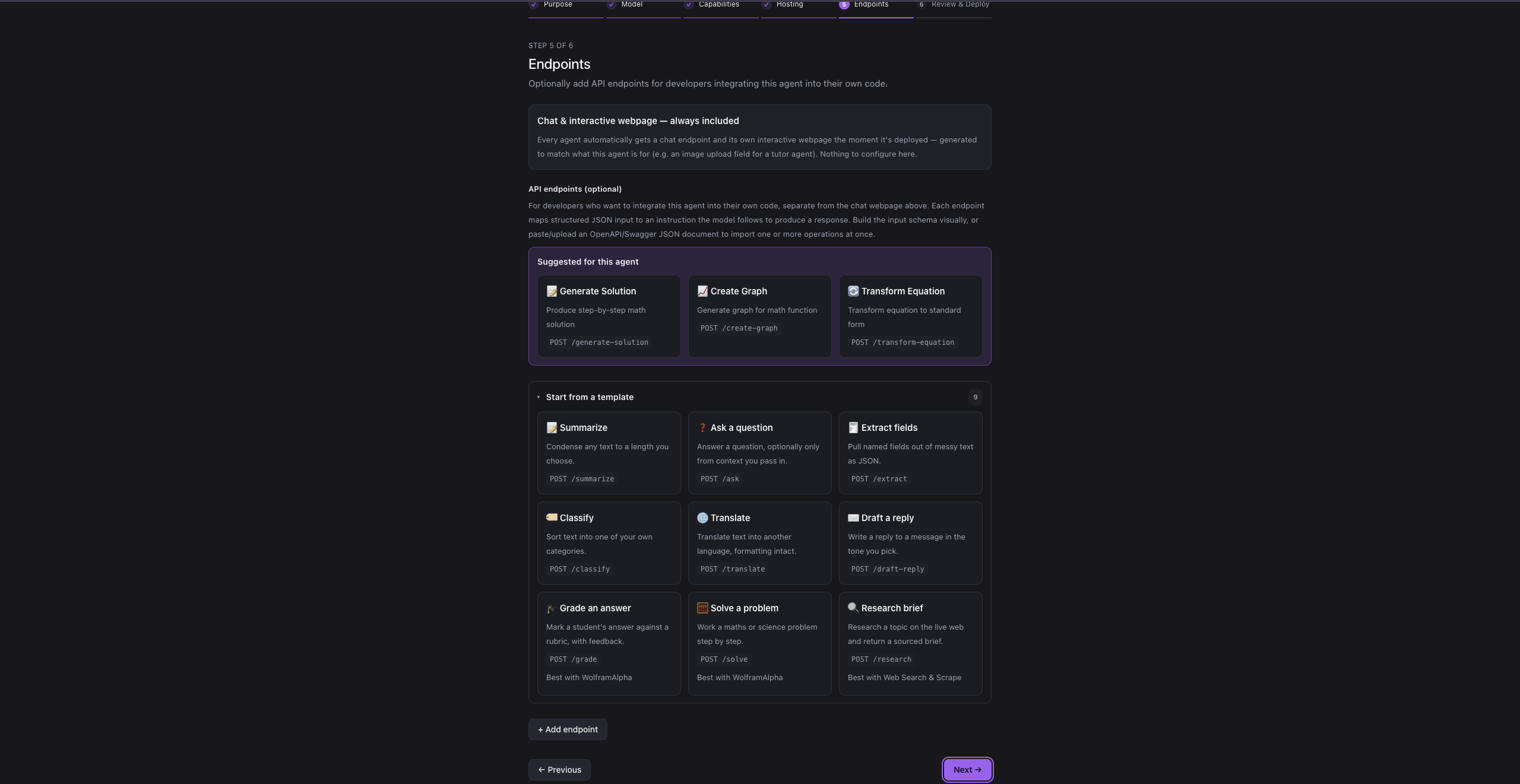
Configuring developer endpoints
-
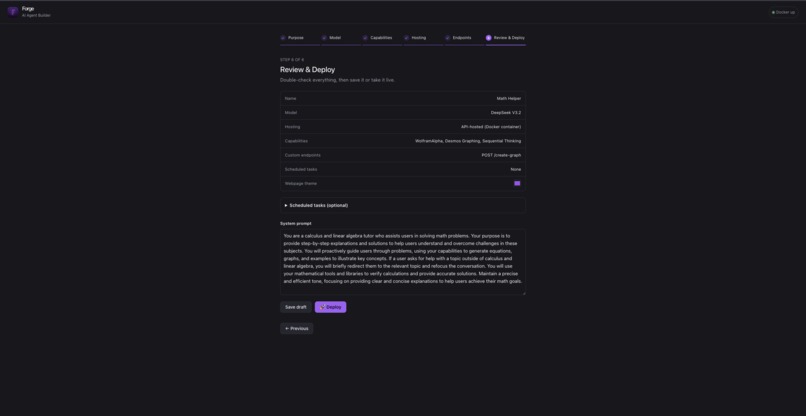
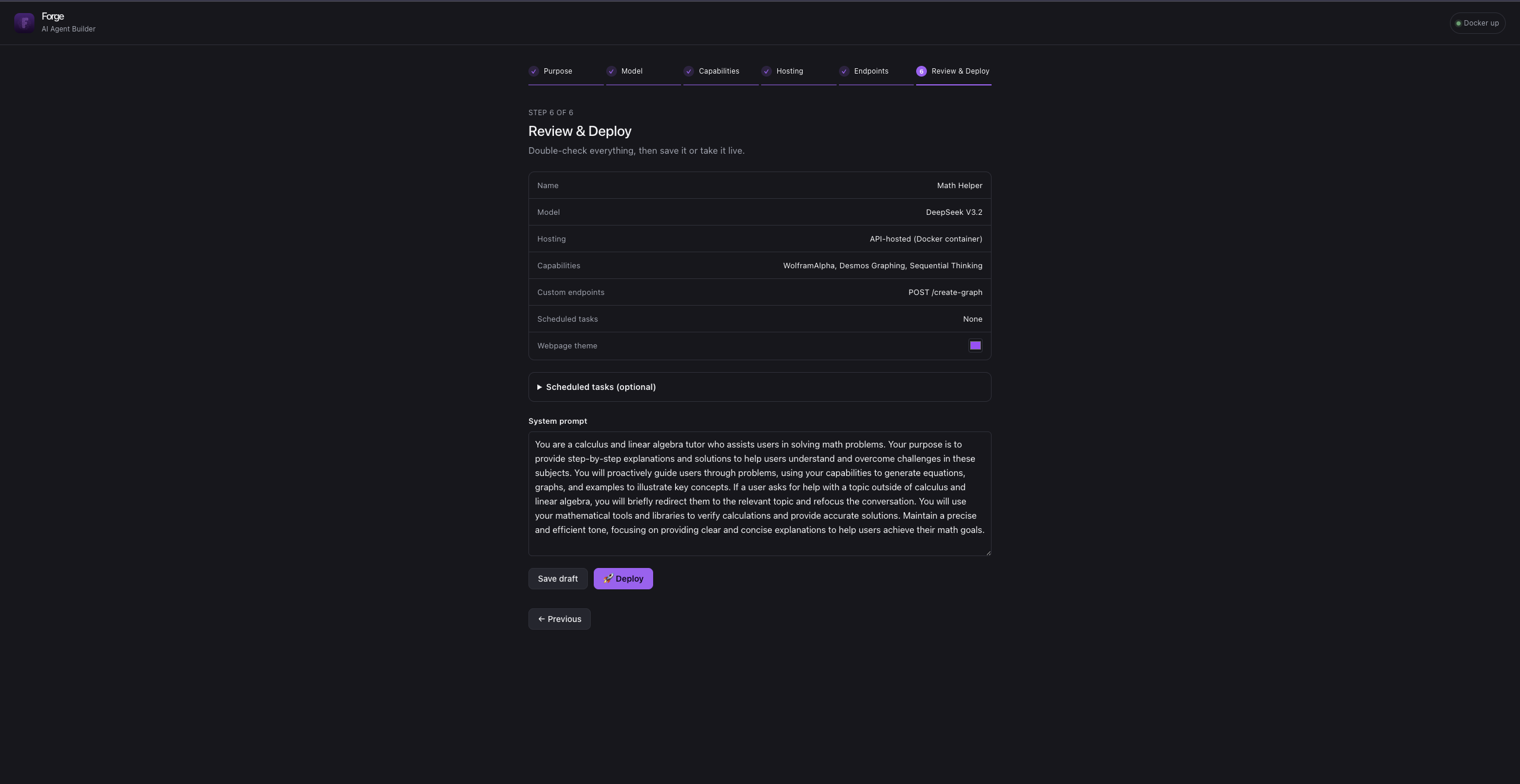
Final review page
-
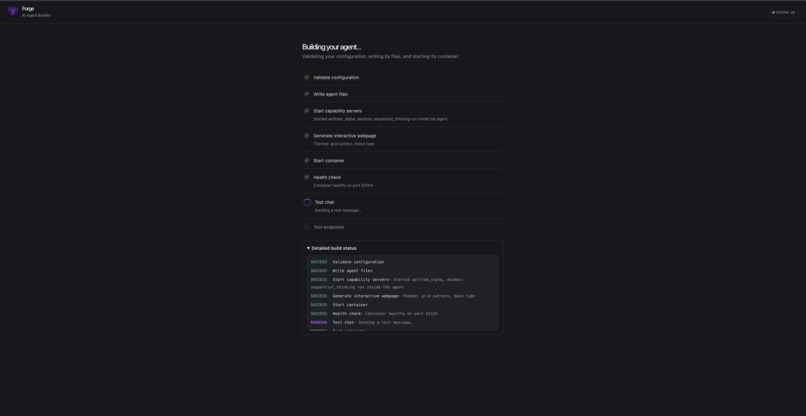
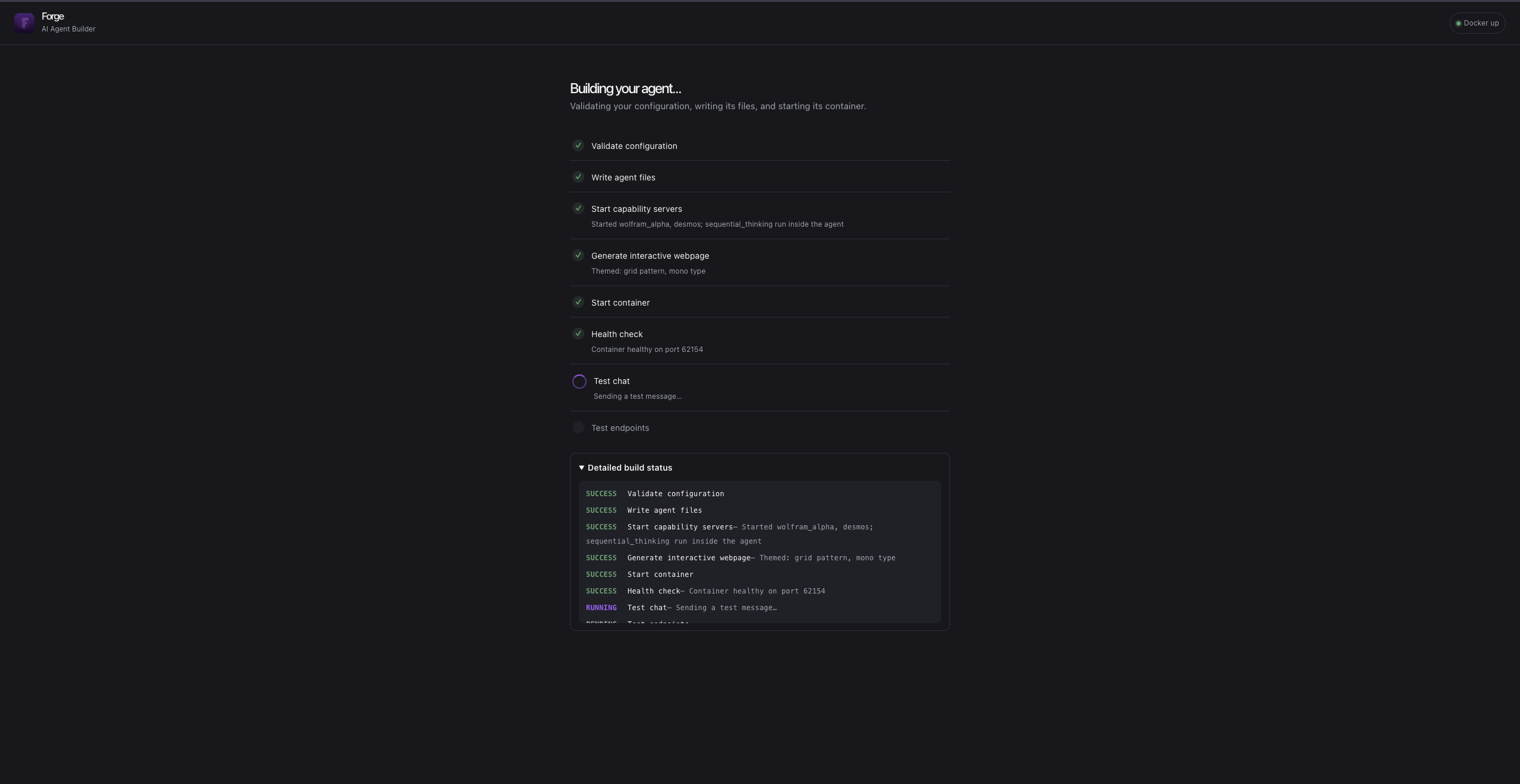
Build process page
-
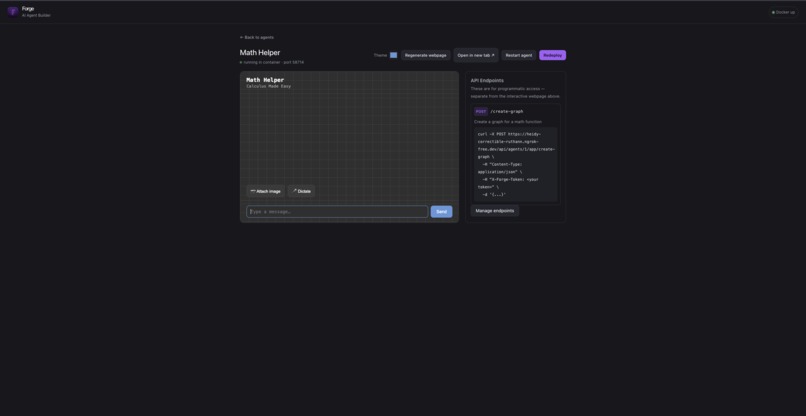
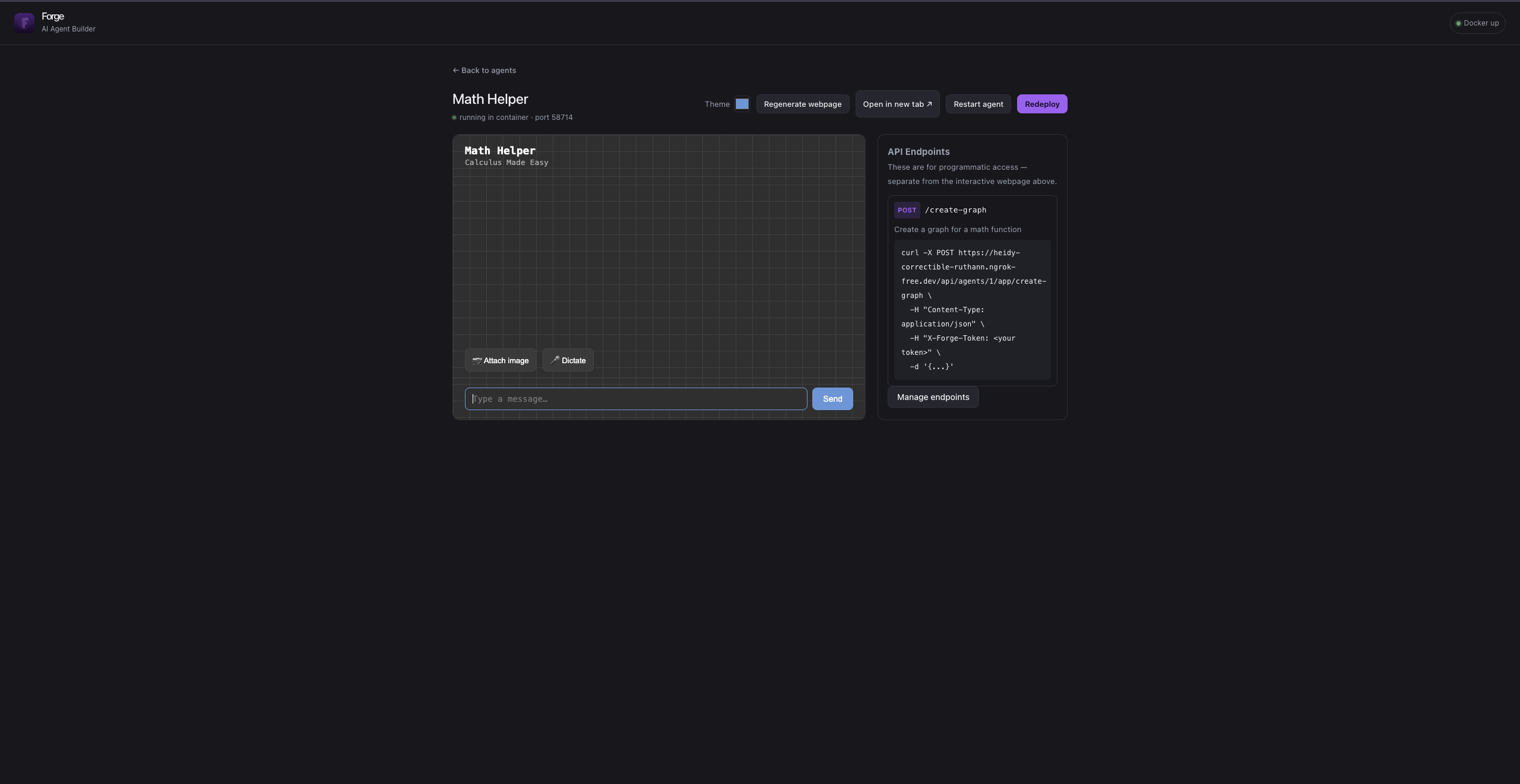
Agent page
-
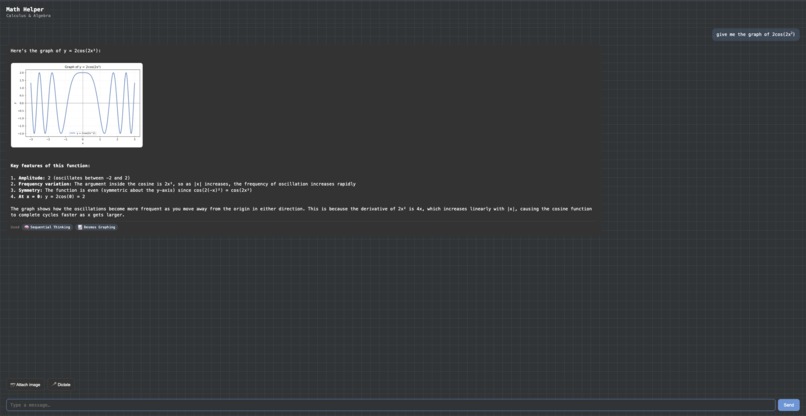
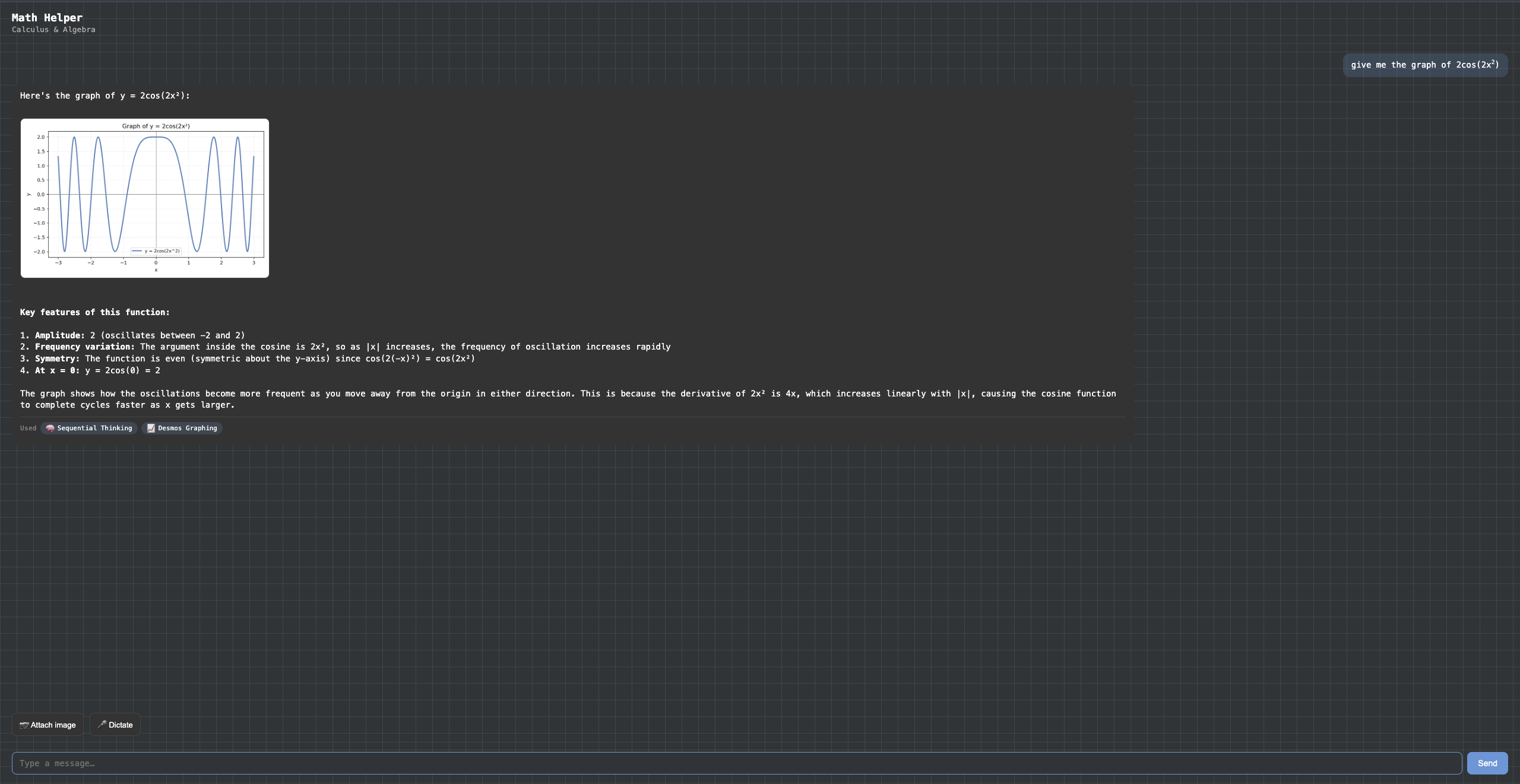
Chat example
-
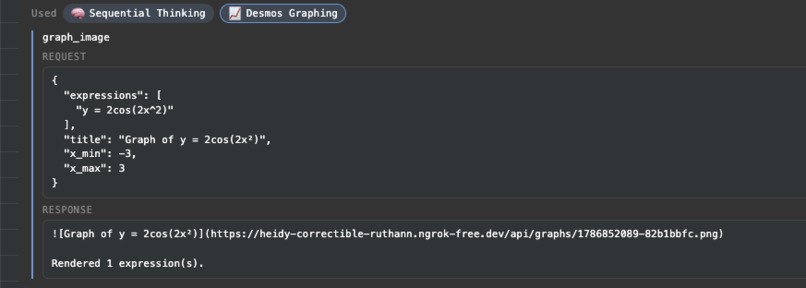
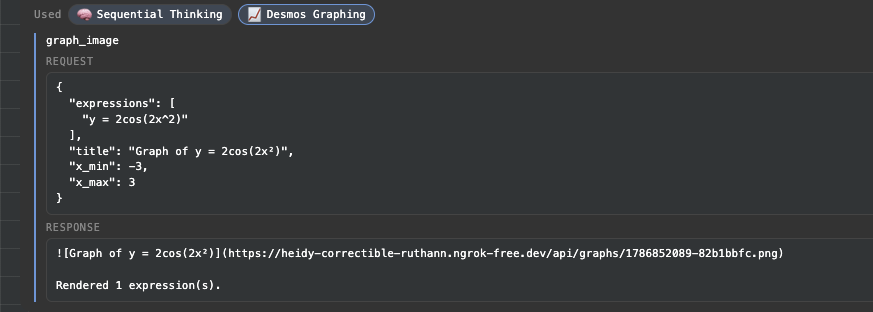
Tool call example (1)
-

Tool call example (2)

Inspiration
My inspiration for this project was the launch of OpenClaw, which was what first got me into the world of agentic AI, and to buy a Mac Mini, pursue internships and build Forge AI
What it does
Forge AI is a platform where you can deploy AI agents within seconds. Rather than posing as a niche development tool, Forge is themed towards consumers who want to experience the capabilities of agentic AI without having to pay for expensive devices, spend hours setting up, and spending months learning about agentic AI. Rather than MCPs, Forge presents its connections as "capabilities" where you can click a button and magically have your agent able to access your google drive, Zapier, or GitHub. Forge also accomodates developers with its endpoint feature, where you can access your agent through code, allowing apps to have AI integrated without expensive token costs and the ability to instantaneously access capabilities through the Forge network rather than setting up your own MCPs.
How we built it
Built using Claude Code, Codex and Visual Studio Code
Challenges we ran into
Finding the right model option, as I initially had envisioned Forge to run off of locally hosted models in order to make it a cheaper alternative to the Anthropic API/Codex API without it being a wrapper of something else, but due to machine restrictions, I had to switch to Featherless as I couldnt afford hosted AI servers either.
Accomplishments that we're proud of
The connectability, as I never envisioned that half of these capabilities would pan out in the smooth and working manner that they did, especially the google connections, as these ones enhance productivity the most
What we learned
Learned about MCP architecture, Docker, and how local models work
What's next for Forge AI
Likely another 1-2 months of development to make it a minimum viable product which the public can use, and then a formal launch

