-
-
-
-
-
-
-
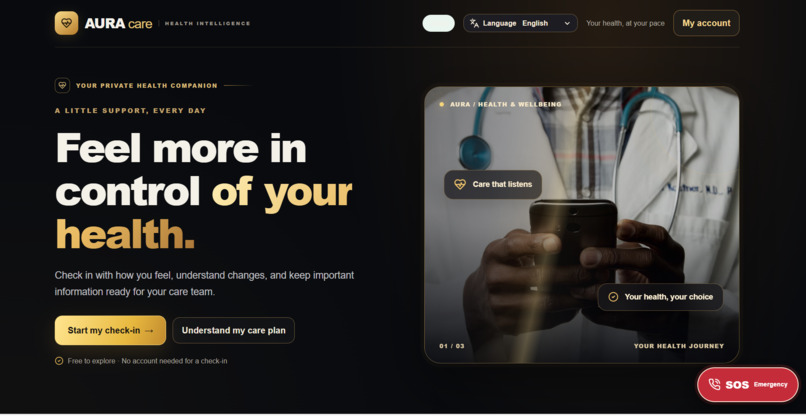
Landing Page
-
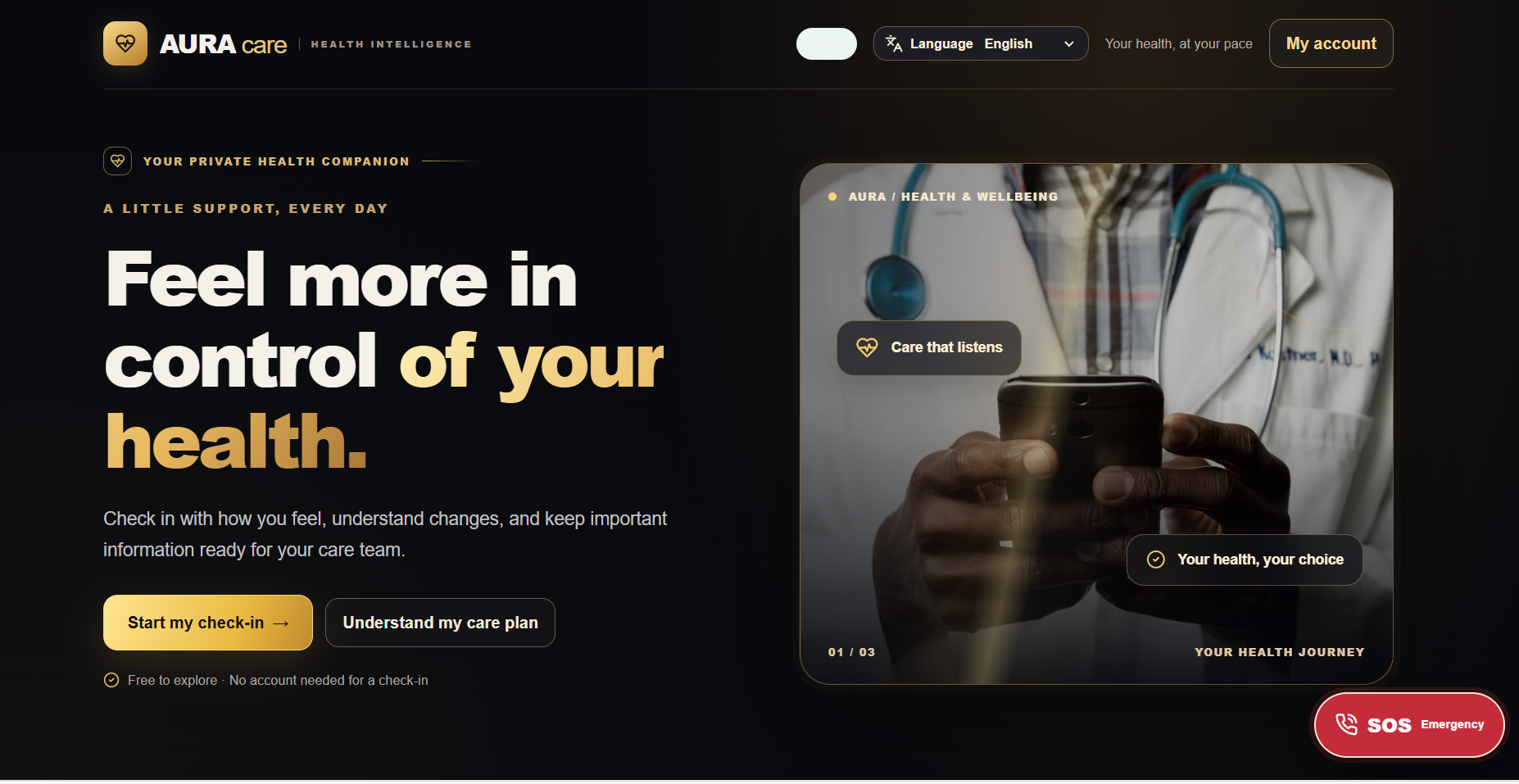
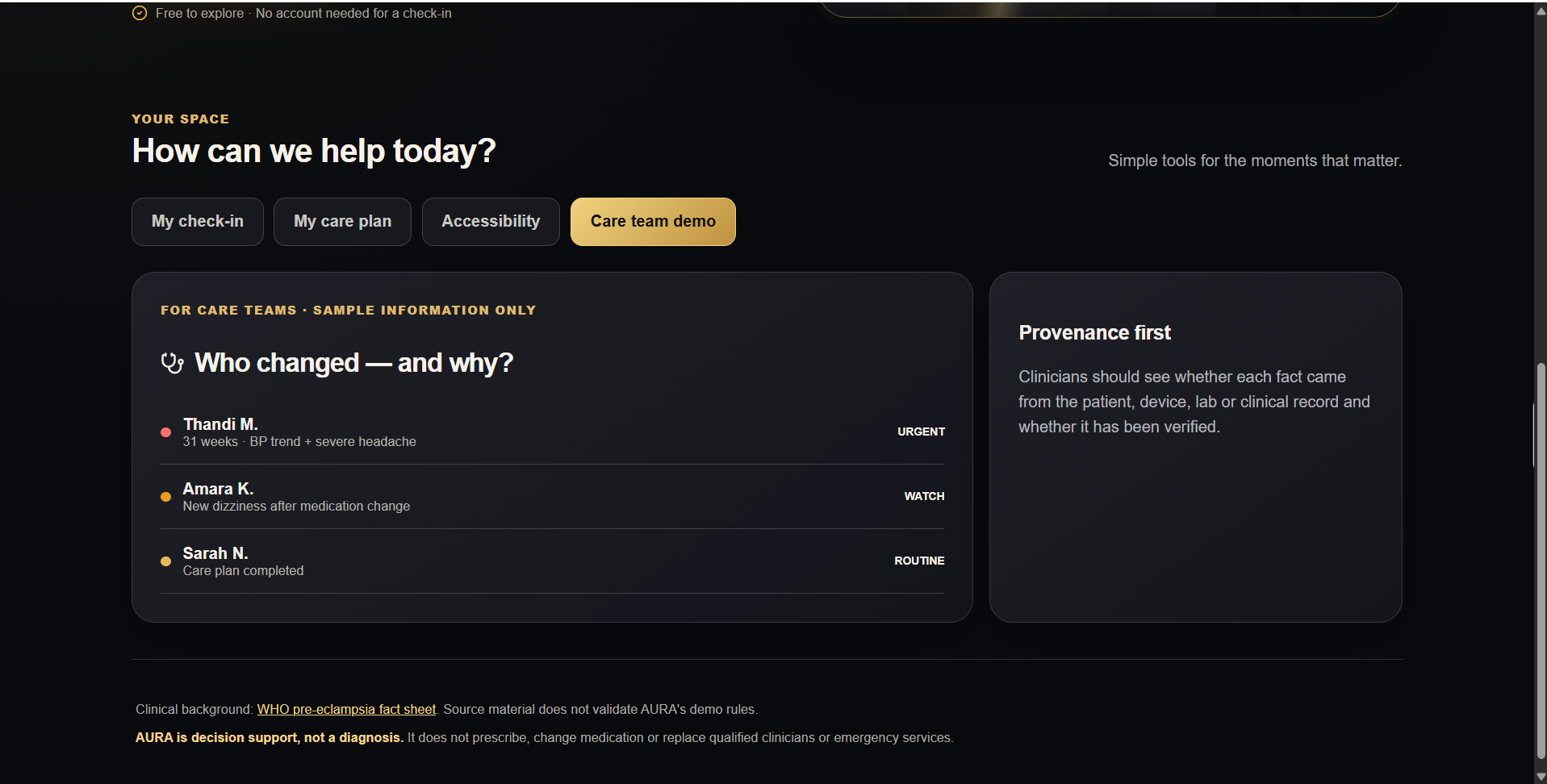
Too often, people only get help once a problem is already serious, and the signs that came before it get lost. A headache that won't go away, dizziness, blurry vision: these are easy to dismiss in the moment, and just as easy to forget by the time you're sitting in front of a clinician. We wanted to build something that helps people notice, remember and communicate what they're feeling, and that knows when to say "stop, get urgent help."
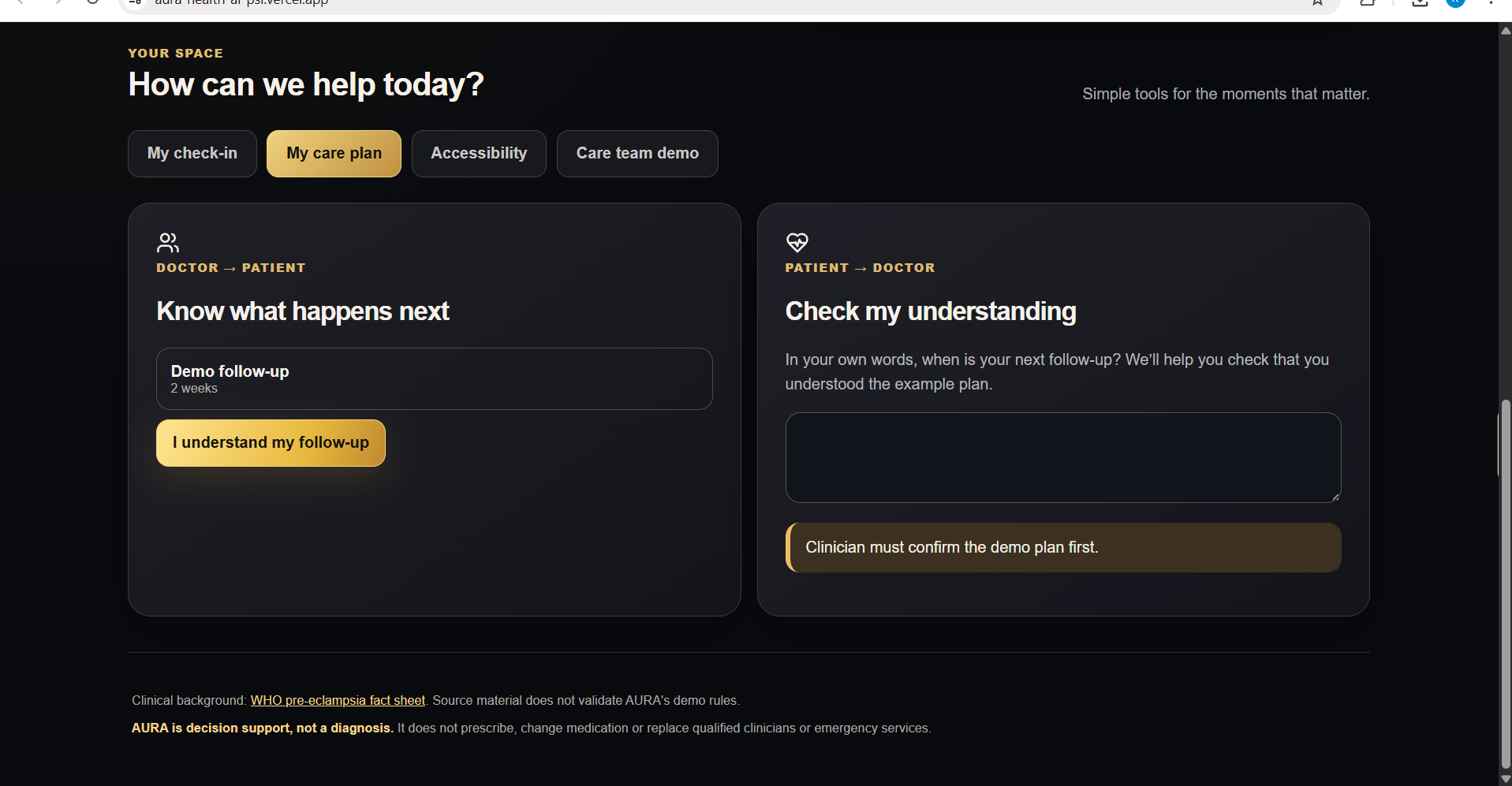
The idea took shape around maternal and everyday health in South Africa, where access to care can be uneven, language matters, and a person's own account of their symptoms is often the first information a clinician gets. We kept asking the same questions:
- What if checking in with yourself took one minute, with no account and no jargon?
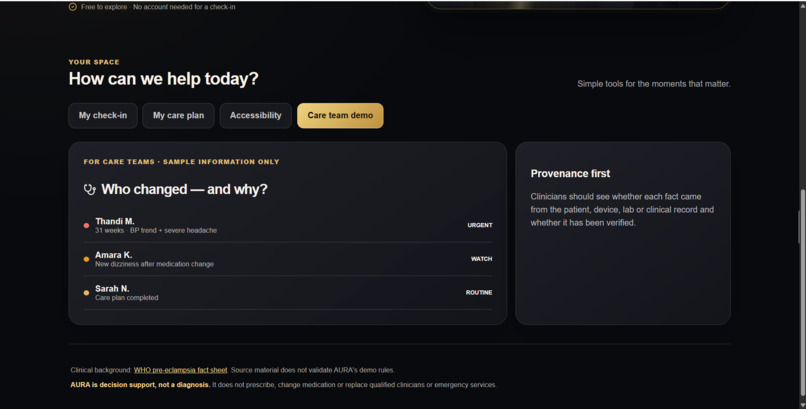
- What if your care team could see what changed, and where each fact came from?
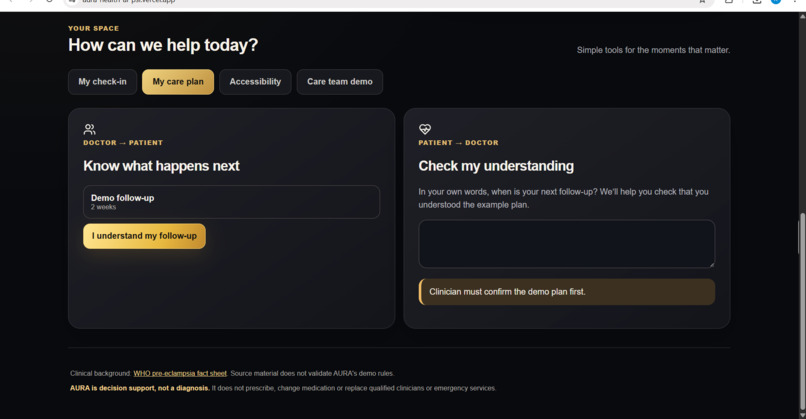
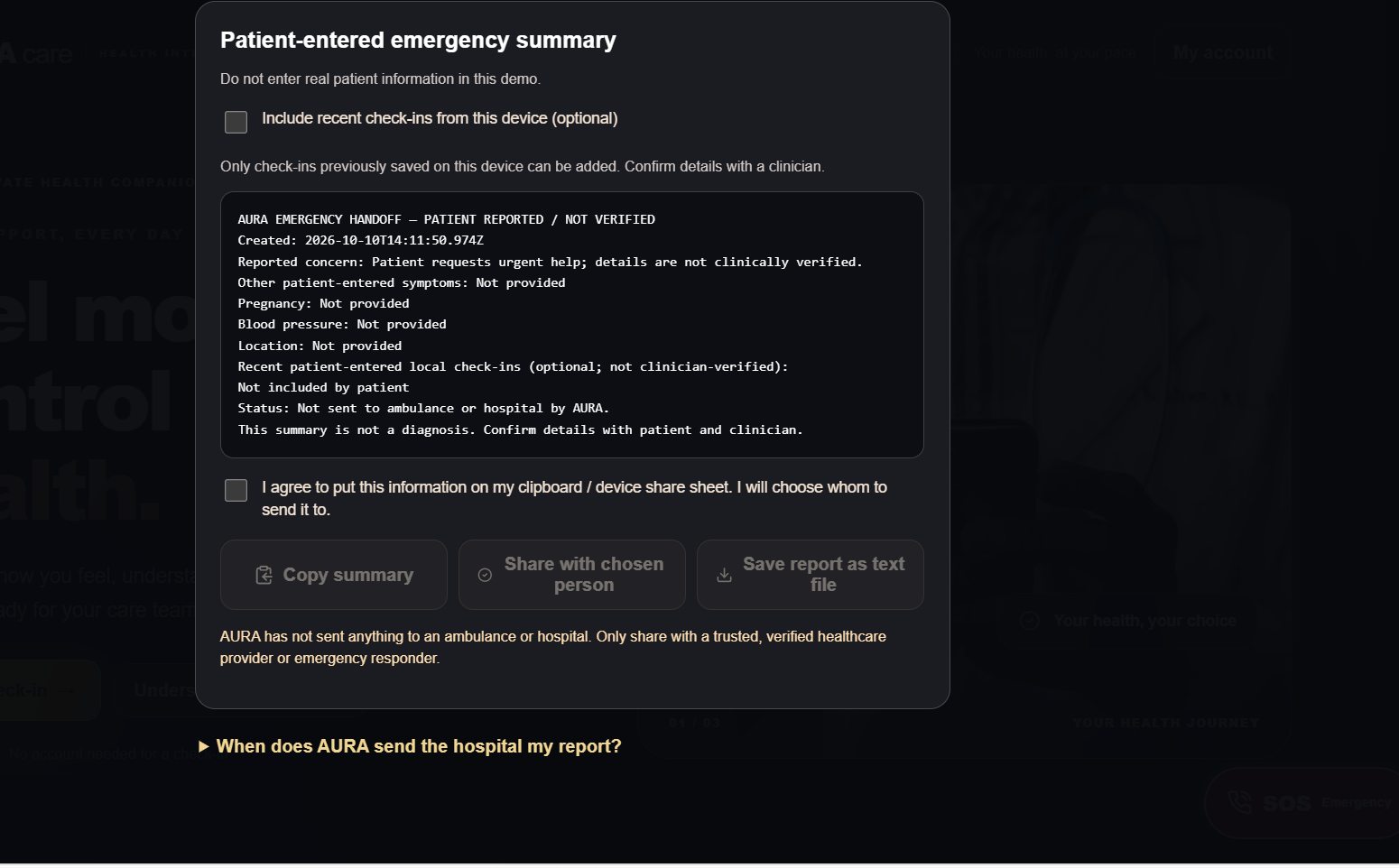
- What if the app were honest about its limits, and clear that it supports decisions rather than making diagnoses?
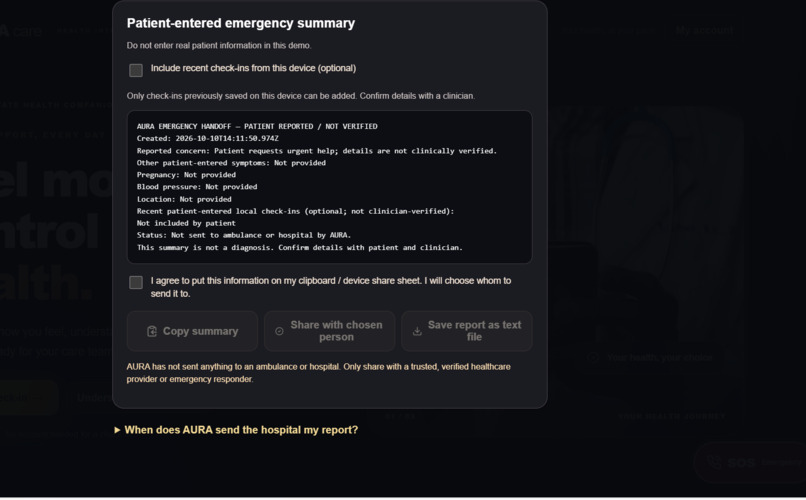
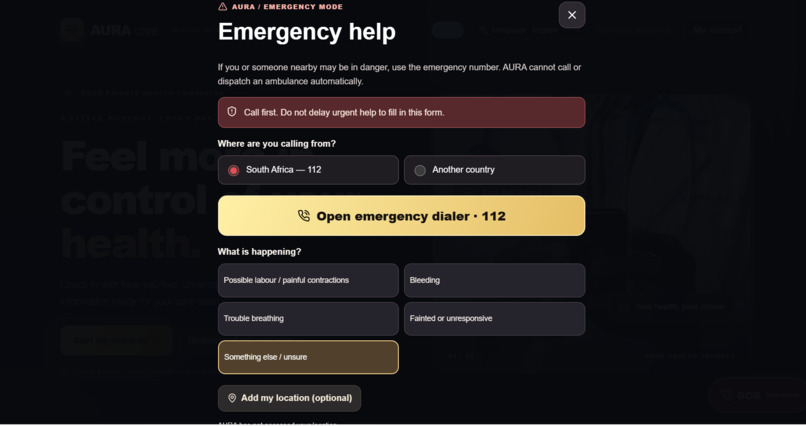
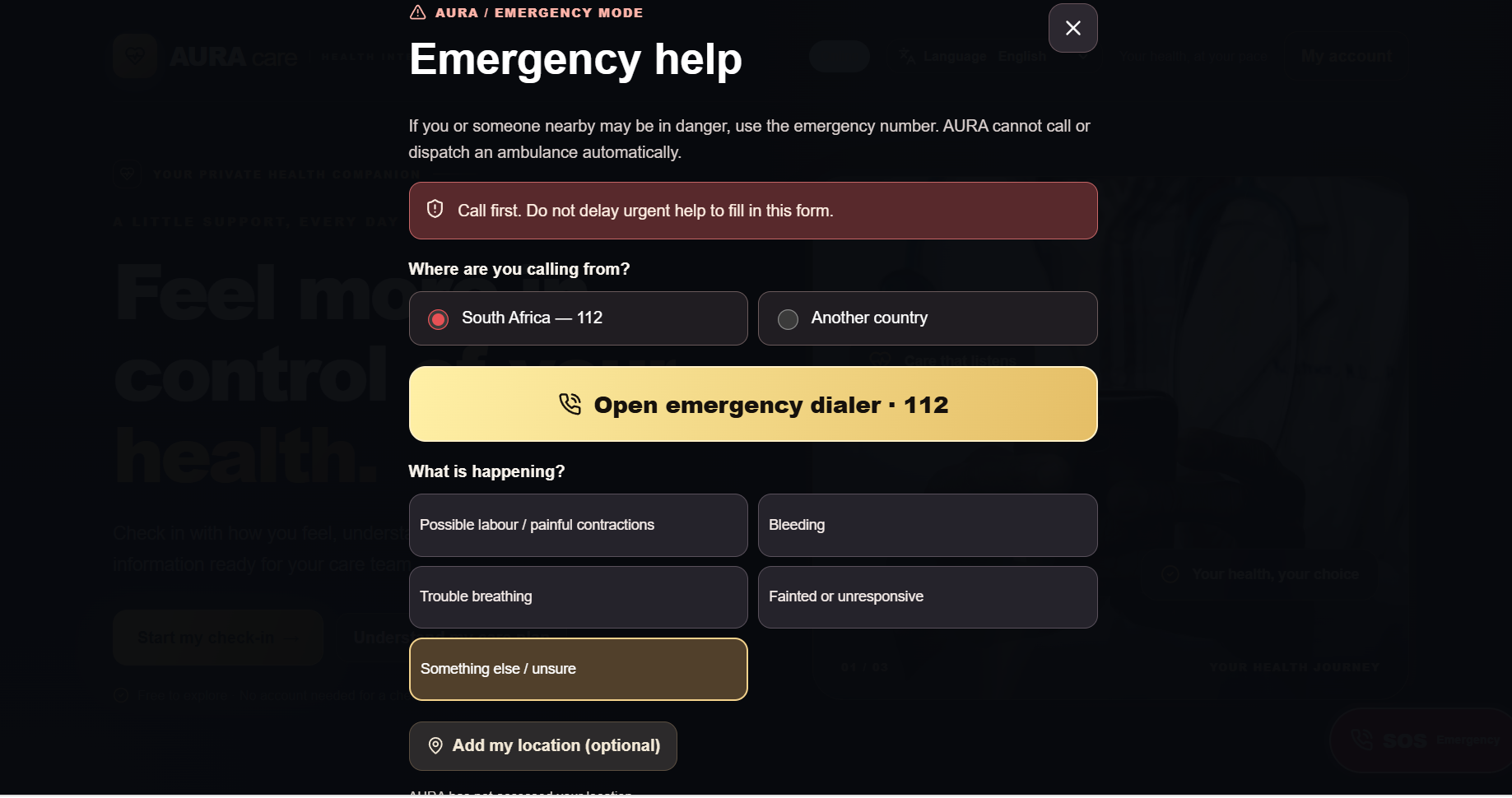
- What if getting emergency help never depended on filling in a form?
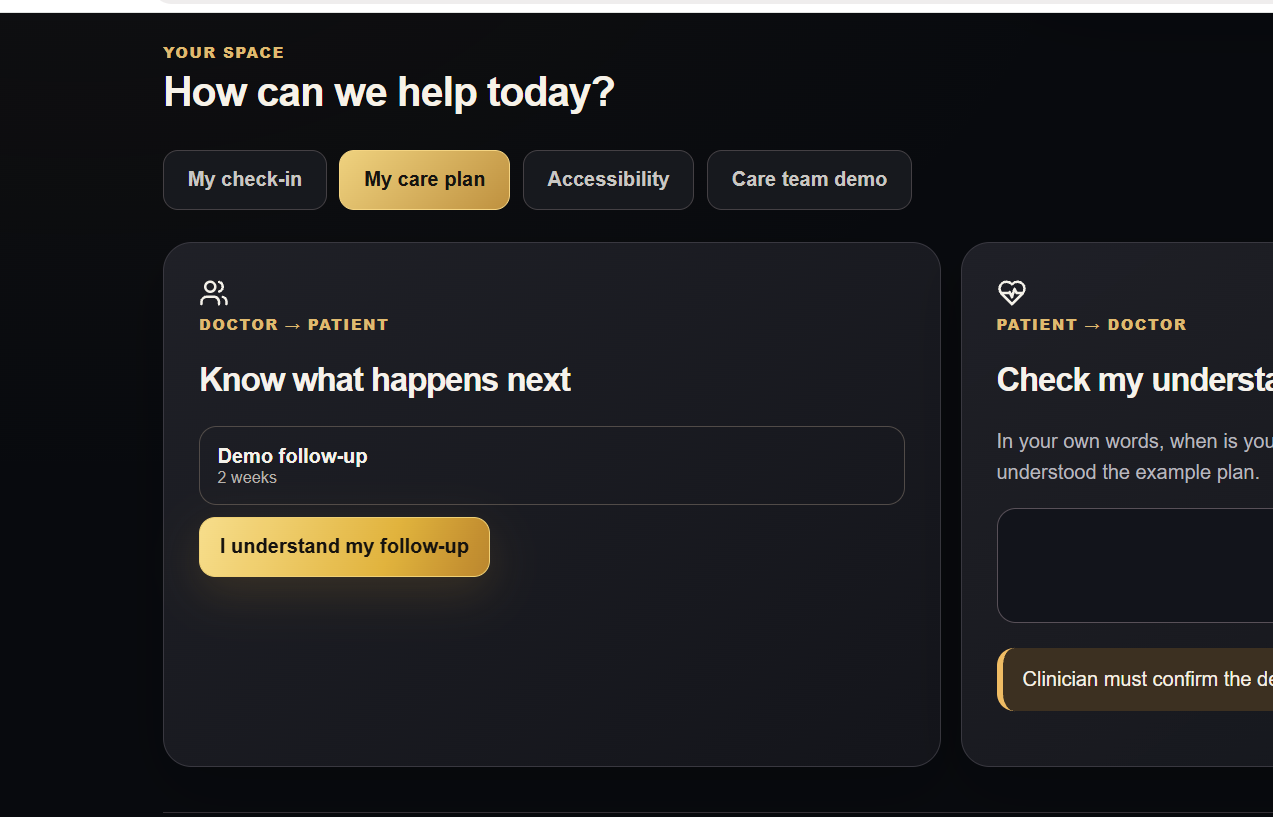
That last question became our guiding principle: AURA never replaces a clinician or an emergency service. Its job is to help someone understand their situation, get ready for their care team, and in an emergency, call first.
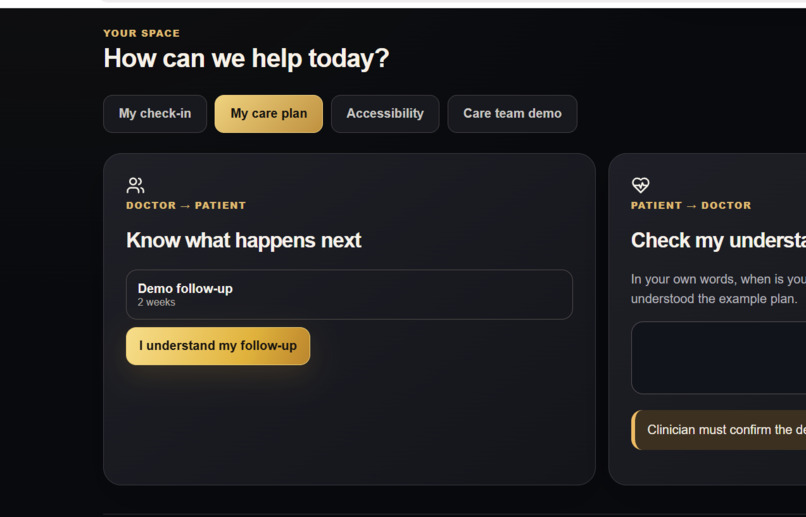
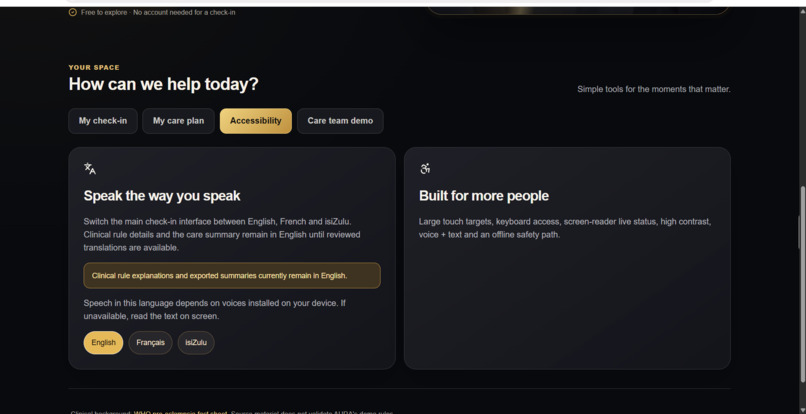
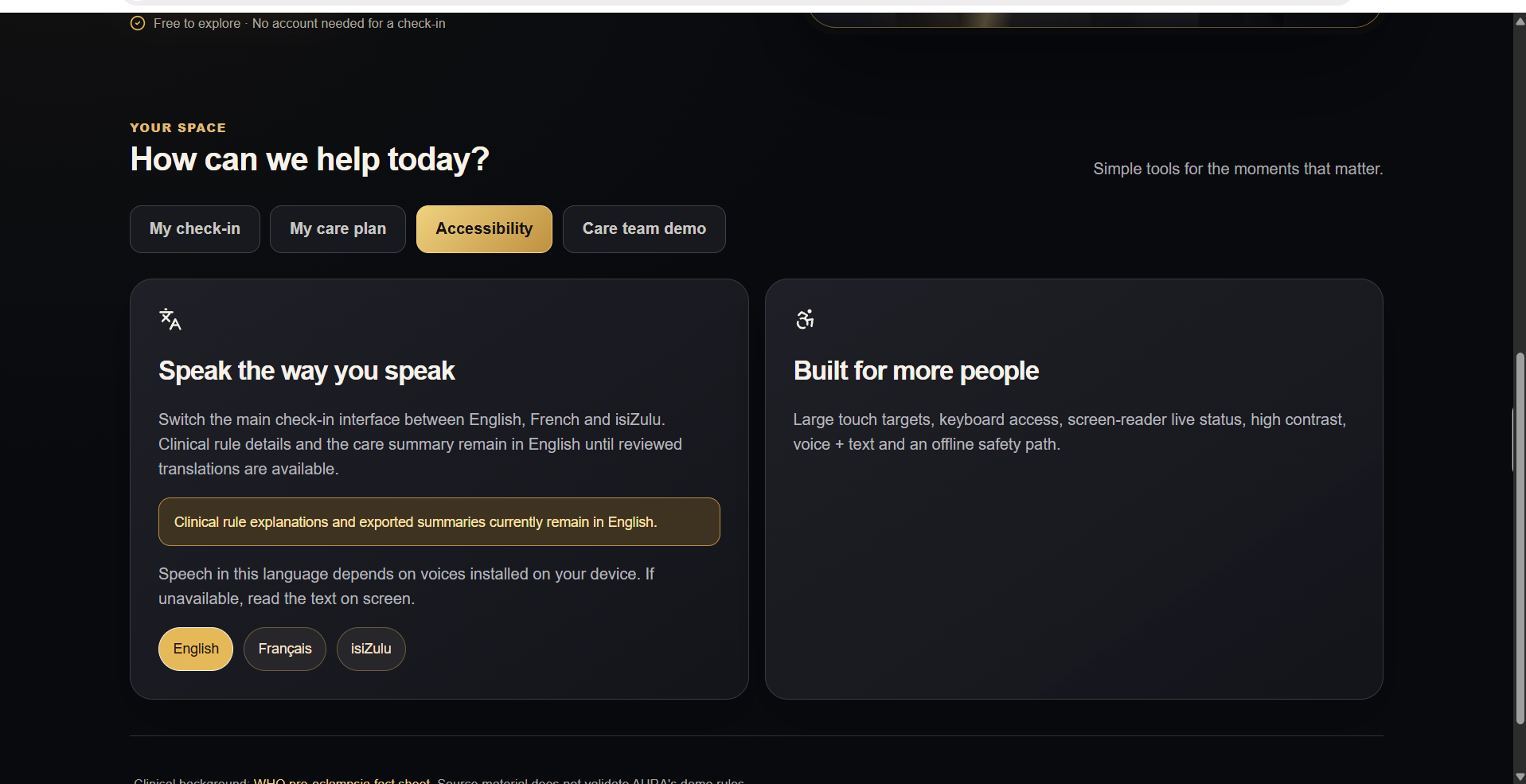
We also wanted AURA to feel like it belongs to the people using it. That meant a private health journal, support for English, French and isiZulu, large touch targets, keyboard and screen-reader support, and an offline safety path, because health tools that only work for some people don't solve much.
Finally, we were inspired by the idea of care that listens: a calm, respectful companion that gives people a little support every day, keeps them in control of their information, and shares nothing unless they choose to share it.

Log in or sign up for Devpost to join the conversation.