Inspiration
AI coding tools can generate code quickly, but they do not automatically preserve the reasoning, evidence, assumptions, and constraints behind their changes.
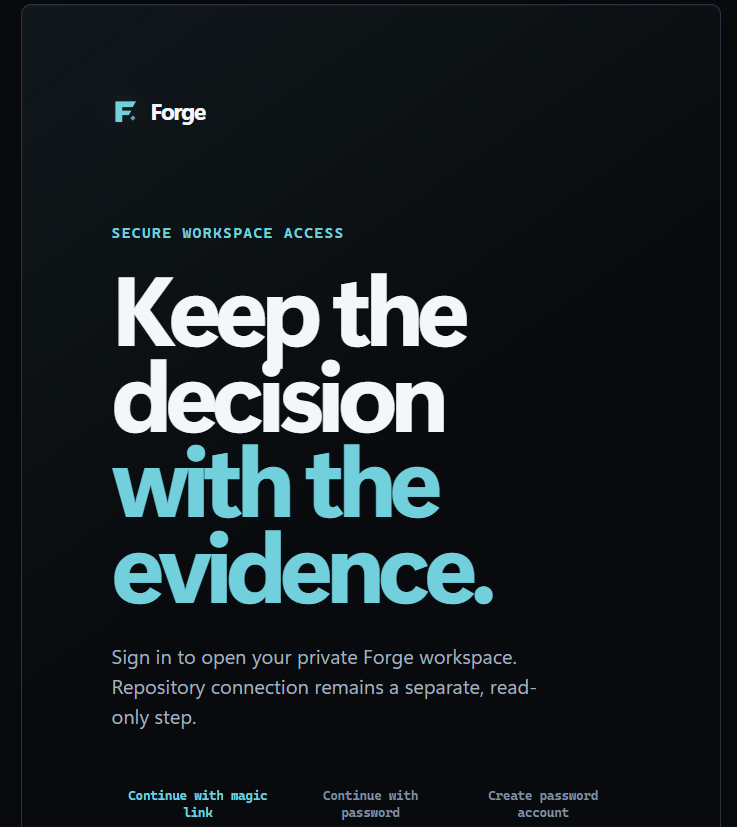
I wanted to build something that sits above the code-generation layer and gives teams a durable record of important engineering decisions. That idea became Forge: decision memory for AI-built software.
What it does
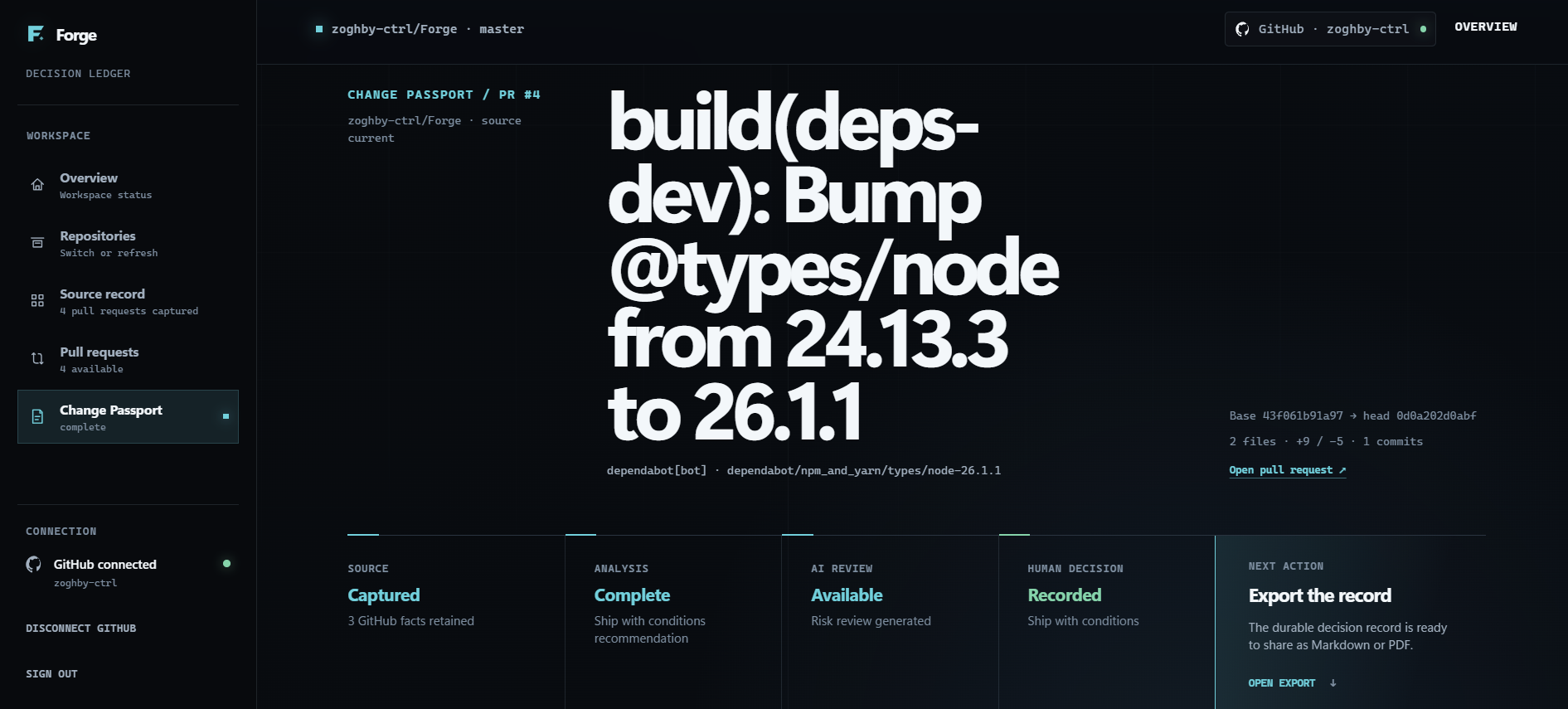
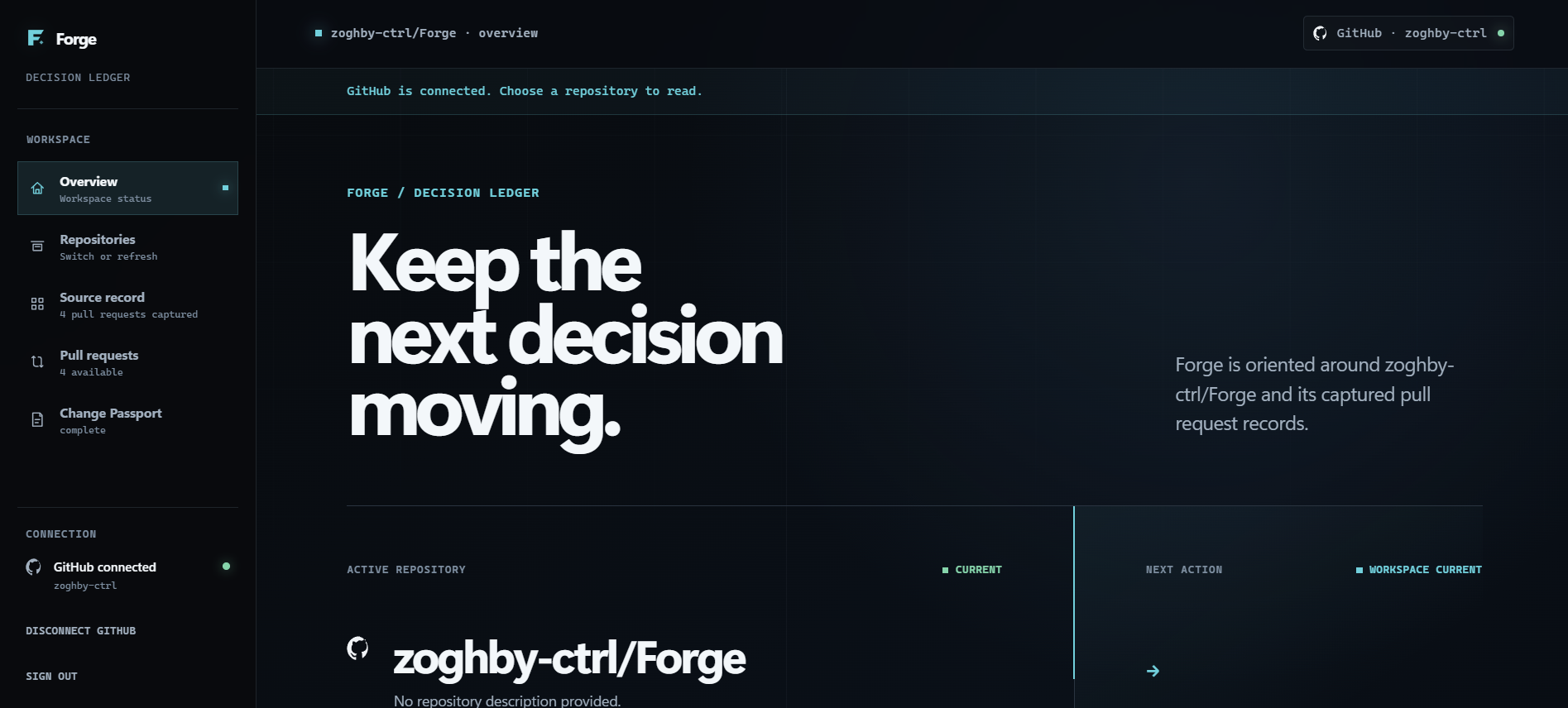
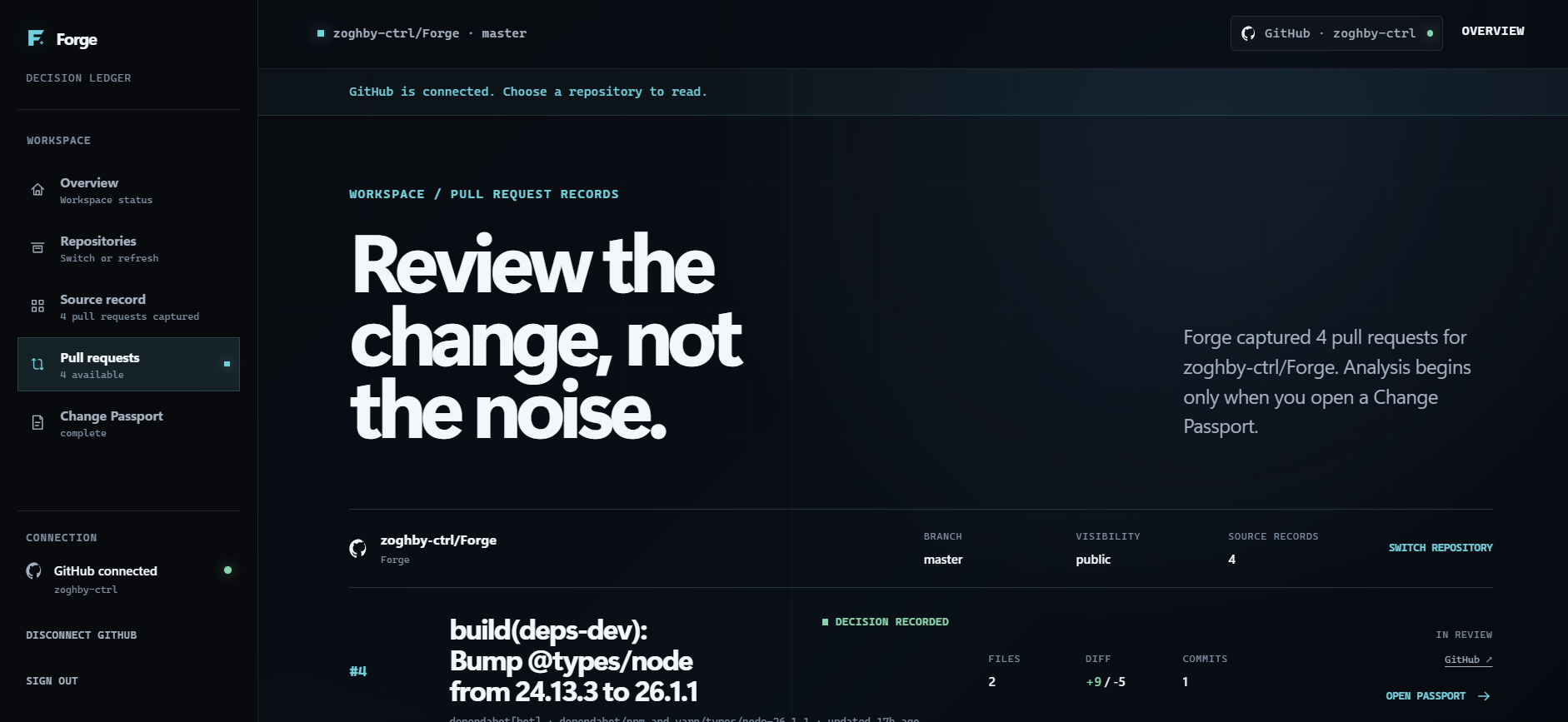
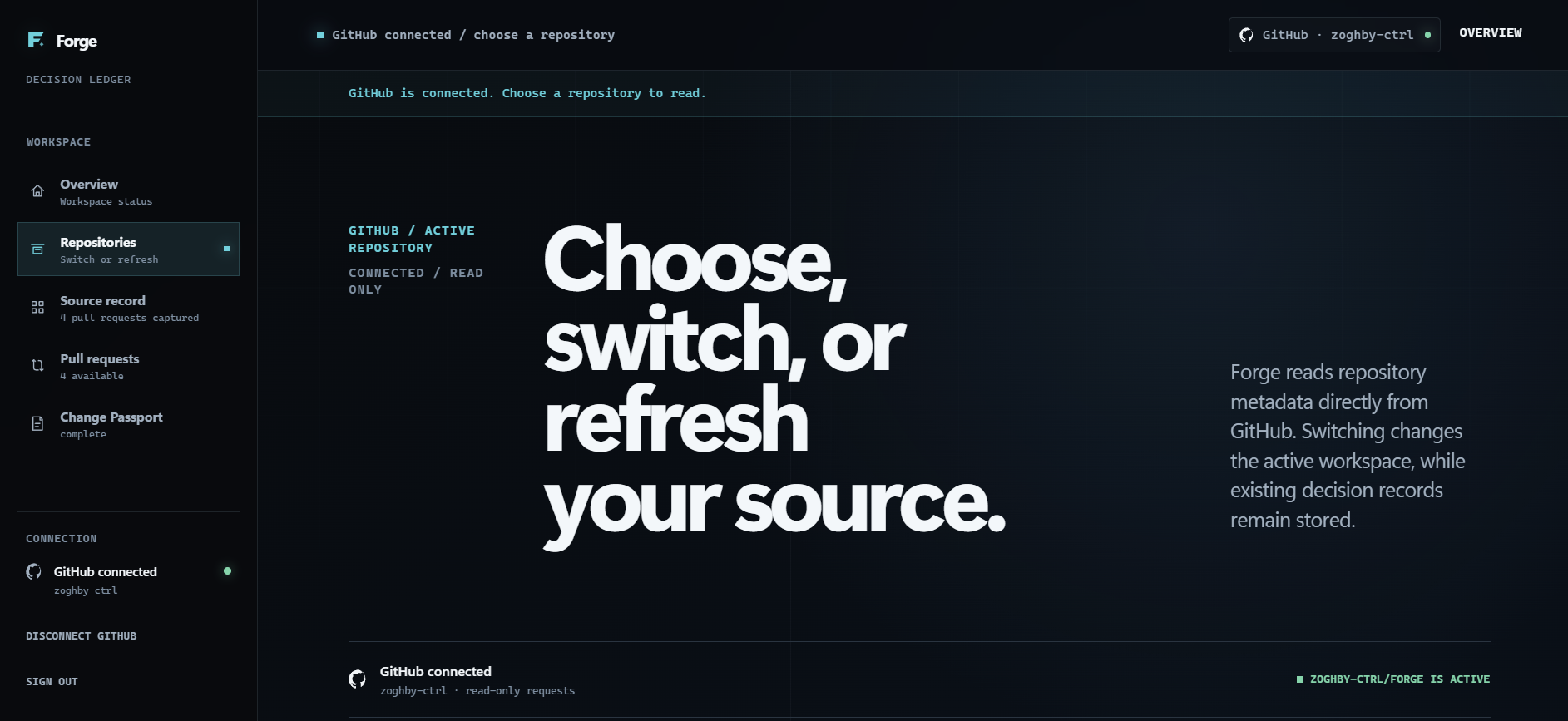
Forge connects to GitHub and lets a developer select a repository and pull request.
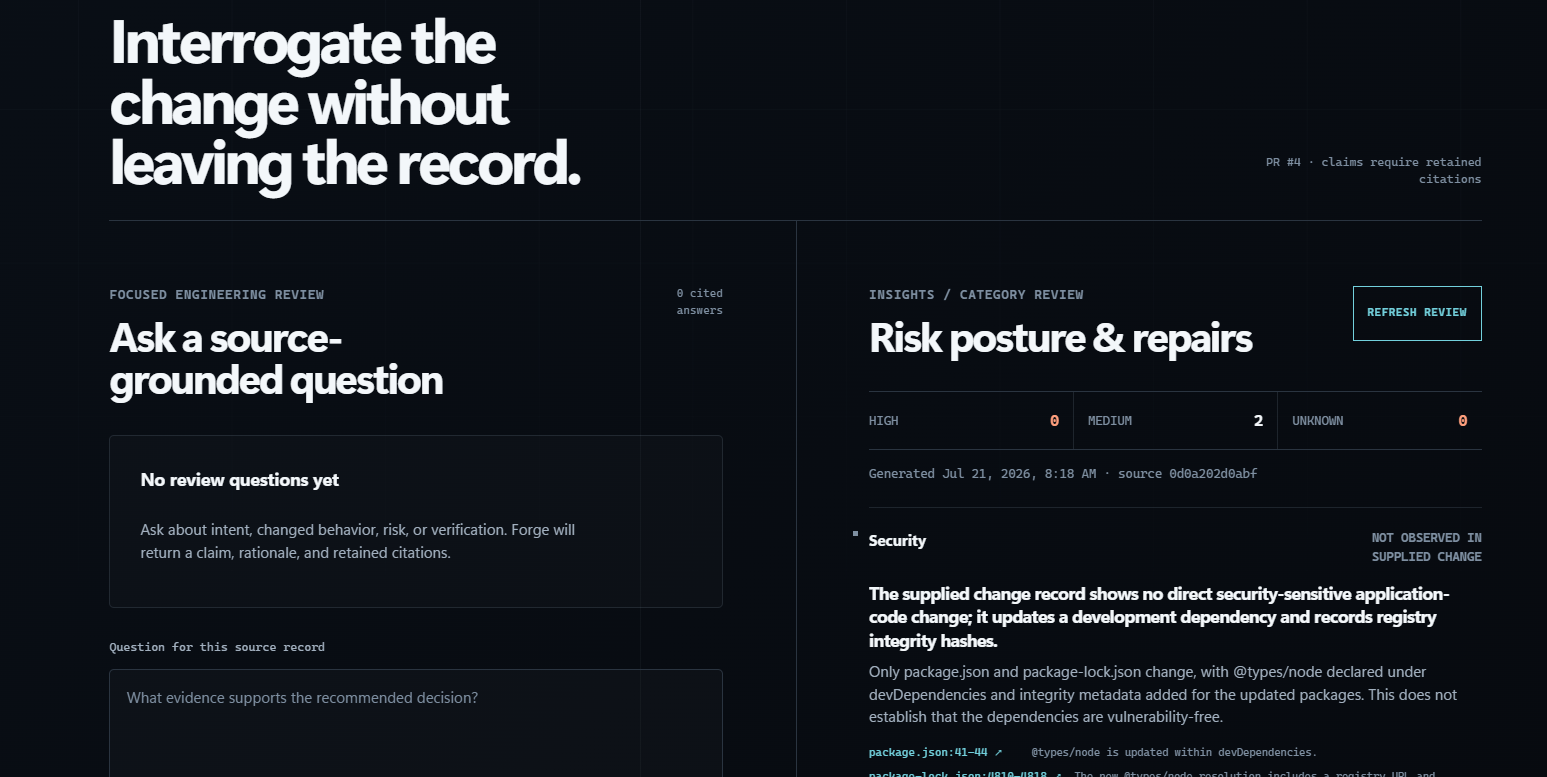
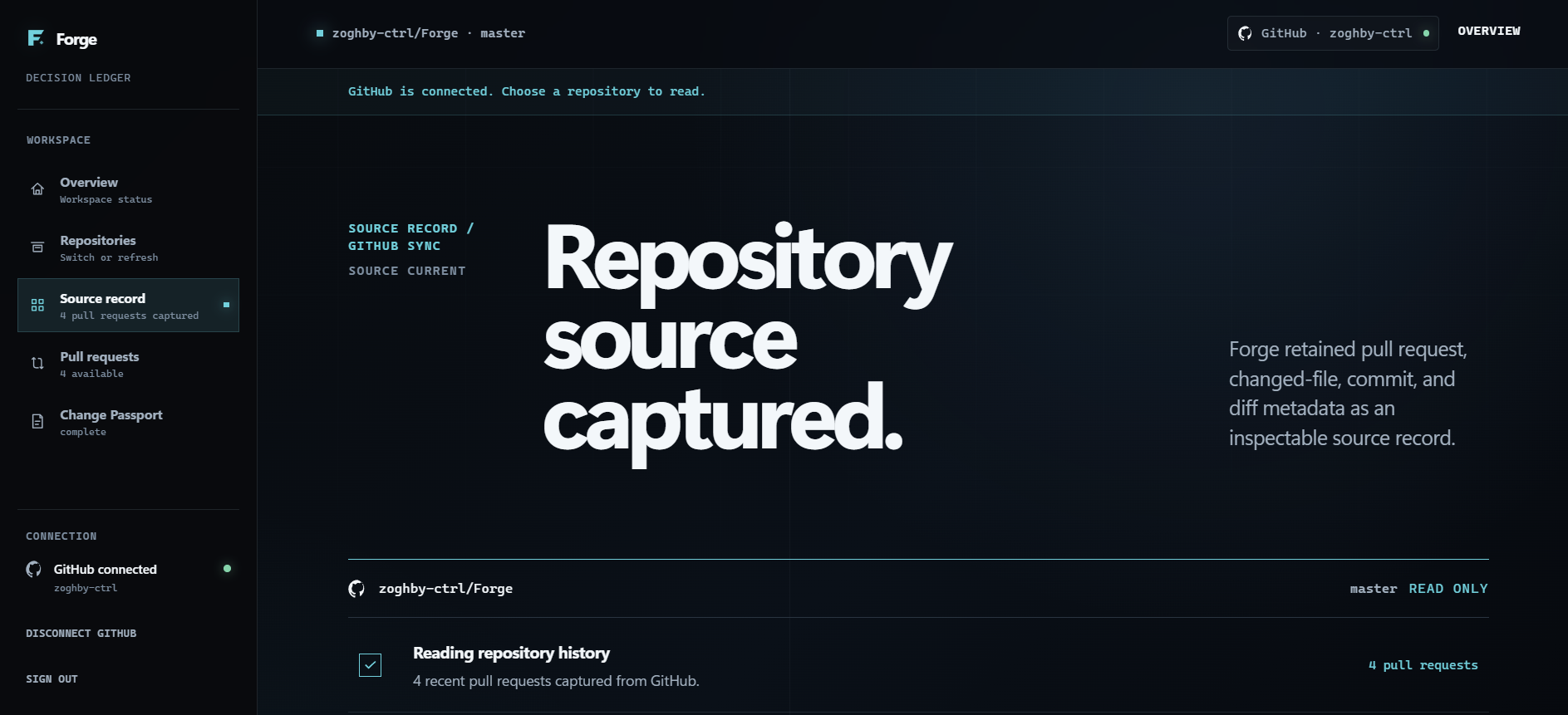
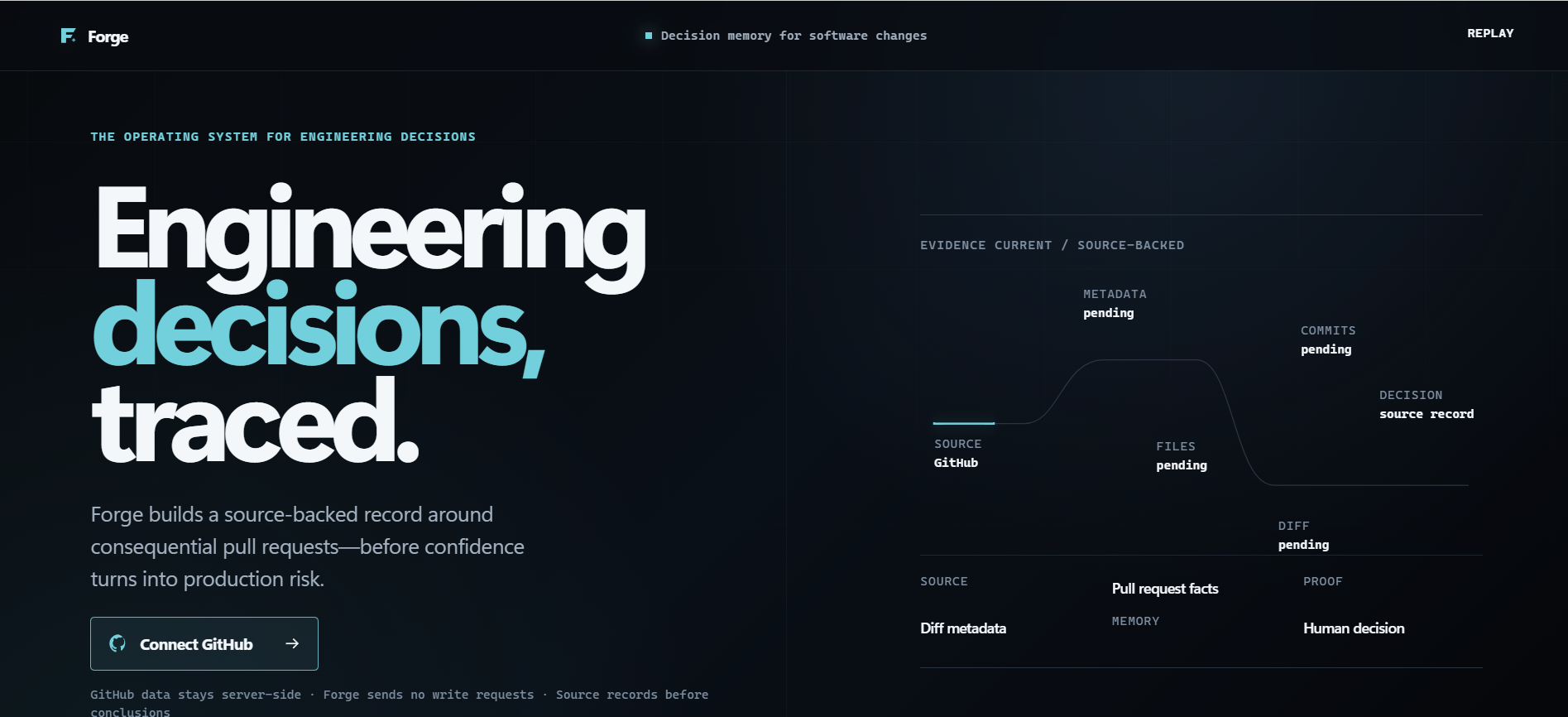
It retrieves pull-request metadata, changed files, commits, code diffs, and repository context. GPT-5.6 then analyzes that information through OpenAI’s Responses API and generates a structured Change Passport.
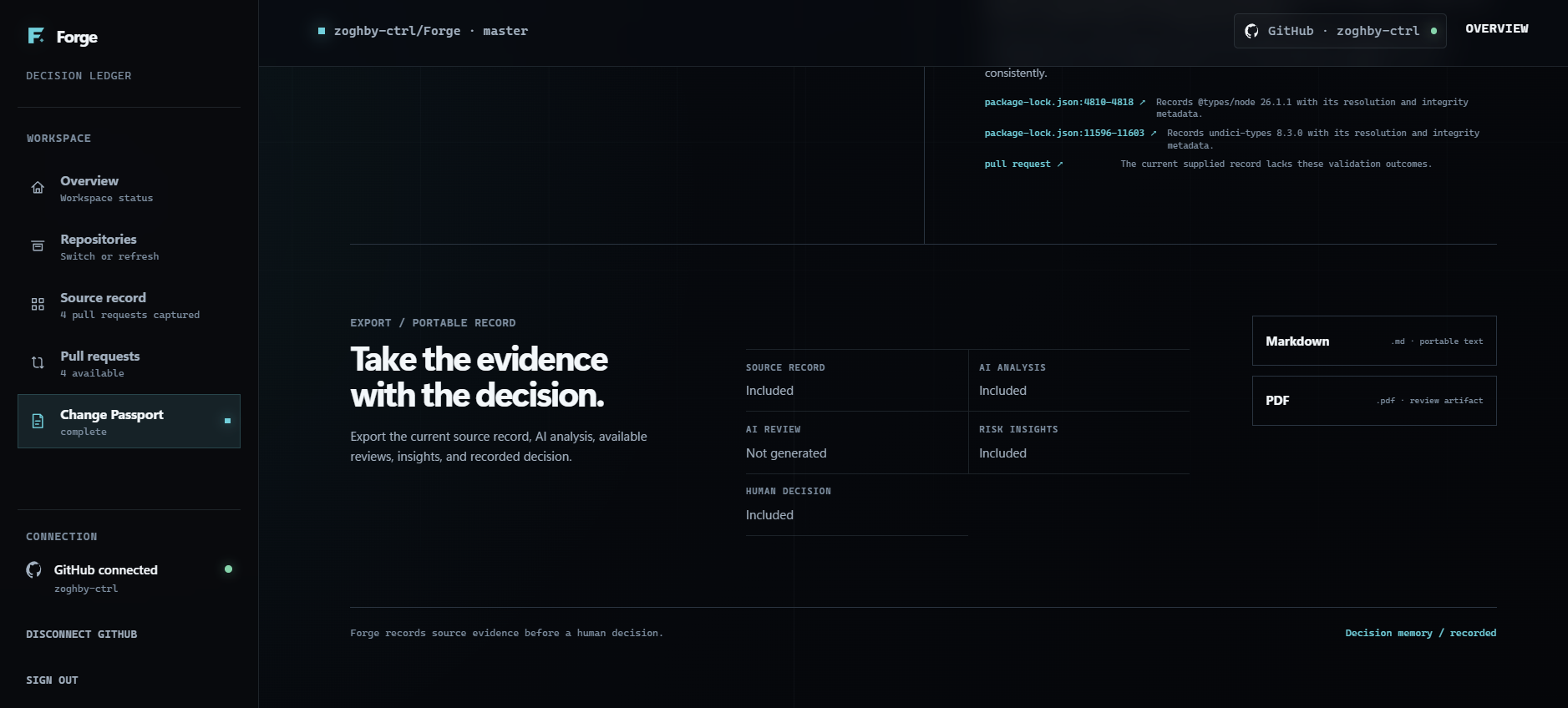
The Passport explains what changed, why the change matters, what evidence supports the conclusions, and what guarantees or constraints should remain true. Developers can review and export the result as durable project memory.
How I built it
I built Forge as a full-stack Next.js and TypeScript application.
Supabase provides authentication, PostgreSQL persistence, and Row Level Security. GitHub OAuth connects users to their repositories, and Forge securely ingests repository metadata, pull requests, changed files, commits, and diffs.
The analysis pipeline uses OpenAI’s Responses API with GPT-5.6 family models and Zod structured outputs to generate source-grounded Change Passports.
I built the project through continuous collaboration with Codex using GPT-5.6. I directed the product, architecture, workflow, and design decisions, while Codex accelerated implementation, debugging, testing, and production deployment.
Challenges I ran into
The hardest challenge was building a secure and reliable production flow across Supabase authentication, GitHub OAuth, encrypted token storage, repository ingestion, and AI-generated structured outputs.
The final production blockers included OAuth environment validation, callback URL configuration, persistent magic-link sessions, and deployment debugging. Solving them required tracing the complete flow rather than treating each failure as an isolated issue.
Accomplishments that we're proud of
I am proud that Forge became a complete deployed product rather than only a technical prototype.
It includes persistent authentication, secure GitHub integration, real repository and pull-request ingestion, structured GPT-5.6 analysis, evidence-backed Change Passports, exports, production deployment, and a workflow judges can test without rebuilding the project.
What I learned
I learned that building reliable AI developer tools requires much more than connecting a model to an interface.
The difficult work is grounding outputs in real source context, preserving human authority, handling authentication and third-party integrations securely, validating structured results, and making the complete workflow dependable in production.
What's next for Forge
The next step for Forge is to become a persistent decision layer across the full software-development lifecycle.
Future versions could connect Change Passports across multiple pull requests, detect conflicts with previous engineering decisions, integrate with additional coding agents, and use a GitHub App for finer-grained repository permissions.
Built With
- agents
- ai
- api
- artificial
- code
- codex
- developer
- devops
- engineering
- github
- gpt-5.6
- intelligence
- next.js
- openai
- postgresql
- responses
- review
- software
- supabase
- tools
- typescript


Log in or sign up for Devpost to join the conversation.