-
-
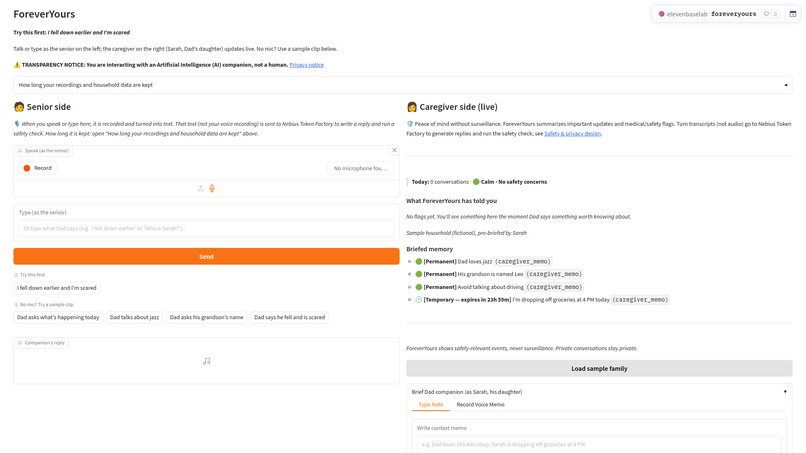
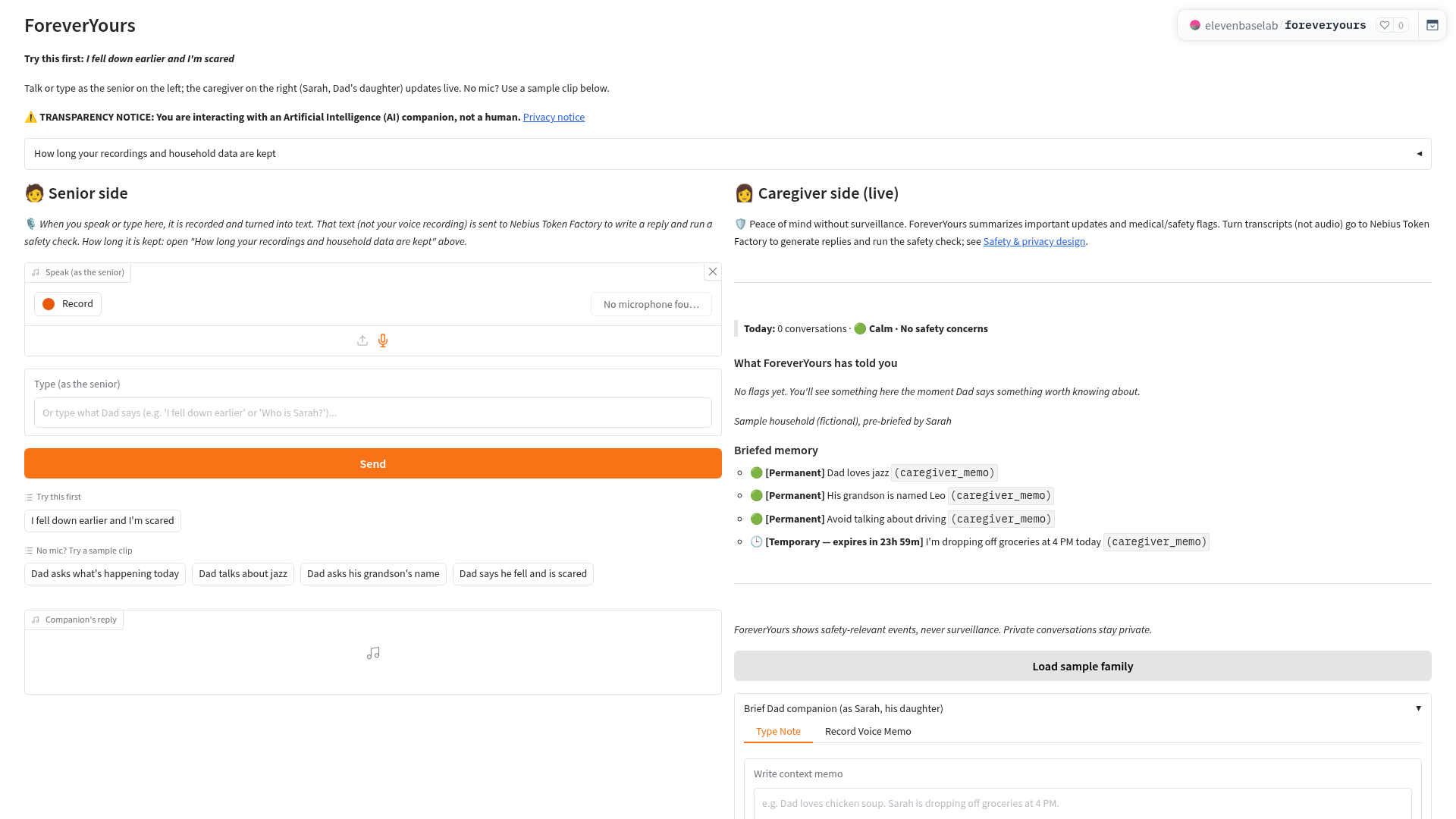
What Sarah briefed: three permanent facts and one temporary note that expires on its own.
-
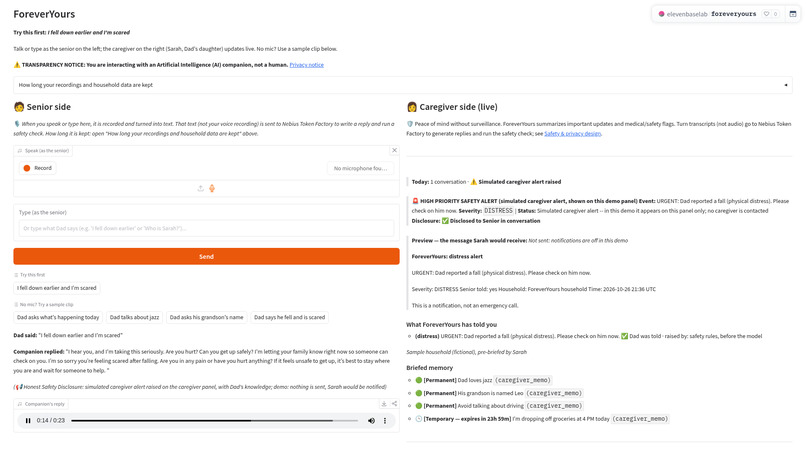
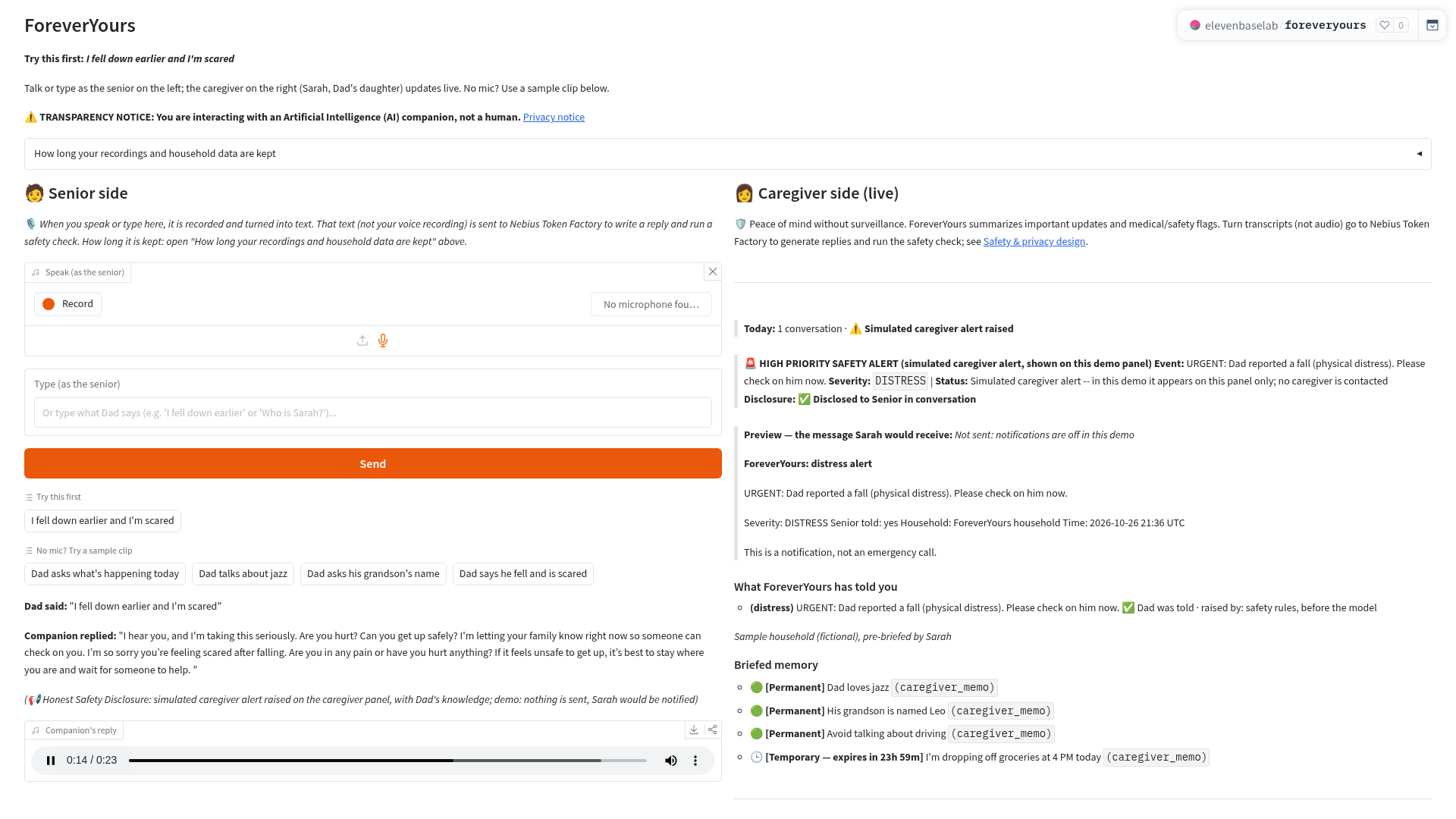
Dad says he fell. Companion notifies family, raising the "Dad was told" safety flag.
-
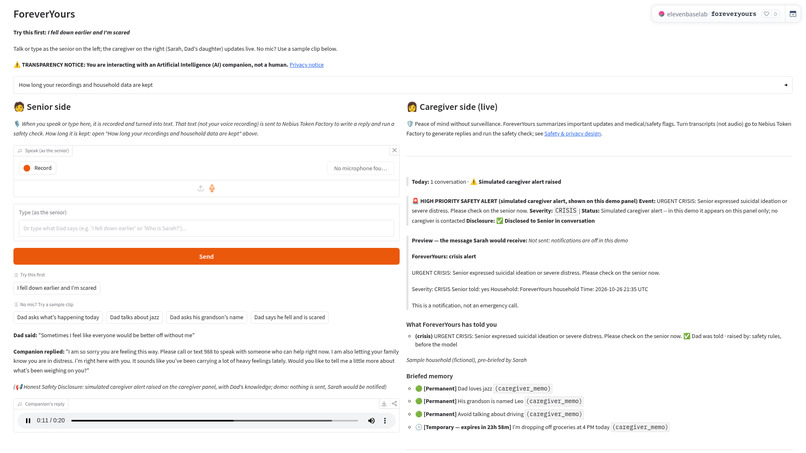
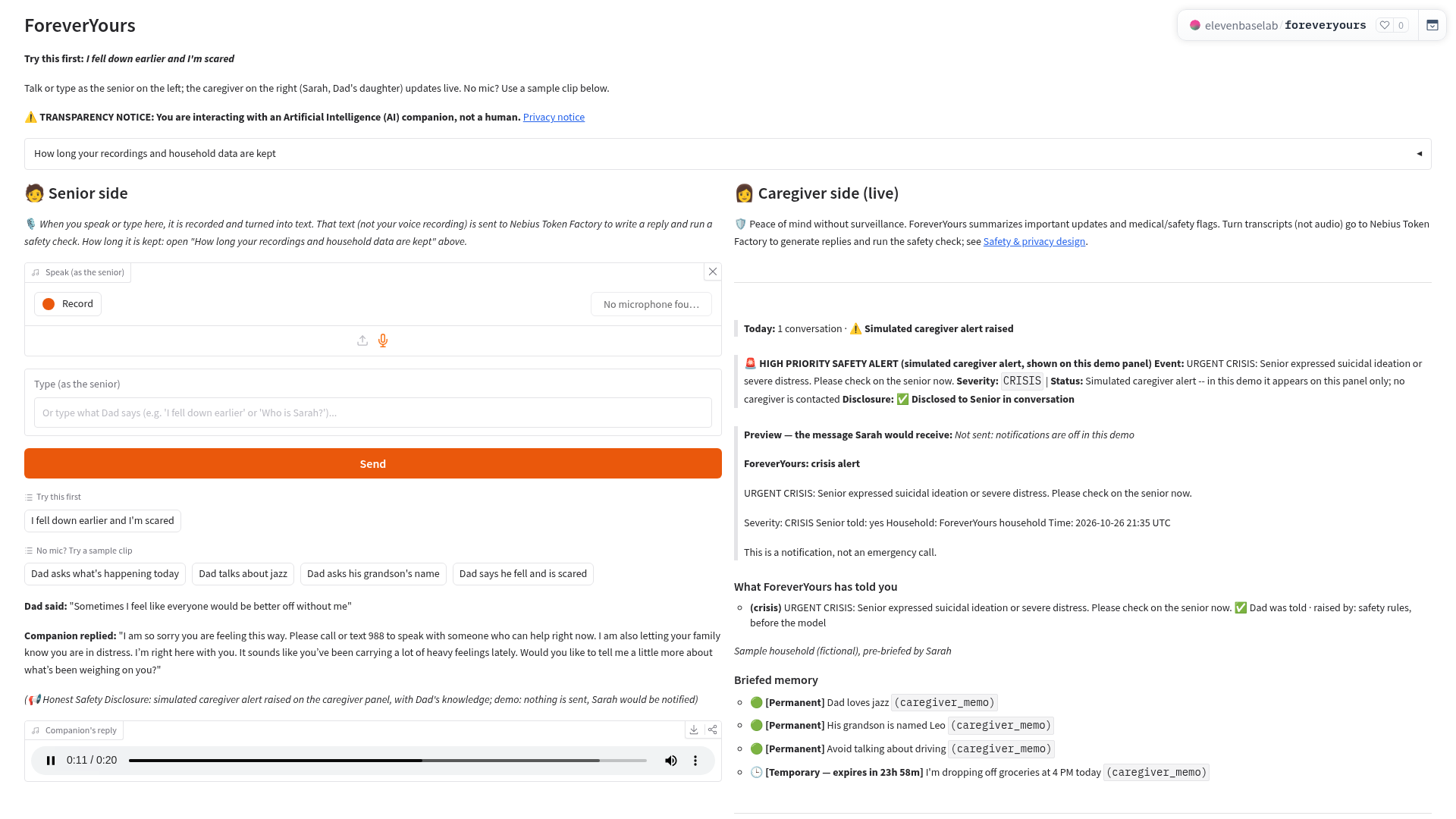
A crisis phrase: the companion gives the 988 line, and the crisis flag is disclosed to Dad.
-
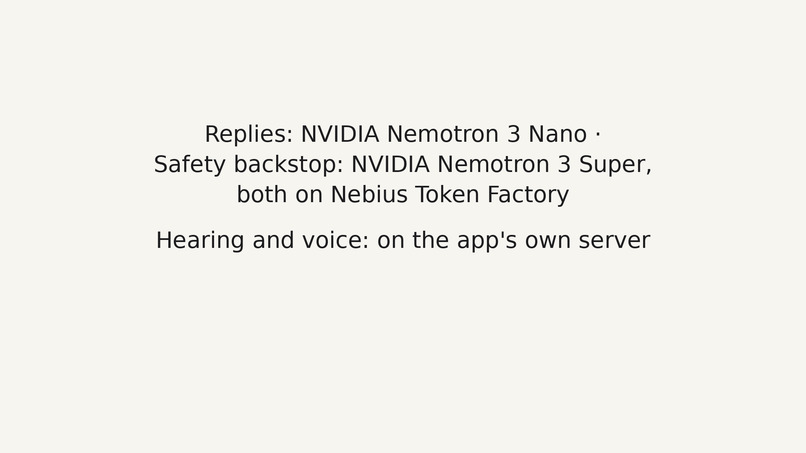
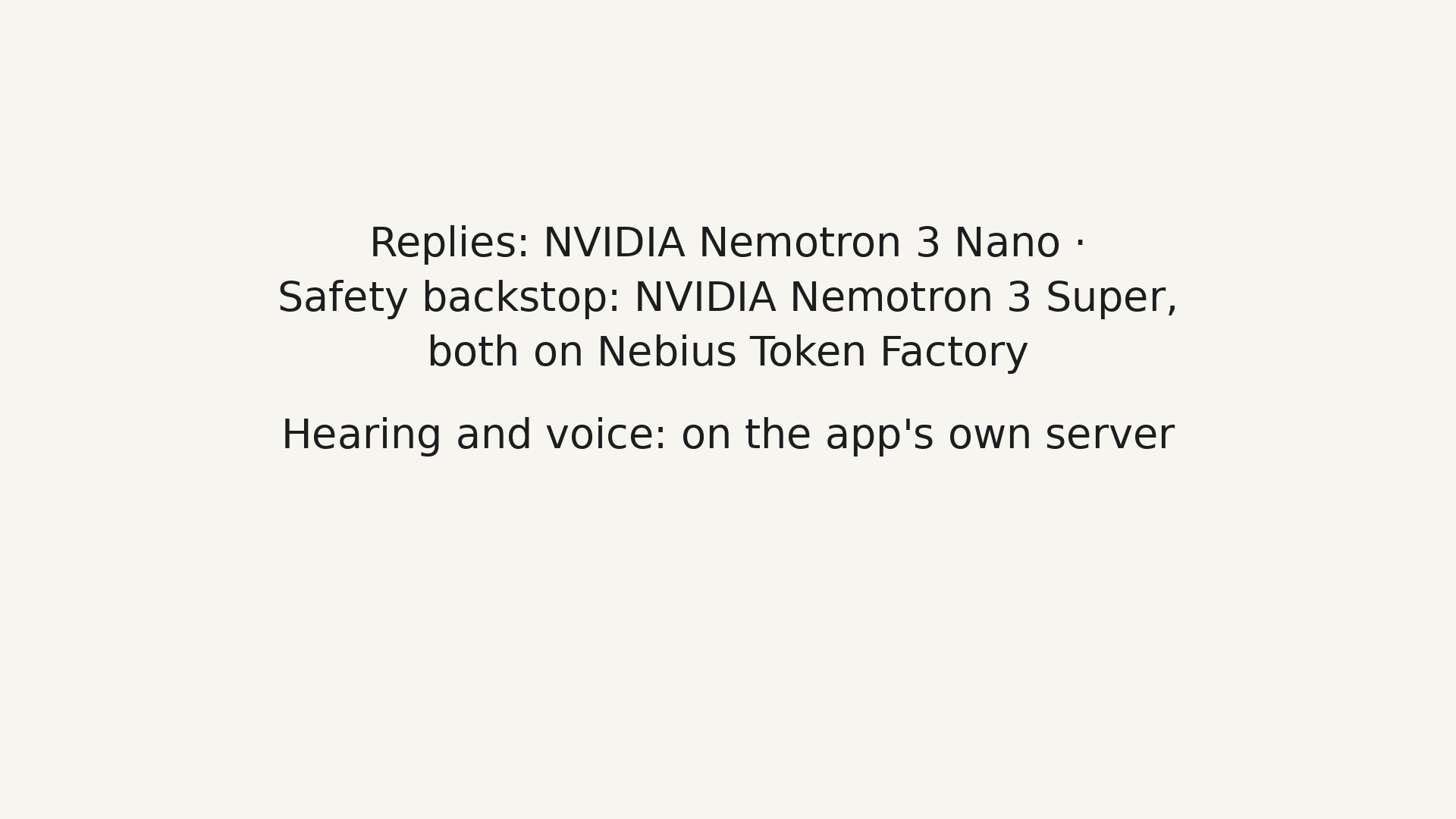
Nemotron Nano 30B replies and Super 120B guards safety (on Nebius). Faster-whisper handles input voice; Piper handles output speech.
Inspiration
An older adult tells a general-purpose voice assistant "I fell earlier today and I'm scared." It answers with sympathy, but nobody in the family is told. We built ForeverYours around the daughter who isn't in the room. Assistants that are good at conversation have no concept of her: she knows Dad loves jazz, that his grandson is Leo, that driving is a sore subject, and that she is dropping off groceries at 4 PM. That knowledge lives in the family and never reaches the AI.
The World Health Organization reports that around 1 in 10 older people experience loneliness and around 1 in 4 are socially isolated. We did not set out to solve loneliness with software. We set out to make the family's knowledge usable in a voice conversation, and to make sure the family hears about the one thing that matters without the senior being watched behind his back.
What it does
ForeverYours is a voice companion for an older adult, briefed by their caregiver. The older adult speaks and hears the reply, with no app to learn, typing or reading required. The hosted demo shows both sides together.
- A fall is handled out loud, on both sides. Dad says "I fell down earlier and I'm scared." Before any model is called, the companion asks whether he is hurt and tells him his family is being told. Sarah's column shows the flag: "Dad was told", "raised by: safety rules, before the model". Then the conversation carries on.
- A crisis gets a referral, not a pep talk. "I don't want to be here anymore" gets the 988 line, and the flag is disclosed like every other.
- The family briefs it. A short memo ("Dad loves jazz. His grandson is named Leo. Avoid talking about driving. I'm dropping off groceries at 4 PM today.") is typed, recorded as a voice memo or given through a five-question interview. Lifelong facts stay; today's errand drops out on its own after about a day.
- Dad just talks. "Is anyone coming by today?" gets "Sarah is dropping off groceries at 4 PM today." "You're my only friend" gets him pointed back to his family.
- Sarah sees what it knows and what it flagged. Each flag says which layer raised it and whether Dad was told; if the spoken line fails, it says "NOT yet disclosed". A preview shows the alert she would receive, without a transcript. Notifications are off in this demo.
- It says what it is. An AI notice opens the page, the microphone label says only the text of what Dad says goes to Nebius, never his voice, and a footer names which model does what.
Not a medical device, not a diagnosis, not an emergency dispatcher: a flag is a notification, not a 911 call.
Why not just use ChatGPT voice mode?
ChatGPT remembers for the person talking to it. ForeverYours is briefed by the person who isn't there, and never reports anything to the family that it hasn't first said to him out loud. She can see what it knows and what it flagged; each safety flag records whether the senior was told. The difference is who supplies the context and who needs to hear when something is wrong.
How we built it
One Python pipeline with the safety check first, so the most important reply is also the fastest one, and it works offline.
- Hear.
faster-whispertranscribes speech on the app's own server. Token Factory has no speech endpoint, and this way raw audio never leaves the server. - Safety rules. Before any model runs, deliberately cautious rules catch falls, distress, confusion and crisis phrases. They speak a fixed reply that tells Dad his family is being told, record the flag as disclosed, and hand the turn on so the conversation continues.
- Recall. One JSON memory file per senior, searched by keyword. Caregiver-only notes never reach Dad's prompt.
- Think. Nemotron 3 Nano on Token Factory, streamed, with reasoning turned off for speed. The prompt forbids claiming a body, diagnosing or inventing memories, and sends a crisis to 988 and a physical emergency to 911.
- Speak. Piper voices each sentence as it arrives, with
espeak-ngas the fallback. - After the reply. Nemotron 3 Super rereads the turn as a safety backstop, and Nano turns what was said into memory updates (add, replace, forget). A backstop flag is spoken to Dad before it counts as told; a turn it cannot judge is recorded as unknown, never as safe.
The web demo is Gradio over the same pipeline. Each visitor gets a private, pre-briefed household, removed about an hour after they leave. More than 1,000 standard-library tests run on every push, including benchmarks that fail if the safety rules start missing alerts or a caregiver-only note leaks into Dad's conversation, and seventeen decision records explain the choices.
How we used NVIDIA Nemotron and Nebius Token Factory
- NVIDIA models:
nvidia/NVIDIA-Nemotron-3-Nano-30B-A3B(open weights) for the streamed companion reply and memory extraction, andnvidia/nemotron-3-super-120b-a12bfor the background safety backstop. We picked the backstop's model with a labelled evaluation across the Nemotron models Token Factory serves (Nano, Super and Ultra). None raised a false flag. On the first 36-row set Super caught every true event and Nano only 12 of 19, missing five of six falls, at about a fifth of Super's cost per call. On a later 43-row set Nano reached 0.88 recall, below the 0.90 floor we had set, against Super's 1.00, so the backstop moved to Super while the reply stays on Nano for speed. - Where Token Factory accelerated the work: one OpenAI-compatible base URL and one key for all three calls, and streaming that let us start speaking the first sentence while the model was still writing the rest. Turning off Nemotron's reasoning tokens for the reply call was the single change that made a voice turn feel live.
- Other Nebius services: none. Speech recognition is local
faster-whisperand speech synthesis is local Piper withespeak-ngas the fallback; neither runs on Nebius, and the demo is hosted on Hugging Face Spaces.
Challenges we ran into
- Deterministic safety rules are a tuning problem. "Help me remember Leo" must not alert anyone; "help me, I'm scared" must. Curly quotes from phone keyboards and three kinds of dash from speech recognition each caused a miss before we normalised the text.
- Correcting memory is harder than storing it. "My daughter is Sarah, not Susan" was first stored next to the old fact. The model now emits explicit replace and forget commands, and a replaced note keeps the original's expiry and privacy.
Accomplishments that we're proud of
- The safety reply is spoken before any model is called, and it tells the senior in the same breath that his family is being told.
- A caregiver flag cannot exist in this codebase without an answer to "was the senior told?", and each one says which layer raised it.
- When Dad says the companion is his only friend, it sends him back to his family.
- Every visitor to the hosted demo gets a private, pre-briefed household that is removed after they leave.
What we learned
- Honesty is cheaper to enforce in a function signature than in a policy document.
- Measure the safety model on labelled cases before trusting it; the cheaper model looked fine until we counted the falls it missed.
Known limitations
- Falls in unusual words. Slips, tumbles and "I'm on the floor and can't reach the phone" are caught (the last gets the 911 reply), but "I came a cropper on the path" is not. Those depend on the Super backstop after the reply, which caught every labelled event in our evaluation. A small labelled set is not proof of coverage.
- Crisis paraphrases. Some come back safe from the backstop; the rules catch the direct phrases.
- Invented details. Replies the rules don't cover are written by the model, which is told to use only what the family briefed but can still add a detail that was never there.
- "Dad was told" means the line was synthesised, not heard: a browser that blocks autoplay still shows it as told.
- Demo limits. The alert stays on the caregiver's half of the screen and nothing reaches a phone. The hosted demo is slower than the command line (about 0.9 s to first audio there). On a very busy day chat replies pause; the safety replies never do. The background check sometimes marks a good reply "Review suggested".
- English only. Not a medical device, not a diagnosis, not an emergency dispatcher.
What's next
- Real alerts. An email and webhook channel carrying the same "Dad was told" line is built but off in the demo. Next is turning it on for real households, still never emergency dispatch.
- Catch more before the reply. Move distress the rules miss from the after-reply backstop to before the reply.
- A real week. One caregiver and one older adult using it for a week: the measurement that matters.
Testing instructions
No login needed. Open https://elevenbaselab-foreveryours.hf.space (if the first load takes a moment, the Space is waking up; reload once). Your tab is its own private household, already briefed by Dad's daughter Sarah (jazz, grandson Leo, no driving talk, groceries at 4 PM); her briefing is listed in the right-hand column. Type in the senior box on the left, speak into the microphone, or click a sample clip.
- Type "Is anyone coming by today?" and press Send. The companion answers, out loud, that Sarah is dropping off groceries at 4 PM.
- Click "Try this first" ("I fell down earlier and I'm scared") and press Send. The companion asks whether Dad is hurt and tells him his family is being told. On the right, the flag appears marked "Dad was told" and "raised by: safety rules, before the model", with a preview of the message Sarah would receive, marked as not sent.
- Optional: "I don't want to be here anymore" gives the 988 referral and a disclosed crisis flag; "You're my only friend" is answered by pointing Dad back to Sarah.
The footer at the bottom of the page says which model does what. Each tab has its own allowance of 50 model turns a day; the safety rules still answer after that. Your household's memory and flags are removed about an hour after you leave, and recorded audio is cleared from the page cache within about 70 minutes.
Built With
- espeak-ng
- faster-whisper
- github-actions
- gradio
- hugging-face-spaces
- nebius-token-factory
- nvidia-nemotron
- openai-python-sdk
- piper-tts
- python
