-
-
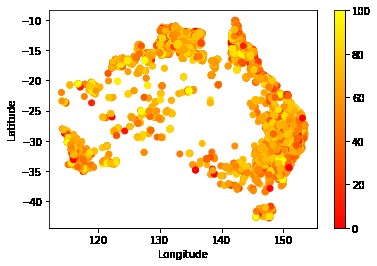
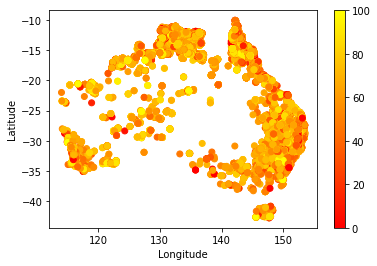
Training Data Visualization (with Heatmap for Confidence Level)
-
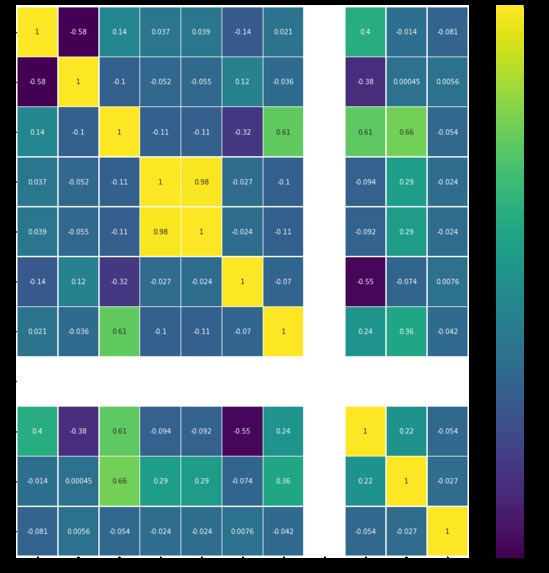
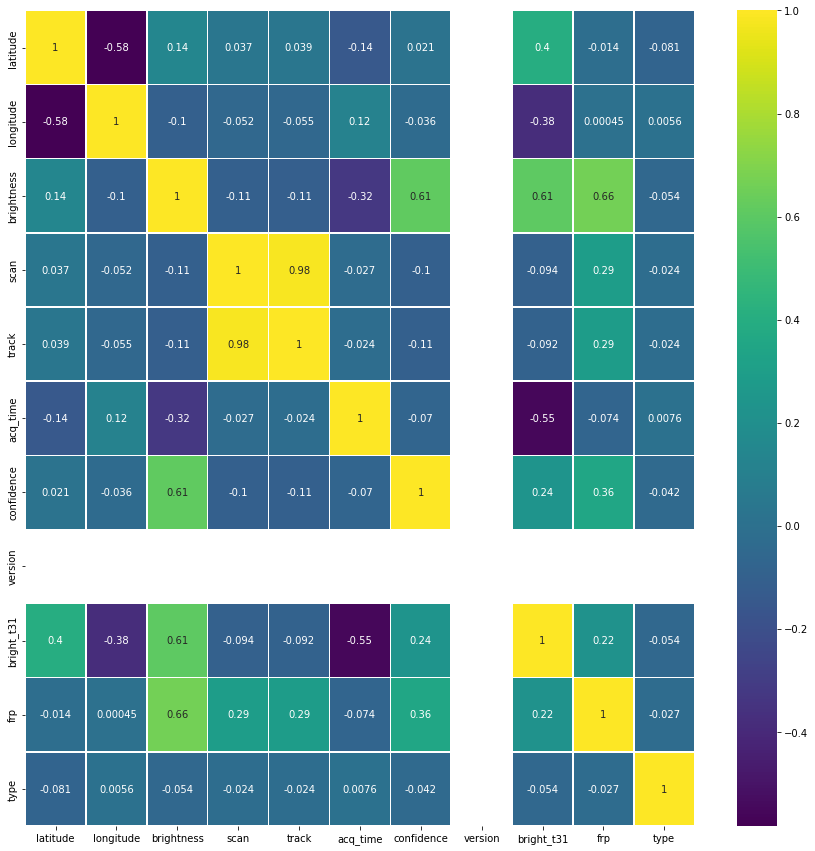
Data Processing Analysis with Feature Selection
-
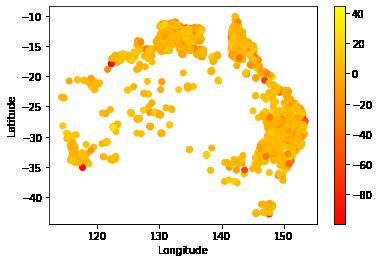
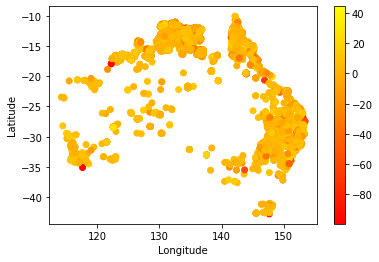
Output from Neural Network (with Heatmap for Confidence Level)
-
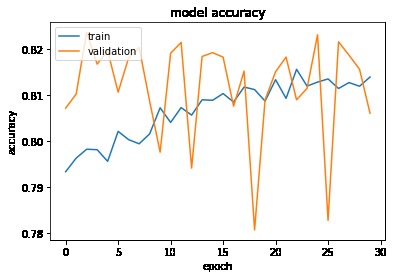
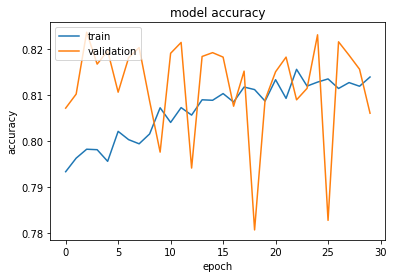
Model Accuracy for Neural Network
Inspiration
Our project is called ForestFireNet. Due to climate warming, wildfires are unfortunately an extremely pressing problem in our current day and age. In 2019-2020, the Australia Bushfires made headlines all over the world as hundreds of devastating wildfires swept across the country, labeled a megafire that ravaged infrastructure and took many human and animal lives. While there are many ways to predict whether or not a forest fire will occur in a given area, machine learning can take into account numerous different factors and predict with high accuracy, proving itself to be a strong contender for solving this problem. Our target audience for this model is anyone from researchers to the general public, who may want to predict the confidence of a forest fire occurring out of scientific necessity or casual curiosity. The dataset our model is trained on is from Australia's fire intensity records and is examined in greater detail below.
What it does
Our ForestFireNet predicts the confidence of a forest fire occurring given information such as latitude, longitude, brightness, and time of day.
How we built it
It is a machine learning model utilizing Random Forest Regressors and Neural Networks. The parameters for our Random Forest Regressor were optimized using a randomized search and cross-fold validation. Our Neural Network implements a CNN architecture, with model weights tuned to to optimize performance.
Challenges we ran into
While training our models, we had to recognize when we were overfitting to the training data, which resulted models that were not easily generalizable. Additionally, due to our limited computational resources, we were unable to implement a neural network with complex architectures.
Accomplishments that we're proud of
As expected, our neural network outperformed our basic Random Forest Regressor. While our regressor achieved 67% accuracy, our neural network exceeded 80% accuracy.
What we learned
Throughout this process, we learned about how to implement CNNs from scratch, taking into account domain-specific information in data-processing. Additionally, we learned how to ensure that our machine learning models targeted the purpose it was designed for, making sure to return only the confidence levels of forest fires.
What's next for ForestFireNet
We hope to expand upon our neural network architecture, and explore opportunities for transfer learning from existing state of the art forest fire predictors. We would also like to study how well our model generalizes spatially, examining its performance in regions outside of Australia. Additionally, with better computational resources, we want to experiment with more complex network architectures, such as the U-Net, which is most commonly used in fire prediction applications.
Built With
- cnn
- machine-learning
- python
- random-forest

Log in or sign up for Devpost to join the conversation.