Inspiration
Current AR/VR involves bulky headsets, we want to free the user and make the screen a portal to the AR/VR world.
What it does
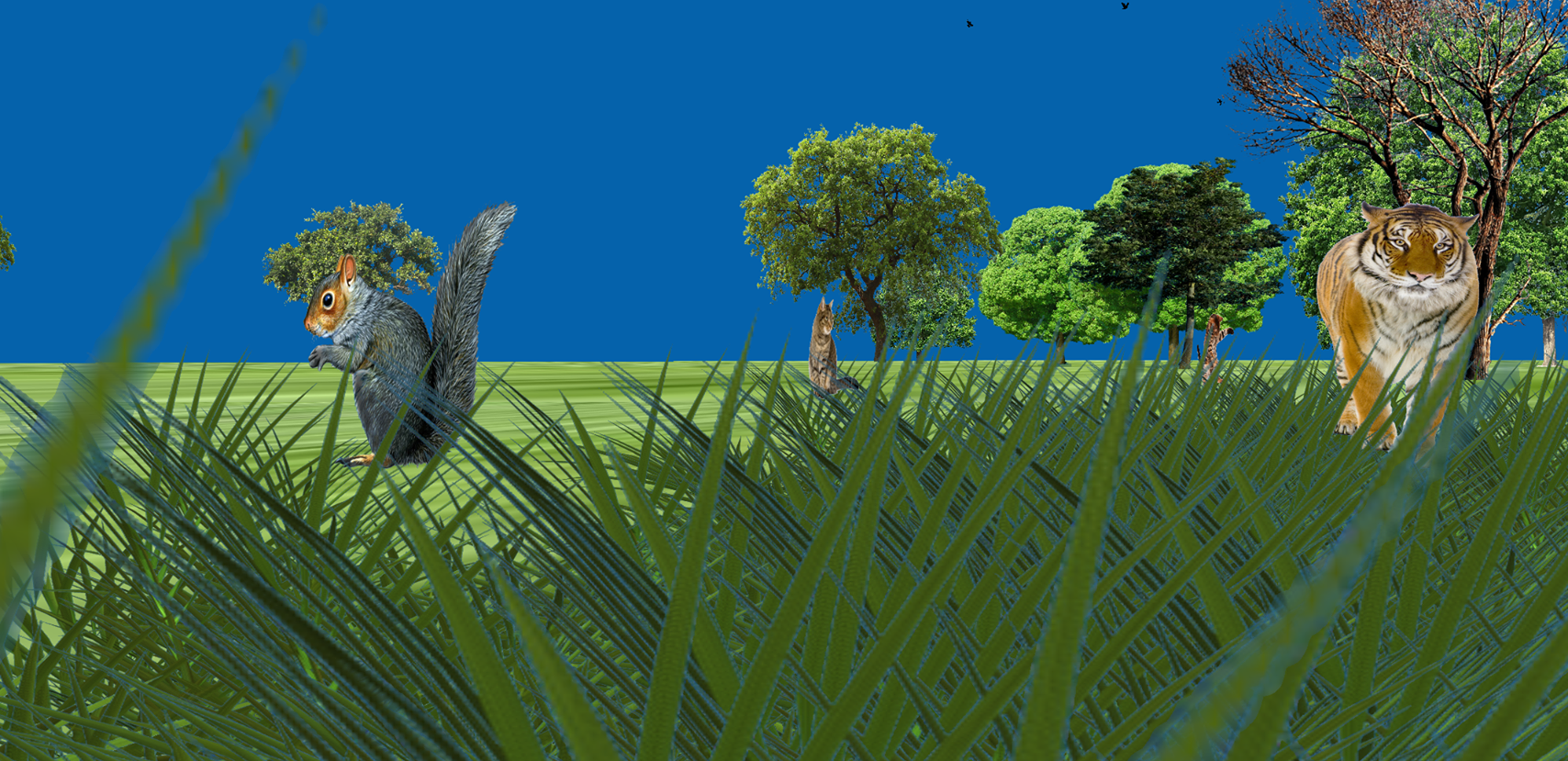
Forest through Kinect is a window into the virtual world filled with birds, tigers and cats.
How I built it
We used Kinect to track the user's position in room scale, then project the virtual world onto the screen, such that it is perspectively correct to the user. The window is updated in accordance to user's position.
Challenges I ran into
Classical computer graphics rely on symmetrical project, where the left/right and up/down pairs are congruent. We had to come up with an asymmetrical projection to solve the rendering issue. We also have to process and smooth the Kinect's input and do prediction so the user will have a smoother experience. Creating the world in a short period of time is tedious, so we came up with a procedural generation method.
Accomplishments that I'm proud of
Asymmetrical projection, smooth tracking with prediction, procedural world generation
What I learned
Kinect in a noisy and cluttered environment such as a hackathon tends to give a lot of false results. Learning how to handle noise in such an environment helps making the program more robust.
What's next for Forest through Kinect
The proof of concept is successful. The next would be to create a framework to share such an AR/VR projection technique such that people can create their own AR/VR world without using headsets. A simple screen with a webcam will do.


Log in or sign up for Devpost to join the conversation.