Forest Defenders
Inspiration
Most strategy games let you expand and destroy without thinking about what’s already there. I wanted to flip that.
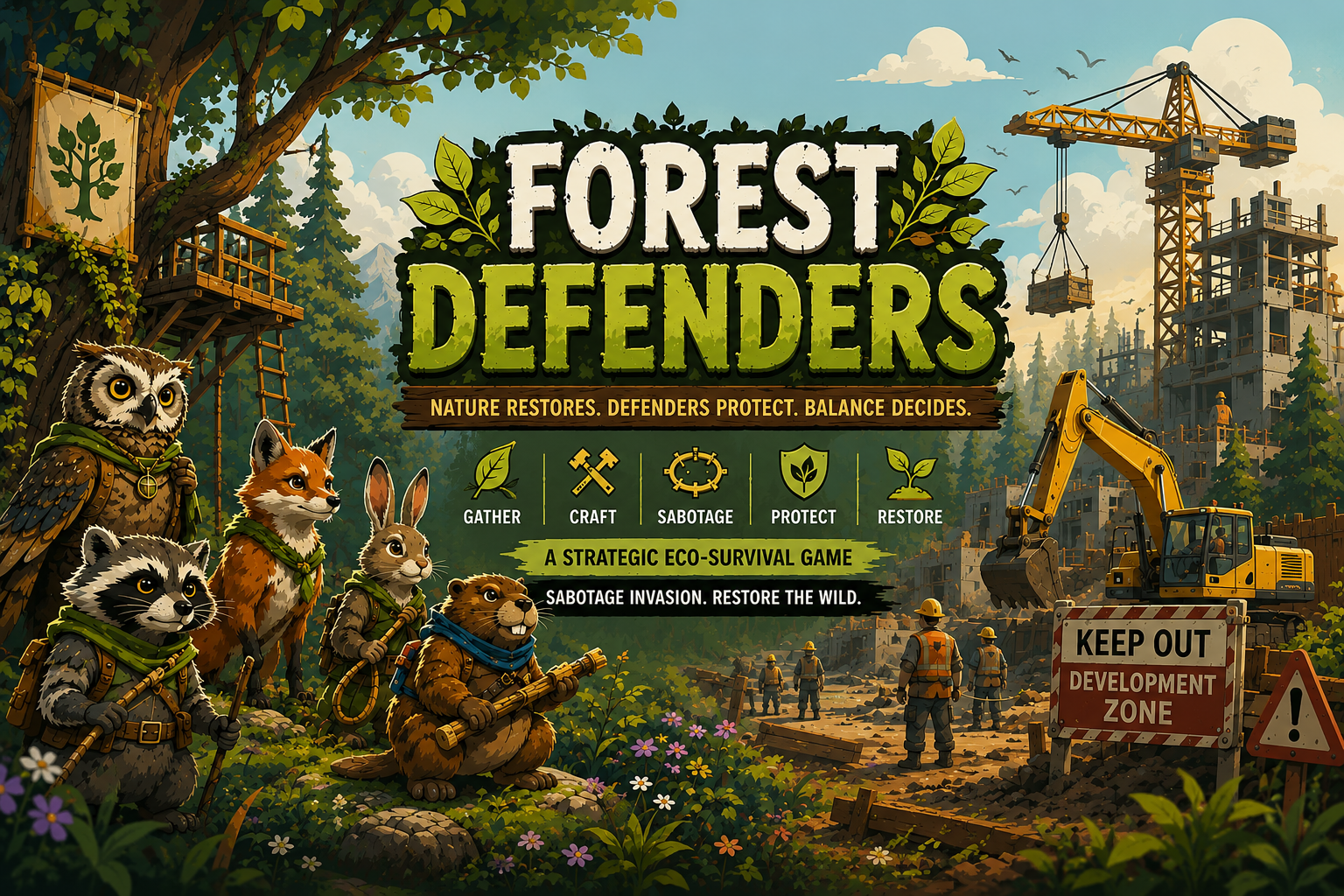
Forest Defenders is about defending a living forest from human construction. Not as background decoration, but as something that is actively being taken away while you try to hold onto it.
The core idea is simple. You are not invading anything. You are trying to hold onto what is already alive.
What it does
Forest Defenders is a mobile survival and strategy game where you defend a forest territory from escalating human construction.
You play as woodland animals gathering resources, crafting tools, sabotaging construction, defending the forest, and recovering between waves.
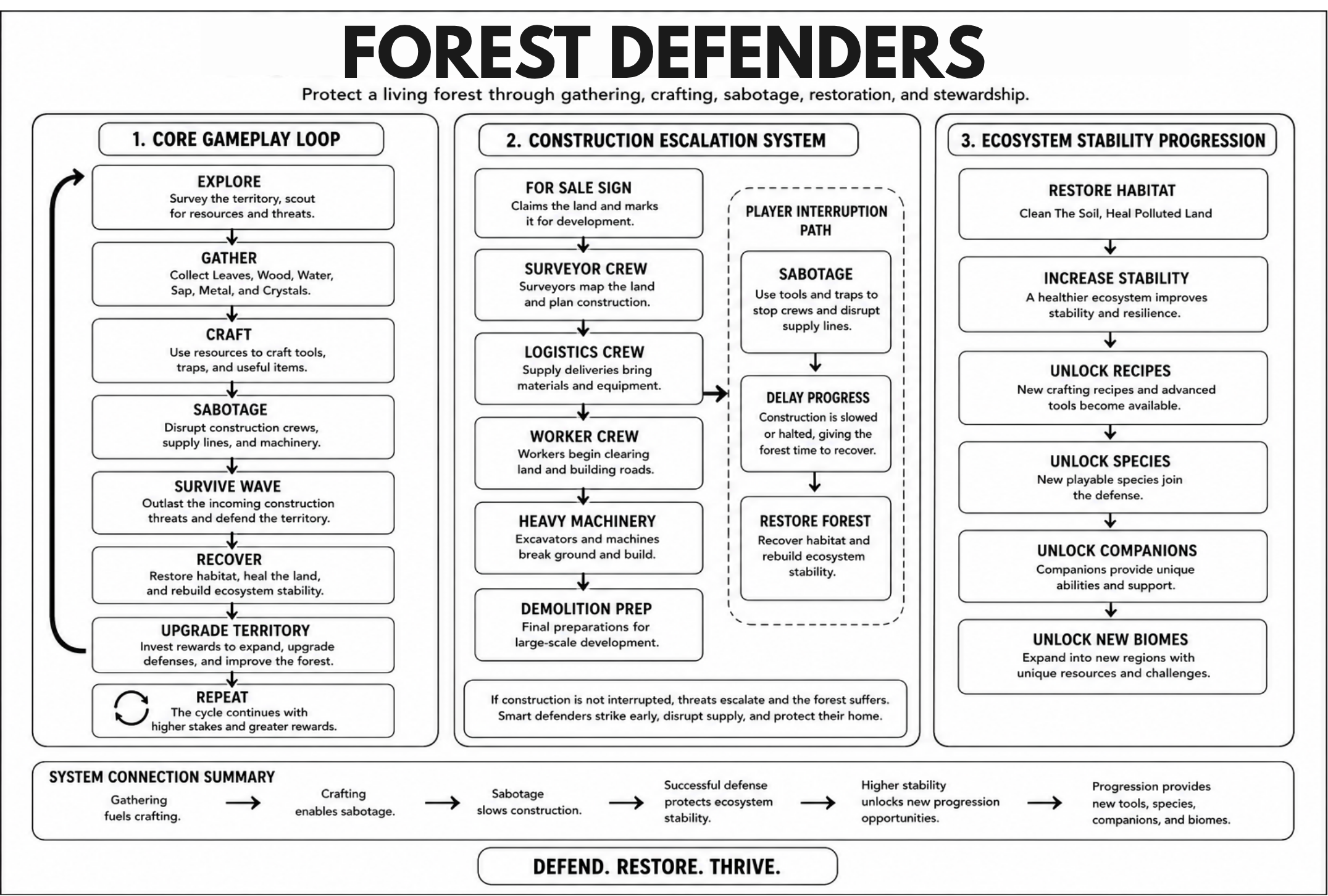
Core loop: Explore, Gather, Craft, Sabotage, Defend, Recover, Upgrade
Construction escalates over time from small signs and surveyors into workers and machinery if not stopped early.
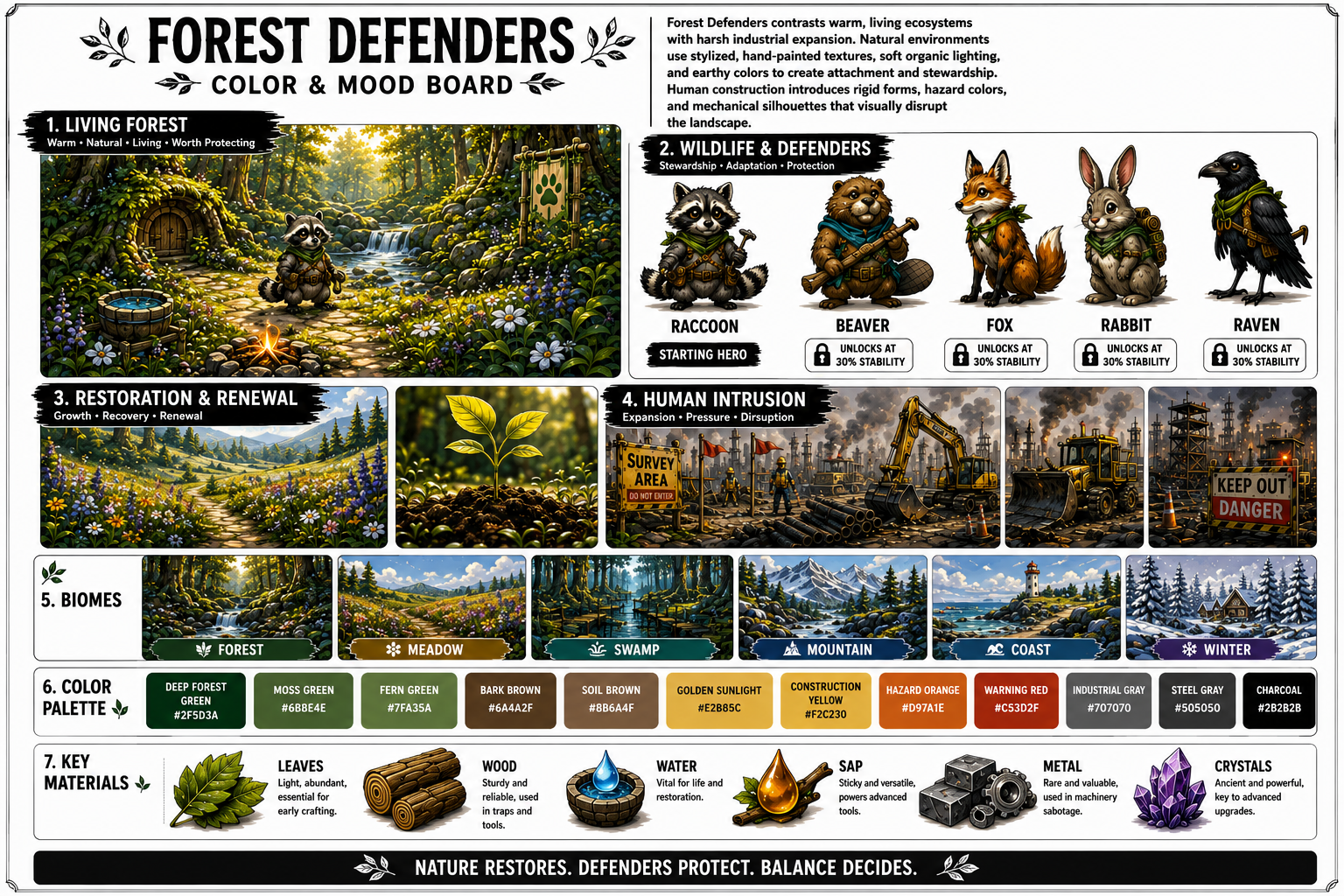
Each animal has a role:
- Beavers build defenses and improve stability
- Raccoons handle sabotage and salvage
- Foxes focus on mobility and disruption
- Rabbits specialize in fast gathering and recovery
- Ravens and owls provide scouting and awareness
How I built it
I started with a Game Design Document built around a single core loop: gather, craft, sabotage, defend, survive.
From there I built every system to support it.
- Wave system that escalates from signs to surveyors to workers to machinery
- Six resource economy: Leaves, Wood, Water, Sap, Metal, Crystals
- Crafting system with tools, traps, and sabotage items
- Ecosystem stability as a persistent world state
- Species roles that shape playstyle without locking the player
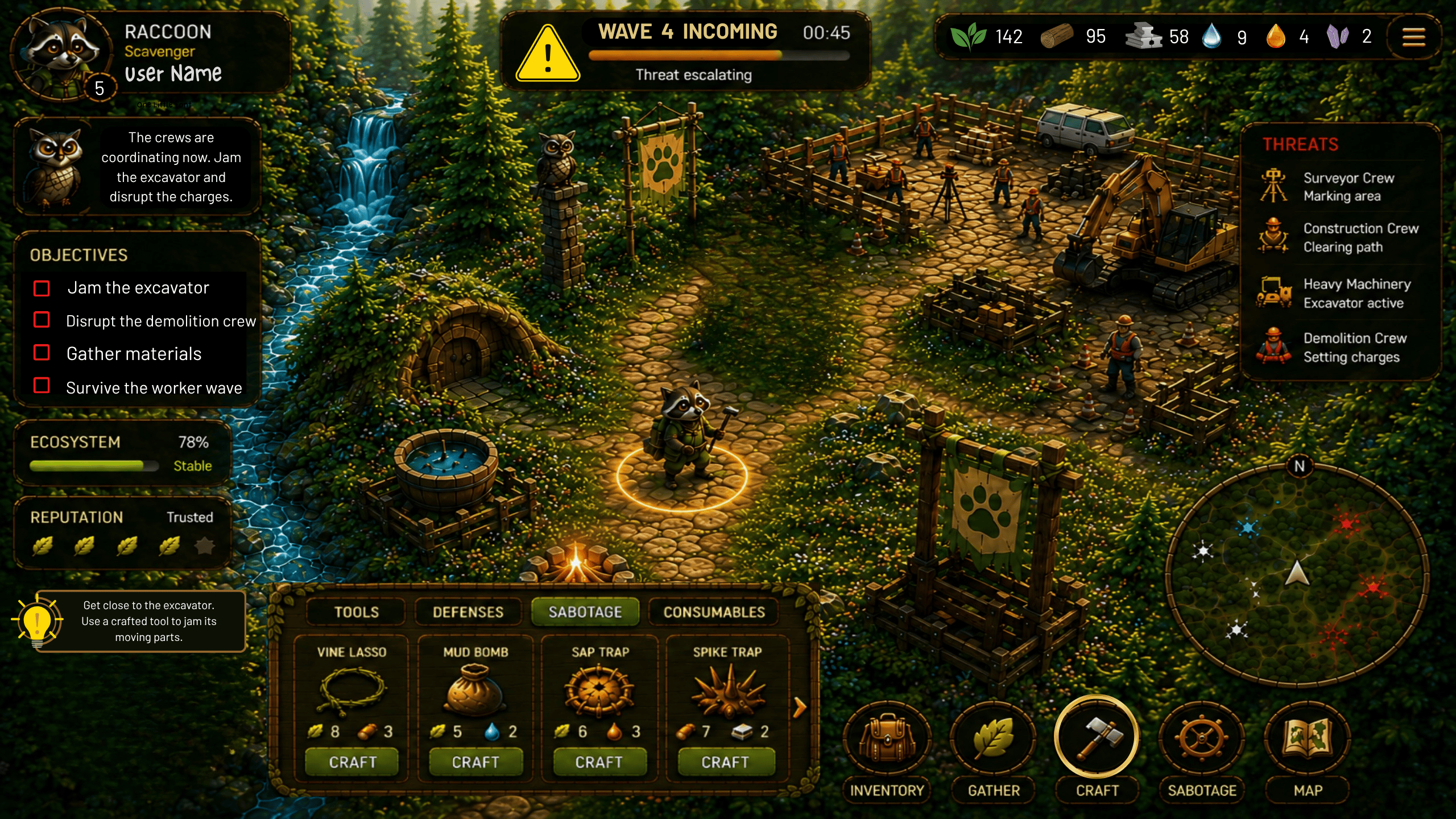
- Mobile-first UI designed for fast decision making
Everything was kept consistent across the Game Design Document, UI wireframes, and visual concept package.
Challenges I ran into
The biggest challenge was scope versus clarity.
The design evolved into a streamlined, readable system focused on clarity and strategy. I refined the design to highlight the systems that matter most.
Another challenge was making sure everything stayed readable during high-pressure mobile gameplay. The experience is built around fast, meaningful decisions with minimal menu friction.
A key design goal was ensuring the environmental theme emerged naturally through gameplay. I wanted environmental themes to come through naturally through gameplay, not feel like a lecture.
Accomplishments I'm proud of
- Built a complete end-to-end gameplay loop
- Designed a clear escalation system from signs to machinery
- Created a resource economy that supports all systems
- Defined animal roles that change how you play
- Kept all design artifacts consistent
- Built a world that visibly changes as you play
What I learned
The core loop matters more than anything else.
The core loop is strong enough to support long-term expansion.
Simplifying systems made the game stronger, especially for mobile strategy gameplay.
What's next
- More biomes and forest regions
- Expanded animal roster
- Companion system
- Smarter construction AI
- Cooperative territory defense
- Seasonal environmental events
- Long term progression systems
The goal is a strategy game where protecting something feels as meaningful as building it.
Built With
- canva
- chatgpt
- copilot
- microsoftword


Log in or sign up for Devpost to join the conversation.