-
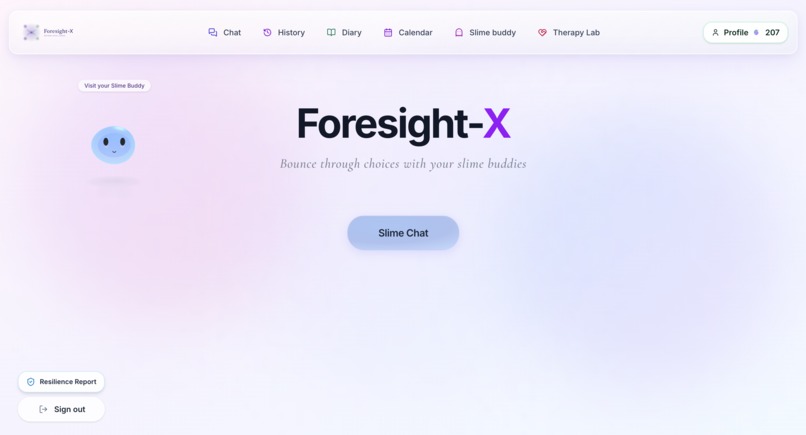
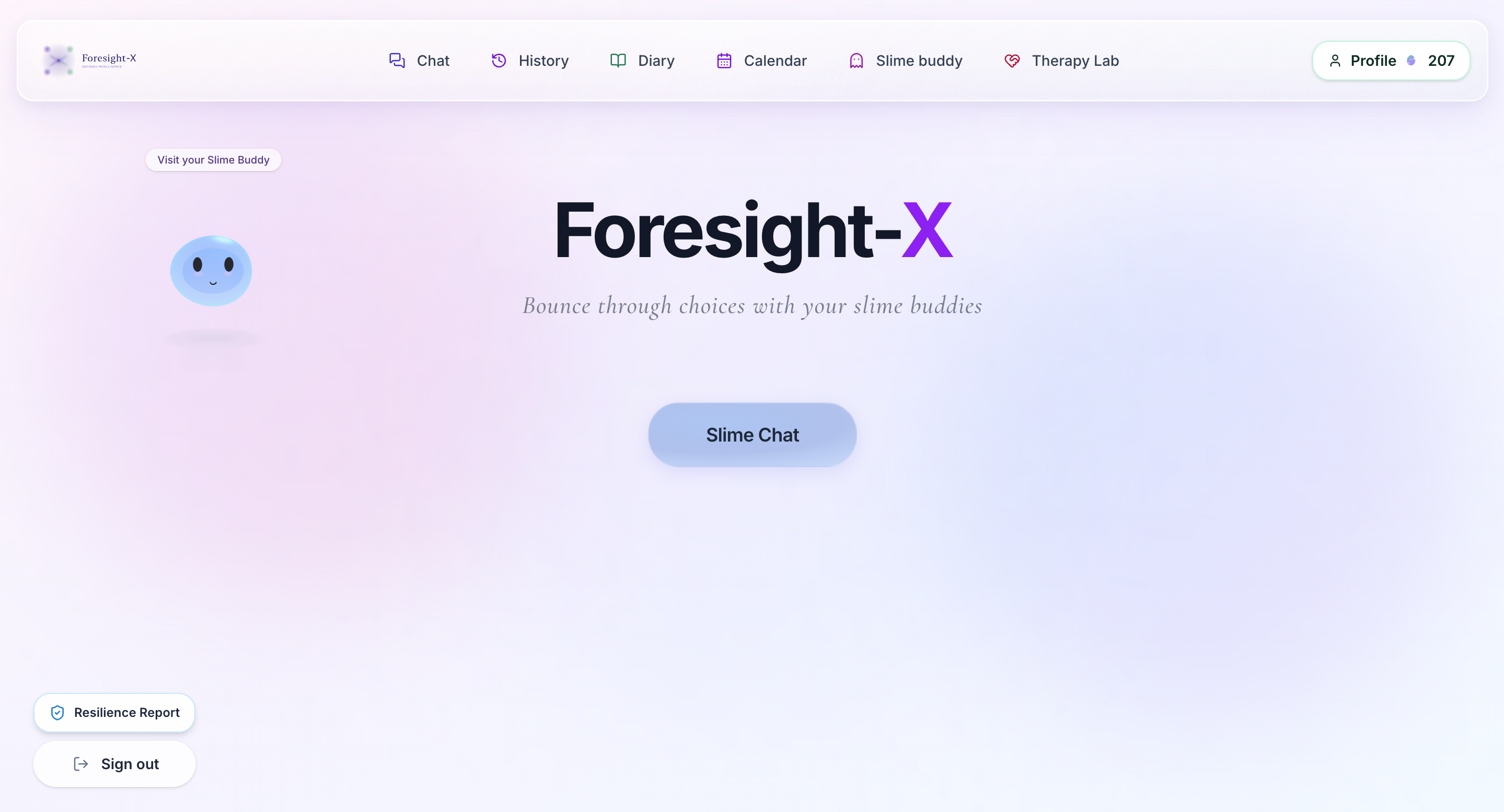
Main Page
-
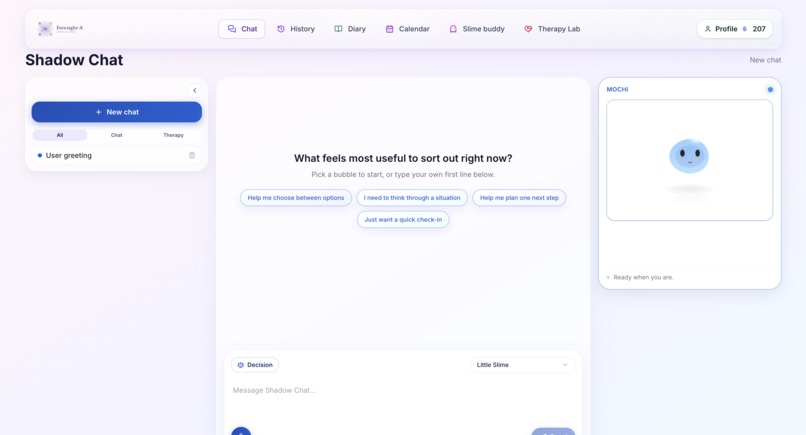
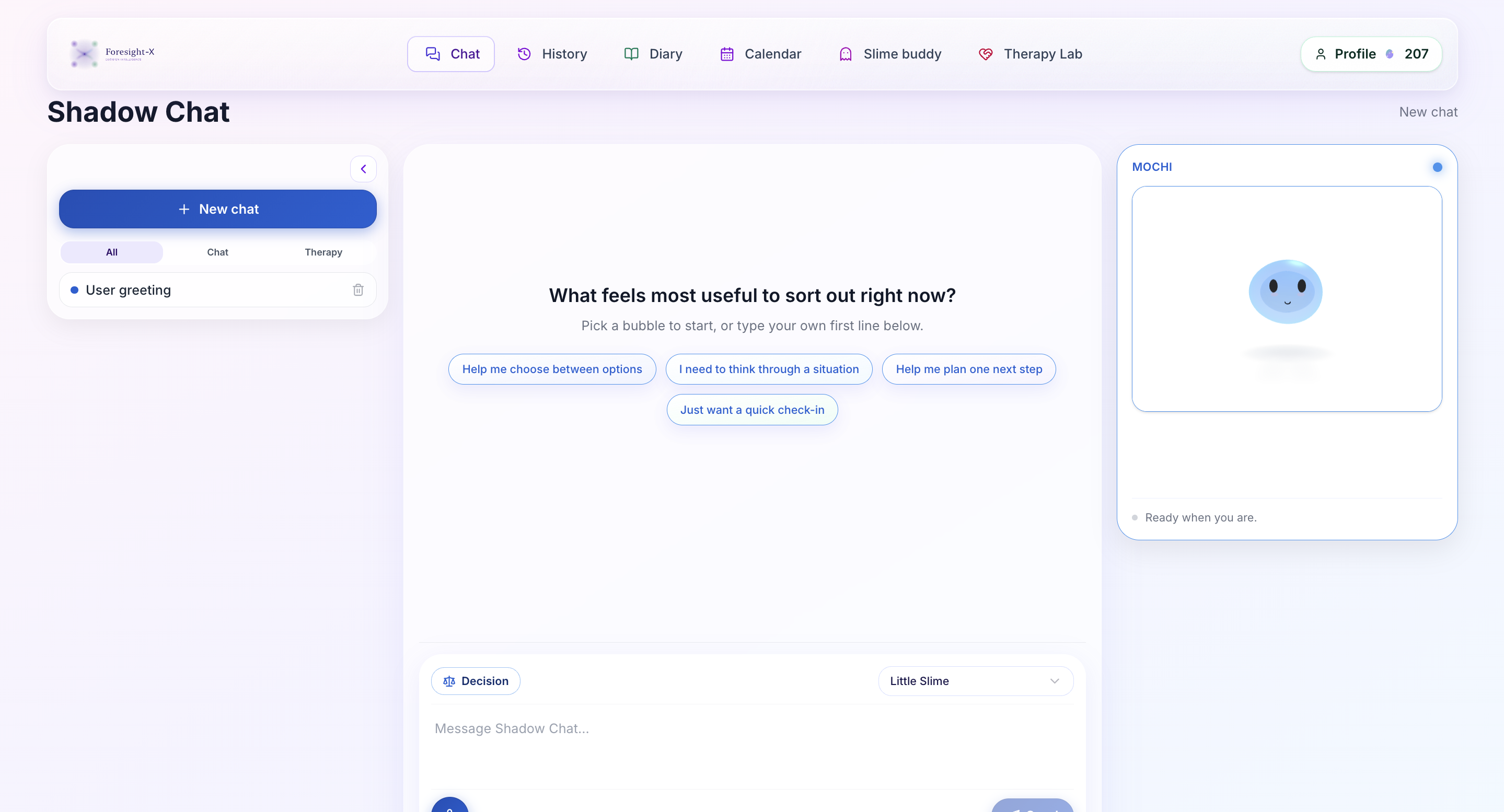
Chat Page
-
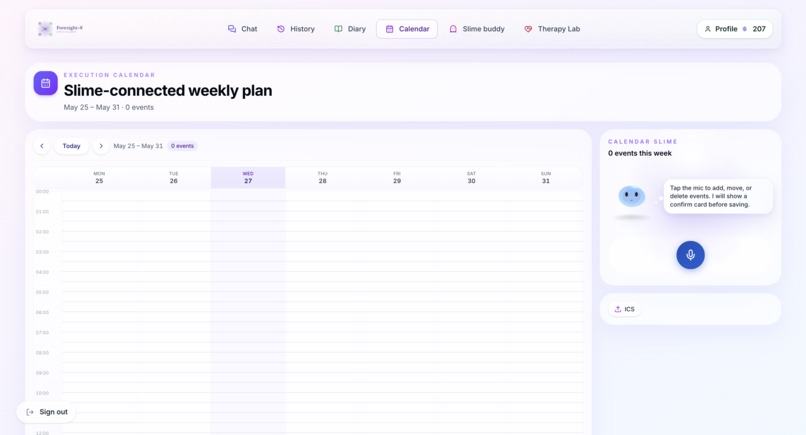
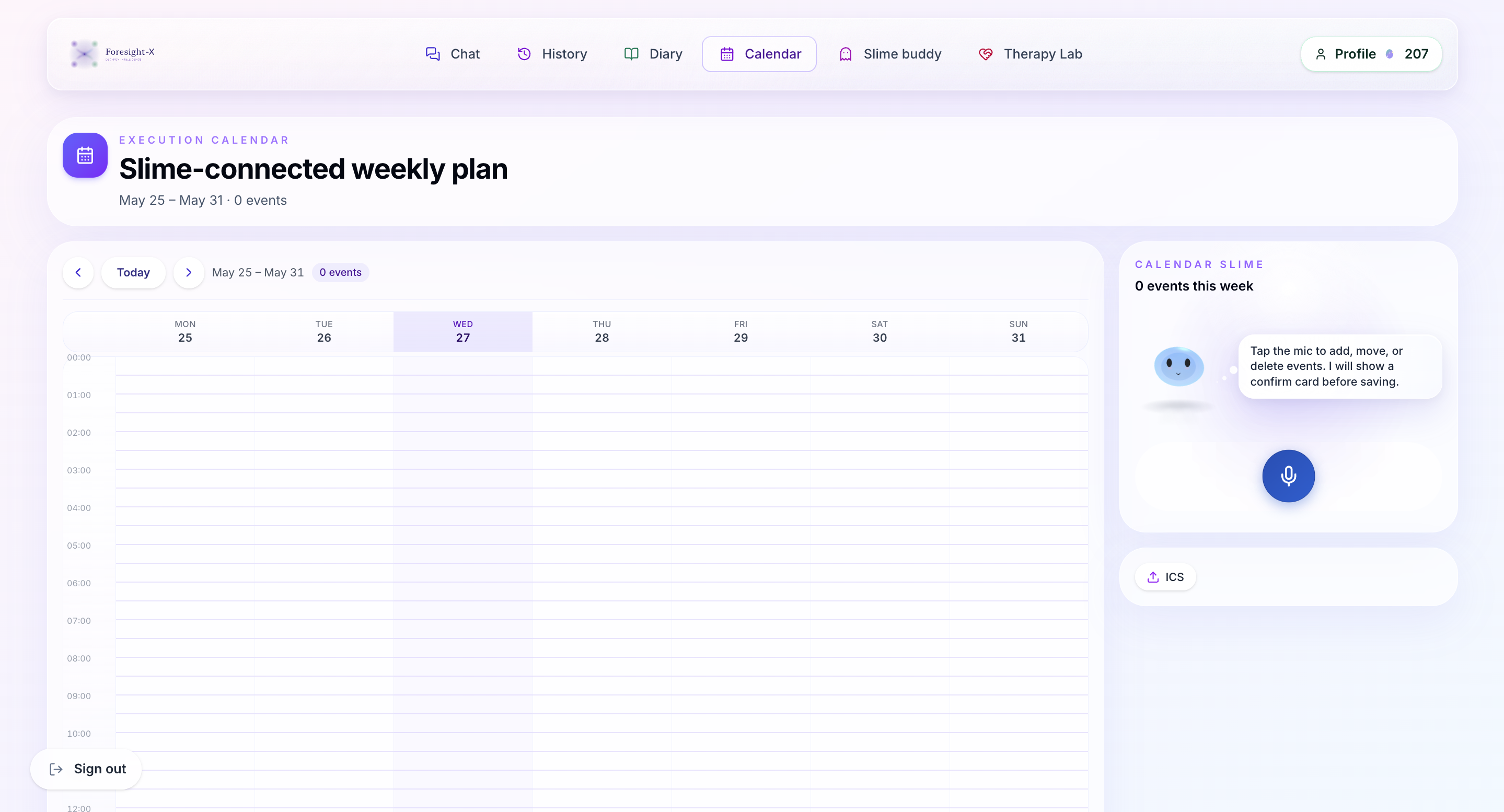
Calendar AI agent
-
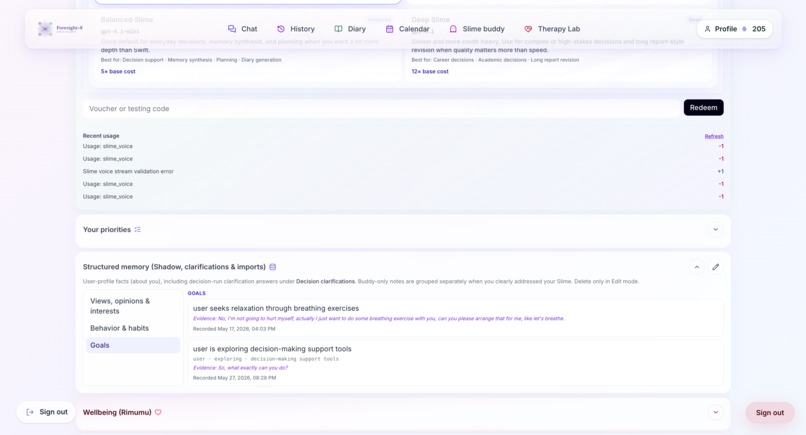
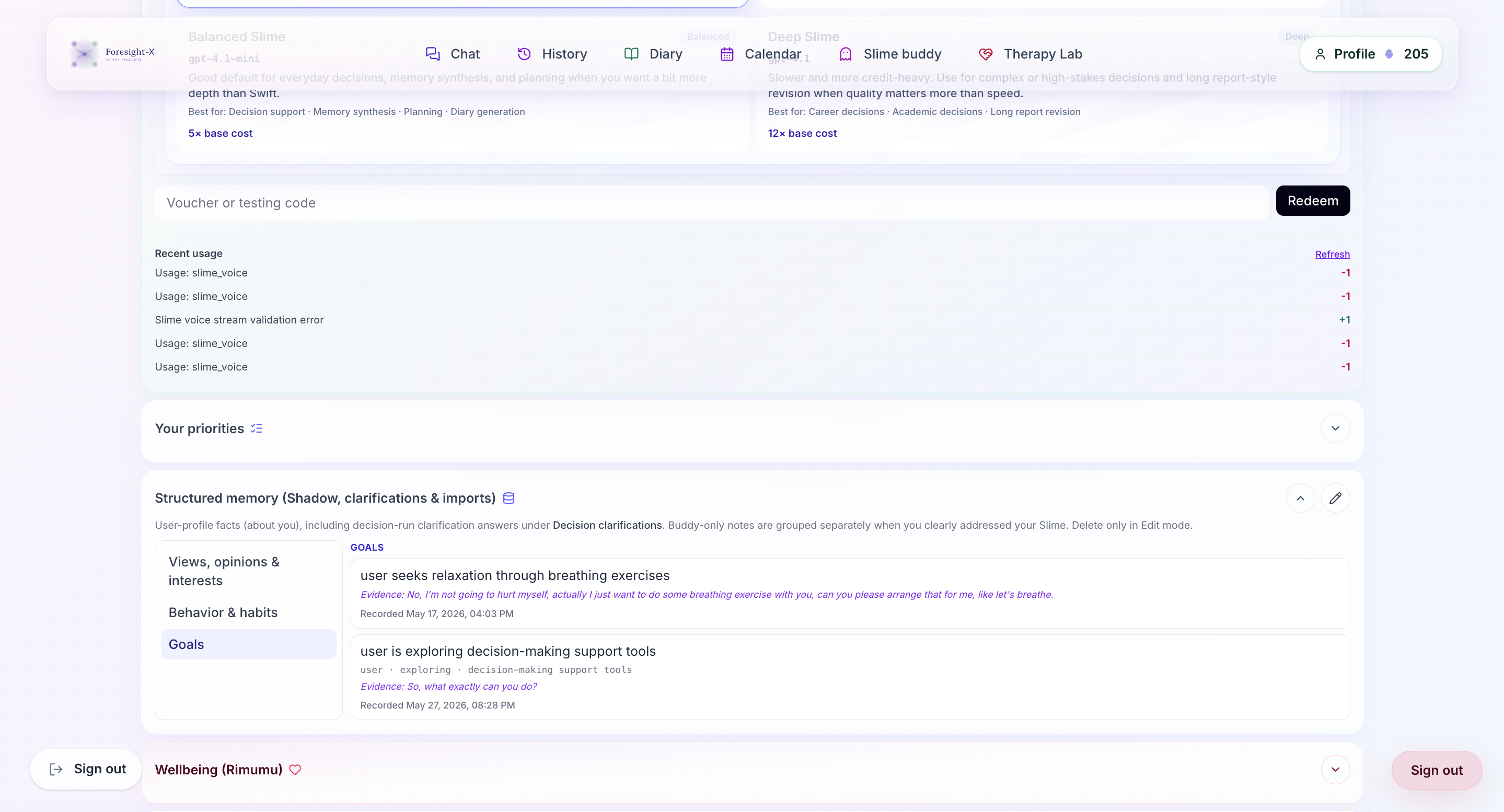
Memory recorded based on users' interaction
-
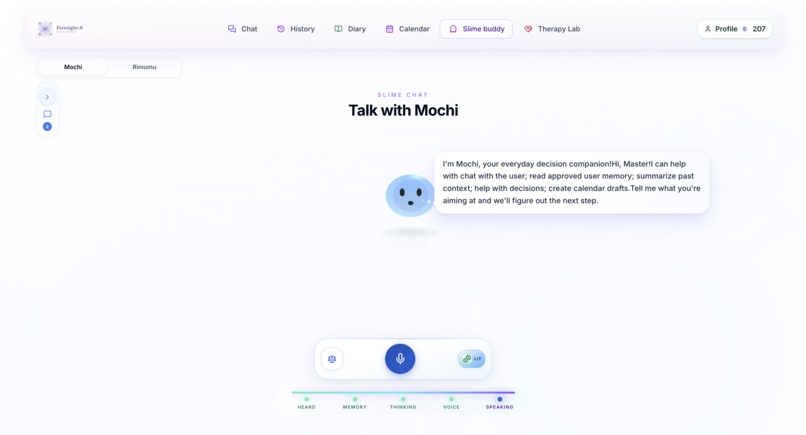
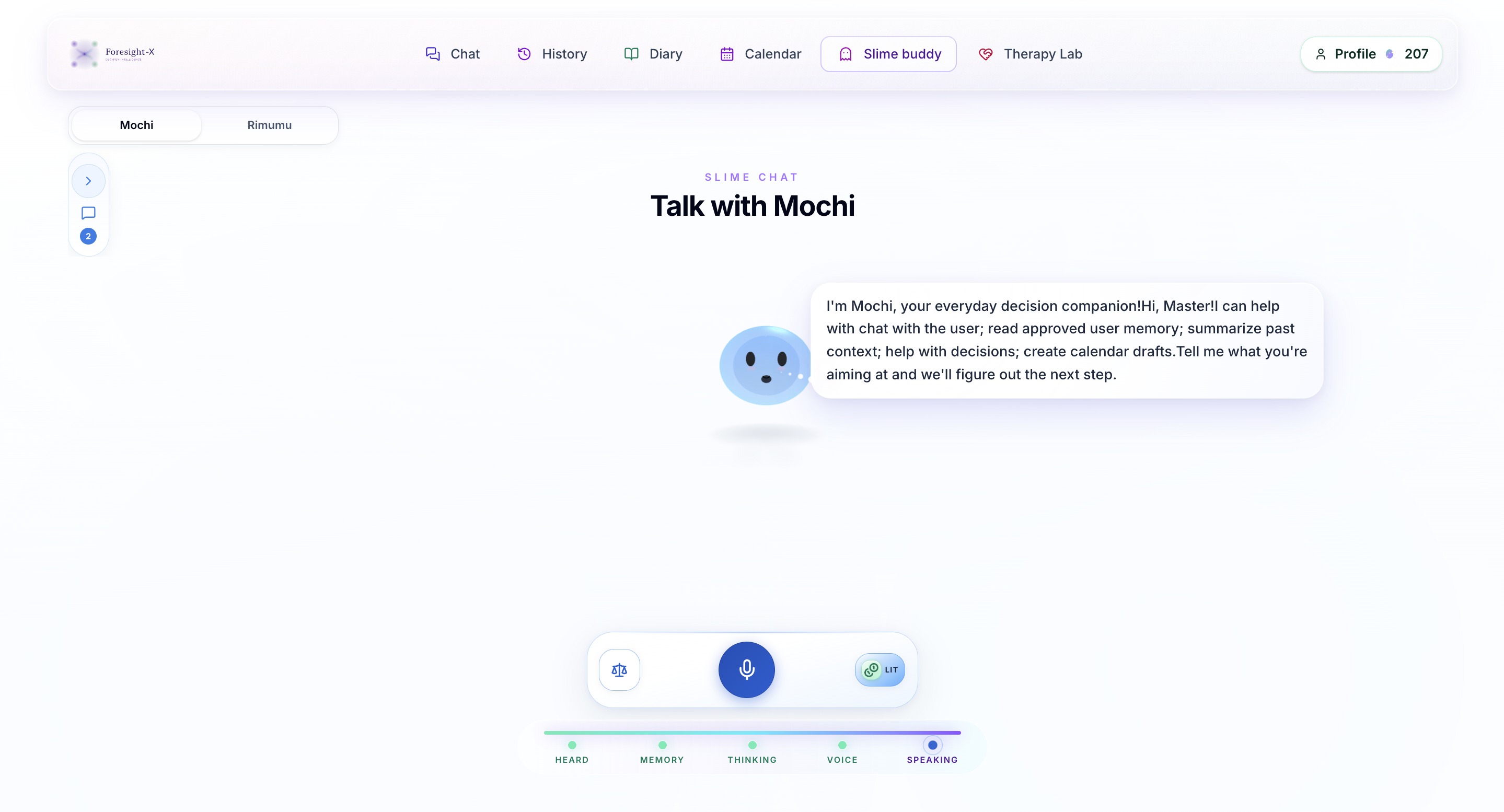
"Slime" Buddy, decision support AI agent
-
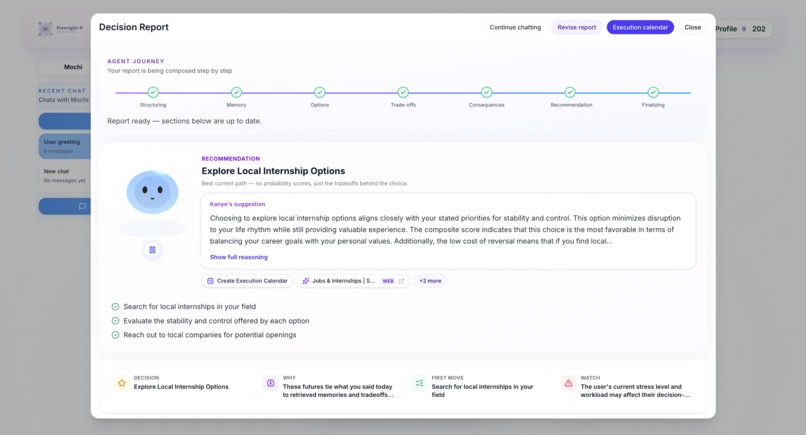
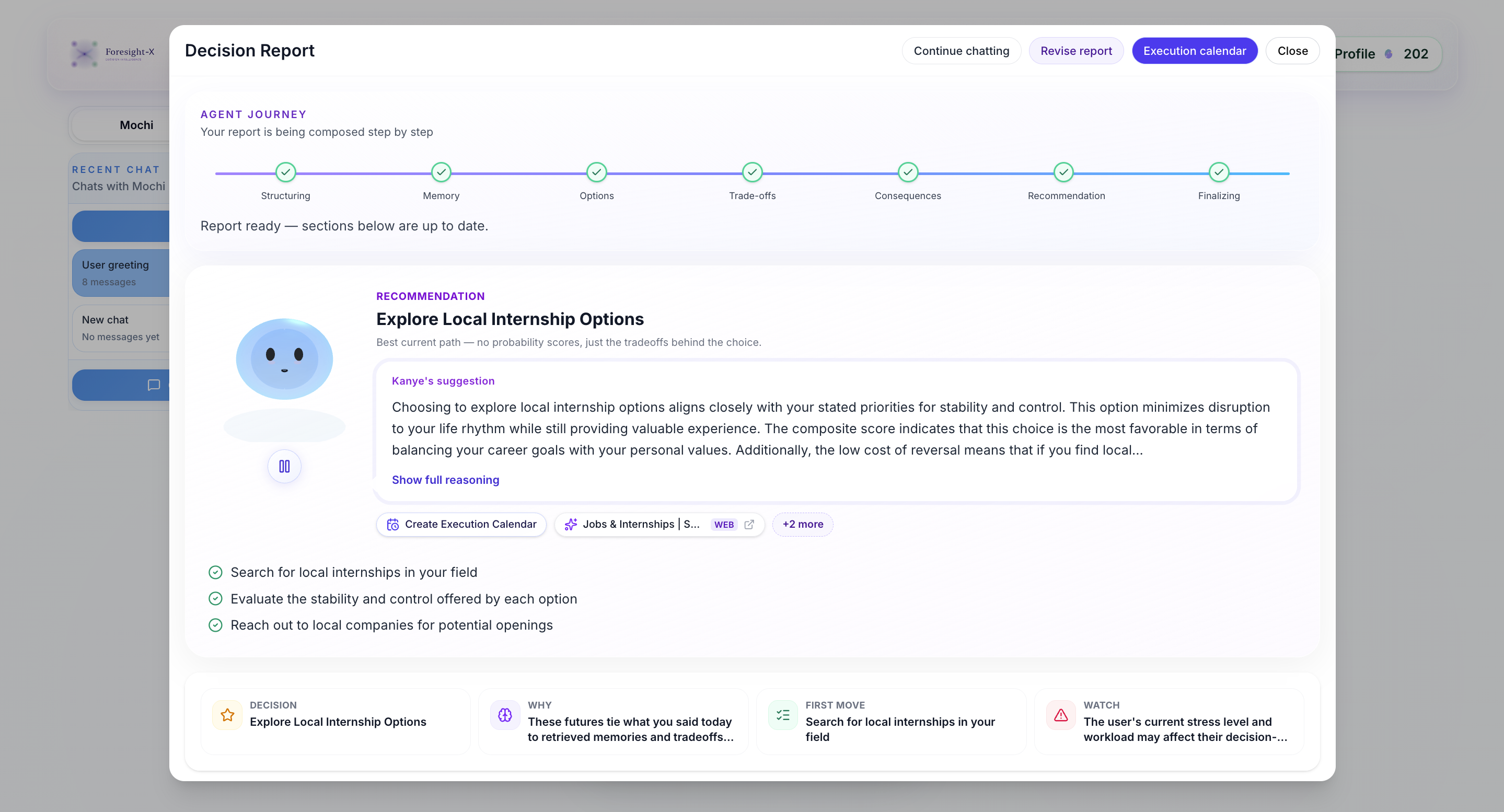
Personalized decision report based on user memory
-
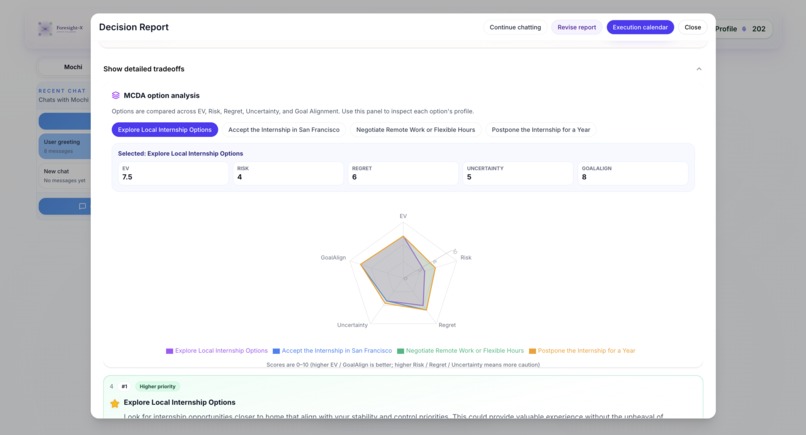
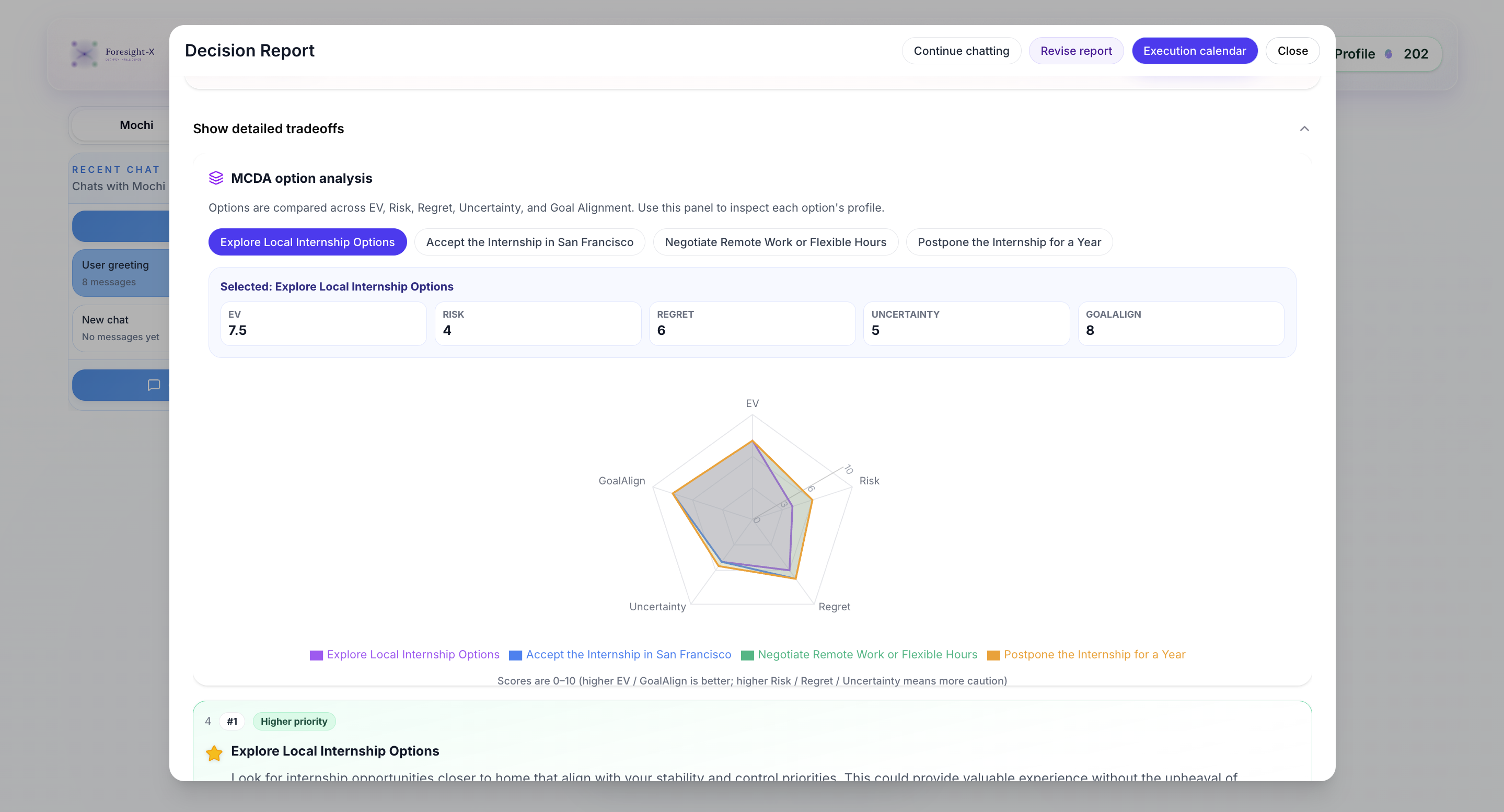
MCDA tradeoff Analysis
-
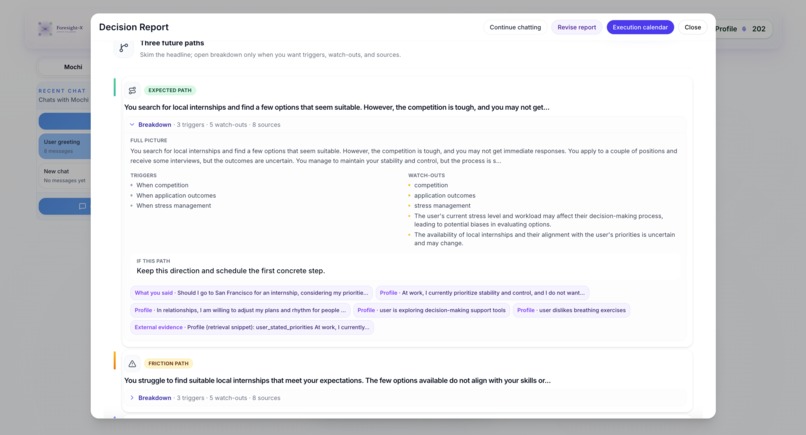
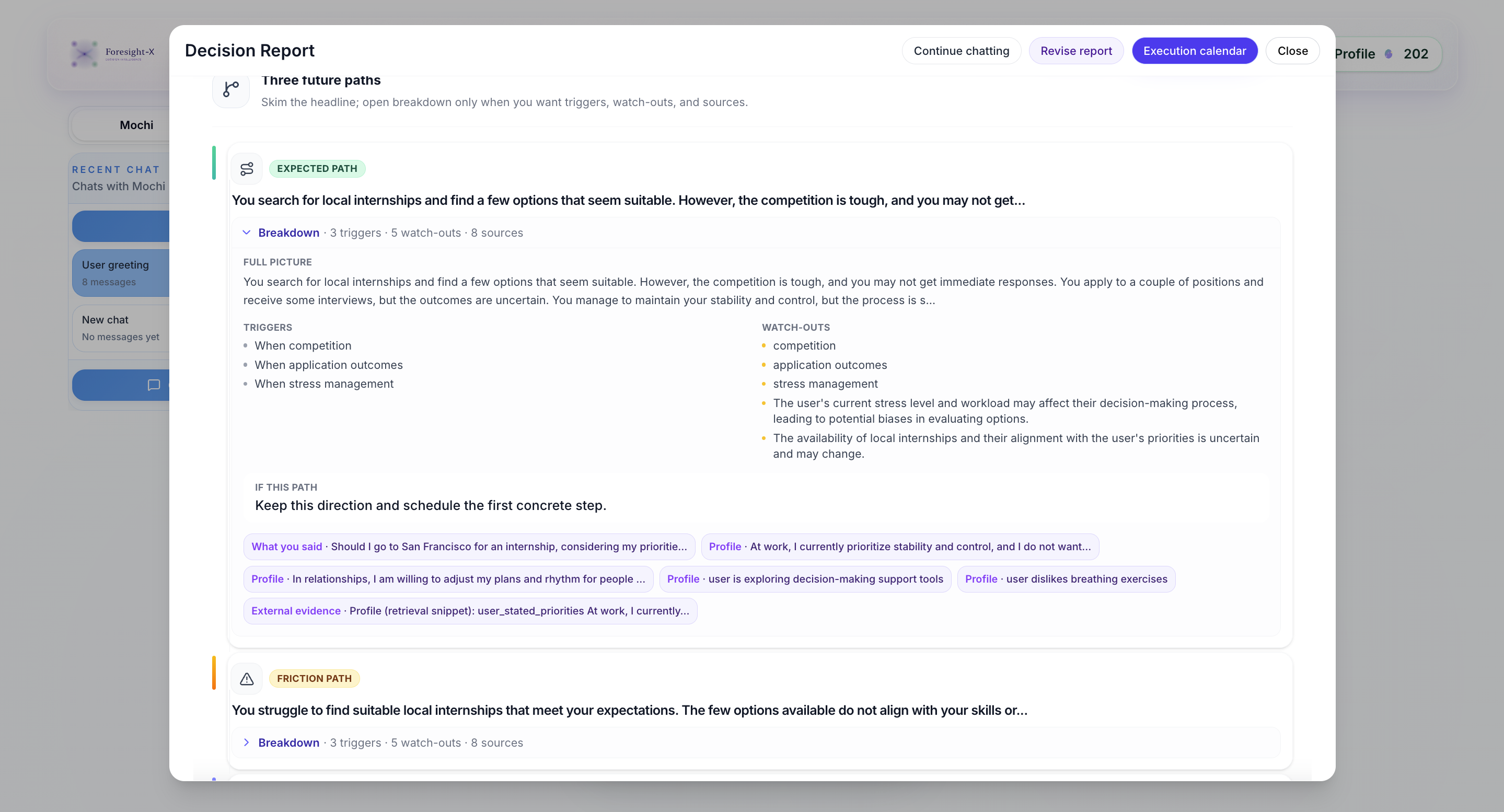
Analysis of potential future outcomes
-
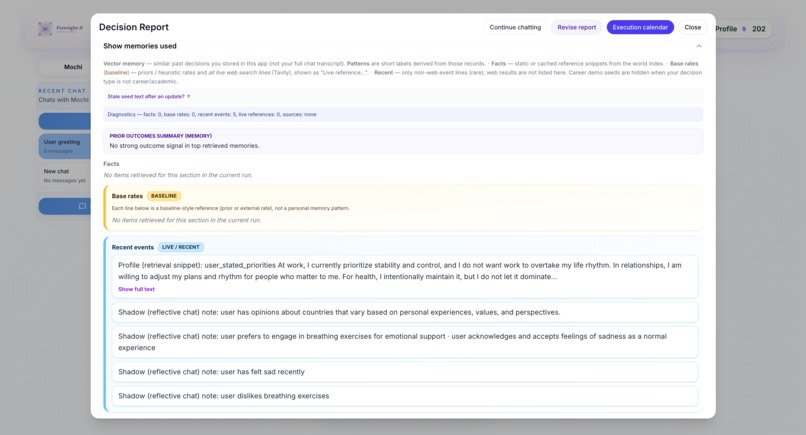
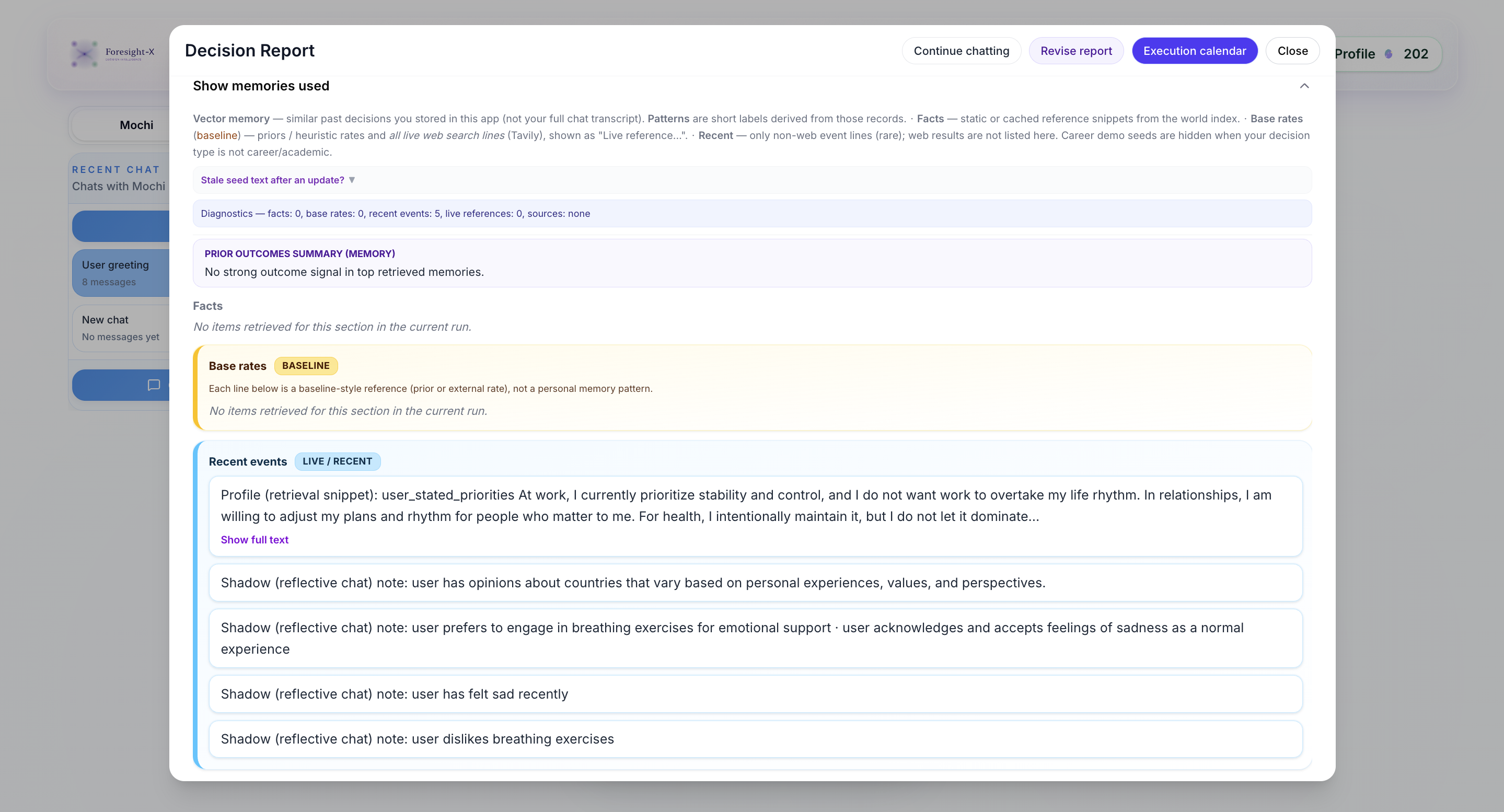
Memory used in decision making
-
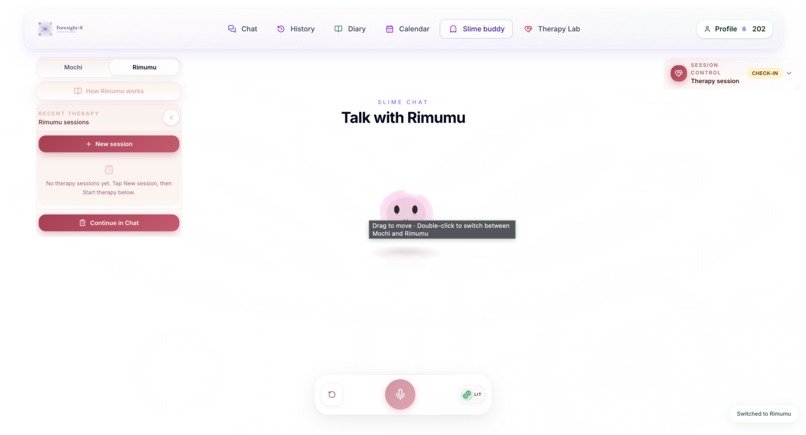
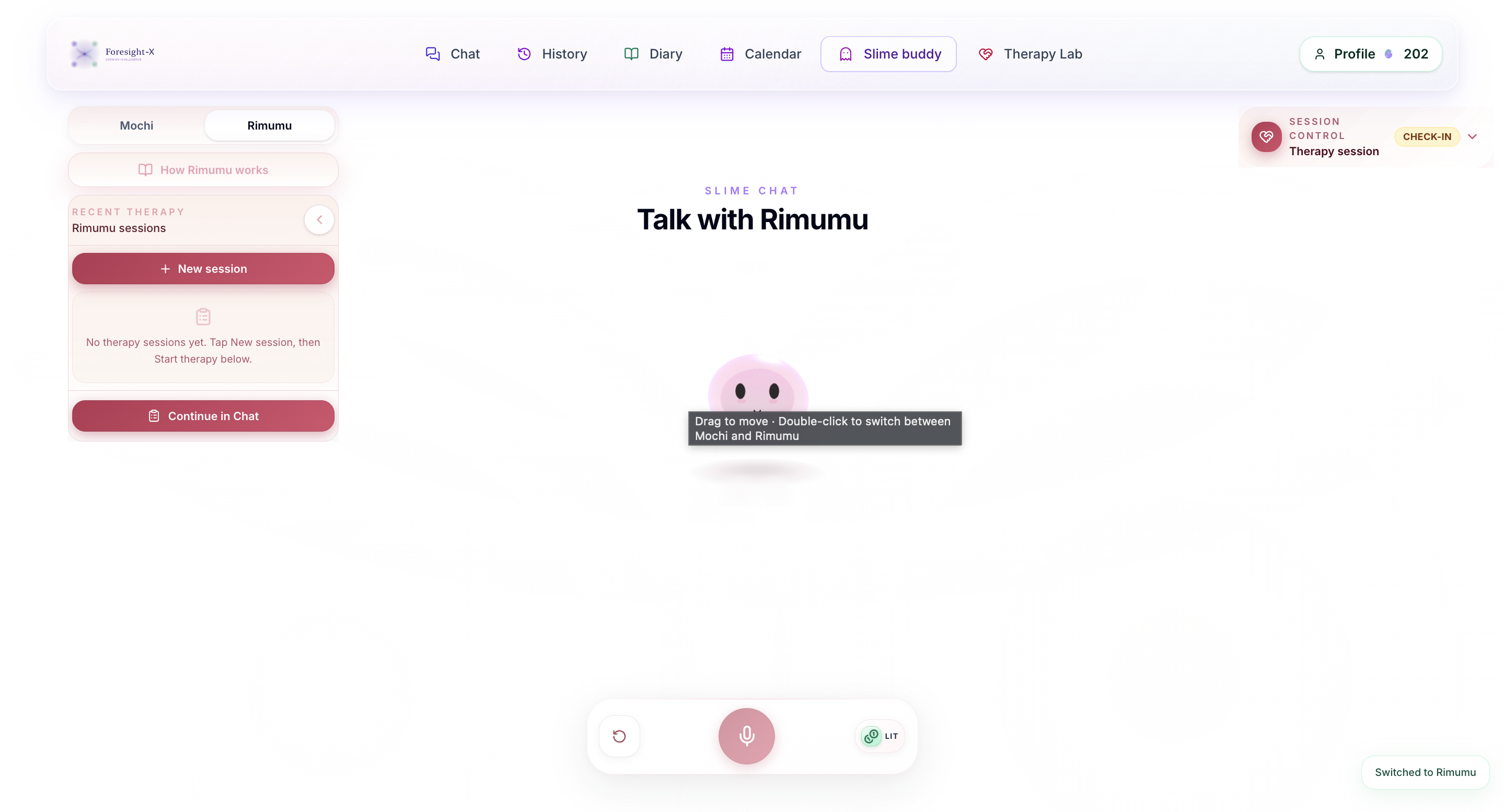
Rimumu: Slime agent specialized in psychological companionship
-
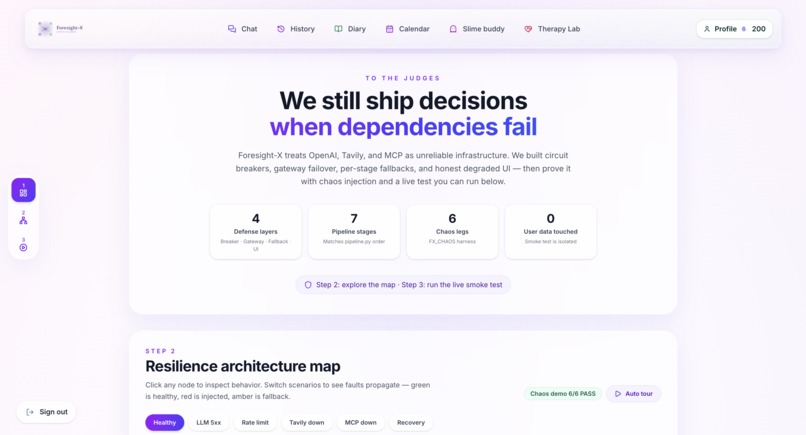
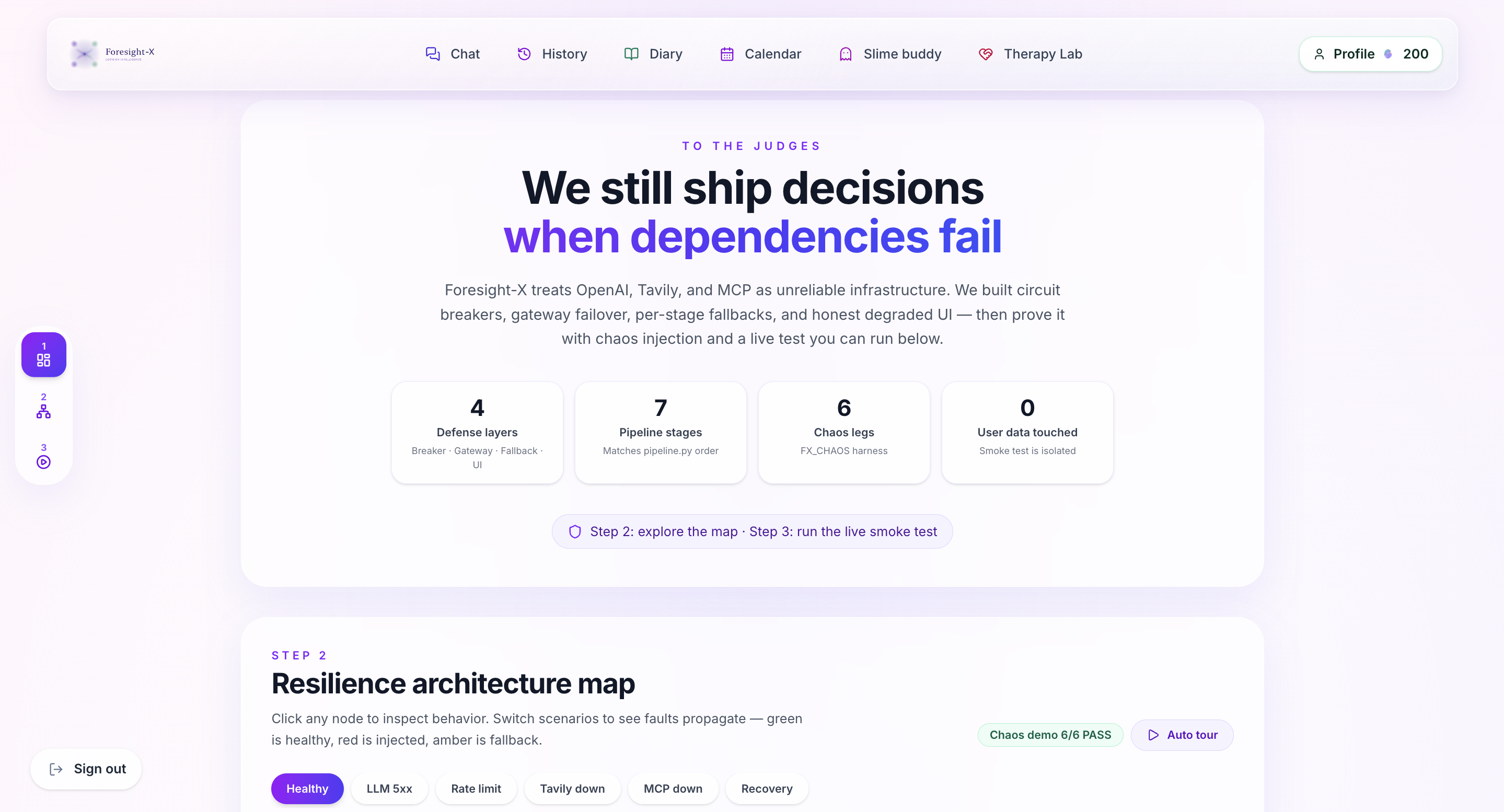
Resilience Report: for the judges
-
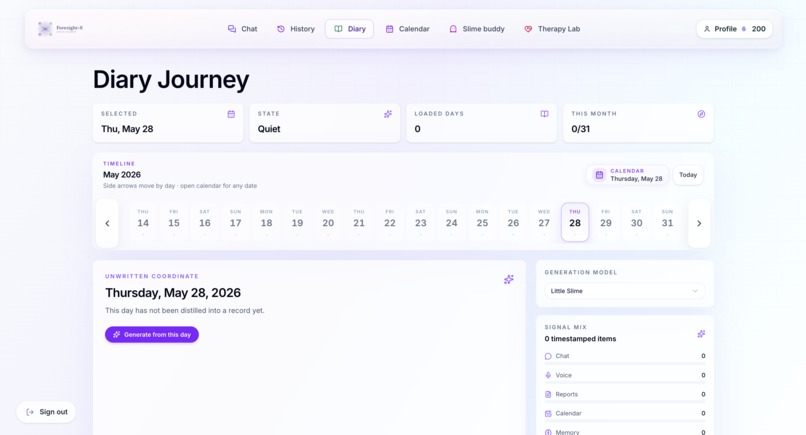
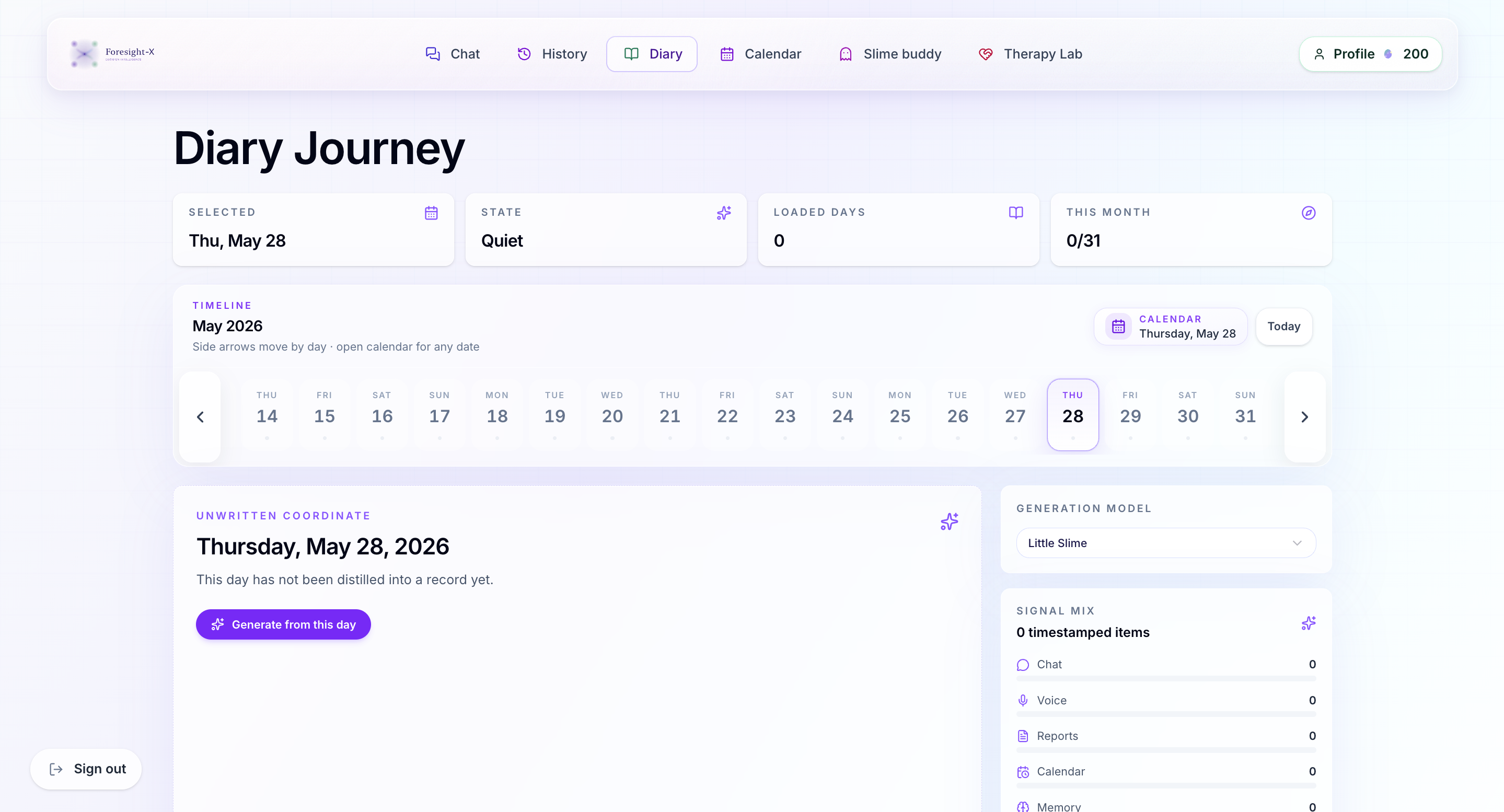
Diary: Summary of user interactions throughout the days
Inspiration
As students and early-career builders, we make high-stakes decisions constantly—courses, internships, leases, timing, boundaries—usually under uncertainty and time pressure. Generic chatbots still felt incomplete: they did not treat decisions as decisions (no clear options, tradeoffs, scenarios, or recommendation), and they forgot context too easily across sessions.
We built Foresight-X to deliver decision support with memory, evidence, and traceable reasoning—not vibes. We also prioritized the Resilience track because advice systems must stay useful under partial failure, not only in ideal infrastructure conditions.
What it does
Foresight-X is an evidence-grounded decision system for students and early-career users. A serious request runs an end-to-end pipeline: perceive → retrieve → infer → simulate → decide → reflect.
For each decision, the system structures your situation (with clarification when needed), retrieves personal memory and world evidence in parallel, checks for bias and assumptions, generates practical options, simulates best/expected/worst futures, performs MCDA-style tradeoff scoring, and returns a recommendation with inspectable rationale.
You receive a Decision Report with recommendation-first structure, option-level detail, grounding labels (memory vs evidence vs assumption), and actionable next steps. Follow-up outcomes feed a harness loop so later recommendations can adapt based on what actually happened.
Current product entry points:
- Home: full report experience on one screen.
- Shadow Chat: process half-formed thoughts, then escalate to report (clarify → offer → optional role-play), with manual Decision Mode and confirm-before-generate.
- Slime Buddy: voice-first companion flow with memory-aware responses and calendar drafting support.
- Therapy Lab (Rimumu): guided wellbeing exercises (breathing, grounding 5-4-3-2-1, emotion check-in, CBT reframe, micro action planning), with supportive audio and safety escalation paths.
- Execution Planner: converts next actions into calendar-ready blocks you explicitly approve (no auto-booking).
Recent UX polish includes cleaner starter bubbles in chat, improved profile controls and section affordances, and refined companion panel styling for clarity and consistency.
Trust & safety:
- Sensitive-topic disclaimers and guardrails
- Grounding-strength labels (strong / mixed / thin)
- Dedicated resilience surfaces for transparent degraded-mode communication
Resilience for judges: Open the Resilience Report to inspect architecture behavior under injected faults: timeline evidence, pass/fail chaos legs, isolated smoke test, and SLO snapshots with honest degradation messaging.
How we built it
Backend: Python pipeline services with structured traces, modular orchestration stages, memory and retrieval, report generation, and resilience instrumentation (retry, failover, circuit breakers, chaos profiles).
Frontend: React-based interface with real-time streaming UX, report visualization, MCDA tradeoff panel, companion experiences (including 3D slime), profile/memory management, and resilience explorer pages.
Quality: automated tests, scenario-based evals, and scripted chaos artifacts so resilience is attached to the real pipeline—not a separate demo shell.
Challenges
The earliest versions over-produced text and under-explained confidence. We shifted to recommendation-first summaries with clearer rationale and visible grounding boundaries. Users also conflated personal memory and external evidence until we explicitly separated and labeled both in the UI.
On execution workflows, we had to prevent duplicate calendar effects and require explicit user confirmation. In voice flows, we focused on eliminating silent side effects while preserving responsiveness. Clarification gating initially blocked momentum; skip paths and manual mode improved control.
Reliability was another major challenge: API outages, brownouts, and partial provider failures forced us to distinguish retries from true degradation and to make chaos behavior reproducible enough for judging.
Accomplishments
- Built a full decision pipeline with options, simulation, and traceable recommendation logic.
- Unified one memory core across multiple user interfaces (Home, Chat, Buddy, Planner).
- Added MCDA-style tradeoff inspection for option comparison.
- Shipped a practical Therapy Lab path with guided exercises and safety-aware UX.
- Improved onboarding/profile/chat entry UX for faster, cleaner first-run interaction.
- Delivered resilience artifacts judges can verify (explorer, timeline, smoke tests, report card).
Most importantly, we can show behavior change across runs: when outcomes are logged, later recommendations can adapt accordingly.
What we learned
- Decision quality is a systems problem, not prompt tuning alone.
- Users need two speeds: exploration (chat/companion) and commitment (report/planner).
- Memory must be curated and inspectable, not raw transcript accumulation.
- Trust is UX: show why, not just what.
- Resilience is product behavior, not infrastructure trivia.
- Voice experiences need explicit safety and side-effect boundaries.
- Scope discipline matters more than feature count in hackathon timelines.
What's next
- Stronger model routing and resilience failover demonstration for sponsor-track requirements.
- Better decision-quality metrics beyond uptime (consistency, regret reduction, follow-through).
- Smoother handoffs between chat, report, therapy, and execution planning.
- Deeper personalization in retrieval and recommendation weighting.
- Expanded pilot feedback with students and early-career users.
Try it:
Home → structured decision report · Shadow Chat → think it through · Slime Buddy → voice + memory · Therapy Lab → guided exercises · Resilience Report → fault behavior and smoke tests.
Built With
- chromadb
- docker
- fastapi
- javascript
- llamaindex
- openai
- pydantic
- python
- railway
- react
- supabase
- tavily
- three.js
- typescript
- uvicorn
- vercel
- vite


Log in or sign up for Devpost to join the conversation.