Inspiration
Finding a good real estate investment takes a lot of time and guesswork. You have to check crime data, population trends, income levels, development activity, nearby amenities, zoning rules, and more. Most of this information lives in different places, which makes it difficult to see the full picture.
We wanted to build something that makes this process simple and data driven. The idea behind Foresight was to help people discover areas that are likely to grow before everyone else notices. Instead of reacting to trends, users can identify opportunities early and make smarter decisions.
What it does
Foresight is an AI powered real estate intelligence platform that helps users find high potential properties and neighborhoods.
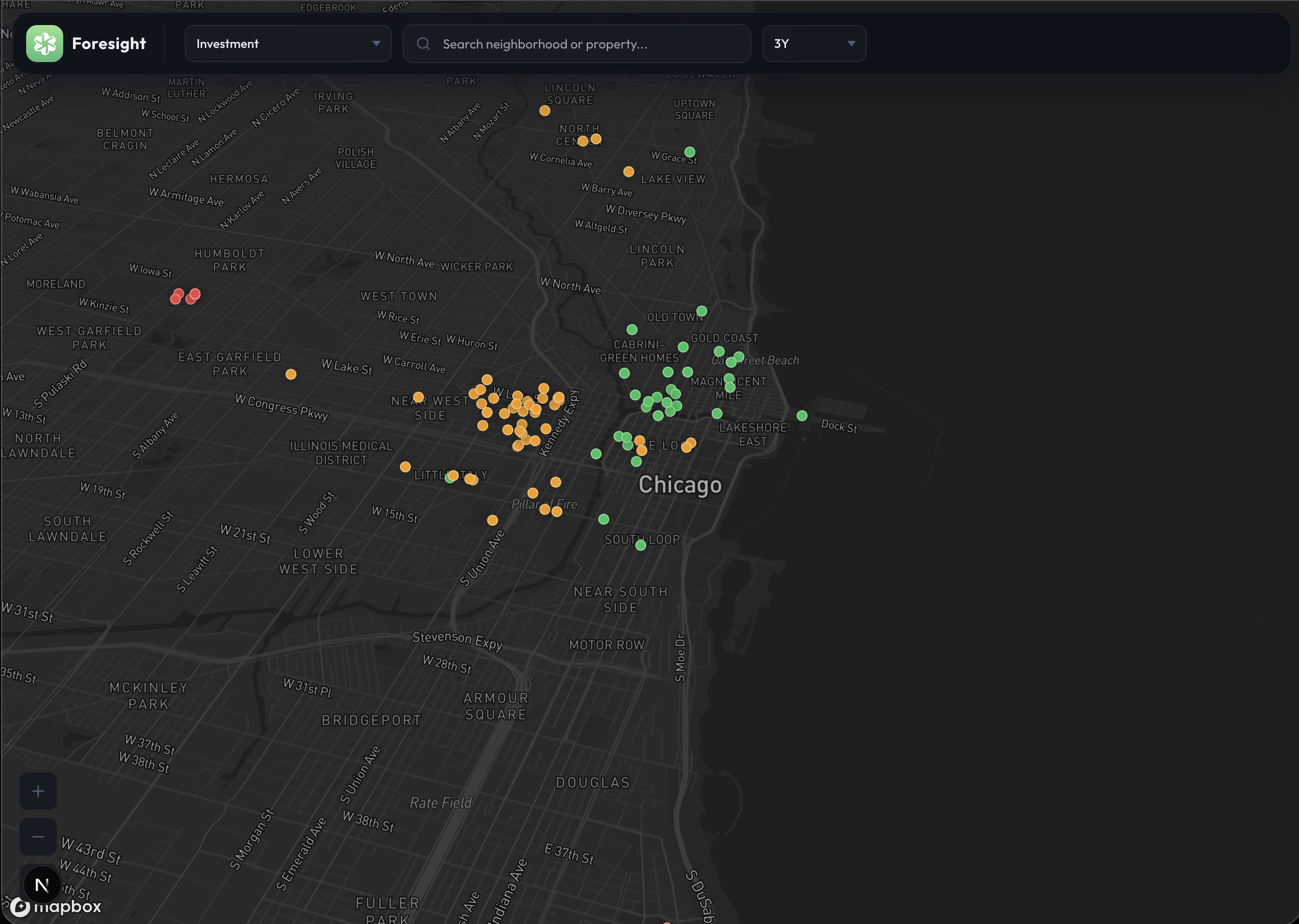
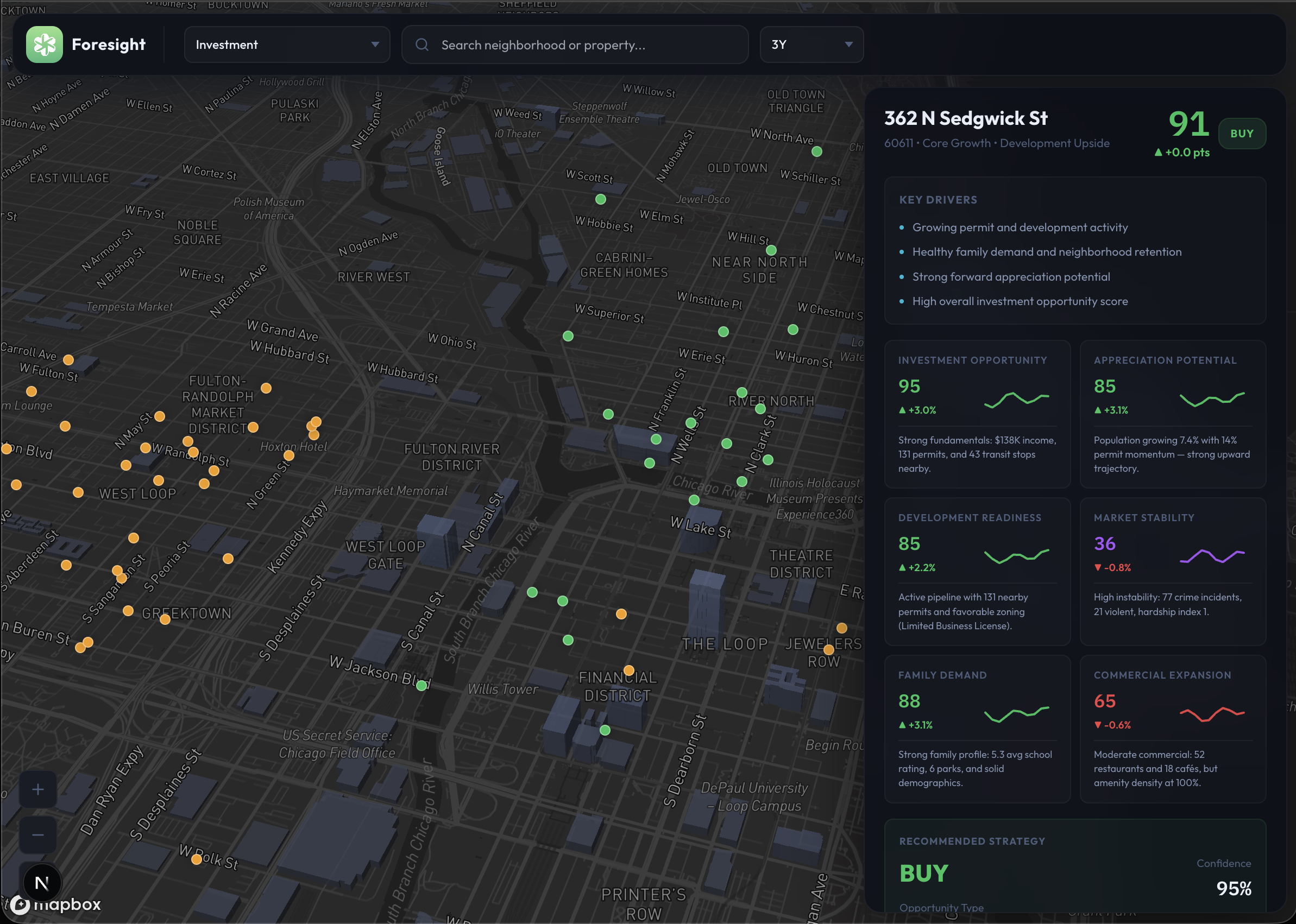
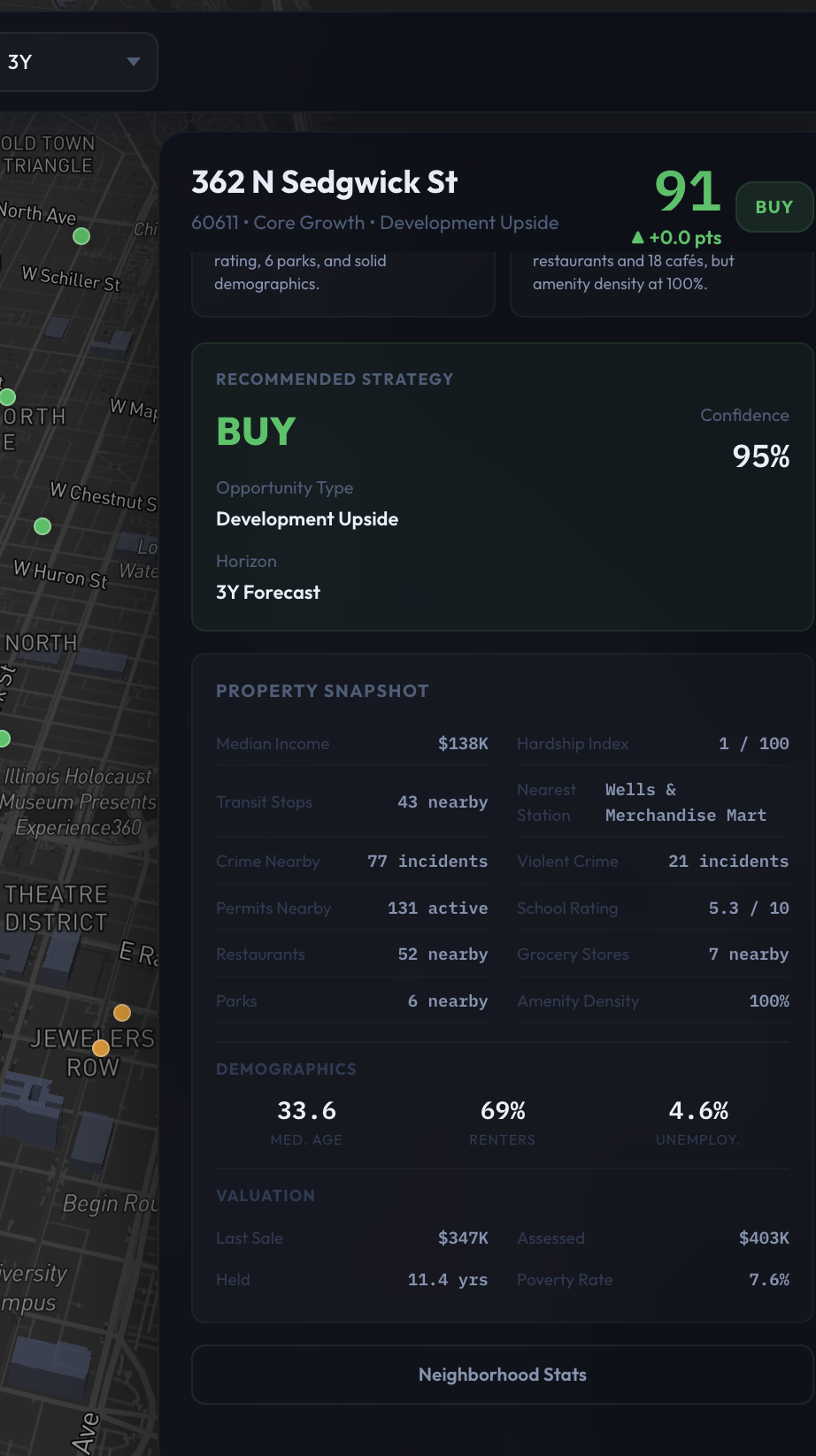
Users can explore an interactive map and click on properties to see investment scores, growth predictions, and key metrics like income levels, nearby amenities, population trends, and development activity.
Foresight also generates AI insights that explain why a location looks promising and suggests possible uses such as residential development, commercial opportunities, or mixed use projects.
Instead of spending hours researching, users can quickly understand where it makes the most sense to buy, build, or invest.
How we built it
We built Foresight as a full data pipeline combined with AI insights.
We first gathered real estate and neighborhood data including crime trends, population changes, income levels, permits, and nearby amenities. Then we created features from this data to better understand each location.
Next, we built a forecasting model to predict future growth and development activity. We created a scoring system to evaluate investment potential, growth, and risk. After that, we built a metrics layer that generates visual analytics for each property.
Finally, we added an AI layer using GPT to analyze each location and generate human readable insights and recommendations. All of this data is displayed in an interactive map based dashboard.
Challenges we ran into
One of the biggest challenges was working with messy and incomplete datasets. Many sources had missing values or inconsistent formats, which made it difficult to combine everything.
Another challenge was designing scoring models that actually made sense. Early versions produced scores that were too similar or unrealistic, so we had to carefully tune the system.
We also had to balance AI insights with data driven scoring. We wanted the AI to add value without replacing the structured models we built.
Accomplishments that we're proud of
We built a full end to end real estate intelligence platform during the hackathon. We created predictive scoring instead of just showing raw data. We integrated AI insights directly into each property. We built a clean dashboard that shows a lot of information without overwhelming the user. We also designed the system so more datasets and cities can be added in the future.
What we learned
We learned that real estate data is much more fragmented than expected. Pulling everything together required a lot of cleaning and normalization.
We also learned that combining AI with structured models creates better results than using either one alone.
Most importantly, we learned how important it is to turn complex data into something simple and useful for users.
What's next for Foresight
Next, we want to add more datasets such as property values, rent trends, and zoning changes. We also plan to improve prediction accuracy as we collect more historical data.
We want to build a 3D map experience, add watchlists and alerts, and allow users to personalize investment preferences.
Our long term goal is to expand beyond Chicago and turn Foresight into a platform that helps people discover high potential real estate opportunities anywhere.
Built With
- fastapi
- mapbox
- next.js
- numpy
- openai
- pandas
- python
- scikit-learn
- typescipt


Log in or sign up for Devpost to join the conversation.