Sentinel - Emergency Action Planner
Sentinel is an AI-driven emergency action planner that evaluates critical situations and provides clear, actionable safety guidance in real time.
💡 Inspiration
Emergency situations are inherently chaotic. When faced with a fire, medical emergency, or natural disaster, people often freeze or make poor decisions due to panic and information overload. The inspiration came from a simple but powerful question: "What if everyone had an emergency response expert in their pocket?"
I wanted to create something that could:
- Reduce panic through calm, AI-generated guidance
- Provide structure when chaos reigns
- Democratize emergency response knowledge - making expert-level safety planning accessible to everyone
- Leverage AI for good - using Amazon Nova's reasoning capabilities to analyze situations and generate contextual safety plans
With Amazon Nova's advanced language understanding and reasoning, this vision became NovaSafe - an AI companion that helps people navigate their most critical moments with confidence and clarity.
🎯 What it does
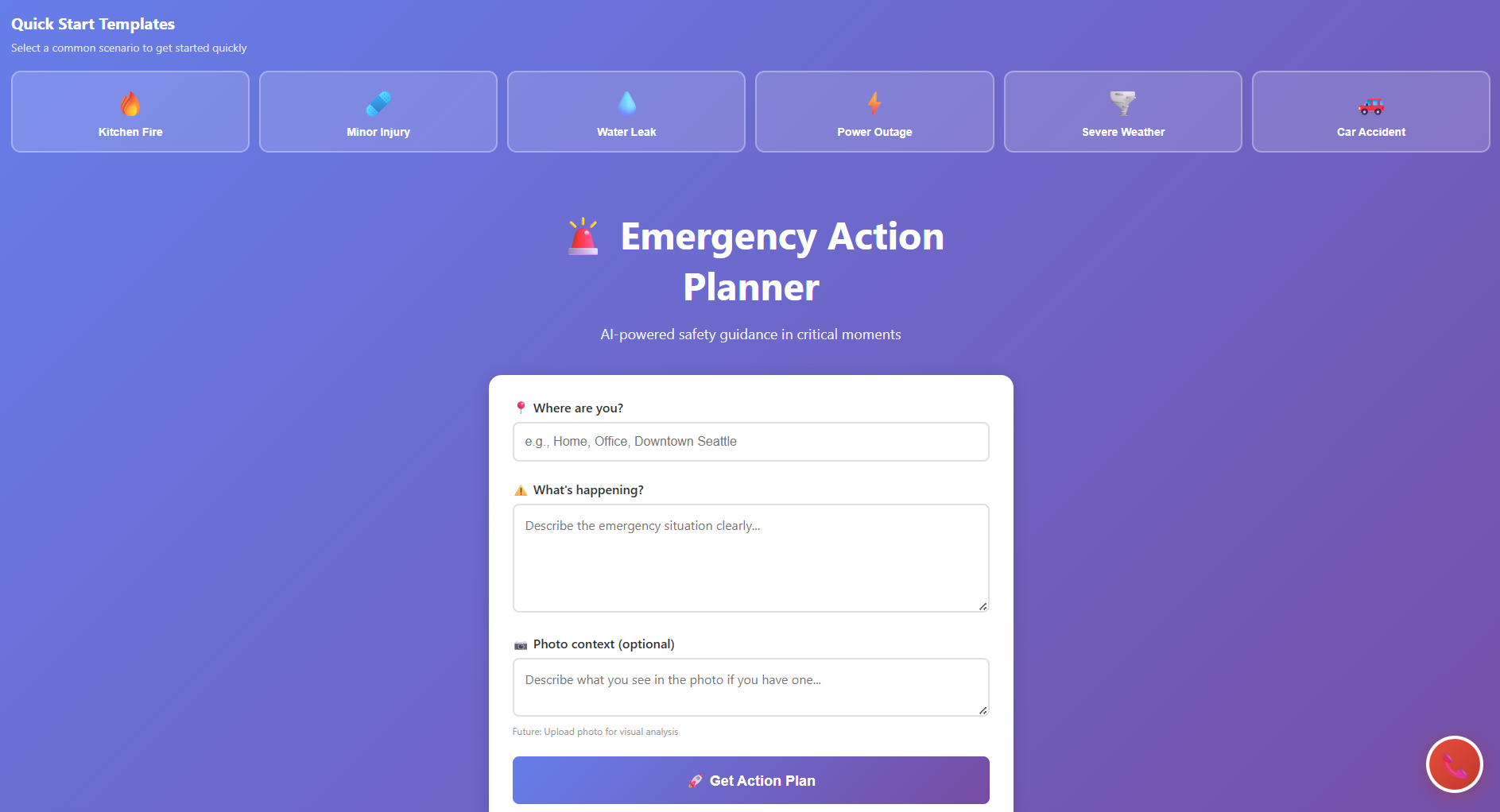
Sentinel is an AI-powered emergency response planner that transforms chaotic situations into structured action plans. Here's how it works:
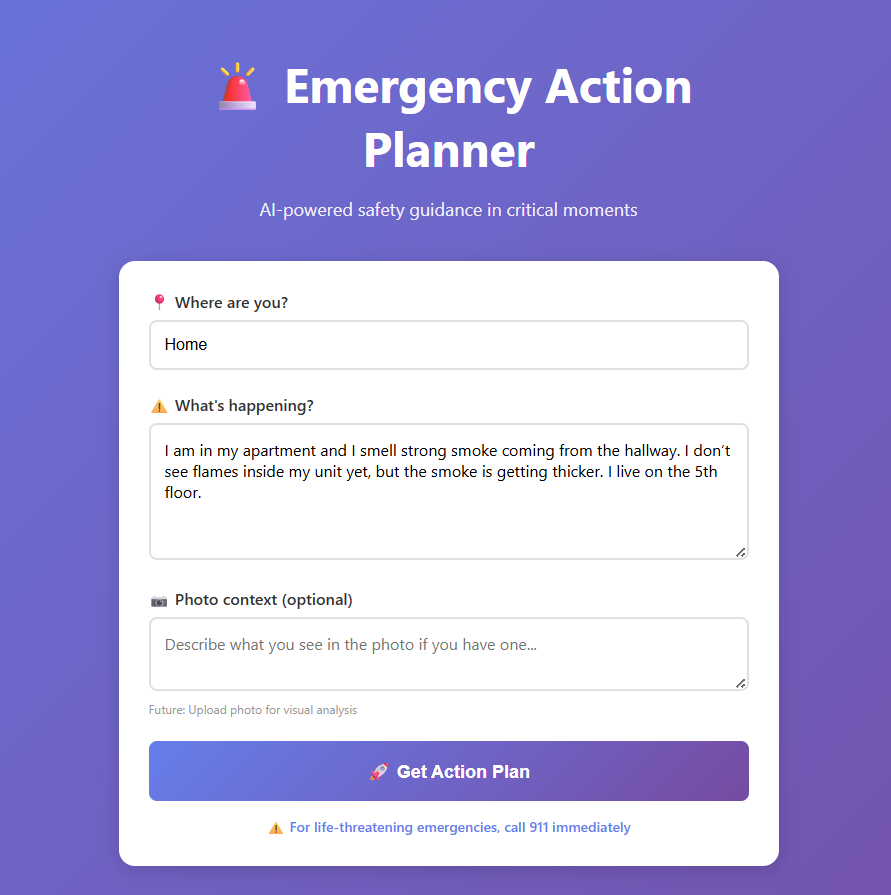
User Input:
- Location (where the emergency is happening)
- Situation description (what's going on)
- Optional photo context (visual details)
Sentinel Analyzes and Provides:
- Risk Level Assessment - Categorizes as LOW, MODERATE, HIGH, or CRITICAL
- Risk Summary - Brief, clear explanation of the situation
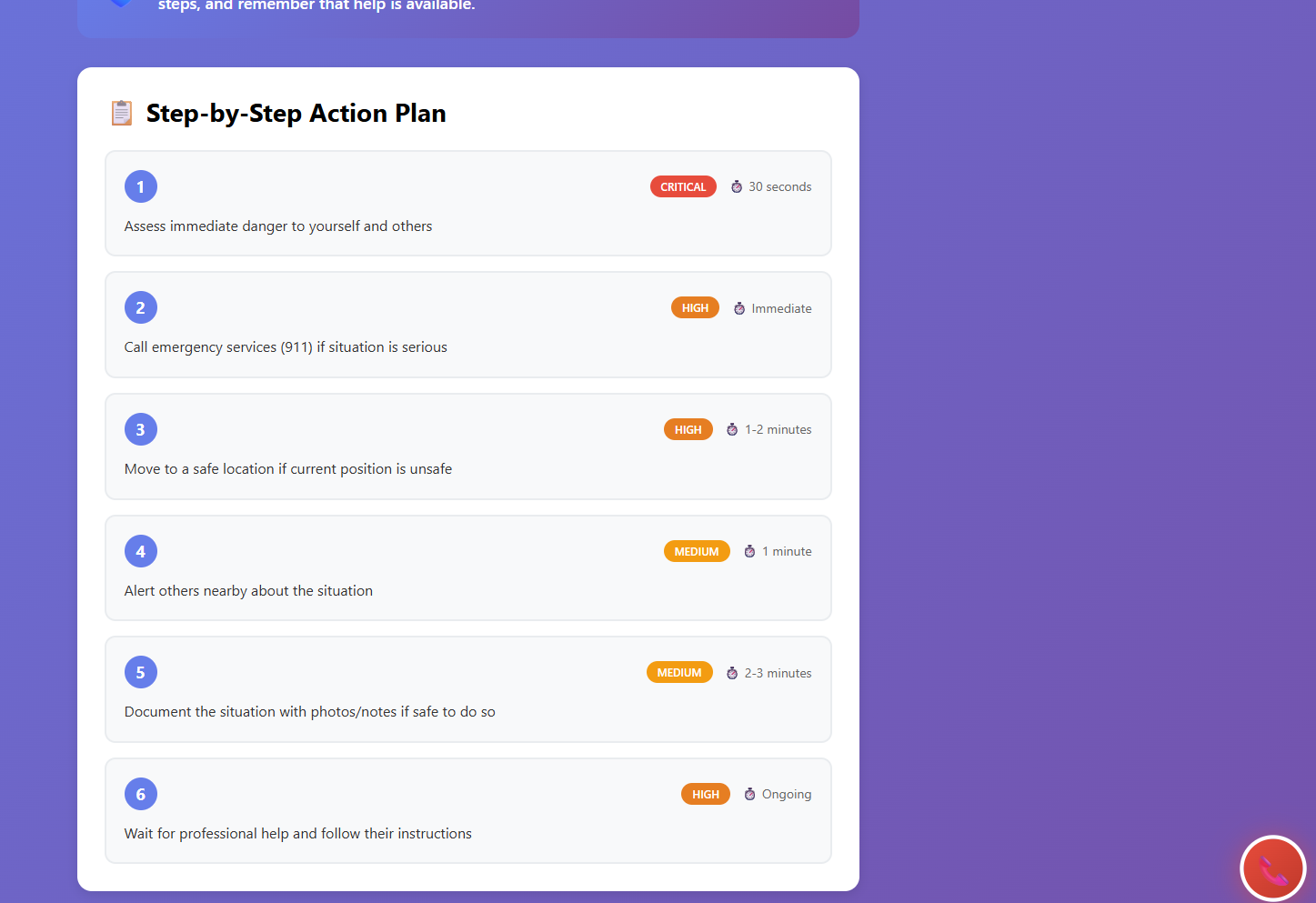
- Step-by-Step Action Plan - Prioritized steps with time estimates
- Each step tagged as CRITICAL, HIGH, or MEDIUM priority
- Clear time estimates (Immediate, 30 seconds, 1-2 minutes, etc.)
- Calming Message - Reassuring guidance to reduce panic
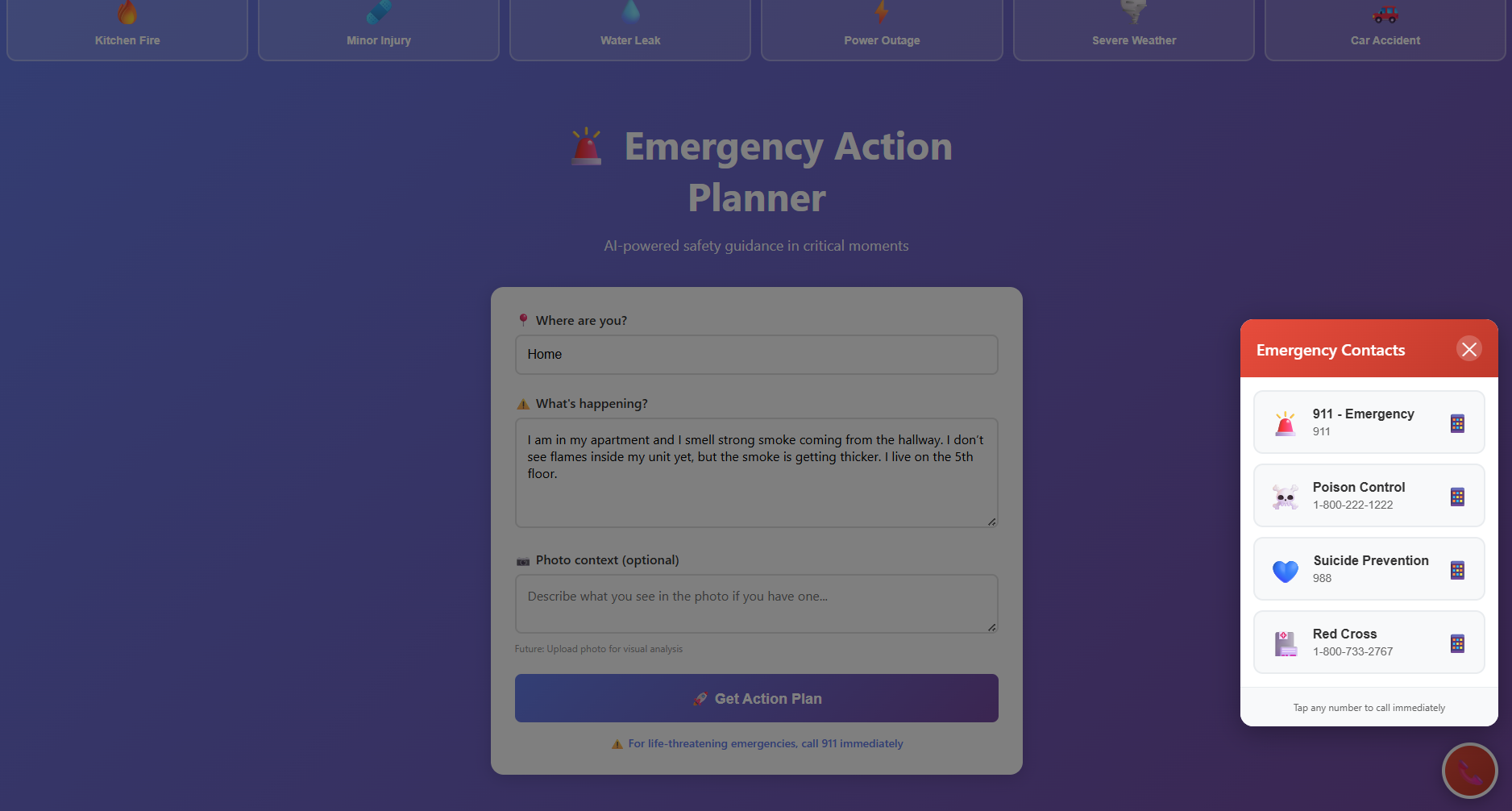
- Emergency Resources - Relevant contact numbers and support services
Key Features:
- Real-time AI analysis using Amazon Nova Pro
- Contextual responses based on situation keywords (fire, medical, etc.)
- Color-coded risk levels for quick visual assessment
- Clean, calming UI designed for people under stress
- Mock mode for demos without AWS costs
🛠️ How we built it
Architecture
User Input → FastAPI Backend → Amazon Nova (Bedrock) → Structured Response → Next.js UI
Tech Stack
Backend (Python):
- FastAPI for REST API
- Boto3 for AWS Bedrock integration
- Pydantic for data validation
- Custom prompt engineering for emergency contexts
Frontend (JavaScript):
- Next.js 14 with React
- Component-based architecture
- Inline CSS for simplicity
- Responsive design
AI Integration:
- Amazon Nova Pro v1:0 via Bedrock
- Converse API for natural interactions
- Temperature: 0.3 (for consistent safety advice)
- Structured JSON output parsing
Development Process
- Initial Concept - Started with a complex decision simulator
- Pivot - Simplified to focused emergency planner (70% less code!)
- Prompt Engineering - Iterated 10+ times to get reliable, structured responses
- UI Design - Focused on calming colors and clear hierarchy
- Mock Mode - Added intelligent fallbacks for demos
- Testing - Verified Nova integration and response quality
Key Implementation Details
Smart Prompt Construction:
def _build_emergency_prompt(location, situation, photo_description):
    # Guides Nova to provide:
    # - Risk assessment
    # - Prioritized action steps
    # - Calming guidance
    # - Emergency resources
    # All in structured JSON format
Contextual Mock Responses:
- Keywords trigger appropriate responses (fire → evacuation plan)
- Risk levels adapt to situation severity
- Realistic action plans for common emergencies
🚧 Challenges we ran into
Challenge 1: AWS Bedrock Configuration
Problem: Initial 500 errors when calling Nova API. Credentials were configured but requests were failing.
Solution:
- Implemented comprehensive error handling
- Added mock data mode for development without AWS
- Created test script (
test_nova.py) to verify connection - Documented clear setup instructions
Challenge 2: Prompt Engineering for Safety
Problem: Early prompts generated inconsistent responses - sometimes too technical, sometimes missing critical information, occasionally not in proper JSON format.
Solution:
- Lowered temperature to 0.3 for more consistent outputs
- Added explicit JSON structure requirements in prompt
- Included "calm message" field to reduce panic
- Iterated on prompt structure 10+ times
- Tested with various emergency scenarios
Challenge 3: UI Design for Crisis Situations
Problem: Initial design used aggressive red colors that increased anxiety rather than reducing it.
Solution:
- Switched to calming purple/blue gradient background
- Used color-coding strategically (green → yellow → orange → red for risk levels)
- Prioritized readability and clear visual hierarchy
- Added prominent calming messages
- Used emoji icons for friendly, approachable feel
Challenge 4: Scope Management
Problem: Started building a complex multi-step decision simulator with too many features and navigation flows.
Solution:
- Pivoted to focused emergency planner
- Removed unnecessary complexity
- Result: Simpler codebase, clearer purpose, more demo-able
- "Do one thing and do it well" philosophy
Challenge 5: Balancing AI with Responsibility
Problem: How to provide helpful AI guidance without replacing professional emergency services?
Solution:
- Added clear disclaimers about calling 911 for life-threatening situations
- Included emergency contact resources in every response
- Designed prompts to encourage professional help when needed
- Positioned as "guidance" not "instructions"
🏆 Accomplishments that we're proud of
Real-World Impact Potential - Built something that could genuinely help people in crisis situations
Successful Nova Integration - Leveraged Amazon Nova's reasoning capabilities to generate contextual, structured emergency responses
Thoughtful UX Design - Created a calming interface specifically designed for people under stress
Rapid Pivot - Recognized scope issues early and successfully simplified to a more powerful concept
Responsible AI Implementation - Balanced AI capabilities with appropriate disclaimers and professional resource recommendations
Clean Architecture - Built a maintainable, scalable system with clear separation of concerns
Demo-Ready - Implemented mock mode so the app can be demonstrated without AWS costs
Complete Documentation - Comprehensive README, setup instructions, and project story
🎓 What we learned
Technical Learnings
About Amazon Nova:
- Nova Pro's reasoning abilities excel at structured problem-solving
- Lower temperature settings (0.3) produce more consistent, reliable outputs
- The Converse API provides clean, conversational interactions
- Structured JSON output requires explicit prompt engineering
About Prompt Engineering:
- Specificity matters - vague prompts get vague responses
- Including output format examples dramatically improves consistency
- Temperature significantly affects response reliability
- Iterative refinement is essential
About Full-Stack Development:
- FastAPI makes Python backend development incredibly fast
- Next.js simplifies React development with great defaults
- CORS configuration is critical for local development
- Environment-based configuration enables flexible deployment
Design Learnings
UI/UX for Crisis Situations:
- Color psychology is powerful - blues calm, reds alarm
- Information hierarchy is critical when users are stressed
- Visual clarity trumps aesthetic complexity
- Calming messages should be prominent, not hidden
Product Development:
- Simplification often leads to better products
- "Do one thing well" beats "do many things poorly"
- Early pivots save time and improve outcomes
- Demo-ability matters for hackathons
AI Ethics
- AI should augment, not replace, professional services
- Clear disclaimers are essential for safety-critical applications
- Responsible AI means knowing when to defer to humans
- Accessibility and clarity matter more than sophistication
🚀 What's next for Sentinel
Immediate Enhancements
Image Analysis - Use Nova's vision capabilities to analyze emergency photos
- Assess fire severity from images
- Identify hazards in photos
- Provide visual context to action plans
Multi-language Support - Emergency guidance in user's native language
- Critical for diverse communities
- Leverage Nova's multilingual capabilities
Location Services - Auto-detect location and provide local emergency numbers
- GPS integration
- Local resource recommendations
- Region-specific guidance
Medium-Term Goals
Voice Interface - Hands-free operation during emergencies
- Voice input for situation description
- Audio readback of action plans
- Critical for accessibility
Offline Mode - Cached common emergency responses
- Works without internet connection
- Pre-loaded action plans for common scenarios
- Essential for disaster situations
Follow-up Guidance - Post-emergency recovery steps
- Insurance claim guidance
- Trauma support resources
- Recovery checklists
Long-Term Vision
Community Features - Share anonymized emergency experiences
- Learn from real situations
- Improve AI responses over time
- Build community resilience
Integration with Emergency Services - Direct connection to 911/local services
- Automatic location sharing
- Situation pre-briefing for responders
- Faster, more informed response
Wearable Integration - Apple Watch, Fitbit, etc.
- Quick access during emergencies
- Health data integration for medical emergencies
- Fall detection triggers
Enterprise Version - For businesses and organizations
- Custom emergency protocols
- Workplace-specific guidance
- Compliance with safety regulations
Research & Development
- Continuous Learning - Improve responses based on real usage
- Expert Validation - Partner with emergency response professionals
- Clinical Studies - Measure impact on emergency outcomes
- Accessibility - Ensure usability for people with disabilities
📊 Impact Potential
Target Users: Everyone with a smartphone
Use Cases: Home emergencies, workplace incidents, natural disasters, medical situations
Social Impact: Democratizes emergency response expertise
Scalability: Cloud-native architecture ready for millions of users
Built With
- amazon
- apis
- bedrock
- cloud-services
- css
- databases
- fastapi
- frameworks
- javascript
- jsx
- nextjs
- nova
- platforms
- pydantic
- python
- restful


Log in or sign up for Devpost to join the conversation.