Inspiration
ForeSee was inspired by a common experience many students and professionals share: facing a dataset and wishing there were an easier way to analyze it. The idea grew from the question, “Wouldn’t it be great if there were a tool that could automatically interpret data and explain it in simple terms?” That thought became the foundation for creating a platform that enables anyone to perform data analysis without needing to code or understand complex models.
What it does
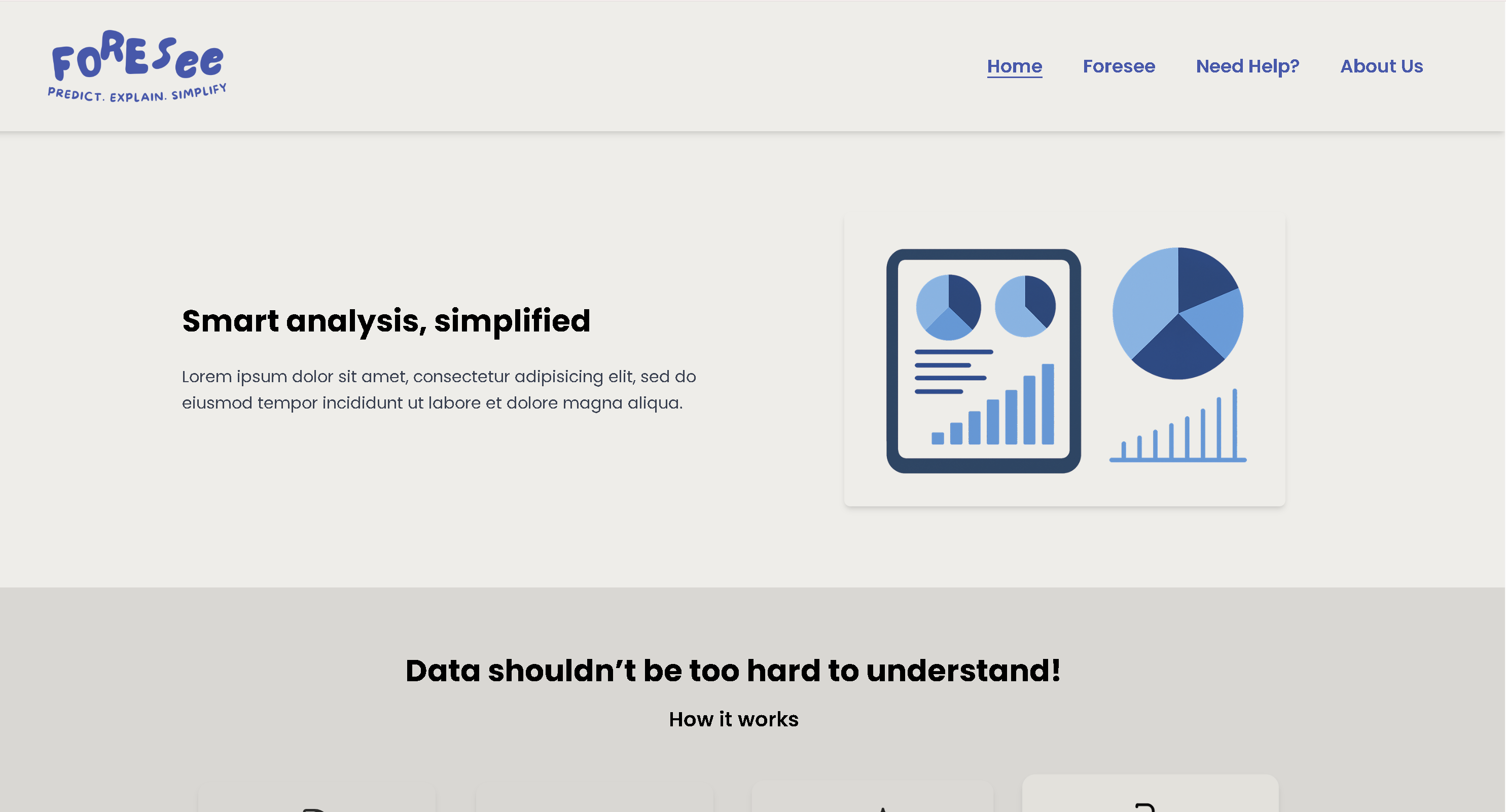
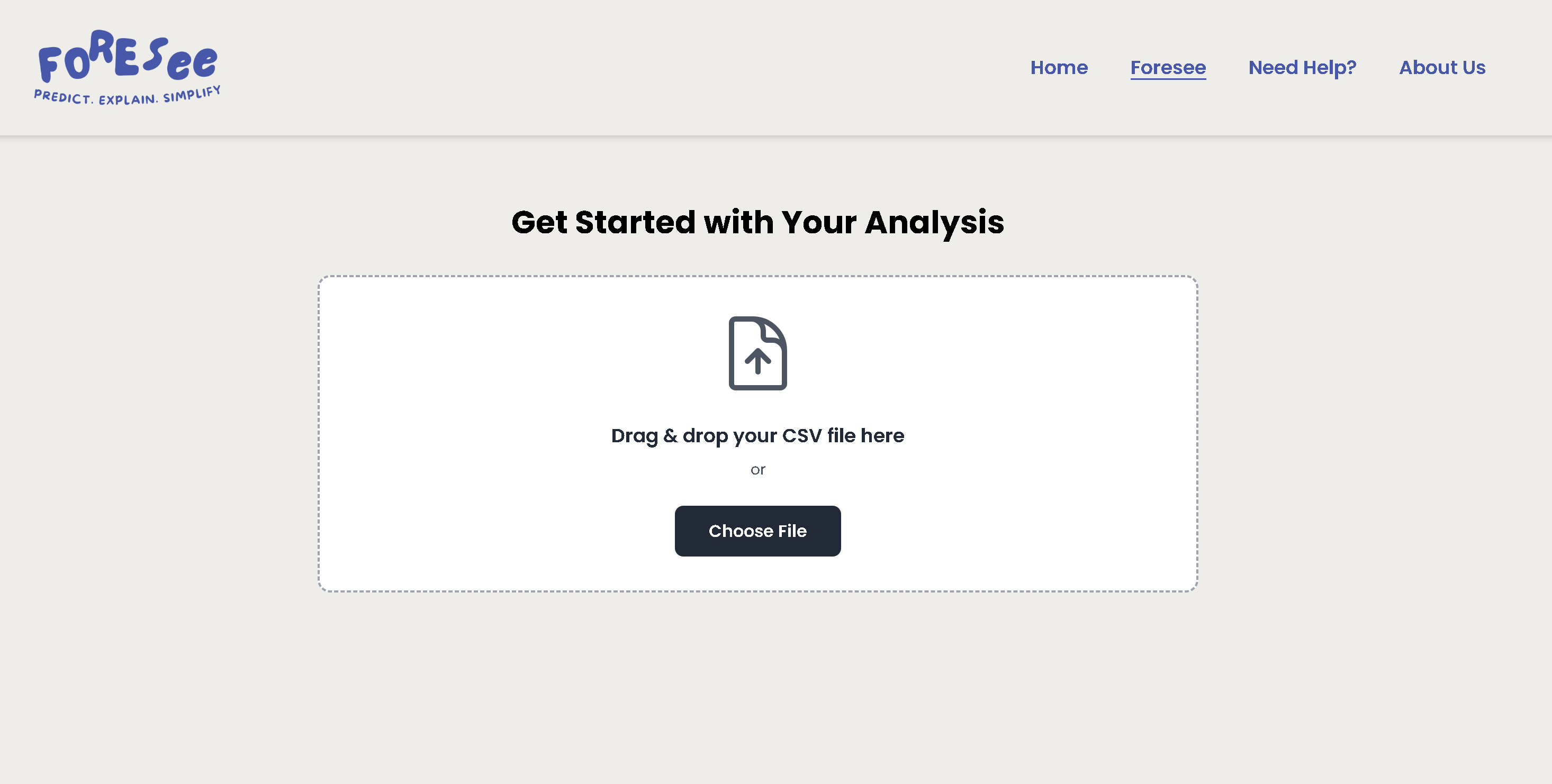
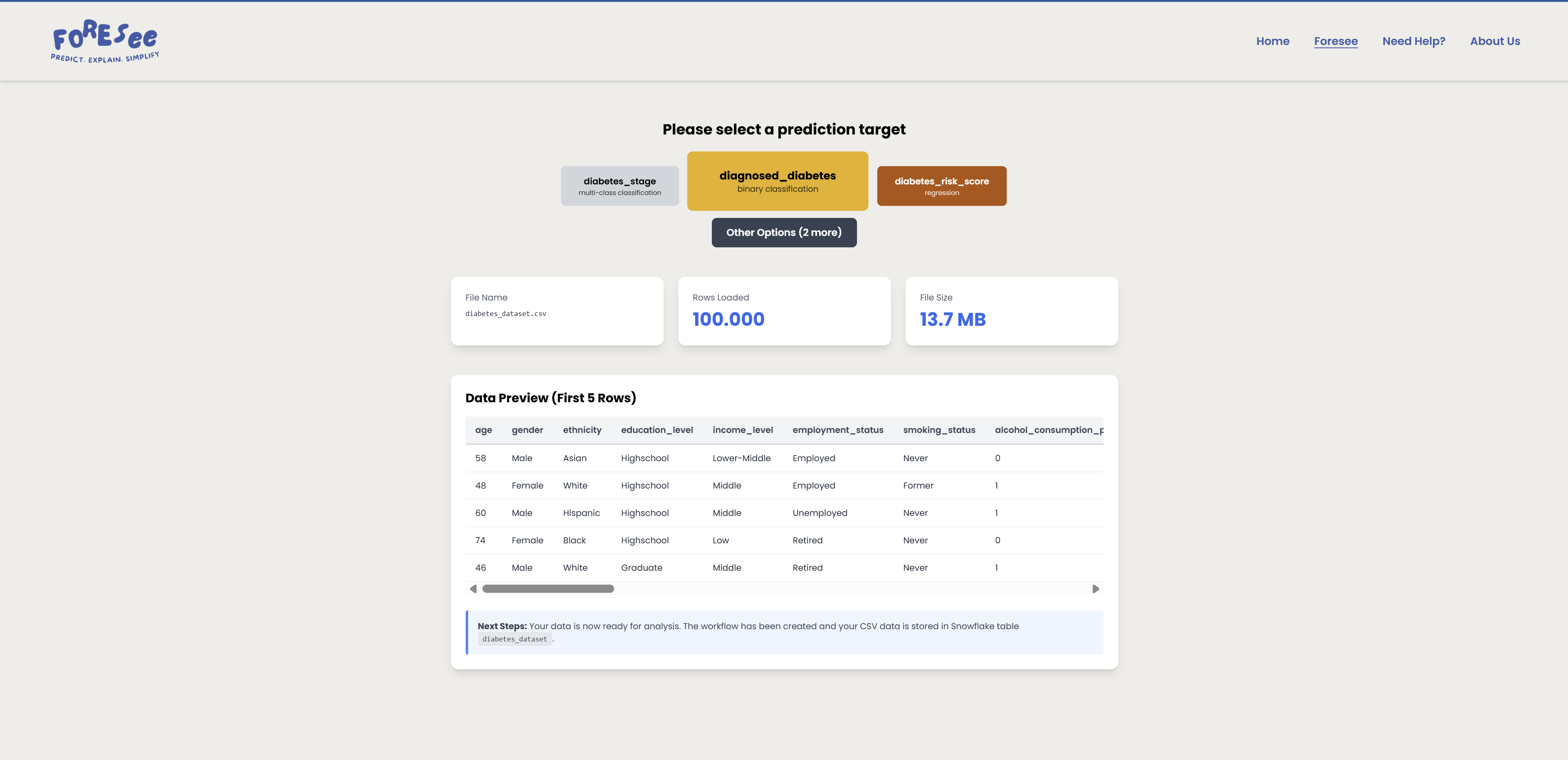
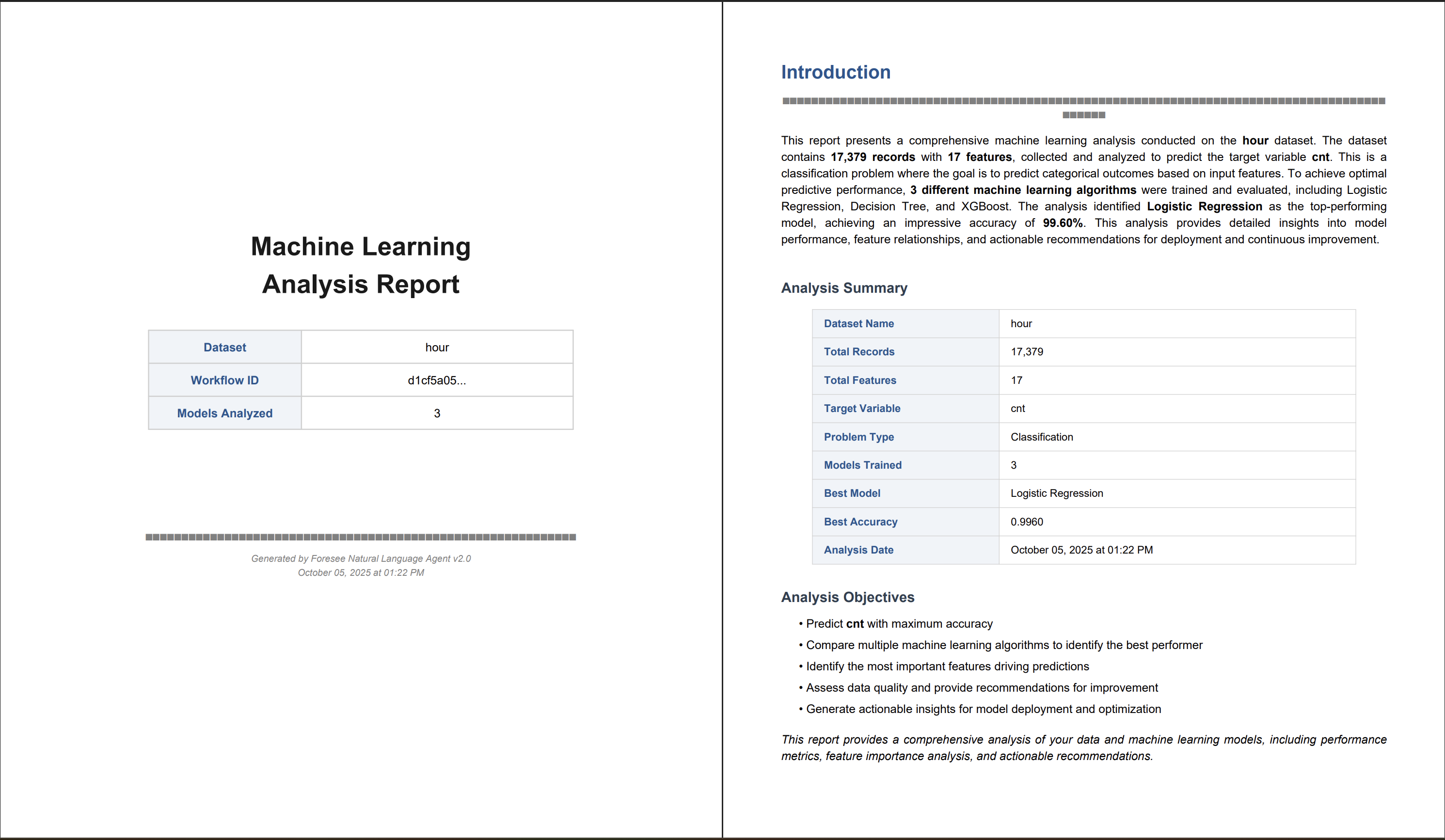
ForeSee simplifies machine learning reporting. You can upload a CSV file to get an automatic overview, select a target variable, and instantly receive a generated report with predictions, metrics, and clear explanations. Using SHAP values, Foresee explains why the model made its predictions, in plain English, and provides a downloadable PDF file.
How we built it
Front-End:
- React 19 with Vite.
- TailwindCSS for a modern design system.
- React Router for navigation
- AOS for animations
- ESLint for code linting
Back-End:
- Python 3.11+ as the core backend language.
- Flask3.0 for building a lightweight, high-performance REST API.
- Flask-CORS for cross-origin requests
AI & ML:
- Google Gemini 2.0/2.5 (via google-generativeai): Target variable recommendations, natural language insights generation.
- scikit-learn 1.5.0 (Logistic Regression, Decision Tree)
- XGBoost 2.1.0 (Gradient Boosting)
- SHAP 0.44.0 (Model explainability)
- pandas 2.2.0 & NumPy 1.26.0
Data Platform:
- Snowflake (Data Warehouse) snowflake-connector-python 3.12.0, snowflake-snowpark-python 1.39.1
Report Generation:
- ReportLab 4.0.7 for PDF Generation
- Matplotlib 3.8.0 for charts and visualizations
Challenges we ran into
- Connecting multiple systems while keeping the response times as low as possible was a challenge.
- Balancing visual accuracy and performance when generating PDF charts.
- Implementing a complete end-to-end pipeline, from dataset to upload to explainable model reports within 24 hours demanded focus and prioritarization.
Accomplishments that we're proud of
- We built a full pipeline that takes raw data, runs ML models, explains them with SHAP, and produces a PDF report
- Implemented a working prototype of intellingent agents communicating through innovative protocols
- We designed a responsive frontend using React, TailwindCSS, and Figma for prototyping.
- Balanced frontend, backend, and ML components in 24 hours
What we learned
- We learned how to coordinate across multiple roles: frontend, backend, design, and machine learning
- We gained hands-on experience combining several technologies, from Flask to TailwindCSS
- We deepened our understanding of SHAP and LIME, and how explainability can make machine learning more human-centered
- Building a complex system under a tight hackathon deadline taught us to prioritize features with the most value quickly.
What's next for ForeSee
- Public deployment
- User accounts to allow users to sign in, save datasets, and track previous analyses securely
- Move beyond static PDFs to dynamic and shareable dashboards
- Integrate with could platforms to handle larger datasets
- Enable teams to annotate and comment directly on reports or shared analysis
Built With
- javascript
- python
- snowflake
- tailwindcss


Log in or sign up for Devpost to join the conversation.