-
-
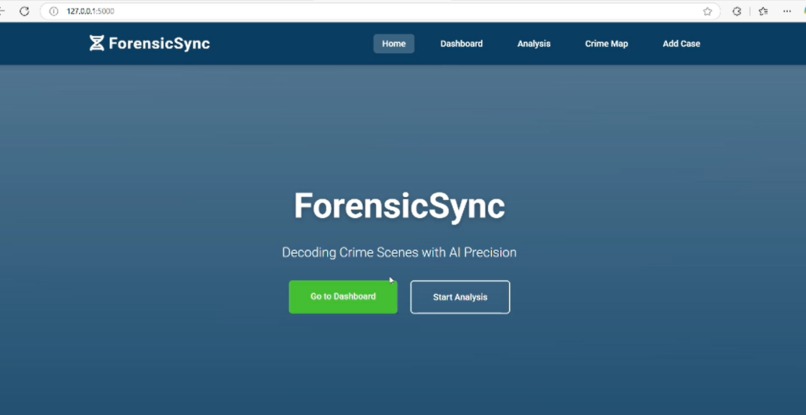
FRONT PAGE
-
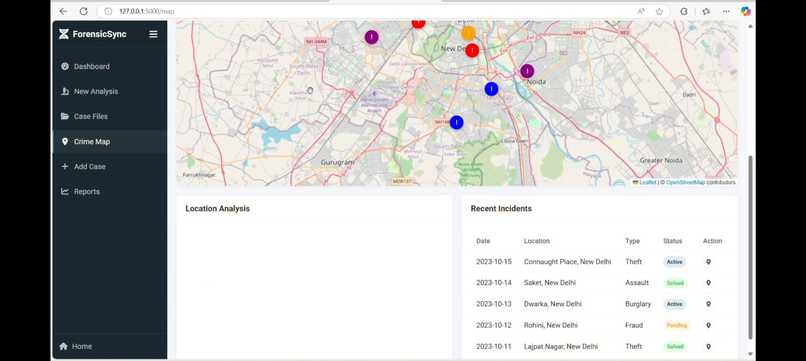
MAP TRACK
-
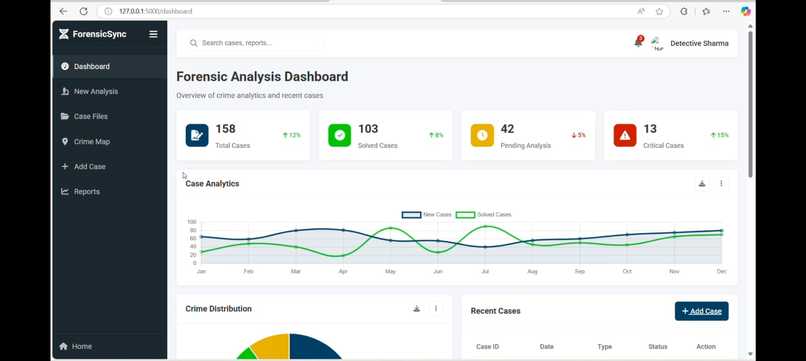
TRACK OF PREVIOUS CASES
-
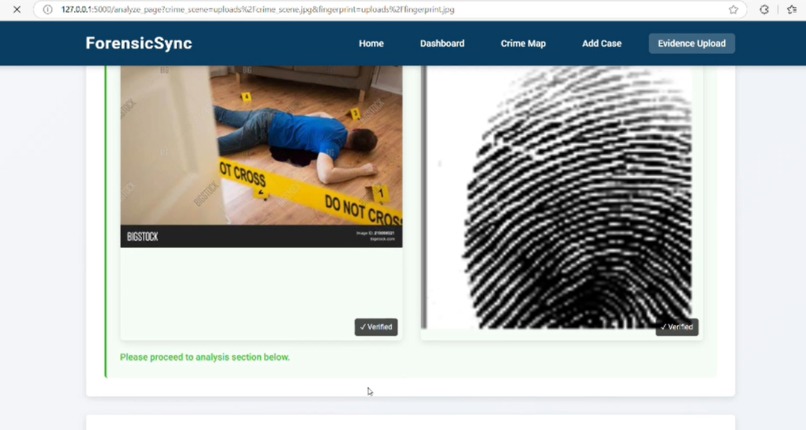
proofs uploaded
-
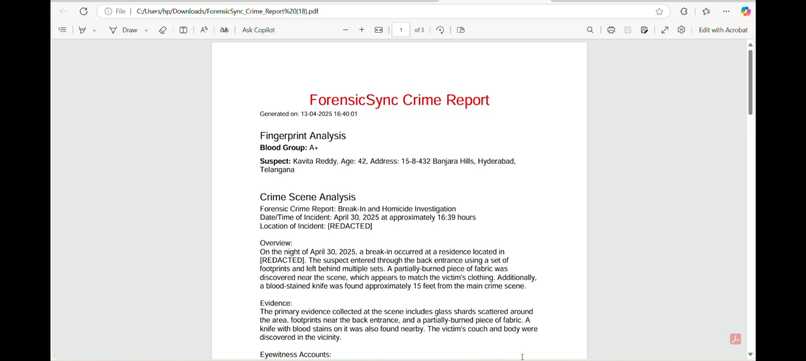
GENERATED CRIME REPORT
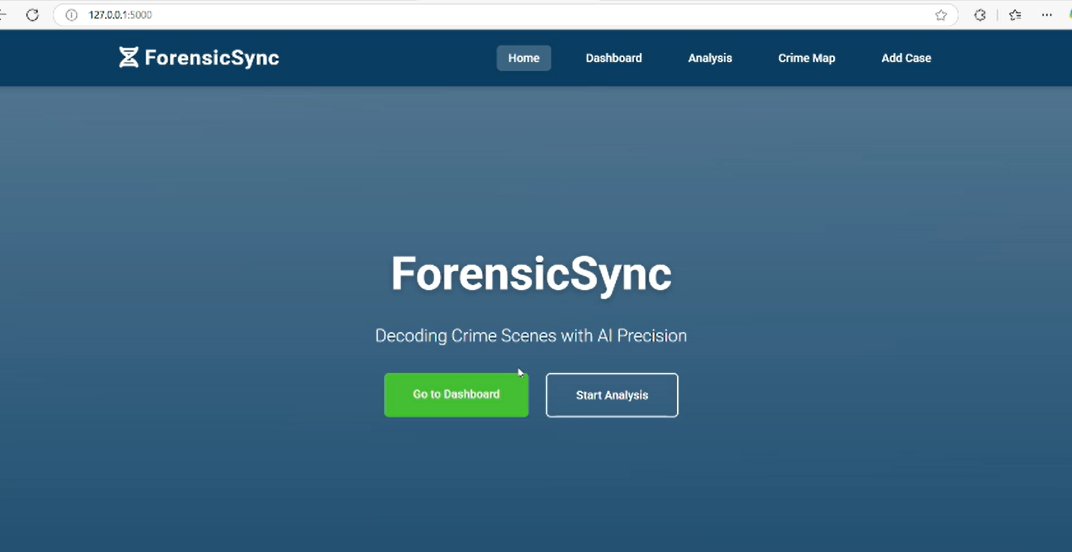
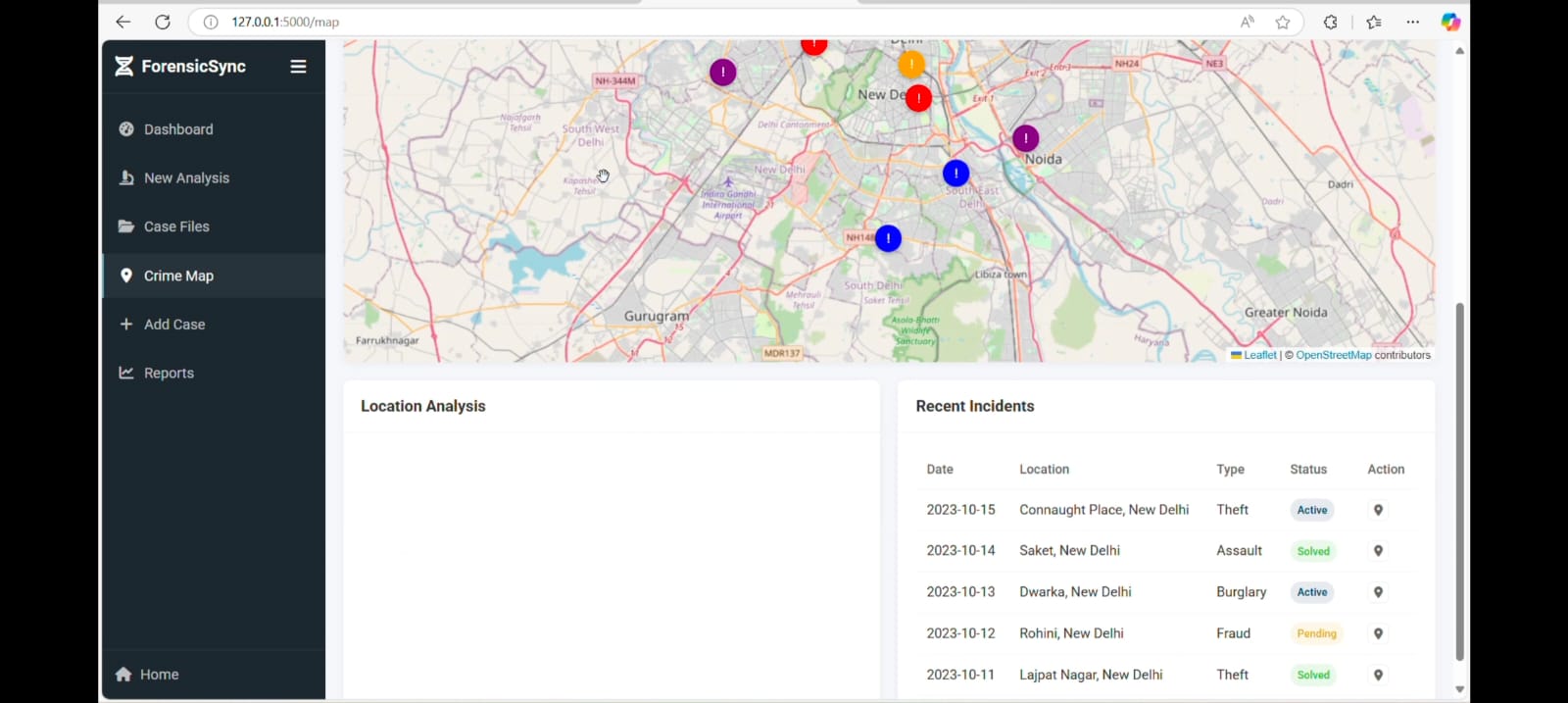
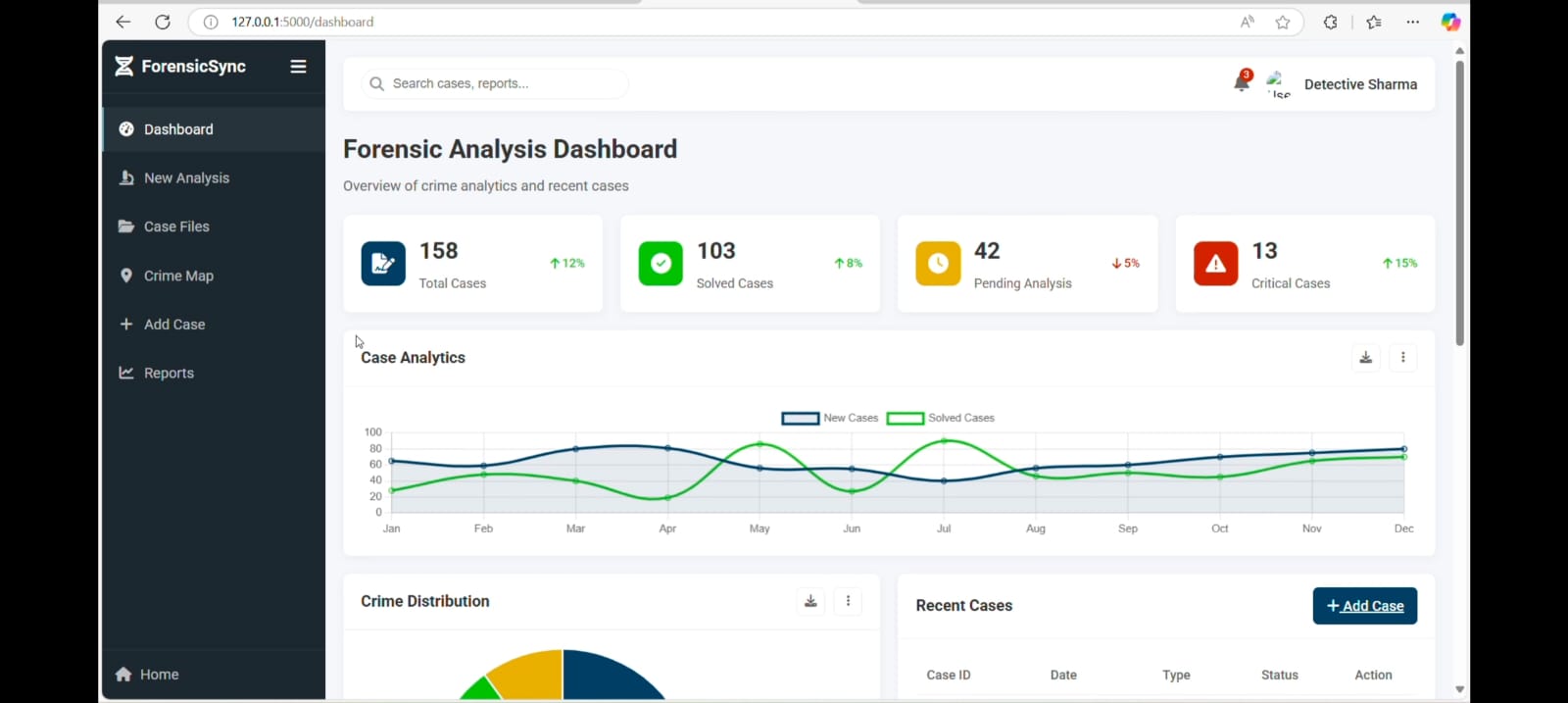
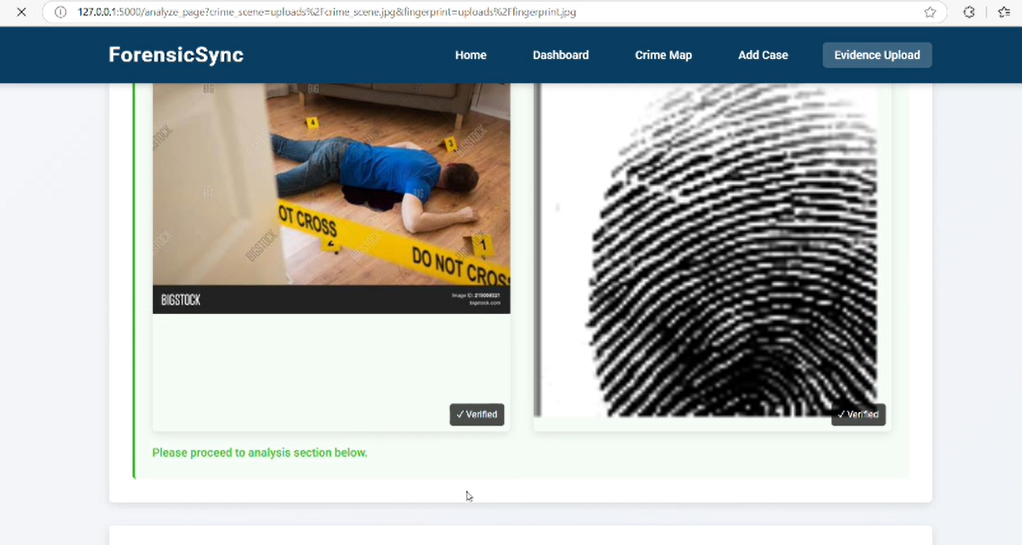
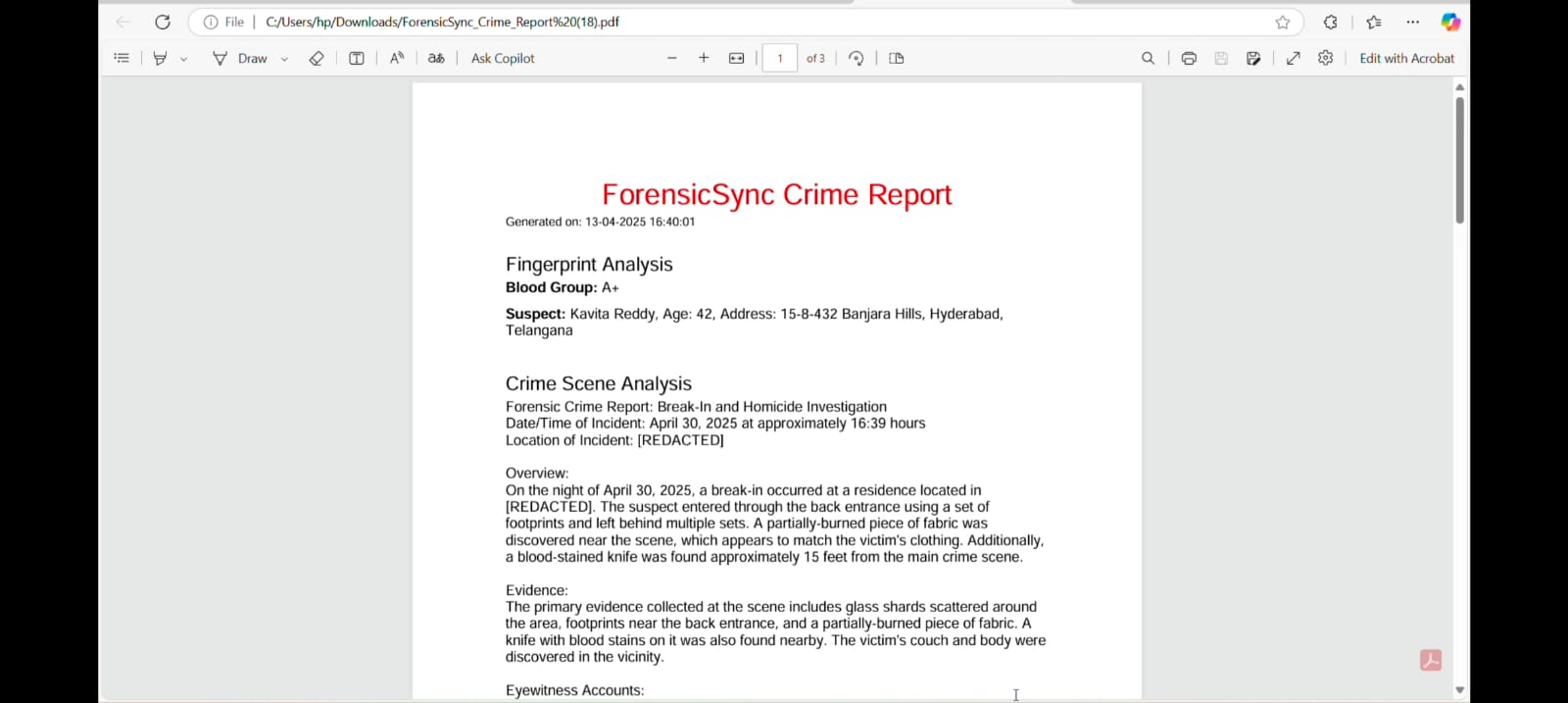
Crime Scene Analysis and Justice Recommendation System using advanced AI
Project Title: AI-Powered Crime Report Analysis and Justice Recommendation System
Developed by: Piyush Kumar Mondal
🧠 Project Overview:
This project leverages deep learning and visionary AI models to streamline crime scene analysis and accelerate the justice process. It is a multi-model system that utilizes YOLOv8, LLaVA 8B (via Ollama), and CNN+LSTM architectures, combined with advanced image processing and fingerprint analysis. The goal is to generate a comprehensive crime report PDF with actionable insights to assist law enforcement and forensic officials.
🧩 Key Features and Components:
🔎 1. YOLOv8 for Harmful Object Detection Detects and highlights potentially dangerous or suspicious objects (like weapons, drugs, etc.) from the crime scene images.
Trained on custom datasets to increase accuracy in real-world environments.
🧬 2. CNN + LSTM on Fingerprint Database Predicts the blood group of individuals using fingerprint patterns.
Combines the spatial strength of CNN with the sequential analysis of LSTM for higher precision.
Useful for narrowing down suspects or identifying victims quickly when other data is missing.
🖼️ 3. LLaVA 8B (Ollama) for Image Contrast and Scene Analysis Performs high-level vision-language reasoning on crime scene images.
Extracts contrast, context, and environment-related information (e.g., outdoor/indoor, presence of struggle, number of people).
Helps determine whether the scene was manipulated or staged.
📄 4. Automated Crime Report PDF Generation All results are compiled into a professional PDF report.
Includes object detection results, blood group prediction, crime scene context, and a suggestion engine for faster justice (e.g., “scan nearby databases”, “look for known gang patterns”, etc.).
Inspiration
Crime investigation often involves time-consuming manual work, scattered information, and a lack of real-time insights. Inspired by the potential of AI to support law enforcement, this project was born out of the desire to speed up justice delivery, especially in scenarios where critical time and evidence can make all the difference.
We observed that many crime scenes lack a structured digital analysis system. Forensics teams and police still rely heavily on manual observations, and there is often a delay in report generation and decision-making. We wanted to change that by building a system that could:
Analyze the crime scene using images.
Predict key biometric traits using fingerprints.
Detect dangerous or suspicious items.
Understand the crime environment visually and contextually.
And finally, generate a professional report with data-driven suggestions to help officials act faster.
This idea is driven by a vision of a future where AI augments forensic investigation, helping officers focus on what truly matters — delivering justice.
##How We Built It We combined the power of multiple deep learning models and image processing techniques into a unified pipeline:
🔧 1. Image Preprocessing We started by capturing or uploading images from crime scenes.
Applied standard preprocessing like resizing, denoising, and color correction to prepare the images for analysis.
🎯 2. YOLOv8 Integration Integrated the YOLOv8 model to detect harmful objects such as knives, guns, or suspicious packages.
Trained on a dataset including weapons, blood stains, and evidence markers to improve accuracy.
Output: Bounding boxes and labels for each object detected.
🧬 3. CNN + LSTM for Fingerprint and Blood Group Prediction Collected a fingerprint dataset labeled with blood group types.
Used CNN layers to extract fingerprint patterns and LSTM layers to model temporal features.
The output predicts the blood group based on the fingerprint — a valuable clue when the identity is unknown.
🖼️ 4. LLaVA 8B (via Ollama) for Scene Understanding Used LLaVA, a large vision-language model, to analyze the crime scene images.
It generated descriptive captions, identified objects and anomalies, and understood scene contrast (e.g., signs of struggle, entry points).
Enabled the system to provide a narrative analysis of the scene beyond just detection.
📑 5. PDF Report Generator Compiled all results — object detection, fingerprint analysis, and scene description — into a structured PDF report.
The report includes:
Time & location details
Scene description
Detected harmful objects
Predicted blood group This is our proect overview.
Built With
- ai/ml
- llava-phi3:3.8b
- ollama
- yolov8

Log in or sign up for Devpost to join the conversation.