-
-
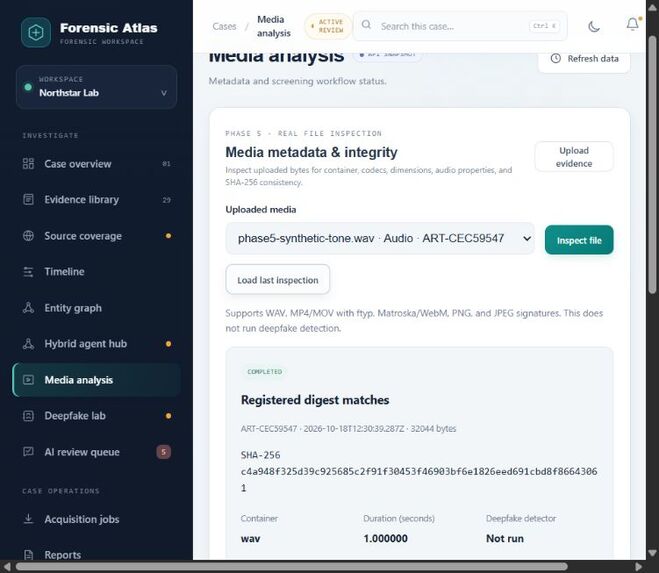
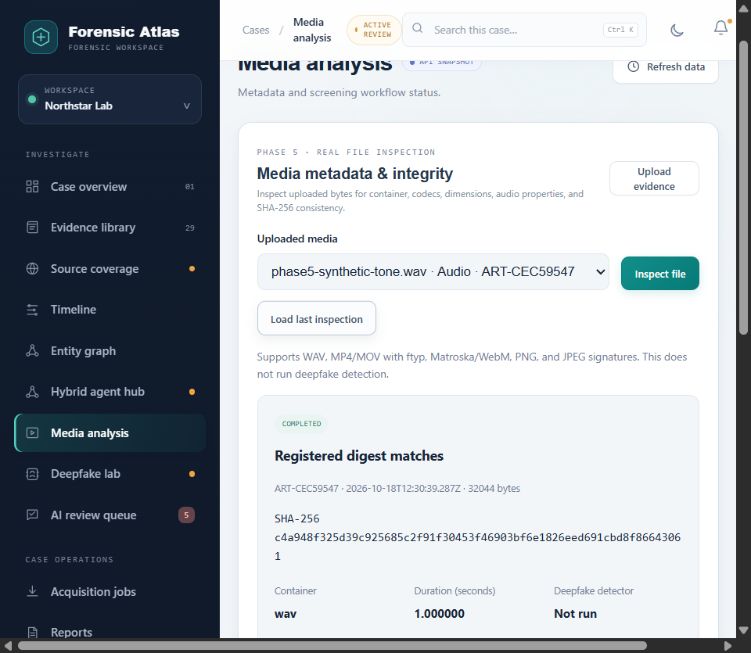
Media inspection showing file metadata and integrity checks.
-
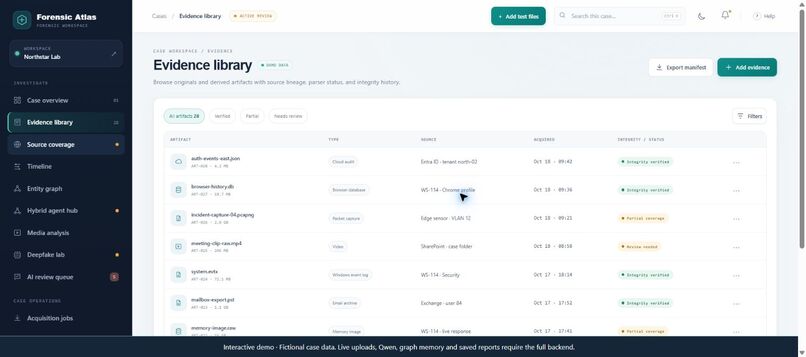
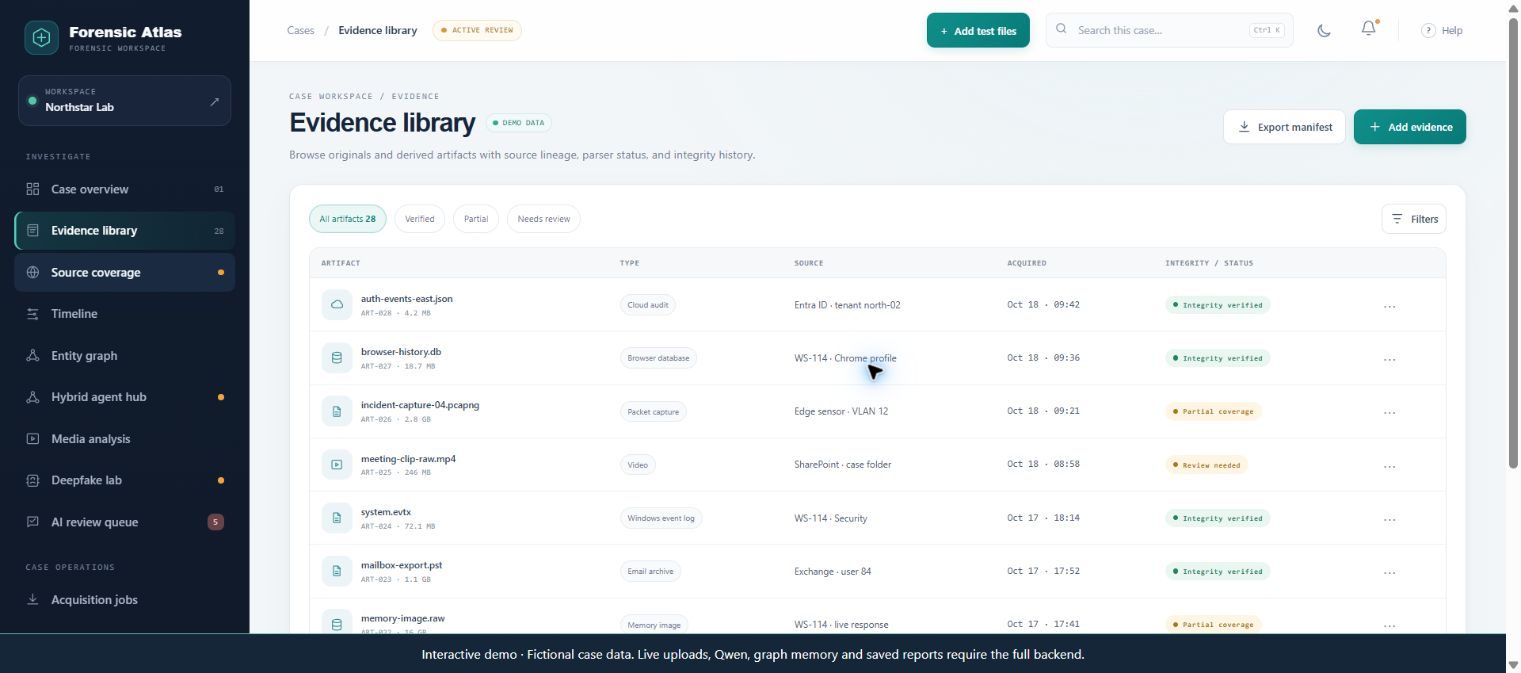
Deployed Forensic Atlas demo with fictional sample case data.
-
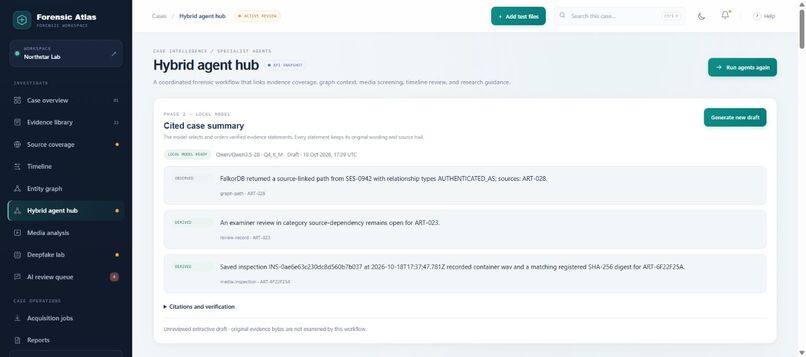
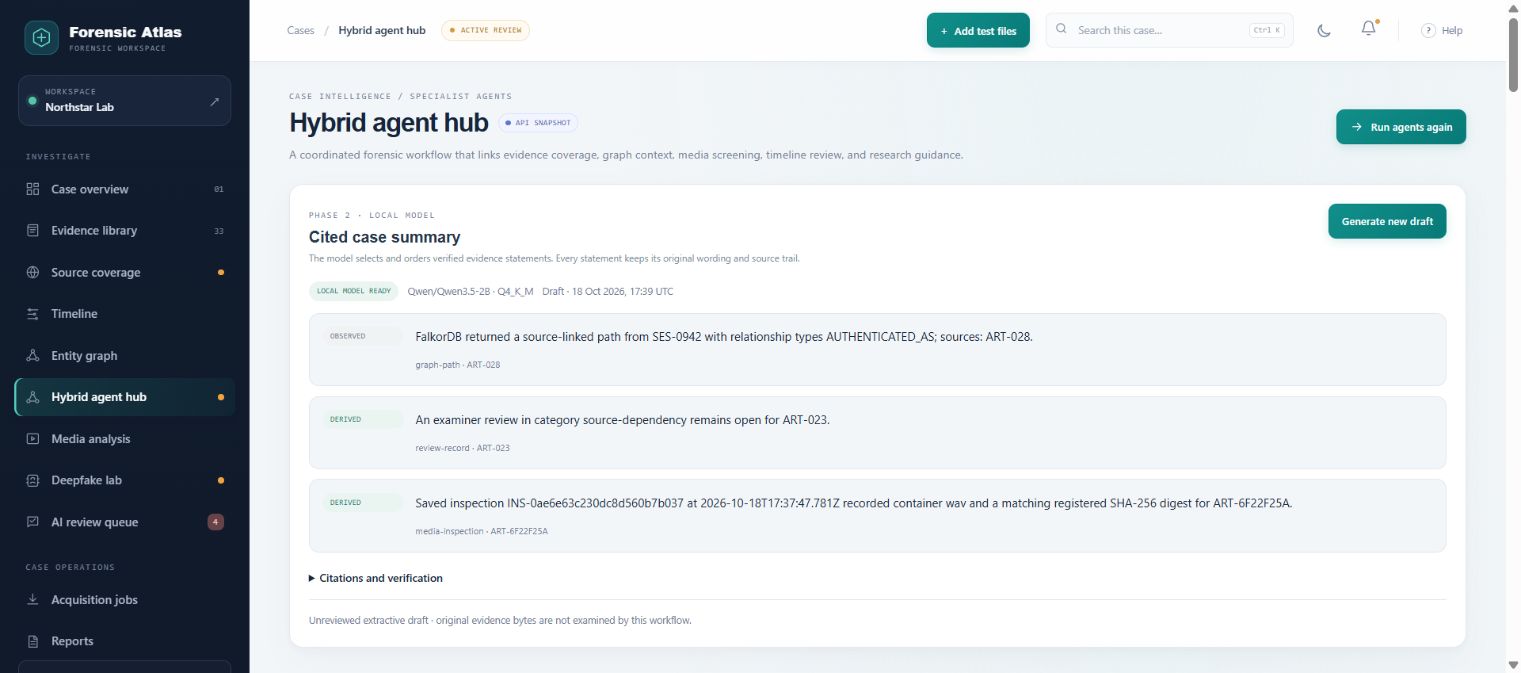
Qwen evidence review with source-linked facts and human review.
-
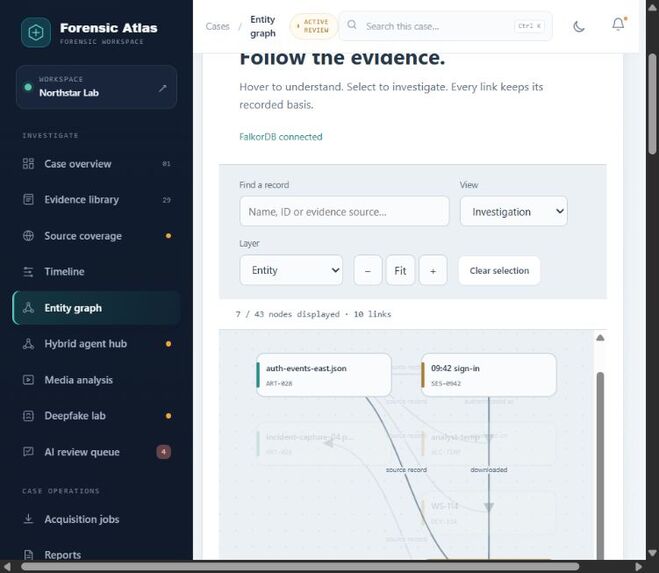
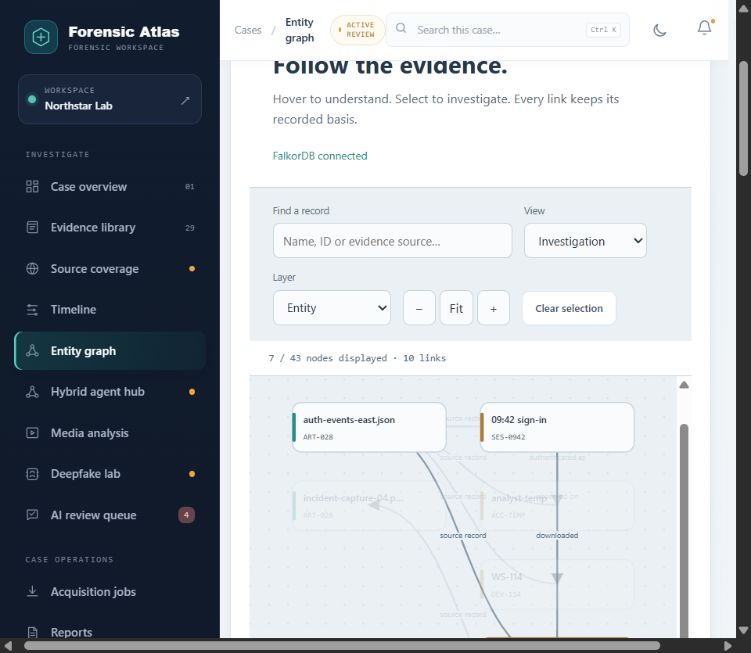
Case entity graph showing linked case information.
-
Forensic Atlas logo: a compass lens and verified evidence shield.
What it does
Forensic Atlas is a digital-investigation workspace that brings case records, evidence context, public web research, and reviewable AI assistance into one place. Investigators can follow a case timeline, inspect source-linked relationships, review media metadata and waveforms, and prepare cited report drafts.
Why we built it
Digital investigations often require analysts to move between evidence inventories, notes, graph tools, and browser research. That fragmentation makes it harder to keep each observation connected to its source and to distinguish verified evidence from a useful lead. We built Forensic Atlas to make provenance visible and keep the investigator in control of every conclusion.
TinyFish-powered research
TinyFetch integrates TinyFish Search and Fetch into the case workspace. An investigator can search a public topic or fetch a public URL, then save returned pages as case-linked Markdown artifacts with the source URL, collection time, available page metadata, provider run ID, and a SHA-256 digest. Qwen can consider saved page excerpts when preparing a summary, while the source remains clearly identified as candidate web material for human review.
The article relevance meter is a transparent lexical topic-overlap heuristic based on the case title, description, and evidence types. Its percentage is not a probability, a corroboration score, or proof that a page describes the same incident. Queries and URLs are sent to TinyFish, so the integration is intended for public research appropriate to share with that service.
How we built it
The application uses a Python/FastAPI backend, SQLite case records, a case-scoped FalkorDB graph, and a browser dashboard. A local Qwen3.5-2B model served through llama.cpp selects from bounded, source-linked fact IDs. A verifier checks those selections, and the application builds an extractive draft from the exact verified statements and citations. This keeps model output tied to reviewable context instead of treating generated text as evidence.
Media tools inspect file metadata and measured waveforms. The optional AASIST-L audio screening is experimental and may be wrong; it is not an authenticity verdict. Qwen does not listen to raw audio, inspect video frames, or detect deepfakes.
What we learned
The most useful AI feature is often the one that narrows a review task while showing where every claim came from. Provenance, bounded inputs, explicit uncertainty, and clear human review matter as much as model output. Our main challenge was coordinating web research, graph context, and local model assistance without blurring their different trust levels. Forensic Atlas is designed to support investigators, not replace their judgment.
Built With
- css3
- falkordb
- fastapi
- html5
- javascript
- llama.cpp
- python
- qwen
- sqlite
- tinyfish

Log in or sign up for Devpost to join the conversation.