-
-
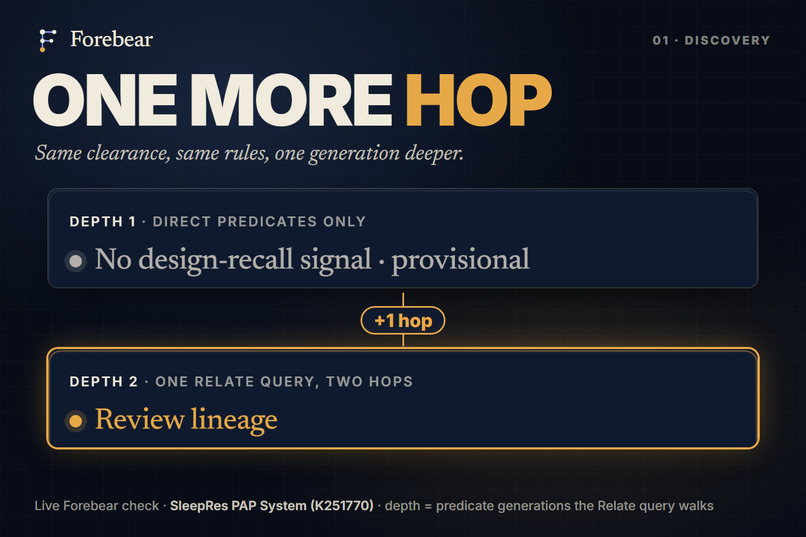
SleepRes shows no design-recall signal at one hop (provisional). A second hop reveals a Class I design recall in its lineage.
-
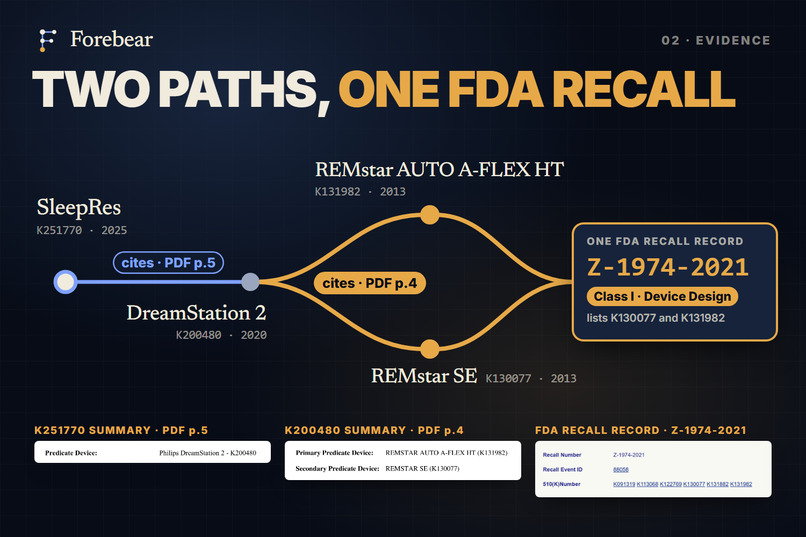
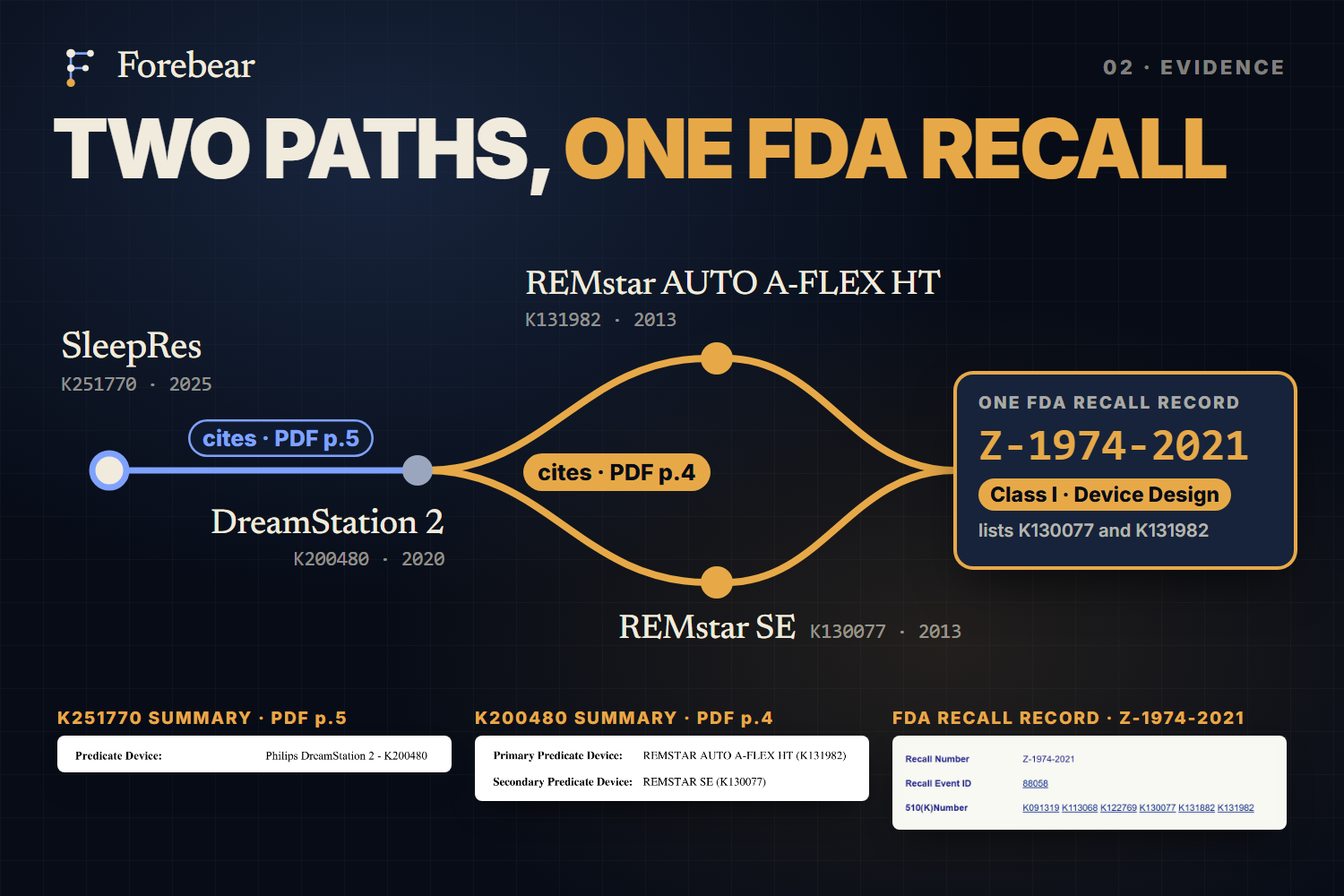
Two FDA summary pages trace SleepRes to two REMstar clearances listed on the same recall, Z-1974-2021.
-
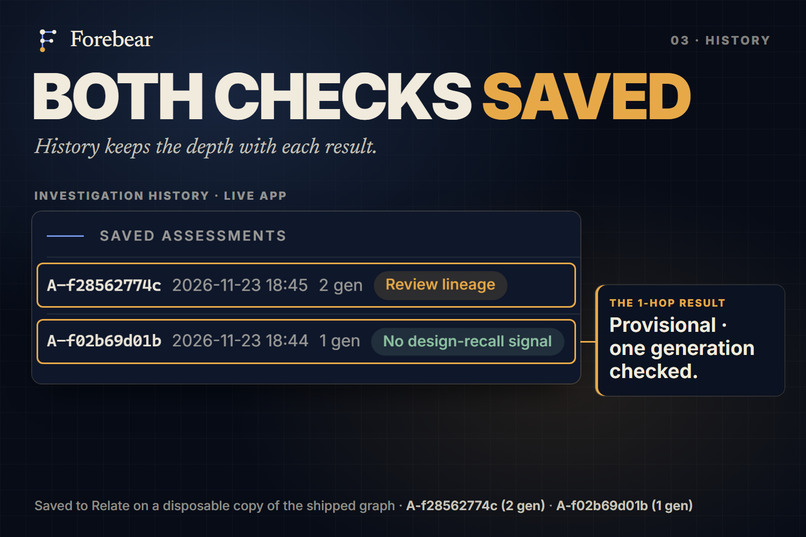
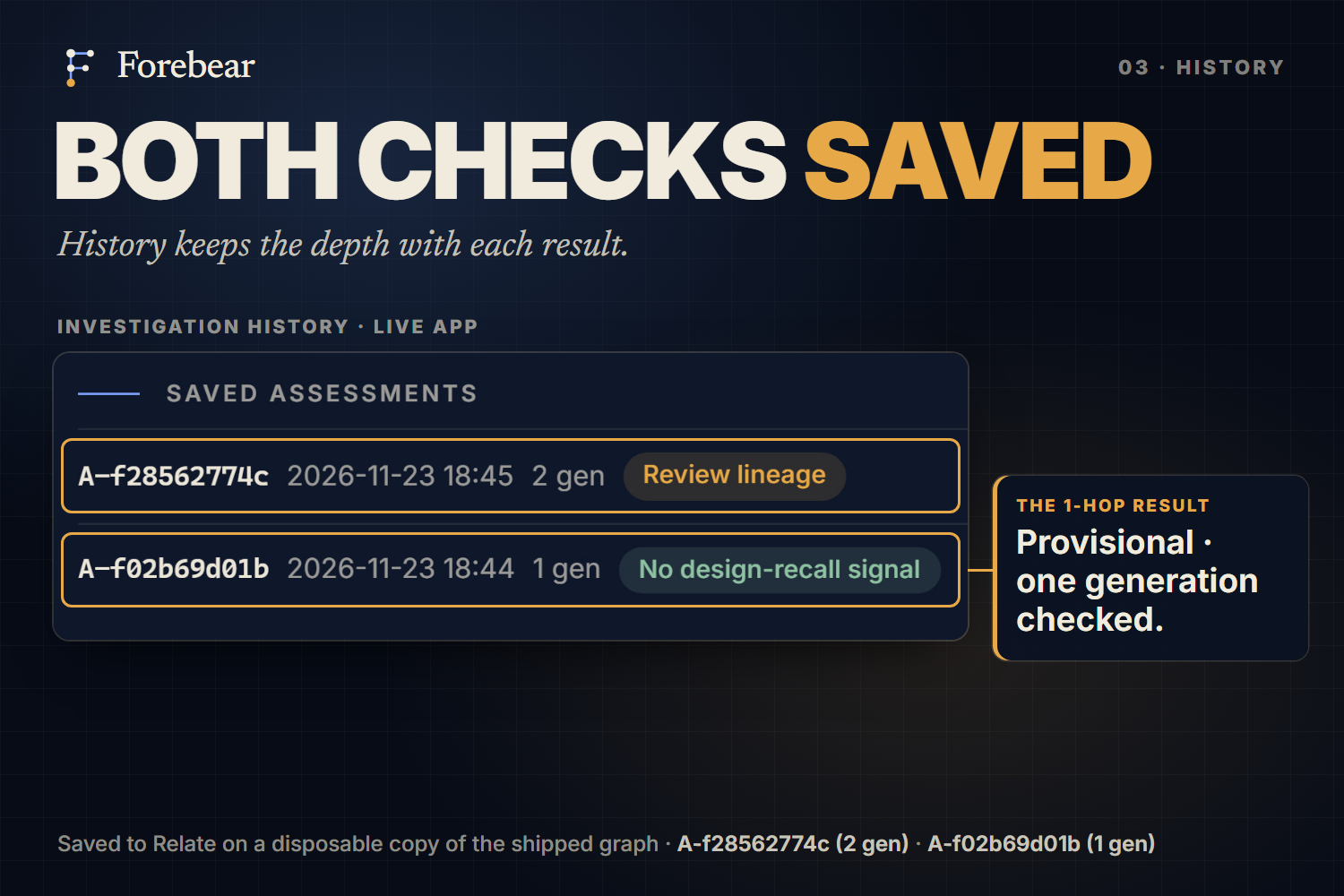
Relate saves each assessment with its query depth, so reviewers can see why the one-hop and two-hop results differ.
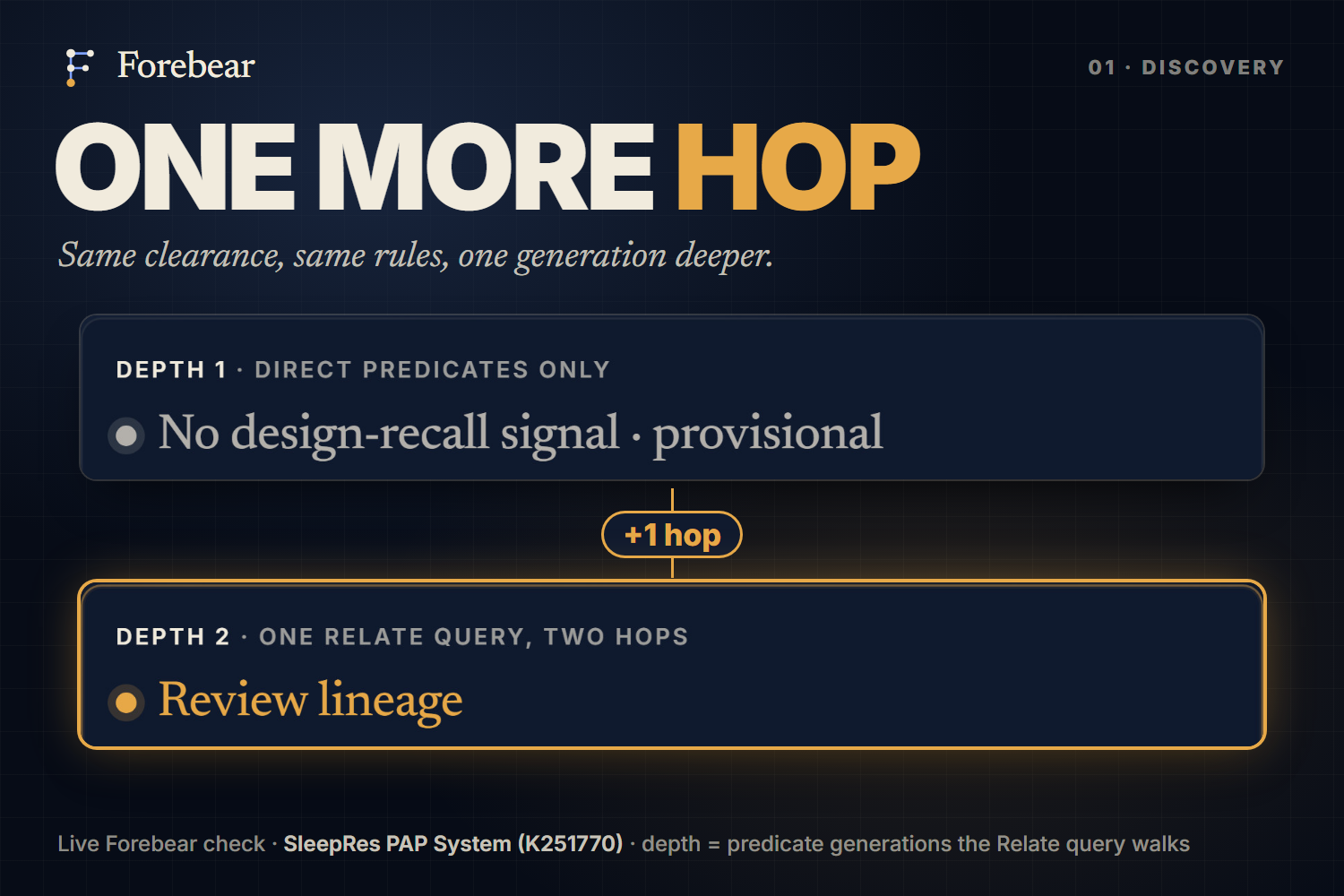
One more hop changed the result
The SleepRes PAP System’s FDA filing cites the DreamStation 2. A direct check returned No design-recall signal · provisional in Forebear’s dataset. At two generations, the result changed to Review lineage. The DreamStation 2 filing cites two REMstar clearances that FDA lists on the same Class I design recall.
Follow the evidence in the SleepRes summary, page 5, the DreamStation 2 summary, page 4, and FDA recall Z-1974-2021.
Inspiration
A predicate is an earlier device a manufacturer compares against in a 510(k) filing. Its identity is usually buried in a PDF, while recall history lives in a separate database. I built Forebear for the regulatory or quality engineer who needs to document why a predicate was chosen. In the SleepRes example, the extra hop gives the reviewer a specific question to investigate: is the recalled design feature relevant to the device under review?
How I built it with Relate
Forebear extracts citations from cached 510(k) summaries and connects clearances → cited predicates → FDA recall records. Each citation carries its source page, excerpt, and PDF hash. A Cypher query follows these relationships to the selected depth. In the demo, changing the depth from one to two reveals two citation paths to one recall record.
Relate runs in embedded single-file mode. The store at data/forebear.rl ships with the repository, so judges can inspect the graph and run the demo locally without an API key. The same store saves assessments with their query depth and marks them stale when relevant evidence changes. The app uses Python and FastAPI on the backend, React and Vite on the frontend, and openFDA records joined to extracted PDF text.
The hard part was deciding which links to trust
FDA summaries can name both predicates and reference devices in the same table. Some are scanned, some are missing, and an FDA recall’s clearance-number list does not establish which downstream devices share the recalled design. Forebear shows disputed citations and marks an incomplete no-signal result provisional. Its findings support due diligence. Device safety and recall applicability require separate evidence.
I also tested an optional investigation agent against the deterministic workflow. The graph report surfaced all 17 critical Class I witnesses in the evaluation, while the agent’s prose retained 10. That result shaped the product: the graph and explicit rules determine the assessment, and optional NVIDIA-hosted models can suggest evidence for review. Claude Code assisted with implementation, tests, and machine-labeled evidence audits. Codex helped audit the project and review the demo. The demo narration was generated with ElevenLabs.
Try it
Watch the 1:49 demo or clone the public GitHub repository. From the repo root, run:
docker compose up --build
Open http://localhost:8765/#/check/K251770 and look for Why the graph matters. Compare the two depths, open the source pages, and save an assessment to the graph.
