-
-

For the people main logo
-
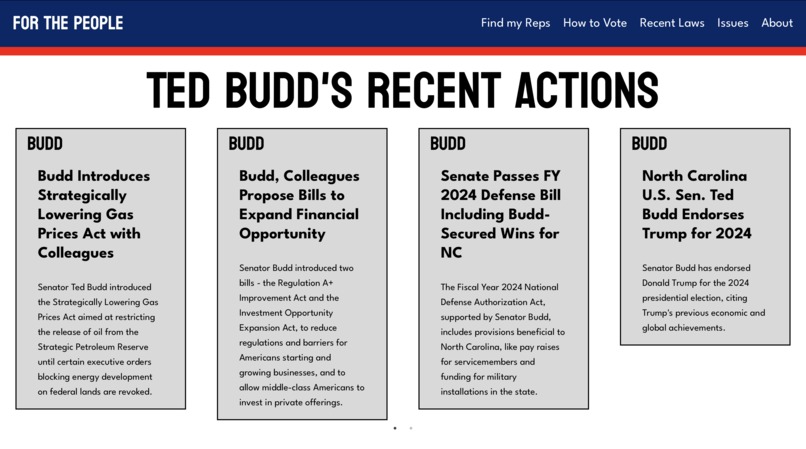
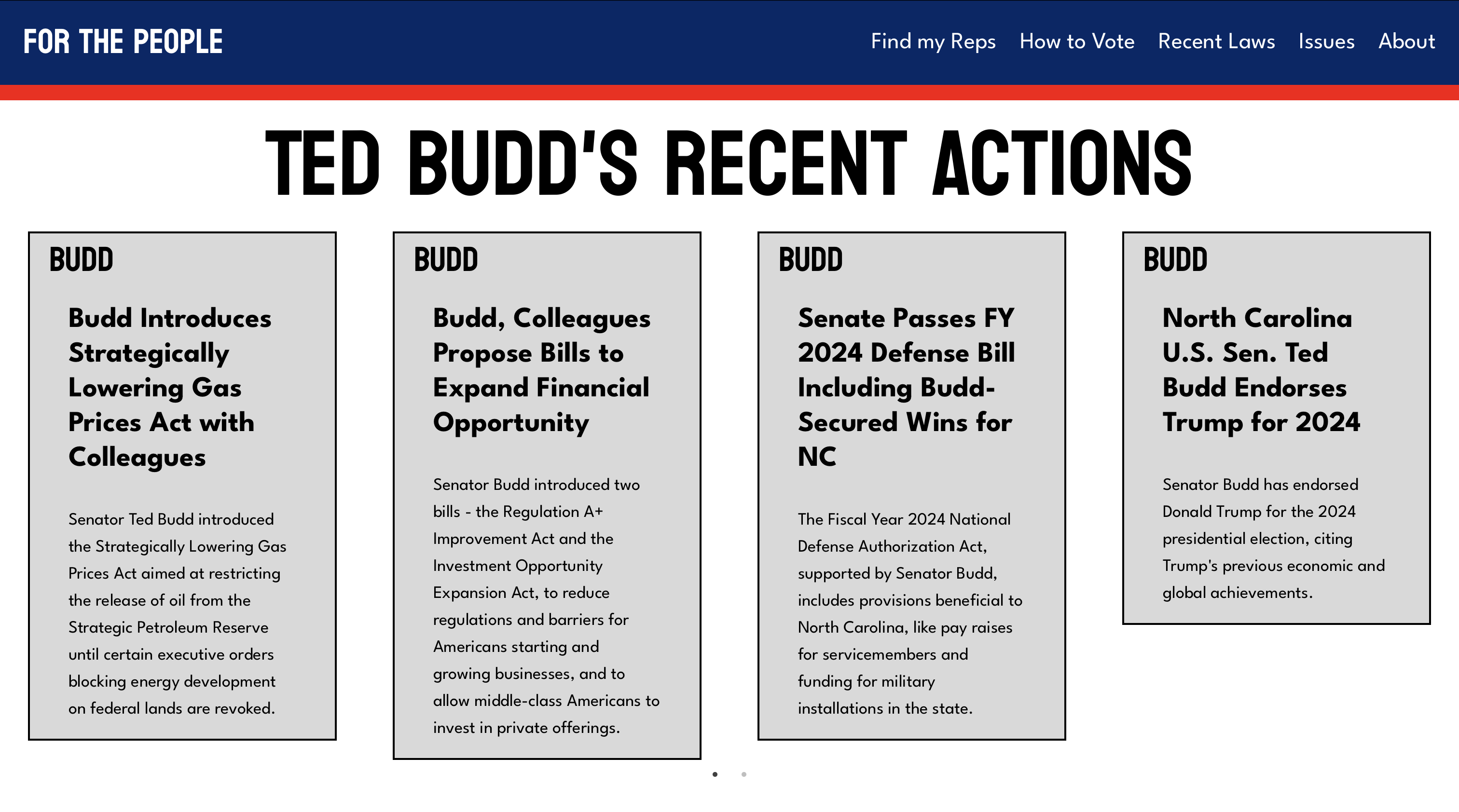
A screenshot of one representative's page
-
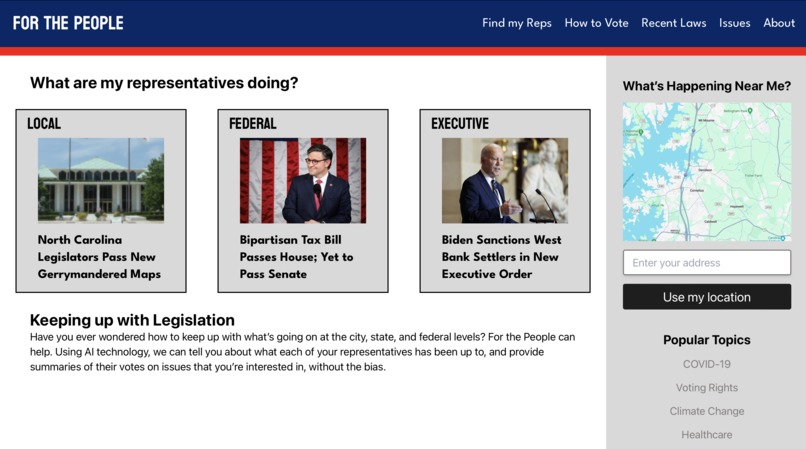
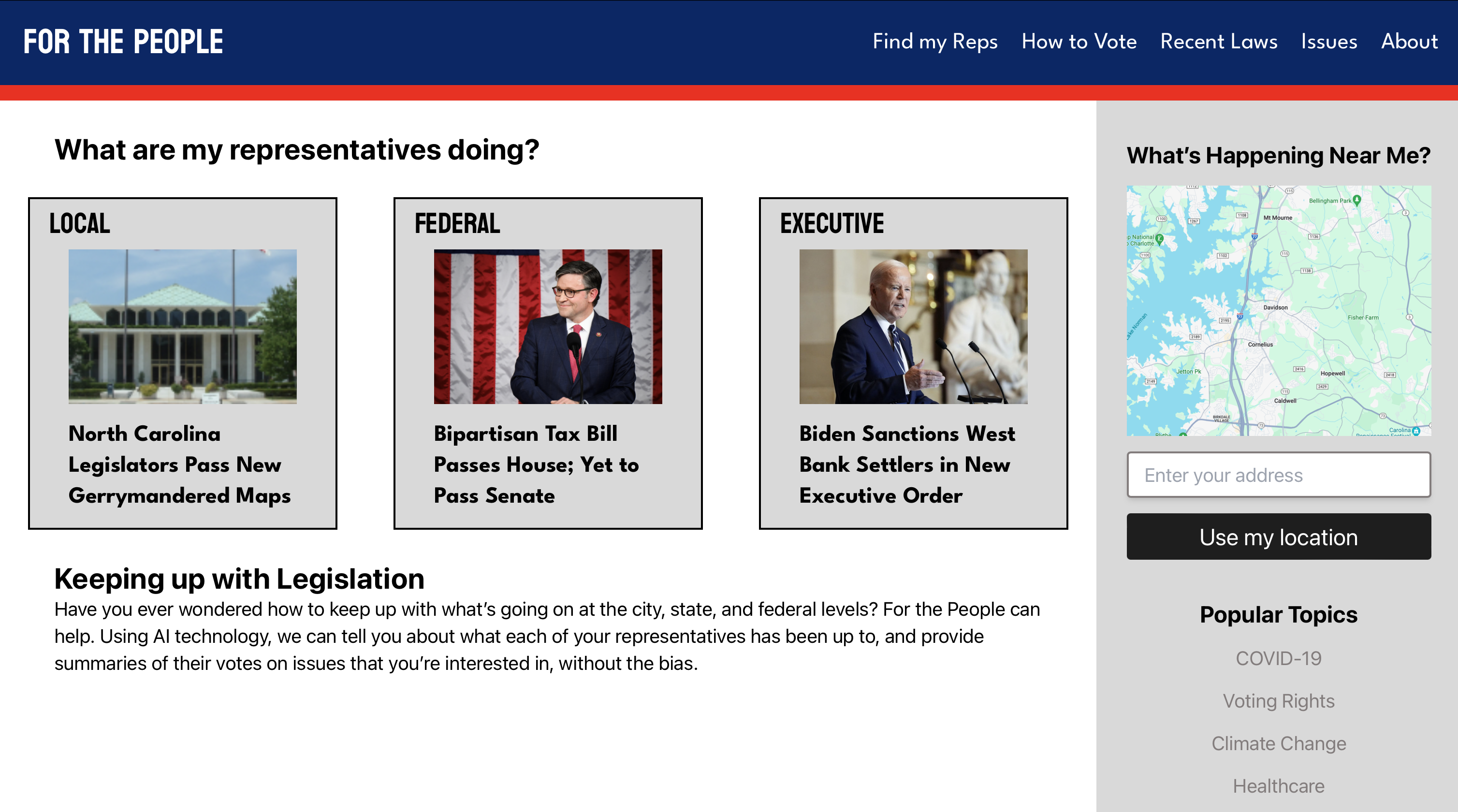
A screenshot of the homepage
-
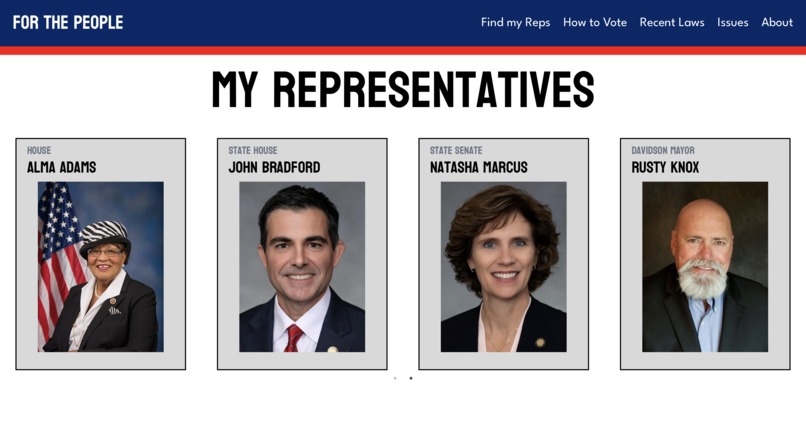
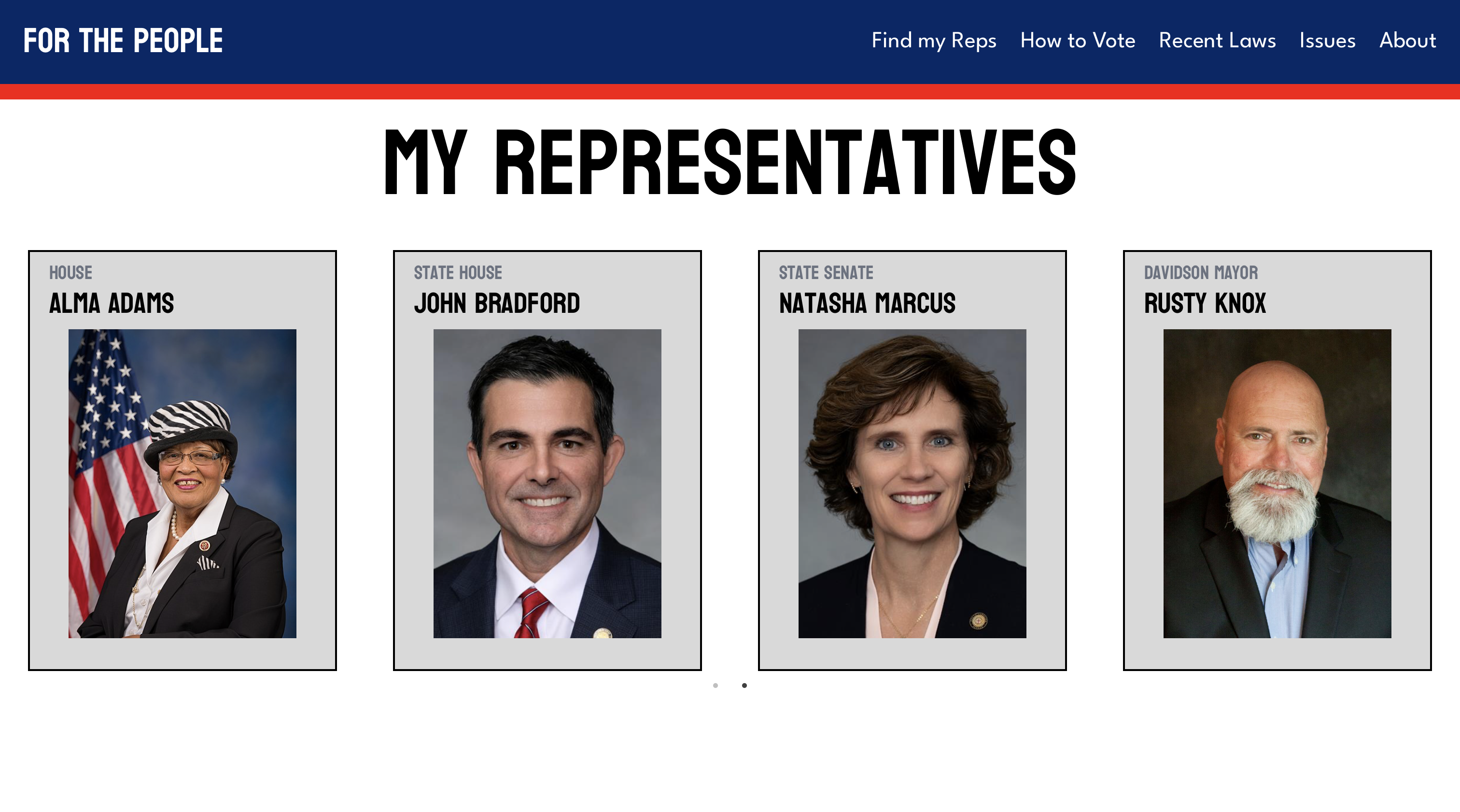
An example screenshot of a representatives page
-
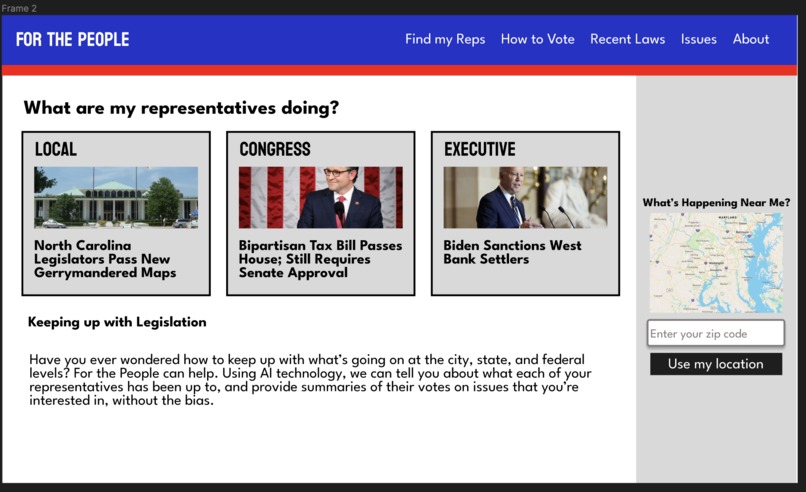
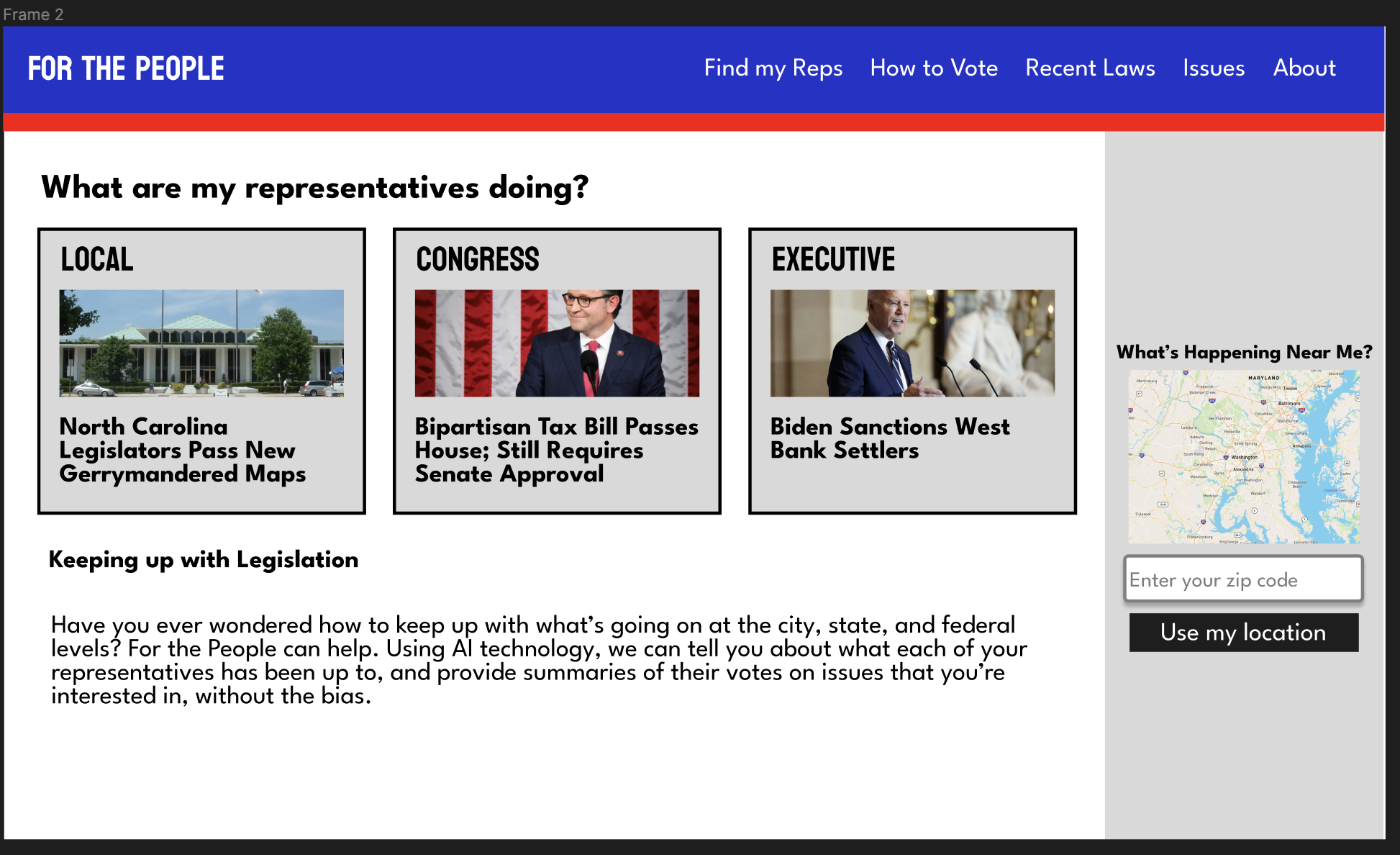
A screenshot of our original mockup of the website

Inspiration
After thinking about America's most pressing issues--from human rights, to healthcare, to global warming--one thing that remained consistent was a lack of reliable information. More specifically, how our government elected officials were or were not contributing. Therefore, we decided to make For the People a website that tells you what your elected representatives are doing from an objective point of view.
What it does
How do we guarantee that the information you're consuming is unbiased? By using AI to focus on individual representatives, For the People summarizes local, state, and federal officials' recent work to allow users to form their own opinions. By eliminating the biases of political parties and only focusing on what a politician is passing or voting for, this allows people to decide if they like or dislike their chosen representatives. In addition, we have included the sources, so a person could fact check to make sure that what they are reading is accurate.
How we built it
First, we created mockups in Figma of what we wanted the website to look like. Only one of us had prior experience with the tool, but it’s fairly easy to pick up, and we all contributed significantly. After that, we used a tool called Recognition which uses AI to convert Figma frames to JSX/Tailwind components. Though this was a new system for us, we took up the challenge, and built our website from the ground up with these technologies, attempting to bring in ExpressJS for the backend with ChatGPT powering the automated research and Google’s Civic Engagement AI helping us find representatives based on the user’s location.
Challenges we ran into
Lack of experience in general was a big hindrance for us, with this being the first full website any of us have created. Figuring out how to integrate ChatGPT was also difficult, as was creating layouts and figuring out JSX to match it.
Accomplishments that we're proud of
We are very proud of our website and its components, which we spent a significant time designing for user convenience and experience. In addition, we tried to take many precautions to ensure that the output of our website was not biased, and accurately reflected the real world.
What we learned
We learned how implicit/explicit biases function and lurk in generative AI while discussing and researching the ways to reduce bias from out content. As it is a heavily emphasized topic in hack at davidson and multiple workshops, we were able to gain more insight in such topic.
We also gained experience in website building and working with javascript
What's next for For the People
As of now, we only have information on the representatives themselves and news articles; however, if we were to expand, we would like to add summaries of town hall meetings, Supreme Court case documents, laws and bills, and political debates. The information would come from a confirmed database with trusted sources that fit the criteria of “objective.” This way, the average citizen can stay on top of knowledge without bias, all in one place.
Built With
- express.js
- figma
- godaddy
- javascript
- react.js
- tailwindcss


Log in or sign up for Devpost to join the conversation.