-
-
Thumbnail
-
Glasses UI
-
Digest
-
ASI Chat ss
Inspiration
“Bluebird is slipping because FCS is still on the old golden path.”
On your first week, that sentence can leave you three explanations behind. Looking everything up takes you out of the meeting. Asking about every acronym interrupts it.
We built Footnote to provide a little context while you stay in the conversation.
What it does
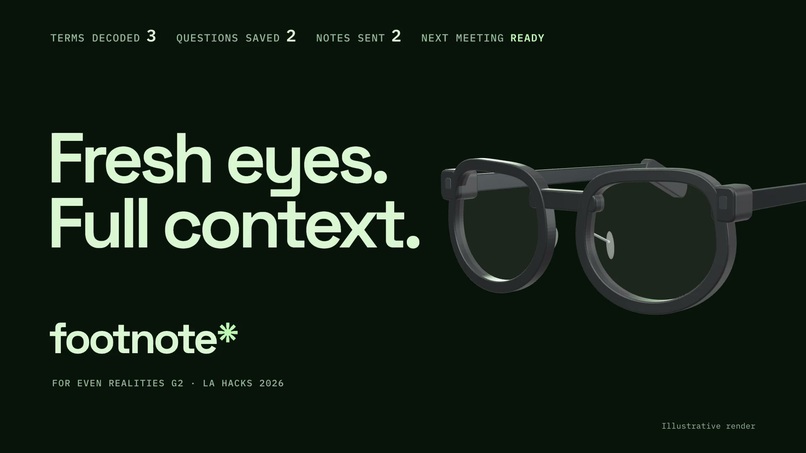
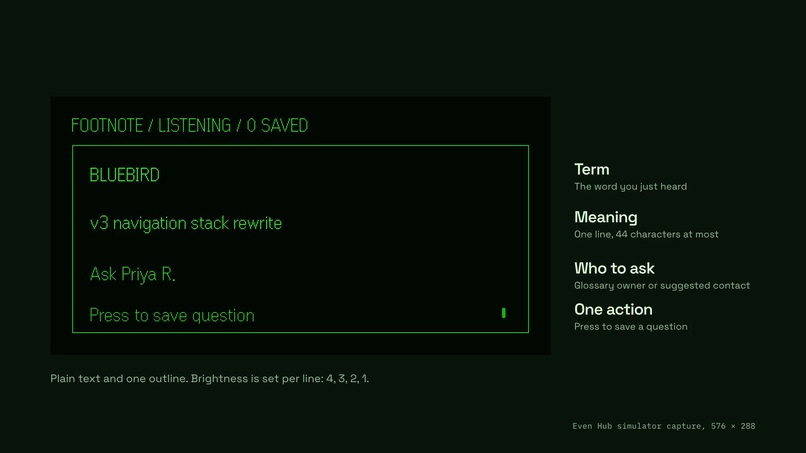
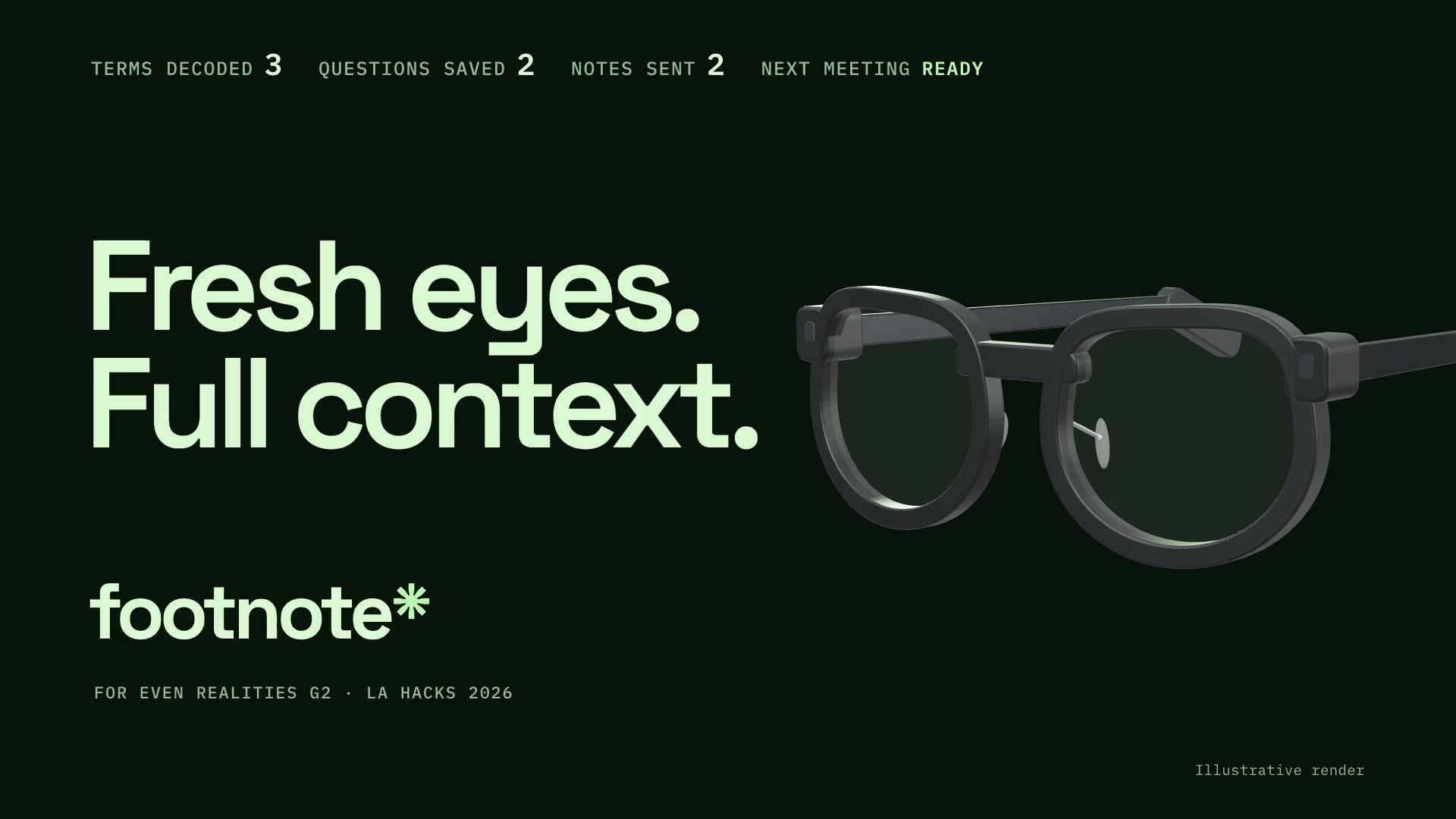
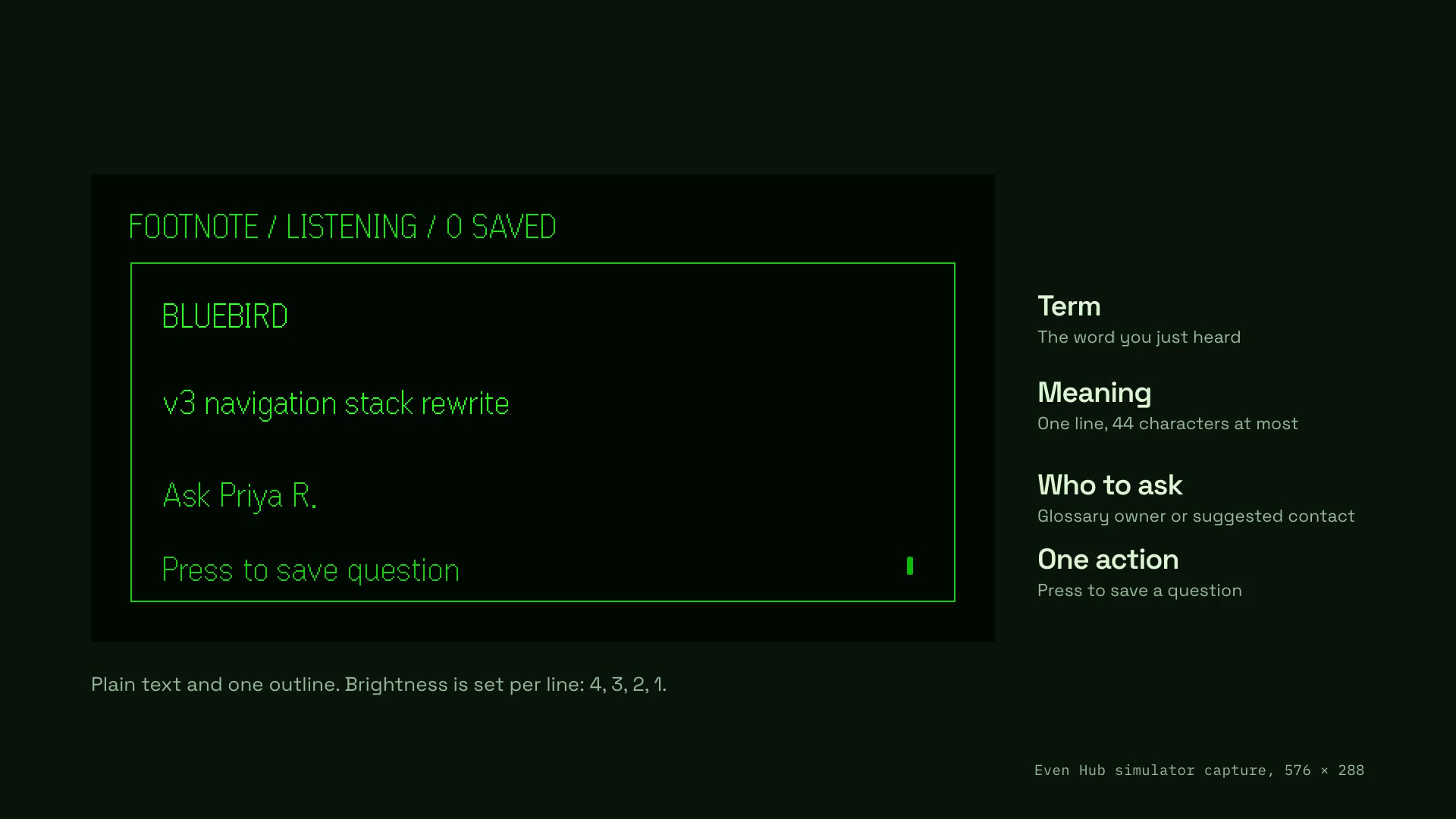
Footnote listens through Even Realities G2 and displays a short card with the company term, its meaning, and a person to ask.
Press to save a question for later. Swipe down to mute a term you already know. After three sightings, familiar terms fade automatically.
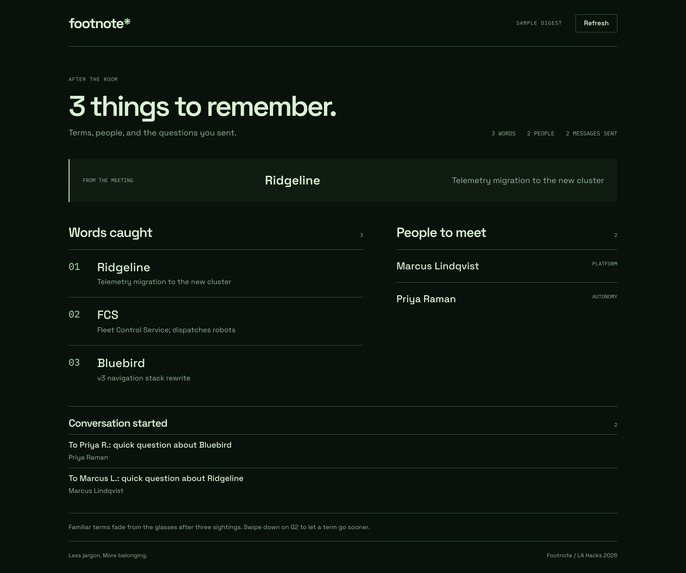
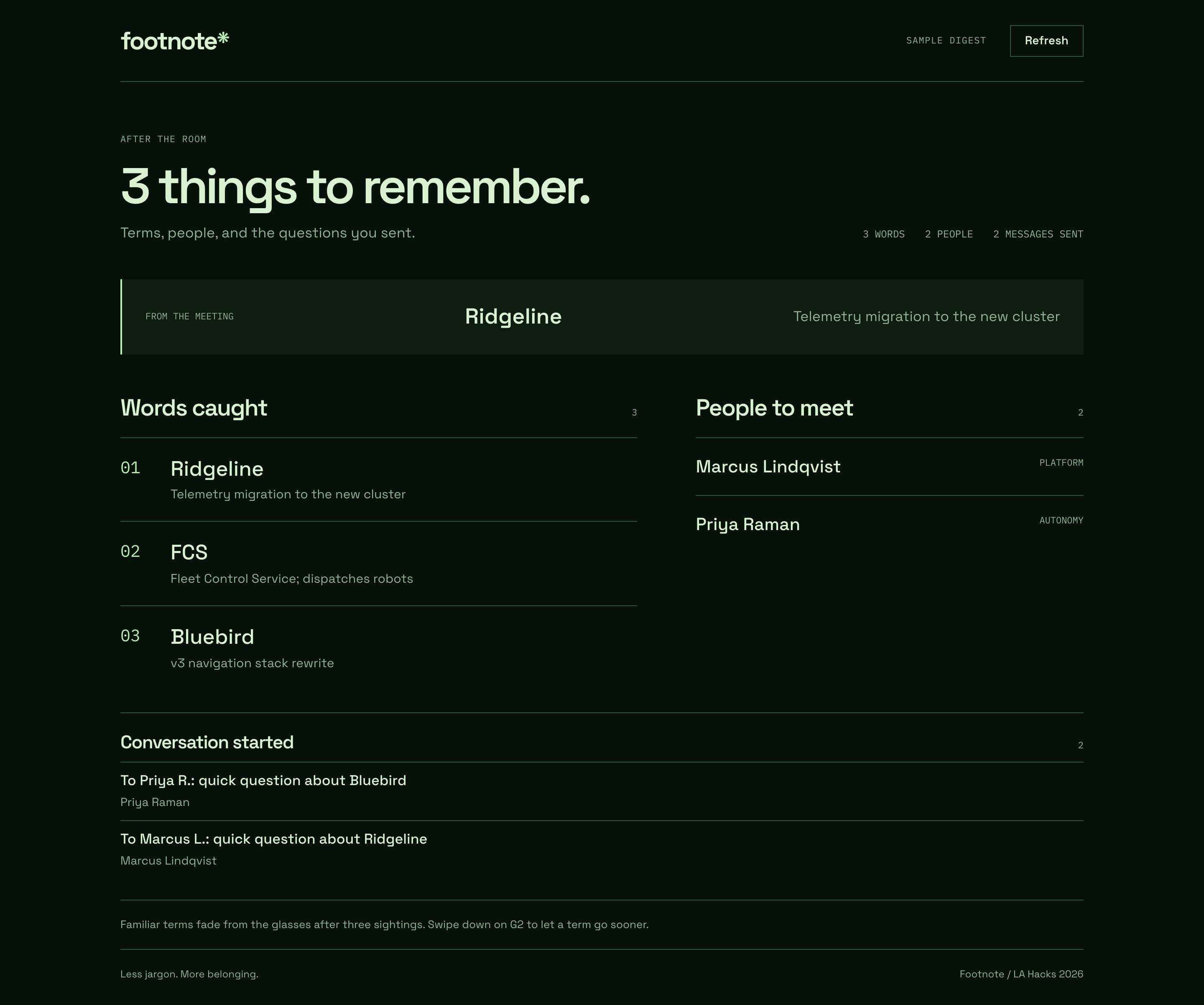
When the meeting ends, saved questions become follow-up drafts grouped by person. You review each draft before sending it. A dashboard keeps the terms you learned, people to meet, and messages sent.
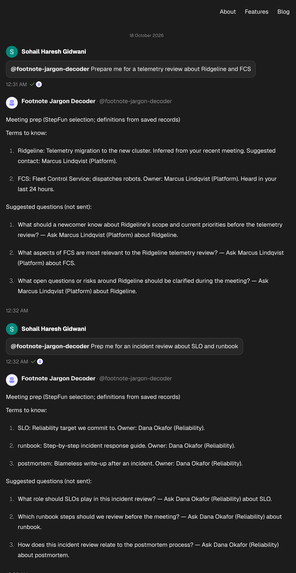
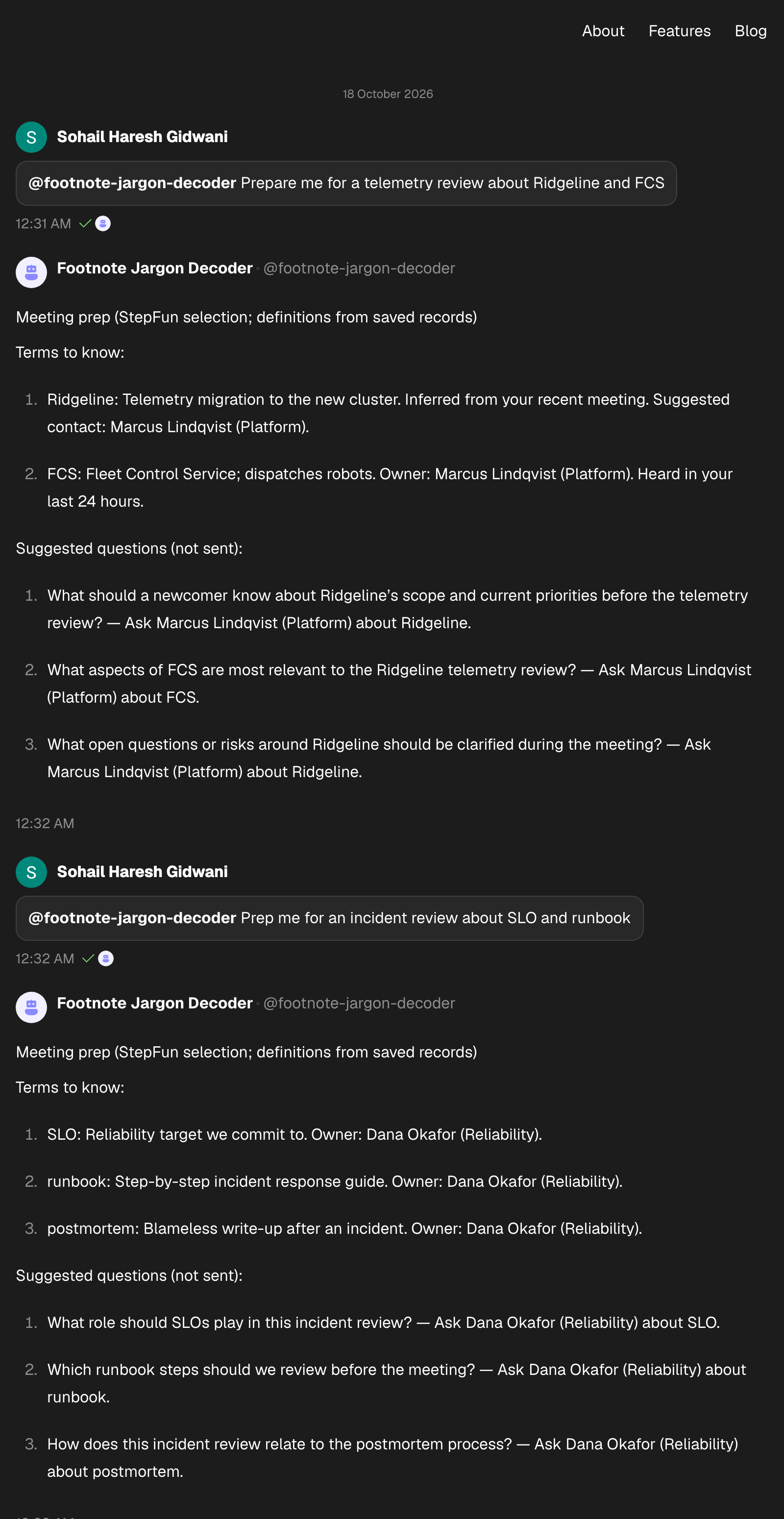
Our Footnote Jargon Decoder agent brings that context into ASI:One. It explains company terms, recaps recent meetings, and prepares relevant terms and questions for your next agenda. You can also review saved drafts and explicitly approve a follow-up email entirely inside the chat.
How we built it
The G2 client uses TypeScript, Vite, and the Even SDK. Audio travels through the phone to a Python FastAPI backend, where ElevenLabs transcribes it.
Known terms match against the company glossary. For unfamiliar terms, StepFun Step-5 Preview reads the surrounding conversation in the background and infers a meaning. Glossary owners and inferred contact suggestions are labeled differently.
SQLite stores meeting history, term sightings, queued questions, and drafts on a persistent Railway volume. The React dashboard reads the meeting digest.
Our Python uAgents agent is registered on Agentverse and implements the Agent Chat Protocol for ASI:One. It reads the glossary and backend history, while StepFun selects relevant meeting-prep terms and suggests questions. Definitions and contacts come from saved records.
For follow-ups, the agent previews an existing draft and requires an expiring approval code before calling the backend’s Resend email tool. Approval codes are bound to the conversation, and the send path protects against duplicate sends.
We designed the phone, dashboard, and glasses interfaces in Paper around the G2’s green-on-black display.
Challenges we ran into
Speech recognition did not always preserve internal project names or word boundaries. We worked on generalized handling of transcription variations while keeping complete terms intact.
Slow inference also needed to finish in the background without blocking known glossary matches or changing the phone’s six-second request timeout.
On the glasses, the challenge was deciding how little to show. We kept one outlined card, a short meaning, and a direct action for saving a question.
Accomplishments we're proud of
We shipped an Even Hub Beta and tested it on physical G2 glasses with real speech, cards, saved questions, and approved follow-up emails.
We also verified the live ASI:One draft-review and approval workflow through to email receipt. The backend, dashboard, and agent are deployed on Railway.
What we learned
Useful intelligence on glasses depends on restraint. The explanation needs to help the wearer follow the speaker without becoming another thing demanding attention.
We also learned to verify every boundary: transcription, background inference, saved meeting state, approval, and email delivery. A successful provider response does not always mean a message has reached the visible inbox.
What's next
We want to add company glossary uploads, separate user workspaces, and broader testing across accents and real onboarding meetings.
The current prototype uses a synthetic Halcyon company glossary and shared demo history. Approved emails go to a configured demo inbox; coworker names are display recipients.
Built With
- agentverse
- asi:one
- elevenlabs
- even-realities-g2
- even-sdk
- fastapi
- fetch.ai
- python
- railway
- react
- resend
- sqlite
- step-5-preview
- stepfun
- typescript
- uagents
- vite


Log in or sign up for Devpost to join the conversation.