-
-
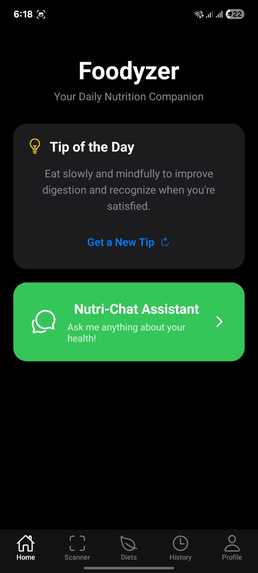
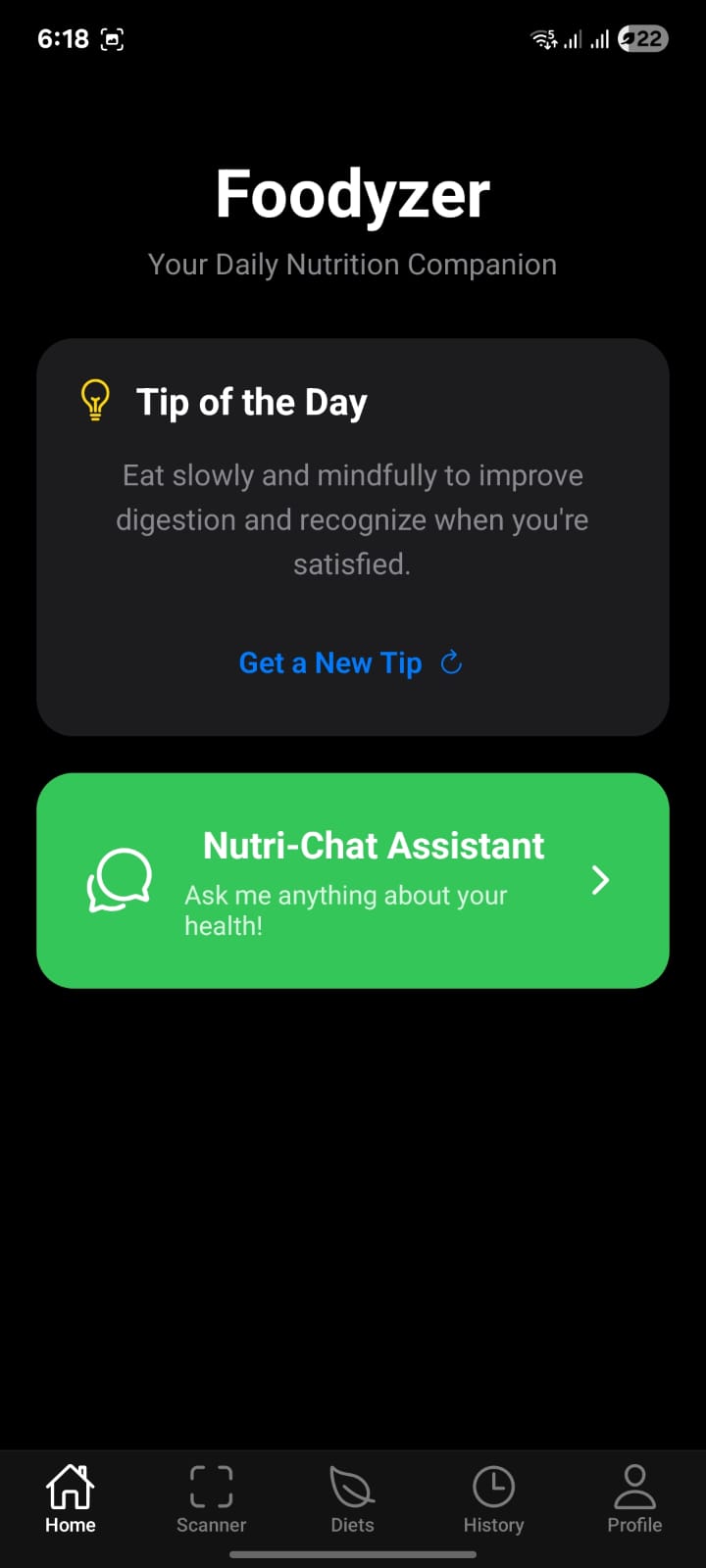
Welcome to Foodyzer! Get your 'Tip of the Day' or chat with your AI nutritionist to start your personalized health journey.
-
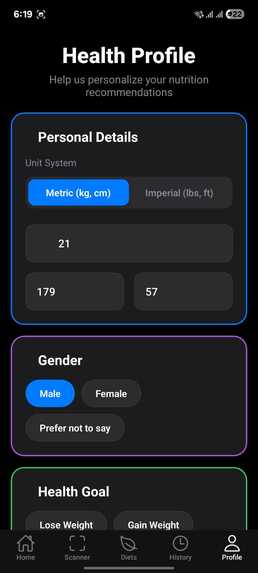
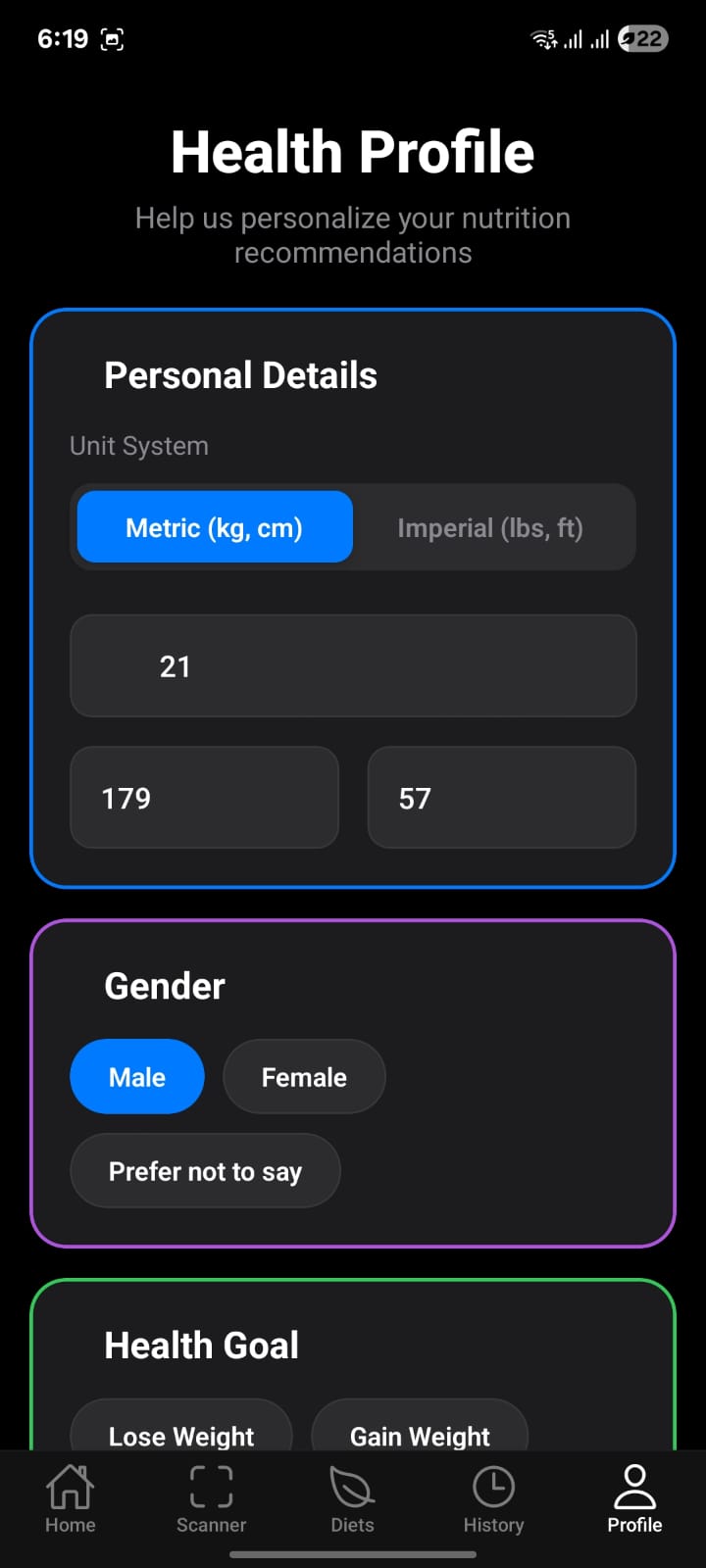
Your hyper-personalized experience starts here. Set your goals, allergies, and medical conditions to get advice tailored just for you.
-
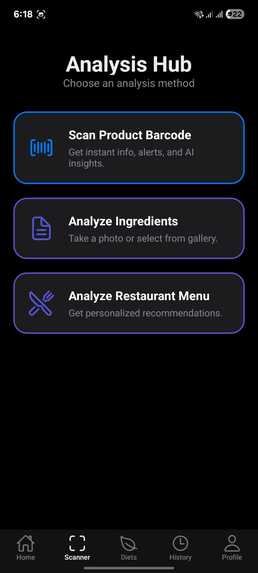
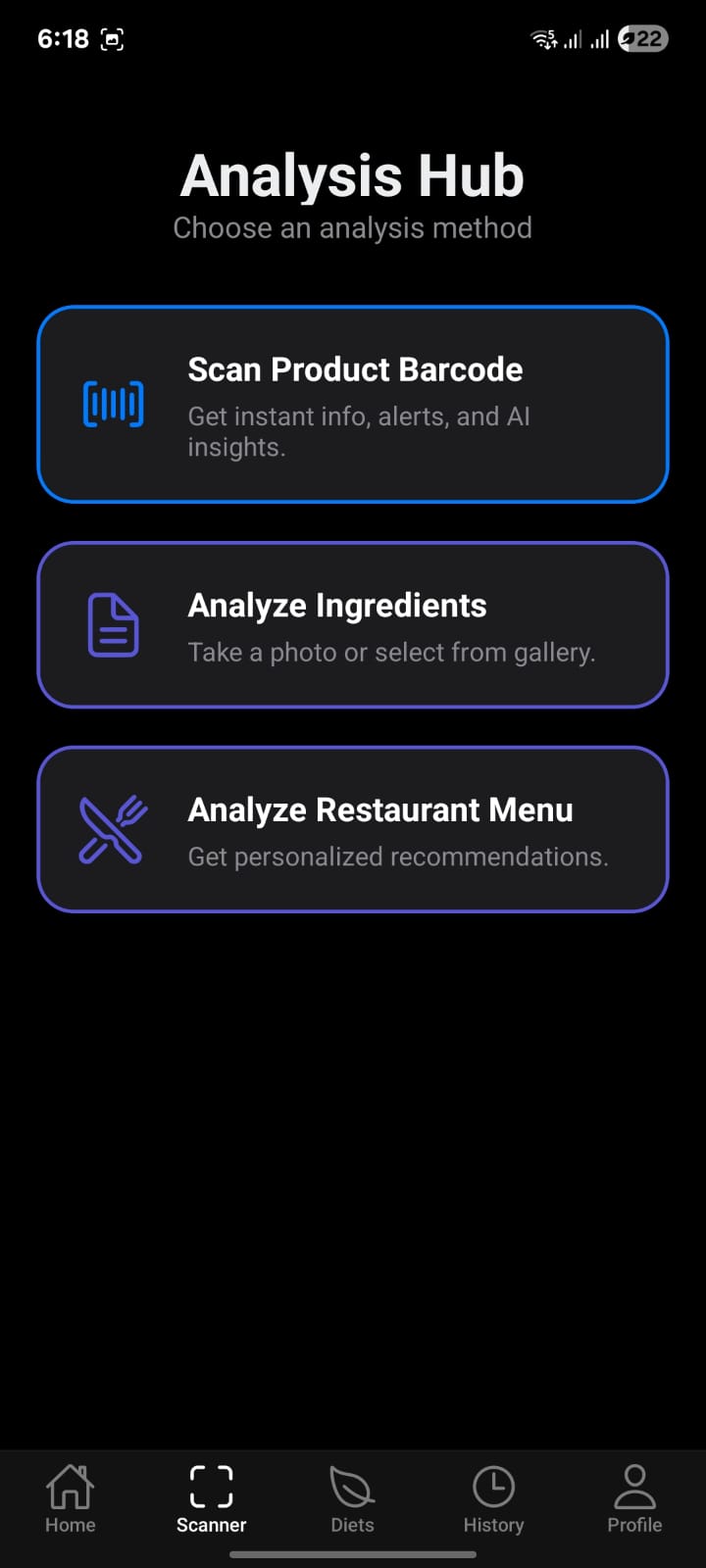
The Analysis Hub: Scan product barcodes, analyze ingredient lists from a photo, or get recommendations from a restaurant menu.
-
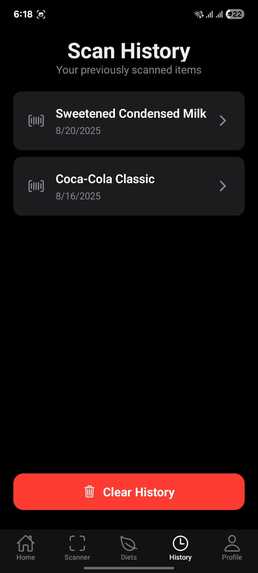
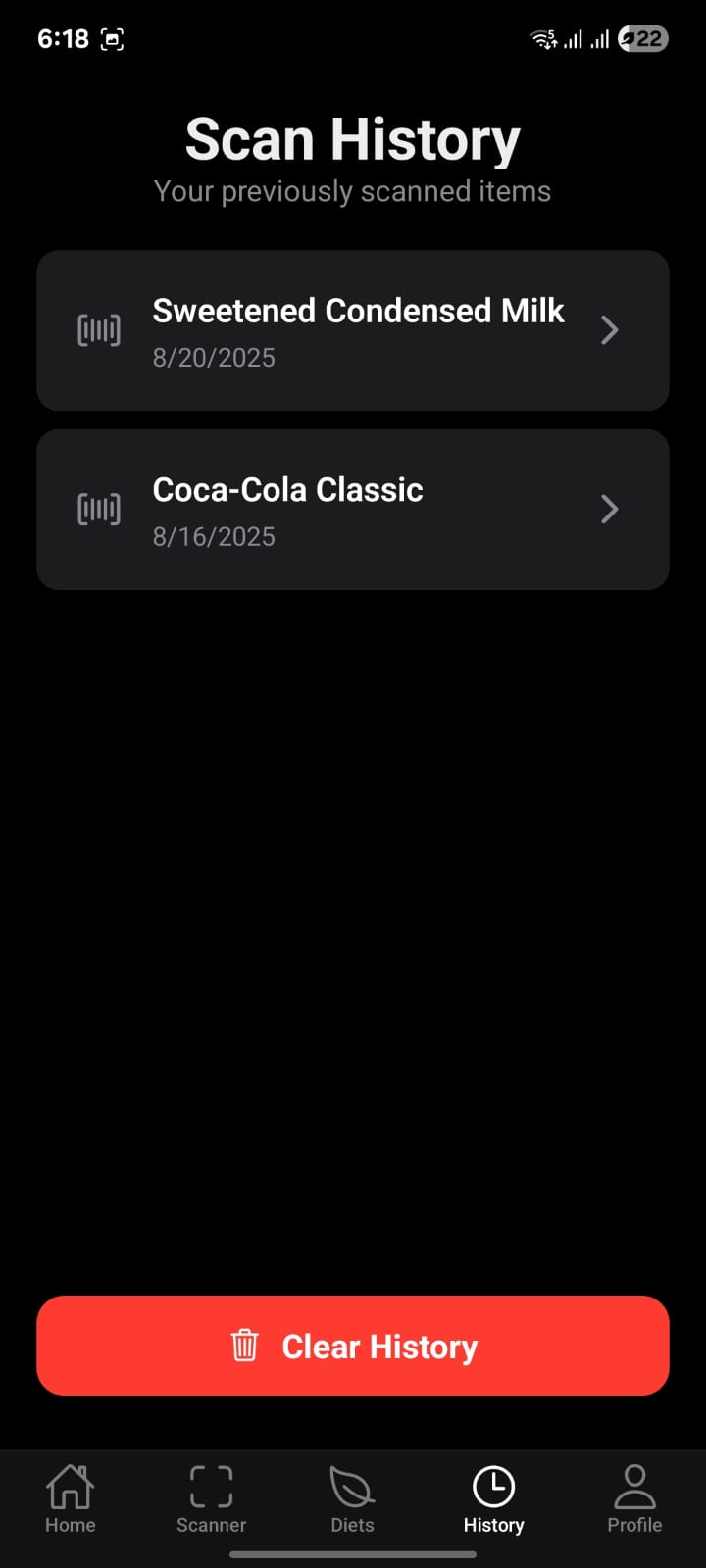
Keep track of your journey with a detailed Scan History. Revisit product details and AI insights anytime you need them.
-
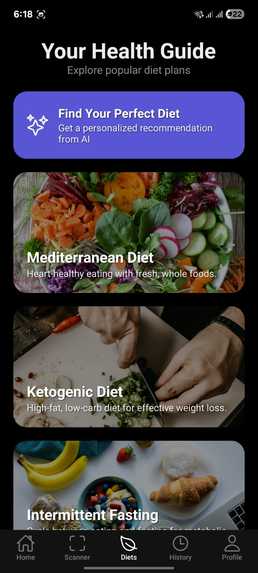
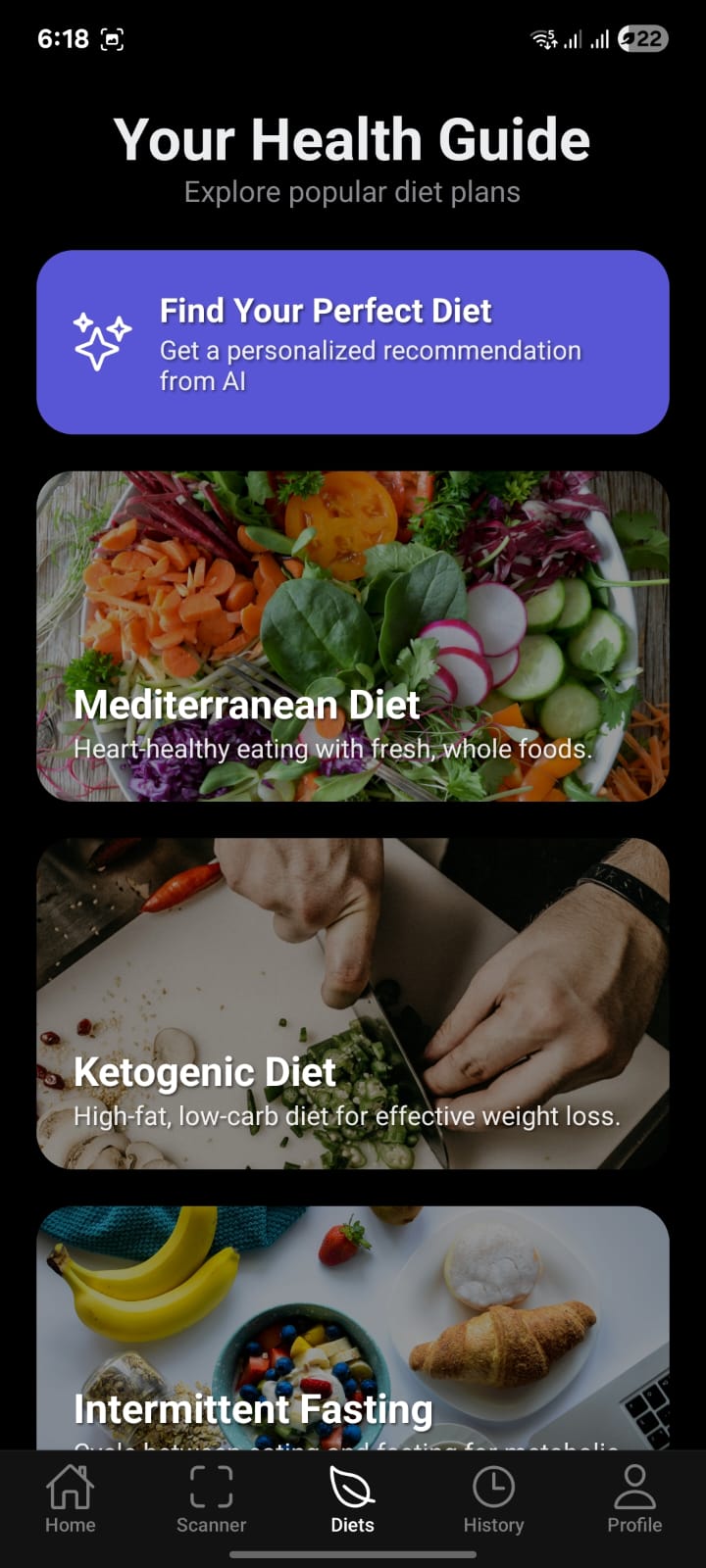
Explore popular diet plans or let our AI find the perfect one for you based on your unique health profile and goals.
💡 Inspiration: Hacking Decision Paralysis The inspiration for Foodyzer stems from a critical, high-stakes problem: nutritional decision paralysis. For millions globally—including the 422 million with diabetes and the 500 million avoiding allergens—choosing food is not a simple task; it’s a constant, high-risk health calculation. Existing nutrition apps fail this audience because they are generic, offering simple "A-F" scores that ignore the user's unique medical context (e.g., "Good for a healthy person, but deadly for someone with a specific allergy").
We were inspired to build the last mile solution—a system that delivers immediate, hyper-personalized, context-aware intelligence right at the point of decision, whether scanning a barcode in a store or viewing a restaurant menu.
🛠️ How We Built It: The Multi-Agent Co-Pilot Our core technological achievement is a Multi-Agent Architecture running on the Gemini 2.5 Flash engine. This is the foundation for our "Nutrition Co-Pilot," enabling sophisticated, contextual reasoning far beyond simple API calls.
Key Technical Components:
The Agent System (The Core): We designed five specialized agents that collaborate to process information and deliver the Personalized Suitability Score:
Profile Agent: Manages and contextualizes the user's deep health profile (allergies, chronic conditions, goals).
Vision Agent: Handles multi-modal inputs, analyzing images of ingredient labels and complex, unstructured data like restaurant menus.
Analysis Agent: Performs a dynamic evaluation of the food against the user's profile and returns the final suitability score.
Chat Agent: Powers the Nutri-Chat, managing complex, multi-conditional conversational queries.
External Data Agent: Fetches real-time market data (e.g., price, stock) and scientific information.
Platform: The application is built on React Native / Expo, ensuring a stable, production-ready codebase for rapid deployment across both iOS and Android platforms.
🧠 What We Learned: The Power of Context Our main learning was the absolute necessity of contextual reasoning for hyper-personalization. We realized that simply using an LLM to read a label is insufficient; the model must be structured as an Agent that first consults the Profile Agent before performing any analysis.
We learned that:
Suitability > Scoring: Providing a dynamic score tailored to the individual is far more valuable than a static, generic health score.
Multi-Modal Integration is Key: Seamlessly transitioning between barcode scan, menu photo analysis, and complex chat within one coherent system is what delivers true utility.
🛑 Challenges We Faced Latency Management: The primary challenge was achieving real-time, production-ready performance for the scanner. Coordinating the five agents to deliver a complex, context-aware suitability score in less than two seconds required rigorous optimization and efficient API usage with Gemini 2.5 Flash.
Data Integration and Compliance: Handling sensitive medical data (e.g., allergies, chronic conditions) required meticulous planning to ensure the application is HIPAA/GDPR aligned from day one, which added significant complexity to the Profile Agent's data handling protocols.
UI/UX for Complexity: Translating a complex Multi-Agent architecture into a simple, single, actionable score for the end-user was a continuous design challenge that we solved with the clear, color-coded "Suitability Score" interface.
Built With
- expo.io
- firebase
- google-gemini-2.5-flash
- javascript
- multi-agent-system
- node.js
- nosql
- react-native
- typescript
