-
-
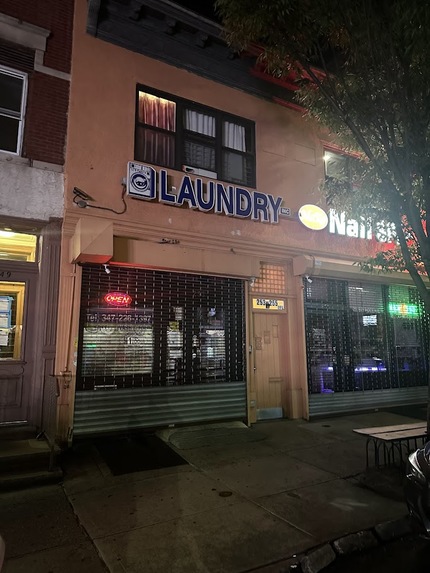
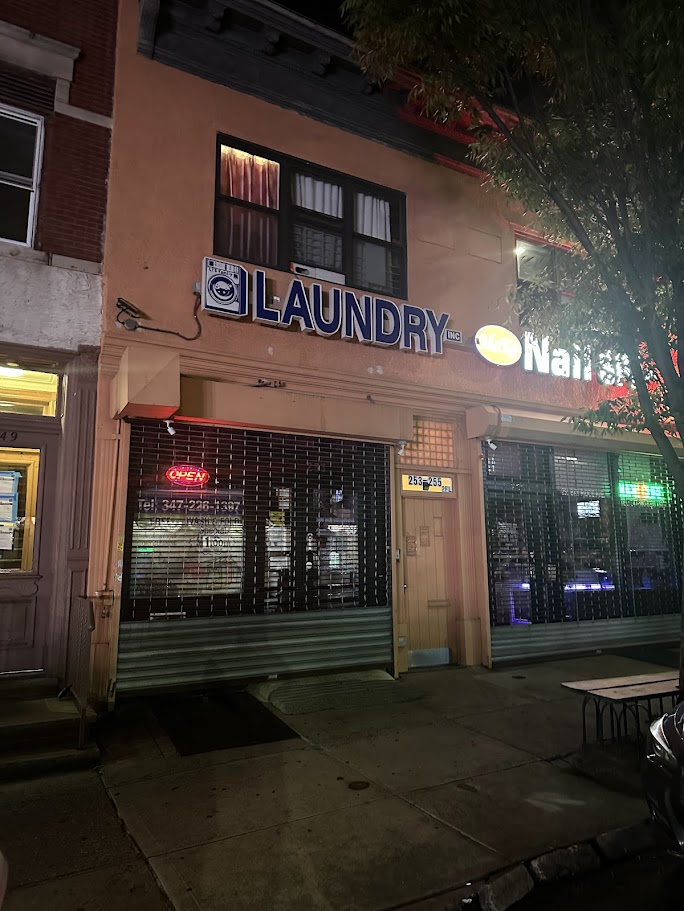
Li's Family Laundry, Bay Ridge Avenue, Brooklyn. Seven years old, family-owned, and now running an AI agent.
-
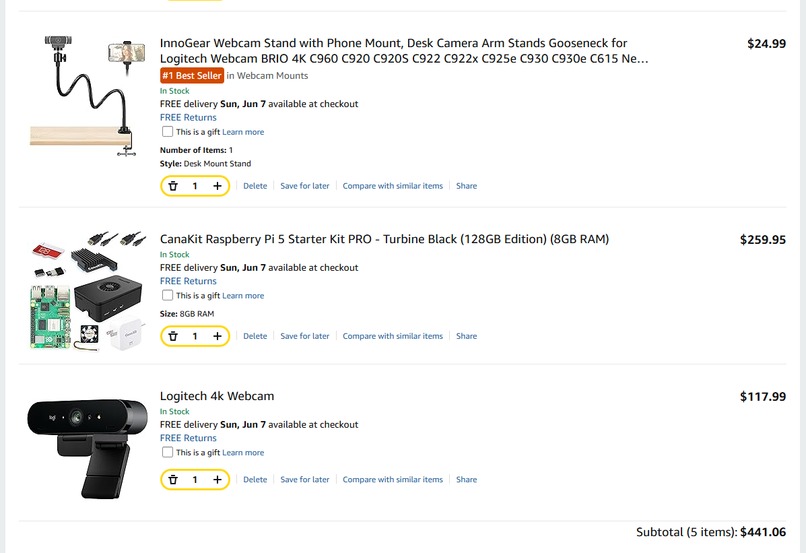
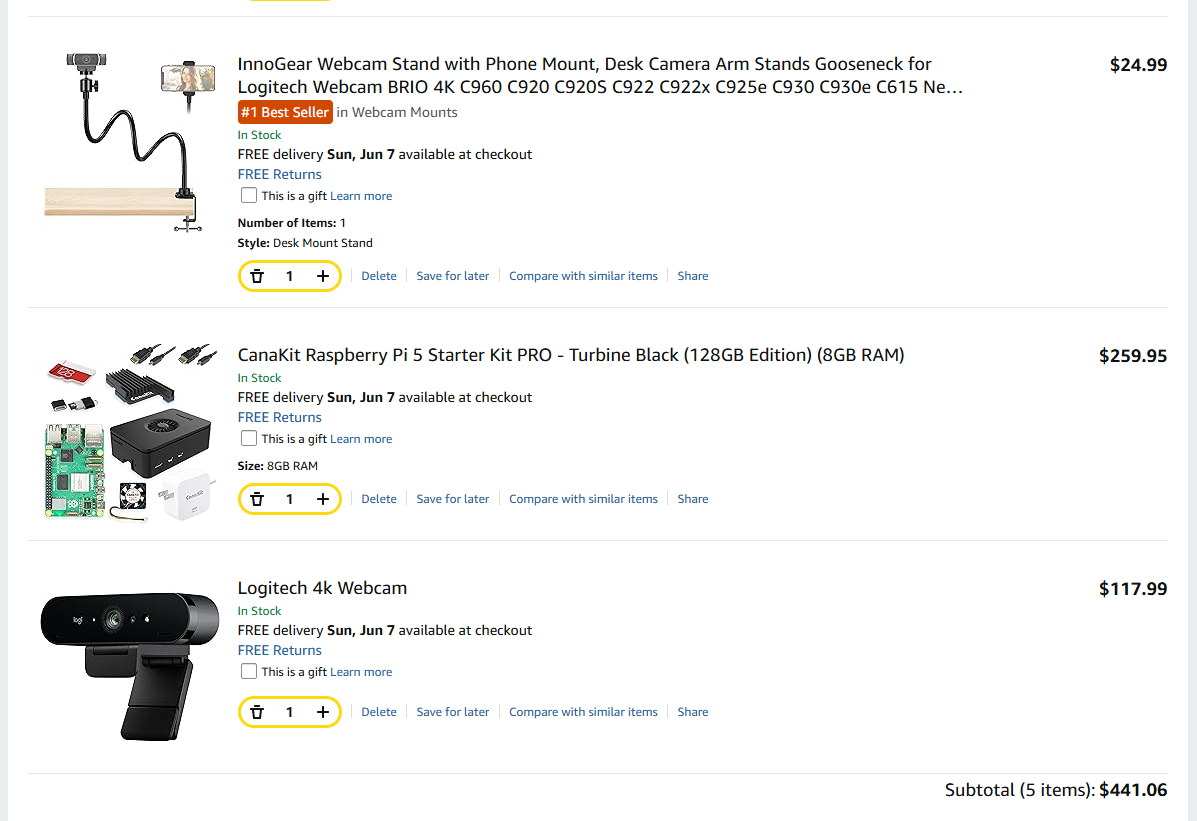
What it cost to start: $441.06 of hardware — a Raspberry Pi 5, a 4K webcam and a stand.
-
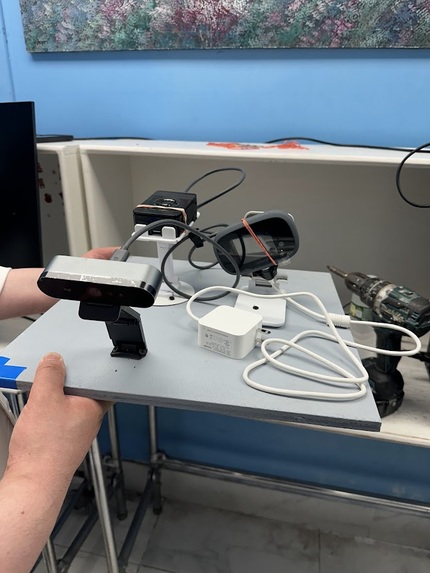
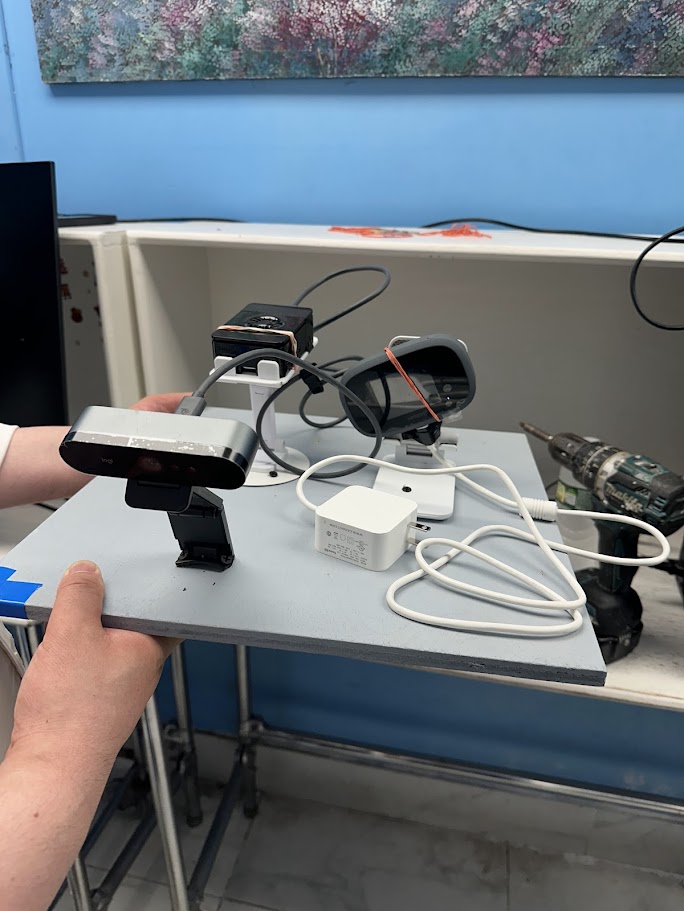
The entire sensing rig: a Logitech BRIO 4K and a PIR sensor on a board. Minutes to install, and it comes off without a trace.
-
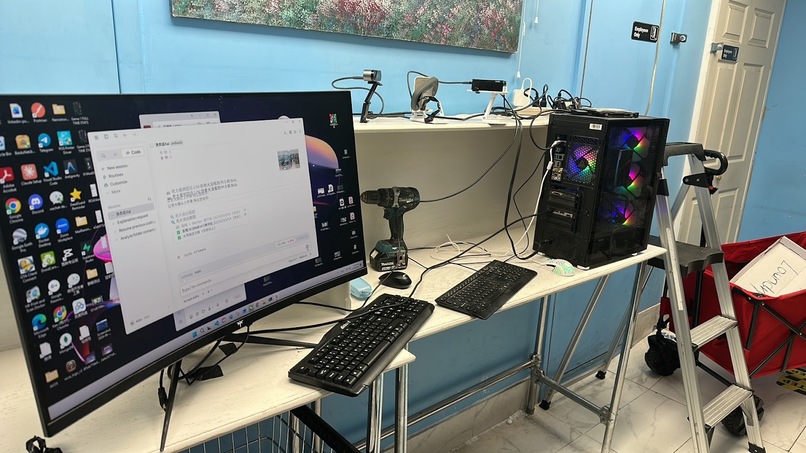
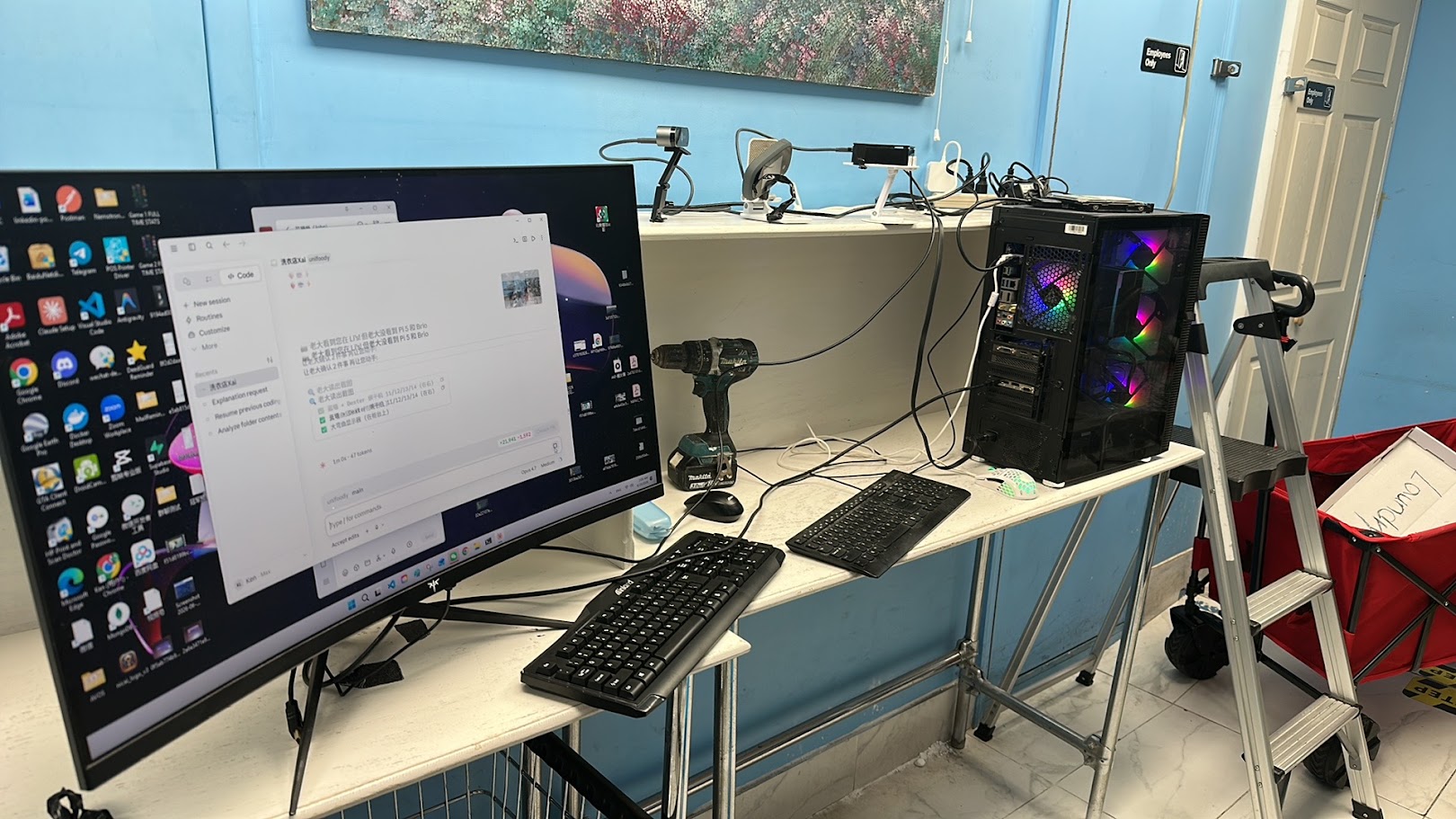
Install day at Li's — Claude Code on the ultrawide, the camera aimed down the machine bank, a drill and a ladder.
-
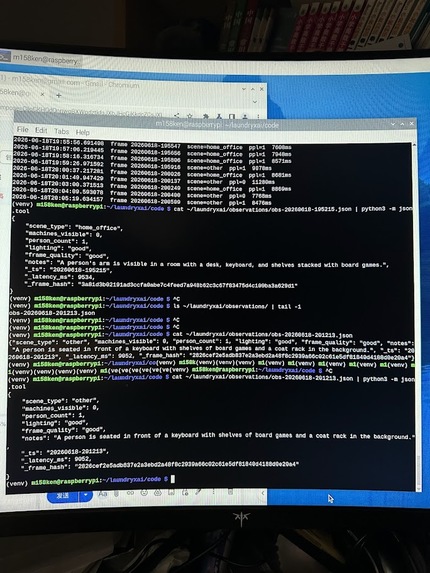
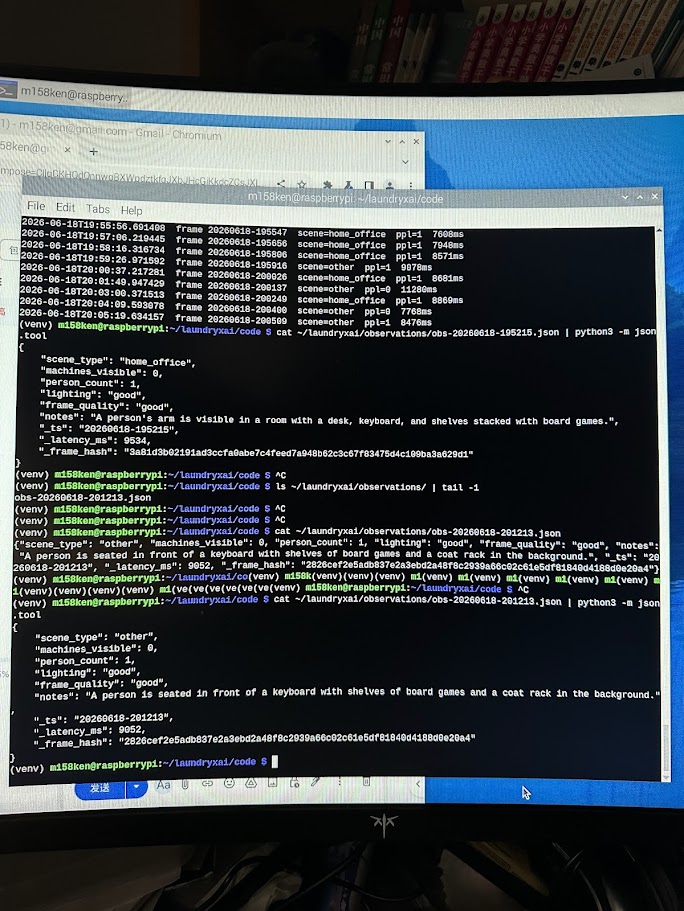
What the AI actually keeps: Gemini's structured read of each frame — scene, people, machines, latency, frame hash. The image is deleted.
-
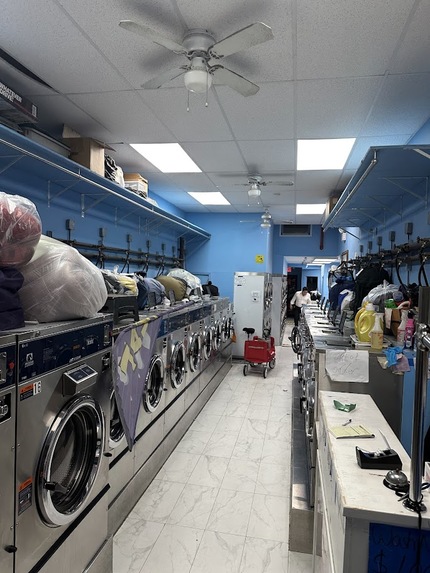
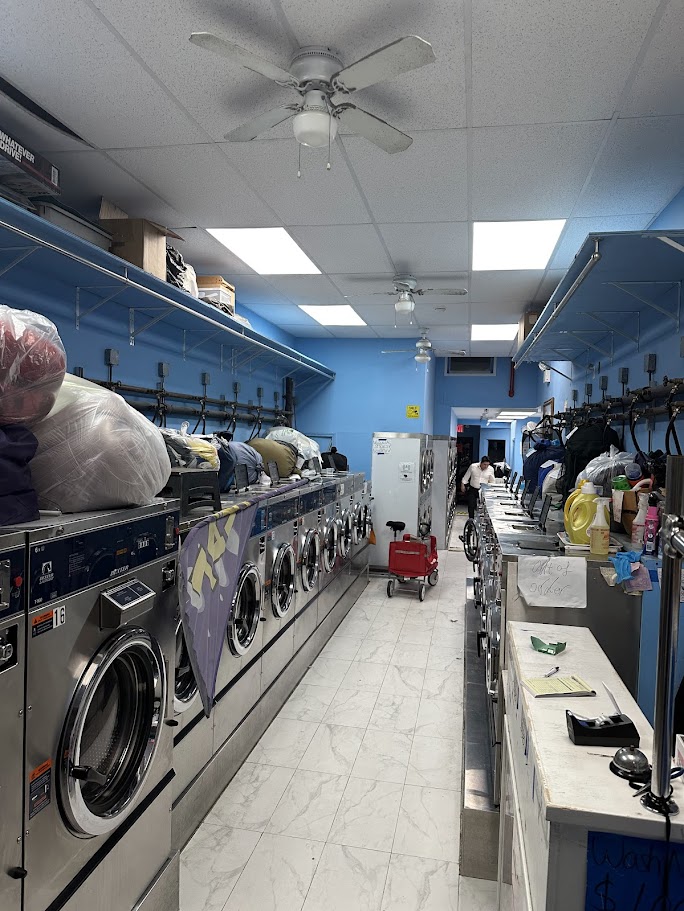
The floor the agent watches: about forty machines, one 4K camera, one frame a minute, all day.
-
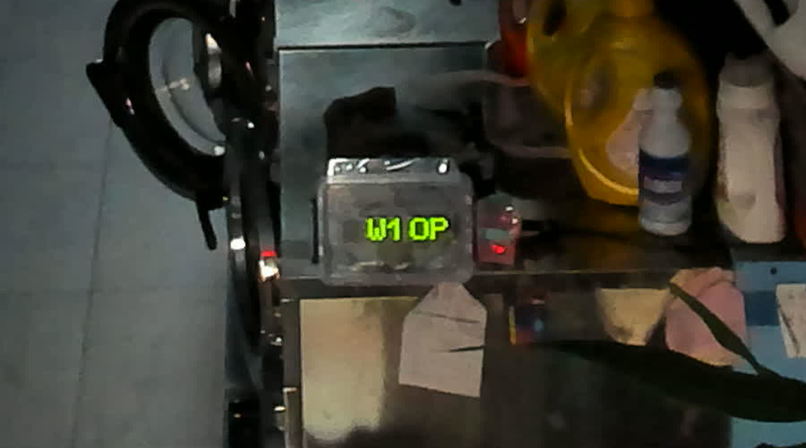
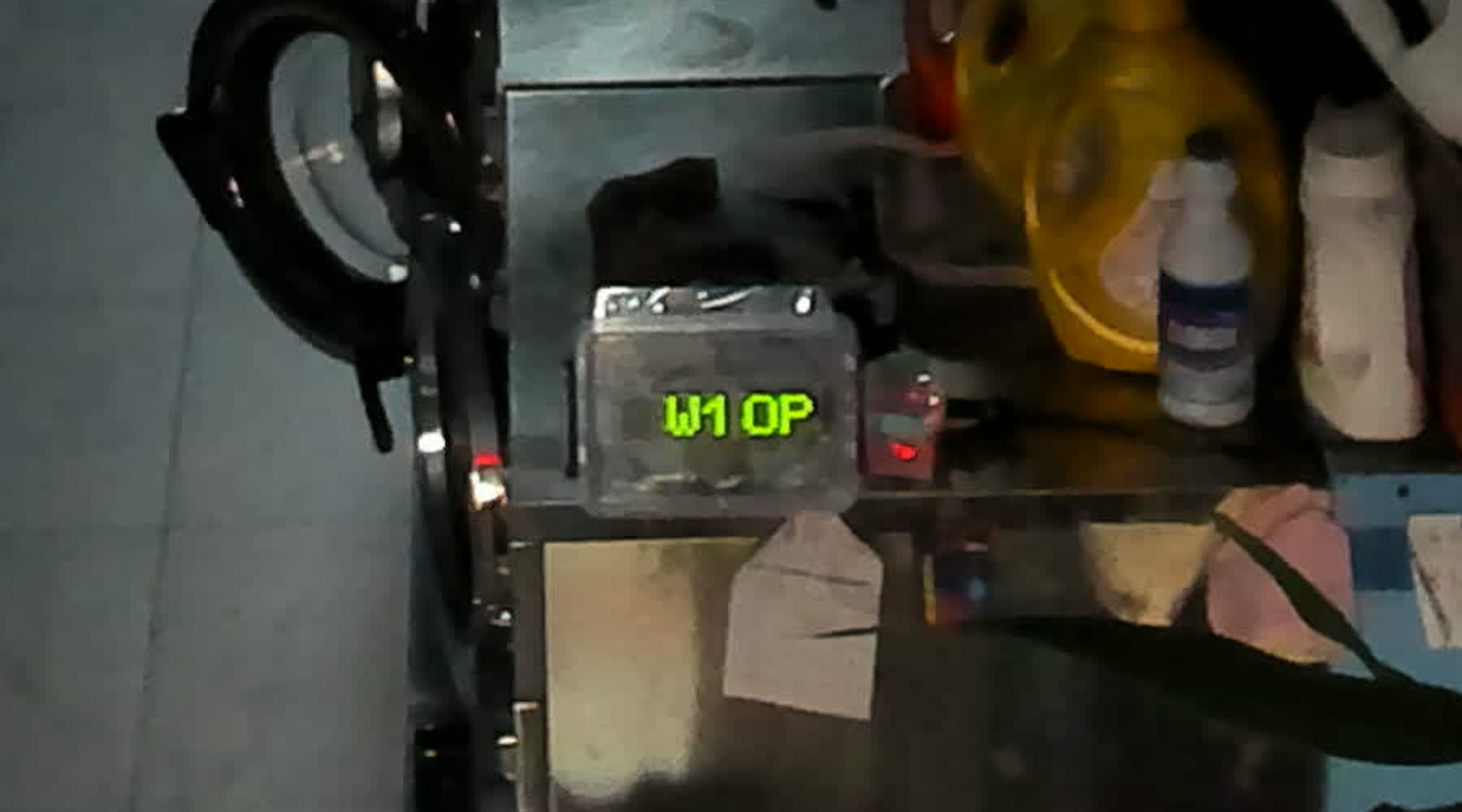
The store's own camera, zoomed by remote control from Queens, reading a machine's display: W1 OP(EN).
-
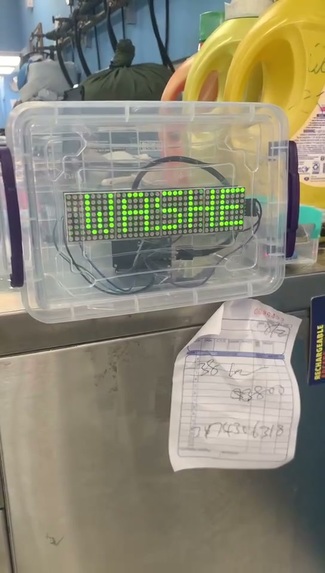
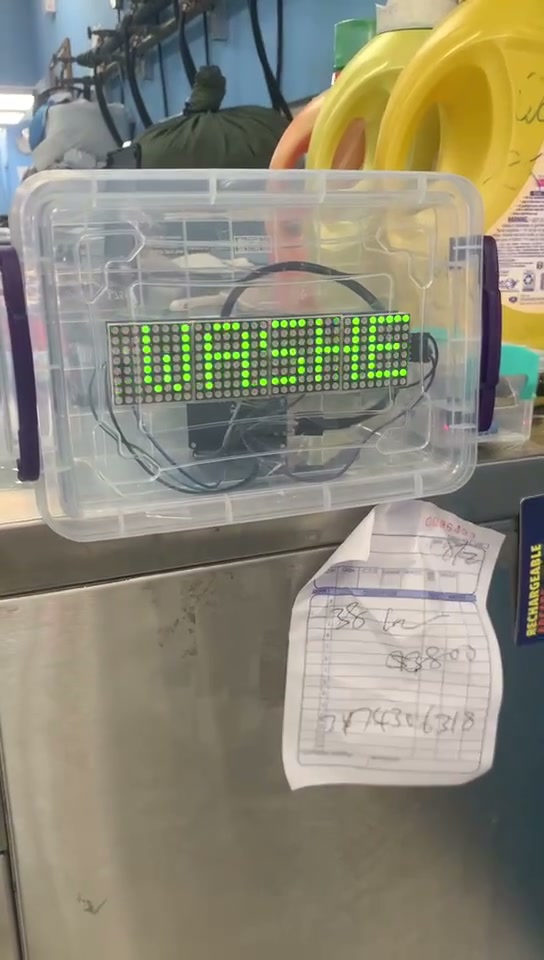
The LED matrix bolted to Washer #1, scrolling the reservation so anyone standing in front of it can see the machine is taken.
-
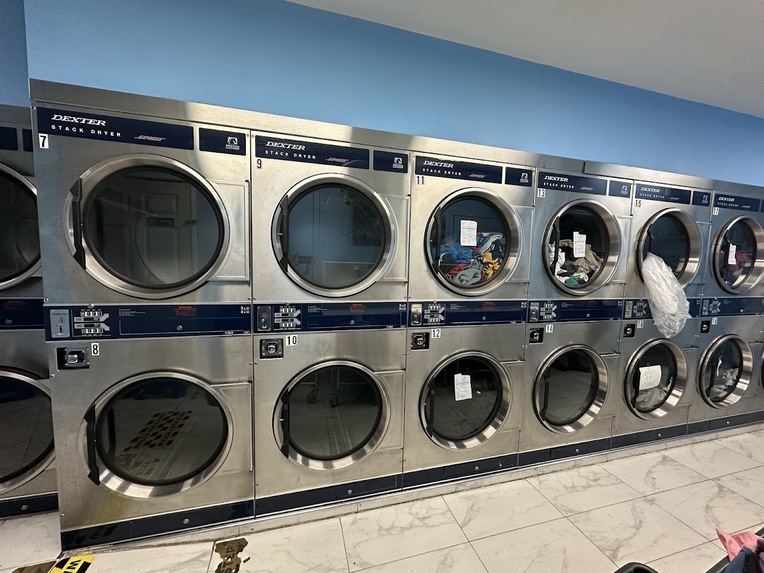
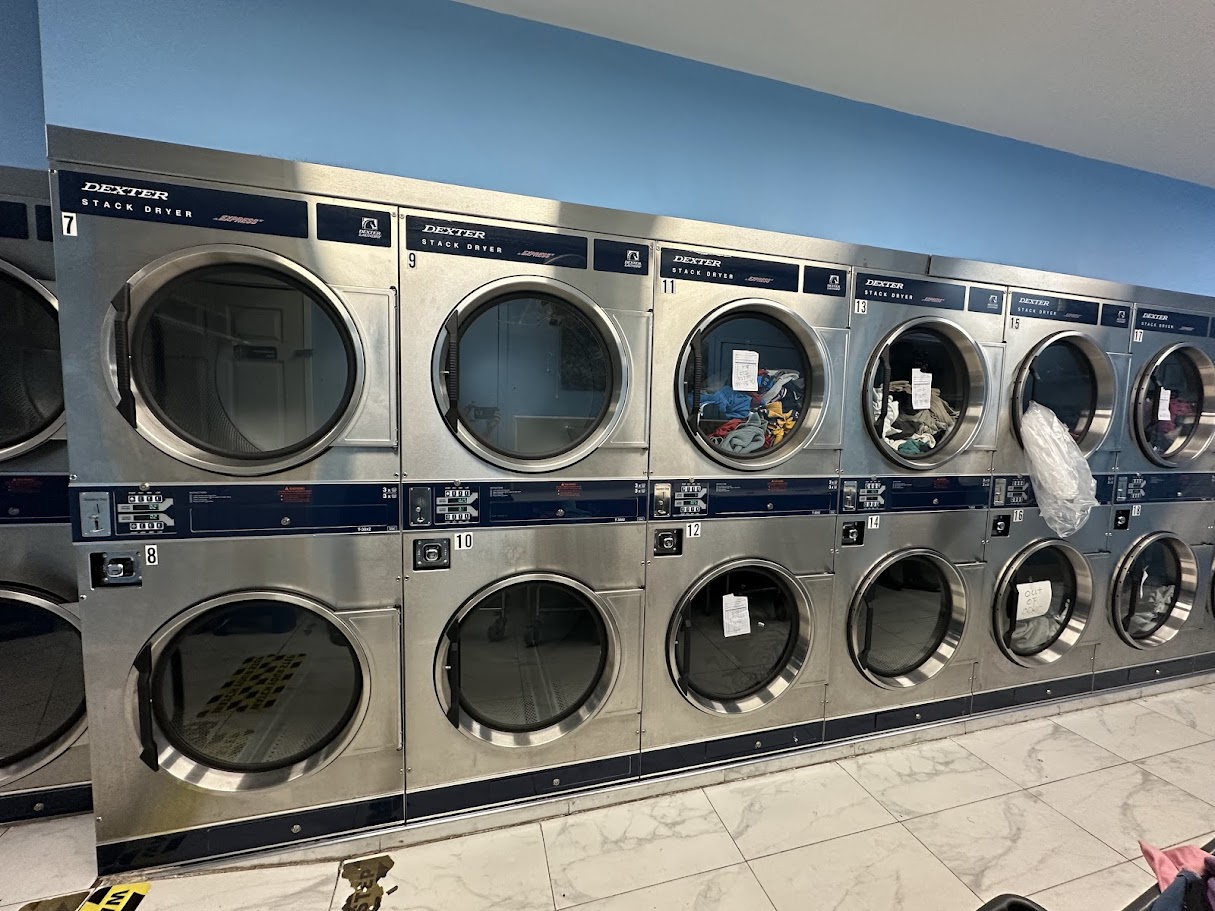
Dexter stack dryers, numbered by hand. Two control generations on one floor — which is why our sensors bolt on instead of wiring in.
-
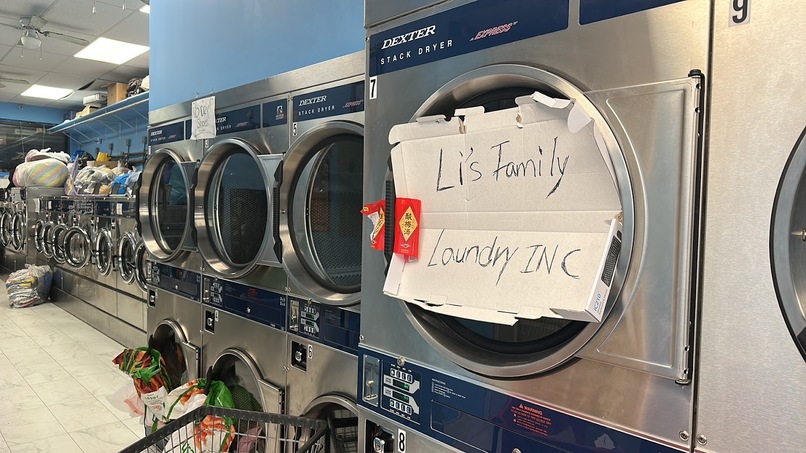
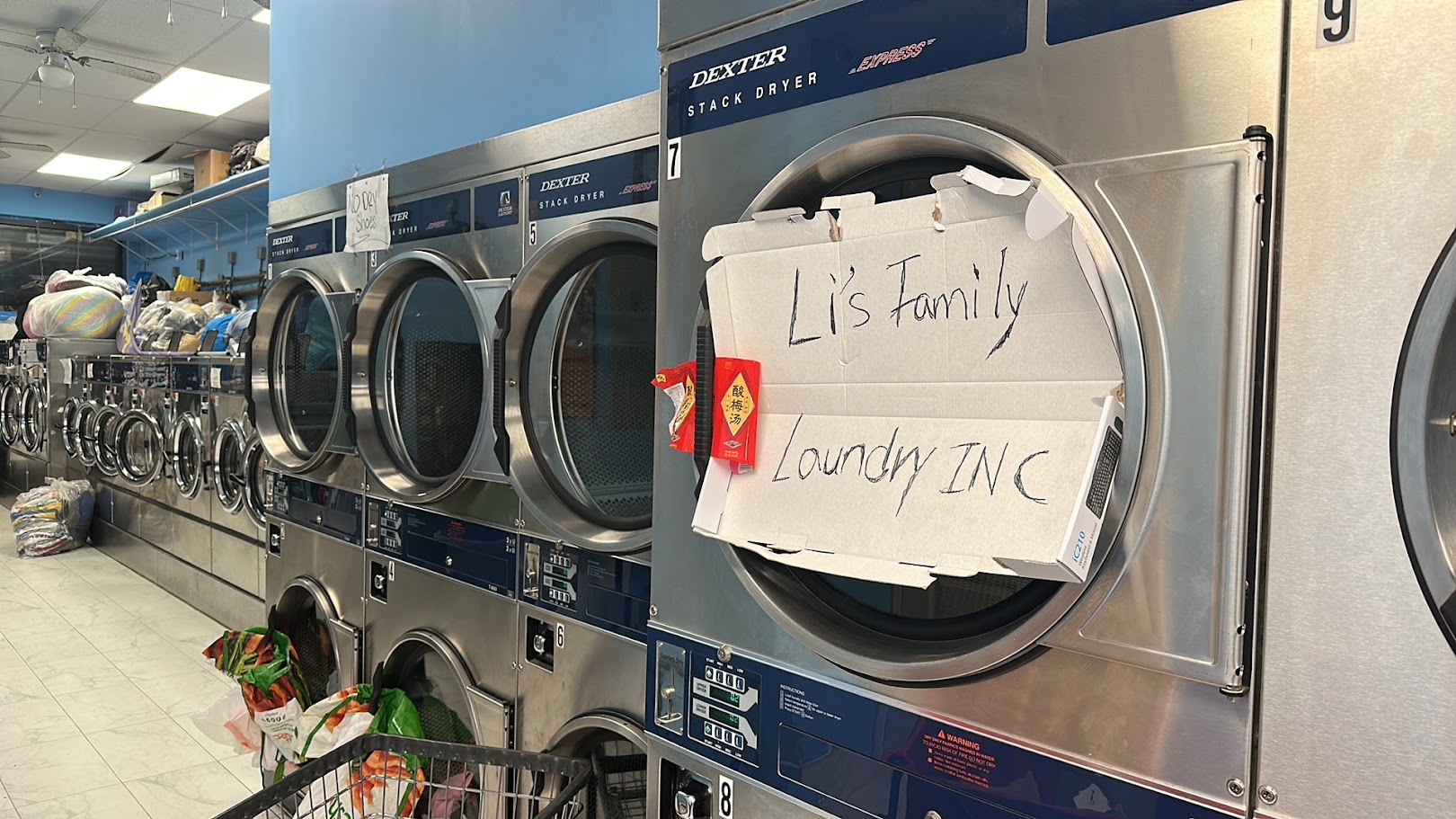
"Li's Family Loundry INC" — the owner's own handwriting, inside dryer #7.
-
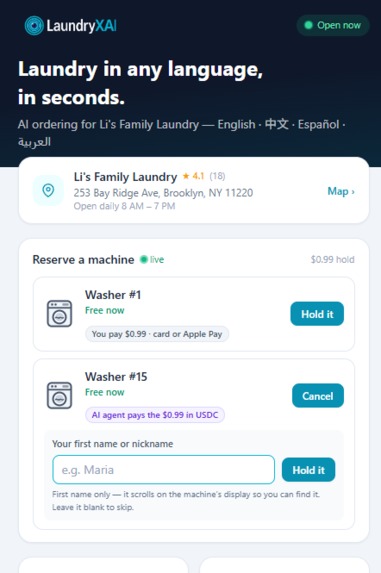
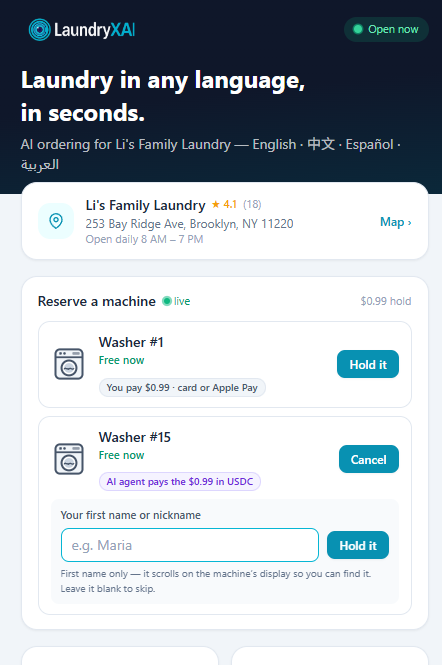
The customer app. Washer #1 settles by card; Washer #15 is paid by the agent in USDC. Same $0.99, two rails, side by side.
-
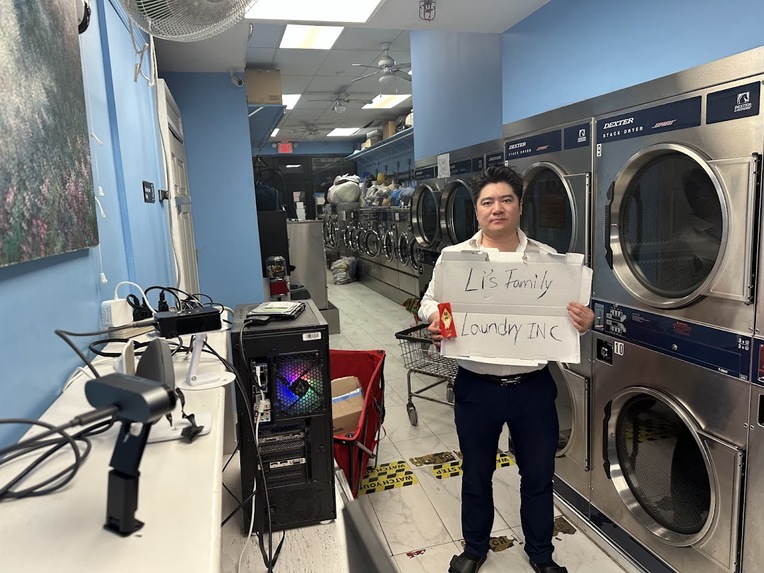
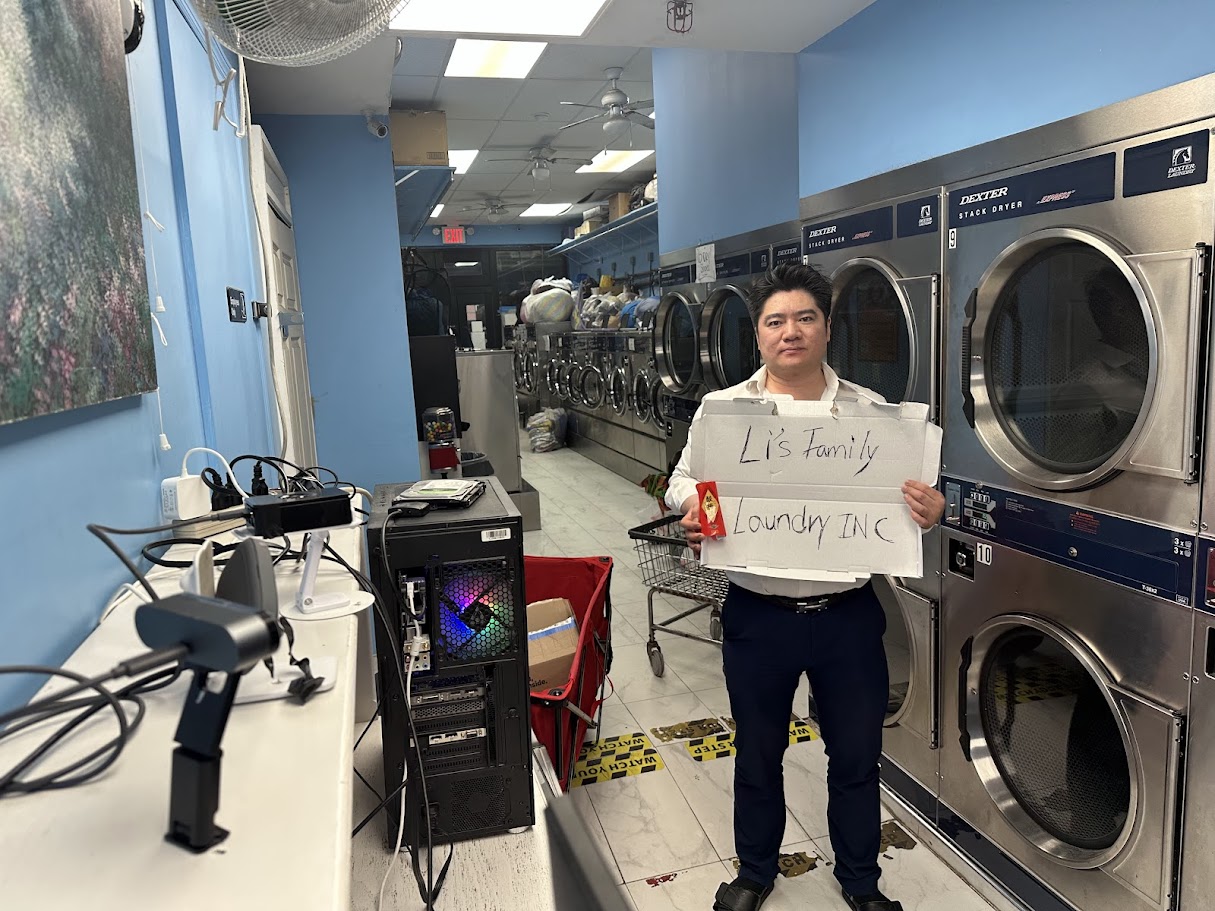
Ken Li, owner of Li's Family Laundry, Brooklyn. The Pi and 4K camera at left; the Dexter machines LaundryXAI watches at right.
Inspiration
In a 7-year-old family laundromat at 253 Bay Ridge Ave, Brooklyn, two 1-star reviews on Google Maps tell the same story.
Shanequa Clark wrote that a machine left her clothes unwashed. When she tried to explain, the worker was "using her translator" — and the conversation broke down into what she described as "rude and dismissive" treatment. The owner kept her money.
Maribel Gutierrez wrote: "the woman who is there does not help you, she does not know English, and the owner only knows how to agree with her."
Both reviews trace to the same root cause: the staff doesn't speak English well, the customers don't speak the staff's language, and when something goes wrong, no one can fix it through conversation. A 5-star review from the same shop — "family-owned-and-operated… affordable drop-off/pickup, they also will pick up and deliver to your home" — confirms the underlying business is genuinely loved when communication works.
The shop is Li's Family Laundry Inc, owned 100% by Ken Li. The neighborhood is Bay Ridge / Sunset Park 11220 — one of the most linguistically diverse zip codes in New York, serving Chinese, Spanish, and Arabic speakers. Language isn't a side issue for this business; it's the failure mode that costs it customers, revenue, and its rating.
LaundryXAI is the AI agent layer we deployed on top of this 7-year-old business to fix that failure mode — and to prove the same pattern can work for small service businesses everywhere.
Then the store taught us a second lesson. Once customers could ask questions in their own language, the question they actually asked was the one nobody could answer: which machine is free right now? On a Saturday afternoon a customer carries a basket down a row of forty machines, guesses, and sometimes leaves. Nobody in the store knew either — not the staff, not the owner. The machines had never been asked.
What it does
LaundryXAI is an AI agent running in one real laundromat, doing three things a laundromat has never been able to do.
1. It knows which machines are actually free. A 4K camera on the ceiling and vibration sensors mounted on the machines themselves report continuously. The agent reconciles the two — one is a vision model that can hallucinate, the other a sensor that can be fooled by a neighbouring machine's spin cycle — and states only what both can support.
2. It sells certainty. A customer opens laundryxai.com/app in English, 中文, Español or العربية and holds a specific washer for $0.99. Fifteen minutes, one named machine, guaranteed — and the machine itself announces it: an LED matrix bolted to the washer scrolls the reservation so anyone standing in front of it can see it is spoken for. A hold nobody can see is just a database row.
3. It pays for itself. Two identical washers run side by side as a controlled experiment. W1 settles through Stripe, the way anything else does — a human taps a checkout button. W15 is settled by the agent from its own Circle wallet on Base: it sees a hold with nothing paid against it and sends USDC, with no checkout, no signature, and nobody clicking anything.
Anyone can watch it work at laundryxai.com/live — one frame a minute, what the model sees, and the day assembled into a story.
Business model
The store pays nothing, and earns half.
Ken had already been offered a connected-machine product for his washers and turned it down. His reasons, in his words: it cost too much, and it needed someone extra to run it. That is the real shape of AI adoption in small business — not ignorance, not fear, but an owner who has done the arithmetic and concluded it isn't worth it. Any model that asks a laundromat for money or labour up front loses before it starts.
So we ask for neither. No subscription, no setup fee, no staff time. The customer pays $0.99 to hold a machine, and half of it is the store's. A store that has never bought software now has a new line of revenue rather than a new expense.
On the agentic rail, the store's half arrives in seconds. The agent transfers the owner's $0.495 to his own wallet moments after the customer taps hold — no invoice, no statement, no payout schedule, no month-end reconciliation. On the card rail the same split is a monthly settlement. That difference is not a detail; for a business that runs on daily cash it is the difference between a share and a promise.
Why this cannot run on card rails. At $0.99, Stripe's fee is $0.33 — a third of the payment, listed on the charge itself. We are not paying it today: Stripe waived processing fees on our first $100,000 of volume until October, and Google Cloud is covered by a startup credit. We say so plainly, because both are temporary and neither is an economic model. When they lapse, the arithmetic is what is left — and a third of a sub-dollar fee is why this price point has never existed in this industry. The same settlement on Base cost a fraction of a cent, with the network fee sponsored by the paymaster and nothing waived. Stablecoin settlement is not a feature bolted onto this business; it is what lets the business exist without a subsidy. We run both rails in the same store, on two identical washers, to measure that rather than assert it.
What it costs us. Google Cloud for the pilot runs about $115 a month at list price, of which $71 is Gemini inference — one frame a minute from the store camera plus every customer conversation. Actual cash cost is about $6 a month; a startup credit covers the rest, with $2,345 remaining and valid to November 2027. The shape matters more than the number: almost all of it is per-store inference, not fixed infrastructure. Adding a second store does not mean buying a second database.
Where we actually are. One store, two instrumented machines, and as of 2026-08-13 exactly one reservation paid for by a member of the public. That is not a business yet. It is the first evidence that what we are selling is something a real customer will actually buy — and he was not a passer-by, he was one of the store's regulars.
How we built it
The constraint that shaped everything. Ken would not let us open a machine. Each one is a five-figure asset, and an owner who has never bought software is not about to let a stranger inside it — nor should he. So nothing we built touches a machine's electronics: no wiring into the controller, no warranty voided, no electrician, no permit. A sensor and a display go on the outside and come off without a trace.
That was a concession at the time. It is now the reason this can go into any laundromat in the country. Li's floor is Dexter — a mix of C-Series and X-Series. Those are two entirely different control platforms: the C-Series runs three separate microcontroller firmwares, the X-Series a single 173 MB system image, and by Dexter's own published update instructions each one is updated by walking to the machine with a USB stick and pressing buttons on its front panel. Any approach that integrates with the machine has to solve that per generation, per brand, per machine, and can fail mid-upgrade on a machine that earns money. A vibration sensor does not care what firmware is inside.
Eyes. A Raspberry Pi 5 with a Logitech BRIO 4K in the store. One frame a minute goes to Gemini 2.5 Flash, which returns a structured read — machines visible, running, idle, people present. The frame is then deleted. Pixels never reach our servers; we store a SHA-256 hash and the model's JSON. A camera in a laundromat is a surveillance risk, and the only real answer is not to keep the pictures.
Touch. ESP32 boards with SW-420 vibration sensors and MAX7219 LED matrices, mounted on the machines. The board decides locally — forty seconds of sustained vibration before it will say "running" — and reports its conclusion, not raw data. When it loses the network for 90 seconds it shows only the machine label and stops claiming anything at all.
Brain. Next.js on Cloud Run, Cloud SQL for state, Cloud Logging for the audit trail. One Gemini call turns a customer's sentence, in any language, into an intent, a machine and a reply.
Money. Circle Agent Stack — an agent wallet on Base mainnet under a spending policy of 100 USDC per month that the agent cannot raise without a human OTP. Settlement runs beside the reservation path, never inside it, so a payment failure can never cost a customer their machine. Every payment carries a deterministic UUIDv5 derived from the reservation id, so a crash between paying and recording can never pay twice.
Challenges we ran into
The camera invented evidence. Gemini kept citing "a wall clock reading 19:32" as proof the store was shut — during business hours. There is no clock. It is a convex security mirror on the far wall reflecting a washer's own display back at the lens. The model was using its own hallucination to override the store's opening hours. Store state now comes from the backend clock, and the model is forbidden to read a time off a picture.
We were publishing numbers that weren't true. Our own dashboard reported 291 machine starts in one day. A single flickering frame — zero washers running, then twelve, then zero again inside a minute, in an empty store before opening — was being counted as twelve starts. It also claimed more frames containing a person than the store had been open. A reading must now persist across three frames before we believe it. 291 became 0 — an honest zero, which also exposed a real capability gap we would rather know about.
Then we were wrong about being wrong. Our corroboration logic refuted any machine start outside opening hours on the grounds that nobody could be there. It was refuting the founders installing boards at 02:30. Closed is not empty. Only the camera may refute a reading now, never the clock.
The sensor is impatient. A washer is nearly still during soak and drain, so a real 30-minute cycle registers as several 5–9 minute fragments. Releasing the machine on the first quiet stretch would tell a customer a machine is free while someone's laundry is still turning — the worst error available to us. The server now latches occupancy to the estimated cycle end.
Two silent bugs nearly cost us the payment thesis. The agent could not pay on Windows at all: Node refuses to spawn npm's .cmd shim, and Circle rejects an idempotency key that isn't a UUID. Both failed quietly — every dashboard looked fine while the agent never paid. They surfaced only because we fired a real hold at a real machine.
And the hardest problem had nothing to do with code. Ken was not impressed, and he had good reasons. Nothing we said moved him. What moved him was the whole thing running — cameras, sensors, displays, payments — without him hiring anyone or paying a subscription he could feel.
Accomplishments that we're proud of
- A regular paid. On 2026-08-13 a regular customer of the store — a man we had never met, and neither us nor the owner — opened the app on his own phone, held Washer #1 and paid $0.99. He had never seen a laundromat do this, thought it was worth trying, and liked what it did. Corroborated three ways: the Stripe charge, the database row (capture_state = captured, 10:36 ET), and the machine's own display.
- The agent settled a reservation on its own, on Base mainnet, in 34 seconds, with no human in the loop — verifiable on Basescan and independently on Blockscout, not just in our logs.
- 60,000+ camera observations from a real trading floor, and not one stored image.
- We made our own numbers smaller and published why.
- It is all open: MIT, with a reviewer's guide pointing at the three files that matter.
Two months ago the owner would not let us open a machine. On the day one of his own regulars paid, he sent one message: "我继续叫客人." — I'll keep bringing customers over.
That sentence is the only piece of evidence in this submission we could not have produced ourselves.
What we learned
The barrier is adoption, not capability. Every part of this could have been built two years ago. What cannot be bought is an owner who lets you touch his machines. That is the scarcest input in this category, and no amount of model quality substitutes for it.
Capital cost decides, not features. Instrumenting a machine costs about $20 in parts — a $6 microcontroller, a one-dollar vibration sensor, an LED matrix and a case. The retrofit quoted to this owner for comparable visibility was around $1,300 per machine. On a forty-machine floor that is $800 against $52,000. That number, not any demo, is what decides whether a family business can say yes.
At $0.99, the card rail does not work. A third of the fee disappears into it. That is not ideology, it is arithmetic — and it is why this price point has never existed in this industry before. We learned something about our own numbers too: both of our rails are currently subsidised — Stripe waived our processing fees to October, Google Cloud is on a startup credit to 2027 — and it would have been easy to quote the flattering half of each. We report the list price and the cash price side by side instead, because a business model that only works while someone else is paying is not a business model.
A single frame is not evidence. Neither is a single sensor. Two noisy instruments that disagree are worth more than one confident narrator — but only if every verdict carries the sentence that justifies it, traceable back to the raw observation.
What's next for LaundryXAI and SMBizXAI
More machines in this store, then more stores. Forty machines, two instrumented — the arithmetic of the pilot is deliberately small so every number in it can be checked.
A prepaid balance, so the customer's own money funds the agent's wallet: they top up with a card, the agent settles in USDC, and they never download a wallet or learn the word "stablecoin."
SMBizXAI is the same three-agent pattern pointed at the next vertical. USDC will not reach ordinary people by convincing them to become crypto users. It reaches them through the trades they already pay for every week — a haircut, a plumber, a loaf of bread, a load of laundry — where the settlement underneath simply happens to be a stablecoin, and nobody has to know.
Built With
- ai-agents
- arduino
- base
- circle
- cloud-logging
- cloud-sql
- computer-vision
- esp32
- gemini
- google-cloud-run
- iot
- next.js
- postgresql
- raspberry-pi
- small-business
- stripe
- tailscale
- typescript
- usdc
