-
-
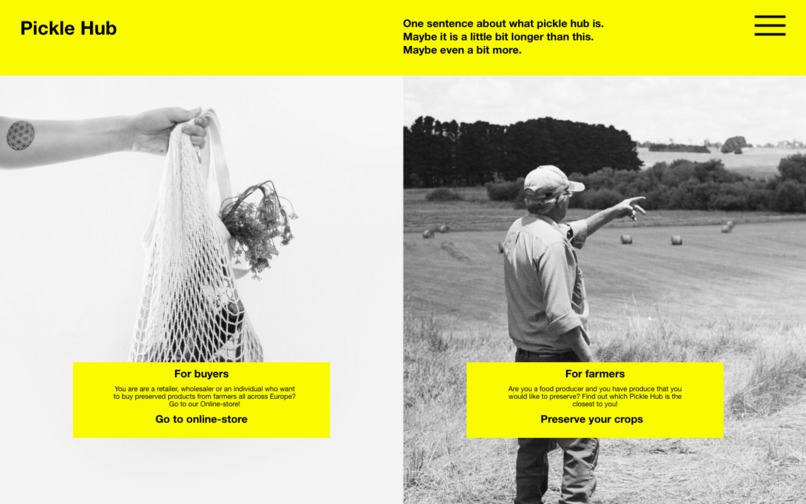
Pickle Hub - web-based platform
-
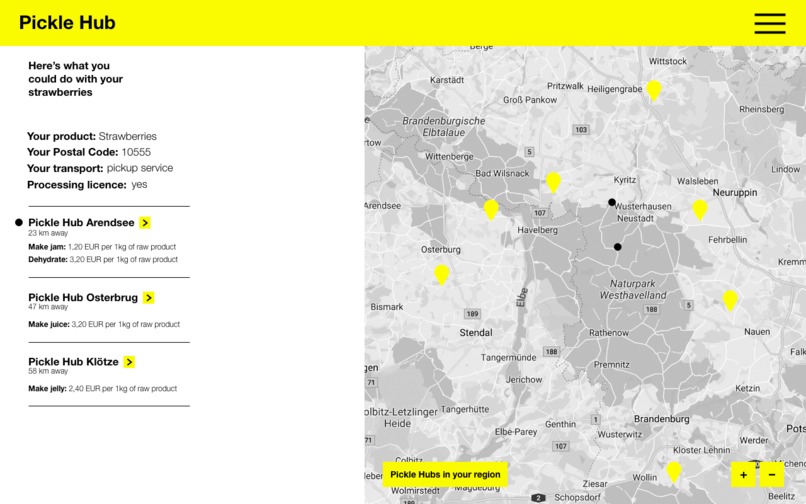
Pickle Hubs for food processing in one region
-
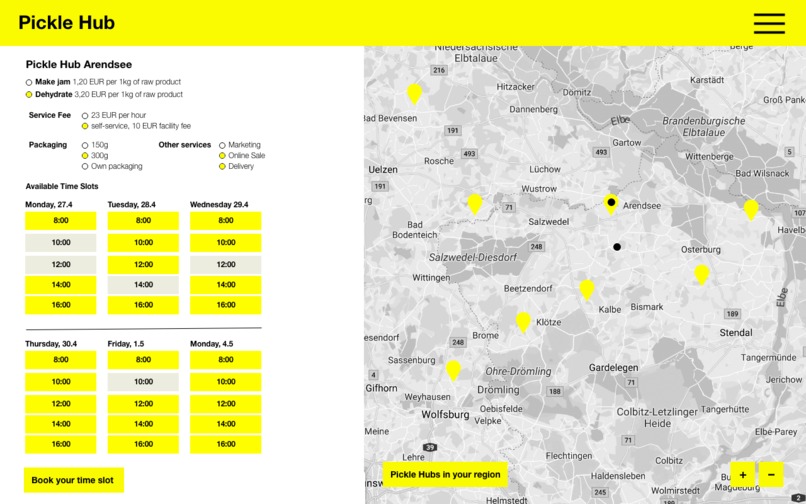
Options for food processing
-
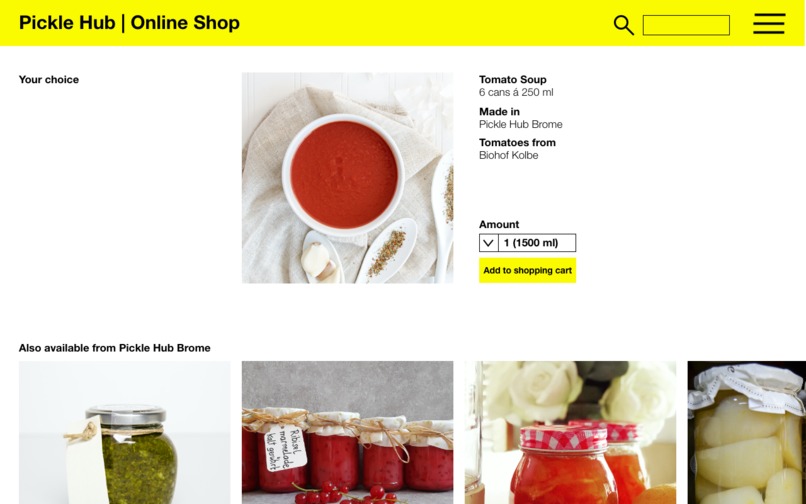
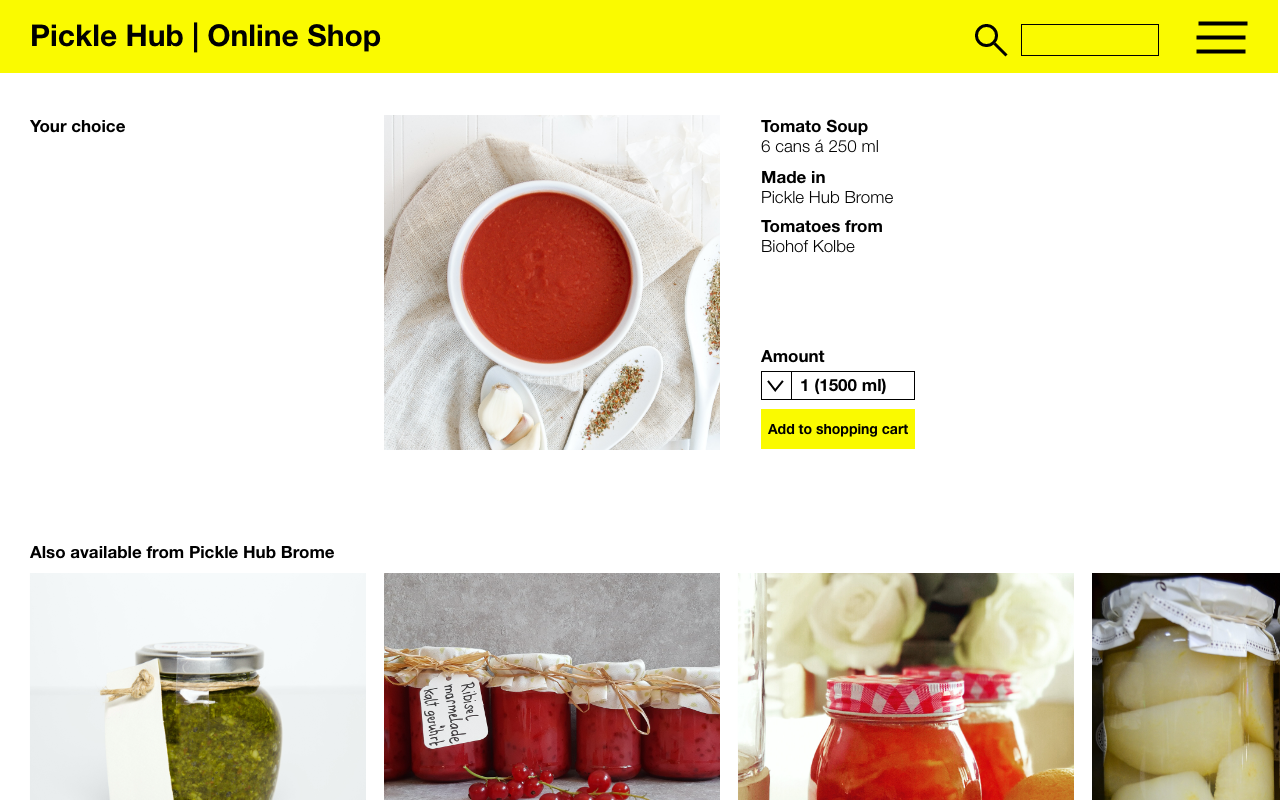
Pickle Hub online shop for preserved food in bulk
-
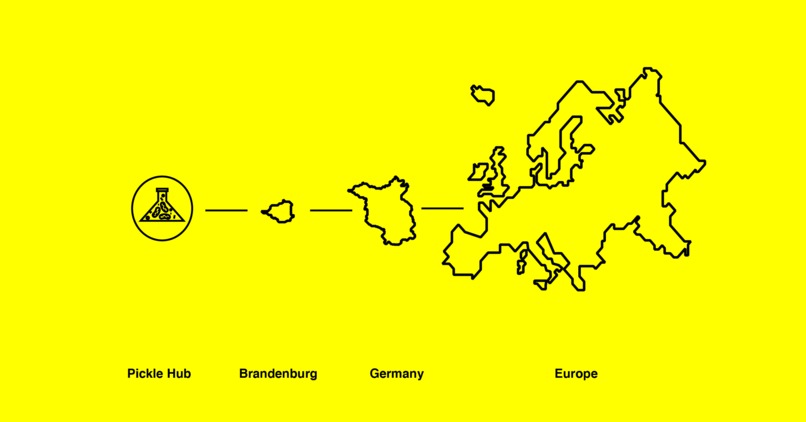
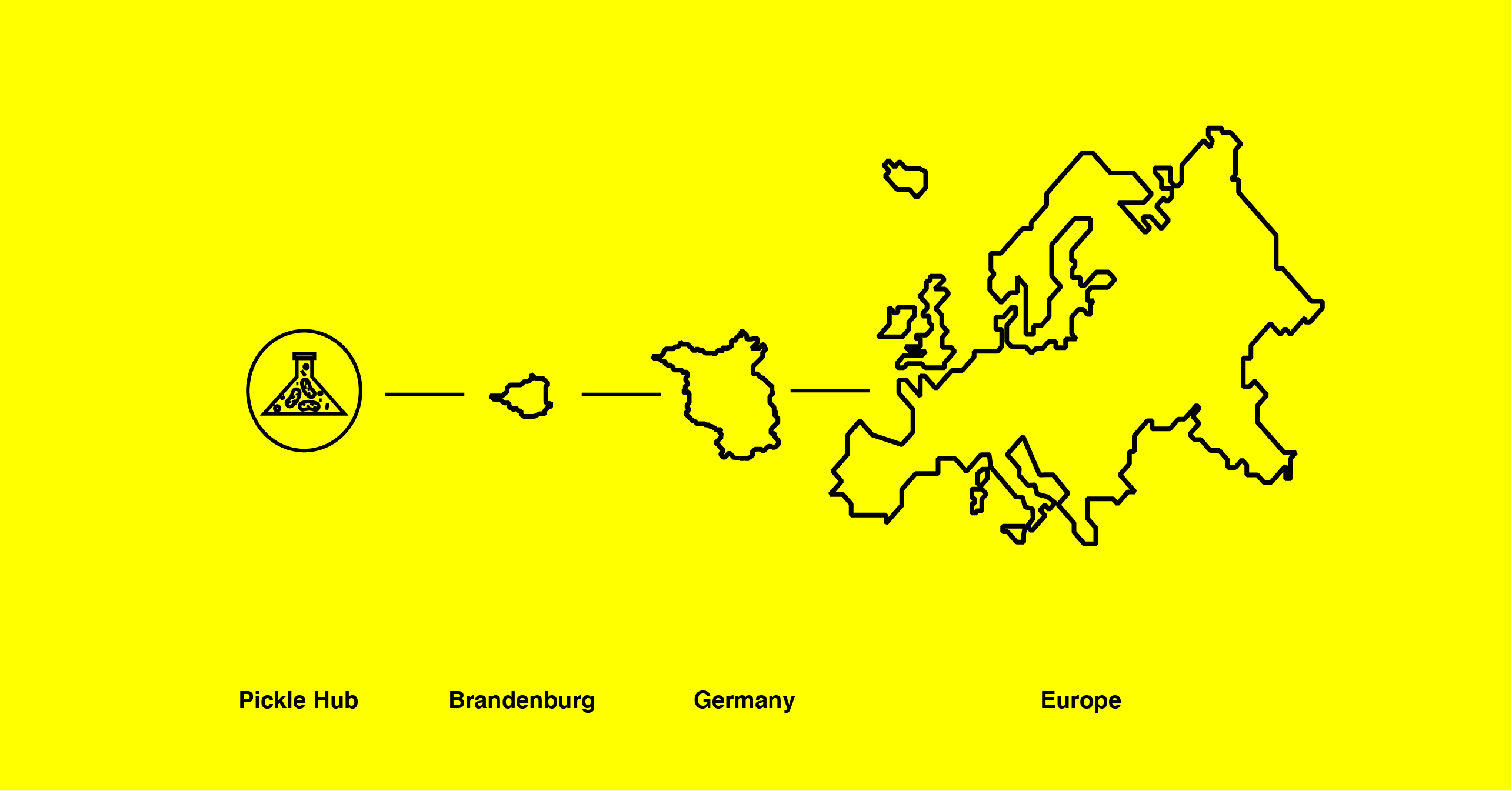
Pickle Hubs all over Europe
PROBLEM/INSPIRATION
Times of crisis, no matter whether financial or a pandemic, show which systems are not resilient. Covid-19 made us realize that our food system is particularly vulnerable. It depends on global trade, cheap temporary workers and rigid supply chains. While the need for food did not diminish during the lockdowns, the markets shifted from catering and gastronomy towards retail and home delivery. As a result food gets wasted rather than reaching the customer because supply chains are not interconnected to be able to quickly shift towards a needs oriented production and distribution of food. On the civil level a lack of visible food availability sparks panicking and stockpiling which hinders fair distribution of food amongst consumers.
How might we build resilient food supply chains that are able to quickly adapt to unforeseen changes?
THE SOLUTION
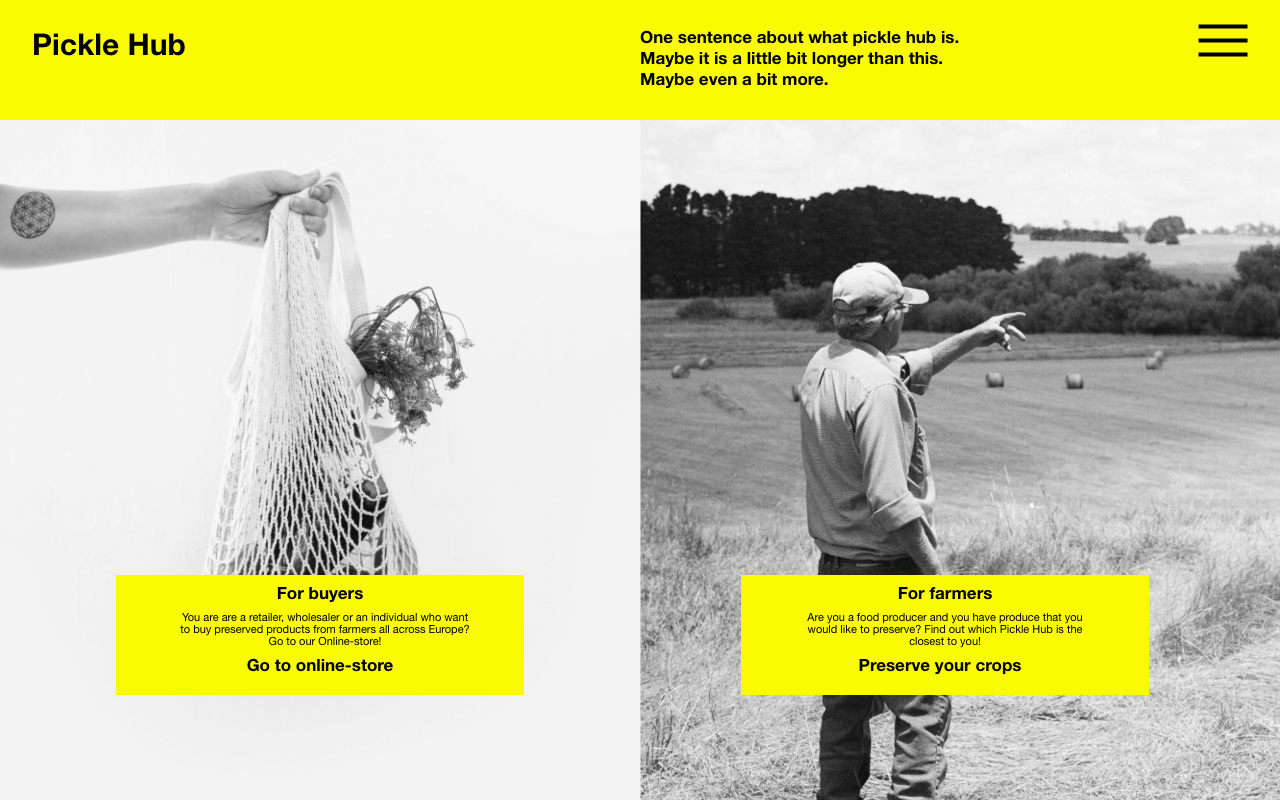
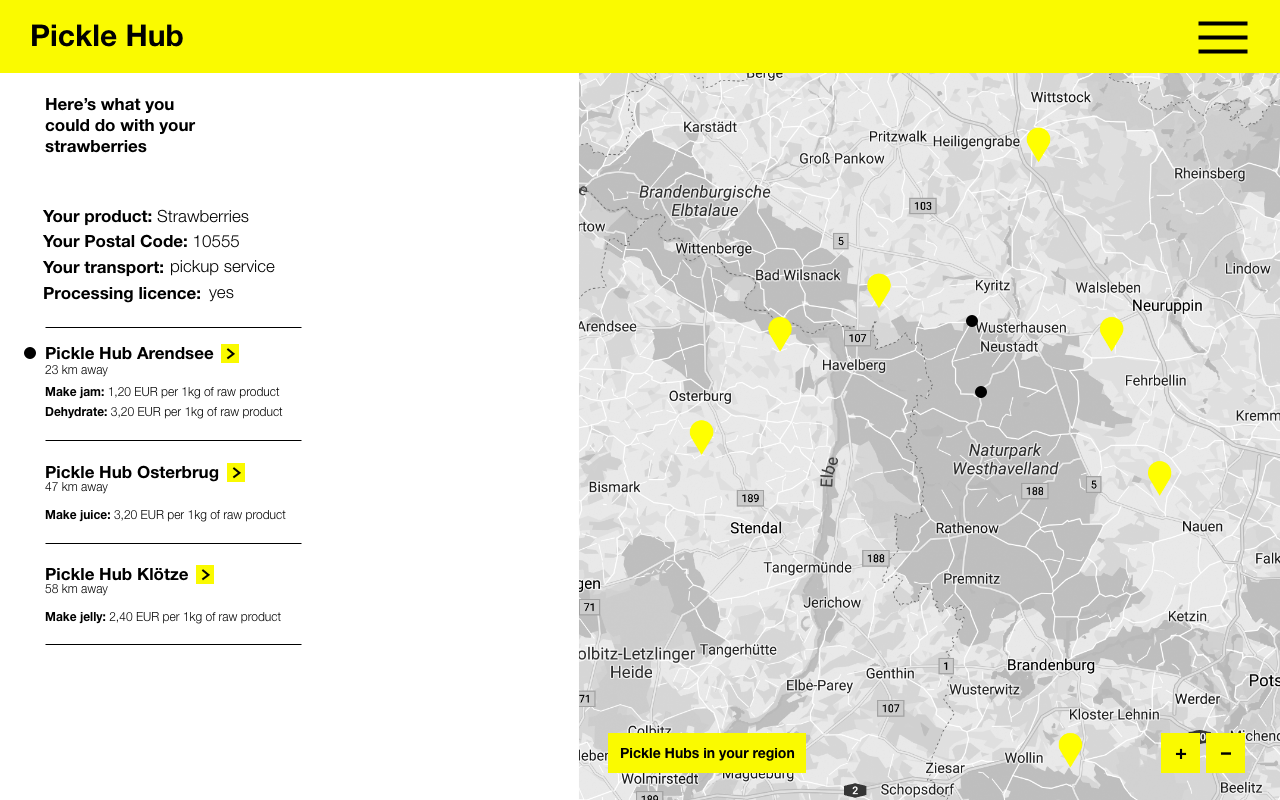
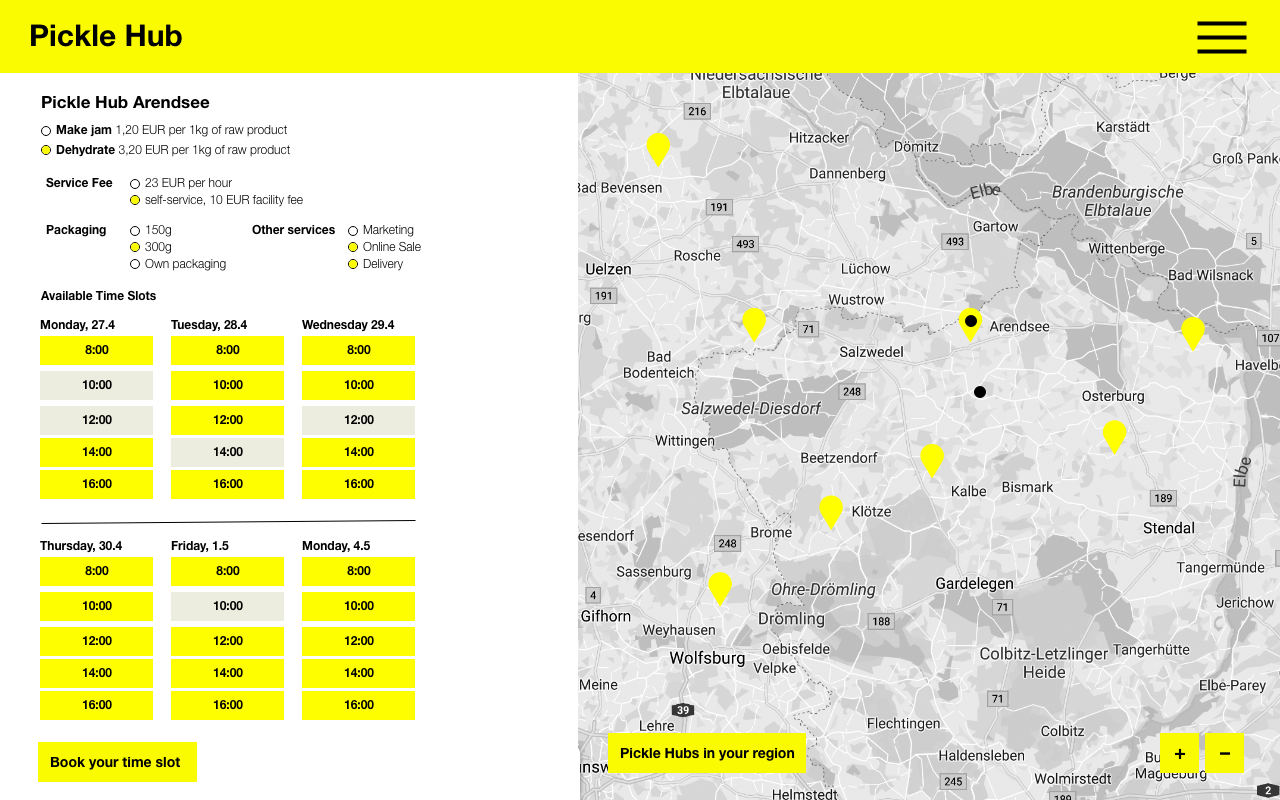
The solution “Pickle Hub” is a network of physical food processing labs - like Fab Labs, just for food - spread across European countries. The fresh products that are being processed avoid an end in the bin and at the same time a country’s food self-sufficiency can be enhanced through long time preservation of existing goods. Depending on the existing infrastructure of a region, either a new Pickle Hub could be established or existing processing plants can be shared when not in use by their owner. It can also be a combined infrastructure as long as all needed processing methods like dehydration, straining, cutting, pickling, fermenting, juice pressing, boiling (jam, soup) or packaging in that particular region are present. A farmer can easily find the processing facilities close to his/her farm through a web-based platform by entering his/her location and the type of product he/she wants to get processed. The System makes suggestions for processing according to available facilities and market demand. Therewith, it allows farmers to add value to their produce that can’t be sold fresh, for example due to shifted market needs. The regional aspect allows for shorter production chains, stong regional economies and therefore carbon footprint can be reduced and the farmer’s income secured. The Pickle Hub takes on the responsibility to advise the farmer on possible processing methods, to control hygiene standards and to optionally do the marketing and selling for the farmer. The products can make use of Pickle Hub’s branding that is adapted to the various regions while the farmer is always mentioned on the packaging. A second connected platform is an online shop where the processed products are sold to anyone who wants to buy small to large scale bulk. The preserved products are categorised by region. However, the buyer can choose to buy from one region, or from other national and European regions. The setup of the hubs such as the platform itself are conceptualised as a blueprint that can be used in any country and adapted to regional conditions. Furthermore, the operators of the hubs are all connected through an instant messaging provider and therefore can exchange knowledge to constantly improve the services of the hubs. To make smart forecasting on regional, national and European level, incoming and outgoing products are being tracked anonymously and data is being analysed by a smart learning system.
CUSTOMER SEGMENTS
FARMER - Any farmer from small to large scale Pain Point:
- Has fresh products that he can’t sell. It risks to rot, particularly due to shifted markets during crisis
- Has no own HACCP certified processing facility
- Has no resources for marketing
- Doesn’t know the markets demand
Advantage through Pickle Hub:
- Added value to his fresh produce
- Reduced food waste
- Advise by the pickle hub according to processing possibilities and market demand
- Secured income through sales and higher margin → 82-90% go to the farmer directly
- Marketing and sales done through Pickle Hub (optionally)
- No contract to deliver on a regular basis
- Freedom to influence the processing and marketing of his product
BUYER - Possible buyers are private people like families, cooperatives, small or large supermarket owners, public food services or restaurants who want to buy preserved food in bulk.
Pain Point:
- Fear of food shortage
- Need to stockpile preserved food
- Trying to avoid contact by not shopping at a local store
- Prefers to support farmers directly
- Has economical worries
Advantage through Pickle Hub:
- Can buy high quality food for a fair price due to shorter supply chain and bulk
- Can buy fairly produced, regional food and thereby support local economy
- Gets full transparency of the supply chain
- Can purchase food with long shelf life
SCALABILITY
- Blueprint for managing existing facilities and setting up a Pickle Hub with the goal that the operations are run by local teams and communities
- Blueprint for analysing the regional needs for processing
- One platform for online sales of products produced in the Pickle Hubs
- One platform for farmers that can be adapted in language and regional circumstances
- Adaptation of branding through regional aspects
- Instant messaging provider for all Pickle Hub operating teams across Europe
THE VALUE OF OUR SOLUTION AFTER CRISIS
Pickle Hub is supporting farmers by adding value to their fresh produce through smart processing and thereby reduces food waste and secures the farmer’s income at all times. However, preserving food is of higher relevance in preparation to any crisis, let it be pandemic, climatic or financial. For example the emerging necessity of public food services which will need to serve more regional, partly processed food in urban areas to reduce carbon footprint, could be compensated by the hubs in the future. Furthermore, such hubs are the link between farmers and the market, and can therefore support the redirection of food streams in a more efficient and agile way. It enables a cut-down of costs due to the shorter supply chains and the Pickle Hub can ensure quality standards.
THE SOLUTION'S IMPACT TO THE CRISIS
During the COVID-19 pandemic, streams of food couldn't be redirected quickly which led to unnecessary food waste despite the demand for food being high around the world. Simultaneously local food processors and retailers are overloaded with the demand and civil societies notice a shortage of food. Furthermore, economic instability for individuals arises and leads to panicking and stockpiling. As a not-for-profit organisation a network of Pickle Hubs would encourage community driven economies and therewith build resilience in times of crisis. Particularly during the COVID-19 pandemic workers from gastronomy could be temporarily redirected to food processing. Preserved foods are of high relevance in preparation to any crisis, let it be pandemic, climatic or financial. With a blueprint Pickle Hubs can be set up in any country by local teams and help build local resilience by boosting food self-sufficiency while digitizing food processing and distribution. The solution “Pickle Hub” is tackling 9 of the 17 UN Sustainable Development Goals: 2. Zero Hunger, 3. Good Health and Well-Being, 8. Decent Work and Economic Growth, 9. Industry, Innovation and Infrastructure, 11. Sustainable Cities and Communities, 12. Responsible Consumption and Reduction, 13. Climate Action, 15. Life on Land and 17. Partnerships.
THE NECESSITIES IN ORDER TO CONTINUE THE PROJECT
Further funds are necessary in order to test the idea and explore the user groups, then build an MVP and prepare for piloting. As we already are connected to a rural community in Brandenburg that is open for an implementation of such a concept, we will be able to launch a pilot relatively soon. Furthermore, we would need to acquire team members with missing skills like business development, food safety, food supply chain management and logistics. Our existing network already provides front and backend developers who we have great experiences with. We would also need to collaborate with local ambassadors, ministries responsible for food and agriculture, certifiers and farmers associations to reach farmers in the most efficient way. Within Germany, we are connected to all of those. Through an activation of the contacts of our current work with communal catering in the city of Berlin we’ll be able to enhance the network of relevant customers on the long run.
WHAT WE HAVE DONE DURING THE WEEKEND
As we work in the food sector, we had diverse insights into the occuring dilemmas of the food supply chain caused by COVID-19. We started on Friday 24th of April with ideation and developed seven ideas that would answer the question: How might we build resilient food supply chains that are able to quickly adapt to unforeseen changes? On Saturday 25th we defined the project scope and presented it to several experts and mentors for feedback. At the end of Saturday we had so many new insights from experts that we decided to go for a new idea which now is Pickle Hub. We went through a new ideation phase and defined a new scope. On Sunday we pitched it again, created a business model canvas, designed a prototype platform, created the video and made a plan with potential partners to further develop the solution and pilot it in Germany.
Built With
- adobe





Log in or sign up for Devpost to join the conversation.