-
-
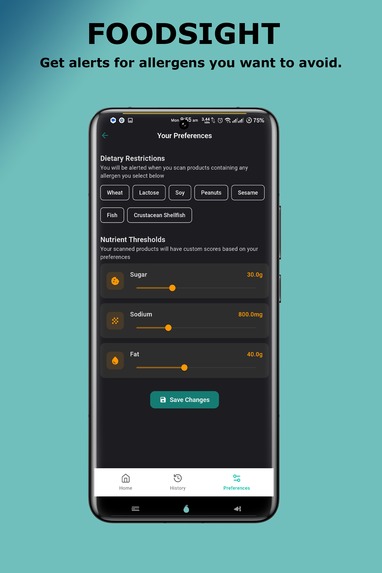
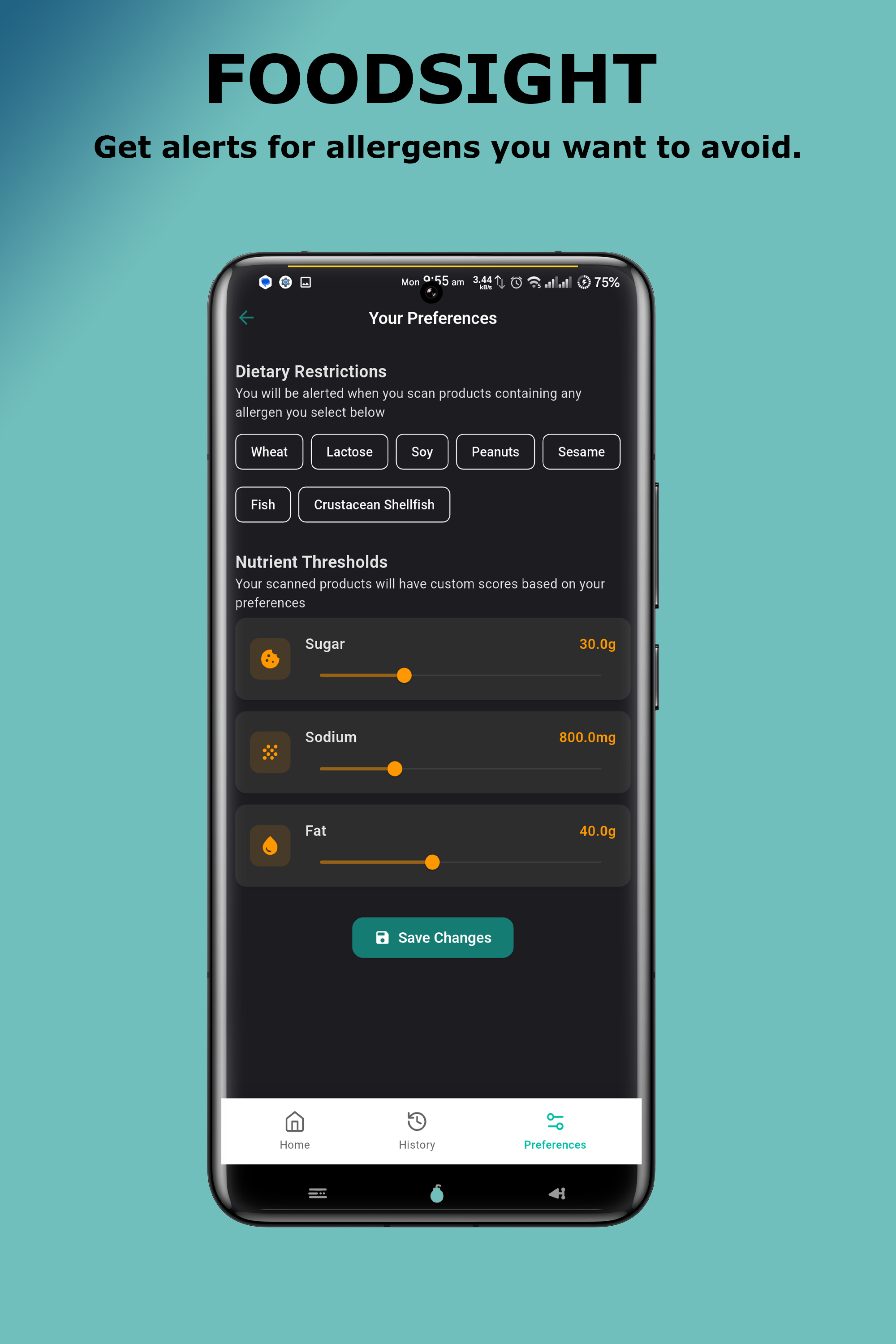
User preferences screen
-
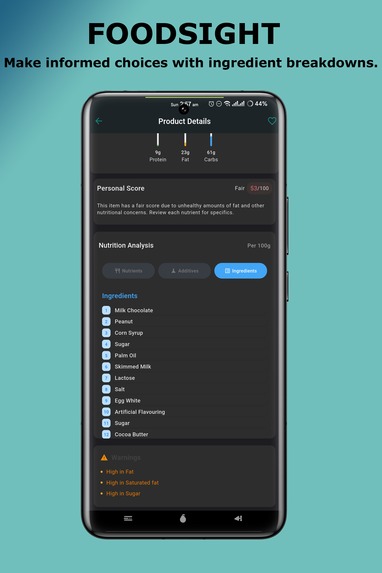
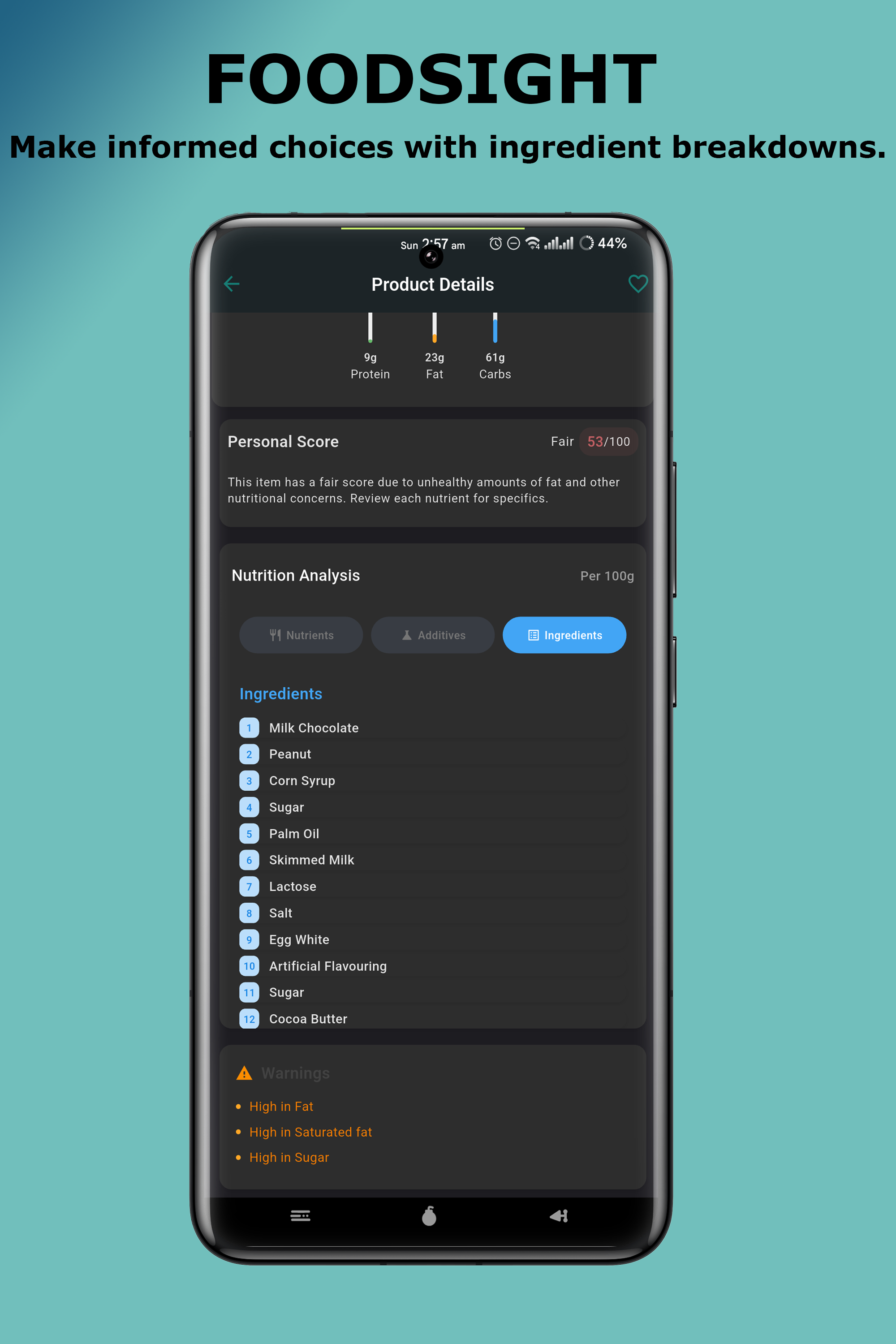
Ingredients Section
-
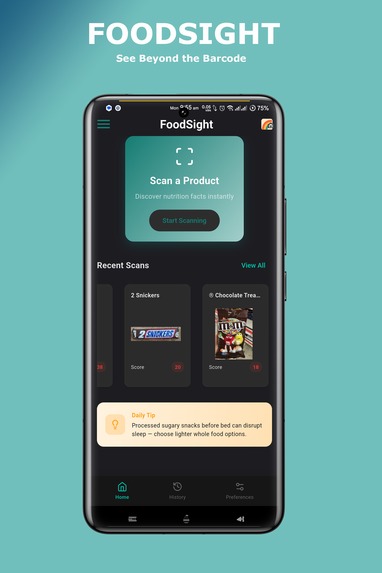
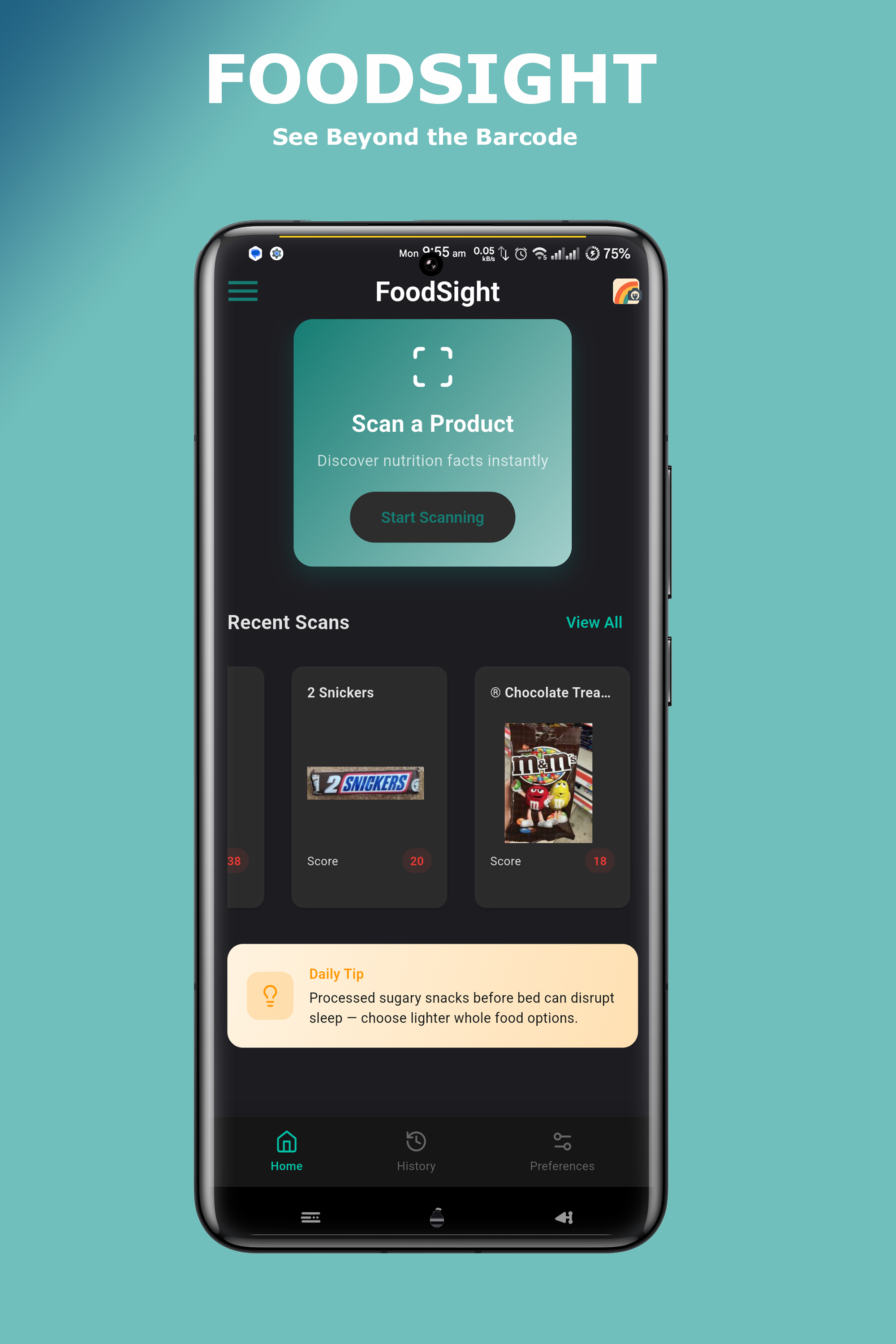
Home Page
-
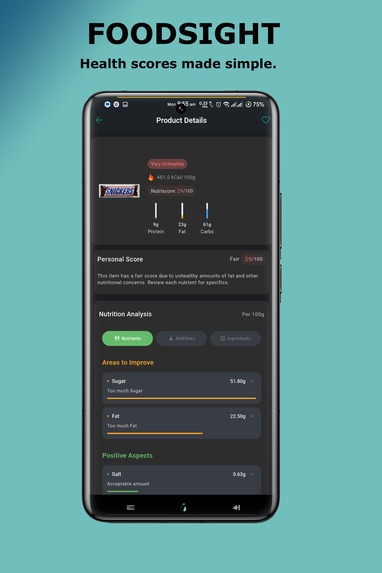
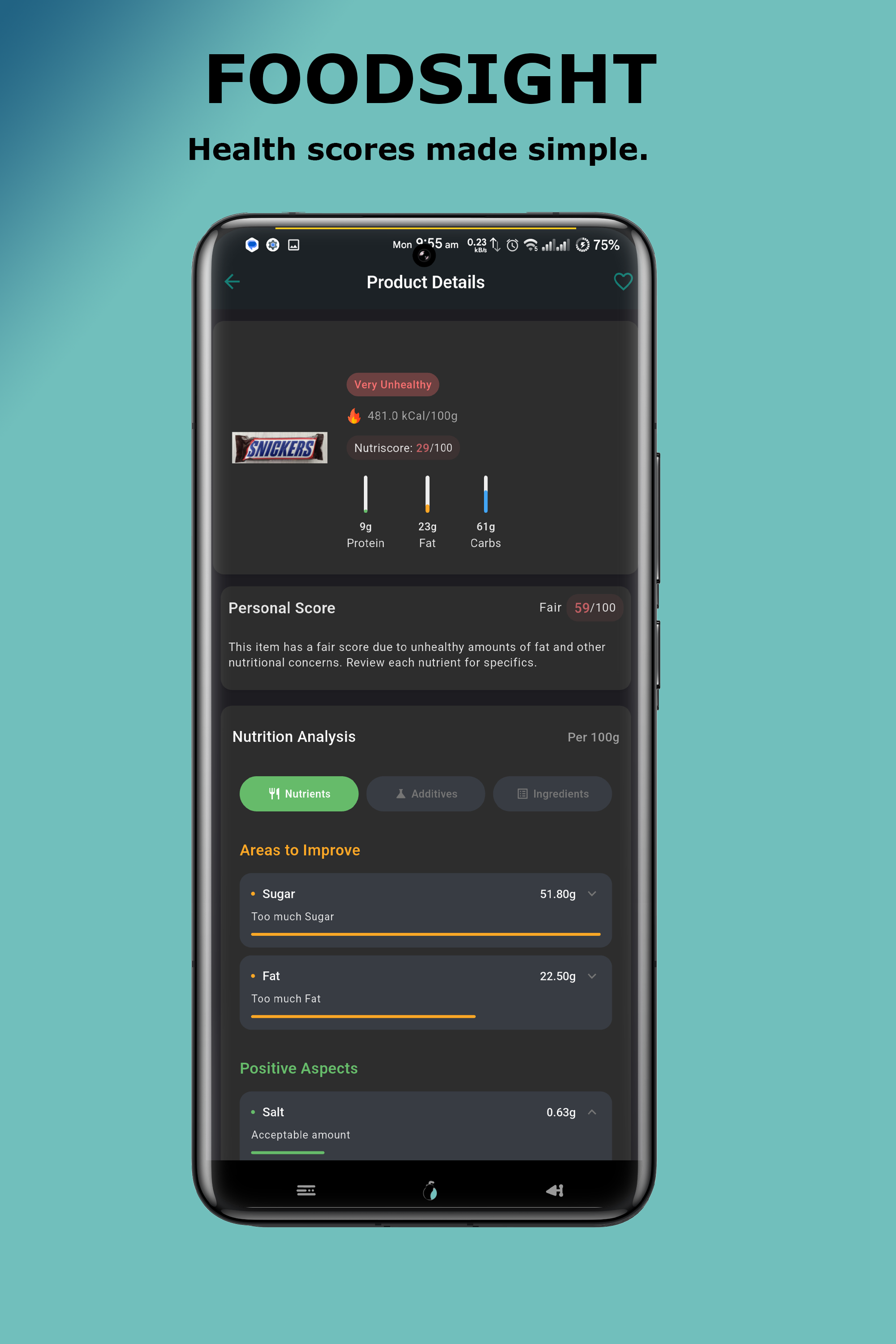
Product nutrition details
-
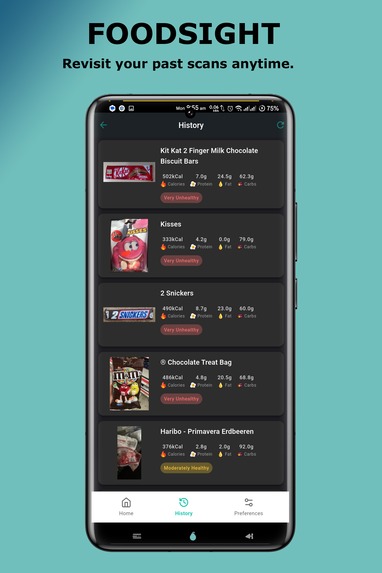
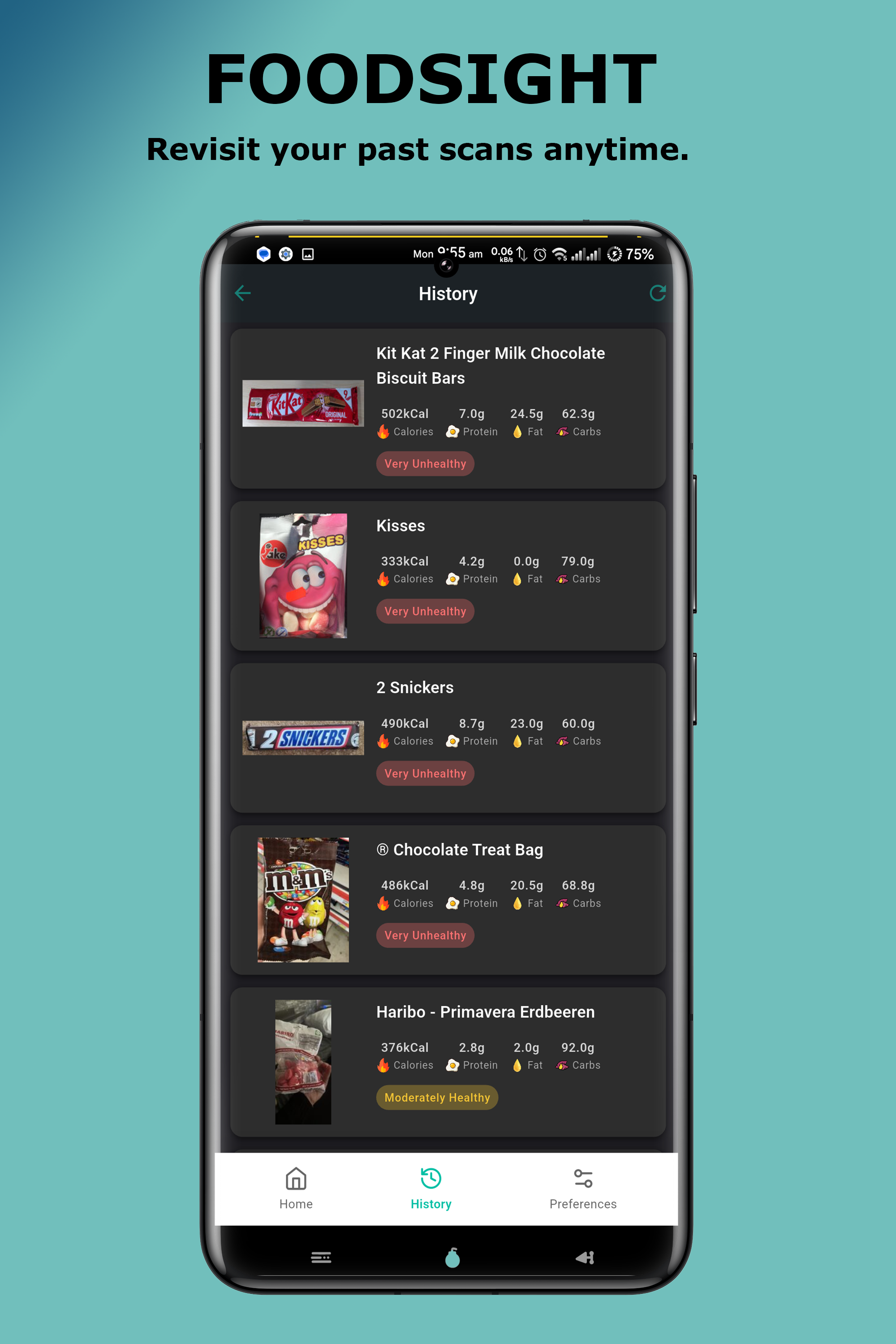
History of past scans
-
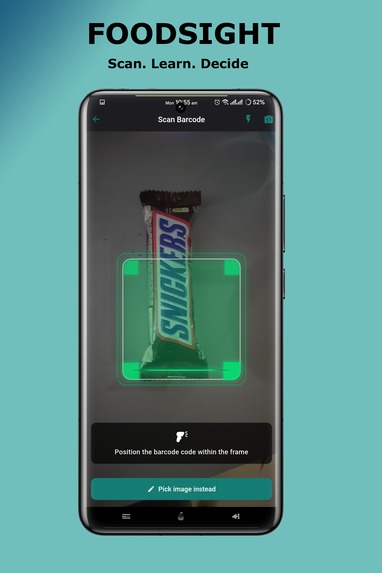
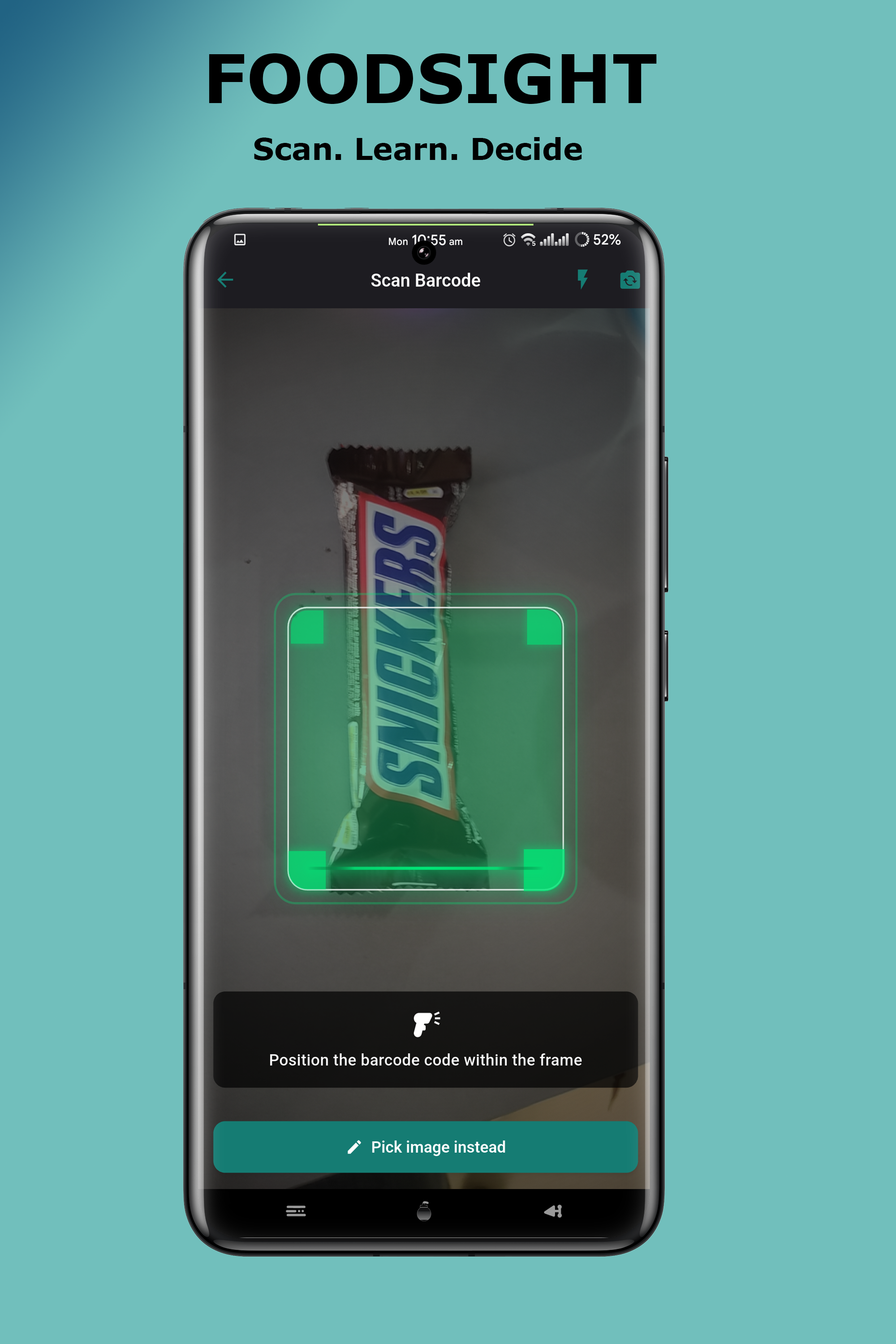
Scanner Screen
Inspiration
The idea for FoodSight came from my own frustration with packaged foods. So many products on supermarket shelves are marketed as “healthy,” yet when you look closer at the nutrition label, the story changes — high sugar, excess sodium, or hidden additives. I wanted a tool that could cut through the noise and give people clear, honest insights into what they’re about to buy.
That’s how FoodSight was born: a barcode-scanning app that turns confusing packaging into simple, actionable knowledge.
What it does
FoodSight is a barcode-scanning mobile app that helps users make healthier choices when buying packaged foods. By simply scanning a product’s barcode, FoodSight instantly provides:
- Nutritional Breakdown – Clear insights into calories, sugar, protein, fat, sodium, and more.
- Health Scoring – A simplified rating system that highlights whether a product supports or harms your dietary goals.
- Ingredient Transparency – Easy-to-understand explanations of additives and hidden ingredients.
- Personalized Evaluation – Scores and recommendations tailored to user preferences, such as low sugar, high protein, or allergen restrictions.
- Smarter Alternatives – Suggestions for healthier options when a scanned product doesn’t align with the user’s goals.
- Daily Tips & Guidance – Practical advice and nutrition insights to encourage consistent healthy eating habits.
How we built it
I built FoodSight using Flutter for cross-platform support, ensuring both Android and iOS users could access it. The core functionality includes:
- Barcode Scanning – leveraging camera APIs to quickly identify packaged foods.
- Database Integration – connecting to nutrition data sources and storing local scans with SQLite for offline access.
- Food Evaluation Algorithm – scoring products based on nutrients per 100g, dietary restrictions, and health impact.
- Dashboard Design – showing recent scans, daily health tips, and personalized preferences.
- Human-Readable Explanations – so users not only see a score, but also why a product is rated that way (e.g., “High in sugar, low in protein”).
Competition & Differentiation
There are existing apps in the food scanning space, such as MyFitnessPal. While these are valuable tools, FoodSight aims to differentiate itself in key ways:
- Clarity Over Complexity: Many apps overwhelm users with raw data. FoodSight focuses on clear explanations — not just numbers, but what they mean.
- Custom Health Preferences: Instead of one-size-fits-all scoring, FoodSight adapts to user goals (low-carb, low-sodium, high-protein, etc.).
- Positive & Negative Categorization: Nutrients and additives are grouped into helpful vs. harmful, making evaluations easier to digest at a glance.
- Daily Engagement: With features like health tips and personalized dashboards, FoodSight goes beyond one-off scans to encourage consistent healthier habits.
- Localized Relevance: Many competitors are focused on Western markets. FoodSight prioritizes adaptability to regional food products and accessibility in emerging markets.
In short, FoodSight isn’t just another barcode scanner — it’s a personal food guide designed to be practical, approachable, and truly user-centered.
Challenges we ran into
Like any project, FoodSight came with its own hurdles:
- Data Consistency: Nutrition databases often had missing or inconsistent entries, which required validation and fallback logic.
- User Experience: Striking the right balance between simplicity and depth was tough — too much data overwhelms, too little makes it shallow.
- Personalization: Users have different health goals (weight loss, low sodium, high protein), so the scoring system needed flexibility.
- Performance: Making barcode scans fast and responsive was critical for real-world usability.
- Monetization Decisions: Choosing what features to keep free versus premium required careful thought to avoid alienating users.
- Database Gaps: Some food items still don’t exist in the database. To solve this, I’m on a mission to add them one at a time — growing FoodSight’s coverage steadily so users can rely on it more each day.
- iOS Development Limitation: Without access to a MacBook, compiling and testing the iOS build has been challenging. While this slows down development, I'm focused on perfecting the Android side of things.
What we learned
Building FoodSight taught me several important lessons:
- Transparency matters: Most people want to eat healthier, but lack the tools to interpret labels. Clarity is empowering.
- Design is critical: Raw numbers alone don’t help. Explanations and visual cues make nutrition more accessible.
- Balance is key: The app had to be informative without being judgmental — encouraging better choices without overwhelming the user.
What's next for FOODSIGHT
FoodSight is more than just a barcode scanner — it’s a step toward making healthier eating easier. Moving forward, I’d like to add:
- Smarter shopping recommendations.
- Personalized nutrition tracking over time.
- Add support for getting nutrition information from existing barcode images.
- AI-driven insights to help users connect their choices to their long-term health goals.
- Gamification and challenges to drive more user engagement
Built With
- flutter
- revenuecat
- supabase

Log in or sign up for Devpost to join the conversation.