-
-
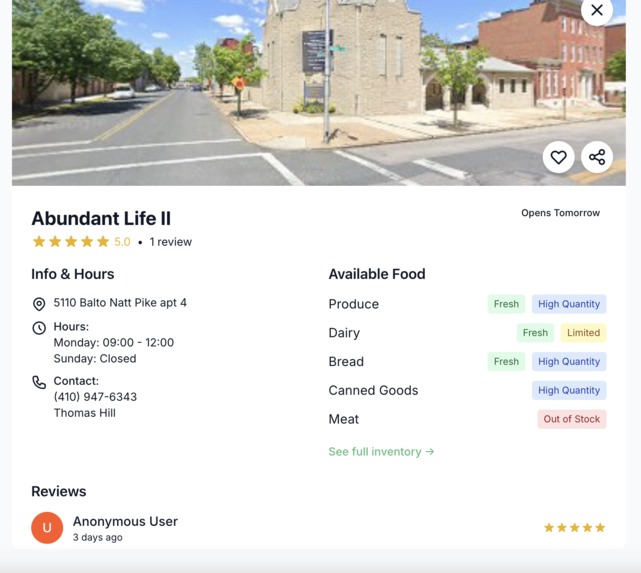
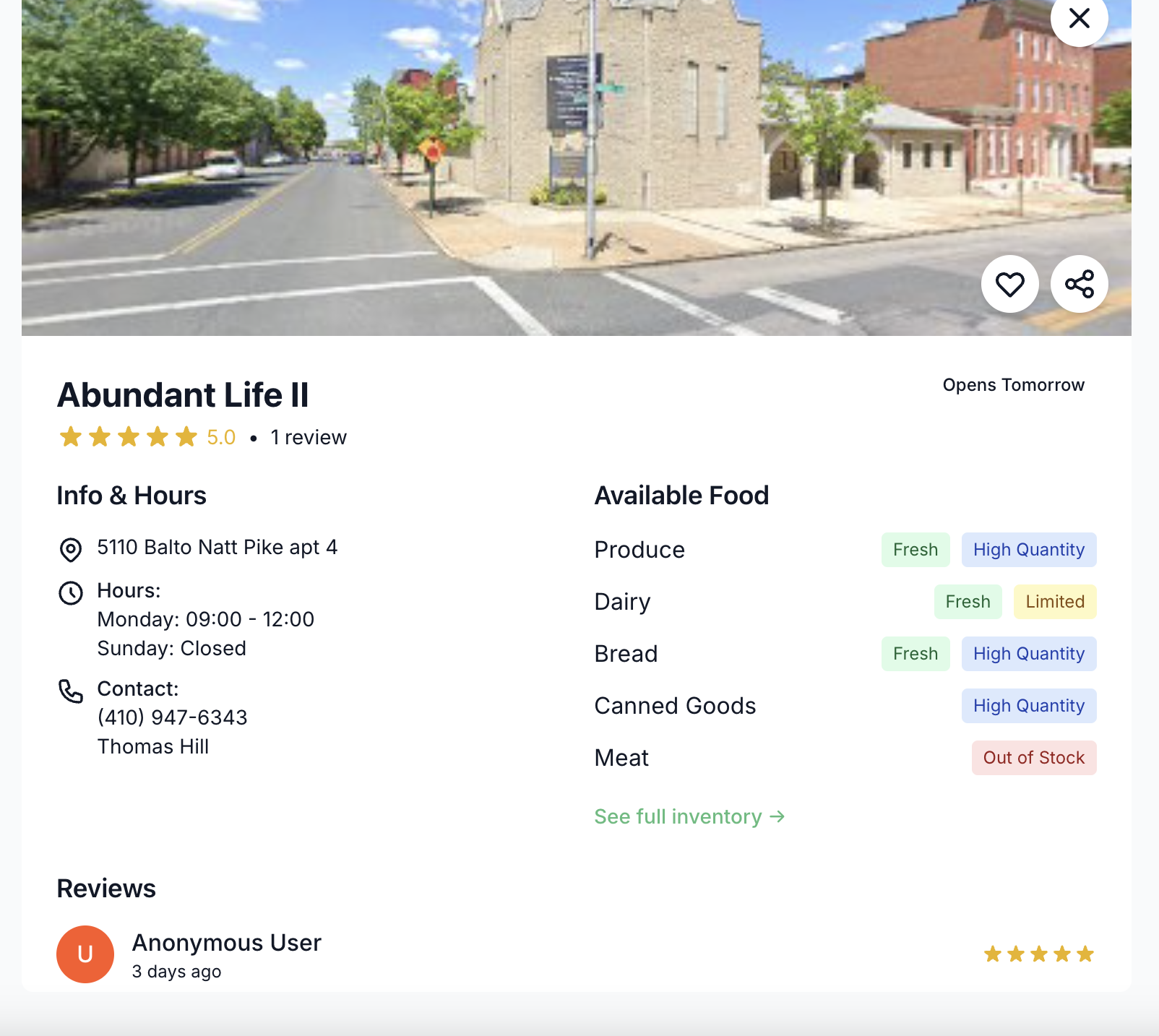
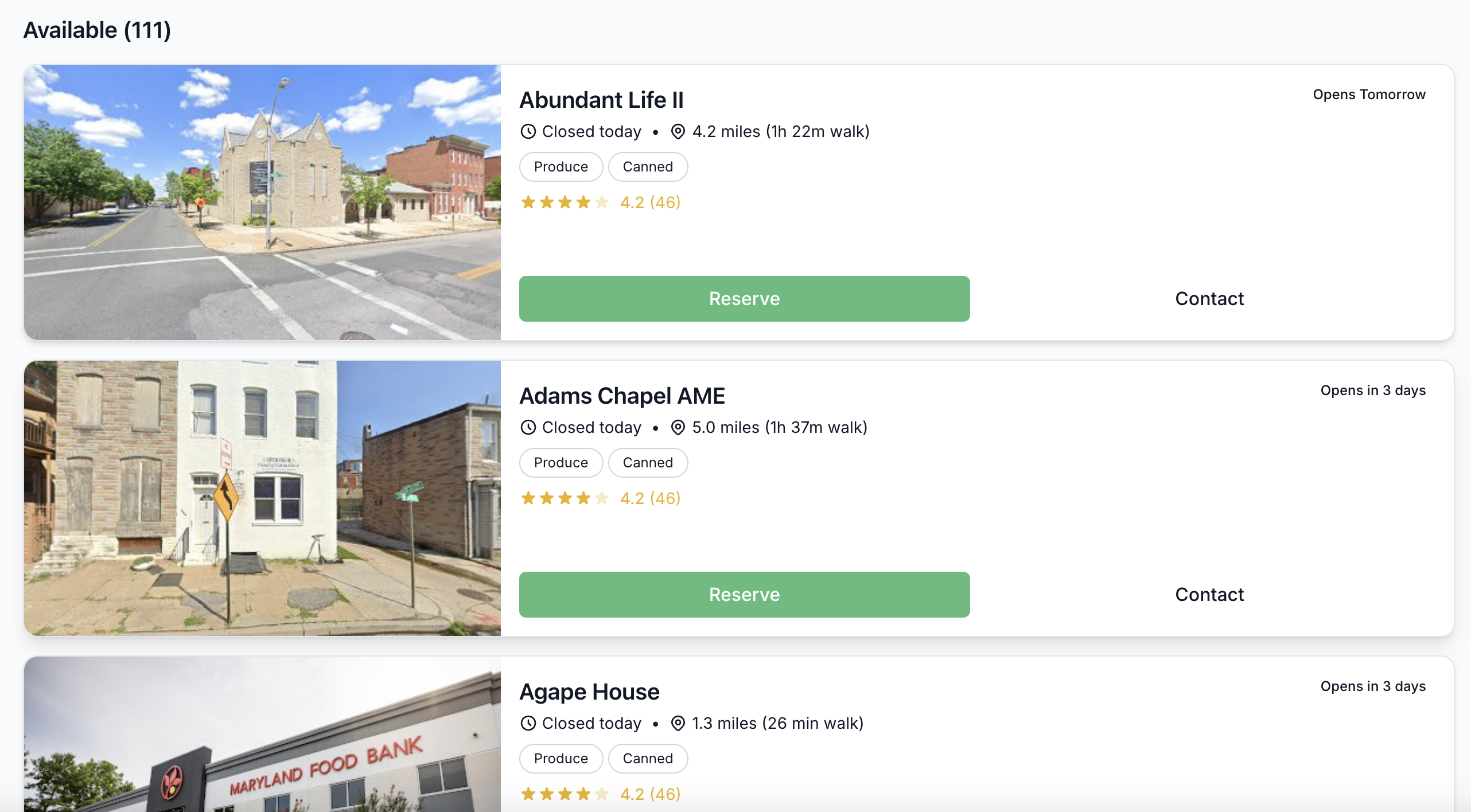
After clicking on a card, more information about the pantry is available
-
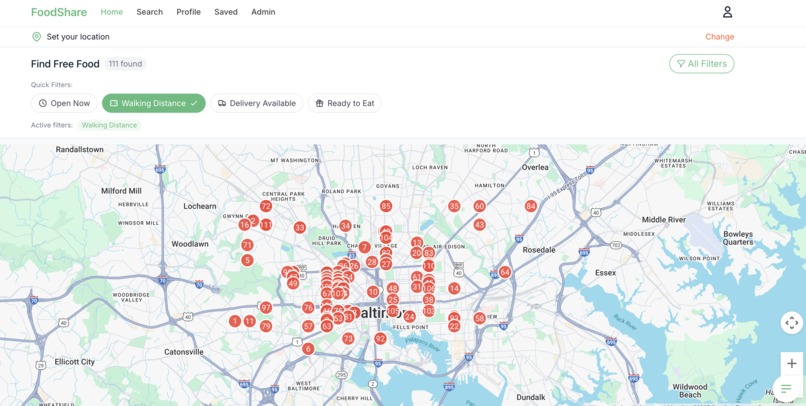
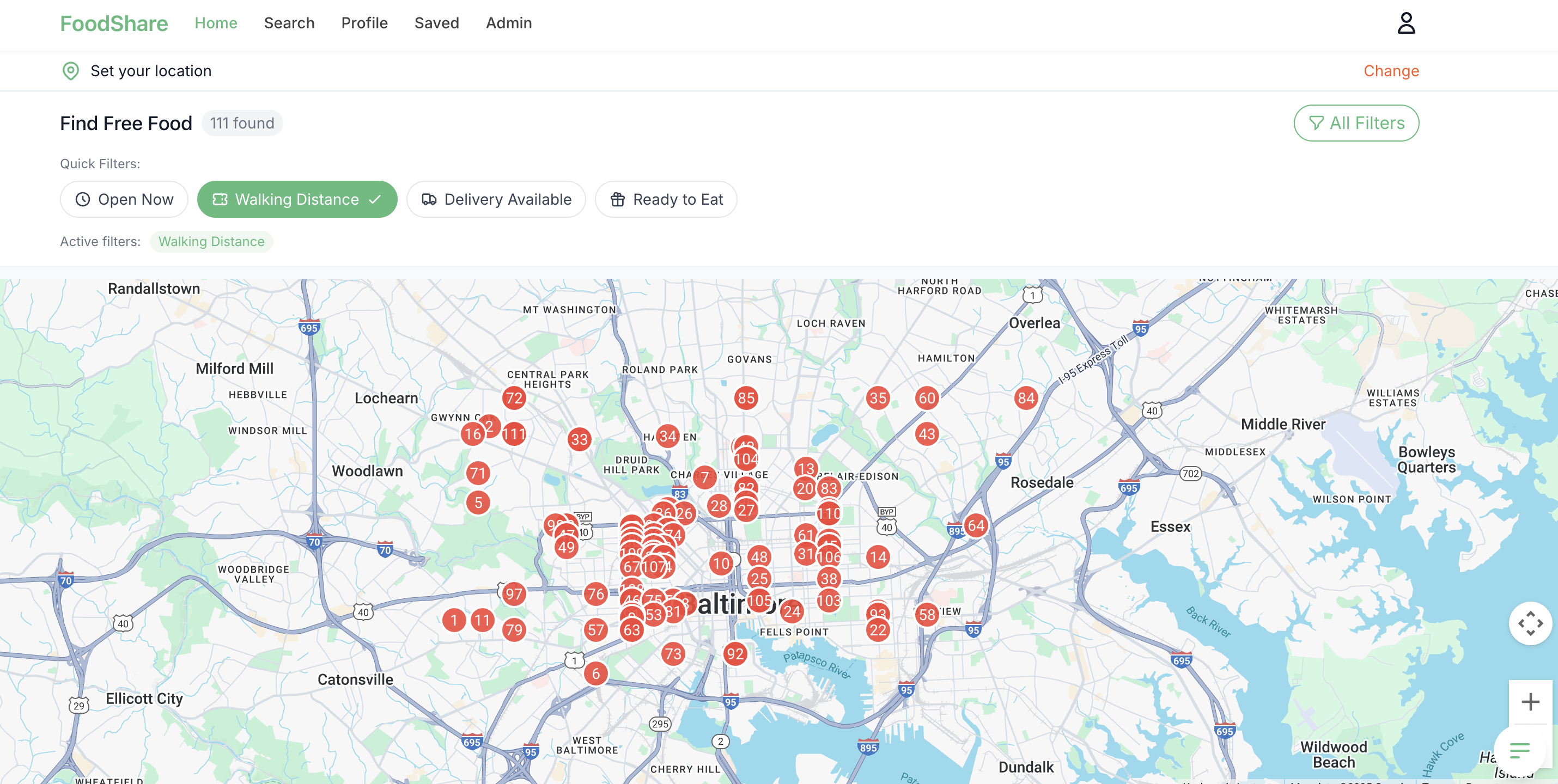
We display a map of available food pantries in Baltimore City.
-
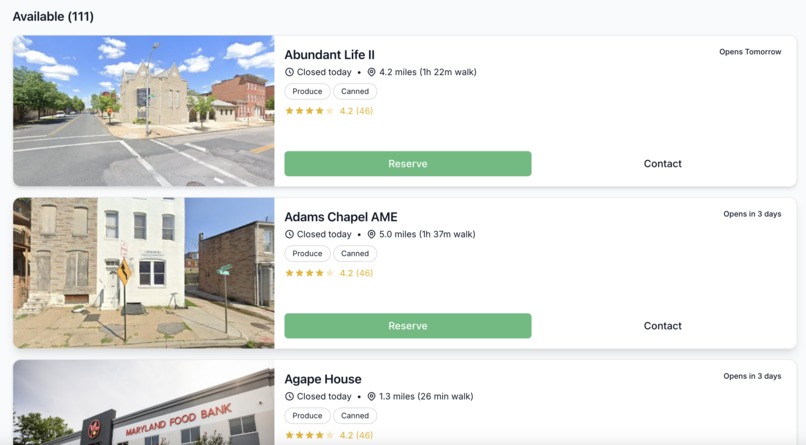
Pantries are displayed in card format.
Inspiration
Every year, millions of Americans struggle with food insecurity, especially those in low-income urban areas. With our group being from the Baltimore area, we've seen the causes and effects of urban food insecurity firsthand. Although Baltimore is home to a plethora of food pantries and food-based non-profits, residents struggle to find free or affordable food options. Because of poor funding, small non-profits struggle to get the word out about what they do. As a result, residents are left hungry and organizations aren't serving as much people as they could, leaving them with underwhelming numbers on grant applications. The system is broken and we're here to fix it.
What it does
We answer the fundamental question: Where can I go to get free food right now? Our user-friendly interface displays all of the food pantries that are open nearby and provides filters that curate the results to the needs of the user. Users can easily filter for locations that are in walking distance, locations that offer delivery, and locations that offer a specific food type such as meat or produce.
How we built it
The front-end of the web application was built with React.JS. The back-end was built with Express.JS. Our dataset was retrieved and stored in Python with Pandas. We utilized the Google Maps API for map-related features and Firebase for user authentication. We also developed a prototype of a mobile version of the app in Figma.
Challenges we ran into
Incorporating the various aspects of the project from the front-end, to the back-end, to the data was difficult. Implementing the Google Maps API was especially challenging, as was user authentication with Firebase.
Accomplishments that we're proud of
We're proud of our UI design in both the web application and the mobile prototype. We're also proud of the practical use of our project and the promise that it has as a potential business venture in the future. Overall, we're very pleased with what we were able to accomplish in a weekend.
What we learned
We learned that the process of developing an application like ours is exhaustive and requires much troubleshooting and collaboration. We also learned that through the use of AI technologies like ChatGPT, Gemini, and Repl.it, the development process is significantly smoother.
What's next for FoodShare
In the future, we'd like to add an admin panel where non-profit owners could directly modify the information that's displayed about their non-profit on the app. We want to fully implement the app's social ecosystem, allowing users to leave ratings and reviews on food pantries. Hopefully, this will motivate the pantries to improve their food and service quality as a result. Lastly, we'd like to develop the mobile application to resemble the application displayed in our prototype.
Built With
- express.js
- figma
- firebase
- google-maps
- pandas
- react.js


Log in or sign up for Devpost to join the conversation.