-
-
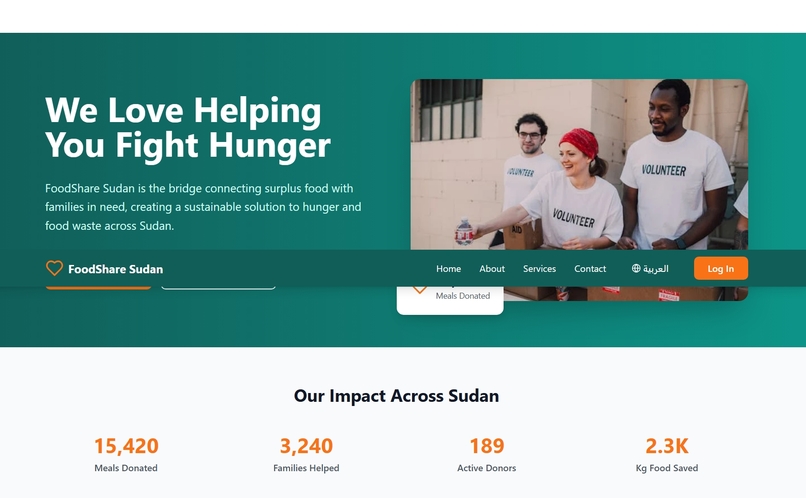
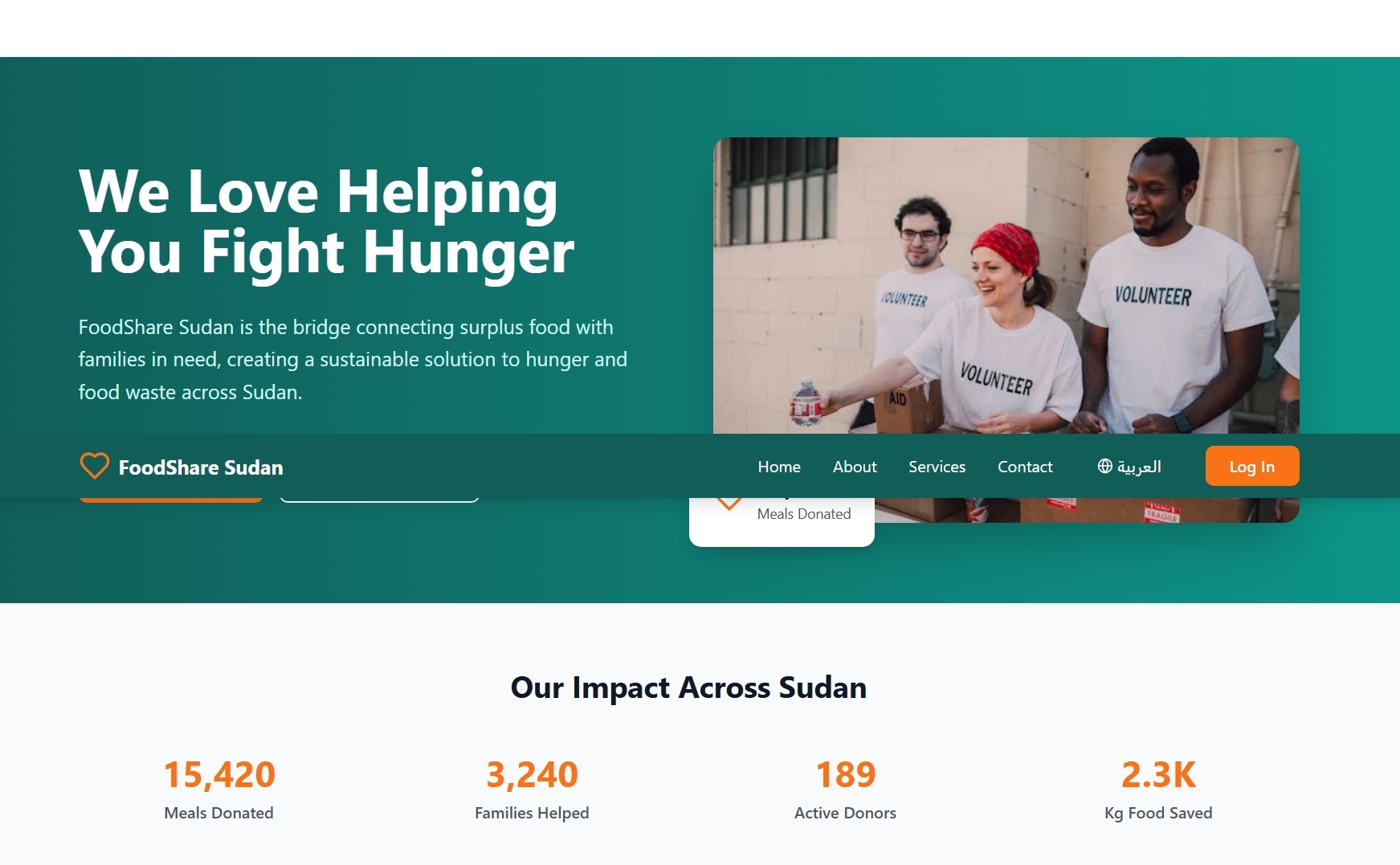
landing page
-
-

-
Inspiration
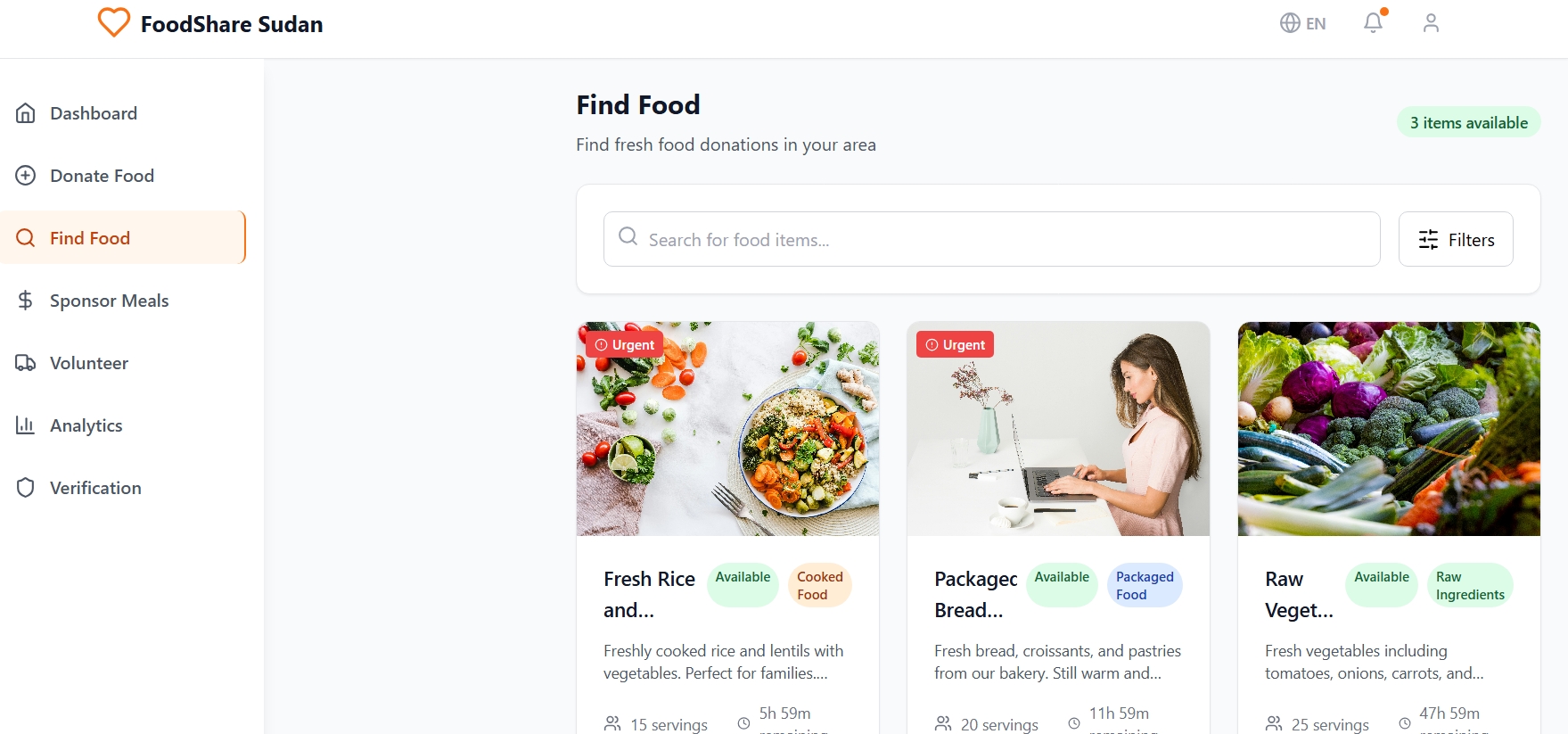
In Sudan, food insecurity remains a critical issue, especially amid conflict and displacement. At the same time, a significant amount of surplus food from households, businesses, and events goes to waste. This inspired us to build FoodShareSudan , a platform where surplus food can find its way to those in need. Our goal is to promote community-driven food sharing and reduce waste through meaningful digital connections.
What it does
FoodShareSudan is a web-based platform that enables:
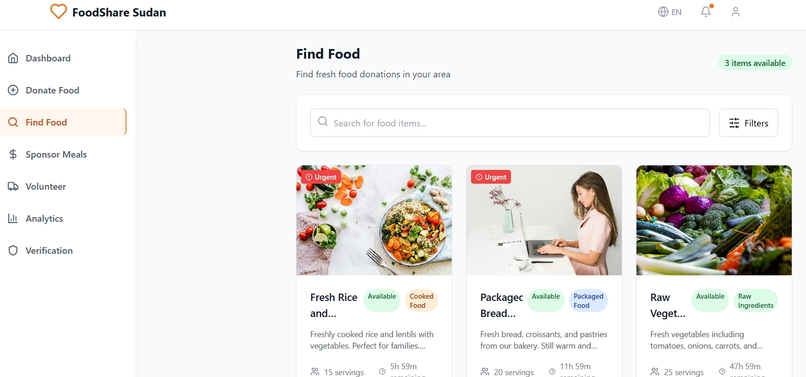
- Donors (individuals, businesses, or organizations) to list extra food items for donation.
- Receivers (people in need or community groups) to search for nearby available food using an interactive map.
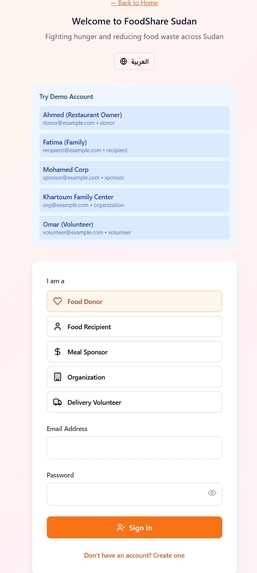
- Coordination tools to arrange food pickup or drop-off in a simple and secure way.
Our mission is to streamline food redistribution efforts and promote mutual support across Sudanese communities.
How we built it
We used a modern, lightweight tech stack that enabled rapid development during the hackathon:
- Google Maps API — for geolocation, helping users visualize food donation locations on an interactive map.
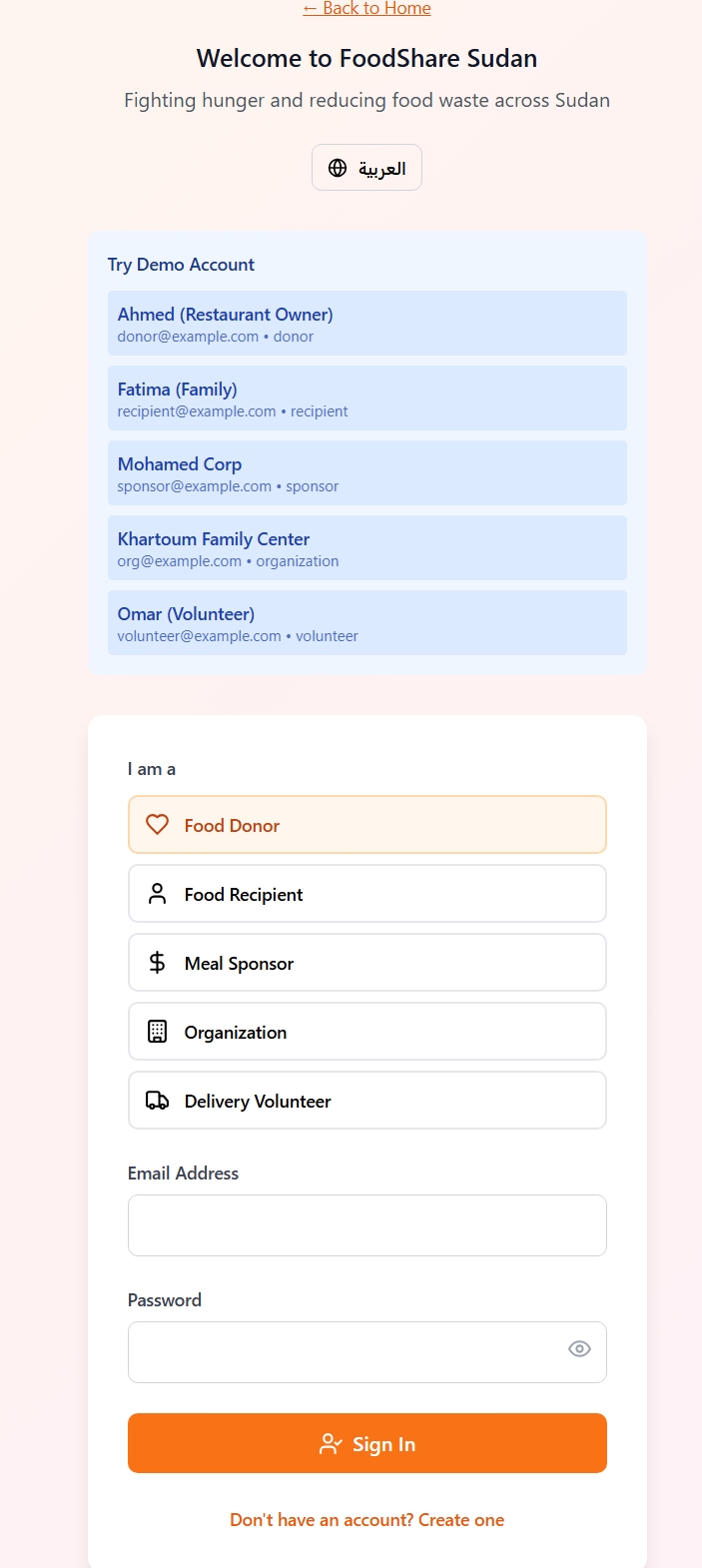
- Supabase — a powerful open-source backend providing real-time database syncing, user authentication, and secure data storage.
- TypeScript — for building a scalable and maintainable frontend with improved type safety and developer experience.
The platform was deployed using Netlify for fast and reliable hosting.
Challenges we ran into
- Limited access to reliable APIs and data focused on Sudanese infrastructure.
- Building key features like real-time updates and location filters within a short time frame.
- Ensuring privacy while allowing users to communicate and coordinate effectively.
- Designing with low-bandwidth and limited-connectivity users in mind.
Accomplishments that we're proud of
- Built and deployed a fully functioning MVP during the hackathon timeframe.
- Integrated Supabase and Google Maps API for a real-time, location-aware experience.
- Designed an intuitive and lightweight UI for a humanitarian-use case.
- Worked collaboratively under pressure and delivered a meaningful solution.
What we learned
- Hands-on experience with Supabase and real-time backend development.
- Improved skills in building map-based user interfaces.
- The importance of designing for low-resource environments.
- Strengthened collaboration, communication, and agile teamwork practices.
What’s next for FoodShareSudan
- Add multi-language support for greater accessibility.
- Partner with NGOs and community kitchens for broader adoption.
- Implement notifications for newly listed food nearby.
- Optimize for mobile and add offline support features.
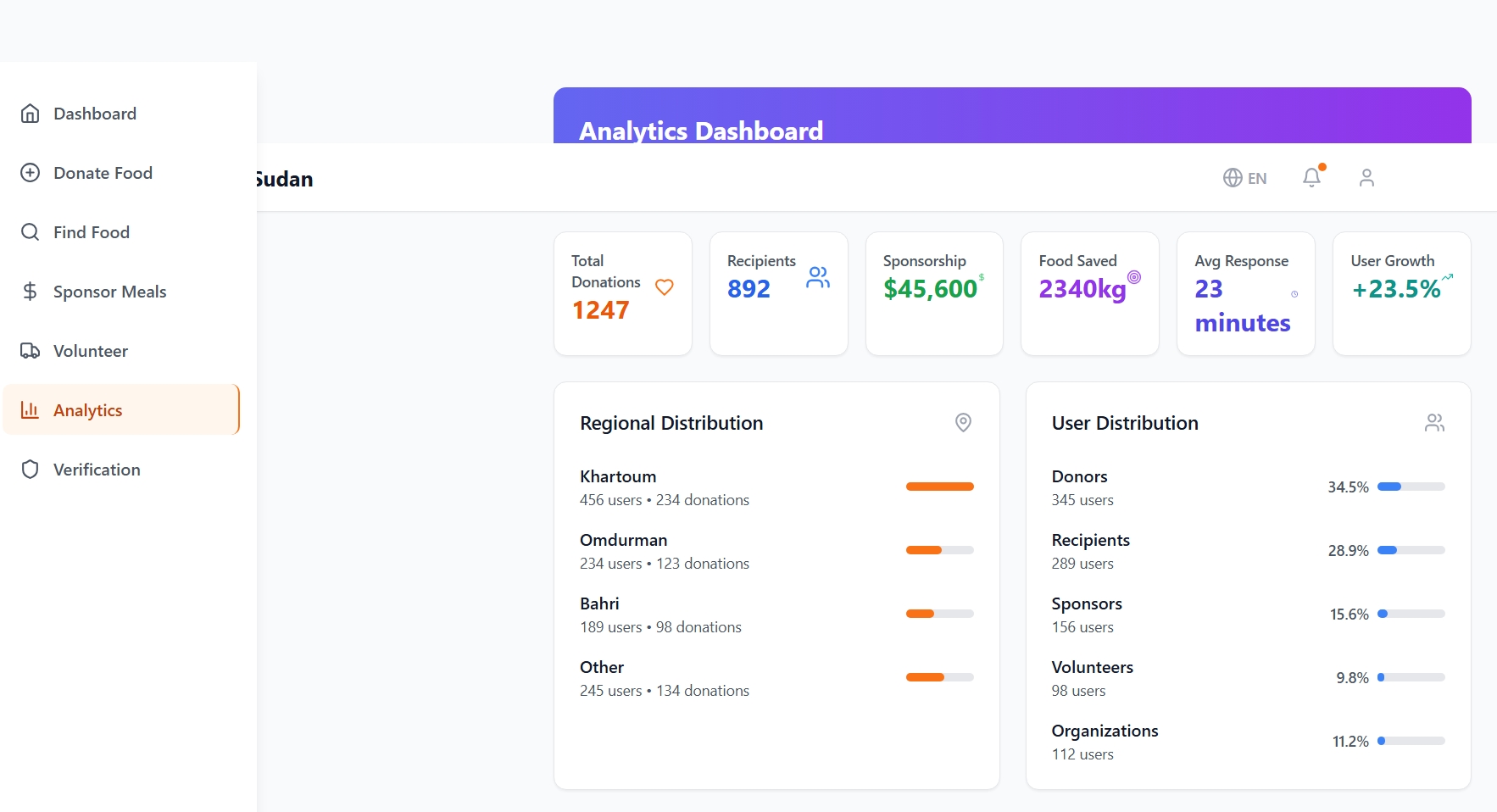
- Track donation trends and generate community insights for future improvements.
Built With
- google-maps
- supabase
- tech-stack-google-map-api
- typescript


Log in or sign up for Devpost to join the conversation.