The Problem
Food waste is not always caused by food being unusable. Often, perfectly usable food becomes waste because there is not enough time to find the right person or organization to receive it.
A restaurant, school, event, supermarket, or community kitchen may suddenly have surplus food. At that moment, the important questions are:
How urgent is the situation? Where is the food? Who could use it? And what should happen next?
That is where FoodRescue comes in.
The Inspiration
We wanted to build something that treats food rescue as a time-sensitive coordination problem, rather than simply another food-sharing platform.
The idea was to create a system that could take information about surplus food, analyze its urgency, recommend an action, and help connect the surplus with potential rescue partners.
Our vision is simple:
Save food before it becomes waste.
How We Built It
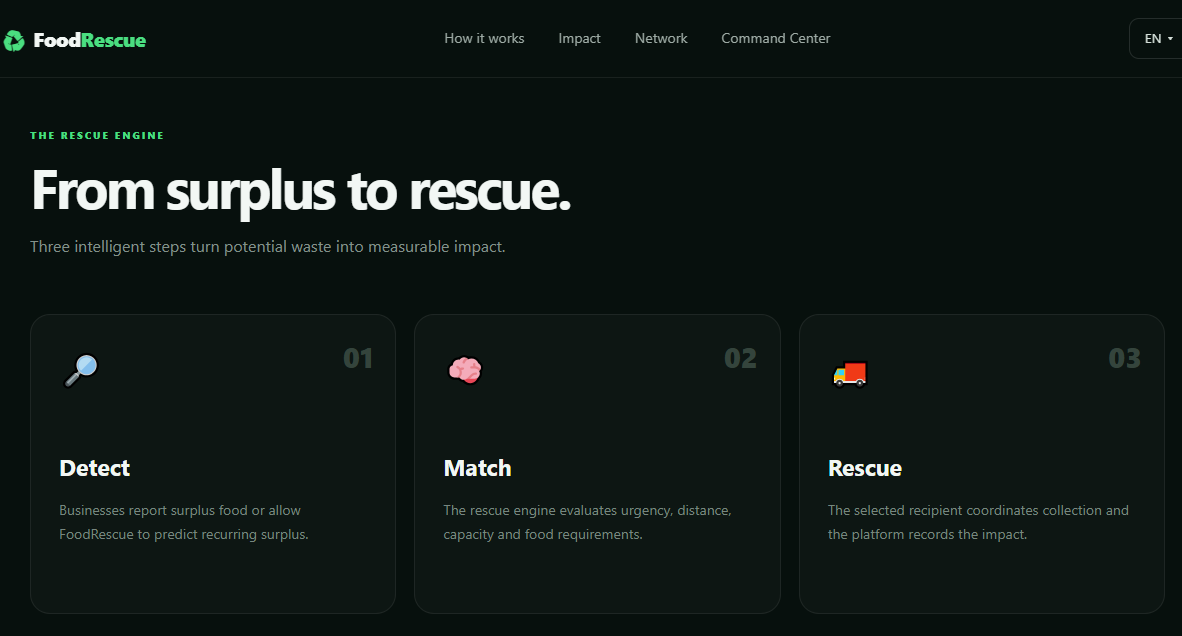
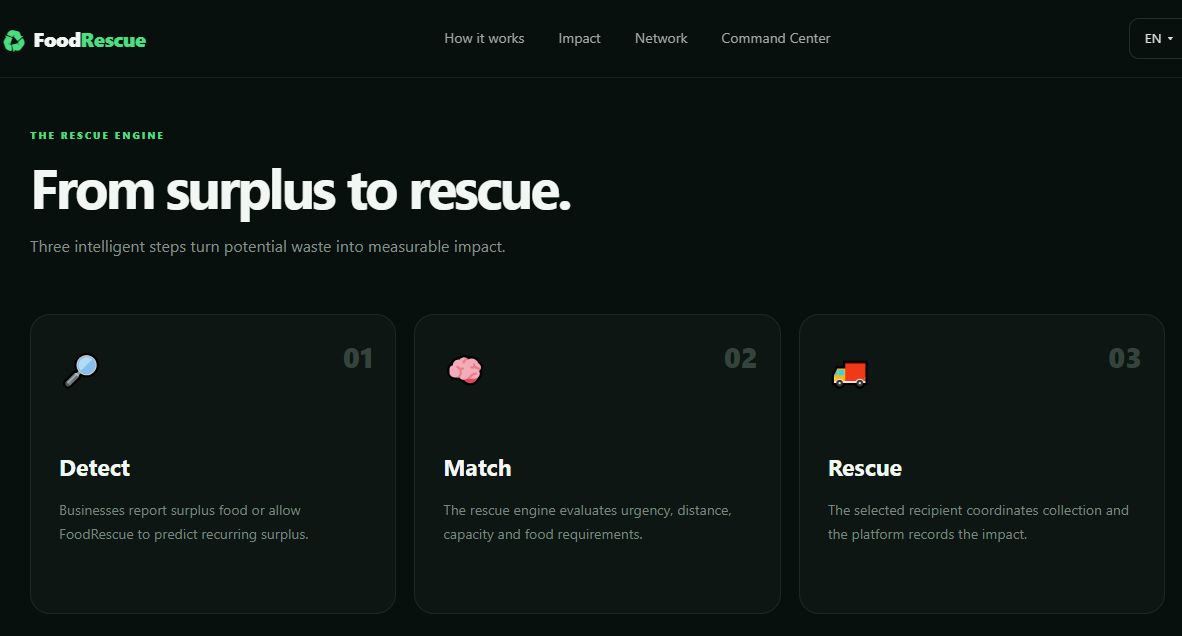
FoodRescue is a web application built around a complete rescue workflow:
Surplus Food → Smart Analysis → Rescue Priority → Matching → Rescue → Impact
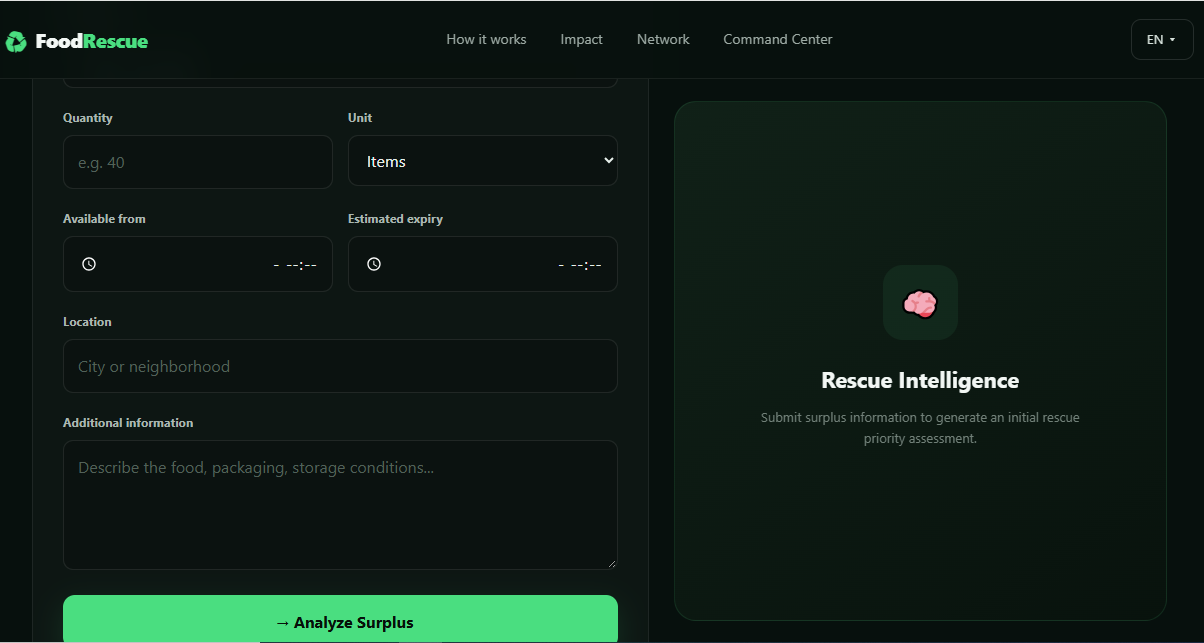
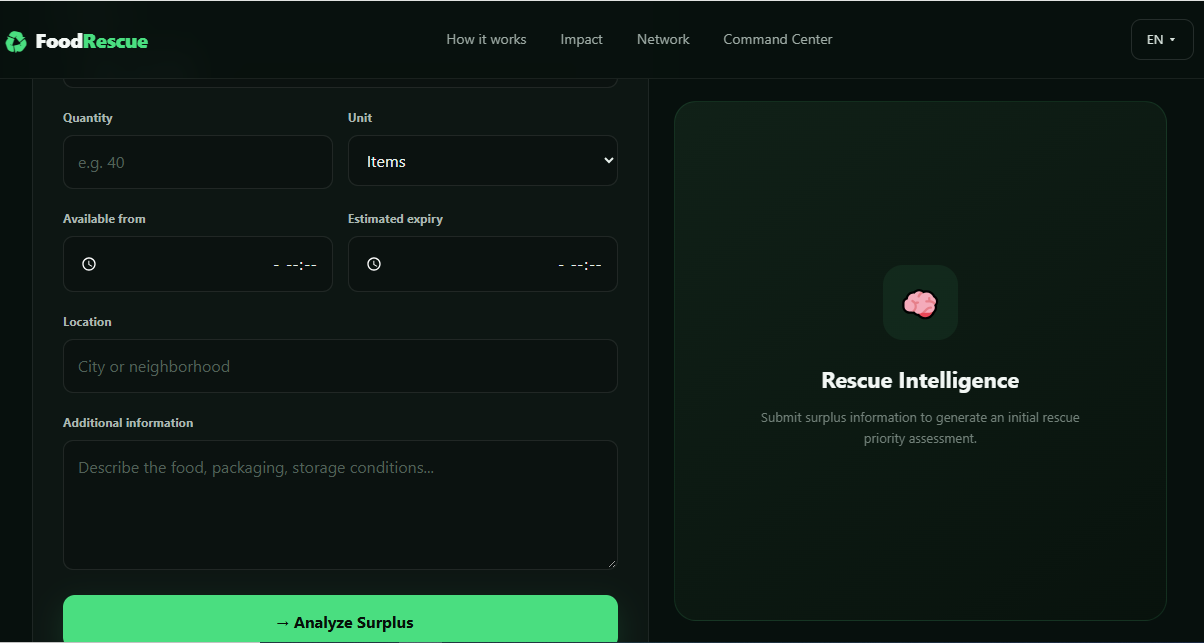
Users can provide information such as:
- Food type
- Quantity
- Unit
- Availability time
- Estimated expiry
- Location
- Additional information
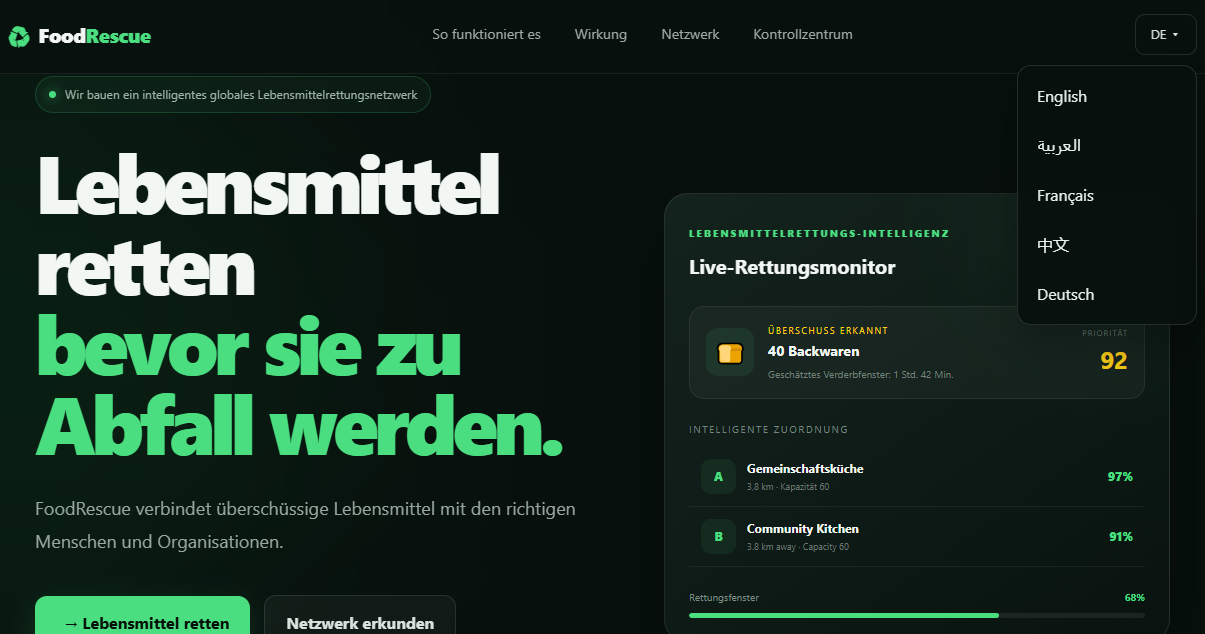
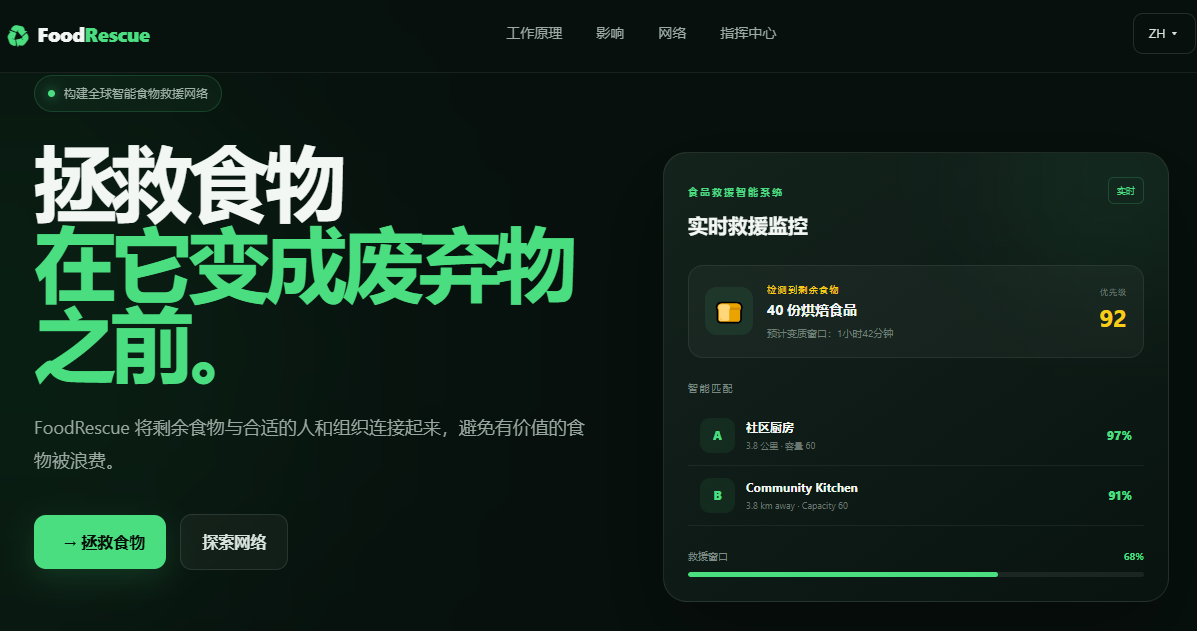
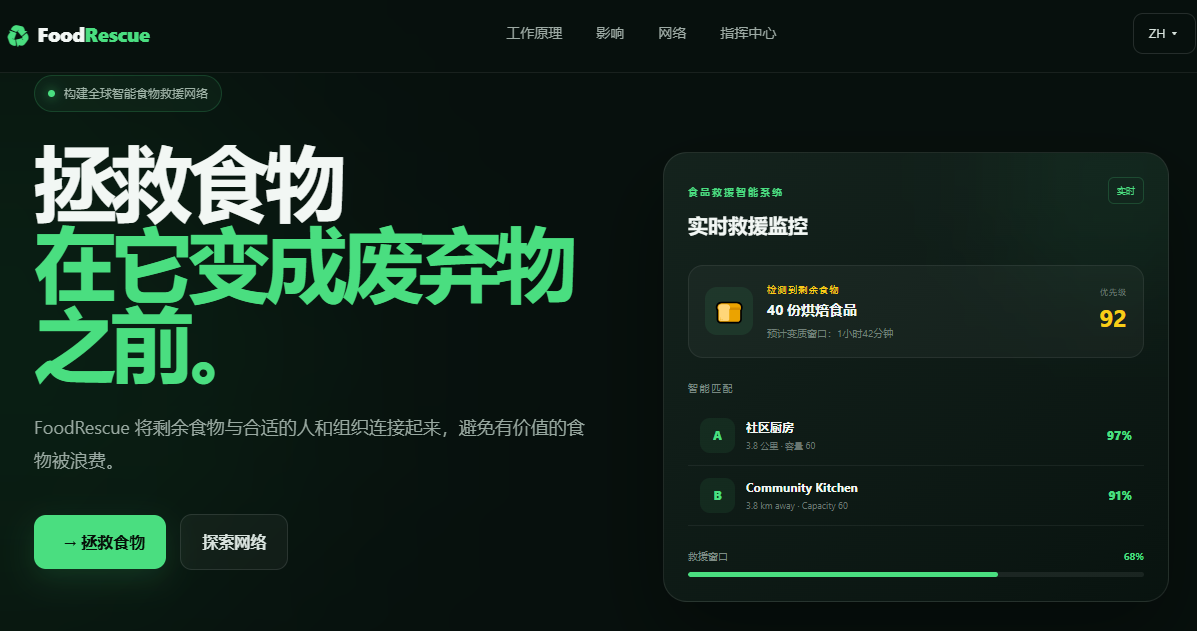
The application then analyzes the information and produces an explainable Rescue Priority Score.
Instead of showing only a number, FoodRescue explains the factors behind the result and recommends an appropriate next action.
The project was built using web technologies including HTML, CSS, and JavaScript, with a modular structure designed to support future backend, database, API, and AI integrations.
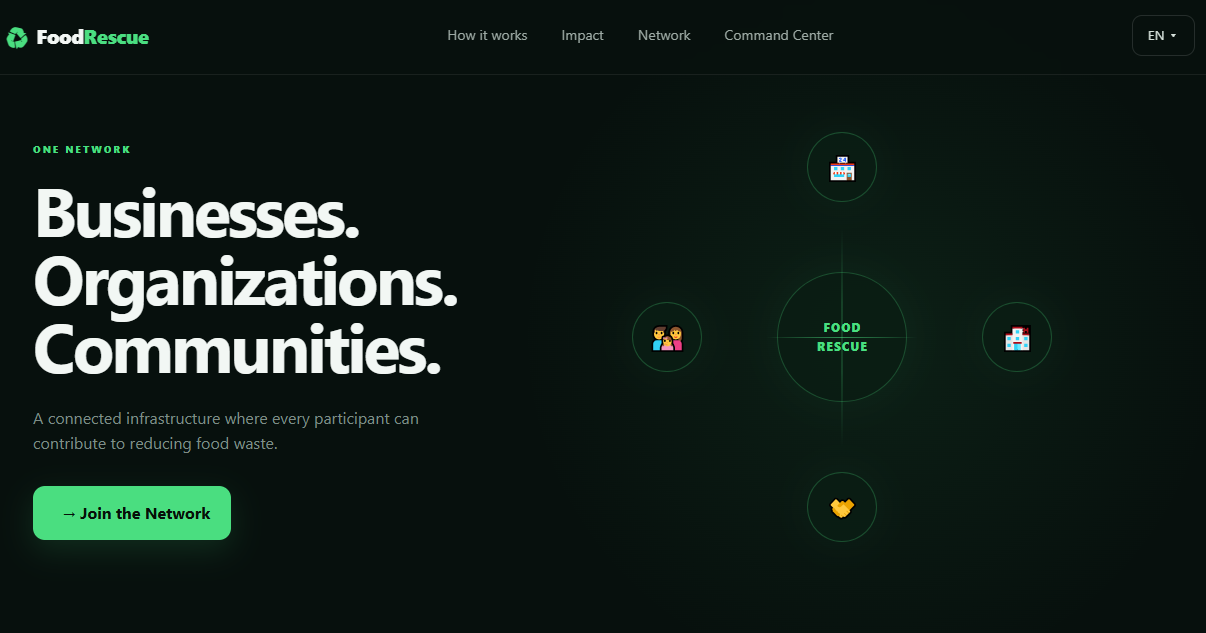
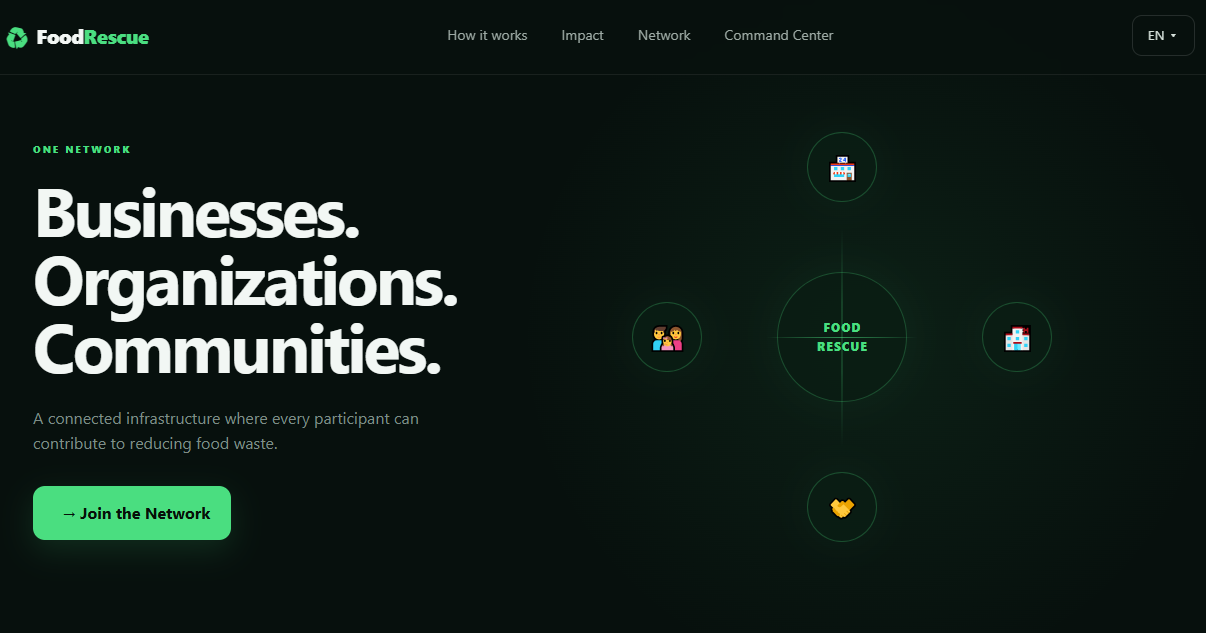
We also designed the system around a potential rescue network connecting:
Food Donors → FoodRescue → Rescue Organizations → Community
The Smart Analysis
One of the main challenges was deciding how to represent urgency.
A large amount of food is not necessarily more urgent than a smaller amount that is about to expire.
FoodRescue therefore considers multiple factors, including:
- Remaining time
- Quantity
- Food type
- Availability
- Location
- Rescue feasibility
The resulting priority is deterministic and explainable rather than random.
For example, a result might show:
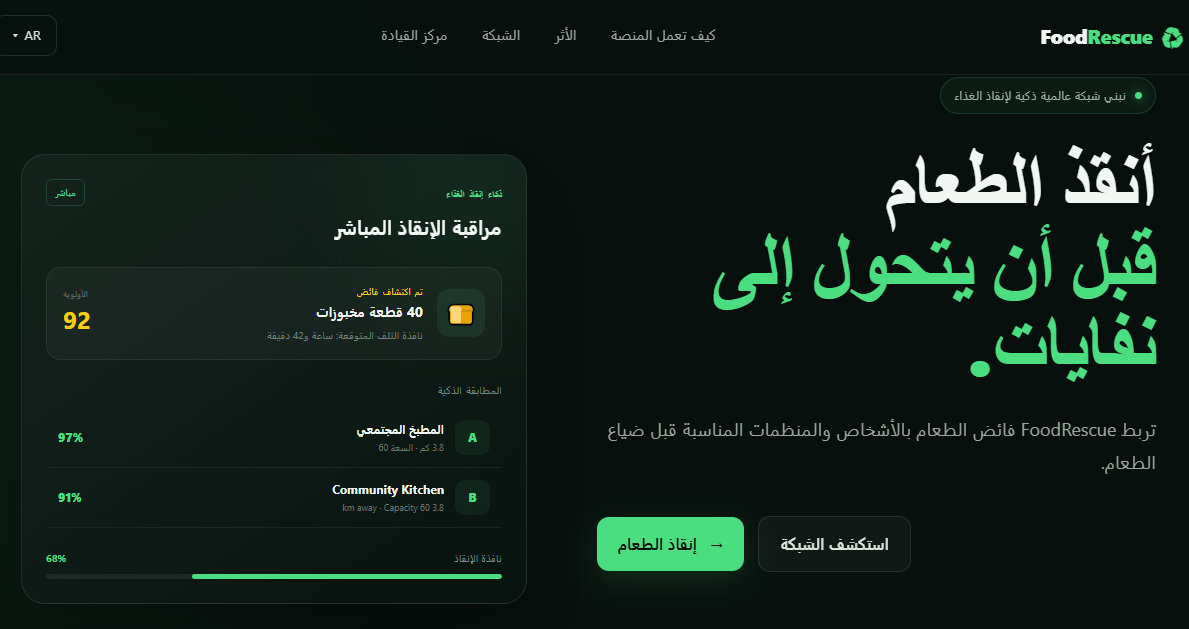
73/100 — HIGH PRIORITY
followed by an explanation of why immediate action is recommended.
This makes the analysis easier for users to understand and act on.
The Matching Experience
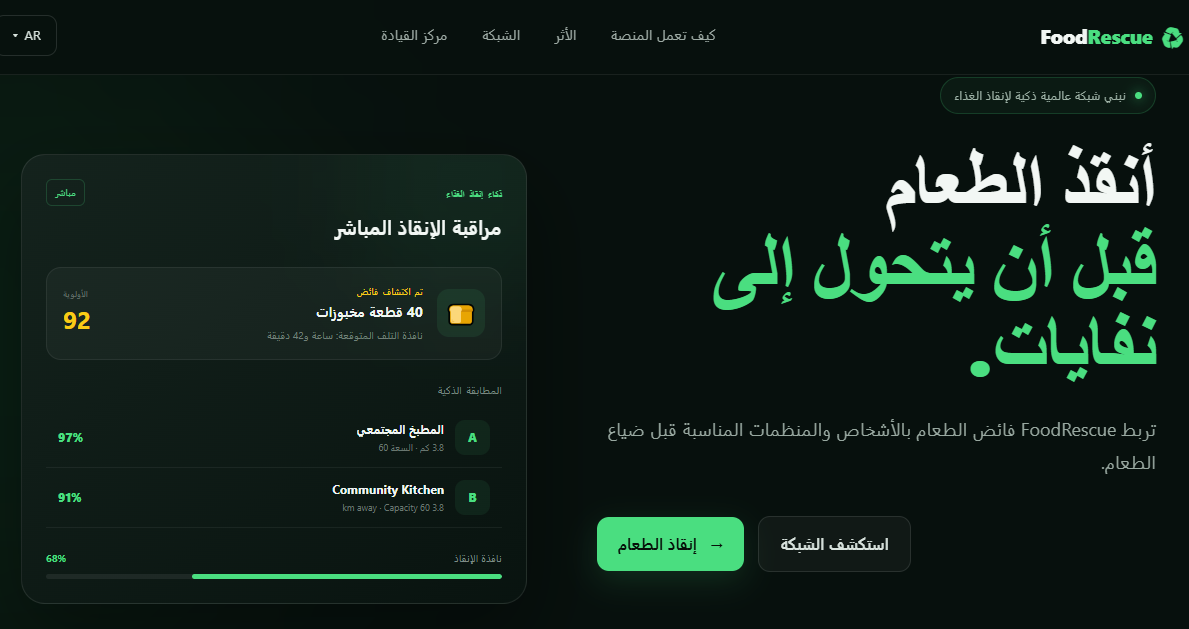
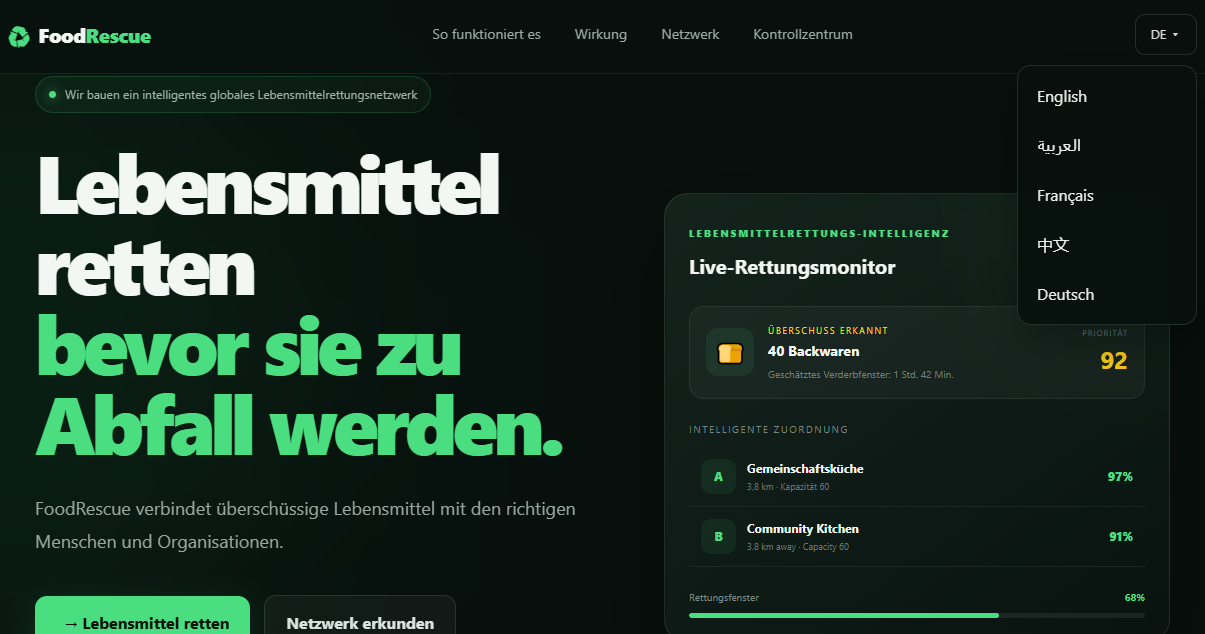
After analyzing surplus food, FoodRescue can present potential rescue partners using structured matching data.
A potential match can include:
- Compatibility with the food
- Distance
- Capacity
- Availability
- Estimated pickup time
- Match percentage
The current prototype uses structured demonstration data where real-time external data is not available. The architecture is designed so these sources can later be connected to real APIs and databases.
What We Learned
Building FoodRescue taught us that creating a useful product is not simply about adding features.
We learned how to turn a broad sustainability problem into a clear user workflow.
We also learned the importance of:
- Explainable decision-making
- Responsive interface design
- Validation and error handling
- Modular JavaScript architecture
- Designing for real-world constraints
- Building a product that can evolve beyond its prototype stage
Most importantly, we learned that time can be a critical variable in sustainability problems.
A solution can have the right intention but still fail if it does not help people act quickly enough.
Challenges We Faced
One of the biggest challenges was designing the rescue-priority logic.
There is no single variable that determines whether surplus food should be rescued immediately. We had to combine different pieces of information into a result that remained understandable to users.
Another challenge was balancing complexity with usability.
We wanted FoodRescue to demonstrate a sophisticated concept without forcing users through a complicated interface.
We therefore focused on a simple principle:
Complexity should happen behind the interface; the user should see a clear decision.
We also faced technical challenges involving responsive design, application state, validation, time calculations, matching logic, and keeping the different parts of the application consistent.
What's Next
FoodRescue is a prototype with a larger vision.
Future versions could introduce:
- Real-time organization matching
- Real geographic distance calculations
- AI-based surplus prediction
- Demand forecasting
- Expiration-risk prediction
- Rescue-route optimization
- Notifications for urgent surplus
- Restaurant and supermarket integrations
- Real databases and user accounts
- Mobile applications
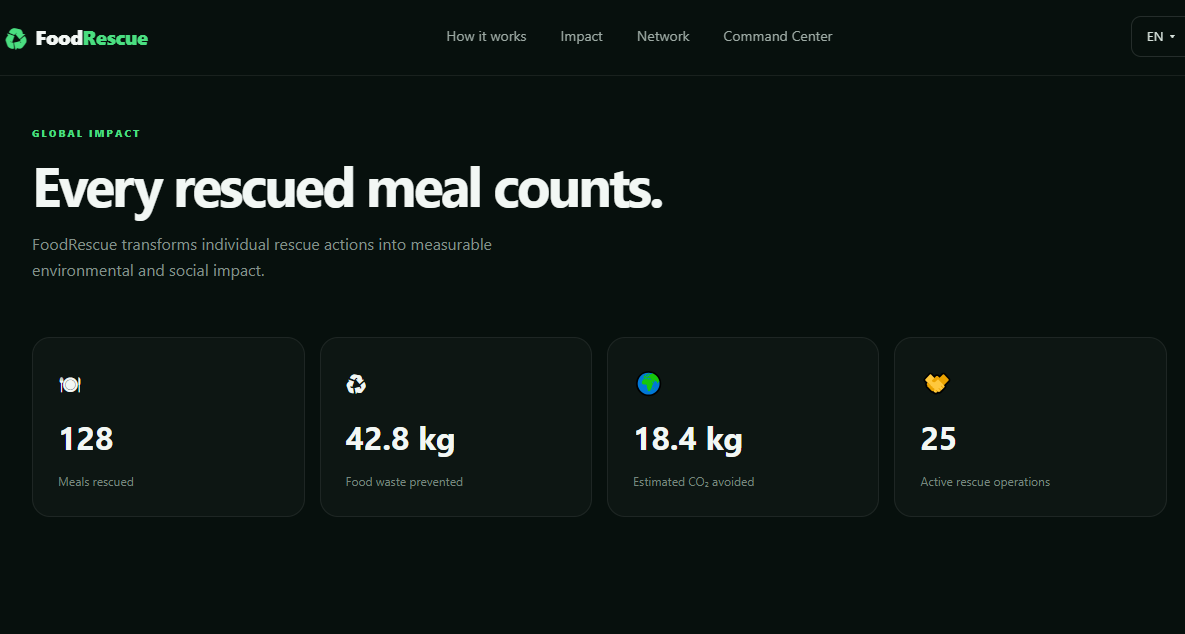
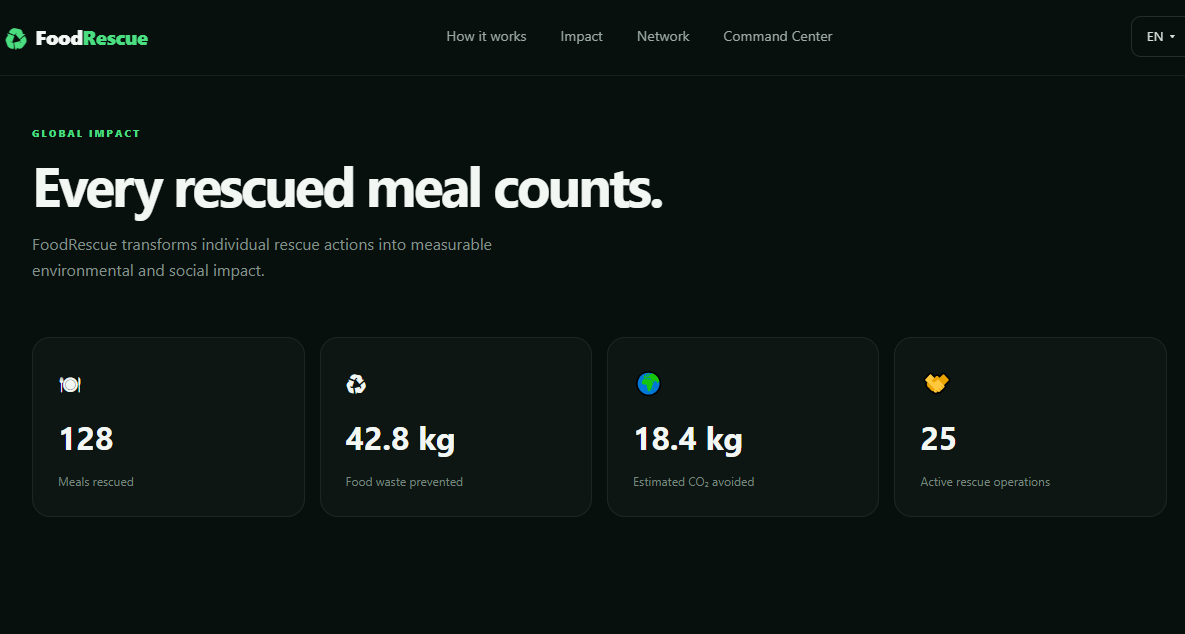
- Detailed environmental impact analytics
The long-term goal is to evolve FoodRescue from a prototype into an intelligent coordination layer for food rescue.
Our Vision
FoodRescue is built around one idea:
Food that can still help someone should have a chance to reach them before it becomes waste.
By combining smart analysis, matching, and coordinated rescue workflows, we hope FoodRescue can help make food rescue faster, more organized, and more accessible.
FoodRescue
Save food before it becomes waste.
Built With
- ai
- css
- data-analysis
- environmental-technology
- food-rescue
- food-waste-reduction
- html
- javascript
- responsive-design
- smart-matching
- sustainability
- ux/ui
- web-application

Log in or sign up for Devpost to join the conversation.