-
-
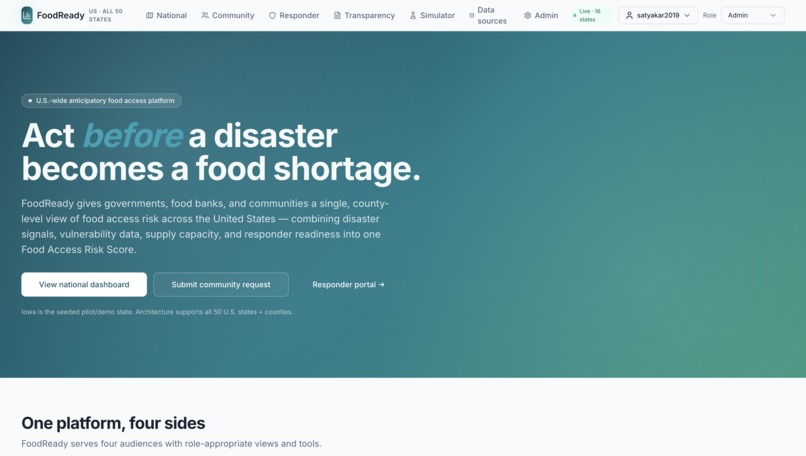
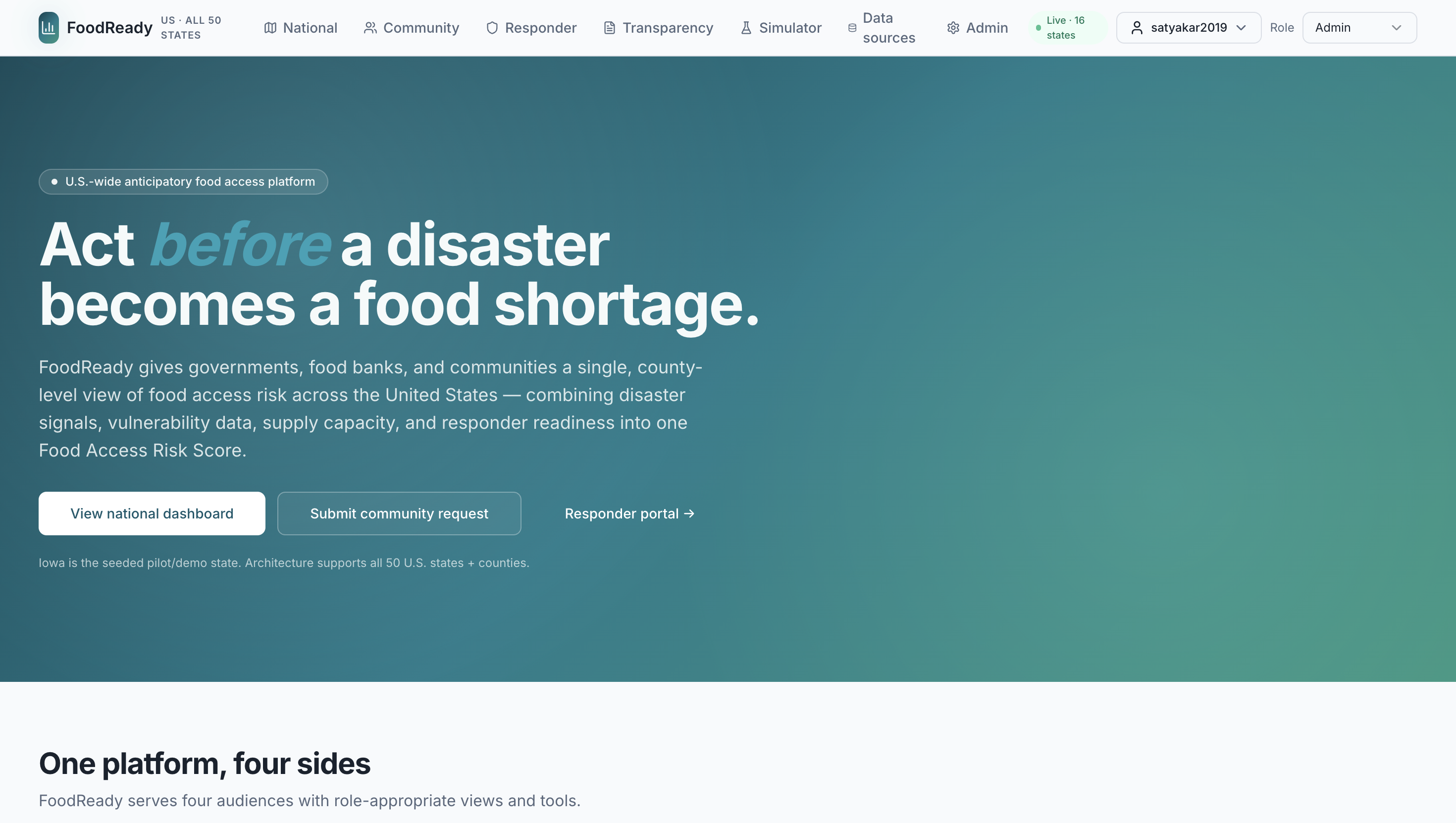
Launch Page
-
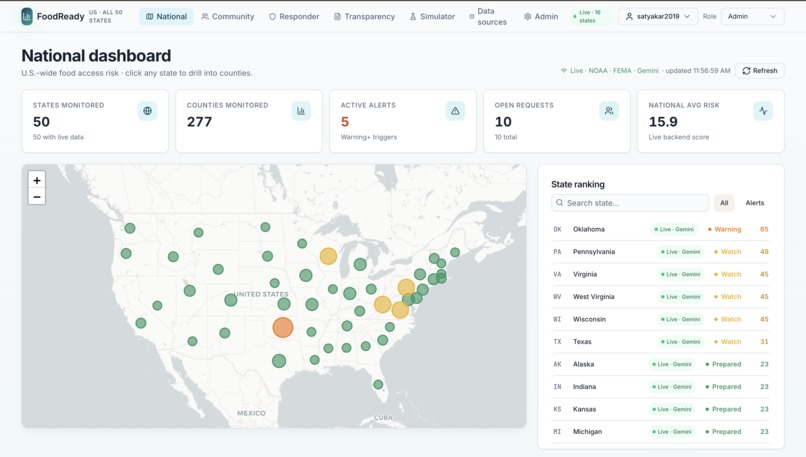
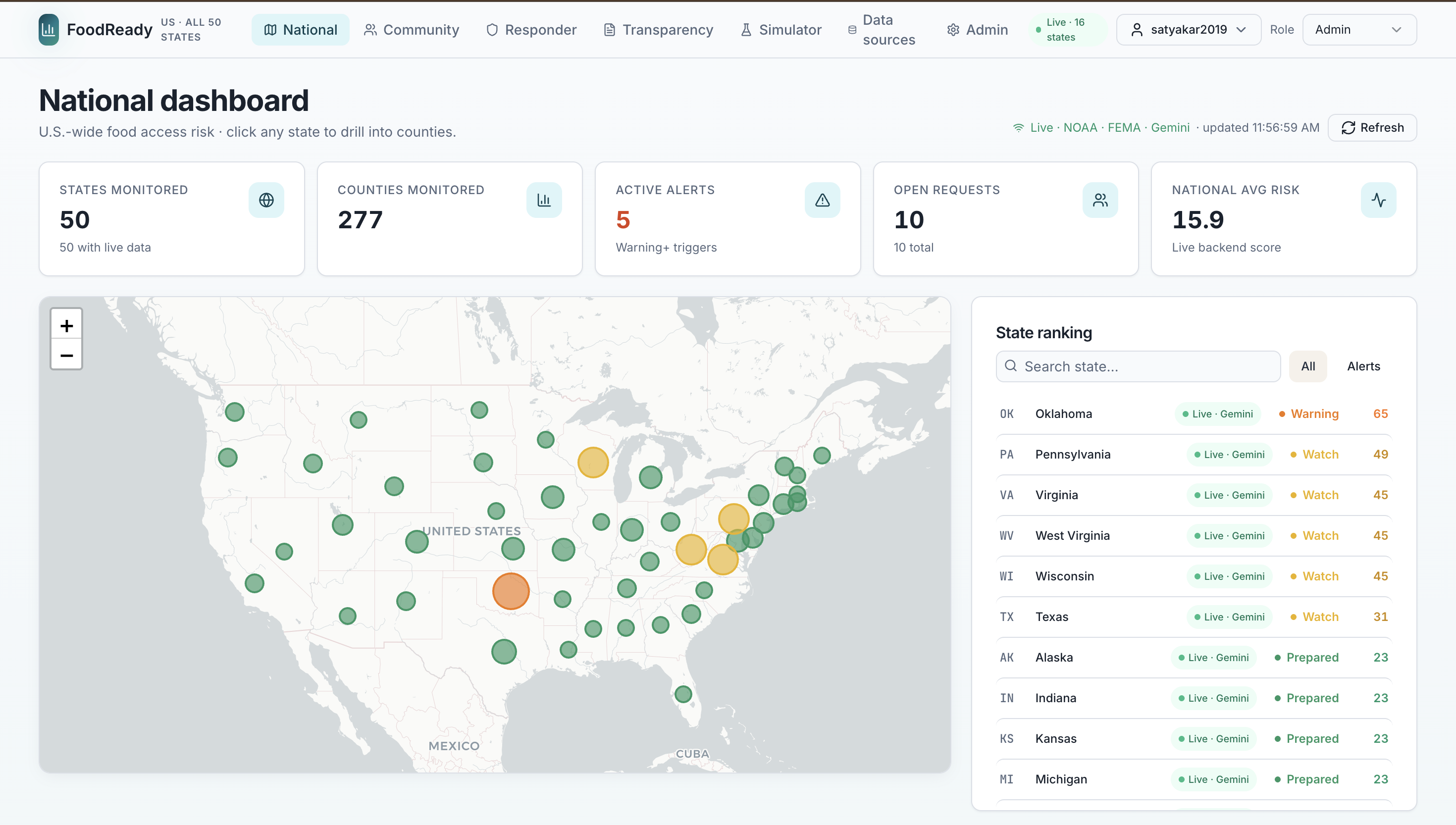
Map with States' Risk Scores
-
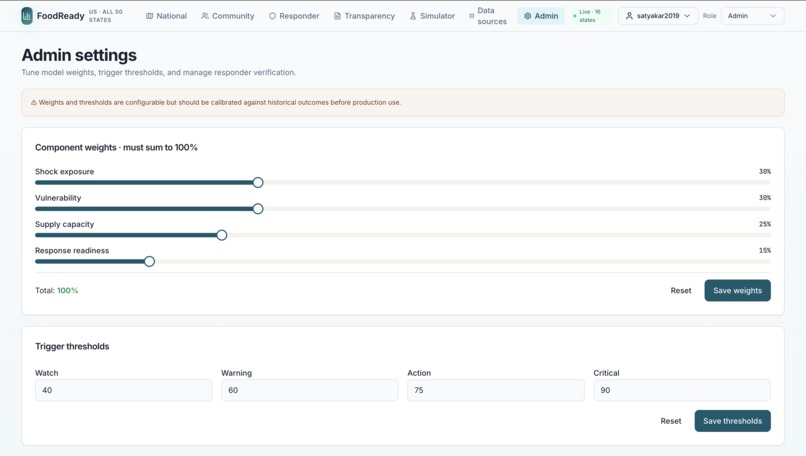
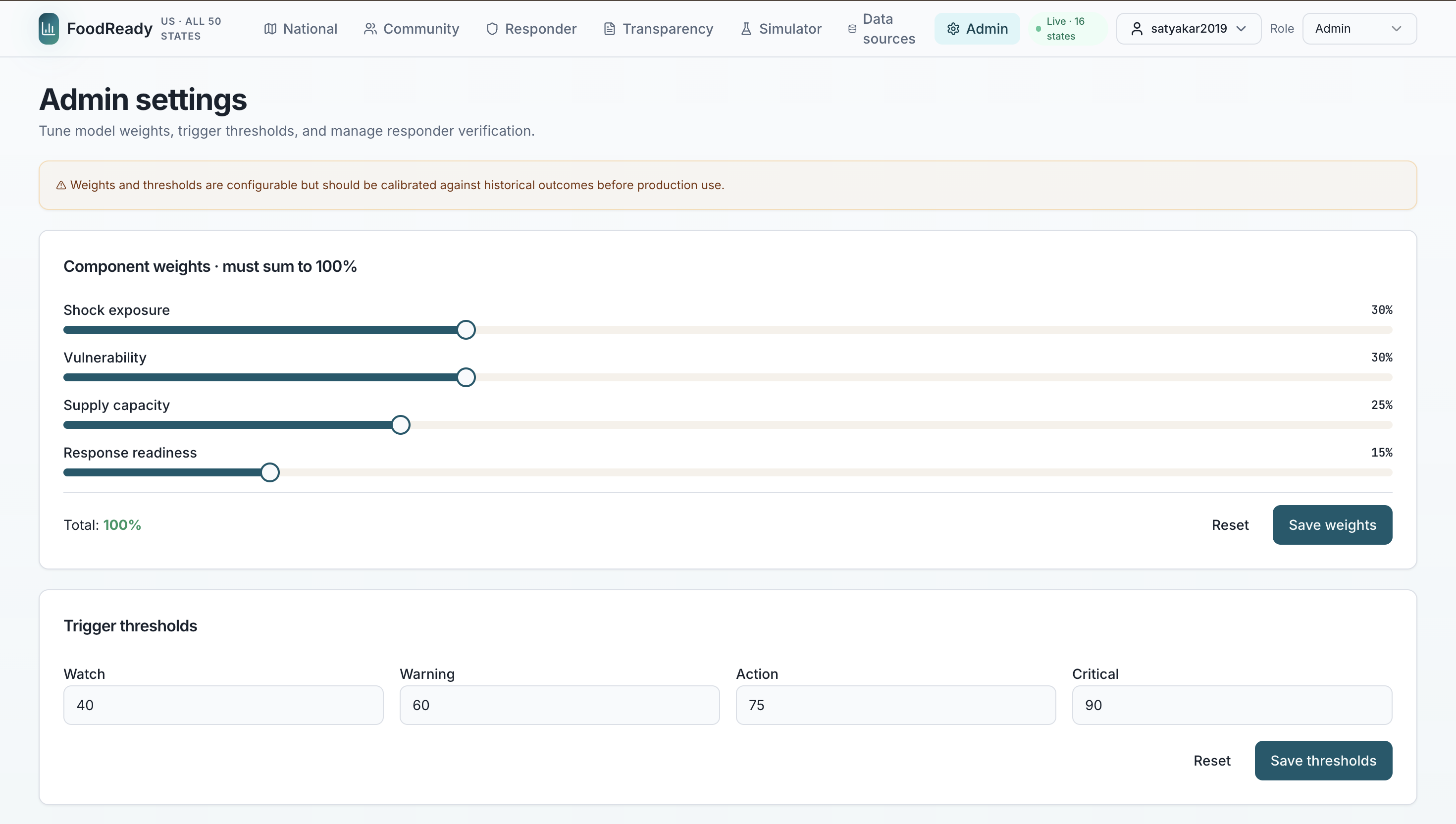
Settings
-
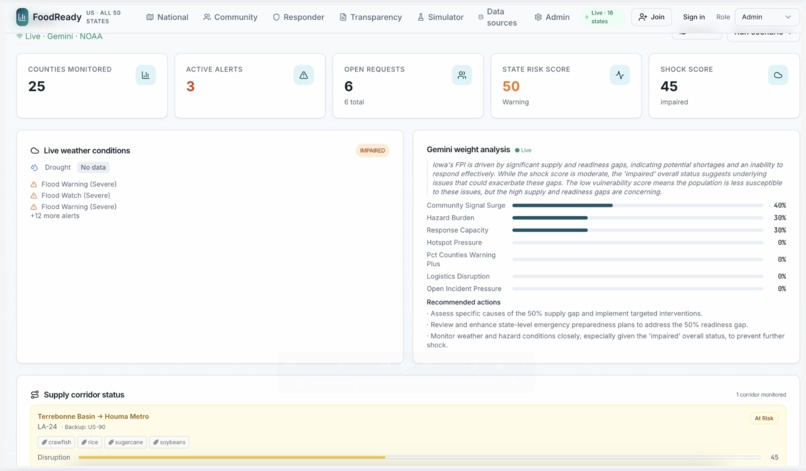
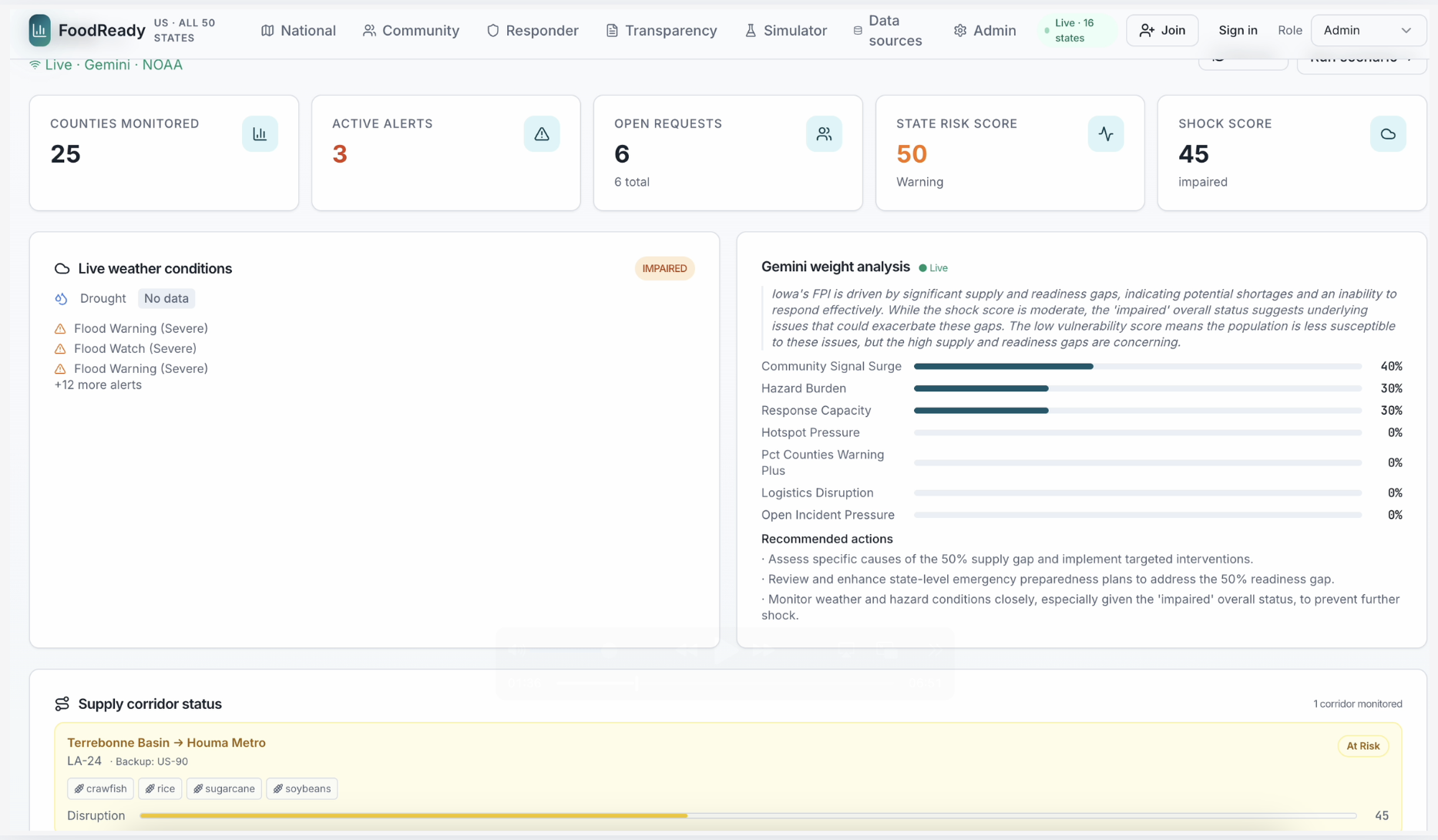
Risk Scores
Inspiration
In the United States, we treat food insecurity as a lagging indicator. We measure it through annual surveys and census data, meaning by the time a "crisis" is officially recognized, families have already been skipping meals for months.
When a climate shock like a flash drought in the Midwest or a hurricane in the Gulf—hits, the response is often reactive. I wanted to build a system that moves the needle from reactive relief to anticipatory action, using the same high-frequency data used by hedge funds and meteorologists to protect the most vulnerable tables in America.
What it does:
FoodReady serves as a real-time situational awareness dashboard and early-warning system for the American food supply chain. By synthesizing disparate environmental and socio-economic data, it provides predictive risk mapping, supply corridor & infrastructure monitoring, and full-lifecycle incident management.
How we built it:
The Tech Stack The Brain: A FastAPI backend that orchestrates data from NASA (FIRMS/NDVI), NOAA (NWS/Drought Monitor), and FEMA.
The Intelligence: Google Gemini API serves as a dynamic reasoning engine. It evaluates raw environmental stressors and adjusts the weighting of our risk formula in real-time.
The Interface: A React 18 frontend utilizing Zustand for ultra-fast state management and TanStack React Query to ensure the dashboard reflects live conditions without constant manual refreshes.
The Math: The Food Pressure Index (FPI) At the heart of FoodReady is the FPI, a composite score calculated for every county. The baseline formula follows a weighted linear combination: FPI = the sum of shock exposure, vulnerability, supply capacity, and response readiness, multiplied by respective weights.
Challenges we ran into:
The biggest hurdle was Data Heterogeneity. NASA's satellite data doesn't "talk" to the USDA's drought reports or the NWS alert system. Each has different update frequencies, coordinate systems, and API structures.
We had to build a robust normalization layer in Python to ensure that a "Severe Thunderstorm Warning" in Iowa and a "D4 Drought" in Texas could be compared on the same 0–100 scale. Additionally, deploying a data-heavy application on a free-tier infrastructure (Render) required creative caching strategies—using React Query to prevent redundant API calls and a "Baseline" fallback engine to ensure the map remains functional even if the backend is sleeping.
What we learned:
This project taught us that AI is most powerful when it’s used as a "Contextual Glue." Using Gemini wasn't just about generating text; it was about using a Large Language Model to make "judgment calls" on data weights that would traditionally require a room full of analysts.
We also gained a deep appreciation for Geospatial Engineering. Learning how to map supply corridors and calculate "dependency weights" for communities showed me how fragile our logistics networks truly are. FoodReady isn't just a coding project; it’s a blueprint for a more resilient digital infrastructure.
Built With
- fastapi
- python
- typescript

Log in or sign up for Devpost to join the conversation.