
NOTE: We tried to get the website running on foodprint.space but were having some trouble with getting the domain name to work. If that website doesn't work, you can access FoodPrint at this link here \
Inspiration
We wanted our product to create positive environmental change, while also providing users with a streamlined and easy-to-use experience. We drew inspiration from nutrition labels and sought to make our web pages similarly easy-to-read and detailed.
What It Does
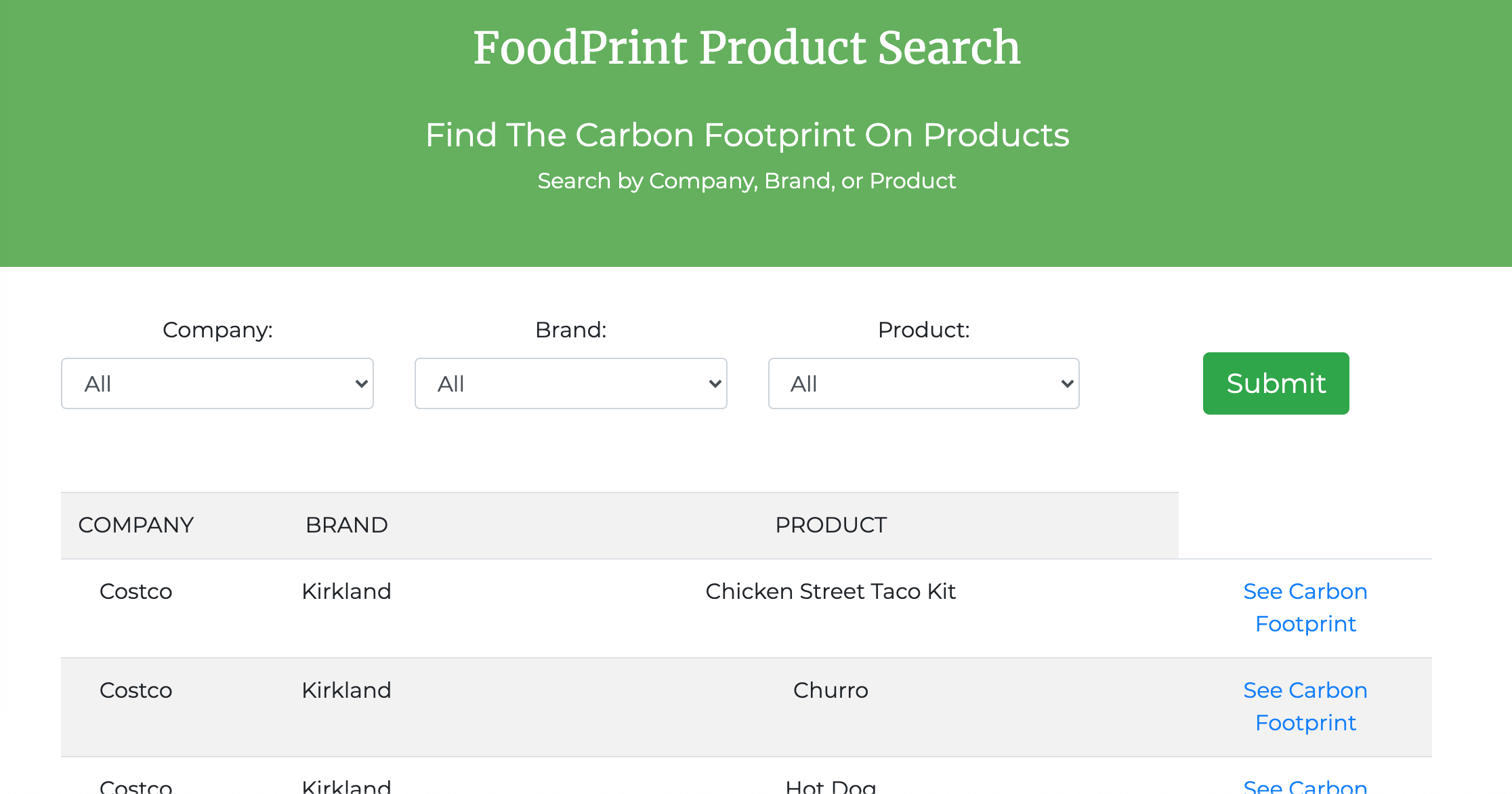
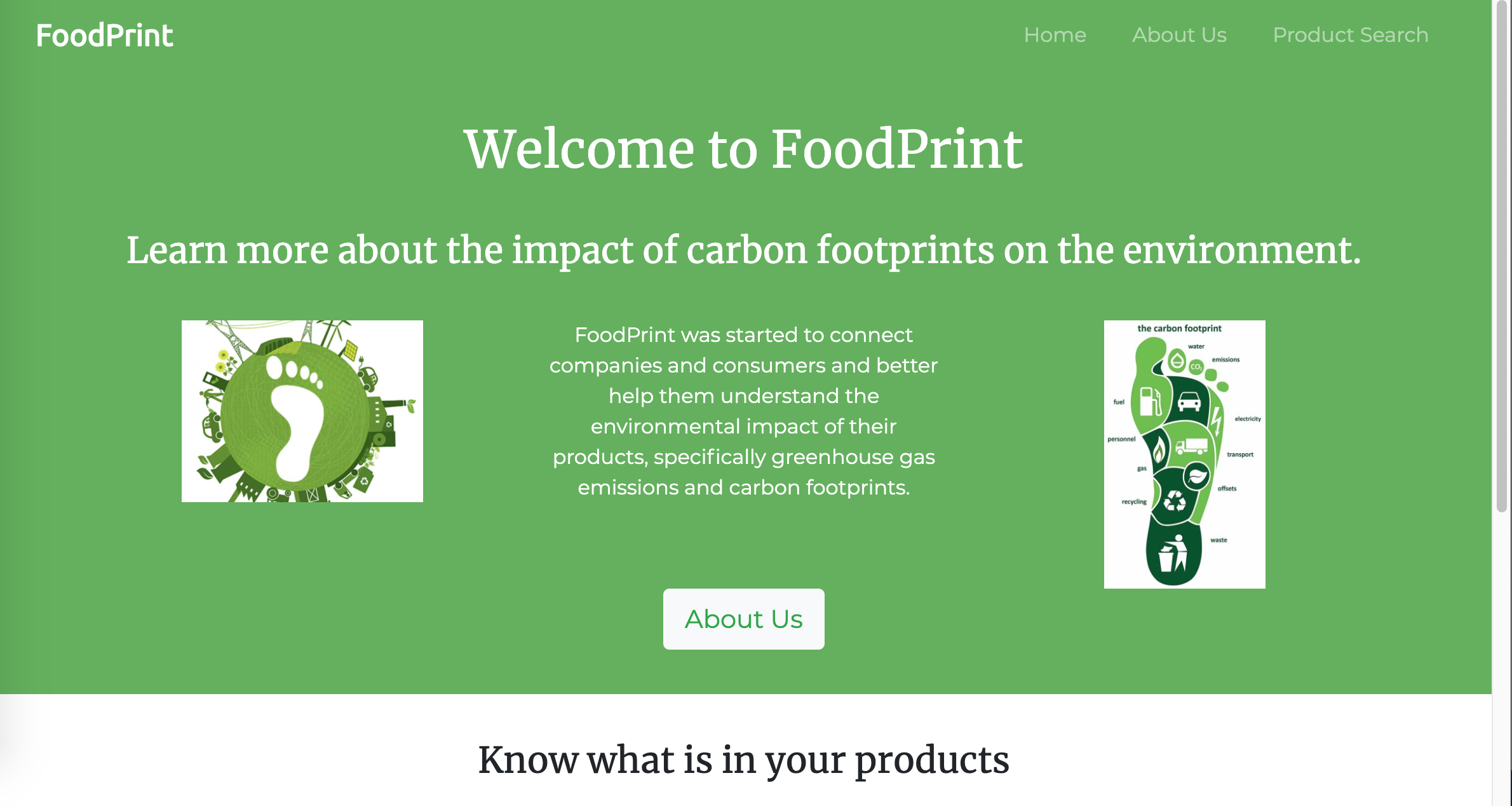
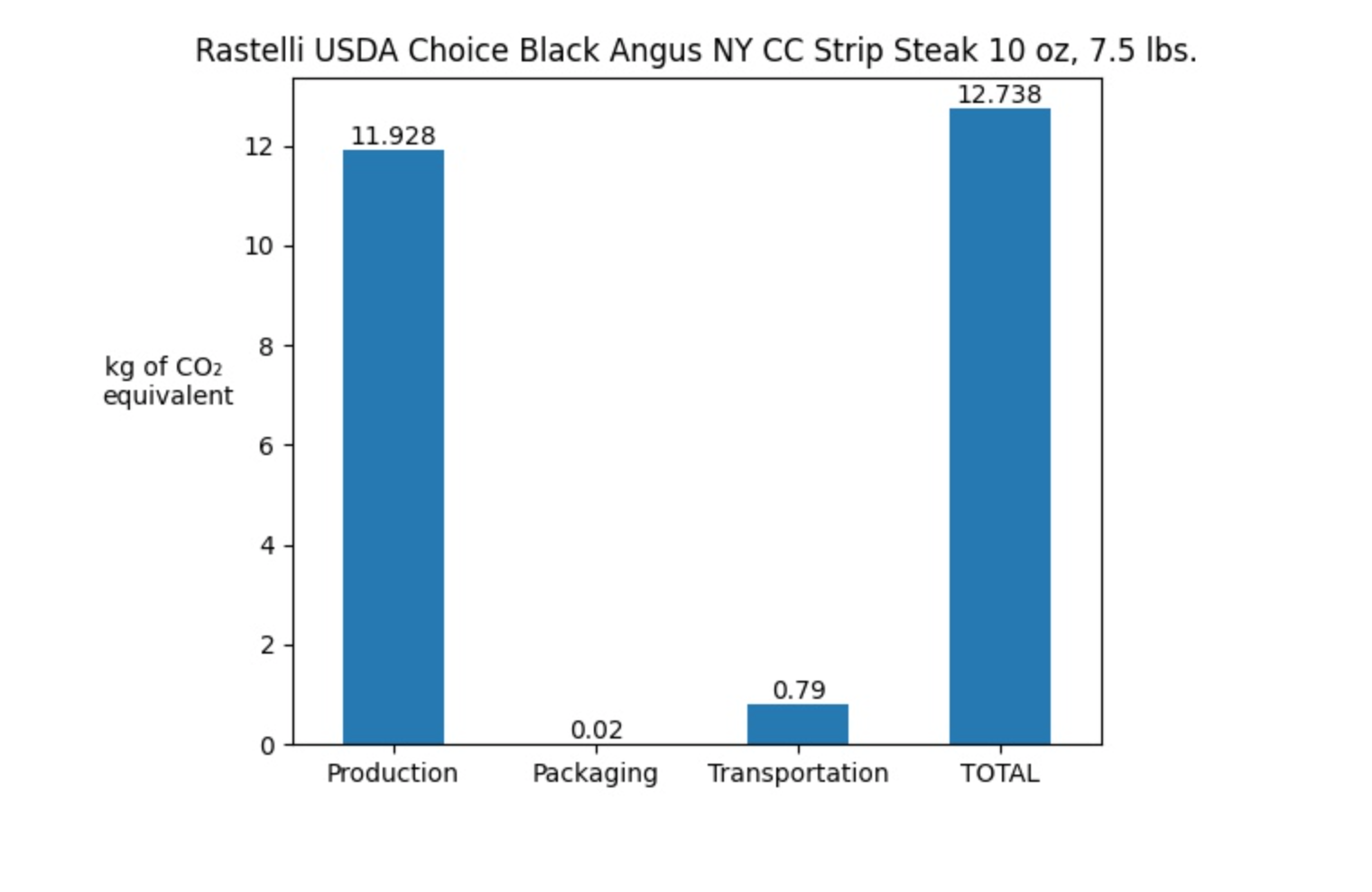
FoodPrint partners with food companies to provide detailed environmental information on their food products. Companies provide us with some easily-measurable data on their production, packaging, and transportation costs, which we then feed into an algorithm that calculates carbon emissions in those three sectors. This emission information can then uploaded to a cloud database, which contains detailed information for a vast variety of food products, sorted by manufacturer and brand. When a customer scans the FoodPrint QR sticker, they are directed to that item’s specific page on our website, which gives them detailed emission information. They can then compare their chosen item to other similar products, and make environmentally-friendly purchasing decisions.
How We Built It
FoodPrint is comprised of two main parts. The first major program takes csv data that companies supply to us, sorts them, runs our emission algorithm on them, and then generates graphs of the data. The data and graphs can then be uploaded to a cloud sever. We wrote this script using Python’s pandas and matplot libraries to efficiently sort and process the csv data. The second parts is a website written in html, css, and javascript, which pulls data from our cloud server, processes them, and presents them to the user. In this manner, FoodPrint is able to simplify and process complicated data and present them to users in an easy-to-understand manner. This takes the responsibility off of the consumer, and makes it much easier for them to make sustainable decisions and to support companies that do not release many carbon emissions.
Challenges We Ran Into
One of the biggest challenges that we ran into early on in our development was that we realized that our website was not able to read local csv files. This prompted us to move our database to a cloud server, which could then be edited with our programs. We used Google Firebase for its cloud-hosting services. Most of our challenges occurred early on, as we honed our product idea and organized the tools we needed to implement FoodPrint. We ran through several different iterations before we finally decided on carbon emission information, and then had to further investigate the best ways to convey that information to consumers. Overall, despite our team being fully comprised of first-time hackers, we ended up learning and adapting very quickly to the challenge, and were able to get a lot of work done in a short time span. Finally, of course, one of our biggest challenges was coming up for a name for our product. Throughout development, our prototype name was “Smart-est Label”, a parody of Smartlabel™ products on food. We decided on FoodPrint about halfway though the Hackathon -- a way for customers to see their food’s carbon footprint!
What We’re Proud Of
We’re very proud of all the work we did during our first hackathon. Starting off, we never though we would be able to accomplished all the things we did in such a short period of time. We coordinated and delegated activities, and in the end, our team worked together to create a wonderful demo product that showcases the potential social good that FoodPrint labels can do!
What We Learned
We learned a lot about how to come up with and develop a product idea. We were able to combine our pre-existing knowledge and experience with CS and Math with our interests in environmental sustainability to create a product that accomplishes our goals.
Plans for the Future
We intentionally built FoodPrint to be scalable so that we can input the most up-to-date accurate information for our users. Our platform is designed so that we can partner with many large companies to provide emission information on their products. As more people use FoodSpace and it becomes more common, bigger companies will be incentivized to give the information on their emissions, which results in more transparency. On our end, we have several short-term UX improvements for FoodPrint, such as providing recommended similar products on pages, so that users can continue comparing products and making smart decisions without too much effort on their end. Additionally, we hope that the ease of our product allows it to grow and expand in ways that we currently have not thought of, so that it can remain an easy way to encourage sustainable and environmentally-friendly behavior to a wide audience of people.
Built With
- css
- domain.com
- firebase
- html
- javascript
- python

Log in or sign up for Devpost to join the conversation.