Inspiration
As a food lover and social media creator, I grew frustrated with how hard it was to capture restaurant-worthy food photos with just a phone. Every time I posted a home-cooked meal, it lacked the polish of professional food shots—bad lighting, off composition, or mismatched backgrounds. I wanted to make pro-level food photography accessible to everyone, no fancy gear required. That’s where FoodPhotography AI was born.
What it does
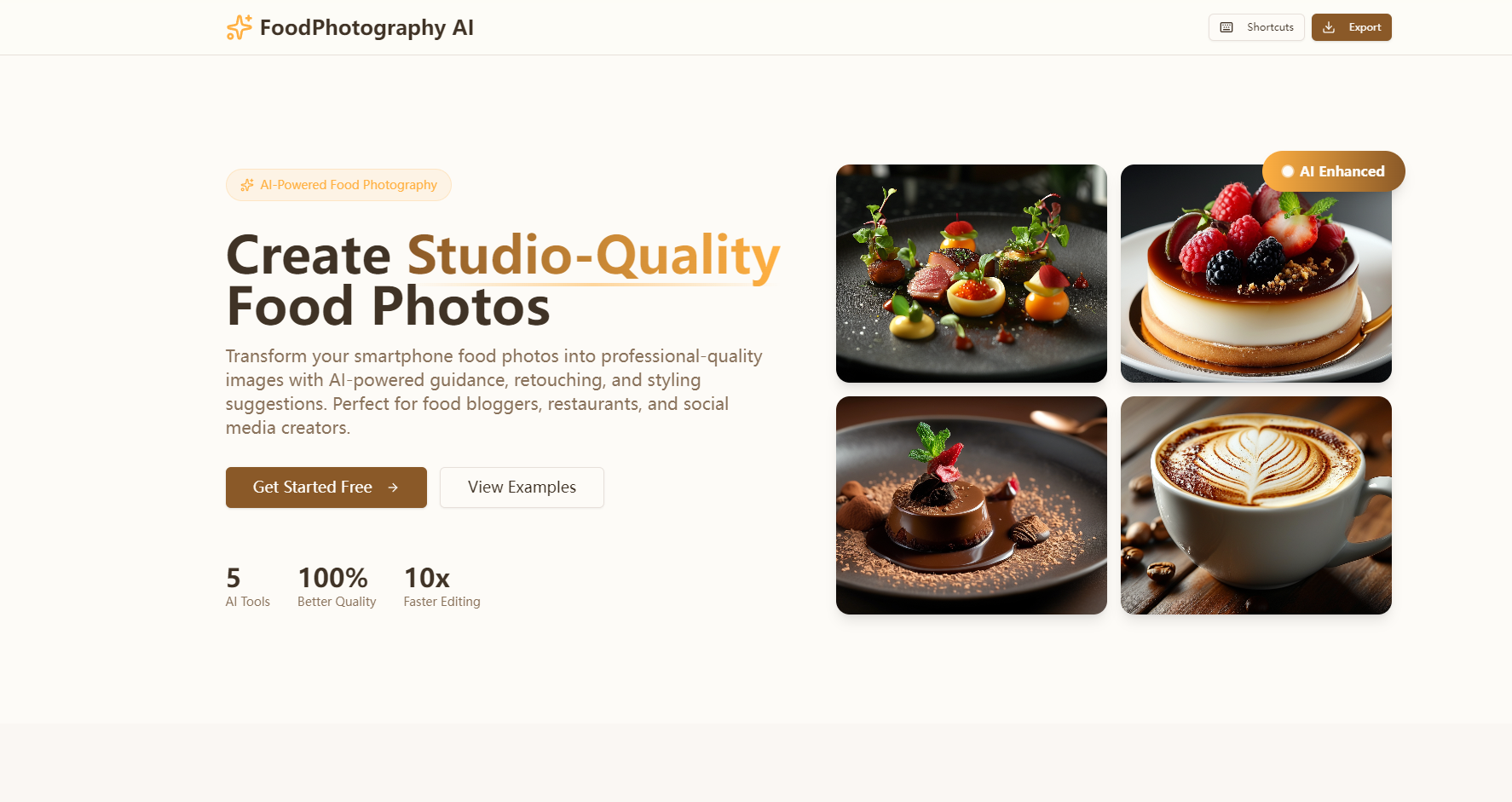
FoodPhotography AI is a mobile tool that uses AI to guide users through every step of food photography: real-time lighting/composition tips, one-tap retouching with curated styles, styling and prop suggestions, and seamless formatting for Instagram, TikTok, and more. It’s designed to turn ordinary phone snaps into eye-catching, social media-ready food photos—no expertise needed.
How we built it
We started by mapping core user needs: simplicity and visual appeal. We used React Native for cross-platform mobile compatibility, TensorFlow for AI-driven image analysis (to tailor guidance to food types), and integrated Photoshop API for retouching effects. We curated sample food imagery across categories (drinks, desserts, mains) to demo features, and built a subscription layer for premium access using Firebase for backend logic.
Challenges we ran into
The biggest hurdle was making real-time previews smooth—users switching between styles or formats needed instant, lag-free updates. We also struggled to balance simplicity with functionality: we wanted to offer pro features without overwhelming casual users. Fine-tuning AI guidance for different food types (e.g., top-down angles for desserts vs. side angles for drinks) required testing dozens of food samples to get it right.
Accomplishments that we're proud of
We created a tool that’s intuitive enough for casual users but robust for content creators—all without requiring login or photo uploads for the demo. The before/after retouching slider became a fan favorite, and we nailed the warm, appetizing color palette that makes food photos pop. Most importantly, we kept the UI minimal and icon-driven, staying true to the "mobile-first" vision.
What we learned
We learned that user experience trumps features—even the most powerful AI tools fail if they’re hard to use. We also realized how much regional food styling preferences matter (e.g., bright, fresh tones for Mediterranean dishes vs. moody dark styles for comfort food) and how to bake that into our presets. Building a subscription model that feels fair (basic access for all, premium for full features) was a key lesson in balancing accessibility and sustainability.
What's next for this project
Next, we’ll add real-time camera integration so users get guidance as they shoot, not just on preloaded samples. We’re also expanding social media integration (direct posting) and adding more regional style presets. We want to build a community layer where users can share their edited food photos, and we’re exploring offline mode for users who shoot on the go (like at farmers’ markets or cafes) without Wi-Fi. Finally, we’re testing multi-language support to reach more creators across Europe and beyond.
Built With
- kotlin
- reactnative
- swift

Log in or sign up for Devpost to join the conversation.