Inspiration
What it doesInspiration
FoodMesh came from something I grew up around: neighbors helping neighbors. In Mexico, if someone was missing an ingredient or had extra food, it was normal to share. There’s a saying, “Donde come uno, comen dos” — where one eats, two can eat. That idea is really the heart of FoodMesh.
What it does
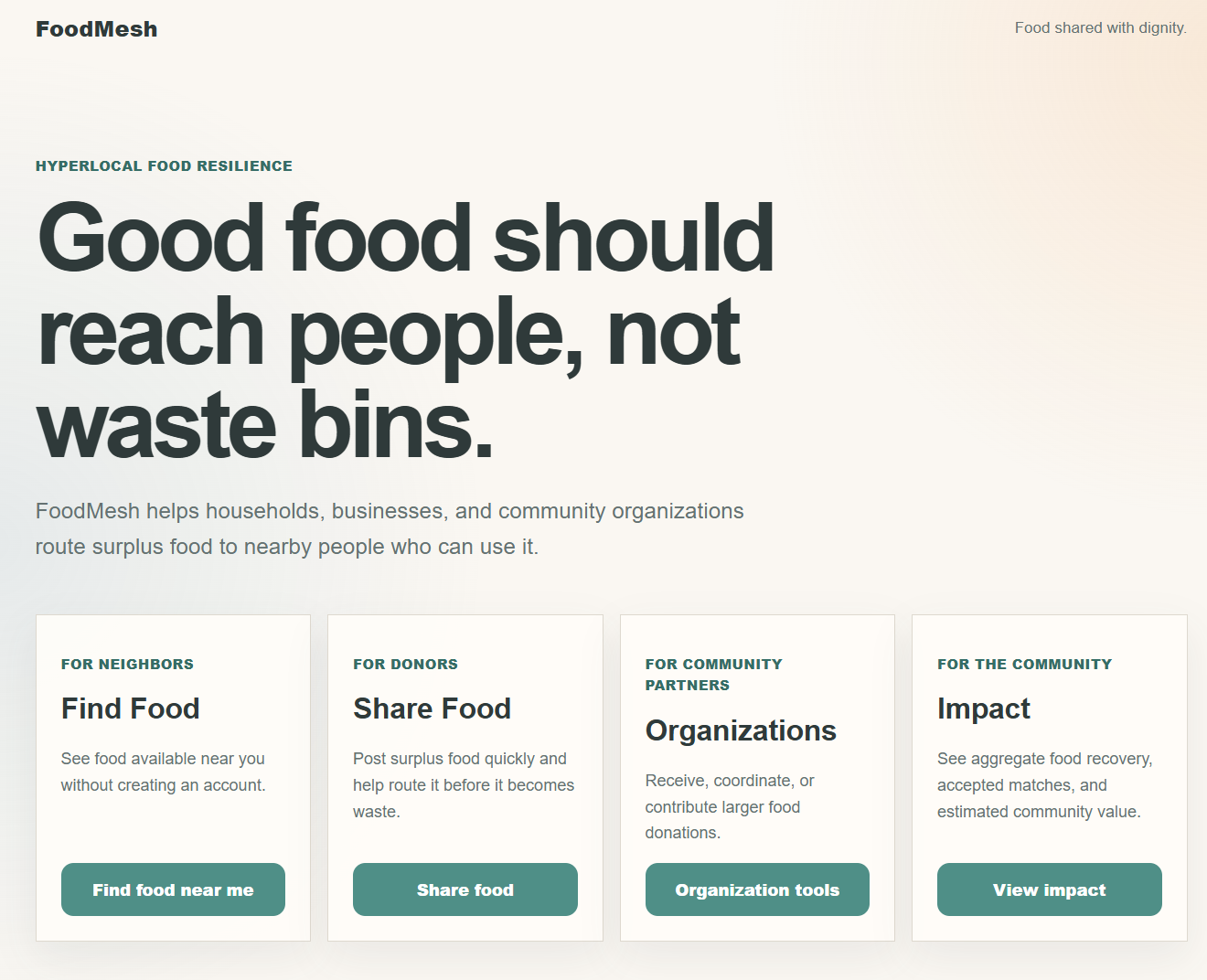
FoodMesh helps people, businesses, and community organizations share surplus food locally.
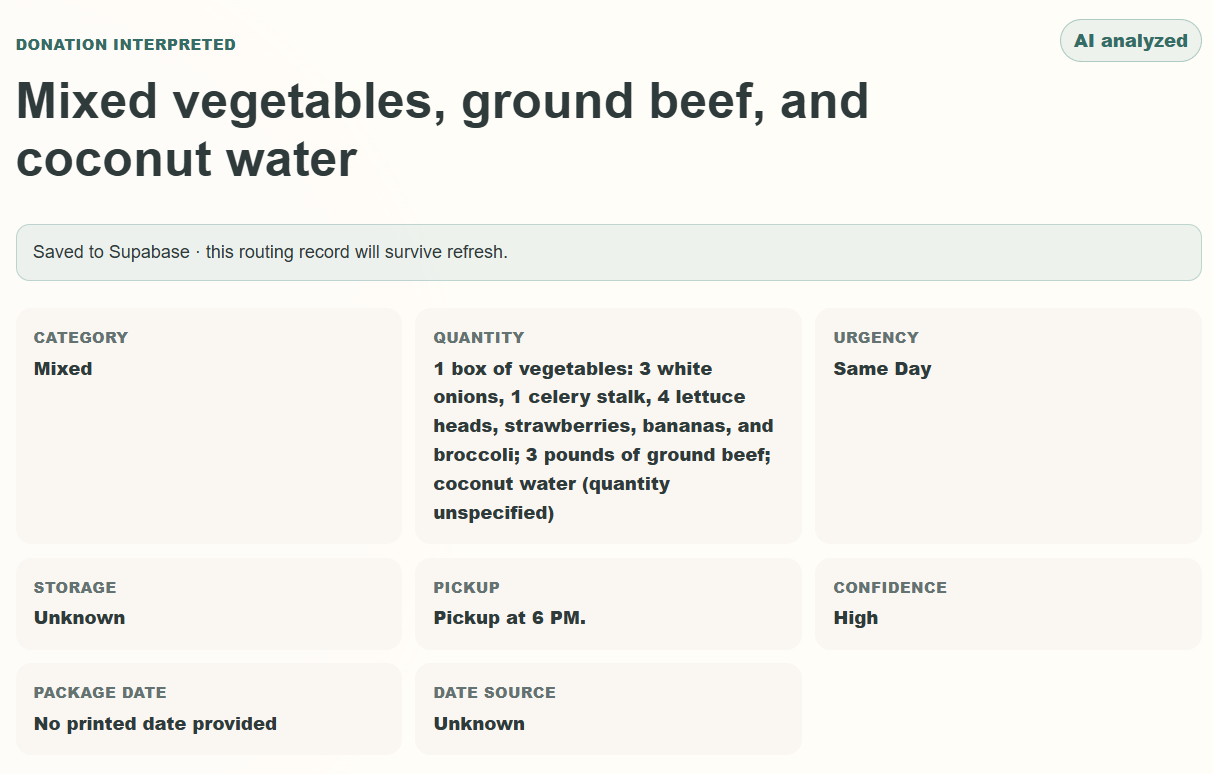
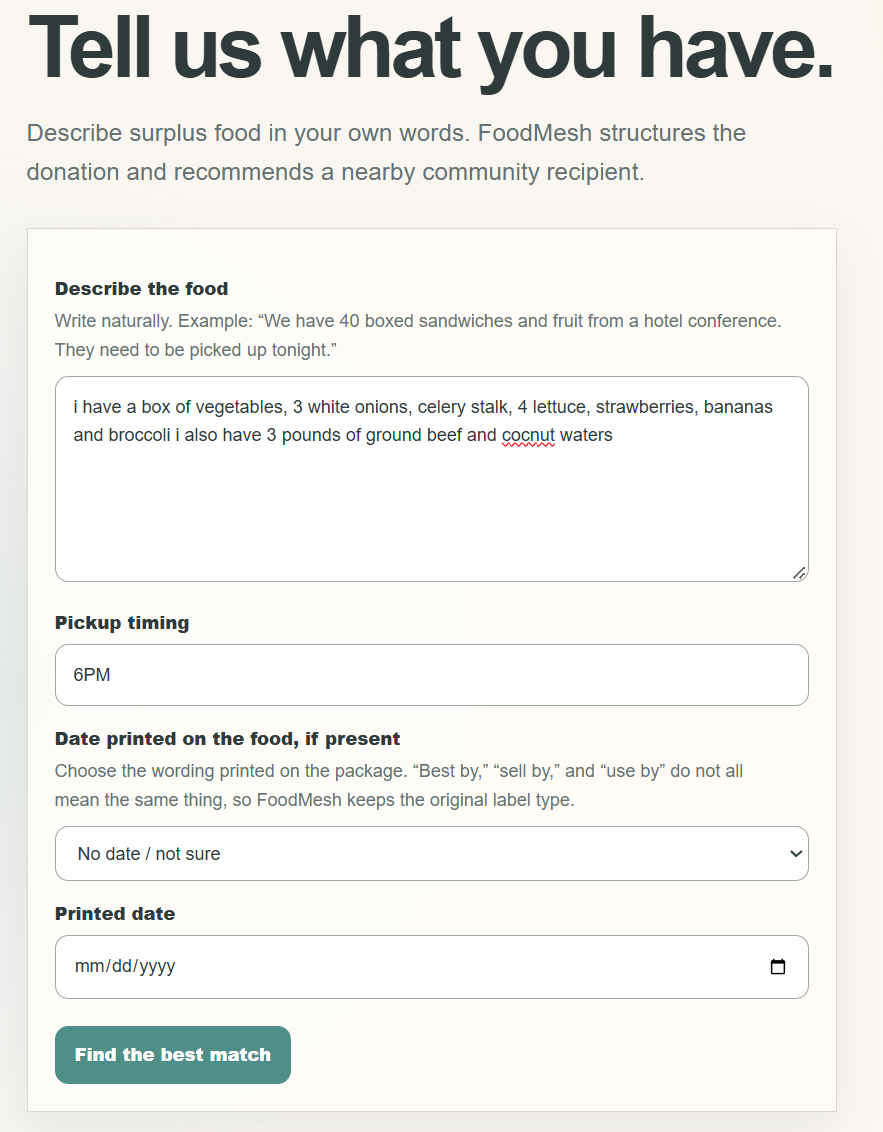
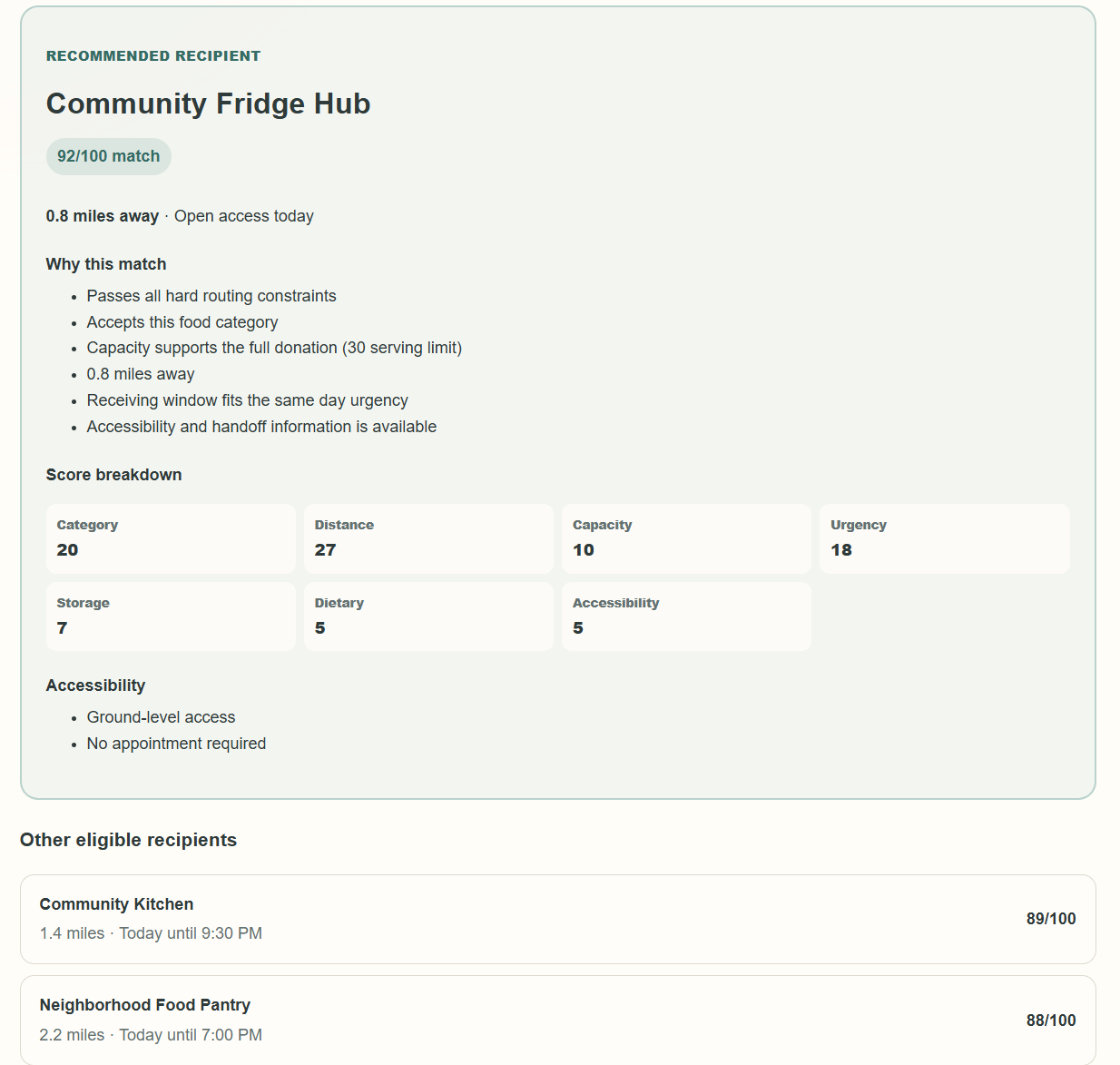
You can describe what you have in normal language, and AI organizes the information. Then FoodMesh uses clear matching rules to find a nearby organization that can actually use it.
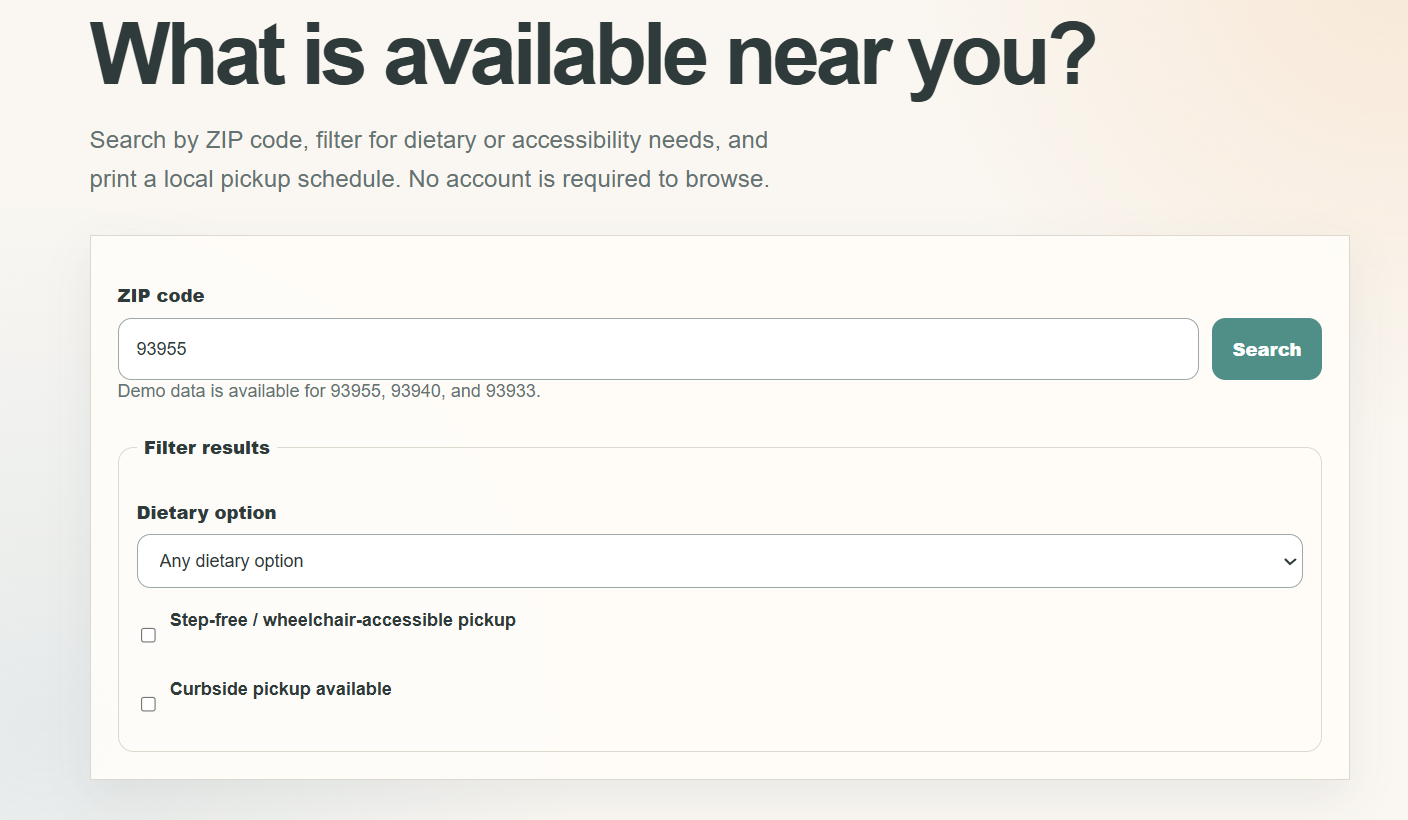
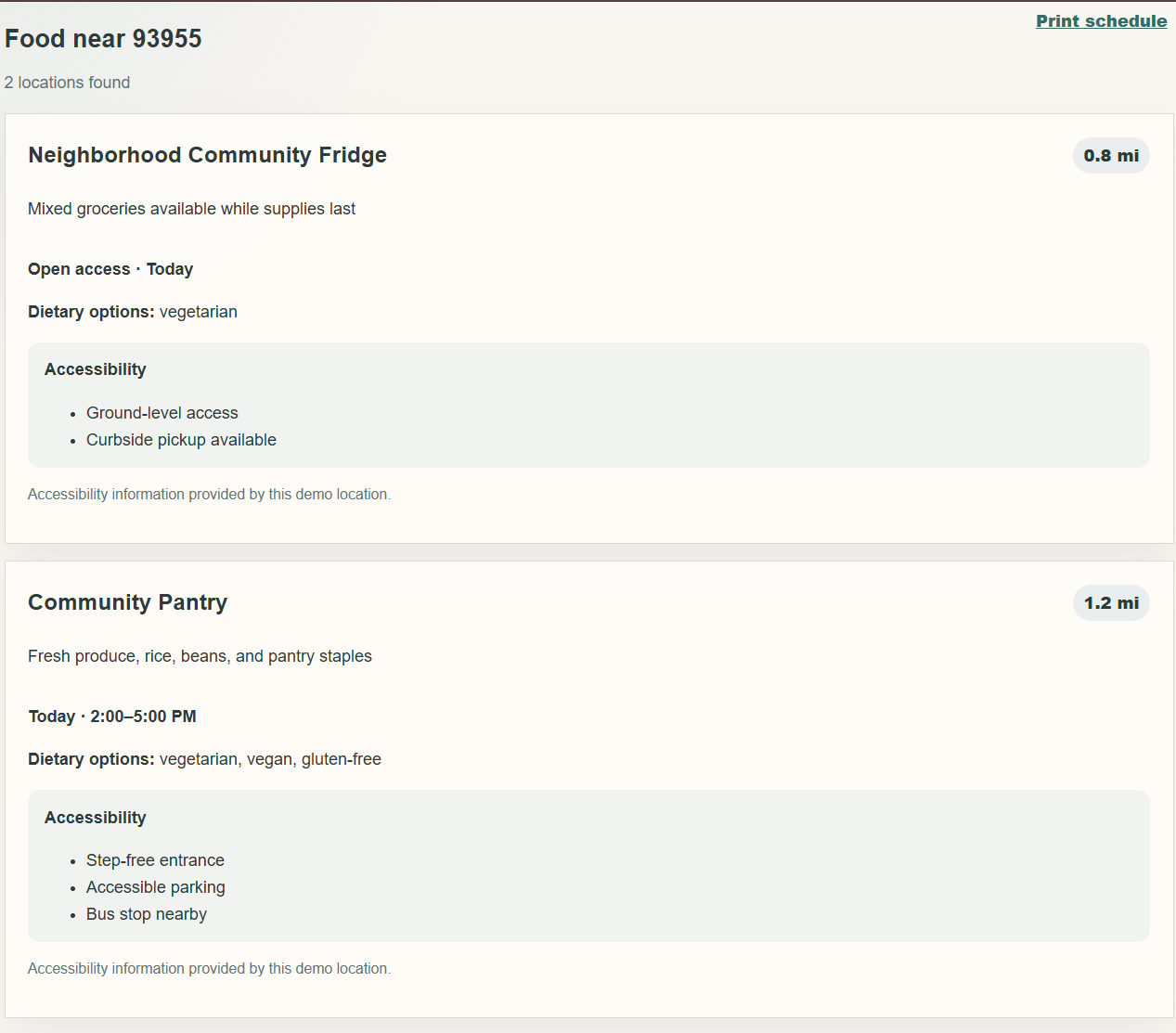
People can also browse nearby food without creating an account. The current MVP focuses on community organizations, but the larger idea includes trusted neighbor-to-neighbor pickup too.
How we built it
We built FoodMesh with Next.js, React, TypeScript, OpenAI, and Supabase.
AI handles the messy human input, but it does not make the final routing decision. The matching engine checks things like distance, capacity, food type, urgency, storage, and accessibility.
The basic idea is:
AI interprets. Rules decide.
Challenges we ran into
One of the biggest challenges was figuring out where AI actually made sense.
We did not want a black box deciding where food should go, so we separated the AI from the matching logic.
We also had to work through deployment, database persistence, fallback behavior, and accessibility while making sure the whole thing still worked reliably for the demo.
Accomplishments that we're proud of
I’m proud that FoodMesh became a real working product instead of just an idea.
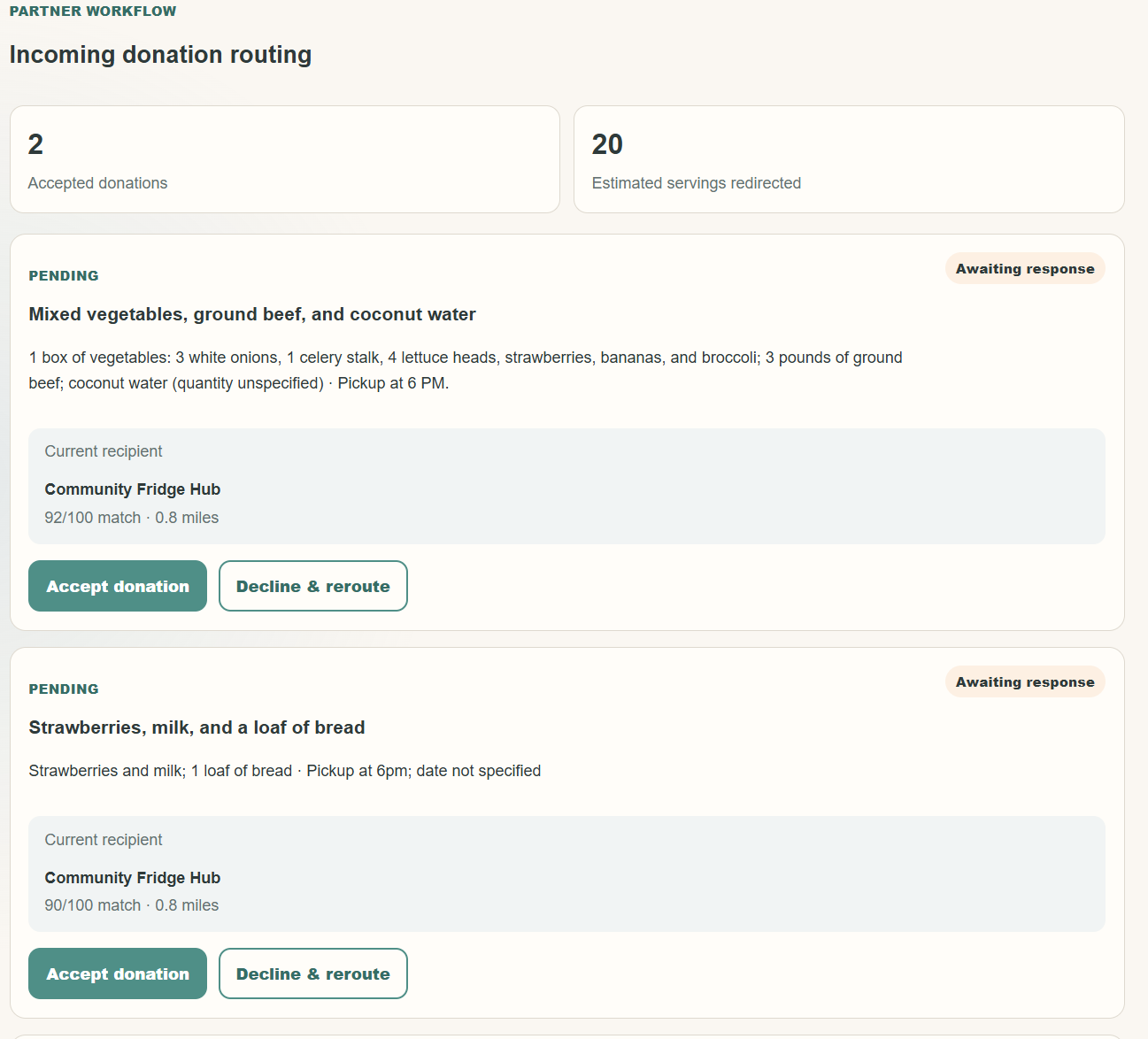
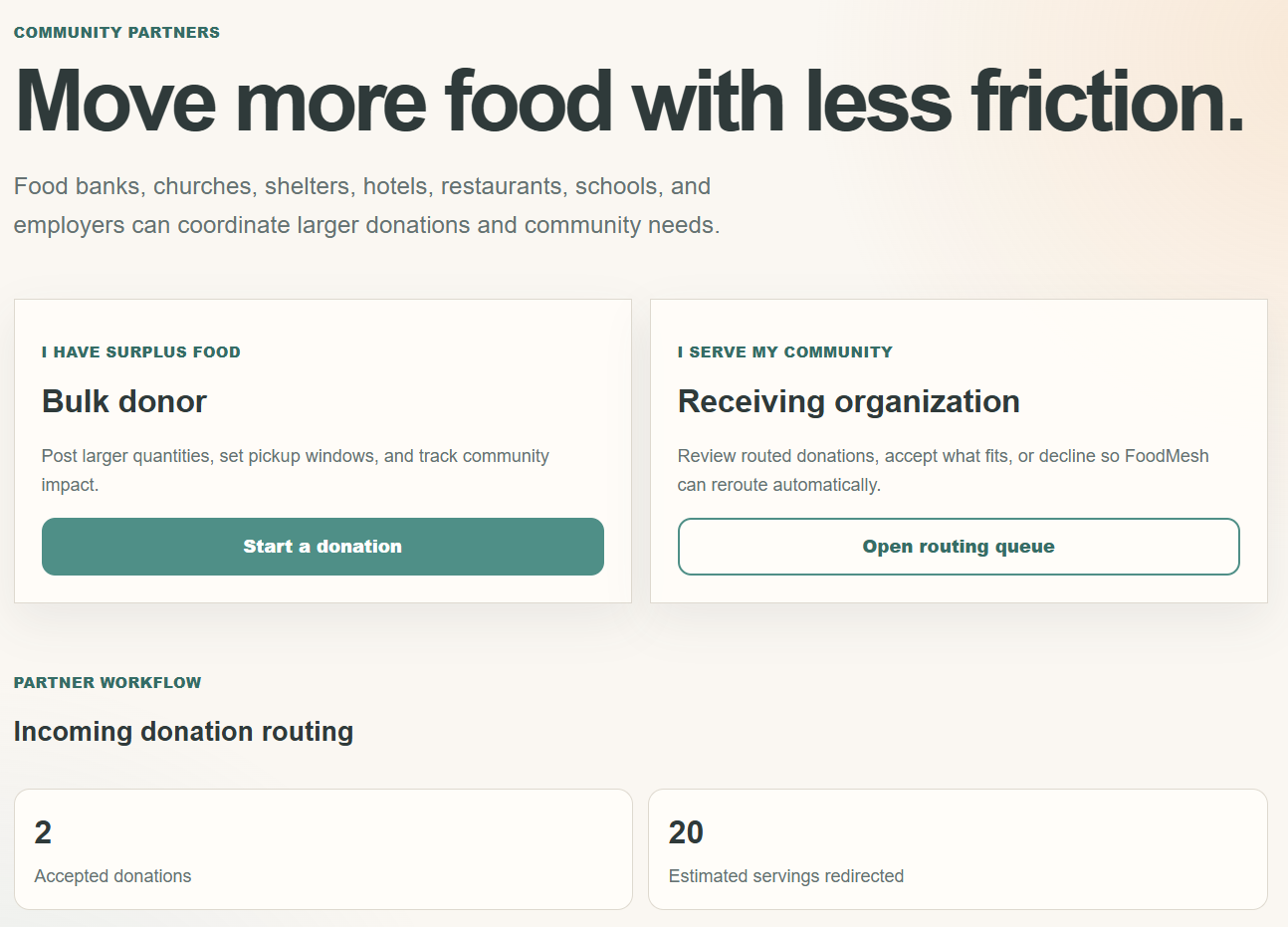
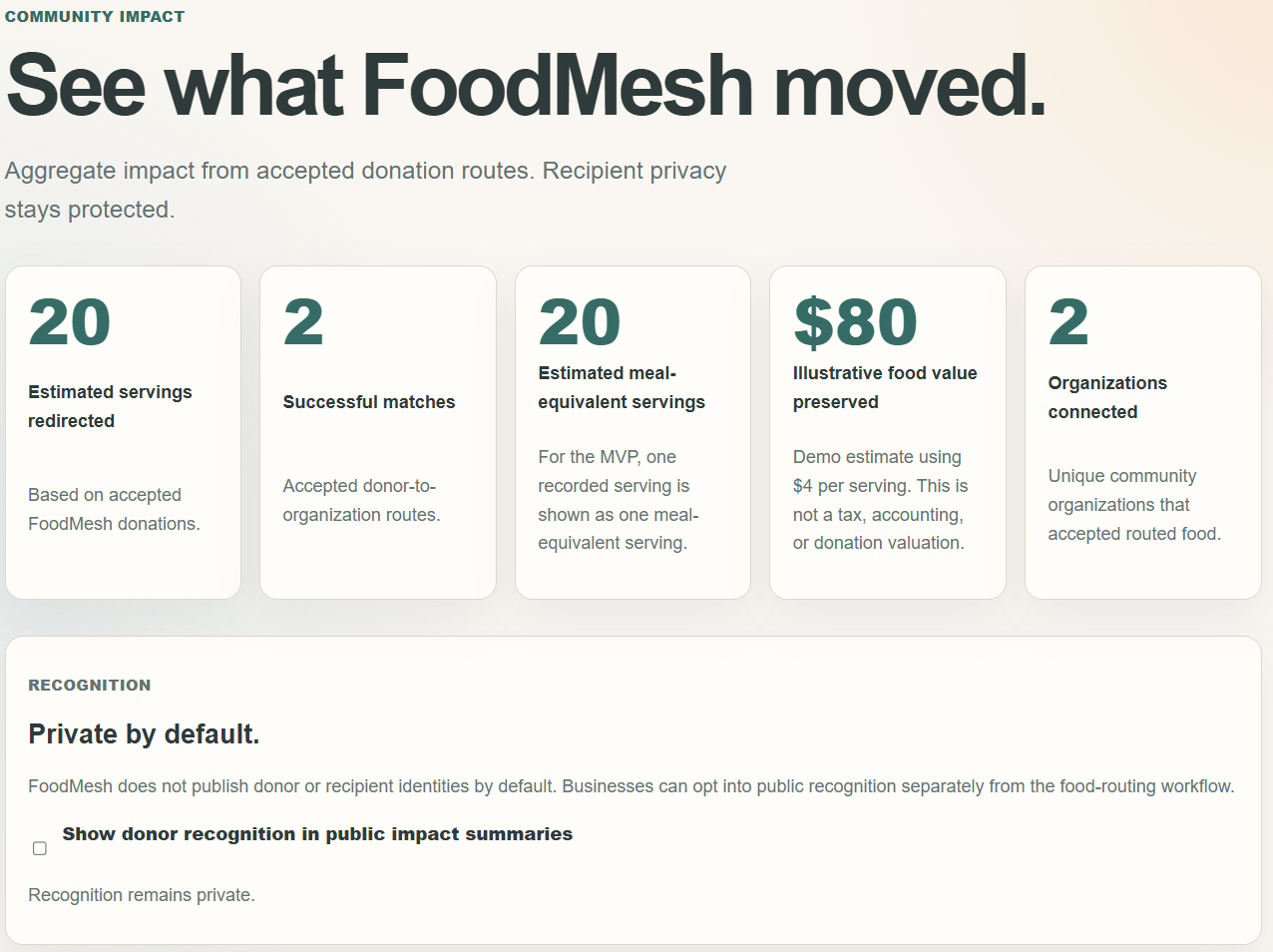
We got natural-language intake, explainable matching, rerouting, organization workflows, Find Food, accessibility features, impact tracking, Supabase persistence, and a live deployment working during the hackathon.
What we learned
The biggest thing I learned is that AI is really useful for handling ambiguity.
People speak naturally, but software needs structured information. AI can bridge that gap, while normal software handles the parts that need to stay predictable and explainable.
I also learned that food sharing is not just a logistics problem. It is about trust, accessibility, and community.
What's next for FoodMesh
Next, I’d like to expand FoodMesh with multilingual support, better organization tools, stronger real-time availability, and trusted neighbor-to-neighbor pickup.
The goal is not to build one giant centralized system. It is to help local communities see what they already have and make it easier to connect.
How we built it
Challenges we ran into
Accomplishments that we're proud of
What we learned
What's next for FoodMesh
Built With
- chatgpt
- css
- github
- next
- npm
- openai
- powerpoint
- react
- supabase
- typescript
- vercel
- visual-studio
- zoom

Log in or sign up for Devpost to join the conversation.