-
-
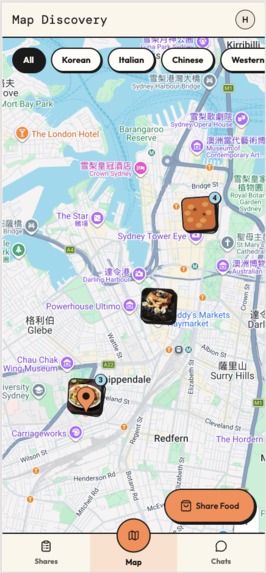
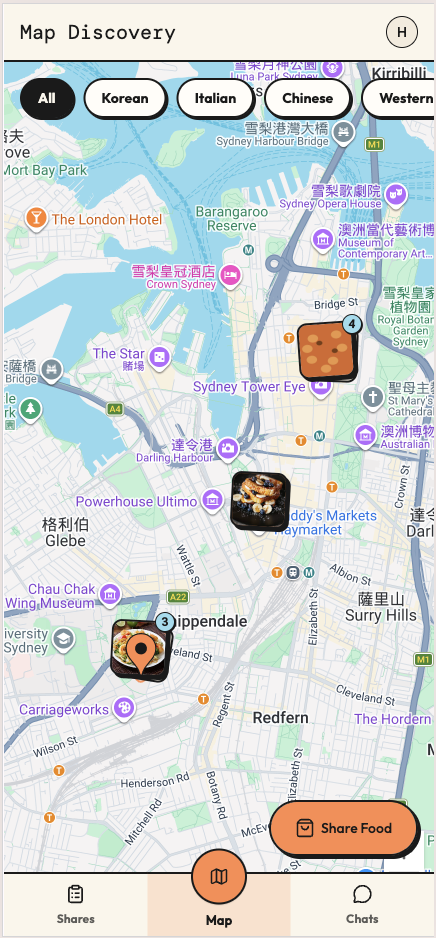
Shared food map
-
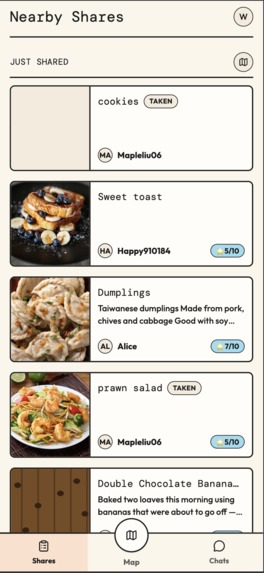
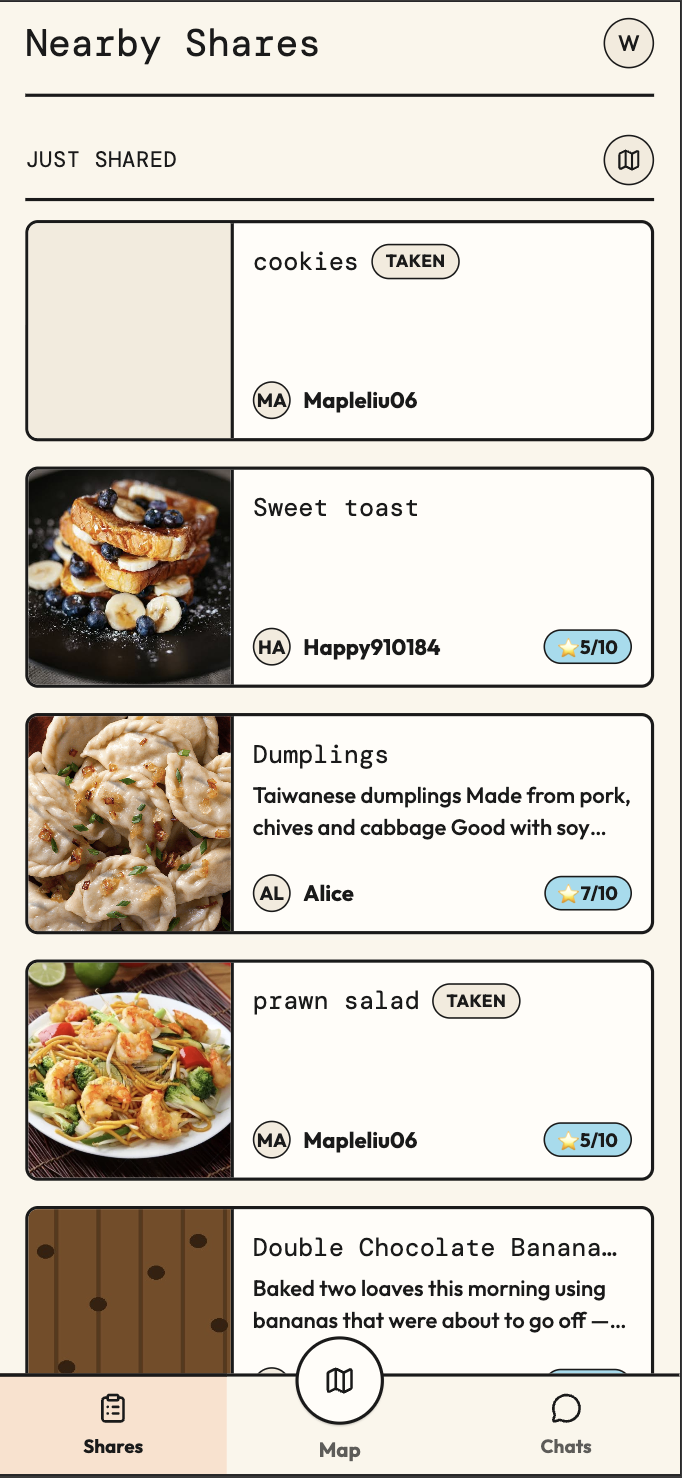
Shared food list
-
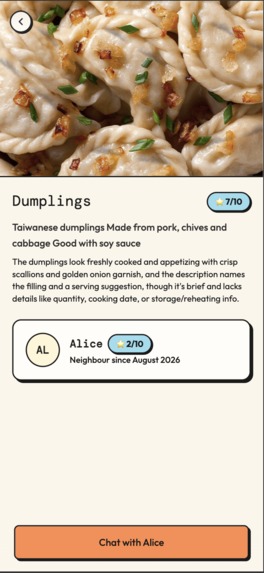
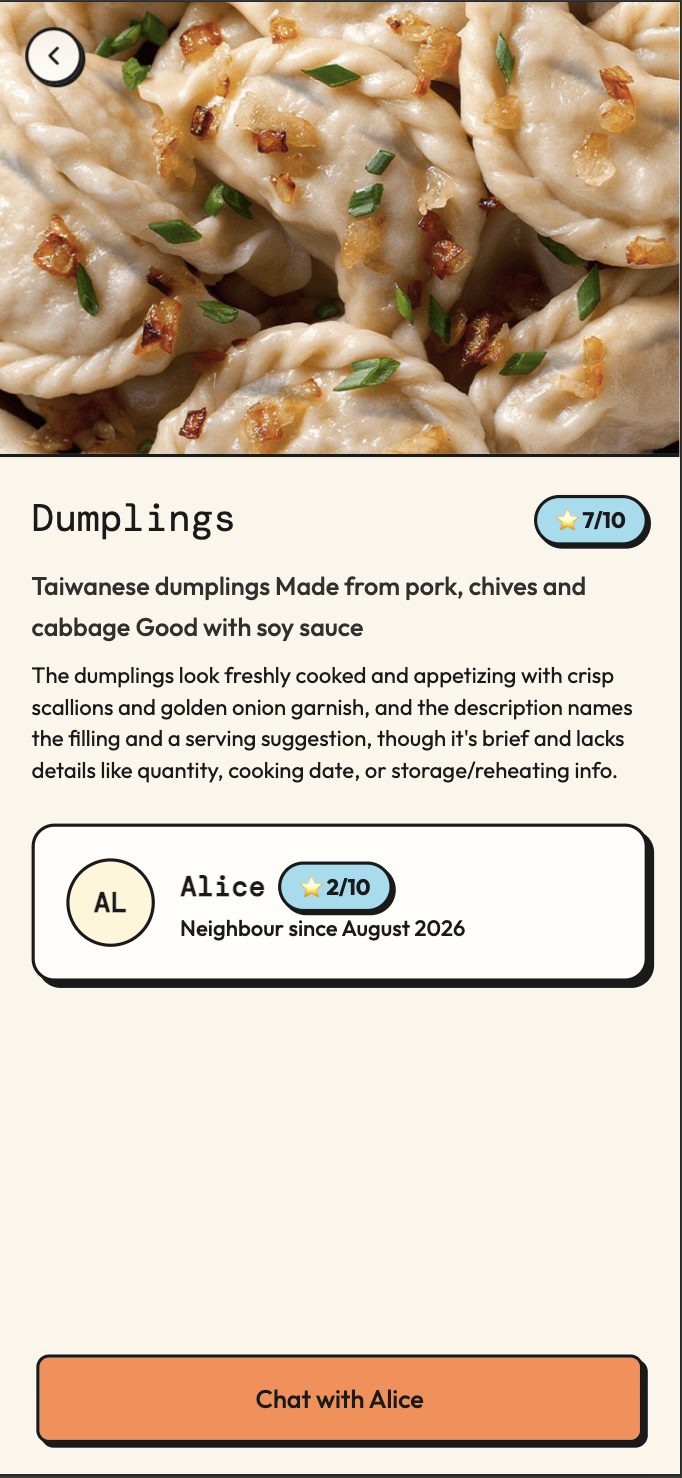
Shared food detail page
-
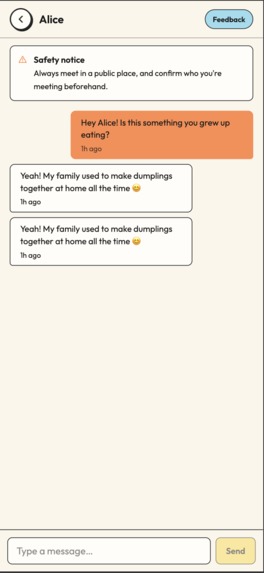
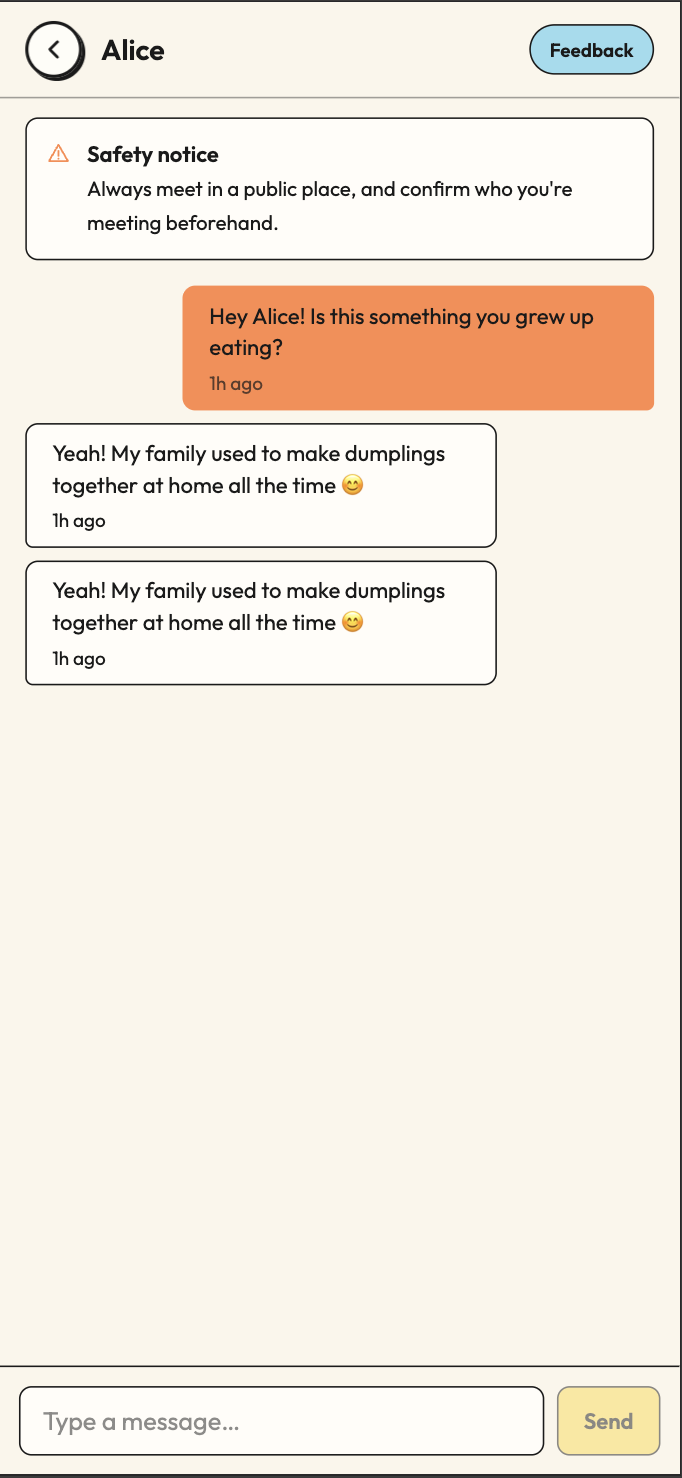
Chatroom page
-
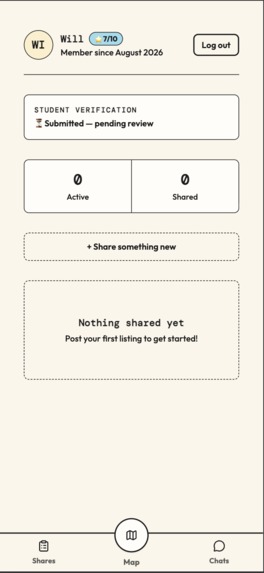
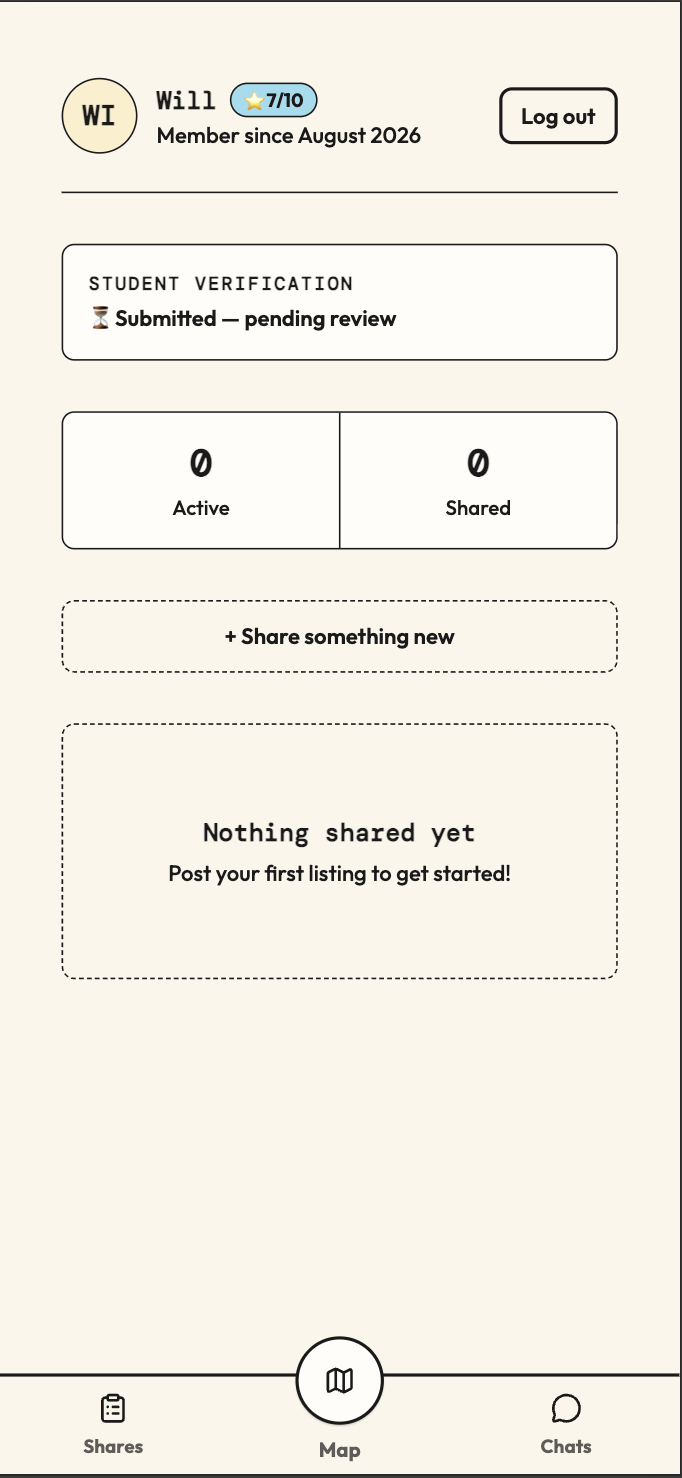
User personal profile page
Inspiration
We started with a simple question:
Why do we have so many social apps, yet still struggle to form genuine connections?
Maybe the problem is not that people are unwilling to connect. Maybe we simply lack a natural reason to start talking.
Food became our answer.
Sharing something you cooked naturally creates conversation. “What did you make?”, “How do you cook it?”, or “I’ve always wanted to try this” are small questions, but they can make approaching someone feel much easier.
For students, especially those living away from home or studying in another country, this felt especially relevant. You can be surrounded by thousands of people on campus and still have very few natural opportunities to really get to know them.
FoodMate was inspired by the idea that food can become a social trigger: something personal, cultural, and familiar enough to turn a stranger into someone you already have something to talk about.
What it does
FoodMate is a social app that helps students connect through the food they love to cook and share.
Users can post something they have cooked, discover food made by people nearby, learn more about the person behind the dish, and arrange a meetup or exchange.
The core flow is simple:
Cook → Discover → Meet → Share
FoodMate is not designed as a food delivery service or marketplace. The food is the starting point. The real value is the interaction that happens around it.
Because sharing homemade food also requires trust, we built several trust signals into the experience.
Users introduce themselves through food during onboarding, including what they enjoy cooking, what cuisines they want to try, and relevant dietary preferences.
We also created a reputation system that begins to form after a user receives three ratings from real exchanges. Over time, the system reflects not only an average rating, but also recurring feedback such as being thoughtful, generous, or a good communicator.
How we built it
We designed FoodMate as a mobile-first social experience, with a strong focus on making the interaction feel warm, simple, and community-oriented.
The product was structured around a few core flows:
- Onboarding and food-based profile creation
- Creating and browsing food posts
- Discovering people and dishes nearby
- Arranging food exchanges
- Leaving post-exchange feedback
- Building the reputation over repeated interactions
We used a warm retro-editorial design system with soft cream backgrounds, orange and blue accents, lightweight outlines, and small pixel-art profile elements to make the experience feel more personal than a typical marketplace or social feed.
The trust system was treated as part of the product architecture rather than an afterthought. We combined a defined student community, richer food-based profiles, and reputation built from actual exchanges.
Challenges we ran into
The biggest challenge was trust.
Food is a powerful way to connect people, but it is also unusually personal. Users cannot always know how food was prepared, stored, or handled, and there may also be allergies, dietary restrictions, or food-safety concerns.
We knew we could not guarantee that every exchange would be completely risk-free, so instead we focused on helping users make more informed decisions about who they interact with.
Another challenge was avoiding the product becoming just another food marketplace. We repeatedly had to ask ourselves whether each feature was helping people complete a transaction, or helping them actually connect.
This shaped decisions such as food-focused profiles, post-exchange feedback, and the Bowl system.
Accomplishments that we're proud of
We are proud that FoodMate developed into more than a simple food-sharing concept.
One of our biggest accomplishments was defining a clear product idea around conversation triggers rather than just matching people.
Another accomplishment was creating a product experience where the social goal stays visible throughout the flow. From onboarding to discovery to feedback, the design consistently asks not just “What food is available?” but also “Who is the person behind it?”
What we learned
We learned that creating more opportunities to meet people is not necessarily the same as creating meaningful connection.
We learned that technology can be more useful when it does not try to replace human connection, but instead creates the conditions for it to happen more naturally.
What's next for FoodMate
The next step is to test FoodMate with real student communities and understand whether food sharing genuinely helps people start conversations and build repeated connections.
We would like to improve the trust model further through stronger student verification, clearer food-safety information, dietary and allergy controls, and more useful post-exchange feedback.
Longer term, FoodMate could expand from individual exchanges into small community activities such as shared meals, cooking circles, cultural food nights, or recurring neighbourhood groups.
Built With
- claude
- google-maps
- nextjs
- supabase
- tailwindcss
- typescript
- vercel


Log in or sign up for Devpost to join the conversation.