-
-
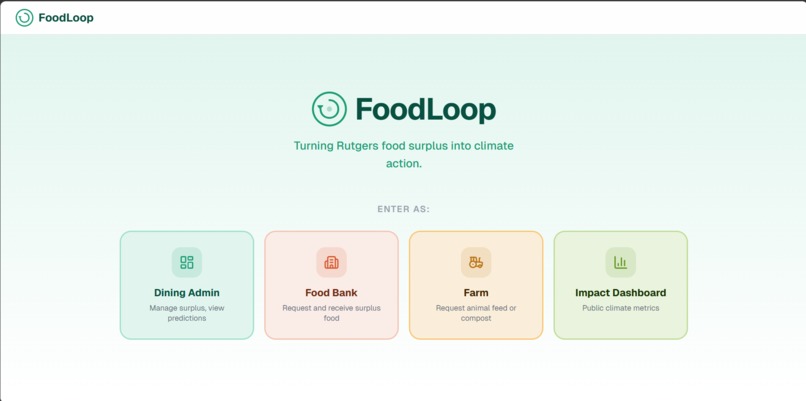
home page
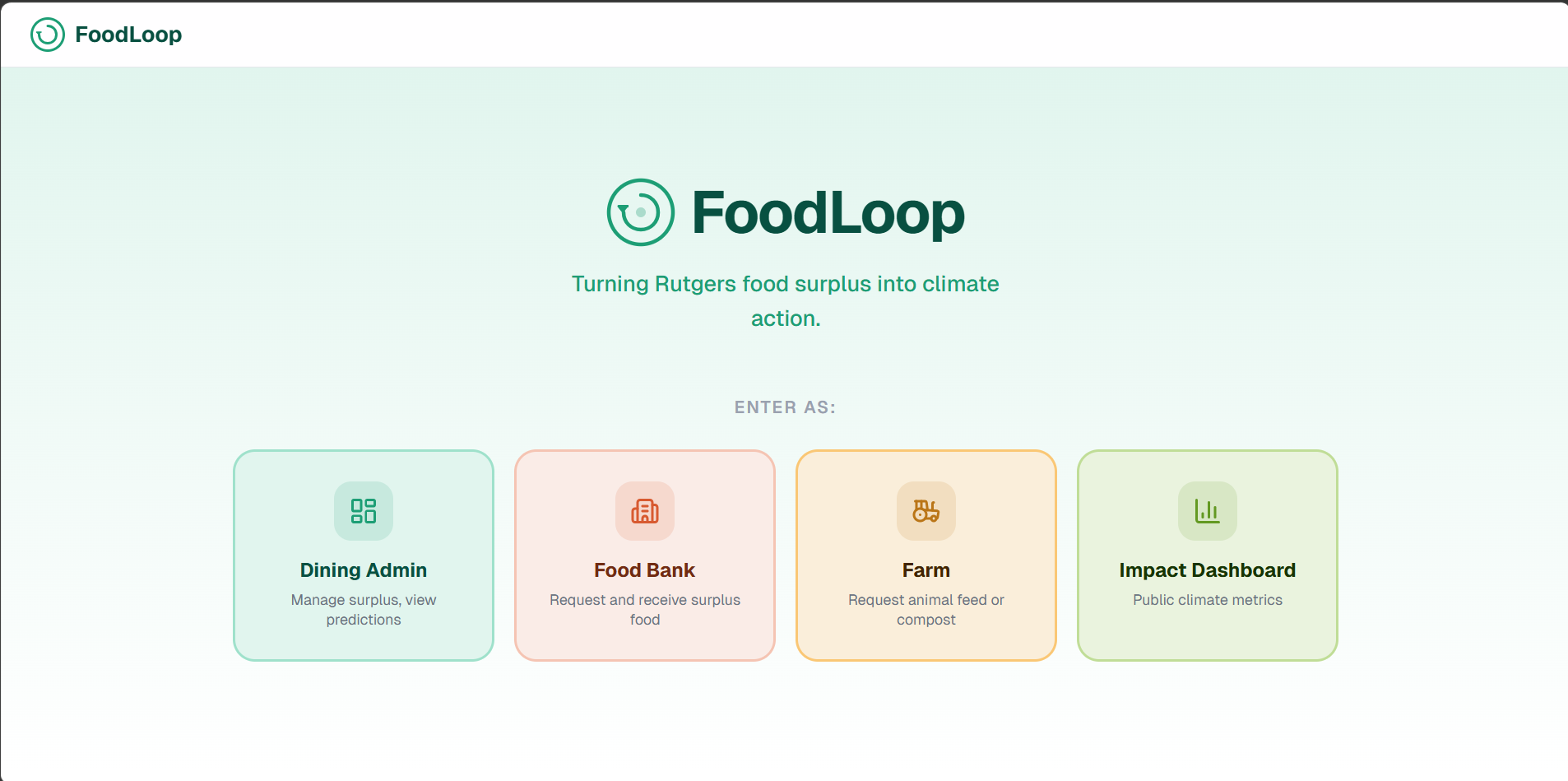
🌱 FoodLoop — Turning Campus Food Surplus into Climate Action
🚨 The Problem
At Rutgers University and campuses everywhere, large amounts of edible food are wasted daily due to overproduction, poor planning, and lack of coordination.
- Dining halls prepare excess food “just in case”
- Student organizations over-order for events
- Restaurants and vendors discard unsold items
- There is no real-time system to redirect surplus before it becomes waste
Meanwhile, food banks face shortages, and valuable organic waste ends up in landfills, contributing to greenhouse gas emissions.
💡 Our Solution
FoodLoop is a real-time food redistribution and prevention platform that ensures surplus food is used at its highest value before becoming waste.
We don’t just redistribute food, we optimize the entire lifecycle:
Predict → Prevent → Redistribute → Track Impact
Check out our OPERATIONS_BRIEF.md file as well.
⚙️ How It Works
🧠 1. AI Planning Layer (Prevention)
FoodLoop uses AI-powered insights to help providers reduce overproduction:
- Predict how much food to prepare/order
- Analyze historical trends and attendance
- Suggest optimal quantities
Example: “Prepare 18 trays instead of 25 based on expected turnout”
⏰ 2. Surplus Detection
The system proactively identifies potential waste:
- Alerts when excess food is likely
- Prompts early action before disposal
- Encourages timely redistribution
🌍 3. Real-Time Redistribution Portal
A live platform connecting food providers and recipients:
- Dining halls, restaurants, and student orgs post surplus food
- Food banks, students, and farmers can request or claim food
- Real-time updates ensure fast coordination
🔄 4. Priority Routing System
FoodLoop ensures food is used in the most impactful way:
- 🥇 Feed People — Food banks, shelters, students
- 🥈 Secondary Use — Farms (animal feed)
- 🥉 Compost — Sustainable disposal as a last resort
🚚 5. Smart Matching & Logistics
- Matches supply with nearby demand
- Enables quick claim and pickup coordination
- Reduces time-sensitive waste
📊 6. Impact Tracking
FoodLoop provides measurable environmental and social impact:
- Meals saved
- Food waste reduced
- CO₂ emissions avoided
👥 User Roles
- Dining Halls / Restaurants
- Food Banks / Organizations
- Farmers
- Admins (campus sustainability teams)
🧪 Demo Scenario
A student organization hosts an event at Rutgers University:
- FoodLoop predicts how much food to order
- Surplus is detected after the event
- Organizer posts leftovers instantly
- Nearby users and food banks are notified
- Food is claimed and picked up
- Dashboard updates with impact metrics
🛠️ Technical Implementation
- Frontend: React
- Backend: Supabase
- AI Layer: Lightweight prediction models
- Data Sources: Food purchasing datasets (Spring 2021–2025)
- Deployment: Web-based platform
🌍 Why It Matters
FoodLoop tackles both sides of food waste:
- Prevention: Reduce overproduction
- Redistribution: Feed people first
🚀 What Makes FoodLoop Unique
- Combines AI prediction + real-time redistribution
- Priority-based sustainability system
- Built for campus ecosystems
🔮 Future Improvements
- Better ML models
- Expansion beyond campus
- Logistics optimization
- Mobile app
🏁 Closing Statement
FoodLoop transforms food waste into impact.
Less waste. More meals. Lower emissions.
Built With
- featherless-api
- next.js
- python
- qwen-2.5-7b
- recharts
- scikit-learn
- shadcn/ui
- tailwind-css
- xgboost

Log in or sign up for Devpost to join the conversation.