-
-
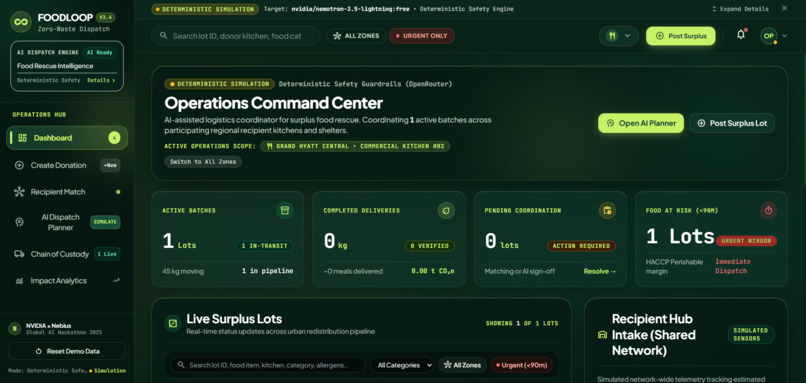
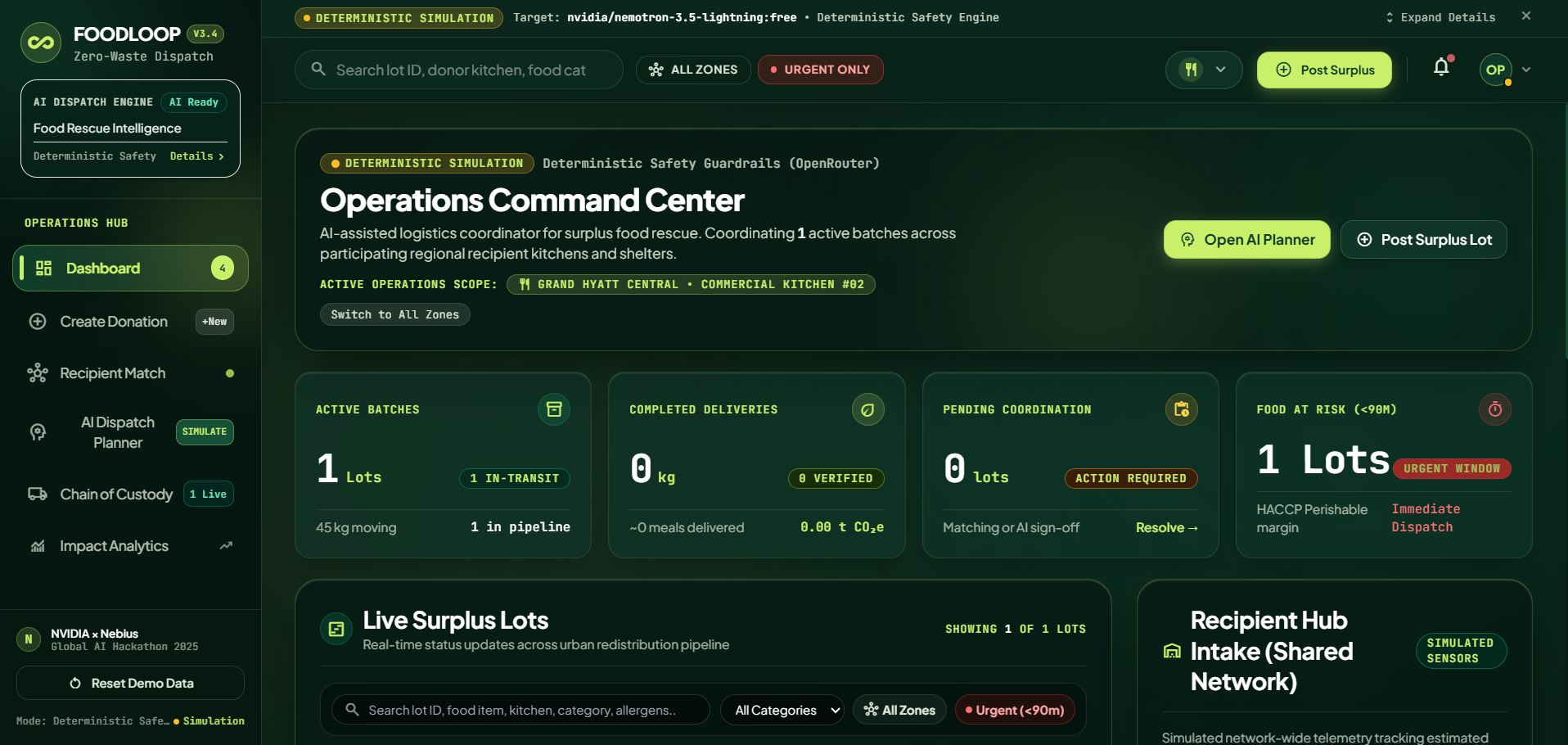
DASHBOARD VIEW
-
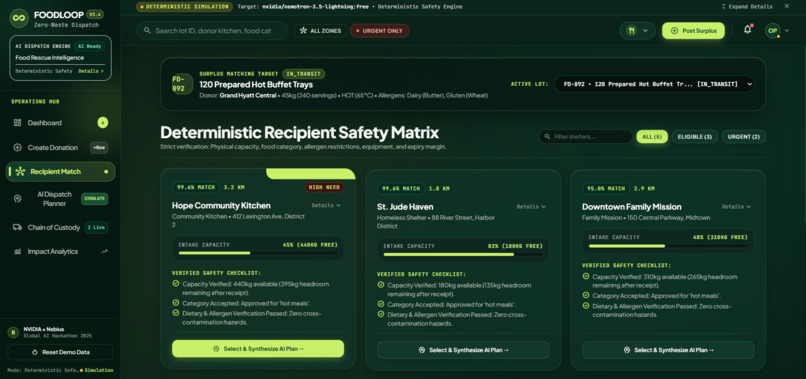
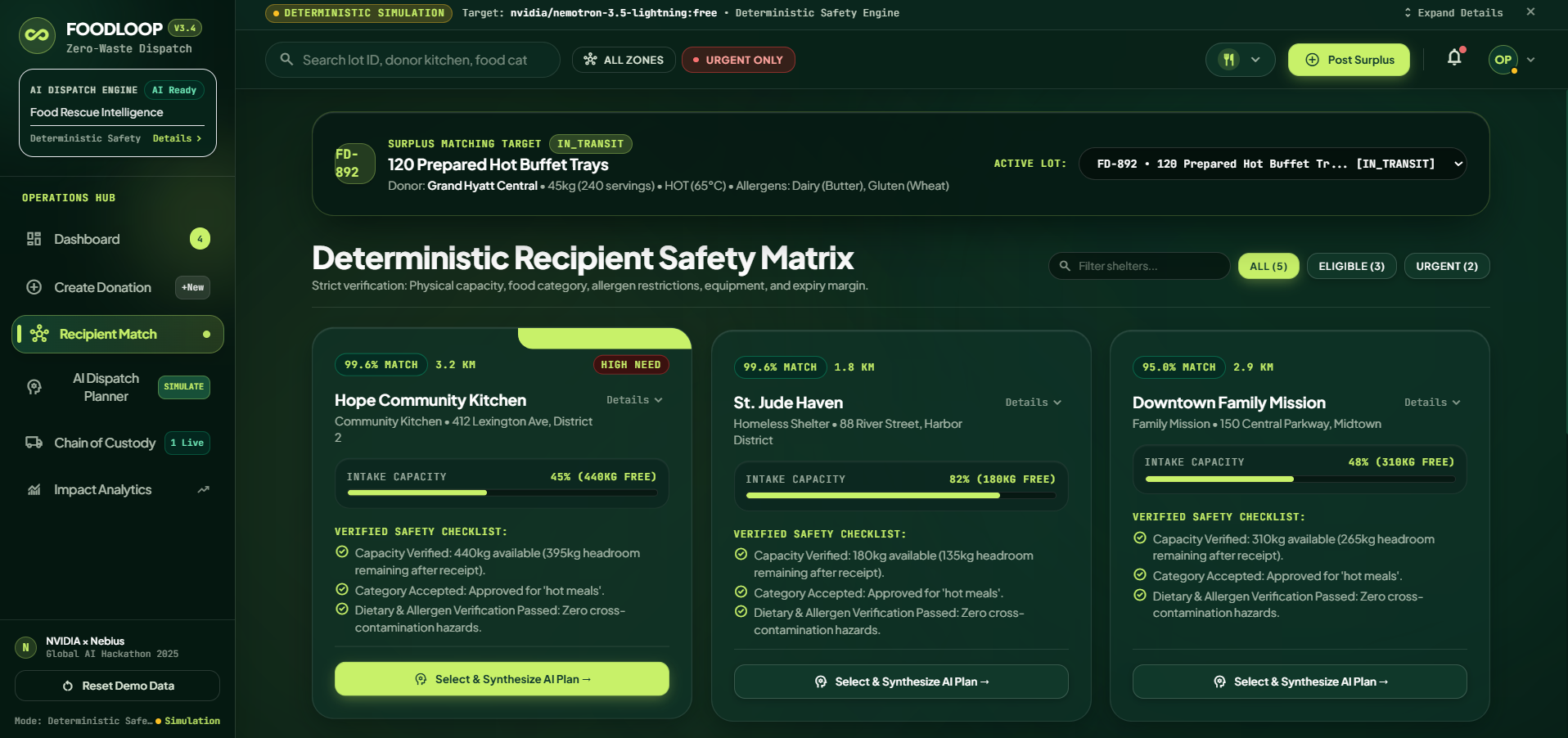
RECIPITANT MATCH
-
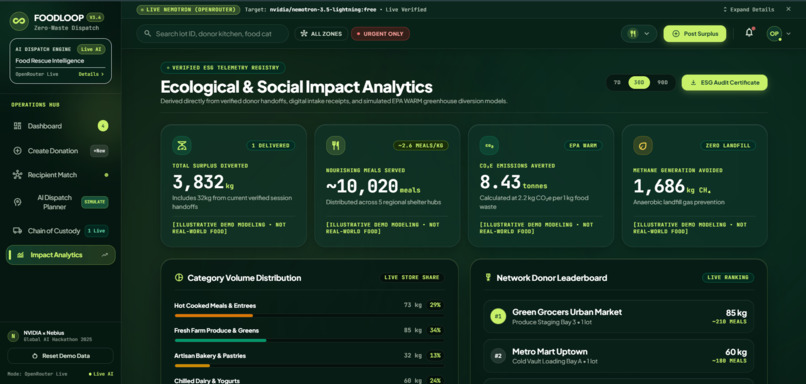
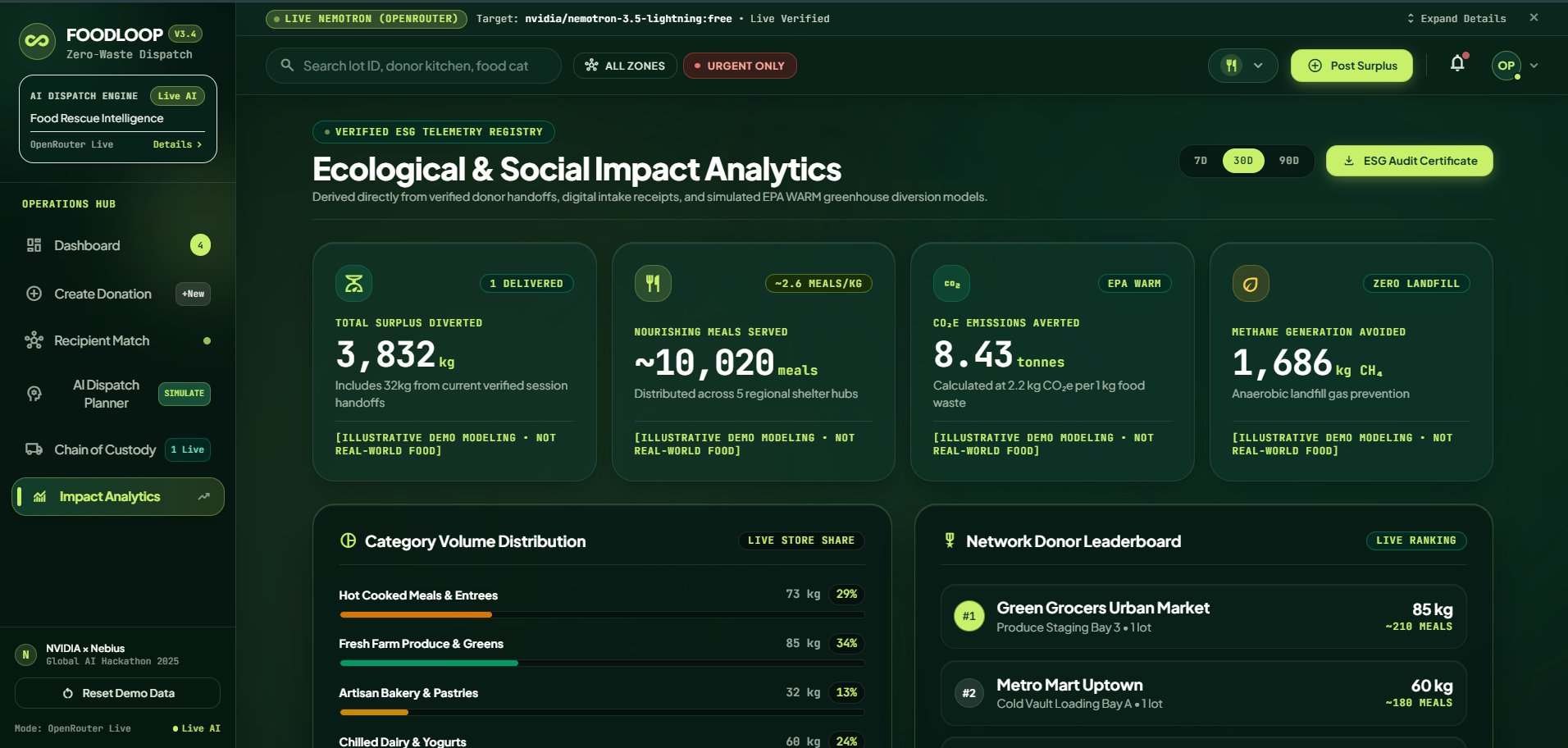
IMPACT ANALYSIS
-
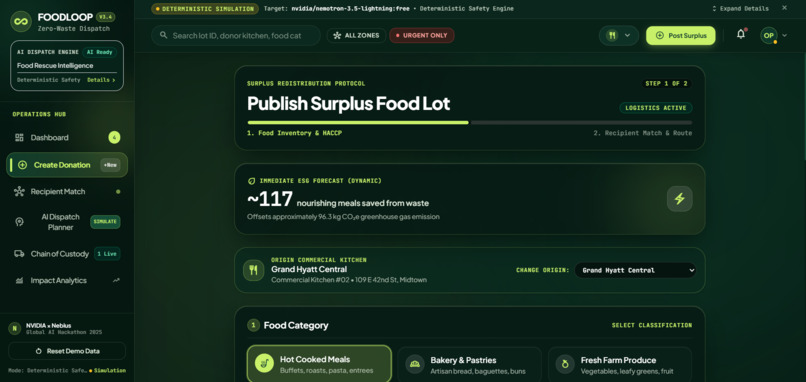
CREATING DONATIONS
-
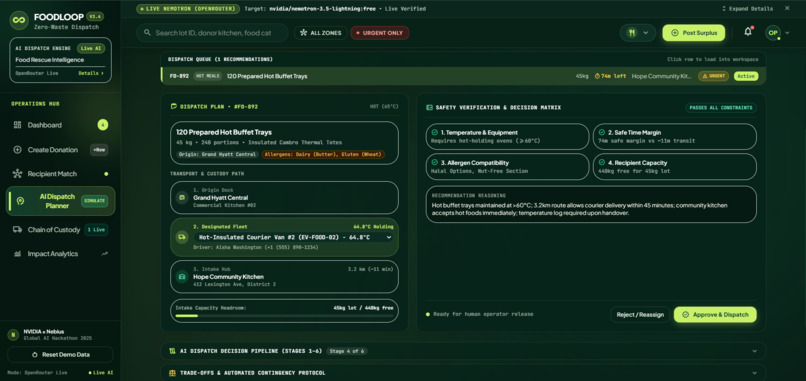
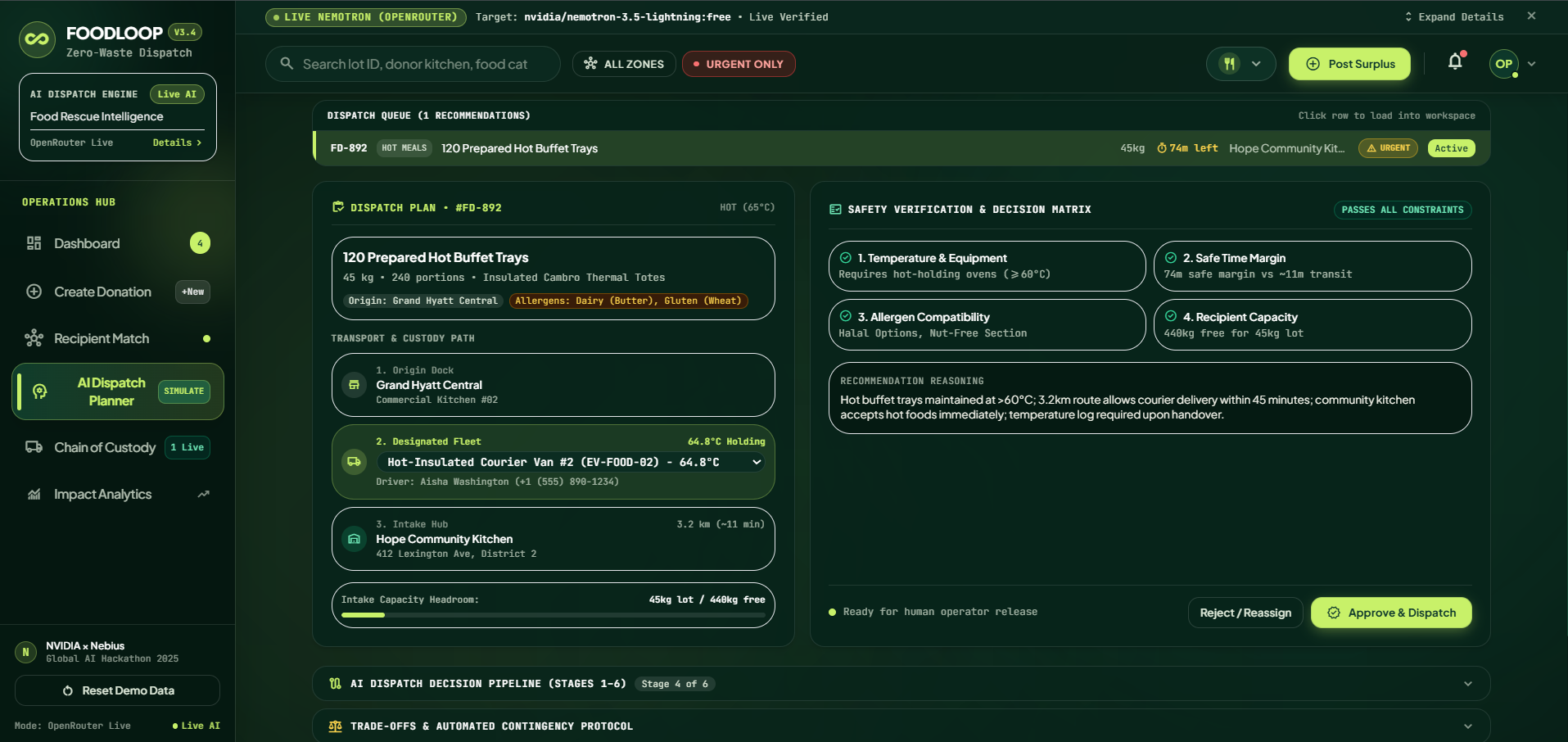
AI DISPATCH PLANNER
-
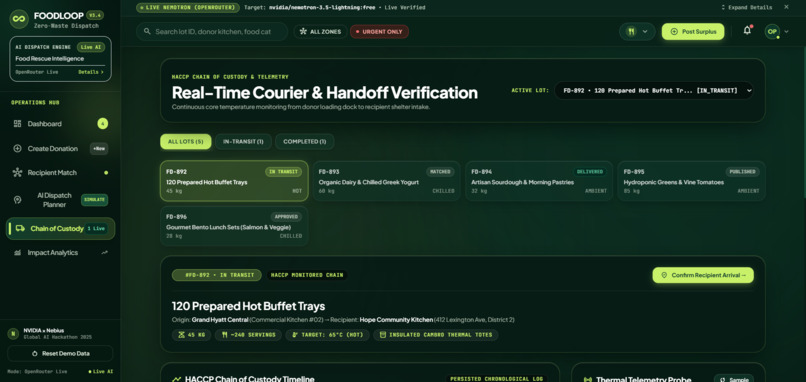
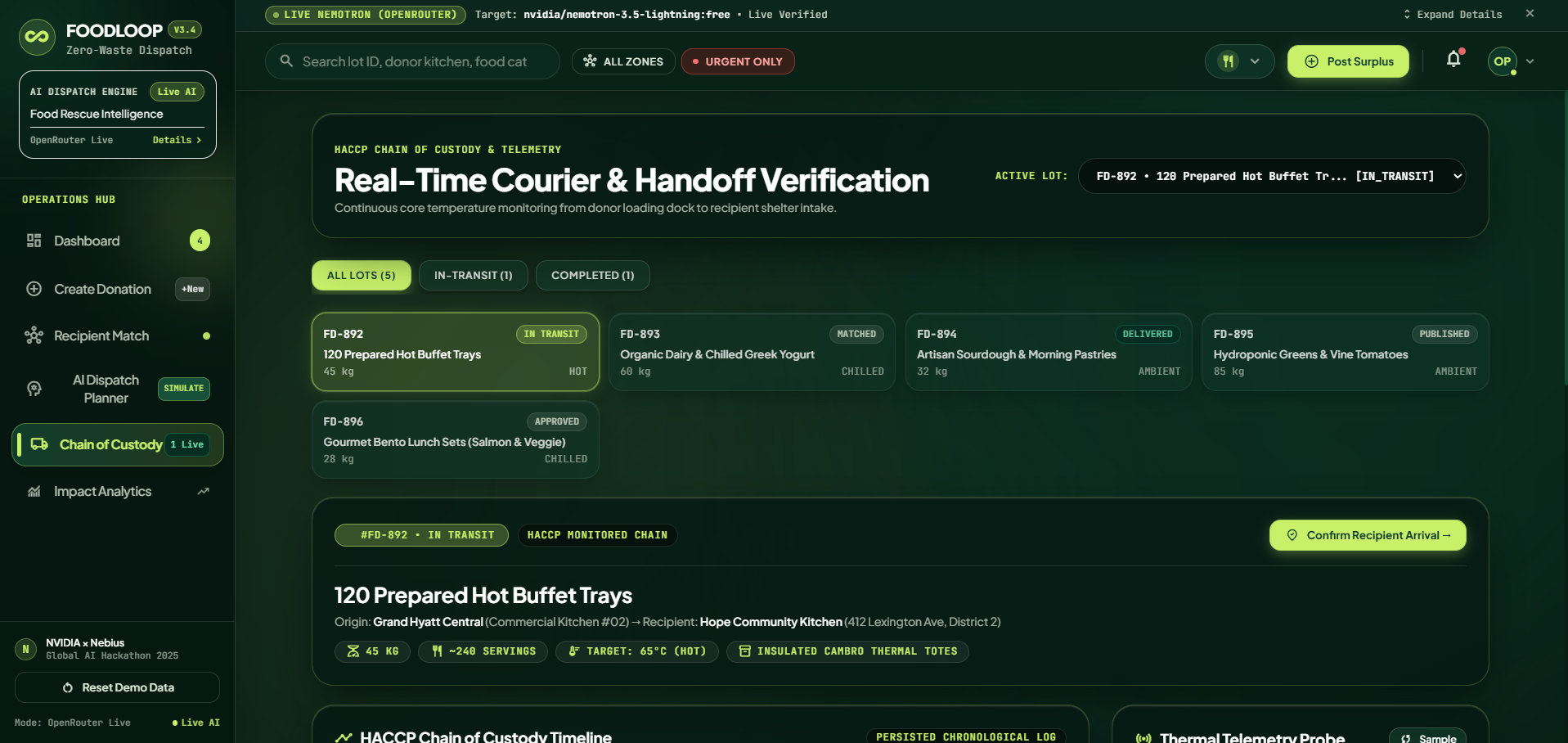
CHAIN OF CUSTODY
-
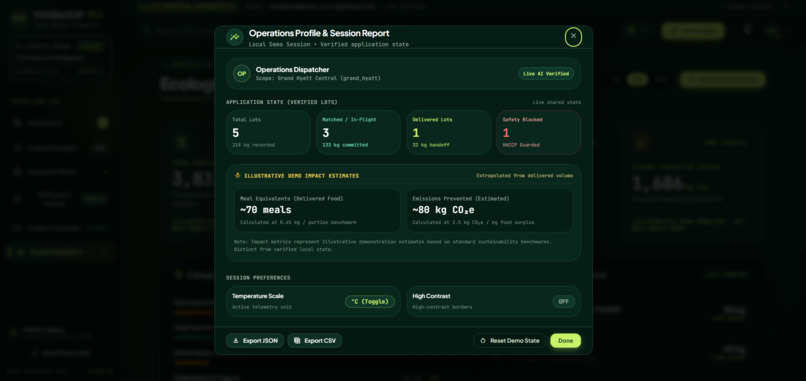
REPORTS

Inspiration
Food waste and food insecurity can exist side by side. We wanted to explore how technology could help surplus food reach organizations that need it, instead of being wasted. That idea inspired FOODLOOP: a smarter way to coordinate food rescue using AI-assisted planning and explicit safety checks.
What it does
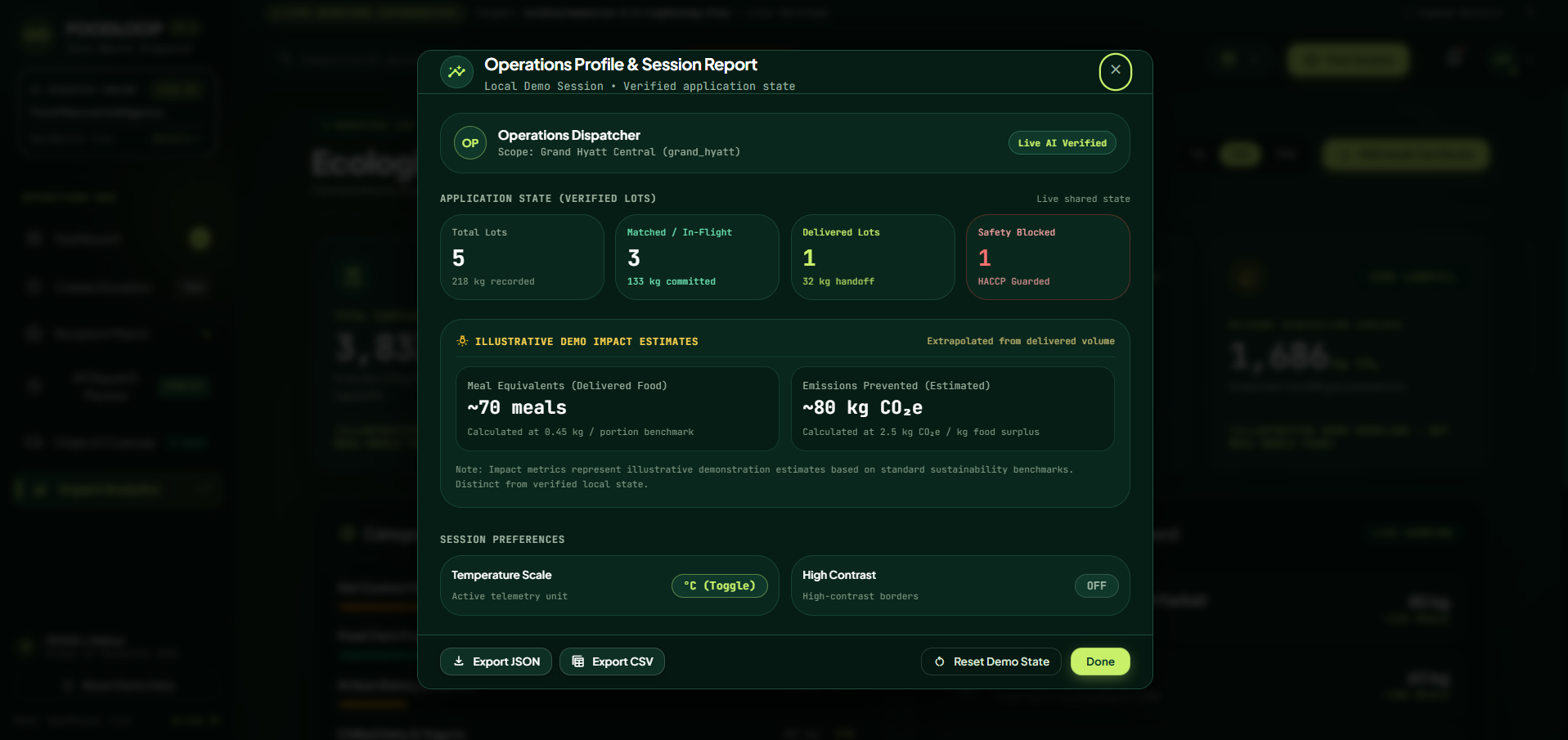
FOODLOOP is an AI-assisted surplus-food redistribution platform. It helps operators publish surplus food lots, find suitable recipient organizations, evaluate dispatch recommendations, review food-safety constraints, manage handoff workflows, and explore estimated environmental and social impact.
How we built it
We built FOODLOOP with React, TypeScript, and Vite, with a server-side API for AI-assisted planning through OpenRouter and the NVIDIA Nemotron model. A deterministic constraint engine evaluates implemented rules such as recipient capacity, food category, allergen restrictions, and equipment compatibility. The interface brings donation management, recipient matching, dispatch planning, tracking, and analytics into one workspace.
Challenges we ran into
One of our biggest challenges was ensuring AI recommendations remained separate from deterministic safety checks. We also worked on handling AI-provider failures through fallback behavior, maintaining consistent application state across pages, and presenting complex operational information in a clean, usable dashboard.
Accomplishments that we're proud of
We brought the core food-rescue workflow into a single web application, from publishing surplus lots to reviewing recipient matches and dispatch plans. We're especially proud of combining AI-assisted reasoning with explicit constraints and human approval, rather than relying on AI alone for operational decisions.
What we learned
We learned that building a useful AI application involves much more than connecting a model to a UI. Reliable fallback behavior, transparent recommendations, deterministic checks, accessibility, and honest reporting are all important. We also learned to distinguish simulated demonstration data from verified real-world outcomes.
What's next for FOODLOOP
We want to explore partnerships with real food donors and recipient organizations, integrate verified temperature sensors and delivery updates, improve audit trails, and test the workflow in real food-rescue settings. These steps would help validate the platform's usability, safety, and measurable impact.
Made by Team DuoFlash
Built With
- ai
- food
- javascript
- nemotron
- node.js
- nvidia
- openrouter
- react
- reduction
- typescript
- vercel
- vite
- waste


Log in or sign up for Devpost to join the conversation.