-
-
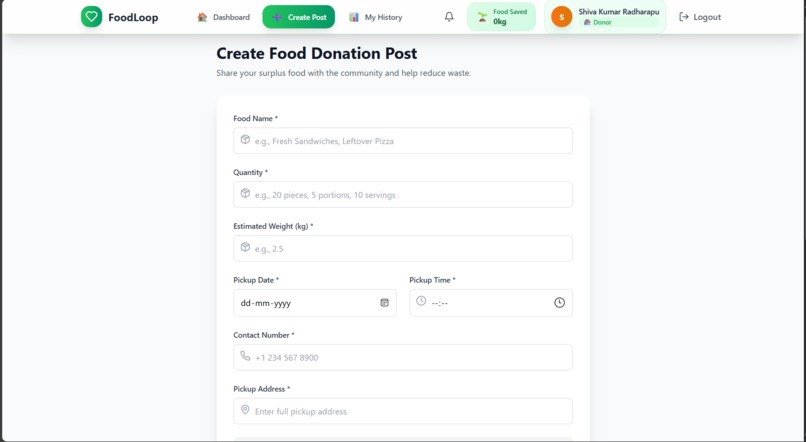
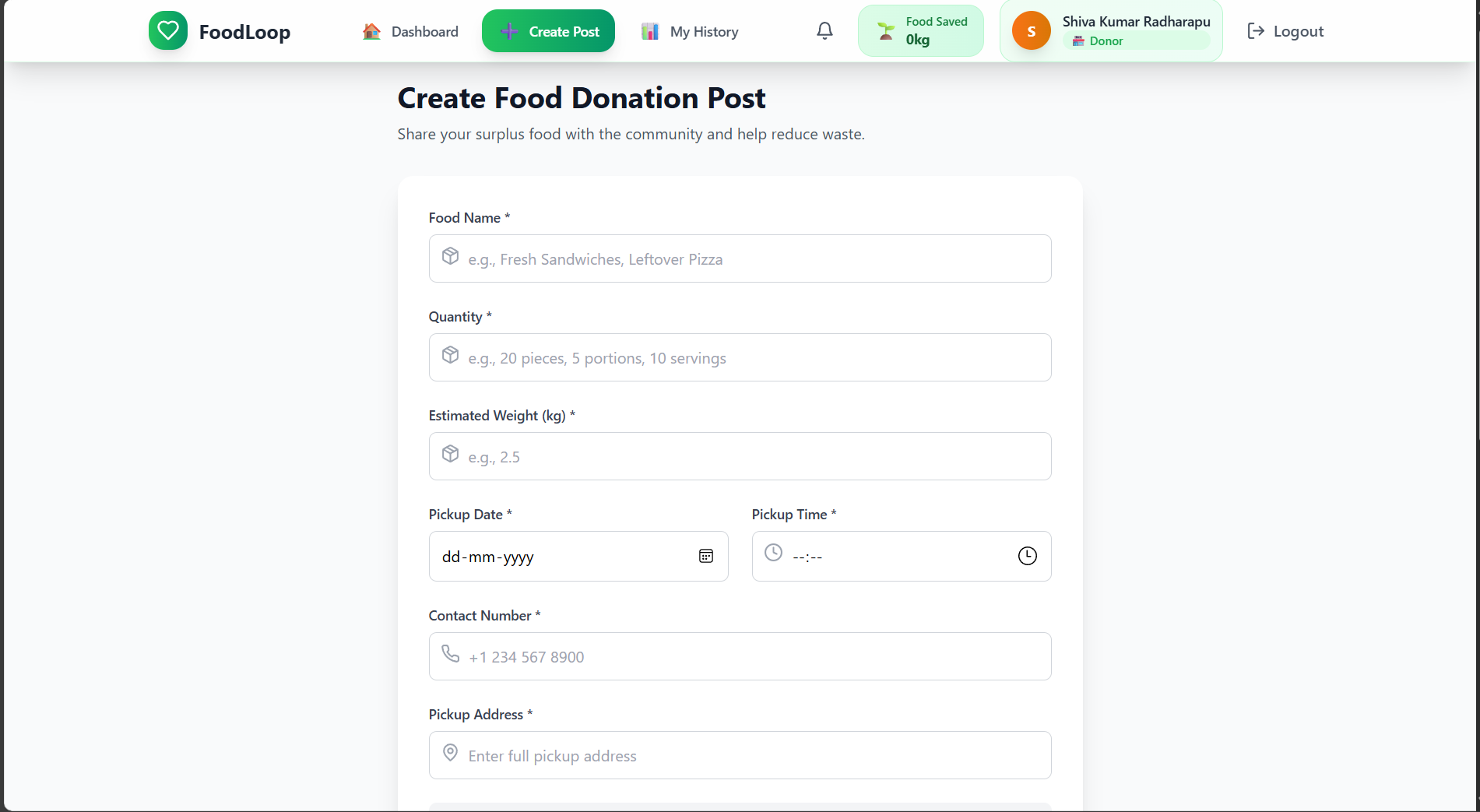
"Create Food Donation Post. Simple form to share surplus food, capture details like name, quantity, weight, pickup time, and address.
-
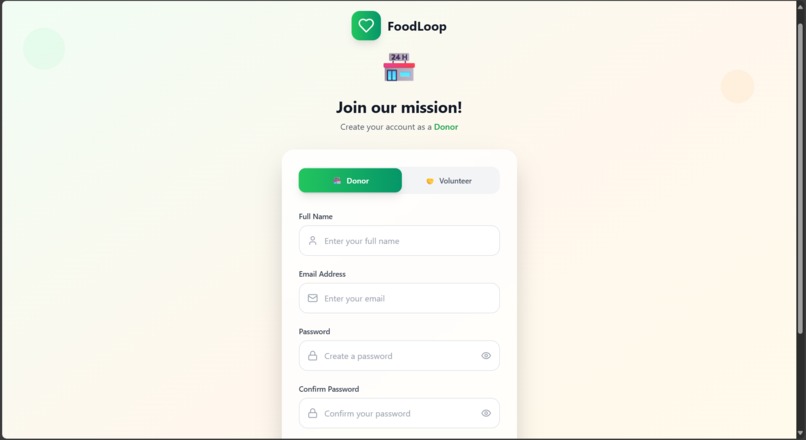
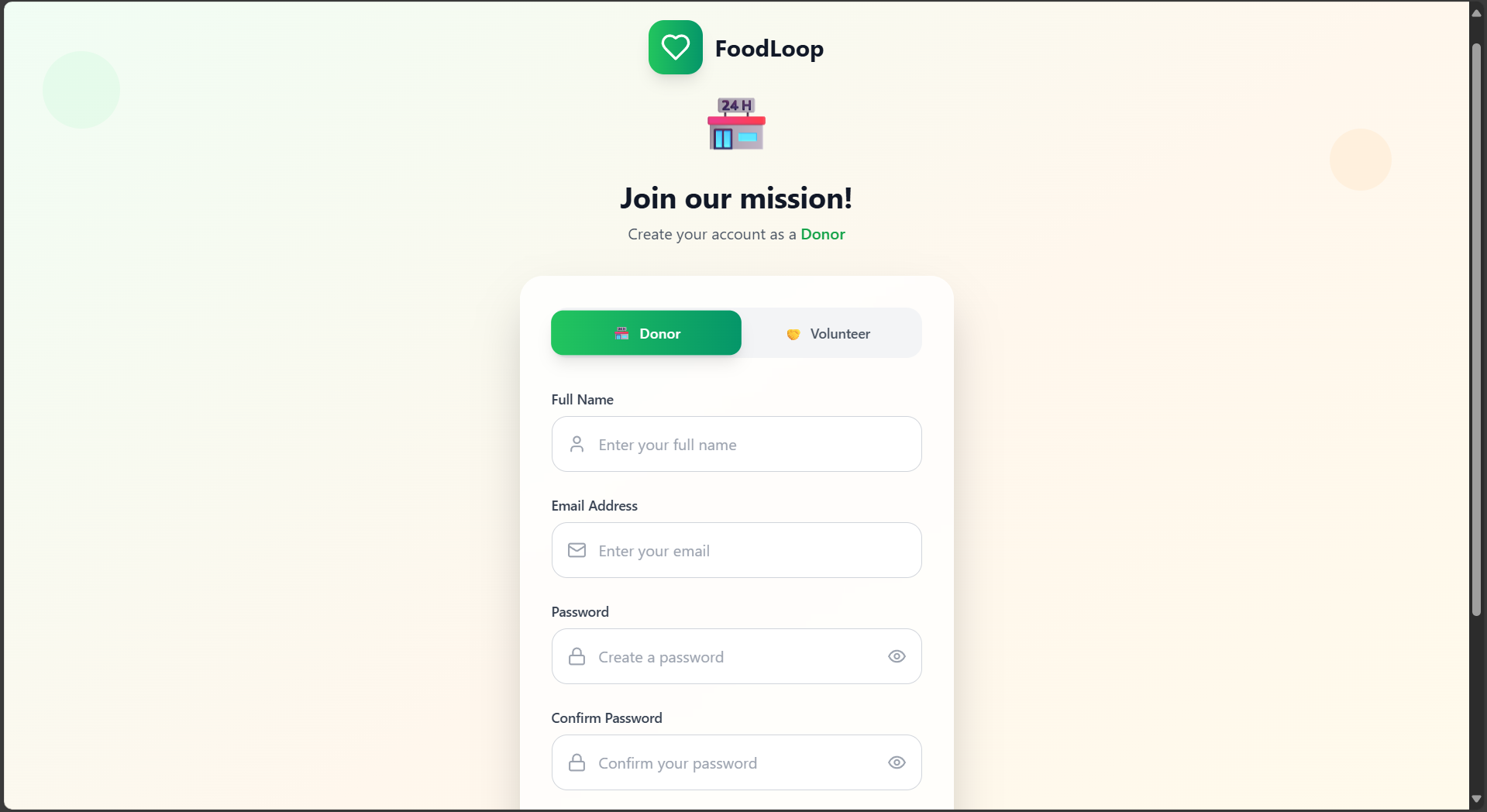
Join FoodLoop's mission! Create an account as a Donor or Volunteer. Simple signup form to collect name, email, and password for new users
-
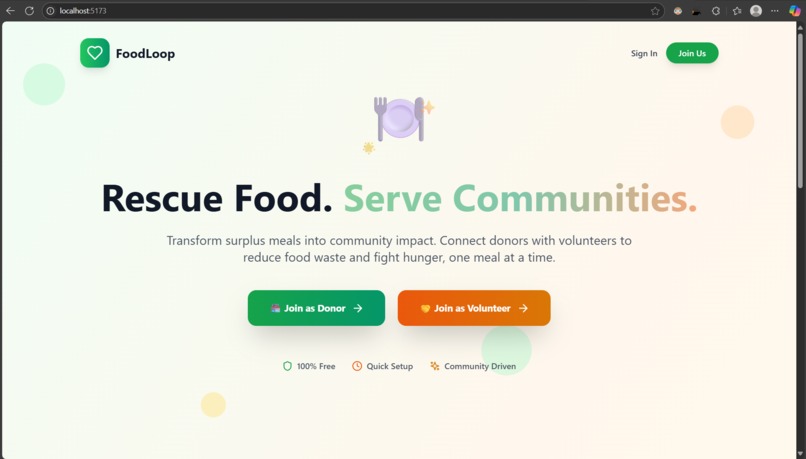
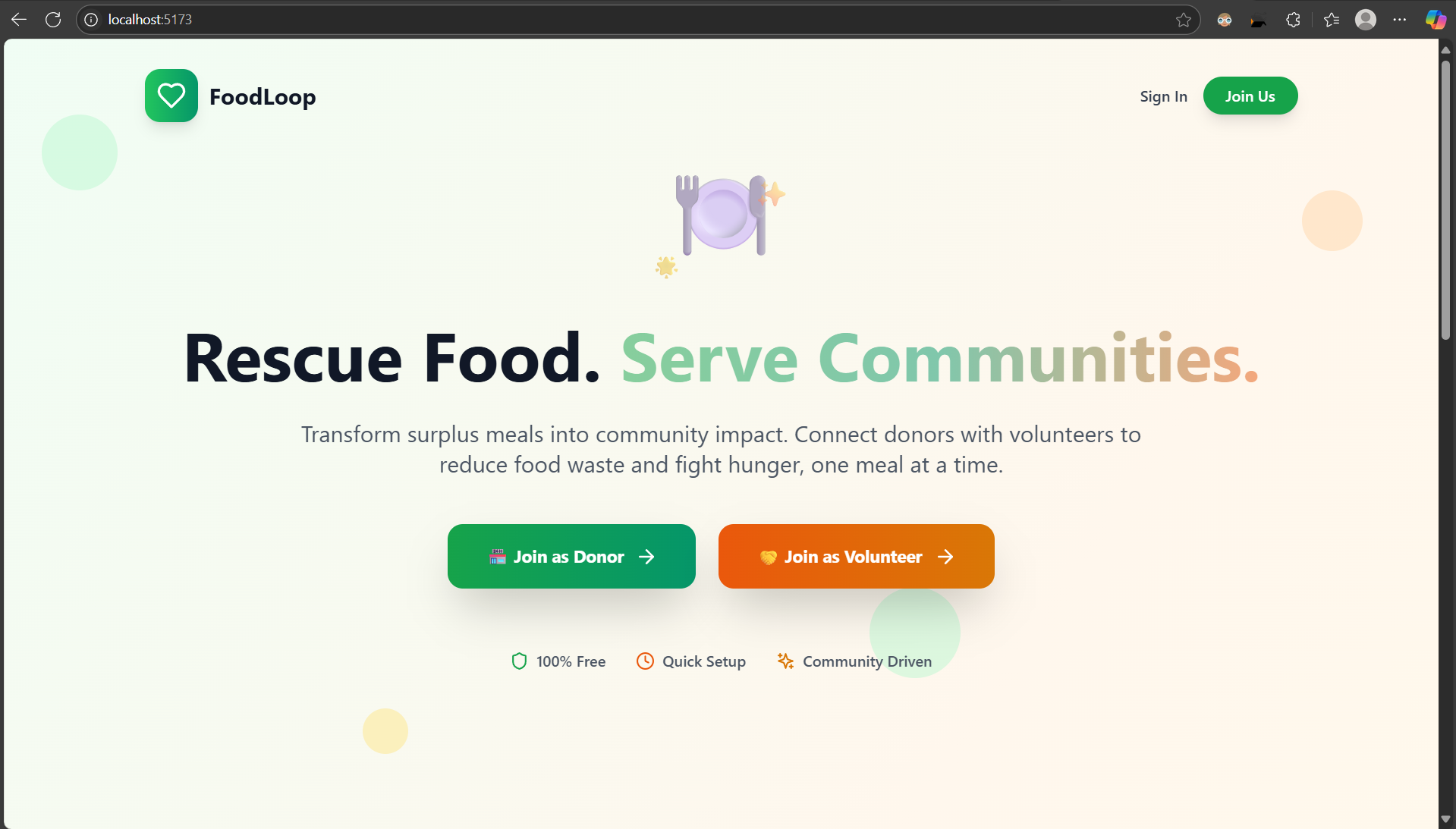
FoodLoop: Rescue Food. Serve Communities. Join as a donor or volunteer to fight hunger, 100% free & community driven.
-
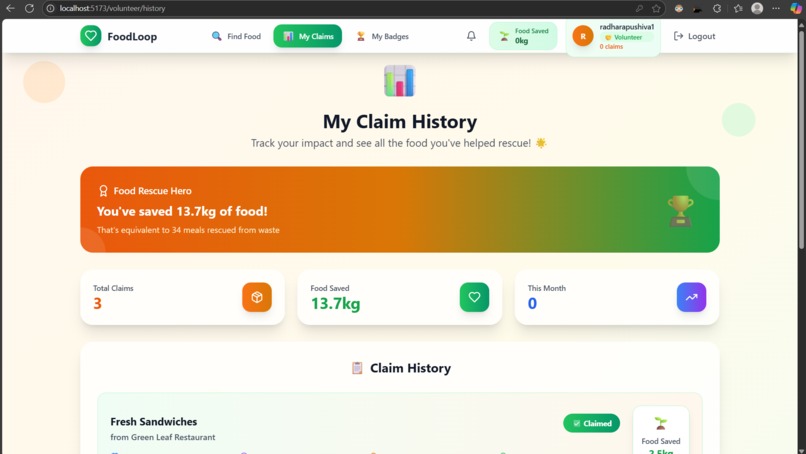
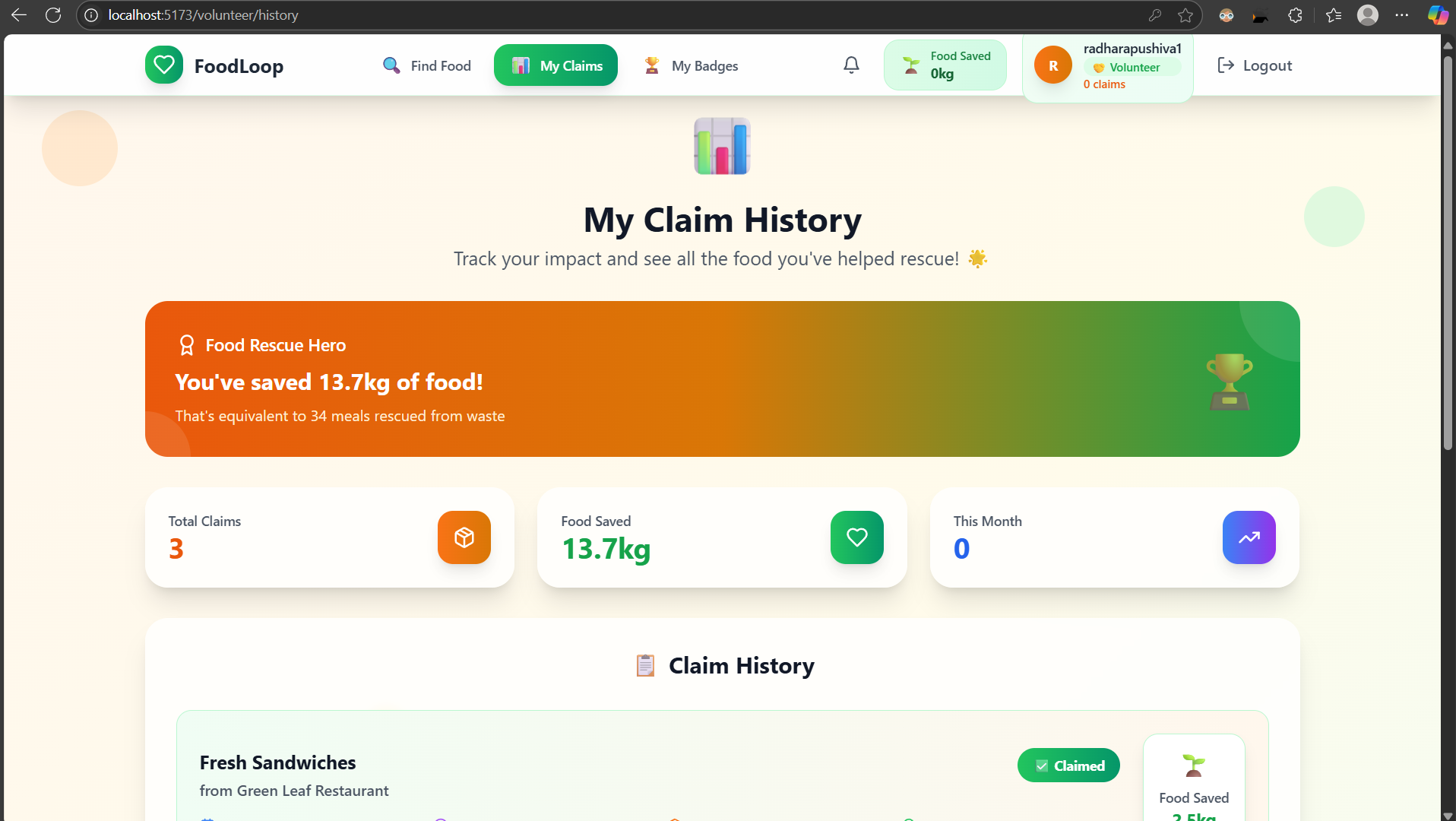
Volunteer's 'My Claim History'. Track impact, total claims, food saved (13.7kg!), and monthly activity. See past rescues at a glance
-
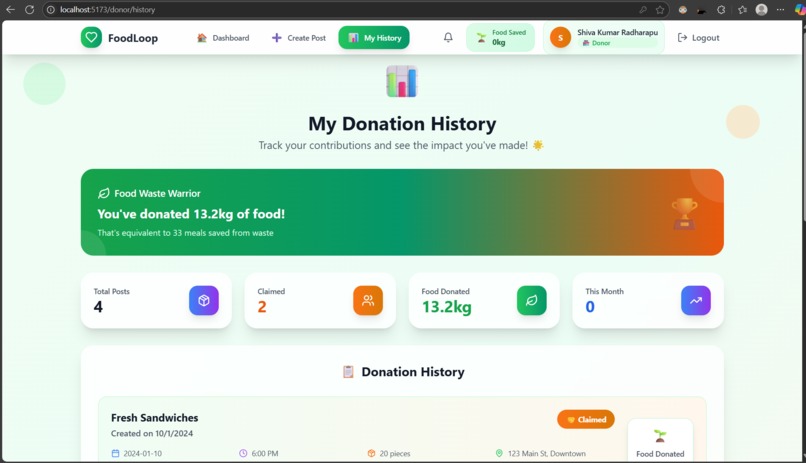
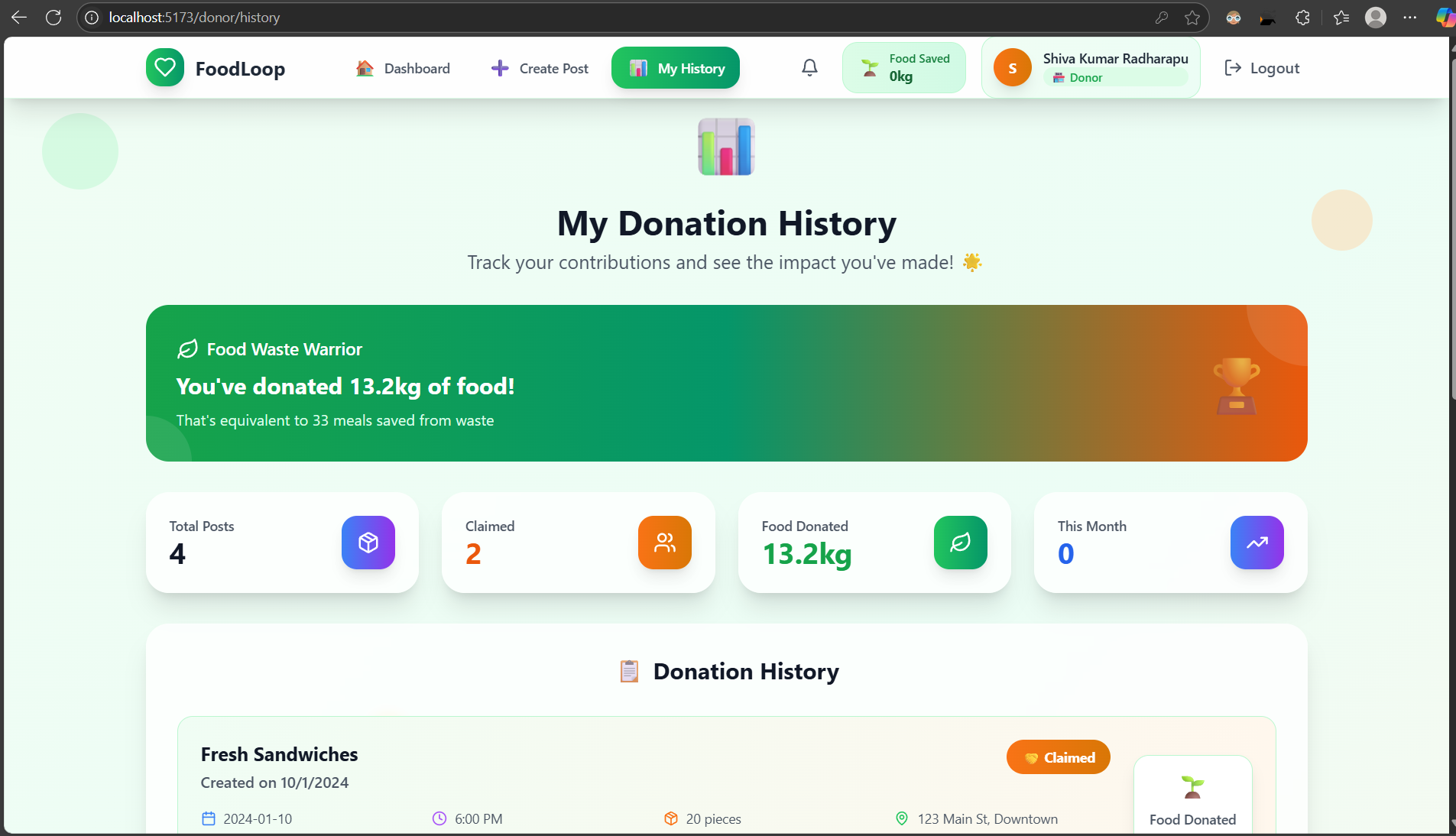
Donor's 'My Donation History'. Track contributions, total posts (4), claimed (2), and food donated (13.2kg!). See impact in a clear summary.
-
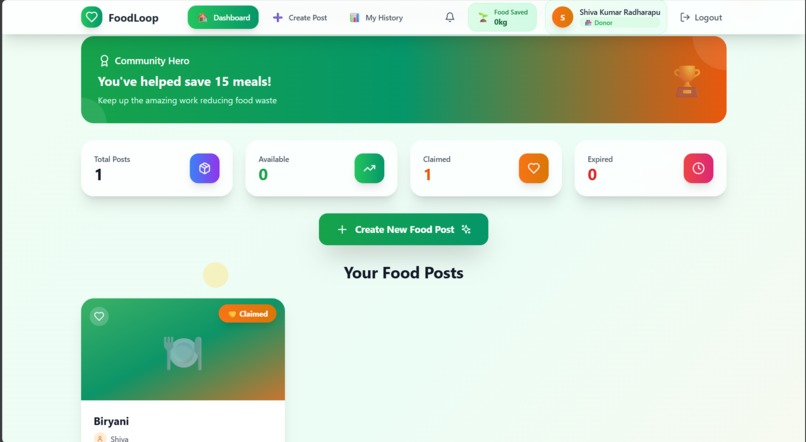
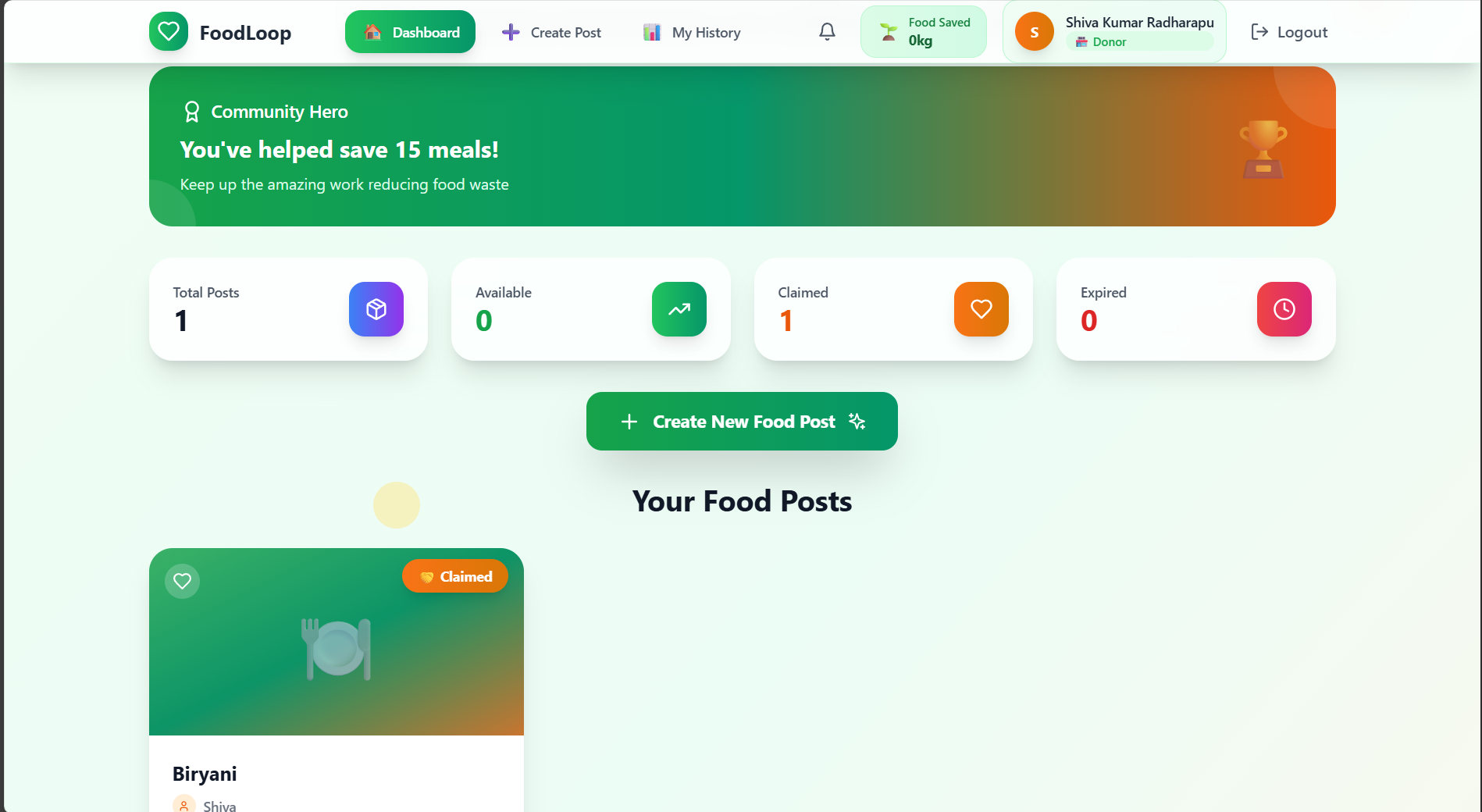
Donor dashboard shows a 'Biryani' food post. Details include date, time, location, contact, and claimed status. Options to edit/delete posts
-
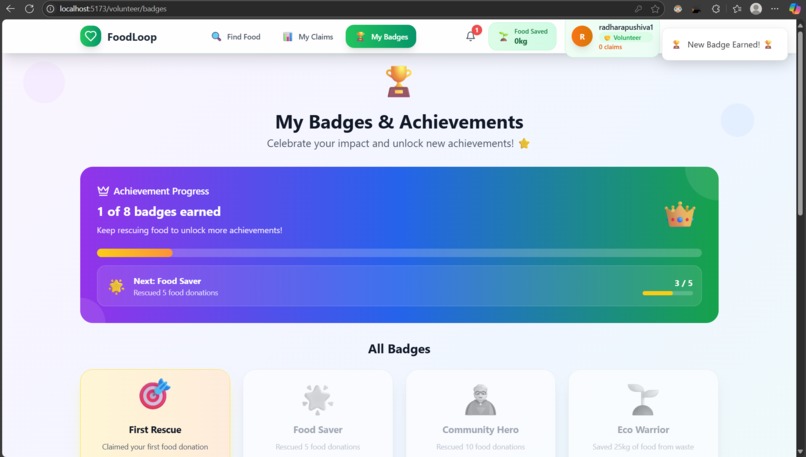
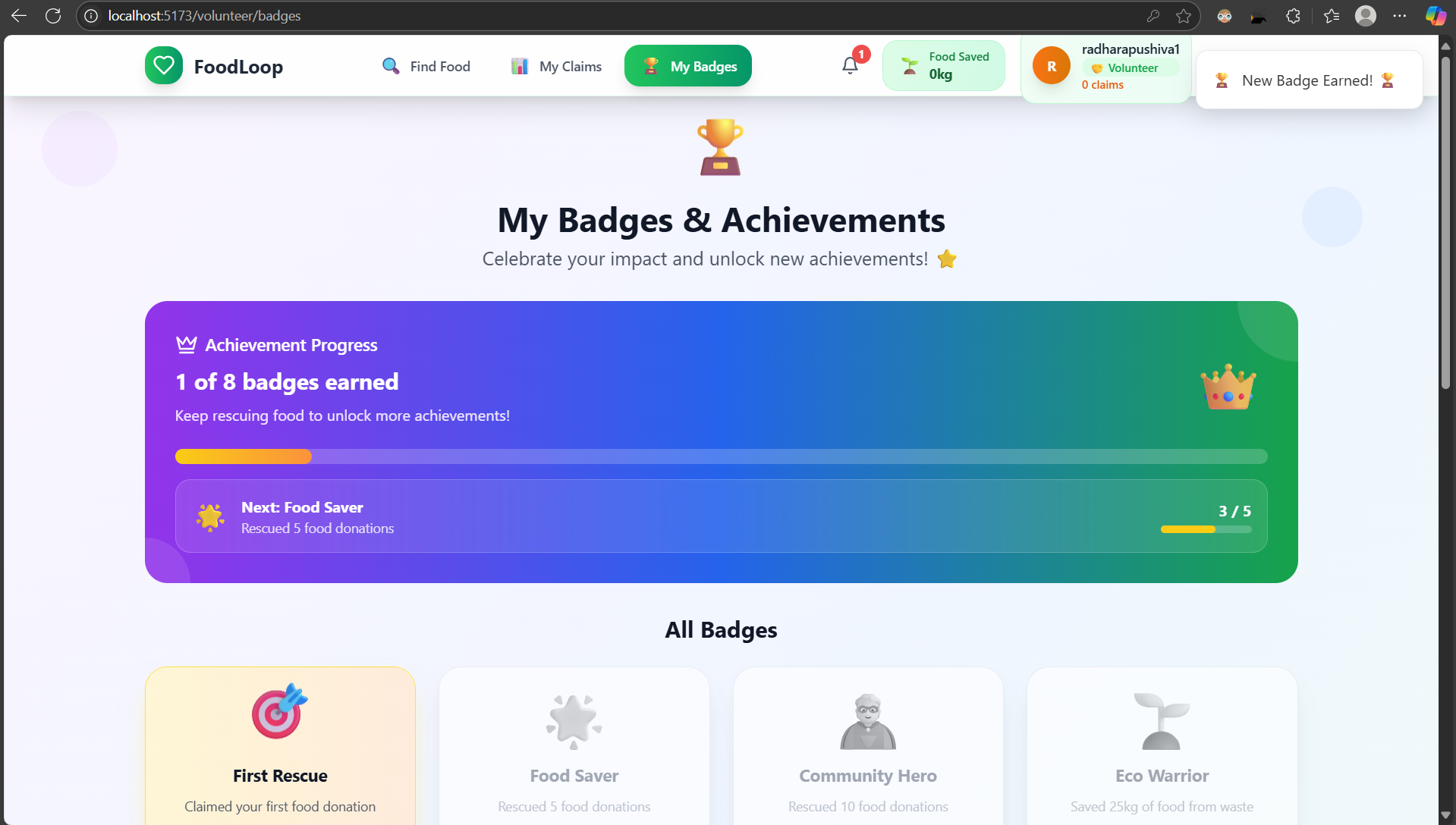
Volunteer's 'My Badges & Achievements'. Celebrate and unlock new achievements like 'Food Saver' for rescued donations. Track progress easily
-
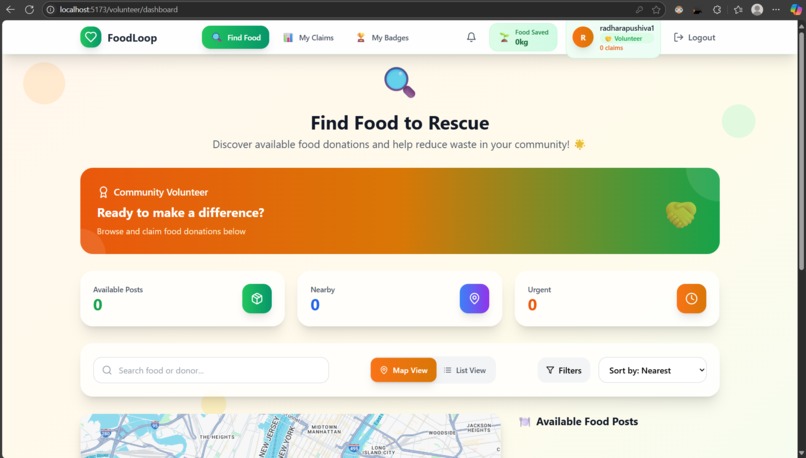
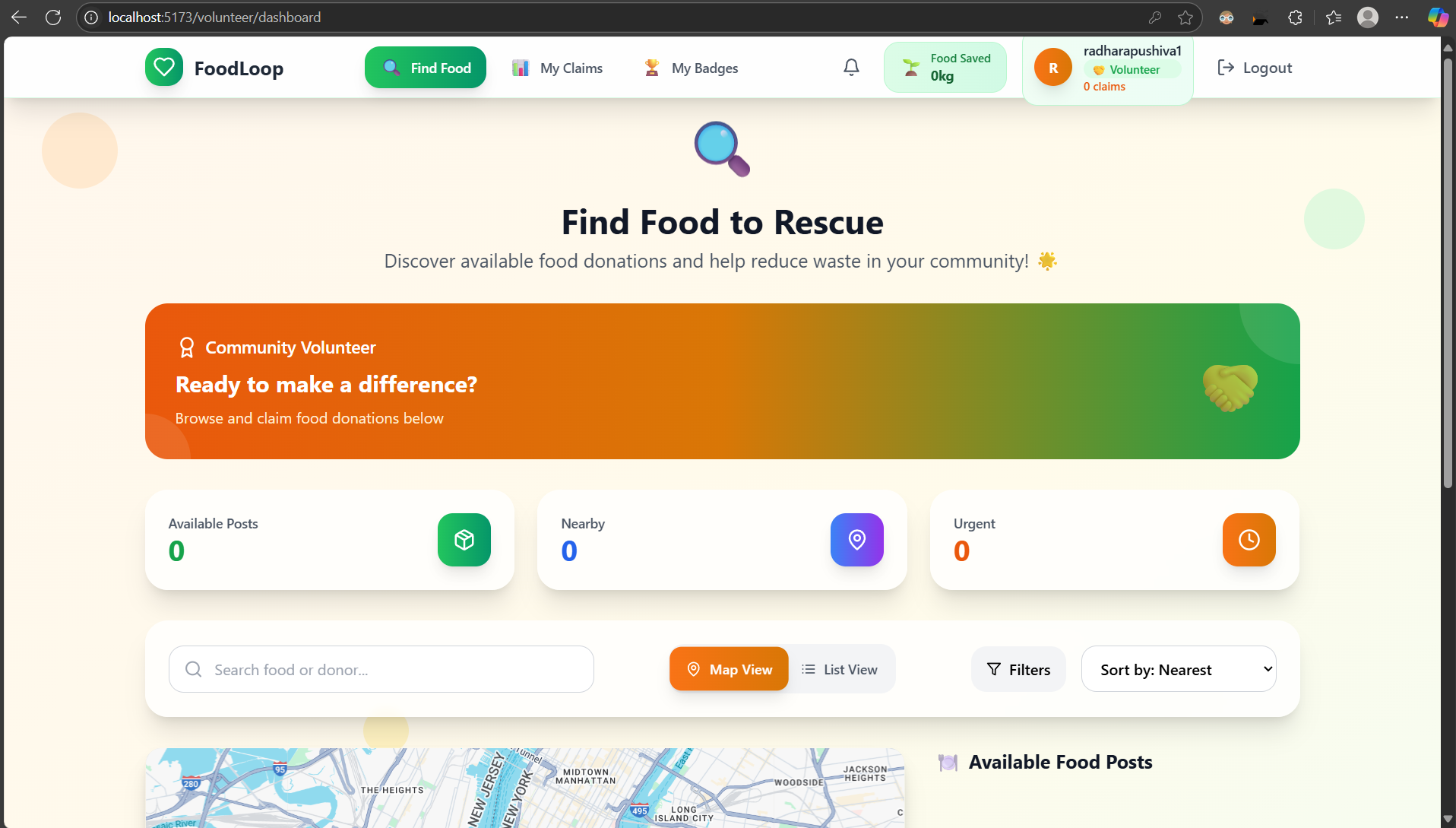
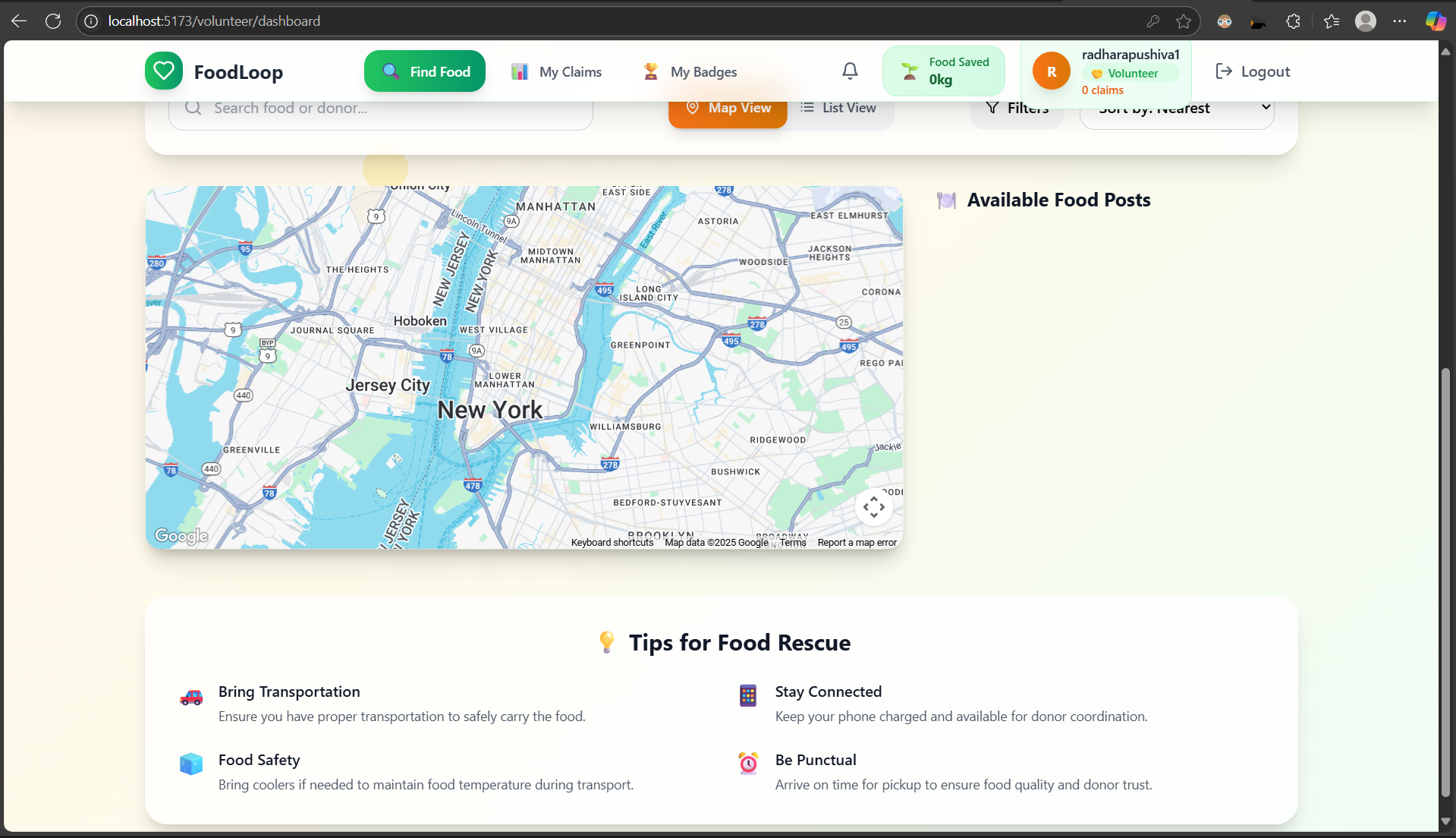
Volunteer dashboard. Easily find food donations, track claims, badges, and food saved. Ready to make a difference in your community!
-
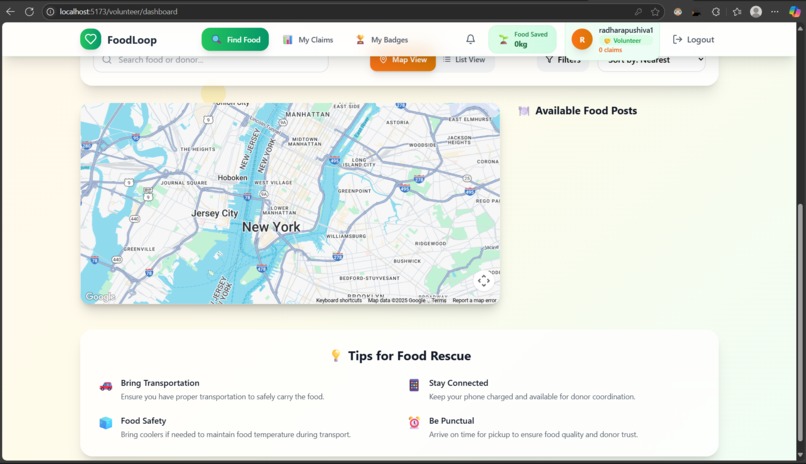
Navigate seamlessly to your food donation pickup.Real-time map directions guide volunteers to the donor's location for efficient food rescue
Inspiration
The inspiration for FoodLoop came from witnessing the stark contrast between food waste and food insecurity in our communities. Every day, restaurants, cafeterias, and event organizers discard perfectly good food while millions go hungry. I realized that the missing piece wasn't the willingness to help, but rather an efficient system to connect food donors with volunteers who could redistribute these meals to those in need.
What it does
For Food Donors (Restaurants, Events, Cafeterias)
- Quick Food Posting: Create detailed donation posts with images, quantity, pickup times, and location.
- Real-time Management: Track food post status (available, claimed, expired) and manage multiple posts.
- Direct Communication: Connect directly with volunteers through integrated contact mechanisms.
- Impact Tracking: Monitor food donated, meals saved, and environmental savings (CO₂, water).
- History Dashboard: View past donations with visual analytics and summaries. ### 🙋 For Volunteers & NGOs
- Smart Discovery: Find nearby available food via an interactive map or list-based interface.
- Real-time Notifications: Get instant alerts when new food donations are posted in your vicinity.
- One-click Claiming: Seamlessly claim food donations; donors are automatically notified.
- Achievement System: Gamified experience with badges and impact tracking.
- Navigation Integration: Direct access to Google Maps for finding donation pickup locations. ### 🛠️ Core Platform Features
- Dual-Role Authentication: Secure login system supporting both donors and volunteers.
- Interactive Mapping: Google Maps-based food discovery system.
- Persistent Storage: LocalStorage-based cross-session data persistence.
- Mobile-Responsive: Optimized UI for desktop, tablet, and mobile devices.
- Real-time Updates: Immediate synchronization of food post statuses across all users. ### 📊 Impact Metrics
- Environmental: Track estimated CO₂ emissions prevented and water resources saved.
- Social: Monitor meals served to communities and food waste mitigated.
- Community: Foster collaboration between food businesses and volunteer networks.
How I built it
The development process followed a user-centric approach:
- Research & Planning
Analyzed the food waste problem and identified key user personas (donors and volunteers). - Architecture Design
Created a modular component structure with clear separation of concerns. - Authentication System
Built a role-based authentication system supporting both donors and volunteers. - Core Features Development
- Donor dashboard for creating and managing food posts
- Volunteer dashboard with map-based food discovery
- Real-time notification system
- Achievement and badge system for gamification
- Donor dashboard for creating and managing food posts
- Data Persistence
ImplementedlocalStorage-based storage for cross-session data persistence. - UI/UX Polish
Added animations, micro-interactions, and responsive design elements for a smoother experience. - Testing & Optimization
Ensured smooth user flows, effective error handling, and optimized performance.
Challenges I ran into
- State Synchronization
Creating a system where food posts update in real-time across different user roles without a backend database required innovative use oflocalStorageand React state management. - Complex User Flows
Managing the intricate flow from food posting → volunteer discovery → claiming → confirmation, while maintaining data consistency, was a key challenge. - Responsive Design
Ensuring the map-based interface worked seamlessly on mobile devices without sacrificing functionality. - Performance Optimization
Efficiently handling large lists of food posts and implementing fast filtering and search capabilities for a smooth user experience. - User Experience
Balancing feature richness with simplicity, especially in the volunteer discovery process, to make the app intuitive and engaging. - Error Handling
Implementing robust error handling for various edge cases during the food claiming and post-update process.
Accomplishments that I'm proud of
- Successfully built FoodLoop, a full-stack MERN web application to reduce food waste and feed communities.
- Created an intuitive donor-volunteer flow to seamlessly match surplus food with people in need.
- Completed the entire project during the HAVK Hackathon, showcasing development speed and innovation.
- Implemented key features like authentication, role-based dashboards, and live donation tracking.
- Contributed towards a socially impactful cause using cutting-edge web technologies.
- Demonstrated team collaboration, problem-solving, and real-world application deployment within tight deadlines.
What I learned
Building FoodLoop was an incredible learning journey that expanded our skills across multiple domains:
- Frontend Architecture
Mastered React with TypeScript, implementing complex state management patterns and creating reusable component libraries. - UI/UX Design
Developed expertise in creating intuitive, accessible interfaces using Tailwind CSS with advanced animations and micro-interactions. - Real-time Systems
Implemented persistent storage solutions usinglocalStorageto simulate real-time data synchronization across user sessions. - Geolocation Integration
Learned to work with mapping APIs and location-based services for food discovery. - User Experience Flow
Designed seamless user journeys for both donors and volunteers, considering different user personas and their unique needs. - Responsive Design
Created mobile-first designs that work flawlessly across all device sizes. - State Management
Implemented complex authentication flows and global state management using React Context API.
What's next for FoodLoop
The future roadmap for FoodLoop focuses on scaling impact, enhancing user experience, and building a sustainable ecosystem.
Immediate Enhancements (Next 3 Months)
- Backend Integration: Real-time database support using Firebase or Supabase
- Push Notifications: Mobile alerts for food availability
- Advanced Filtering: Filter by location, dietary restrictions, food type
- Photo Verification: Improved upload system with image compression & quality validation
- User Profiles: Enhanced donor/volunteer profiles with ratings and verification badges
Short-term Goals (3–6 Months)
- Mobile Application: Native iOS and Android apps with React Native
- AI-Powered Matching: Machine learning to match food donations with ideal volunteers
- Inventory Management: Track expiration and auto-update food statuses
- Multi-language Support: Internationalization and localization support
- Payment Integration: Accept optional donations to support platform sustainability
Medium-term Vision (6–12 Months)
- NGO Partnership Portal: Interface for non-profit organizations to manage donations
- Corporate Dashboard: Tools for enterprise donors (hotels, cafeterias)
- Analytics Platform: Visual reports showing impact metrics and usage trends
- API Development: Public API for 3rd-party platform integrations
- Blockchain Integration: Transparent and verifiable food donation tracking
Long-term Aspirations (1–2 Years)
- Global Expansion: Launch in multiple cities with region-specific features
- IoT Integration: Use smart sensors for food quality and quantity monitoring
- Predictive Analytics: Forecast food waste and volunteer availability trends
- Social Impact Marketplace: Connect to other sustainability initiatives
- Government Partnerships: Collaborate on hunger relief and waste reduction efforts
Sustainability & Growth
- Community Building: Events and local challenges to grow food rescue communities
- Educational Content: Resources on food waste reduction and sustainability
- Research Partnerships: Collaborate with universities on hunger studies
- Revenue Model: Premium plans for large organizations to sustain development
- Open Source Components: Share reusable modules with the dev community
Technical Roadmap
- Microservices Architecture: Containerized and scalable backend systems
- Real-time Communication: WebSockets for instant status updates
- Advanced Security: Role-based access, encryption, and privacy-by-design
- Performance Optimization: CDN usage, caching strategies, and load balancing
- Accessibility Improvements: Full WCAG compliance and assistive tech support
FoodLoop's Vision
A world where no good food goes to waste and no person goes hungry. Through technology, community, and strategic alliances, we aim to grow from a local platform into a global movement fighting food insecurity.
Built With
- api
- css3
- express.js
- git
- github
- html5
- javascript
- mern
- node.js
- react
- tailwind


Log in or sign up for Devpost to join the conversation.