-
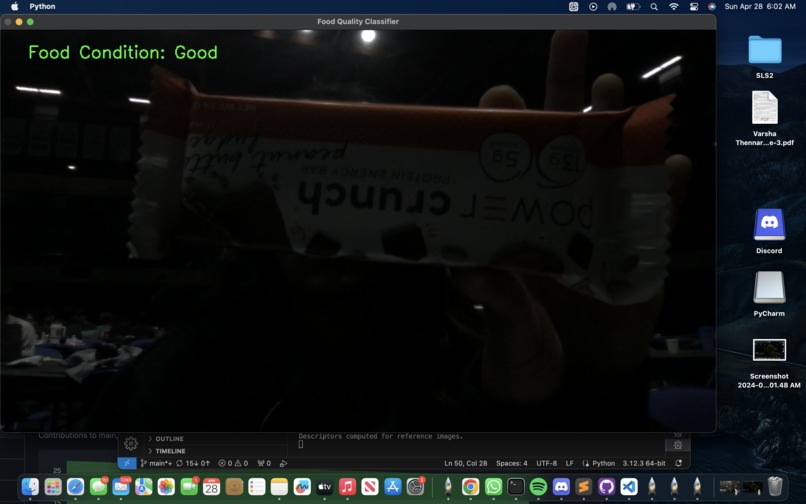
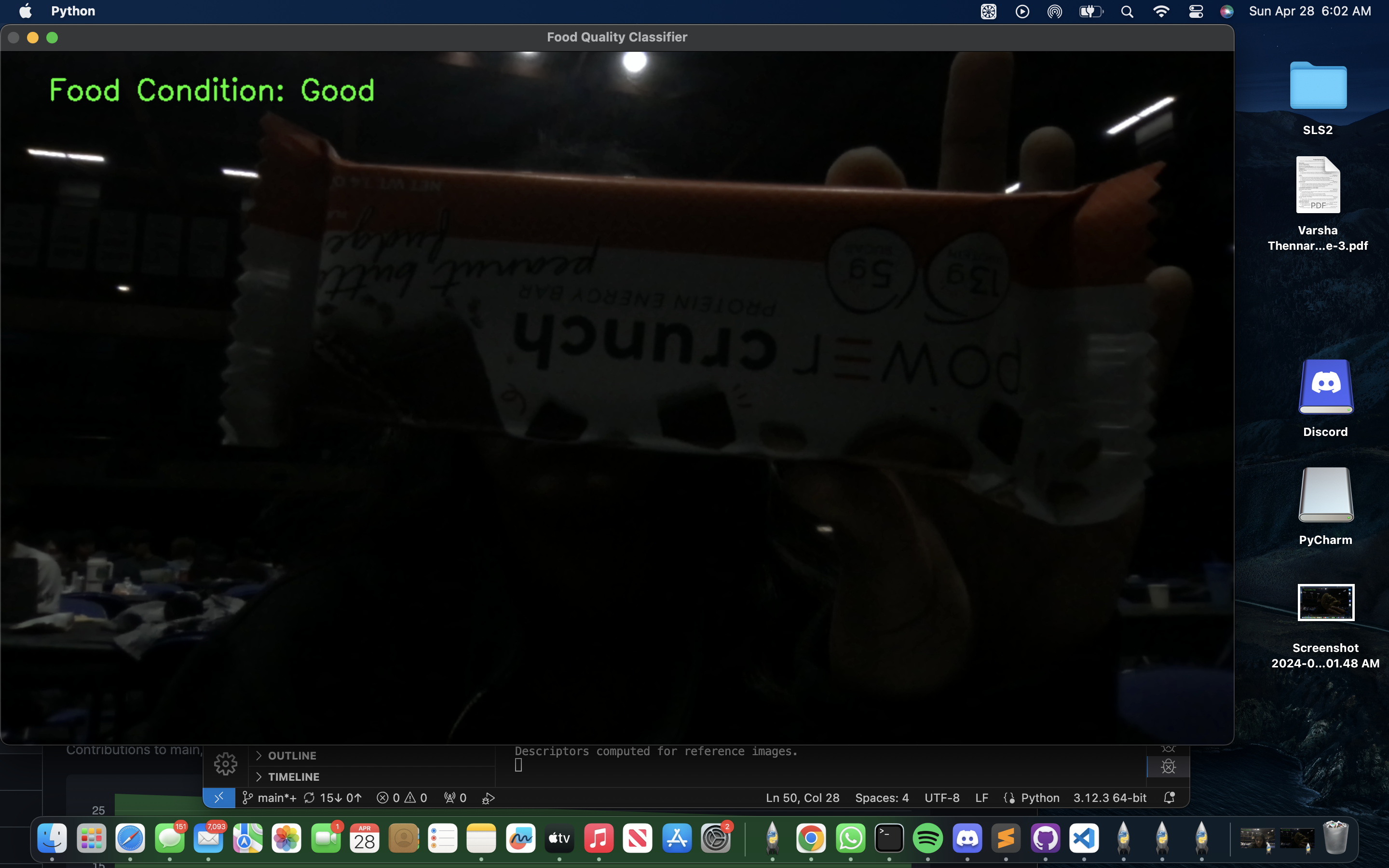
Results from Food Condition image classifier. Image shows a clean, unopened, packaged protein bar classified as "good" quality.
-
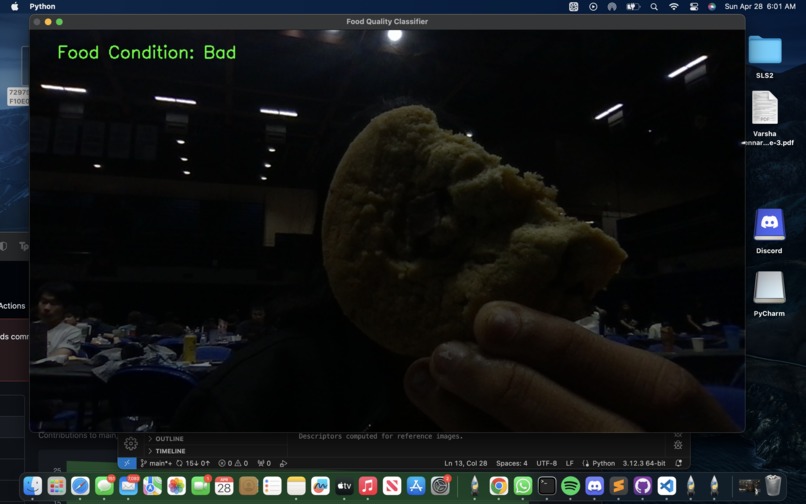
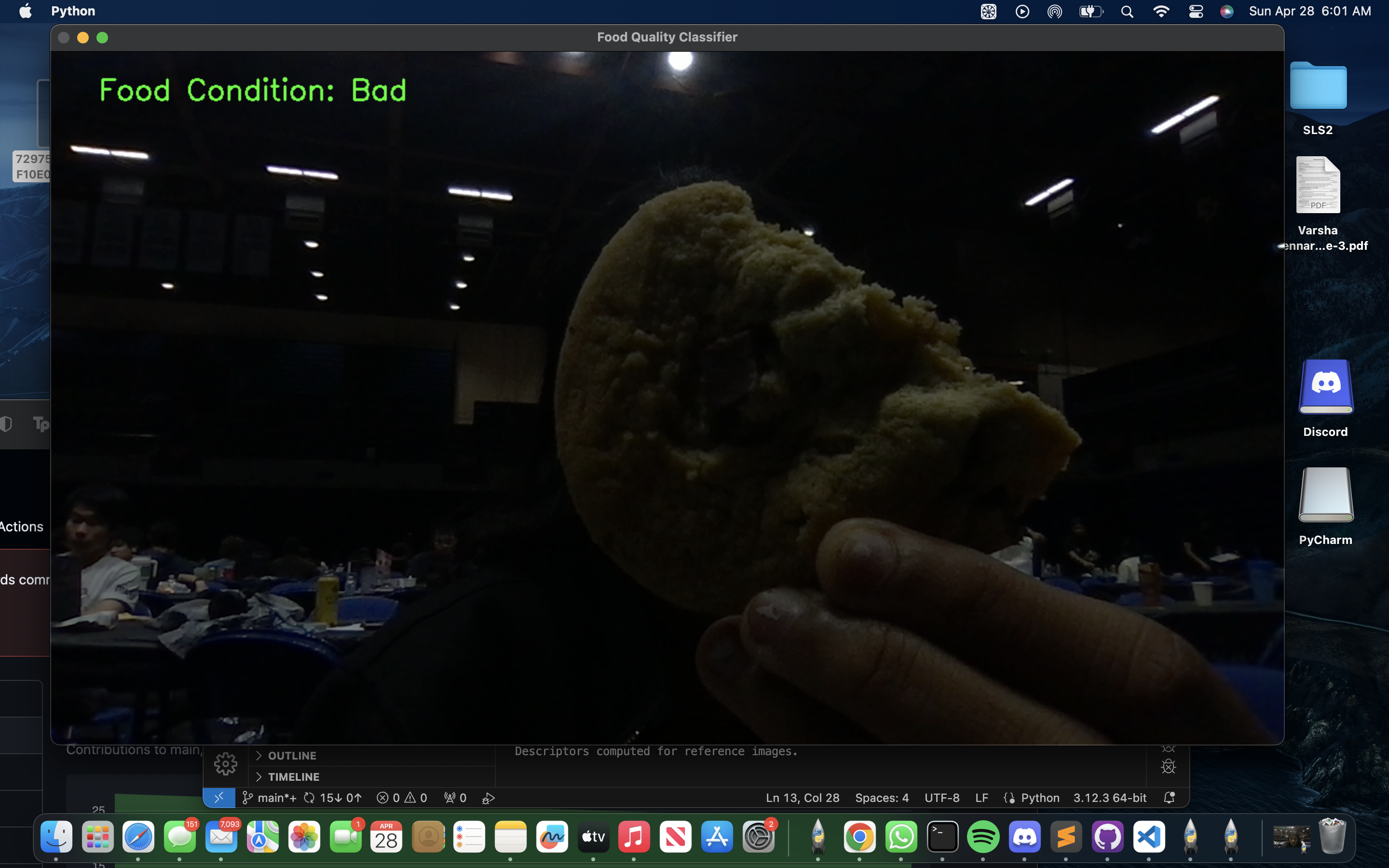
Results from Food Condition image classifier. Unpackaged/foods that have been bitten into are classified as having "bad" quality.
Inspiration
We were inspired by some of our members volunteer work where we would pack/deliver extra food from huge supermarkets to people of less fortune(elderly homes, homeless shelters). Beyond this, we want to use technology to address both social and environmental problems, and food insecurity and hunger in local communities shows the disparity between those who have excess food and those who struggle to access nutritious meals. We also considered food waste's environmental impact and contribution to greenhouse gas emissions. FoodLoop has potential for local communities to come together to support each other fostering a sense of solidarity. By witnessing food waste firsthand and volunteering at food banks and shelters, we were inspired to create a platform to help eliminate food waste.
What it does
Our projects enables 3 groups of people to match with eachother to reduce food wastage: Volunteers, Donors, and Receivers. Donors will post about extra food that they have, Receivers will request for that extra food, and Volunteers will help deliver that food between the Donors(which could be supermarkets or just ordinary people with extra food) and Receivers(people of less fortune).
How we built it
We used Next.js and React for the front end alongside Figma for the UI/UX Prototyping and Wireframing. For the backend we used Flask alongside PostgreSQL, OpenCV, and Sockets to communicate with our database of users and food requests alongside helping communicate between people who are giving/deliverying/and receiving food from eachother and making sure that the food is upto good quality.
Challenges we ran into
Integrating the Figma Designs into the front end dynamically while also connecting to the Flask server API. On the backend we had issues figuring out how to collect good data and train the model and also getting the sockets working in a multi-room type setting alongside persistent usernames and messages(even if 1 client disconnects).
Accomplishments that we're proud of
This was a very ambitious project as we were trying to integrate many technologies that we hadn't used extensively before and managed to pull it off collaboratively to a MVP level with 3 highly technical challenging features. On the UX Design end we are proud of getting our Wireframes and over 22 screens designed along with fully functioning high fidelity prototype. We were able to successfully use Computer Vision to detect damaged poor quality vs clean and packaged high quality food with both video/single capture and user file import pictures of food.
What's next for FoodLoop
Our main next steps are properly integrating the private messaging groupchat within the website as its base state right now and also fully integrating the food sanitary level classification. Beyond this, we need to fix some bugs that could potentially cause issues for users down the line and expand the technologies used such that they won't fail at a scalable level.
Built With
- css
- figma
- flask
- html
- javascript
- nextjs
- opencv
- python
- react
- socket
- sql
- supabase
- tcp
- typescript

Log in or sign up for Devpost to join the conversation.