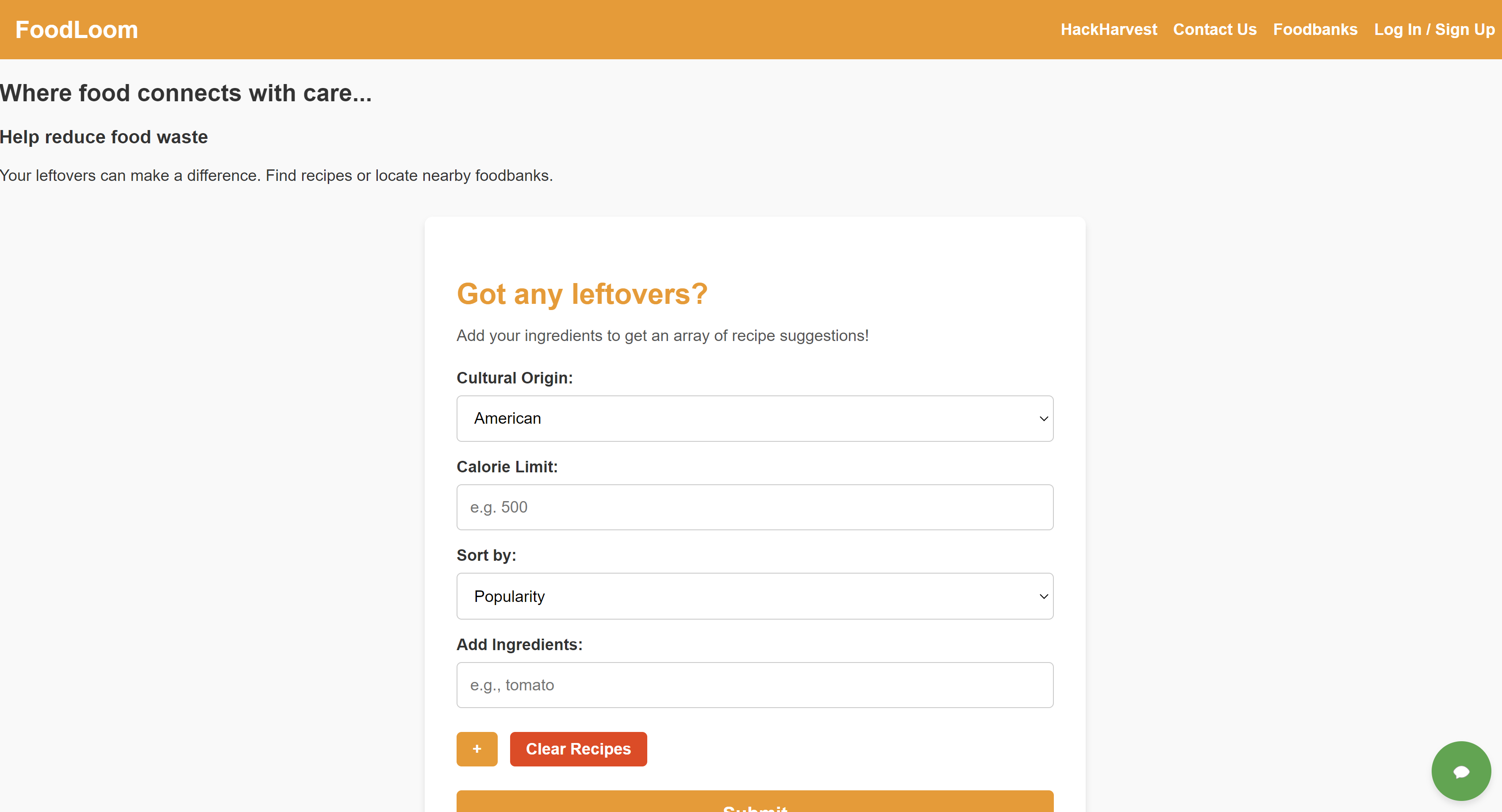
What it does FoodLoom is a web platform that helps users locate nearby food banks, explore nutritional details about food items, and engage with community resources. Users can search for food items, view requested recipes from food banks, and even access additional information like websites and resources scraped dynamically from the web. The platform also includes a chatbot assistant to answer food-related queries and simplify navigation.
How we built it We built FoodLoom using a combination of:
Frontend: HTML, CSS, and JavaScript with Google Maps API for location-based functionality. Backend: Flask framework with SQLite for data storage. APIs: Integrated Google Places API for food bank data and Spoonacular API for nutritional analysis and food item images. Web scraping: Dynamic keyword-based scraping for enhanced information retrieval from food bank websites. Chart.js: Used for visualizing nutritional data in a clean and interactive format. Challenges we ran into Data integration: Combining data from various APIs and ensuring consistency with user-submitted information was challenging. Web scraping limitations: Handling inaccessible or unstructured websites required fallback logic and error handling. User experience: Designing a seamless, responsive interface that remains functional and intuitive on all devices. Time constraints: Balancing feature ambition with project deadlines while ensuring a polished final product. Accomplishments that we're proud of Successfully implemented dynamic food bank mapping using Google Maps API and backend synchronization. Created visually appealing nutritional charts with interactive insights. Developed a functional chatbot integrated with OpenAI’s API to provide real-time assistance. Streamlined a login/signup system with database-backed user authentication. Overcame major technical hurdles in integrating multiple APIs cohesively within the project timeline. What we learned The importance of robust API error handling and fallback strategies when working with external services. How to optimize a web application for both backend performance and frontend responsiveness. The value of user feedback in refining design and functionality to meet real-world needs. Collaboration skills in a fast-paced, deadline-driven environment. What’s next for FoodLoom Mobile App Development: Extend the platform to mobile for on-the-go access. Enhanced personalization: Add user profiles that remember preferences, frequently searched items, and bookmarked food banks. Donation integration: Enable monetary or food donations directly through the platform. Volunteer matching: Create a portal to connect volunteers with food banks in need of manpower. AI-driven insights: Utilize machine learning to predict food demand patterns and optimize resource distribution. Accessibility improvements: Expand multilingual support and voice-based interaction features.

Log in or sign up for Devpost to join the conversation.