-
-
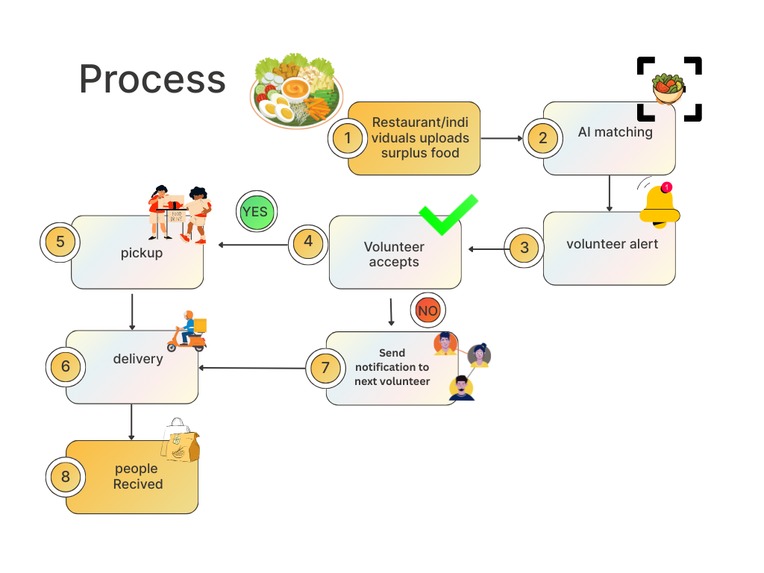
PROCESS OF OUR PROJECT
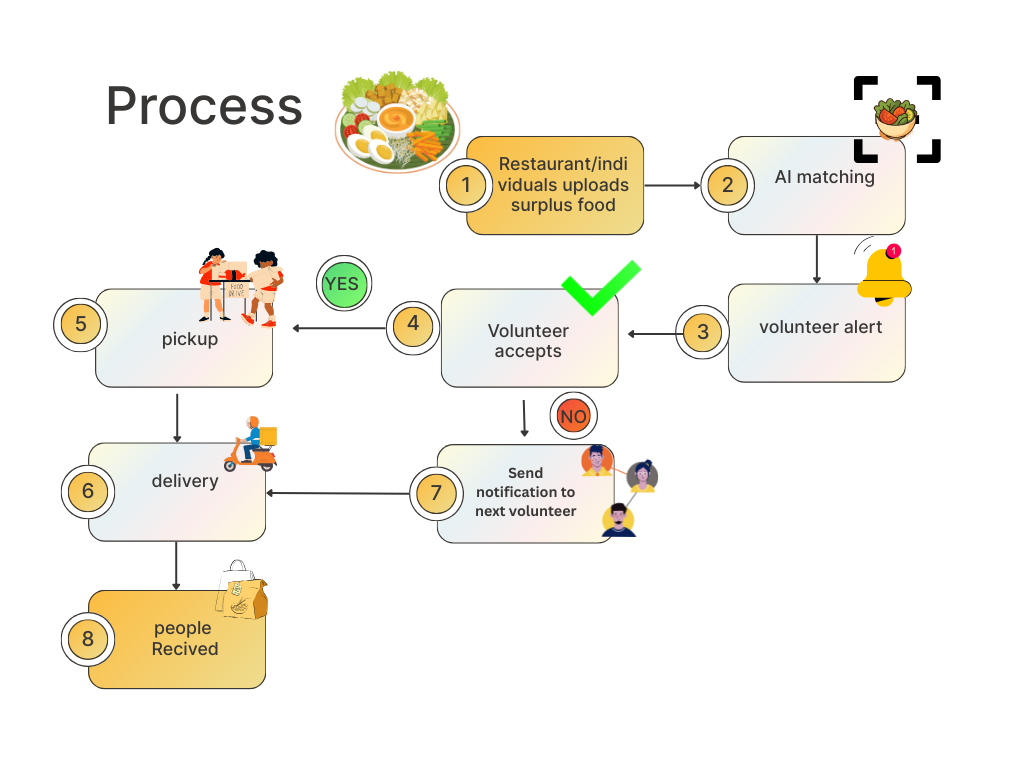
Inspiration
Every day, tons of food are wasted while thousands of people still sleep hungry—especially roadside communities, slums, bus stands, and railway station areas. We wanted a simple system that connects leftover food from donors (homes, hotels, restaurants) with volunteers who can deliver it to needy areas. We built FoodLinkAI to use AI to identify real hunger hotspots so food reaches the right people at the right time.
What it Does
FoodLinkAI is a smart food-donation and matching platform that: Allows anyone (individuals, hotels, restaurants) to donate leftover food. Connects volunteers who pick up and deliver the food. Uses AI to identify hungry locations based on historical data, volunteer reports, and population density. Generates a hunger heatmap that shows high-need areas in red. Assigns priority scores (0–10) to each locality based on demand. Guides volunteers to the most critical hunger zones first. Ensures transparency by requiring volunteers to upload delivery proof.
How We Built It
Frontend/Web App
Food donors submit food details (type, quantity, location). Volunteers get real-time pickup and delivery requests. Admin dashboard shows heatmap + demand insights
Backend
Stores data about donors, volunteers, deliveries, and hotspot locations. Tracks volunteer activity and delivery history.
AI/ML Layer
Input data used: Historical delivery data Volunteer reports (“more homeless here”) Population/slum density Donor availability AI analyzes patterns and: Detects high-demand zones using clustering Creates a Hunger Score (0–10) Generates a heatmap
Heatmap Visualization
Red = hungry Yellow = medium Green = low Auto-updates as deliveries happen.
Challenges We Ran Into
Collecting clean and consistent data from volunteers. Handling missing or incomplete population/demand information. Creating a reliable hunger score without overcomplicating the model. Designing a heatmap that updates in real time. Ensuring volunteers actually deliver food and upload proof. Balancing simplicity for users while keeping AI powerful.
Accomplishments That We’re Proud Of
Successfully built an AI model that detects real hunger hotspots. Created a transparent food-donation system with delivery verification. Auto-generated a heatmap that helps volunteers act fast. Made an interface simple enough for anyone to use. Reduced food wastage while increasing the number of people served.
What We Learned
Real-world social projects need both technology + ground validation. AI works best with simple but meaningful features (delivery data, reports, density). Visualization (heatmaps) helps volunteers make quicker decisions. Ensuring trust and verification is just as important as the algorithm. Even small amounts of leftover food can create a big impact with the right system.
What’s Next for FoodLinkAI
Live GPS tracking of food delivery by volunteers. AI route optimization so volunteers take the fastest path. Predictive hunger scoring based on time of day (ex: bus stands evening peak). Image-based food quality detection before accepting donations. Blockchain-based proof of delivery for full transparency. City-level dashboards to support government and NGOs. Expand to nearby cities and integrate with major restaurant chains.
Built With
- flask
- geopy
- joblib
- numpy
- pandas
- psycopg2-binary
- python-dotenv
- scikit-learn
- sqlalchemy
- werkzeug


Log in or sign up for Devpost to join the conversation.