-
-
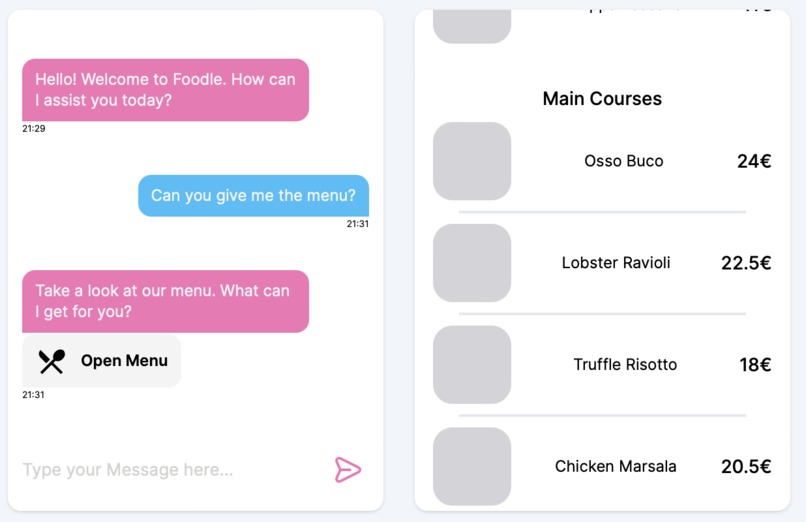
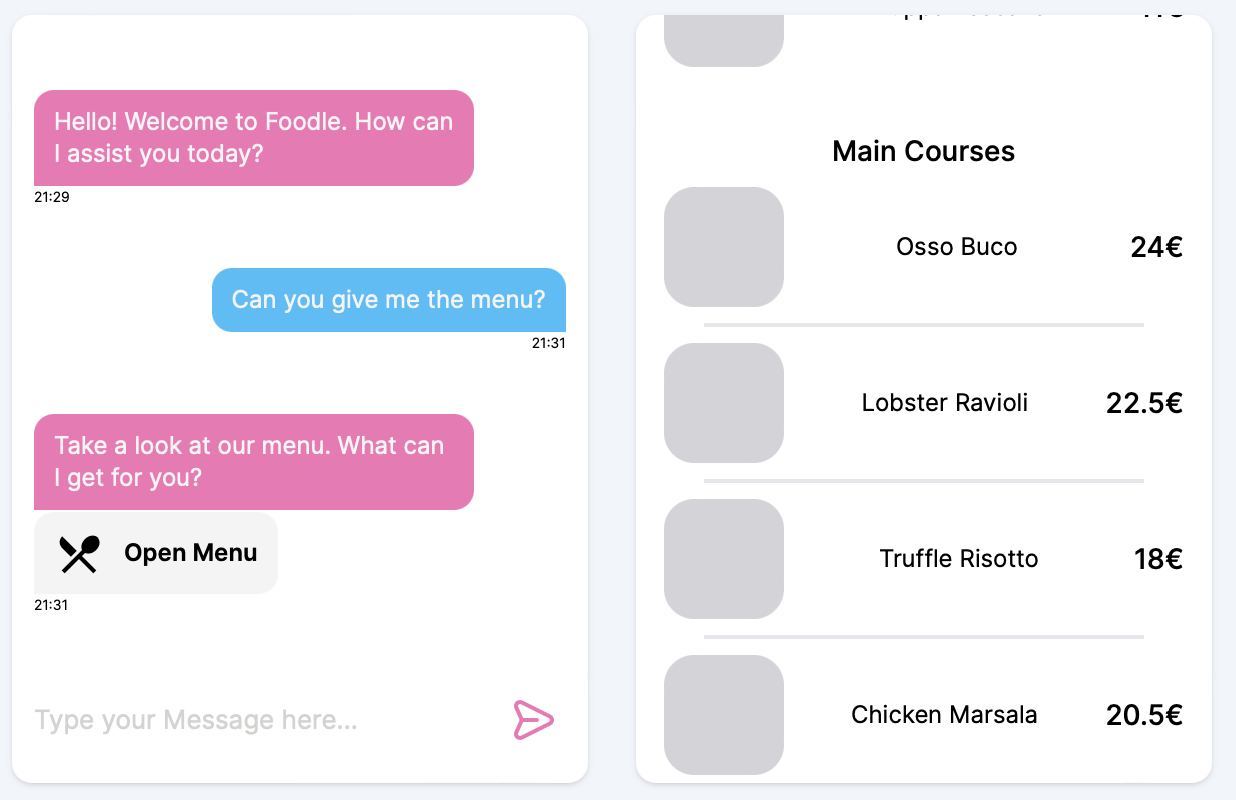
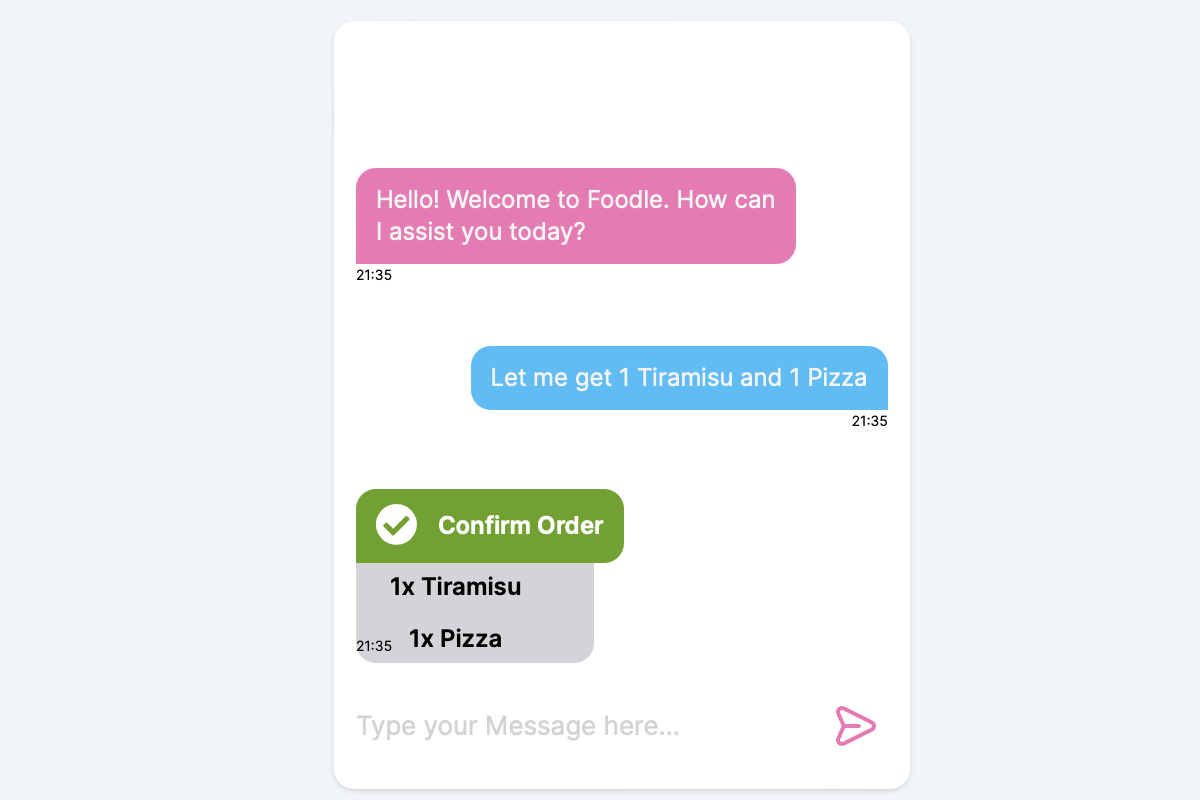
When asked for a menu, Foodle will provide the menu.
-
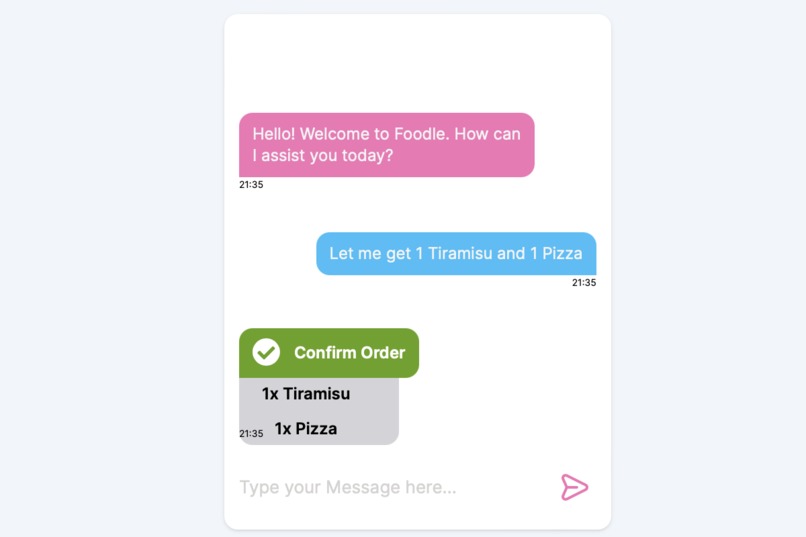
Foodle will take orders and collects them for checkout.
-
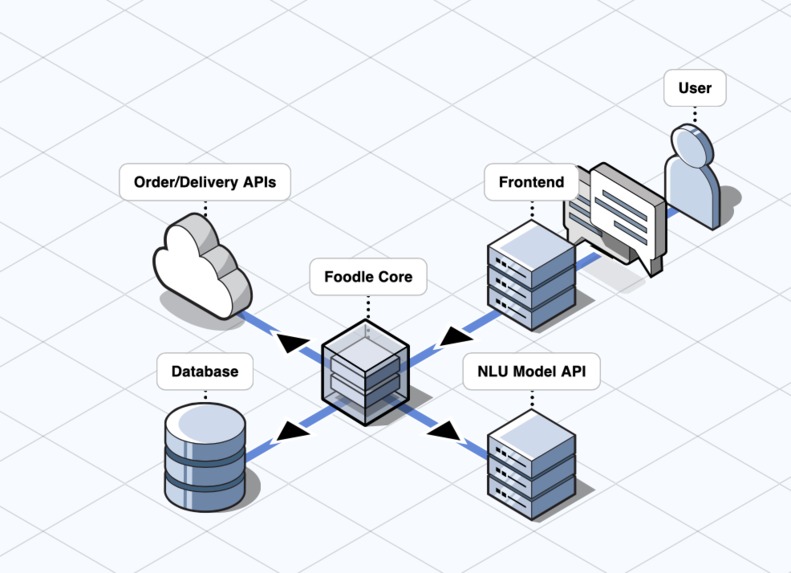
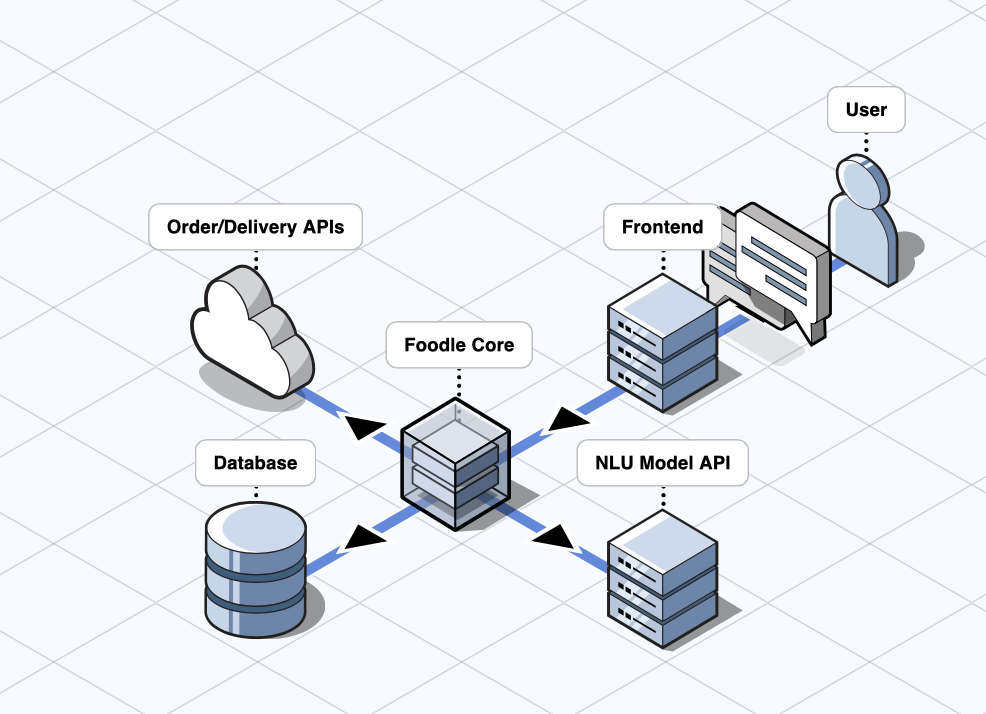
System Architecture
Inspiration
The idea behind Foodle emerged from a simple desire to streamline the food ordering experience. I wanted to explore the potential of chatbots to create a practical and enjoyable solution.
What it does
Foodle is a chatbot-driven platform that allows users to effortlessly browse menus, place orders, and track their food deliveries. It's a straightforward yet powerful tool aimed at enhancing the user experience in the world of online food services.
How I built it
Foodle is built on a foundation of modern technologies. The chatbot's natural language understanding (NLU) is powered by Rasa, providing a robust and customizable conversational interface. The frontend is crafted with Svelte, the backend runs on Node.js, and Redis serves as the data storage solution.
Challenges I ran into
Building Foodle wasn't without its hurdles. Integrating different components seamlessly, fine-tuning the chatbot's responses, and ensuring smooth deployment on OpenShift presented challenges that demanded creative problem-solving.
Accomplishments that I am proud of
I'm particularly proud of the cohesive integration of diverse technologies into a functional and user-friendly application. Despite being a solo project, Foodle successfully brings together various elements to create a cohesive and seamless user experience.
What I learned
The journey of developing Foodle provided invaluable insights into natural language processing, containerization with Docker, and deploying applications on OpenShift. Learning to navigate and overcome challenges significantly contributed to my skill set.
What's next for Foodle
While Foodle stands as a functional proof of concept, needing adaptations for usage in real world scenarios, there's room for growth. Future iterations could involve enhancing the chatbot's capabilities, refining the user interface, and exploring additional features to make it even more versatile.

Log in or sign up for Devpost to join the conversation.