-
-
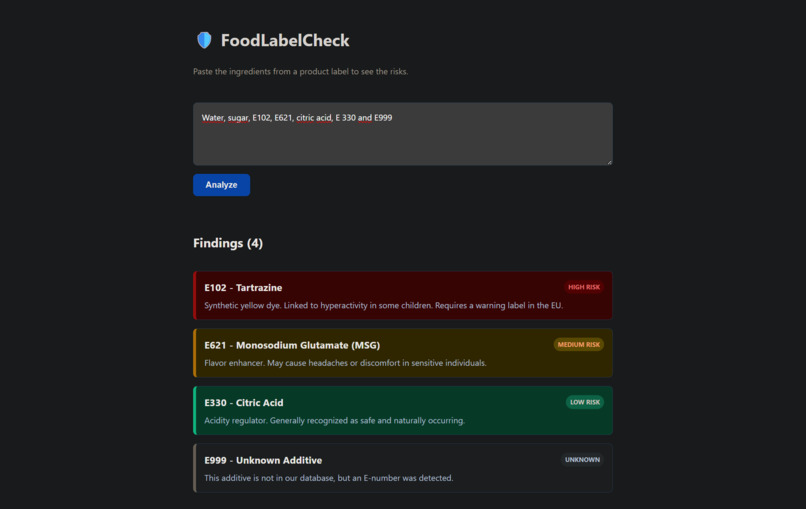
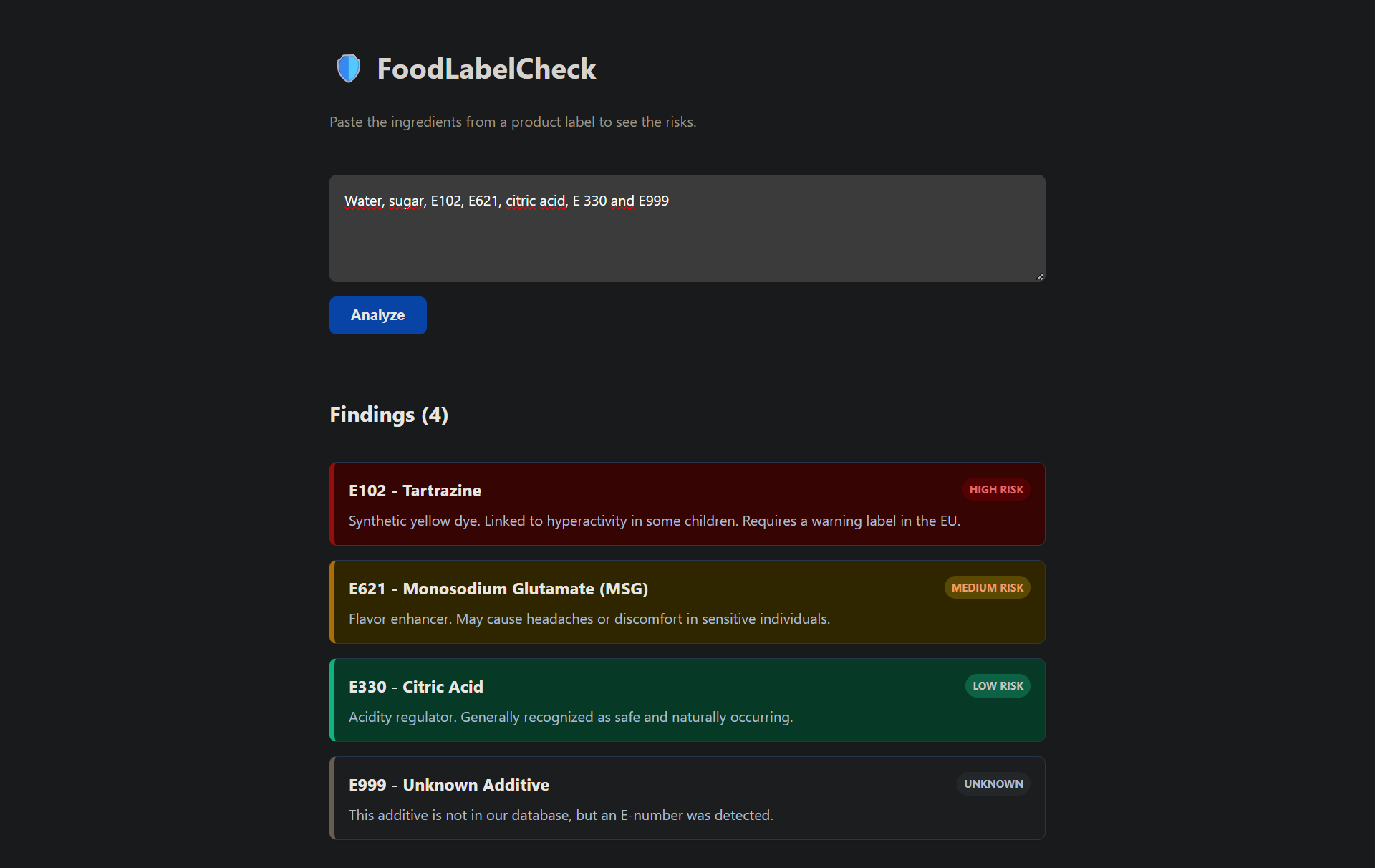
Instantly analyzing food additives: Color-coded risk levels (High, Medium, Low, Unknown) with clear explanations.
Inspiration
We've all been there: standing in a supermarket aisle, turning a product over, and being confronted by a list of cryptic E-numbers (like E102 or E621). As consumers, we have no idea what these are, why they are in our food, or if they pose health risks. We wanted to build a tool that cuts through the jargon and provides instant transparency for everyday consumers.
What it does
FoodLabelCheck is a transparency tool that analyzes food additives from ingredient lists. You simply paste the text from a product label, and the app extracts the E-numbers. It then cross-references them with a database to provide:
- The actual name and purpose of the additive.
- A color-coded risk level (High, Medium, Low, Unknown).
- A clear explanation of why it is controversial (e.g., "Linked to hyperactivity in children" or "Banned in the EU").
How we built it
We built this as a rapid MVP during the hackathon.
- Frontend: React.js powered by Vite for a lightning-fast, responsive UI.
- Styling: Vanilla CSS with a sleek dark-mode theme to make the color-coded risk cards pop.
- Logic: JavaScript Regular Expressions (Regex) to smartly parse text and extract E-numbers, even if the user types them with spaces (e.g., "E 330").
- Deployment: Vercel for seamless, instant hosting.
Challenges we ran into
One of the main challenges was ensuring the Regex parsing was robust enough to catch variations (E-102, E 102, E102) without false positives. We also focused heavily on the UX design to ensure the risk levels are instantly understandable at a glance through color psychology.
Accomplishments that we're proud of
We are proud of building a fully functional, live, and genuinely useful product in a very short timeframe. The "wow moment" is seeing the app instantly flag an unknown additive (like E999) gracefully without crashing, proving the robustness of the MVP.
What's next for FoodLabelCheck
The next step is to implement OCR (Optical Character Recognition) so users can simply take a photo of a physical label. We also plan to integrate with the Open Food Facts API to allow barcode scanning and expand our database dynamically based on real-time FDA and EFSA updates.
Built With
- css3
- github
- javascript
- react
- vercel
- vite

Log in or sign up for Devpost to join the conversation.