-
-
Foodini Banner
-

Foodini Login Page
-
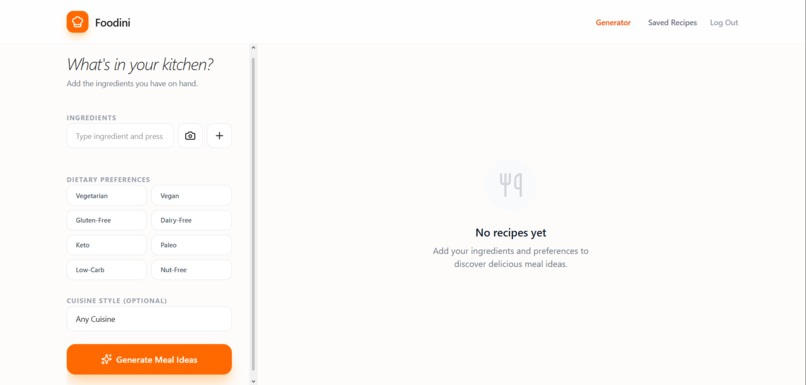
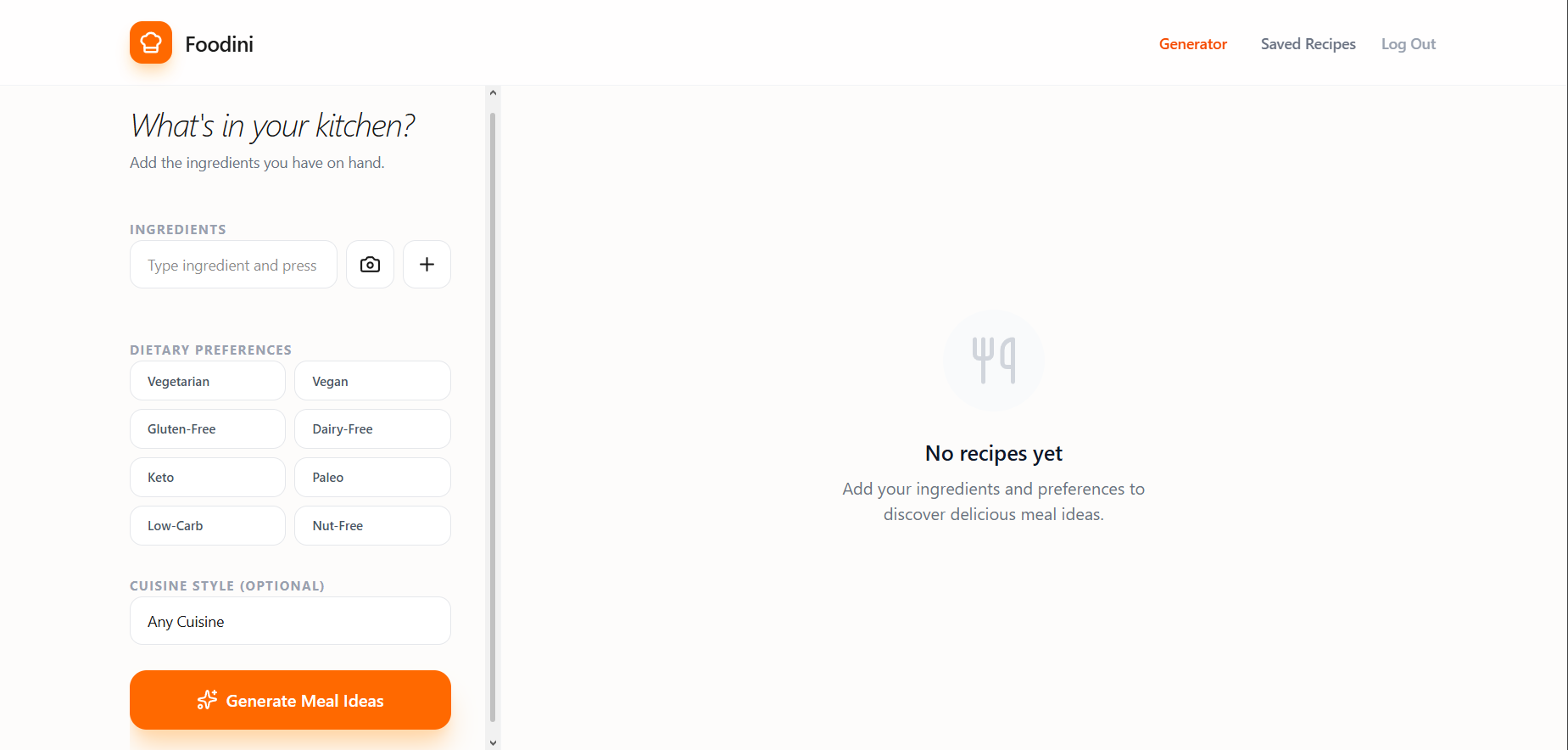
Main Foodini Page
-
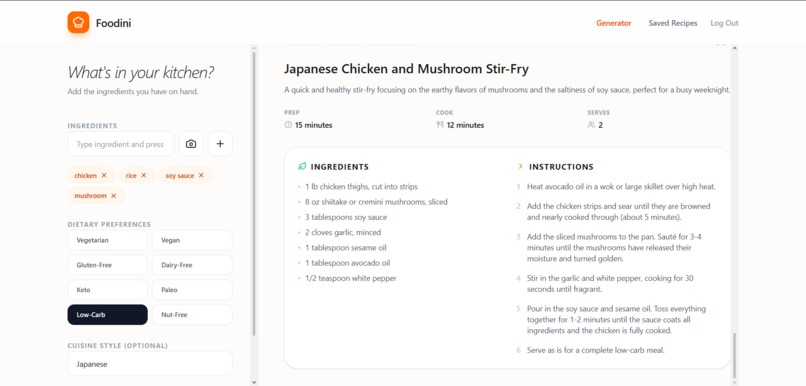
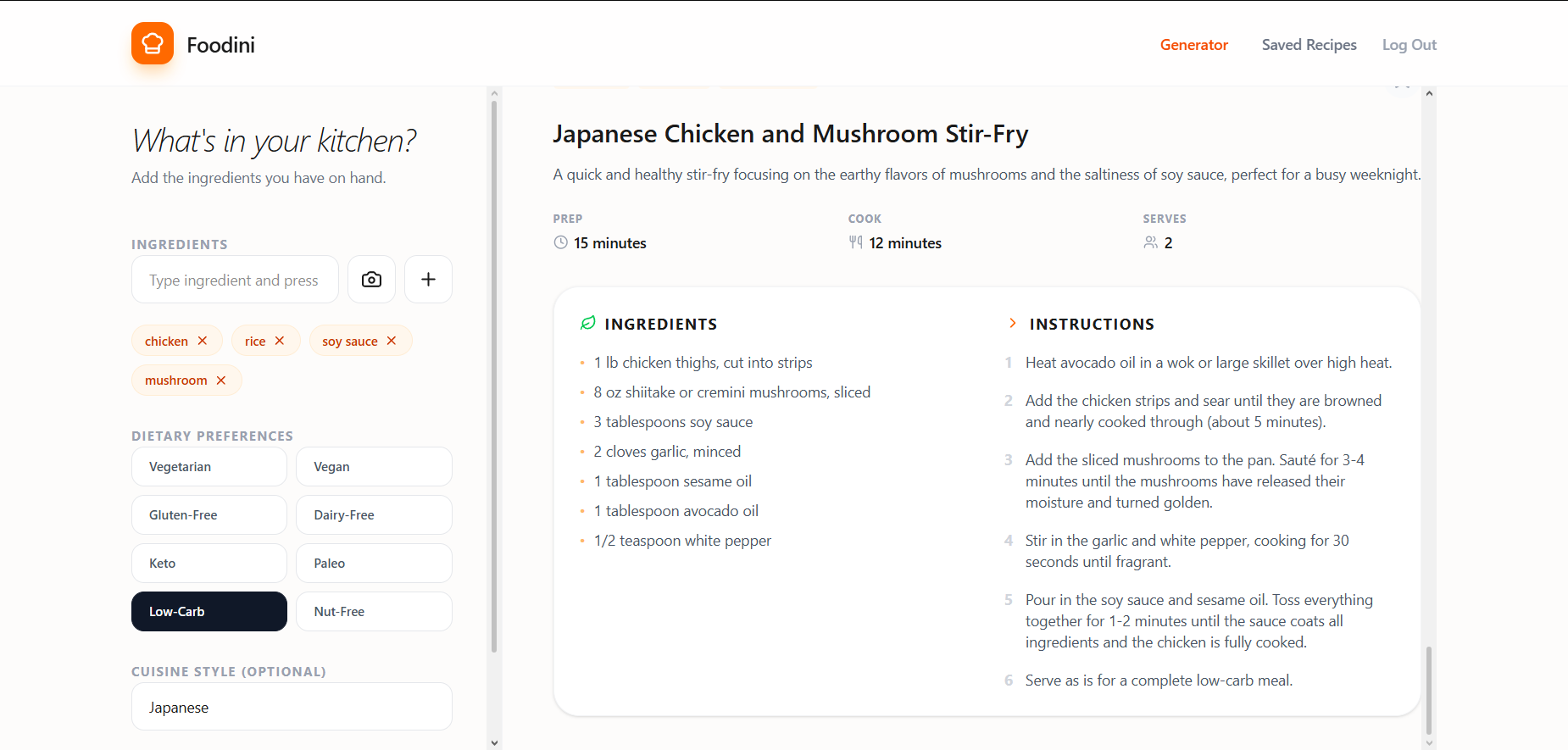
Foodini Generated Recipes
-
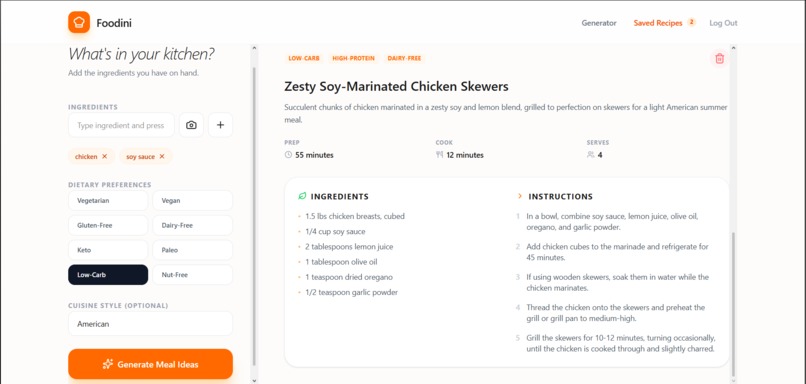
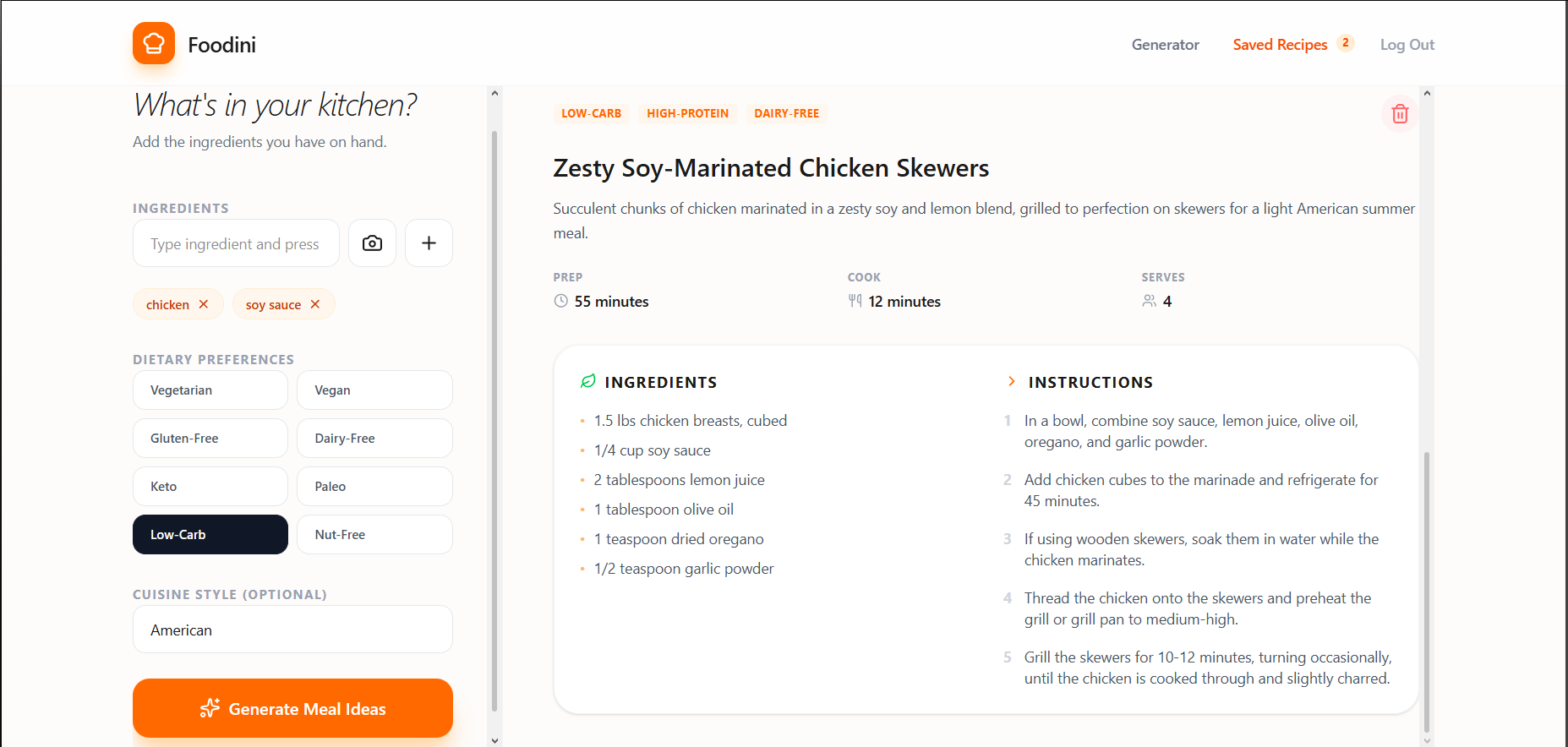
Foodini Saved Recipe

Inspiration
As college students, we found ourselves stuck in a cycle of cooking the same few meals over and over again. Between busy schedules, limited budgets, and inconsistent grocery runs, it’s hard to branch out and try new recipes. We wanted a way to make cooking more exciting without requiring extra time, money, or planning.
We also noticed a common problem: most recipes assume you have all the ingredients ready. For students (and honestly, most people), that’s rarely the case. Instead of adapting recipes to what we have, we often just give up and default to something easy.
That’s where Foodini comes in. We wanted to flip the traditional recipe search process—rather than searching for recipes and adjusting them, Foodini creates recipes for you based on the ingredients you already have. The goal is to make cooking more accessible, reduce food waste, and help people discover new meals effortlessly.
What it does
Foodini is an AI-powered recipe generator that helps you cook with what you already have. Instead of searching for recipes and realizing you're missing half the ingredients, Foodini flips the process—just input what’s in your fridge or pantry, and it generates a complete, easy-to-follow recipe tailored to you.
Whether you're trying to save money, reduce food waste, or just avoid another grocery trip, Foodini makes cooking more accessible, creative, and efficient.
How we built it
We built Foodini by combining modern AI tools with our own development experience:
- Integrated Gemini AI through Google AI Studio to generate dynamic, context-aware recipes
- Used GitHub for version control and team collaboration
- Developed the backend and logic using our own programming knowledge
- Began deploying the project using web technologies and domain setup (including a
.techdomain)
Our focus was on creating a seamless pipeline from user input → AI processing → clean, readable recipe output.
Challenges we ran into
- GitHub merge conflicts while working collaboratively on the same codebase
- Learning how to properly configure and deploy a .tech domain
- Debugging API interactions and ensuring consistent AI responses
- Managing time effectively while learning new tools during the hackathon
Each challenge pushed us to communicate better and adapt quickly.
Accomplishments that we're proud of
- Successfully building a fully functional product in a short time frame
- Creating an intuitive experience that turns simple inputs into useful recipes
- Maintaining strong teamwork and efficiency while still attending workshops and enjoying the hackathon
- Overcoming technical hurdles like deployment and API integration
What we learned
- How to integrate AI (Gemini) into a real-world application
- Practical experience with APIs and prompt design
- Basics of DNS configuration, servers, and Docker-based deployment
- The importance of collaboration, version control, and clear communication in a fast-paced environment
Built With
- css
- docker
- gemini
- gemini-ai-studio
- github
- html
- node.js
- python
- typescript
- visual-studio


Log in or sign up for Devpost to join the conversation.