-
-
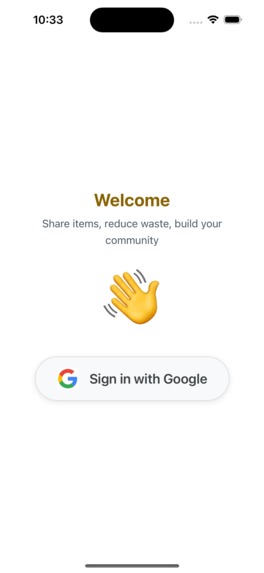
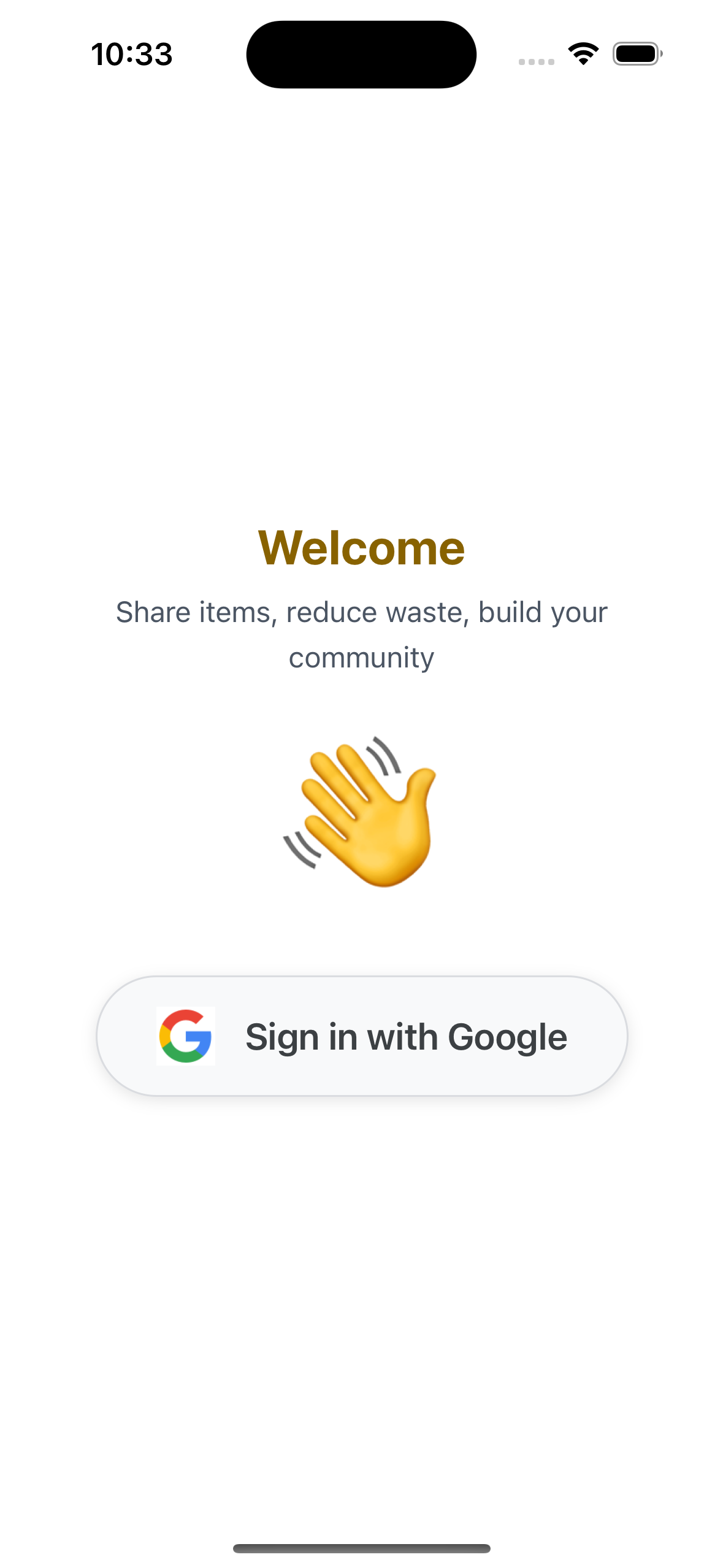
Login Screen
-
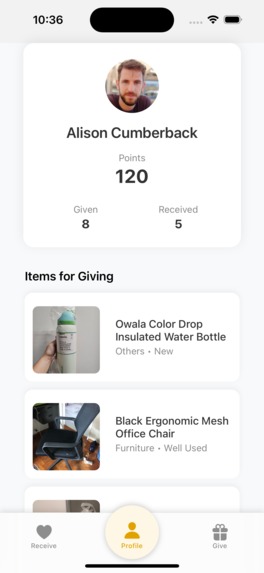
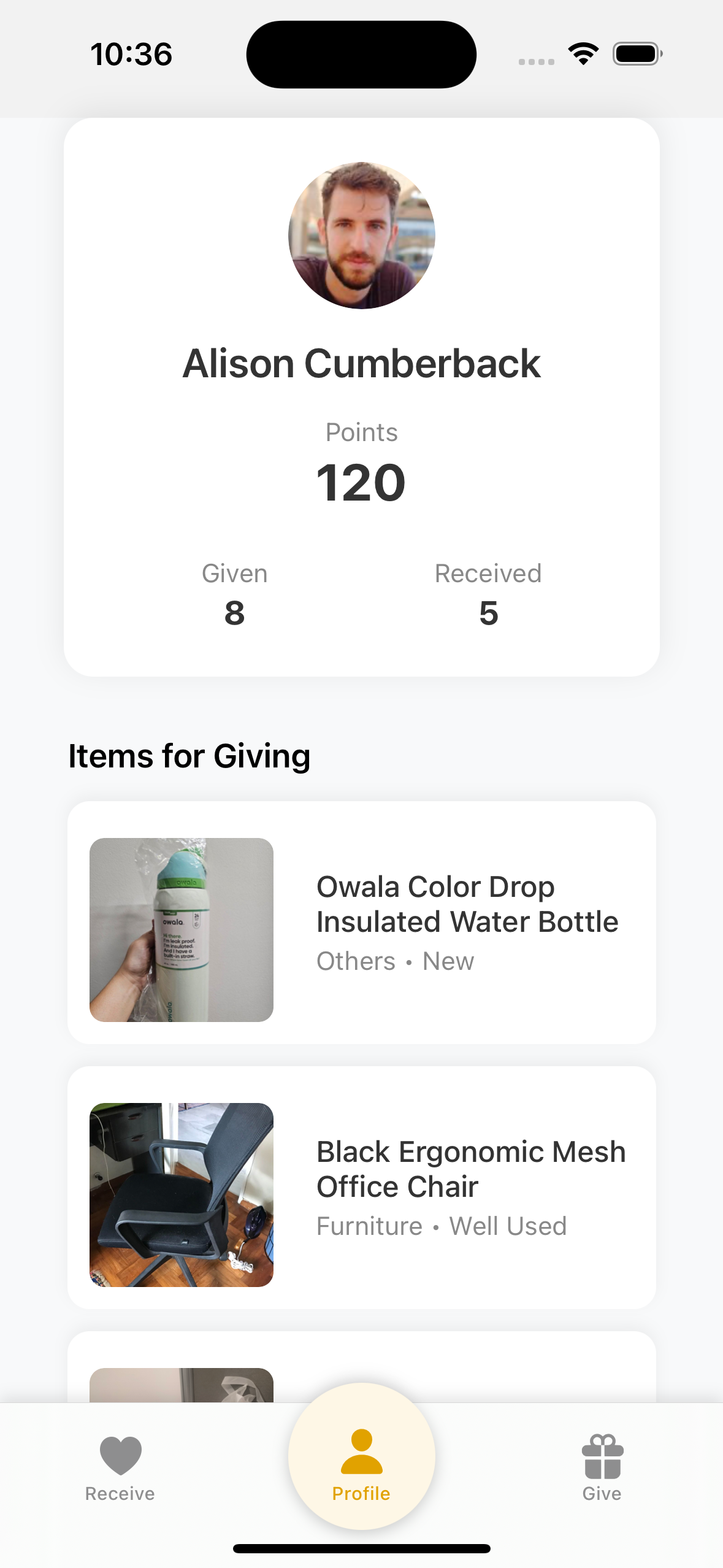
Profile Screen
-
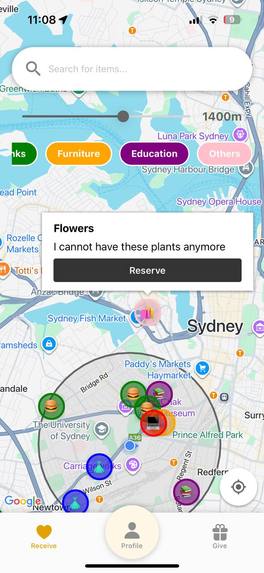
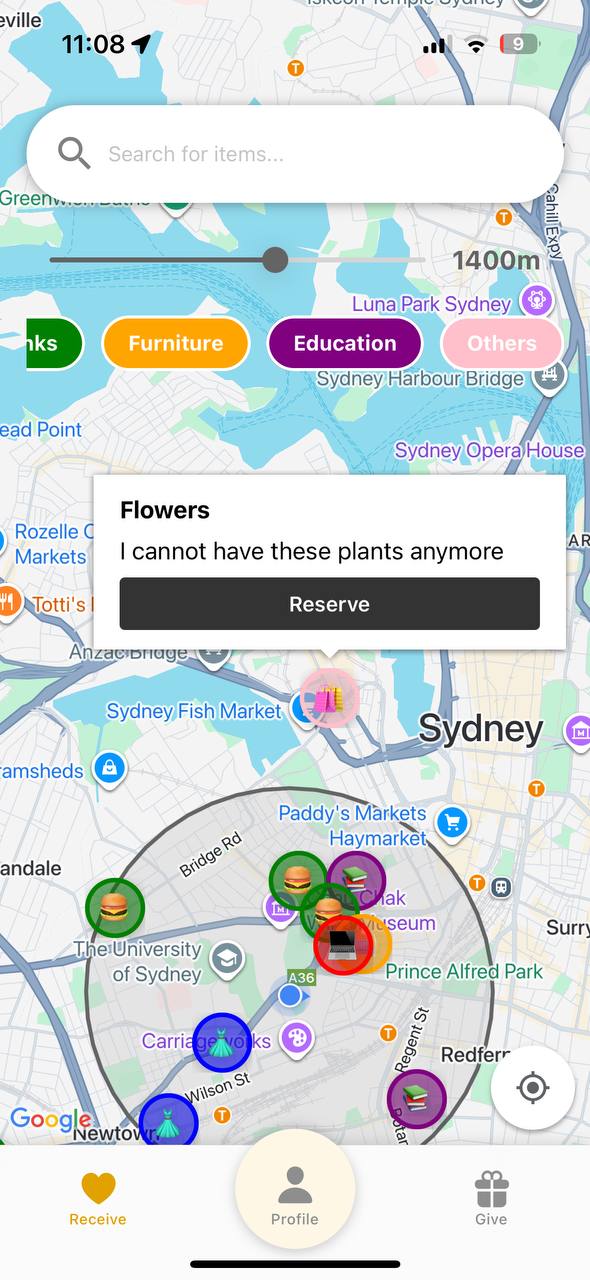
Receive Screen
-
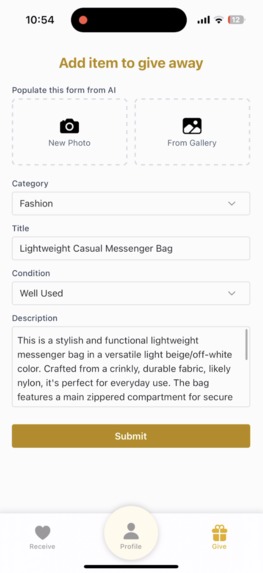
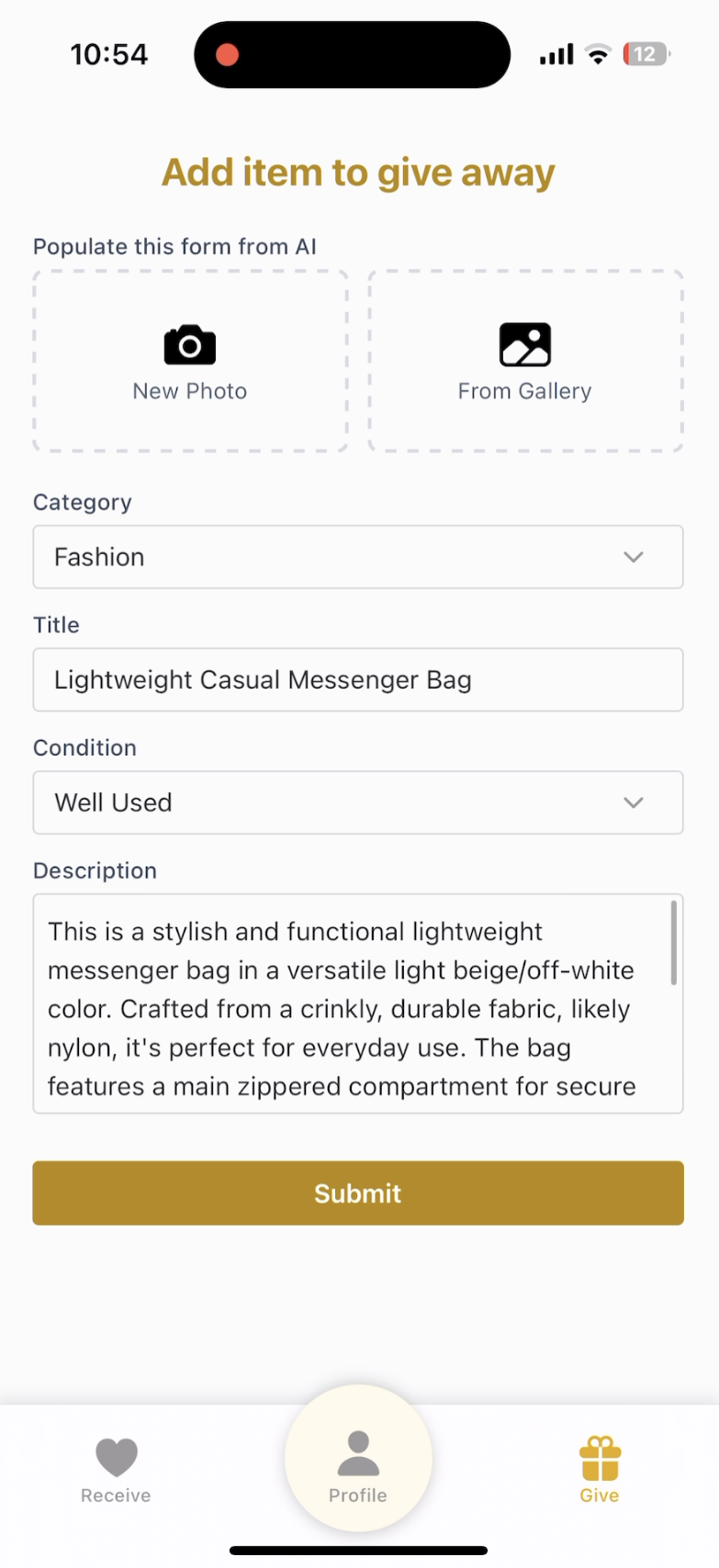
Give Screen
Inspiration
The cities of the future will thrive on circularity, uniting human connection with the continual renewal of resources. As students, we often find ourselves surrounded by items we no longer need, especially when moving out of our accommodations after completing university. Throwing these items away feels wasteful, yet selling them on platforms like Facebook Marketplace can be inconvenient — it involves pricing, pitching, and sometimes even creating an account. At the same time, as students and young people, we often need everyday items but would rather not spend money on brand-new ones.
EcoGive was born out of this shared experience, built on the belief in sharing over selling, and community over commerce. Our platform creates a space where people can easily give away what they no longer need and receive what they do without barriers. This helps reduce unnecessary purchases, prevents waste, and fosters community spirit by connecting people who help one another.
EcoGive directly ties into the theme of "Cities of the Future". We envision future cities that are:
- Sustainable, where resources are reused rather than discarded.
- Community-driven, where people collaborate and connect rather than live in isolated, individualistic ways.
What it does
EcoGive is a mobile app that enables people to give away items they no longer need and receive things they need - completely free.
Key Features:
- Points System: Users earn points whenever they give or receive items.
- Profile Dashboard: Tracks users’ total points and the number of items given and received, helping promote engagement.
- Give Page: Users can upload or capture item images and AI pre-fills the name, condition, category and description of the item.
- Receive Page: Displays nearby available items using a map-based view, making it easy for users to explore what others are offering around them.
Challenges and lessons learnt
Integrating social login on mobile devices proved more complex than expected due to platform-specific nuances, while working with native features like the camera and GPS was challenging given our limited prior experience. Additionally, with a wide range of envisioned features, we had to carefully prioritize which functionalities to implement within the constraints of the hackathon, balancing ambition with feasibility. Through these experiences, we learned that identifying the right problem to solve is just as important as building the solution itself. Not every solvable problem is worth pursuing. We also discovered the value of iteration, collaboration, and clear role distribution, and how focusing on meaningful, community-driven impact can guide design decisions and motivate both creators and users.
What's Next for EcoGive
Our vision for EcoGive extends beyond just giving and receiving items for free. We aim to grow the platform into a community-driven ecosystem that encourages sustainable living and rewards user engagement.
Incentive Programs: Partnerships with Supermarkets and Brands
We plan to collaborate with supermarkets and local brands to offer exclusive rewards to users. Users will be able to redeem points collected through giving and receiving items for discounts, coupons, or special offers provided by partner brands.Enhanced Sustainability Impact
By partnering with organizations focused on waste reduction and sustainable living, we aim to scale the platform to have a measurable impact on reducing urban waste.
References
Brief Summary of Team Contributions
Our team of three worked closely across product and UX design, frontend, and backend development, with each member contributing meaningfully to all stages of ideation and feature development while bringing unique strengths to the project. Jodi focused on frontend engineering with React Native, developing the core user interface and integrating camera and GPS map features to ensure a seamless user experience. Apurva played a key role in shaping our pitch, presentation deck, and story direction, while also contributing to the design of frontend components. Jonas concentrated on backend system architecture, API design, and data modeling, while also integrating multimodal AI and building the frontend API services.
Built With
- amazon-web-services
- fastapi
- firebase
- firestore
- gemini
- gluestack
- javascript
- python
- reactnative

Log in or sign up for Devpost to join the conversation.