-
-
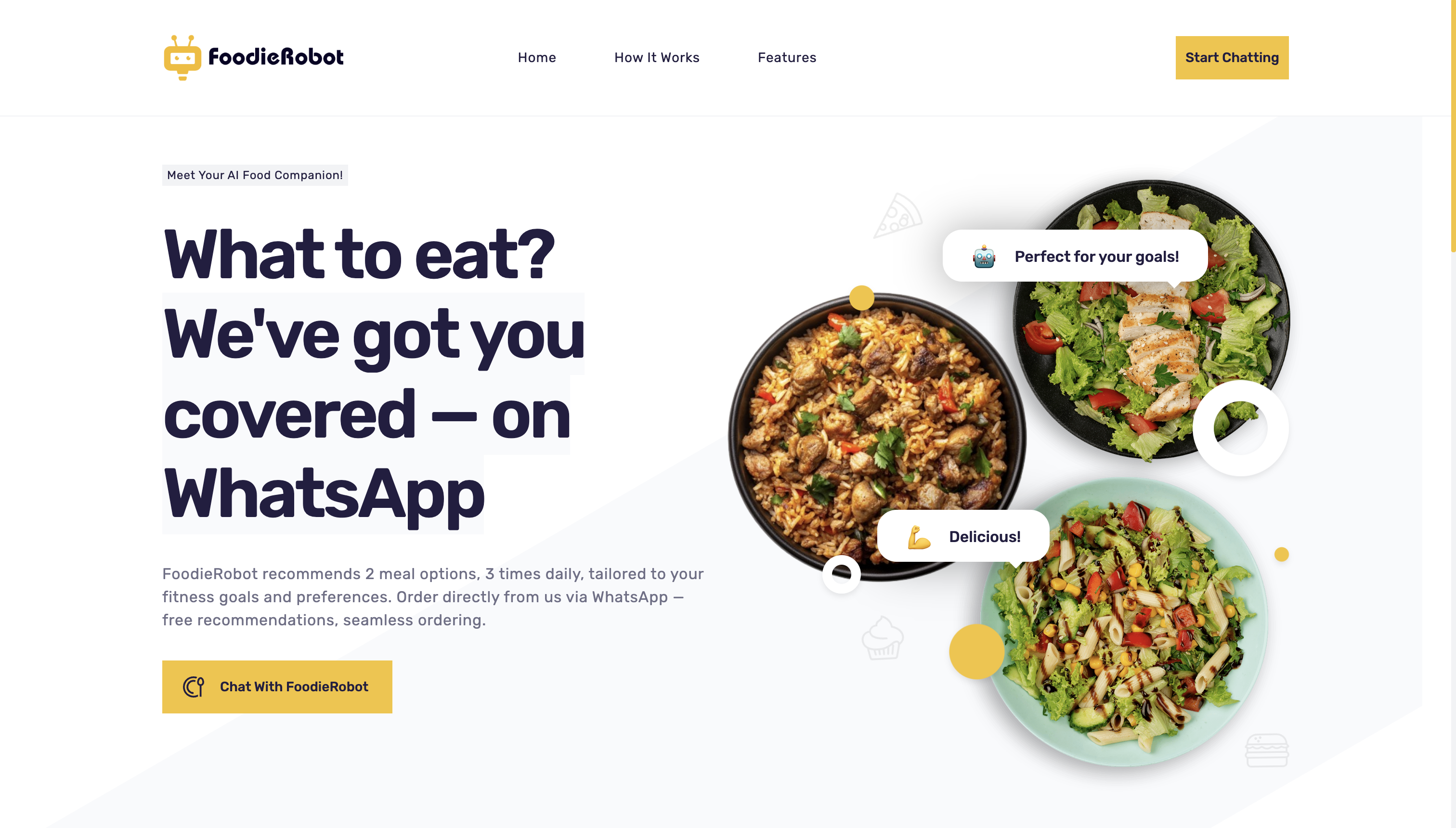
Website Home page
-
Website Home page
-
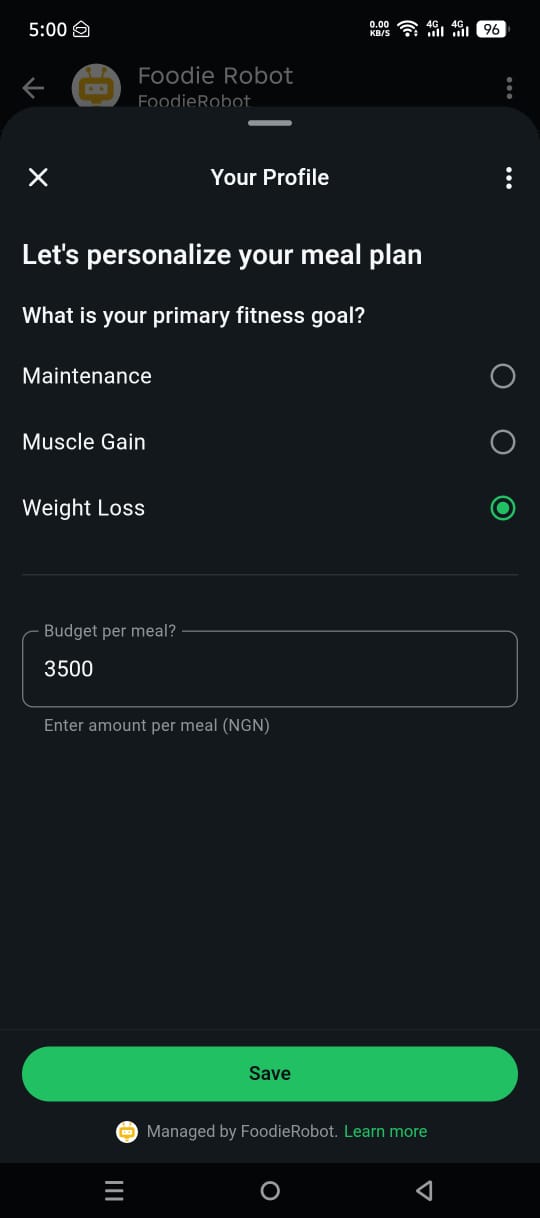
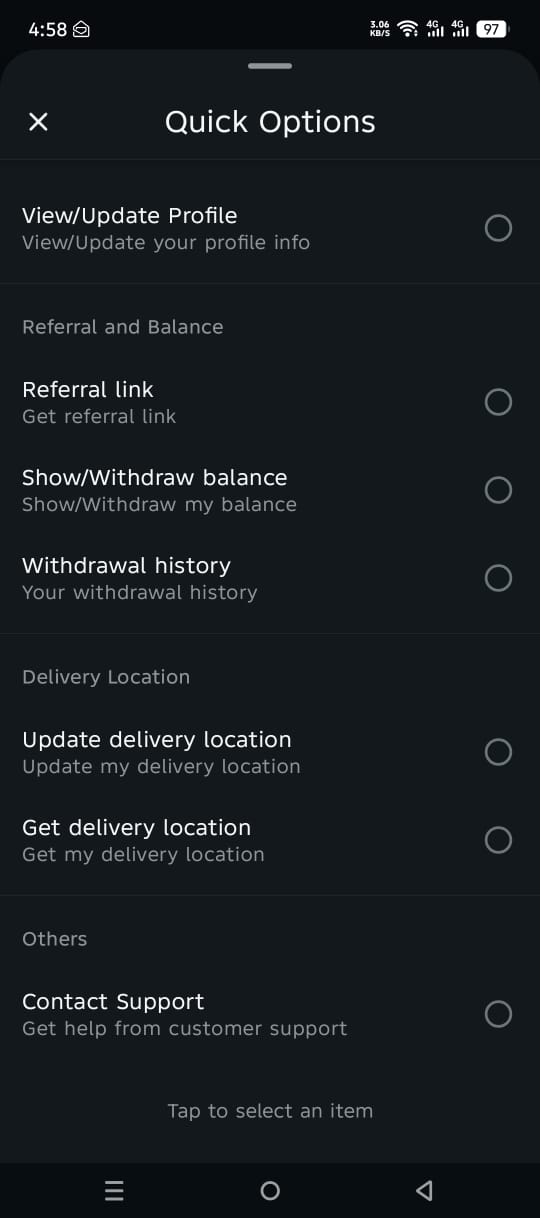
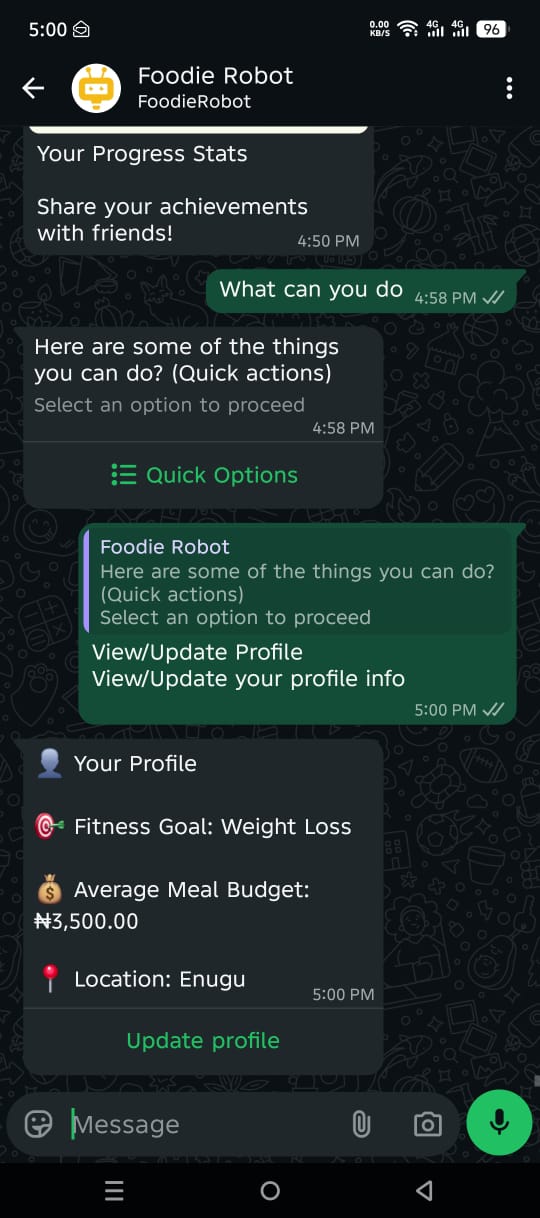
Whatsapp Bot
-
Whatsapp Bot
-
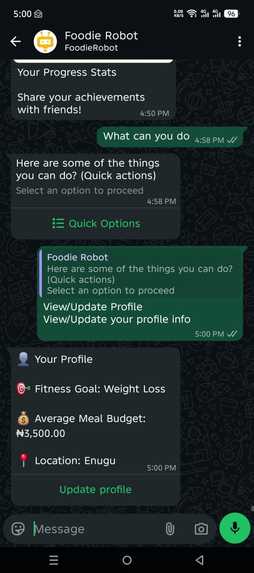
Whatsapp Bot
-
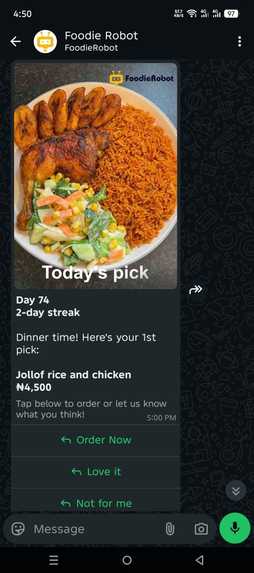
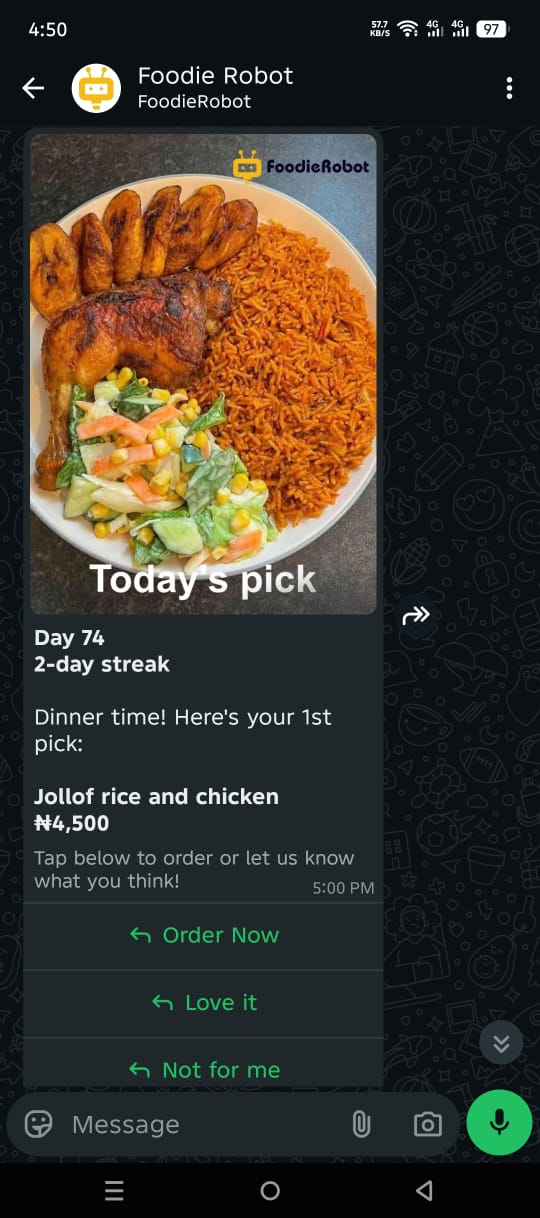
Whatsapp Bot meal recommendation
-
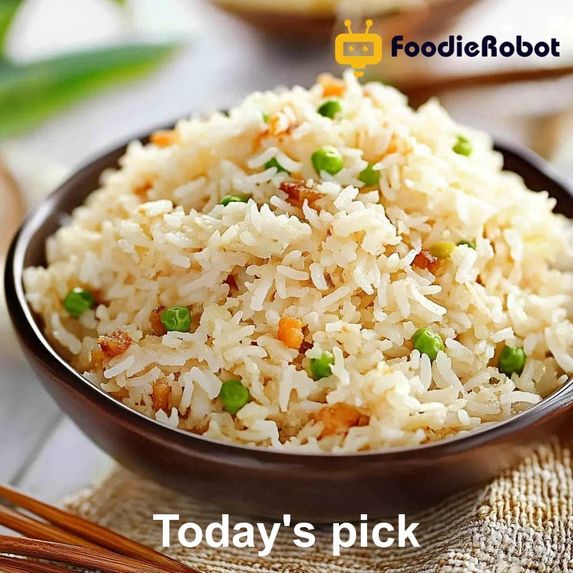
Whatsapp Bot meal recommendation
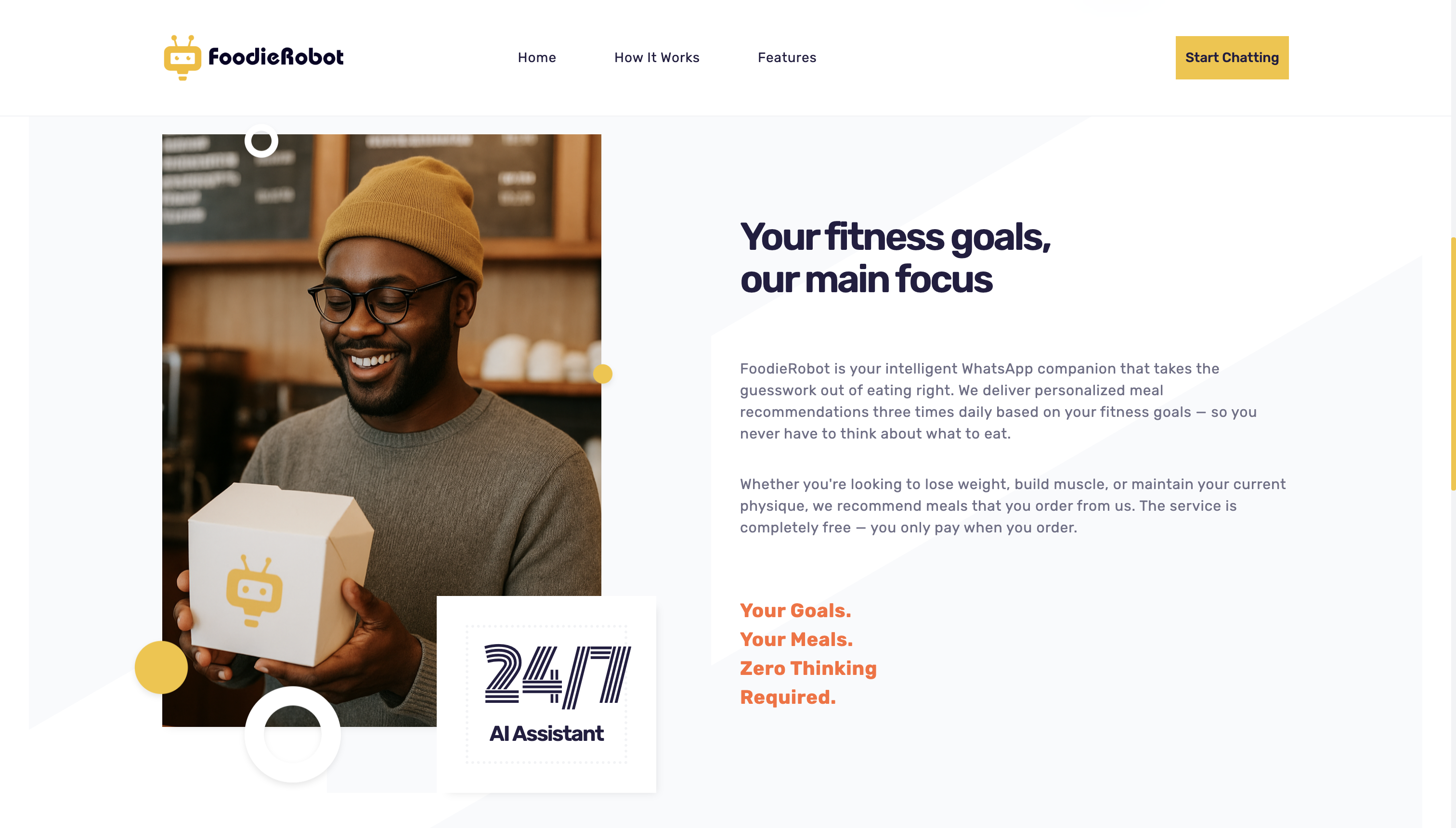
Foodie Robot
Inspiration
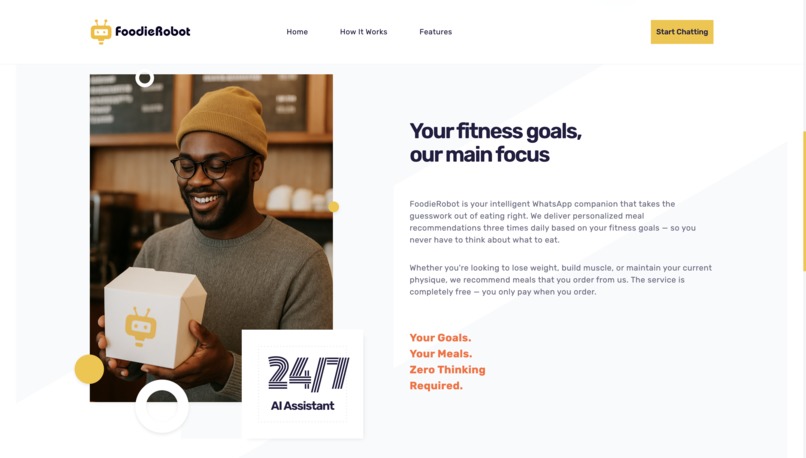
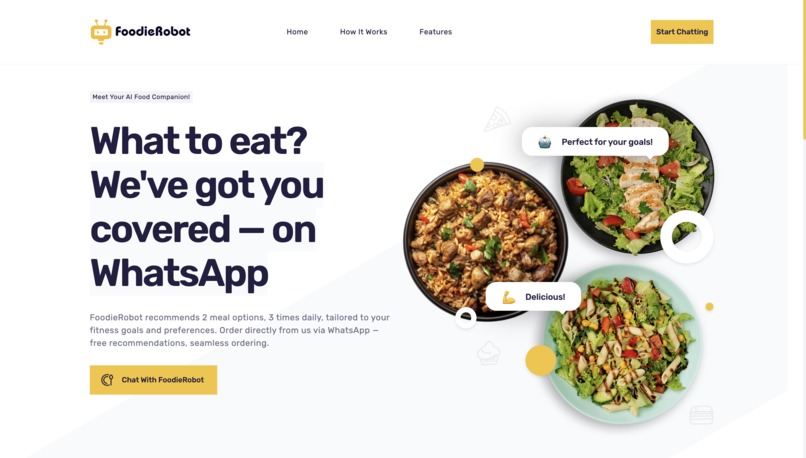
Food ordering apps hand you a menu and leave you guessing — will this fit my fitness goals? is this too many calories? Foodie Robot flips that around: it recommends meals tailored to your fitness goals and lets you order them directly, so it eliminates the guesswork.
And it lives where you already are — WhatsApp. No new app, no new account. You just text it like a friend who knows every restaurant in town — "something light and high-protein for around ₦3000" — and it tells you exactly what to eat and lets you order it on the spot.
What it does
- Chat with the bot on WhatsApp in plain language.
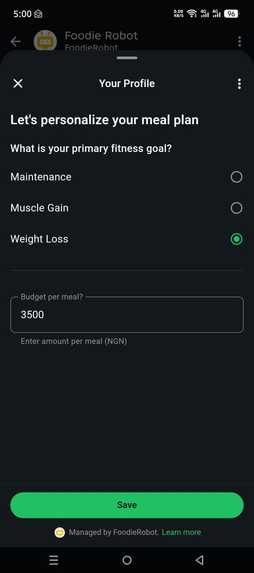
- It recommends meals tailored to your fitness goals, taste, budget, and time of day — and you order them directly, no guesswork.
- It can analyze a meal photo to estimate calories and nutrition.
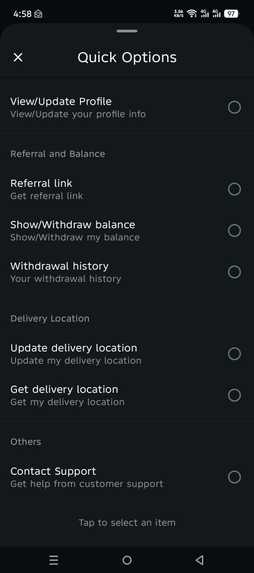
- It handles the full flow — location, ordering, payments, referrals, and balances.
How I built it
- Backend: Django (ASGI / Daphne) with a Huey worker for background jobs, PostgreSQL + PostGIS for data and geo, and Redis for caching and the task queue.
- AI: Alibaba Cloud's Qwen models via Model Studio (DashScope), used in
three ways:
qwen-maxfor chat and tool calling — the bot decides which action to run (recommend, order, save location, etc.).qwen-vl-maxfor vision — reading a meal photo.text-embedding-v4for embeddings — turning meals and requests into vectors so I can match them by meaning.
- Hosting: Docker containers on Alibaba Cloud (ECS), with managed RDS (PostgreSQL) and Redis.
Challenges I ran into
- Structured output from vision. Getting reliable, schema-shaped JSON out of the image analysis took prompt tuning plus a forgiving parser (handling code fences and stray text) so a single odd response wouldn't break the flow.
- Embedding dimensions. My database assumed 1536-dim vectors, so I pinned the embedding size to keep everything consistent.
- Server-side image fetching. The vision model downloads image URLs itself, so images must be hosted somewhere reliably reachable — I use a global CDN (Cloudinary) for that.
- Keeping costs low. Caching embeddings and filtering tools before each call kept token usage (and the bill) small.
Accomplishments that I'm proud of
- A bot that feels natural. Tool calling lets it understand free-form requests and take real actions — no rigid menus or button trees.
- Recommendations that actually fit you. Semantic matching on fitness goals, taste, and budget turns "what should I eat?" into a direct answer you can order.
- Full end-to-end flow on WhatsApp. From recommendation to location to payment to referrals — all inside a chat, with no extra app to install.
- Lean and cost-efficient. Cached embeddings and pre-call tool filtering keep it fast and cheap to run.
What I learned
- Tool calling beats menus. Letting the model pick the right action from a set of well-described tools made the bot feel natural instead of scripted.
- Embeddings make search feel smart. A little linear algebra goes a long way — semantic matching is far better than keyword matching for food.
- Qwen is genuinely capable across chat, vision, and embeddings, and one API key covers all three.
What's next for Foodie Robot
- Scale to more regions. Currently it is based in Lagos, Nigeria.
- Smarter personalization as more taste signals accumulate.
- Multi-language support so the bot can chat the way each user does.


Log in or sign up for Devpost to join the conversation.